
Is drinking alone in Japan awkward as a woman? I asked myself that on the bullet train to Tokyo with three nights blocked off and no one to meet, and the honest answer turned out to be: less awkward than at home, and more interesting than I’d expected. Walk into a Shinjuku basement bar by yourself in London and you spend the first ten minutes pretending to read your phone. Walk into a Tokyo tachinomi at 19:00 by yourself and you’ve already passed the social test, because half the counter is doing the same thing.
That’s the part the safety-first guides miss. Yes, the trains are safe at midnight. Yes, women-only carriages exist. Yes, your phone really will sit on the table where you left it. But the actual question isn’t whether you’ll be assaulted between the konbini and the hotel, it’s whether you’ll feel comfortable on a bar stool with no one across from you, in a country whose social wiring around solo drinking is genuinely different from the West. The good news is the wiring favours you. There’s an entire culture of hitorinomi (一人飲み, drinking alone) that women have been claiming back over the past decade, and even a registered All-Japan Solo Drinkers’ Association running the website hitorinomi.jp. This is a guide to what that looks like once you actually sit down.
In This Article
- The honest safety read, with caveats
- Where solo female drinkers actually land: a quick comparison
- Tachinomi first: why standing bars are the easy entry
- What an otoshi looks like in practice
- Counter izakaya: how to walk in and order
- The first three orders that work everywhere
- Where to drink in Tokyo, by district
- Shibuya: easiest first night
- Shinjuku: the deep end
- Ginza: counter-bar serious mode
- Ebisu and Daikanyama: the local-friend version
- Shinjuku 3-chome wine and natural-wine stands
- Drinks women I know order, and what to skip
- Highball: the safe-bet beer alternative
- Sake: glass first, bottle second
- Cocktails: one well-made one beats three okay ones
- Skip the chain nomihodai
- Outside Tokyo: Osaka, Kyoto, Sapporo, Fukuoka
- Osaka: louder, friendlier, cheaper
- Kyoto: Pontocho narrow lanes
- Sapporo: cold weather, beer-and-seafood logic
- Fukuoka: the quietest welcome
- The friction points, and how to handle them
- Hotel bars: when you want zero friction
- What to wear, what to bring
- If you only have three nights
- The seasonality detail
- What this trip will and won’t do
- Quick reference: phrases that work
The honest safety read, with caveats
Japan’s violent crime rate is among the lowest in the world. As a solo female traveller you’ll be safer walking back to a Shinjuku hotel at 02:00 than you are in most Western capitals at 22:00. The Adventurous Kate piece that ranks for solo female Japan describes leaving a bag on a park bench, coming back an hour later, and finding it untouched. That’s not a fairytale, it’s pretty close to true. I’ve left a coat over a Yokohama izakaya chair, gone to the toilet, and come back to find it folded by the staff.
What you actually have to manage is something quieter. Three things, in order of how often they’ll come up.
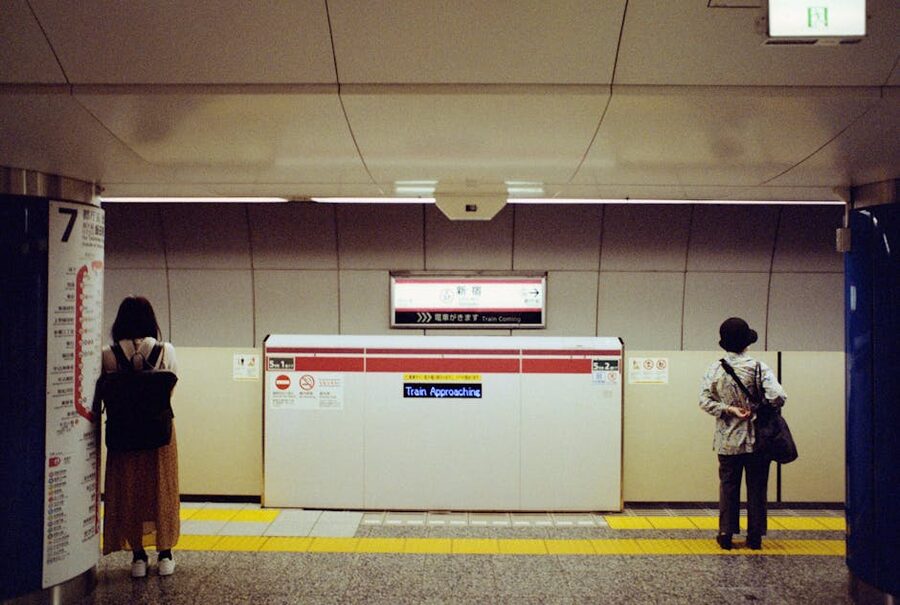
Drunk salarymen on the last train. Japan’s drink-with-colleagues culture means the 23:00–00:30 train window contains a lot of unsteady men. They’re rarely aggressive, mostly just loud and tipping into your shoulder. The fix isn’t avoidance, it’s timing. If you’re on the Yamanote line or any commuter route after 22:30, the women-only carriage (marked in pink on the platform, usually the front or back of the train) is signposted. Use it. Even native women do.
Chikan (痴漢, gropers on packed trains) is the one criminal-statistics anomaly Japan has, and it’s the reason women-only carriages exist in the first place. It’s a rush-hour problem more than a late-night one. Solo female travellers off-peak almost never encounter it. If you do, the word to remember is chikan desu, said loudly, with the train’s emergency button pressed. Staff will arrive in seconds.
Tipping points inside the bar. A salaryman three seats down at a Golden Gai bar trying to buy you a drink at 02:00 is the most common solo-woman friction point, and it’s not a Japan thing, it’s a small-bar-anywhere thing. The polite local script is to say arigatou gozaimasu, daijoubu desu (thank you, I’m fine), keep your eyes on your own glass, and the regulars will cool him off without your asking. If they don’t, the master will. Owners run their counters carefully and they’re allergic to drama.
Where solo female drinkers actually land: a quick comparison
Before you spend a night doing trial and error, here’s the rough map most women I know end up using on a Japan trip. Each row is a venue type, with the hour and price you’ll feel most relaxed at, and what it costs to sit down at all. Cover charges in Japan are real and almost never on the website.
| Venue type | Best window | Cover / otoshi | Ease for solo women | Best for |
|---|---|---|---|---|
| Tachinomi (standing bar) | 17:00–20:00 | None or ¥300–500 snack | High; easiest entry | First night, daylight tail |
| Counter izakaya | 18:00–21:00 | ¥300–700 otoshi | High | Eating well alone |
| Hotel-floor bar (Park Hyatt, Hyatt Regency) | 19:00–23:00 | ¥1,500–3,000 | Very high | One quiet luxe night |
| Wine bar / natural-wine stand | 18:00–22:00 | None typical | High | Glass-by-glass exploring |
| Basement cocktail bar | 20:00–24:00 | ¥1,000–2,000 | Medium (needs reservation) | Slow second drink |
| Golden Gai / Shinjuku 3-chome | 22:00–02:00 | ¥500–1,500 | Medium; pick the right door | Late, social, talkative |
| Kakuuchi (drinking at a liquor shop) | 15:00–19:00 | None | Very high | Daytime drinking, sake learning |
| Whisky bar (Bar High Five etc.) | 19:00–23:00 | ¥1,500–3,000 | High; reservation only | One serious dram |
The otoshi (お通し) is the small dish placed in front of you when you sit at most izakaya. It’s not optional, it’s a cover charge dressed as a snack, usually ¥300–700. Refusing it is awkward; budget for it the way you’d budget for the bread basket in Italy. Hotel bars and small cocktail places list a cover charge instead, which is more transparent.
Tachinomi first: why standing bars are the easy entry
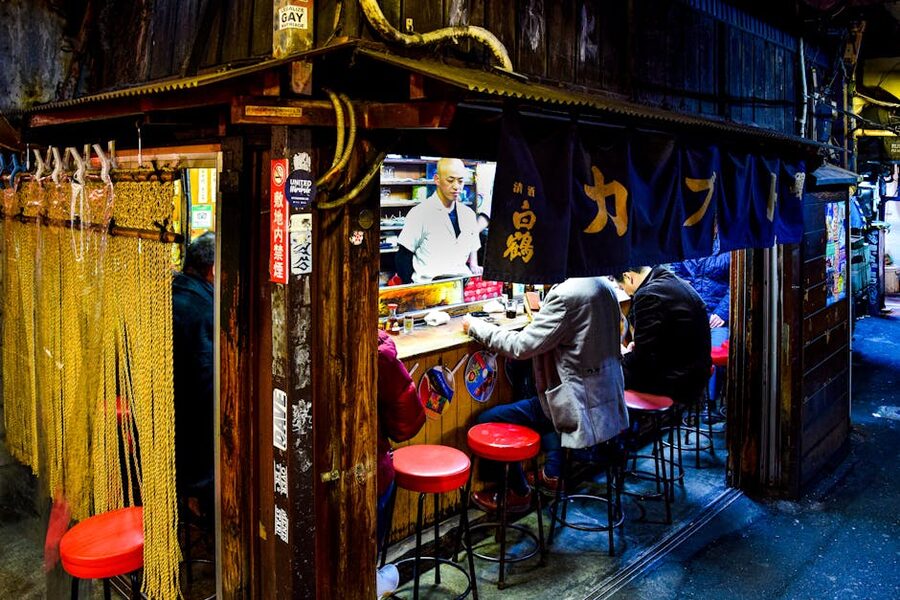
Tachinomi (立ち飲み, “stand and drink”) is the format I’d push at any solo female traveller on her first Japan night. They’re tiny, they’re cash-cheap, you pay per drink and per snack as you go, and the social geometry is built for one. No table awkwardness. No “table for one?” pause from the host. You just walk to a free spot at the bar, point at the beer pull or the sake board, and you’re in.
Tokyo has hundreds. The one I send first-timers to is Tachinomi Fujiya Honten in Shibuya, in the alleys behind Bunkamura. It’s bigger than a classic tachinomi (counter, stand-around tables, a back room for groups) which means the threshold is lower. There’s almost always one or two solo drinkers near the front counter, and the bartenders will steer your order if you point. A pint of beer with a juicy shumai dumpling, or sake with a stuffed seaweed-wrapped sardine roll, lands at about ¥1,200–1,500 total. They do an ika (squid) cream croquette with a black, crispy exterior that I order every time.
If you’re after the more atmospheric end, head to Ueno’s Yorozuya Shuho, ten minutes from the south exit of Ueno Station. It started life as a 90-year-old liquor shop and has been refitted as a kakuuchi, the Japanese tradition of drinking at the counter of an alcohol retailer. The current proprietor is a woman, the wall has a colourful painted mural, and there’s a 500-yen set of draft beer plus your choice of gyoza, beef-tongue stew, or pork-offal stew. Hours are 14:30–19:00 weekdays only, closed weekends, which is the one thing that catches people out. For the longer take on this format, see the [kakuuchi guide](/kakuuchi-japan/) elsewhere on the site.
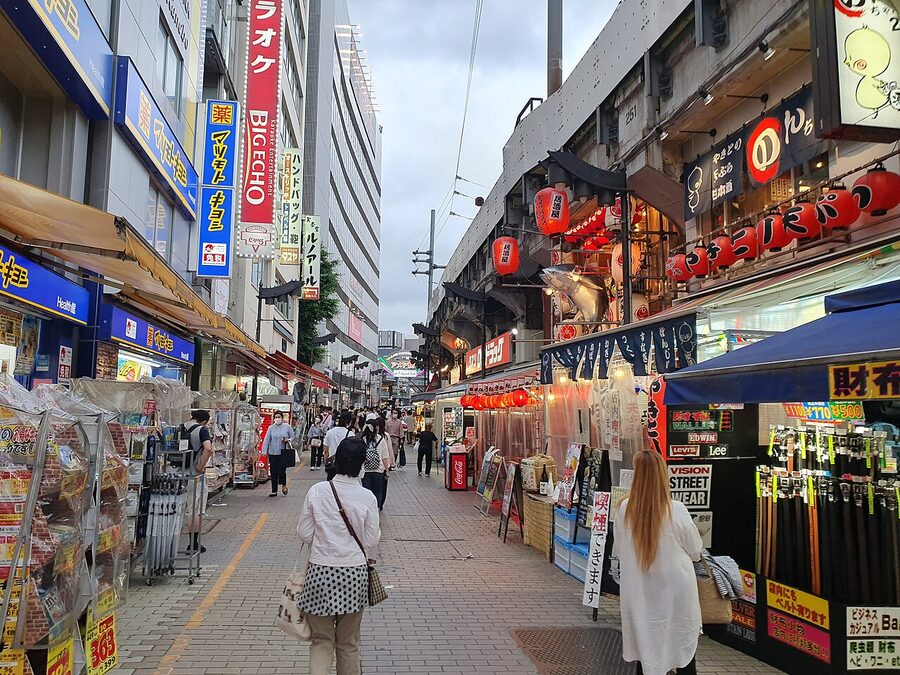
For something rougher and louder, Niku no Ohyama in Ueno does hoppy, the old-Tokyo low-alcohol beer substitute, for ¥500 a bottle, served as a “soto” (the bottle) plus “naka” (a shot of shochu poured into your glass). One bottle gives three full glasses. Pair it with their wagyu menchi-katsu (a breaded, deep-fried beef cutlet, ¥390–500) and you’ve eaten and drunk for under ¥1,500. The format is take-it-to-the-counter, eat-where-you-stand. Solo women fit in instantly because the place is built for the high-volume turnover, not for couples.
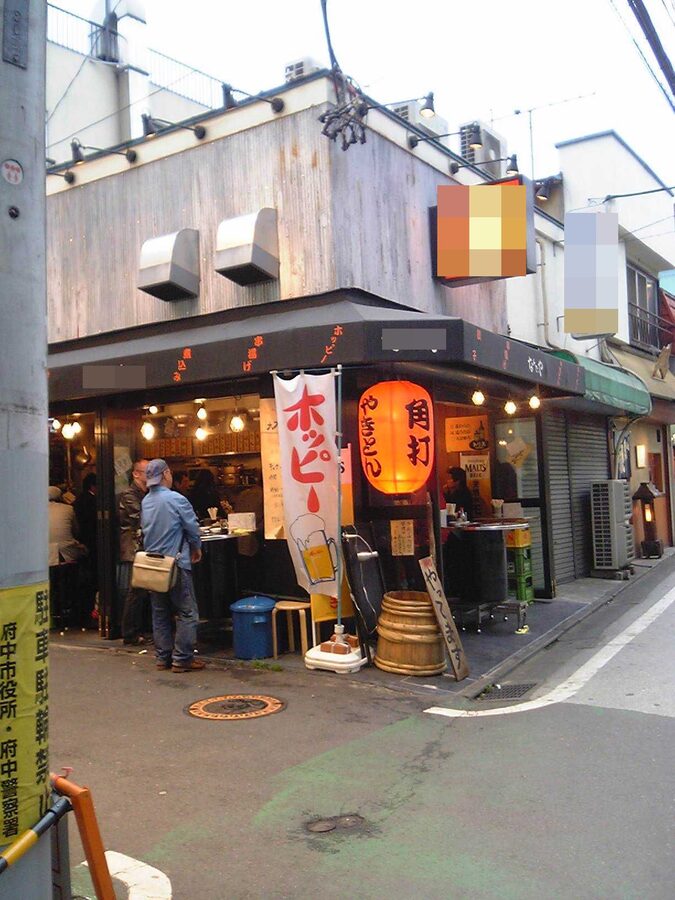

If you want a primer on standing bars before you go, the tachinomi Tokyo guide is a longer read. The short version: walk in, point, eat-drink, pay at the register, leave. No reservation. No tipping. No anxiety.
What an otoshi looks like in practice
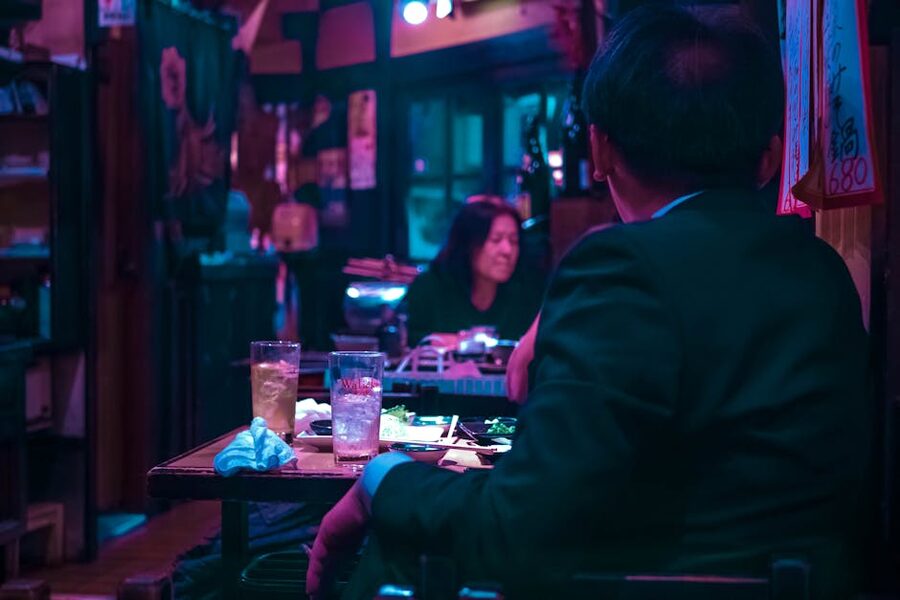
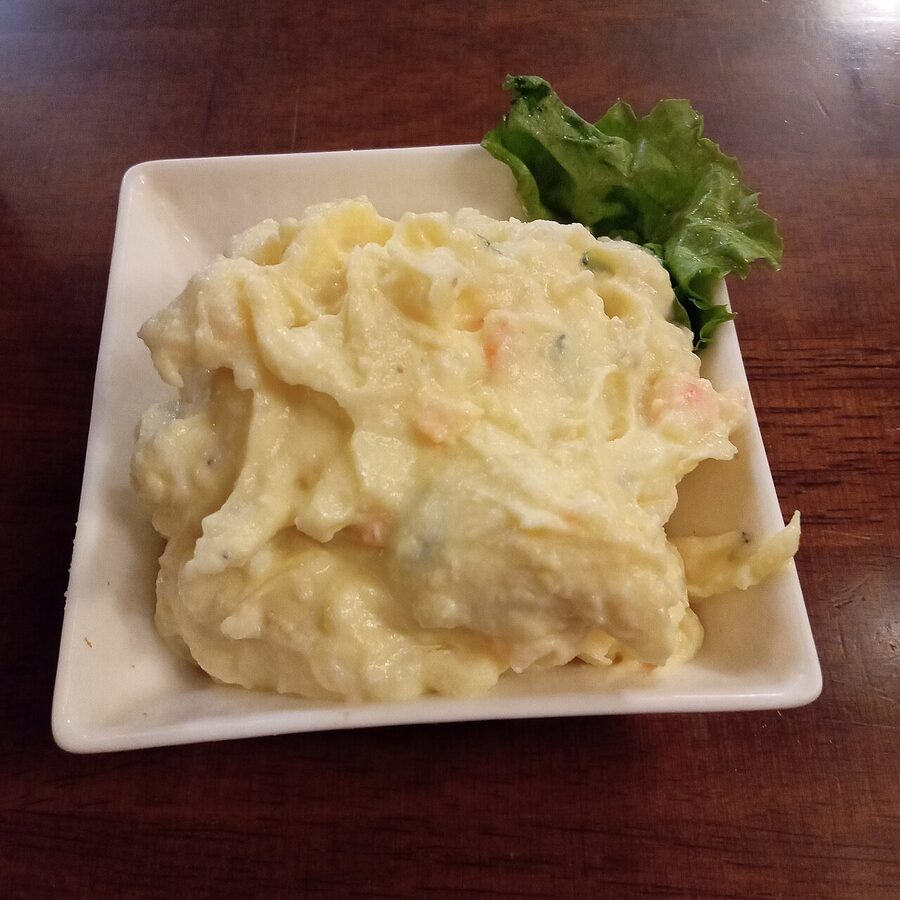
The first dish that arrives at almost any sit-down izakaya is a small bowl you didn’t order. Last week mine was three pieces of grilled mackerel with daikon, ¥500 added to the bill. The week before it was a tiny pile of sweetened beans. It’s not a free welcome snack and it’s not negotiable. Once you stop expecting to be asked, the system clicks. Counter-only places sometimes skip it; tachinomi almost always do.
Counter izakaya: how to walk in and order
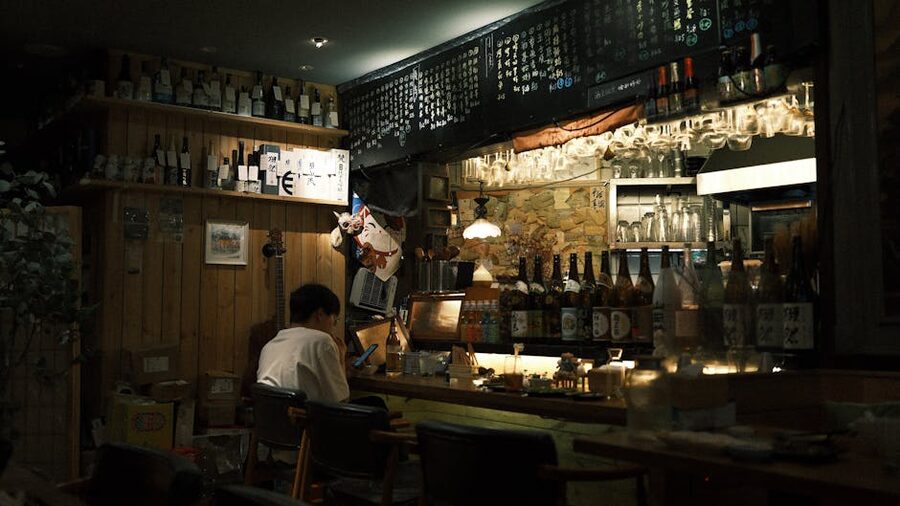
The izakaya counter is the single best invention Japan has made for solo female drinkers. You face the kitchen, you see the cook work, you get fed in micro-courses, you don’t have to fill a table. The friction is the entry: the noren curtain, the door slide, the eight pairs of eyes that turn for half a second when you walk in. Three sentences of Japanese cuts through it.
“Hitori desu” (one person) on the way in. The master will gesture to a counter seat. You sit. The oshibori (hot towel) and otoshi appear. “Nama biiru hitotsu” (one draft beer) gets you started. Read the menu, point at three things, and they’ll arrive over the next twenty minutes. When you want the bill, “okanjo onegaishimasu” gets a little bamboo or paper slip. You pay at the register on the way out. That’s the whole routine. The full breakdown of the mechanics, including the words for “I’ll have what they’re having,” lives in the izakaya ordering guide.
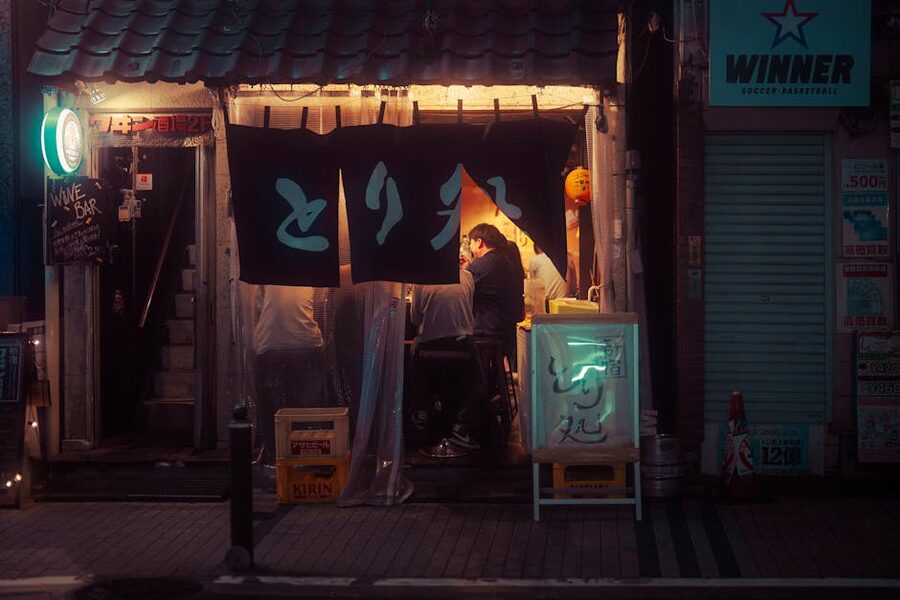
The big pattern most solo women miss: counter seats are cheaper to keep occupied than table seats, so masters actually want you there. Two of you at a four-top is a problem. One of you at the counter is exactly right. I’ve never been told a place was “groups only” if I asked at 18:30. After 21:00, when tables start emptying, even the rare counter-shy place will wave you in.
For the eat-and-drink pairing, the best counter izakayas have specific food angles you can lean on. Ajinofue in Ueno (under the Ameyoko viaduct) is run by Yoshiike, a famous local seafood wholesaler, so the sashimi is hours-fresh and the system is help-yourself: pick a plate from the counter display, take it back to your spot, pay at the register on the way out. Three pieces of chu-toro (medium-fatty tuna) at ¥800 are stronger than what you’ll get in most chains. Their lemon sour is the local default and pairs cleanly with grilled chicken tail. For a deeper read on pairings, see what to eat with sake on a trip to Japan.
The first three orders that work everywhere
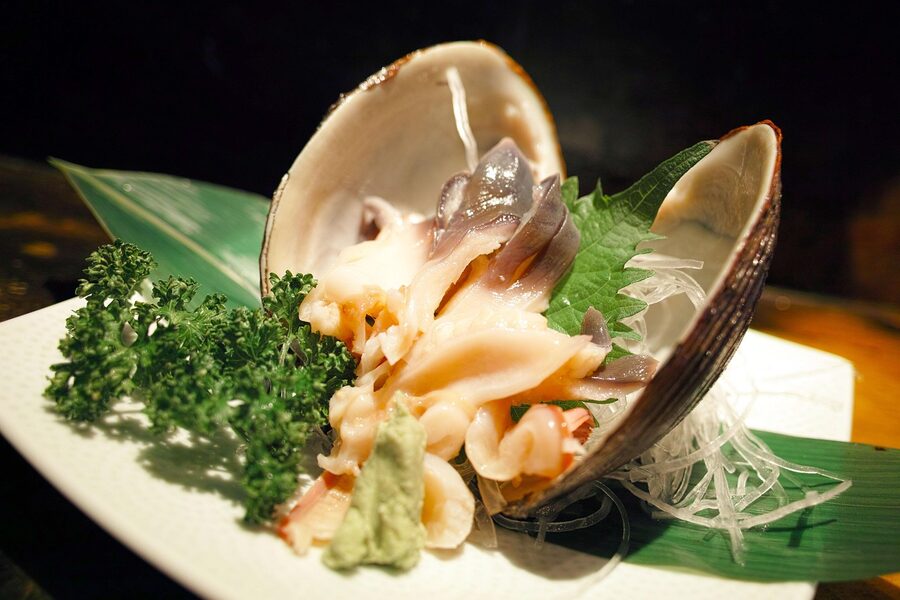
Walking in with a plan saves the awkward menu-staring minute. Three things I’ve ordered at every counter izakaya in Japan with no friction: a draft beer (nama biiru) to start, edamame or a small otsumami plate while I read, then a regional drink the master picks. “Osusume wa” (what do you recommend) opens the conversation if you want one. If you don’t want one, point and nod.
Where to drink in Tokyo, by district
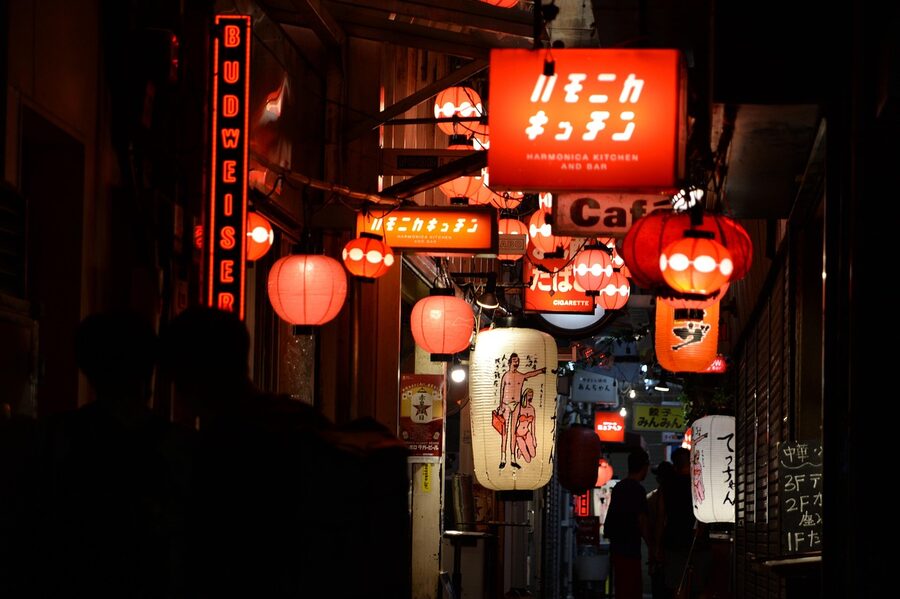
Tokyo is twelve drinking neighbourhoods, not one. As a solo woman the geography matters because each has a different ratio of solo welcome, female-friendliness, and price. Here’s how I’d rank them for a first trip.
Shibuya: easiest first night
Shibuya is where I send first-timers. The streets are bright, the crowd is mixed-age and skews female-leaning younger, and there’s a tachinomi-or-cocktail option on almost every block. Tachinomi Fujiya Honten covers the cheap-and-fast end. YATA Junmaishu Senmon at Dogenzaka 1-6-9 (5F) is a stand-up sake bar where the staff pick a glass from your flavour cues, served in a wine glass, ¥700–1,200 a pour. Stylish in a “office workers grabbing one before the train” way, not a tourist way. The Tokyo sake bars guide has the longer Shibuya block-by-block. For the cocktail-and-counter angle, the craft cocktail bars piece covers the slower, more reservation-based set.
Shinjuku: the deep end
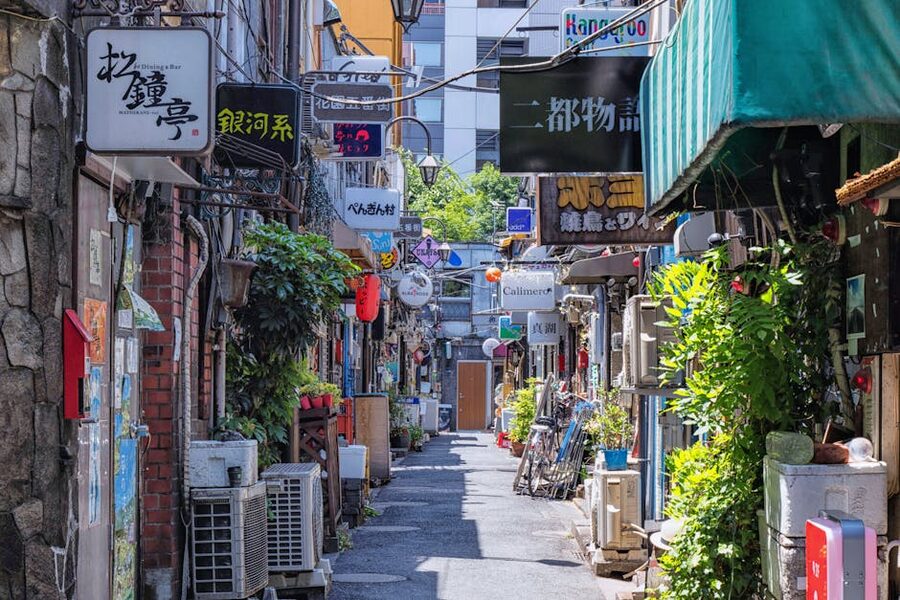
Shinjuku is where the famous photographs come from: Golden Gai’s two-storey alleys, Omoide Yokocho’s grilled-skewer smoke, the Park Hyatt 52nd floor where Lost in Translation happened. It’s also where solo female friction is most unevenly distributed. Some Golden Gai bars are openly tourist-friendly with English menus and women bartenders. Others are seven-seat regulars-only places where a foreigner solo woman walking in will get a polite “we’re full” even when they’re not. The trick is to read the door before you slide it.
The signal: if there’s a chalkboard or English menu at street level, or a queue of foreigners outside, you’re safe. If the bar’s name is in only kanji and the door has no English signage at all, it’s probably a regulars-only place; pick another. Albatross G (G2 alley, second floor) is the women-bartender-friendly default I send people to for Golden Gai’s first-time visit; the master is welcoming, drinks are ¥800–1,200, and there’s no fixed cover.
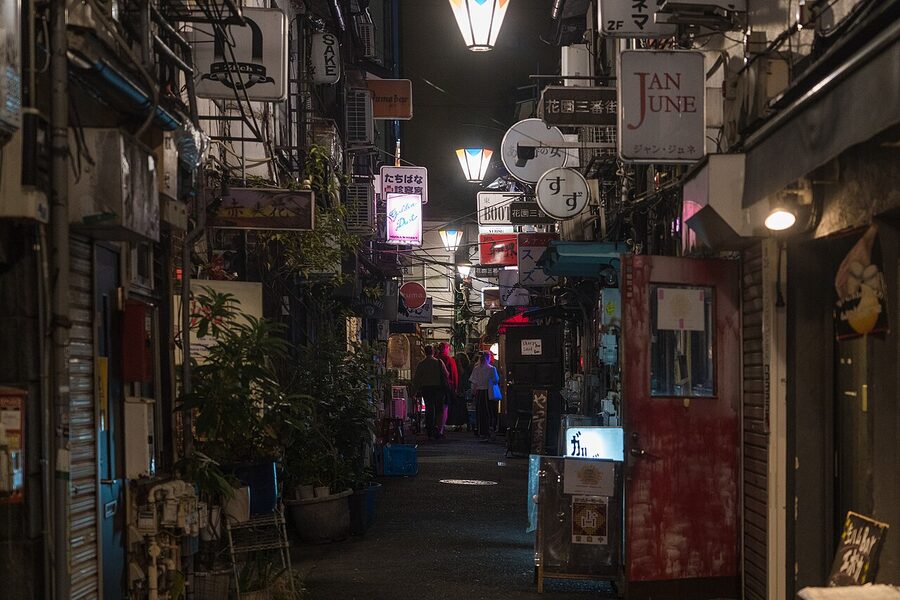

Omoide Yokocho is easier. Eight or nine narrow lanes of yakitori counter spots running parallel to the JR tracks; pick a place with three free counter stools, point at the skewer board, drink the highball in front of you. Asadachi is the famous offal-yakitori one (frog sashimi, pig testicle skewers, all the things you didn’t know you’d try). Most counters are eight-seaters and turn over fast, so even at 19:30 on a Friday a solo seat opens within ten minutes. For the broader Tokyo spread, the Tokyo bars and drinks guide covers the wider spread of districts.
Ginza: counter-bar serious mode
Ginza is where Tokyo’s serious cocktail bars are. Reservations expected. Cover charges of ¥1,500–3,000 standard. Drinks of ¥2,000–3,500 each. The reason solo women fit here especially well is that Ginza bartenders treat the counter as a stage, the ice as the prop, and the customer as one (not two) by default. Bar High Five (Ginza 7-2-14, basement) is the famous one; Hidetsugu Ueno carves the diamond ice in front of you and the cocktail is built to your stated mood. Bar Lupin in Ginza 5-chome has been operating since 1928 and was Dazai Osamu’s regular, which is the kind of historical detail you only get to enjoy if you go alone.
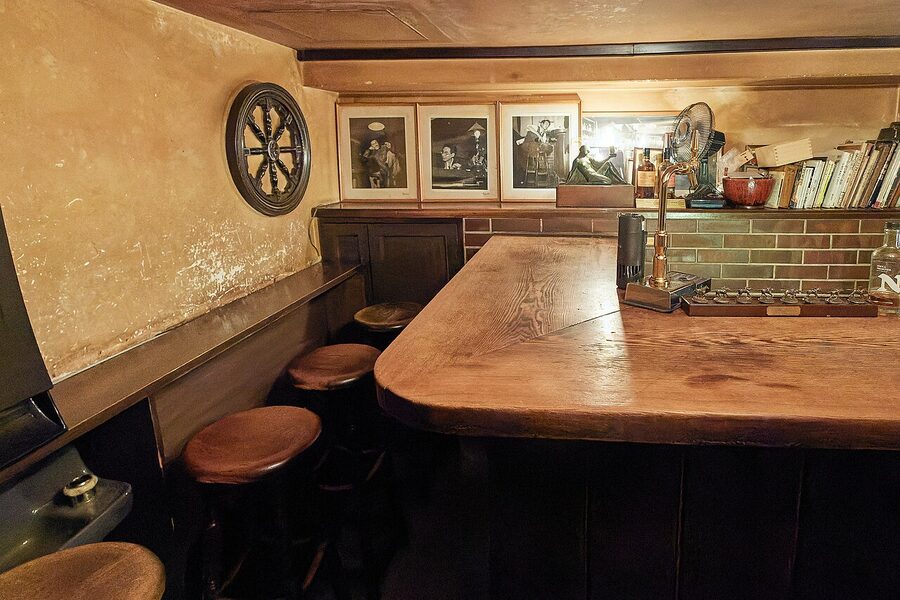

Reservations: phone or e-mail, 24 hours ahead minimum. The Japanese whisky guide covers Ueno’s bar in more detail, and the Tokyo whisky bars piece covers Park Hotel Tokyo’s Society and Bar Benfiddich (Shinjuku) which are the next two stops if you’ve already done Bar High Five.
Ebisu and Daikanyama: the local-friend version
If you’d rather not be in a tourist district at all, Ebisu and Daikanyama are where the office-going Tokyo women I know go for hitorinomi. Ebisuzaka Torikou, on the 38th floor of Ebisu Garden Place Tower, does counter-seat yakitori with a Tokyo skyline view; their original-breed Yatsugatake Torikou chicken is the draw, set menus from ¥6,500. Less Instagram-y but better food per yen, Soba Ikkon (Ebisu 1-21-17, five minutes from the station) does soba-mae, the small drinking dishes that traditionally precede a soba course; they have a counter, a private room, and lunchtime is open for daytime drinking too.
Shinjuku 3-chome wine and natural-wine stands
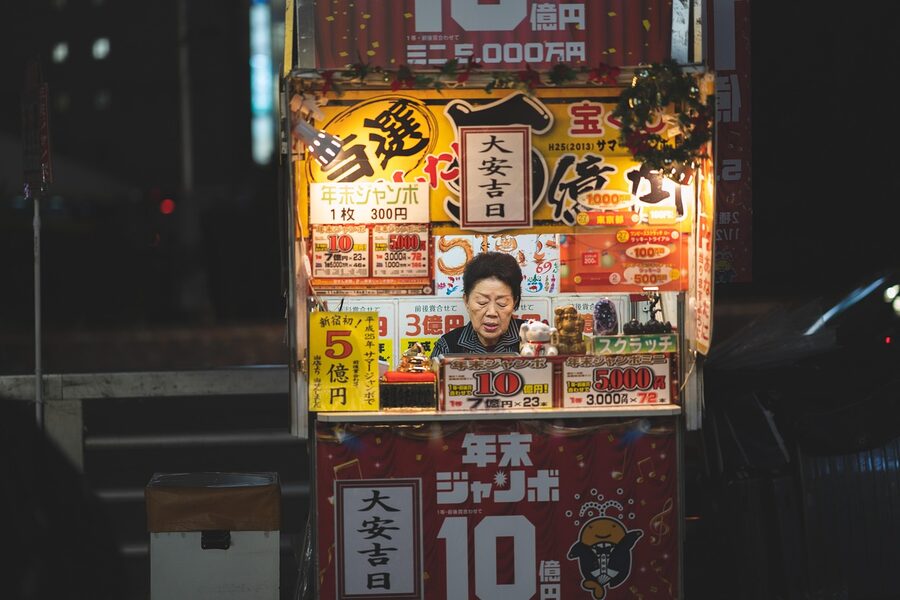
Shinjuku 3-chome and the Sangenjaya/Daikanyama belt have a different scene: natural-wine stands, where Japan’s young indie wine scene shows up. MIMOSA Natural Wine Stand (Azabudai Hills, 3F tower plaza) is a daytime grocery and night-time stand-up wine bar; you choose by glass, taste, and end up taking a bottle home. Brooklyn Parlor SHINJUKU (Shinjuku 3-1-26, B1 of the Marui Annex) is the bigger New-York-style restaurant-bar where solo women can sit on a sofa with a book and a wine and the staff leave you alone. Live music starts at around 20:00 some nights.
Drinks women I know order, and what to skip
The drinks list at a Japanese bar can read like an exam if you don’t know the categories. Three drinks I order on rotation, and one I stopped ordering, after enough Japan trips to have settled views.
Highball: the safe-bet beer alternative
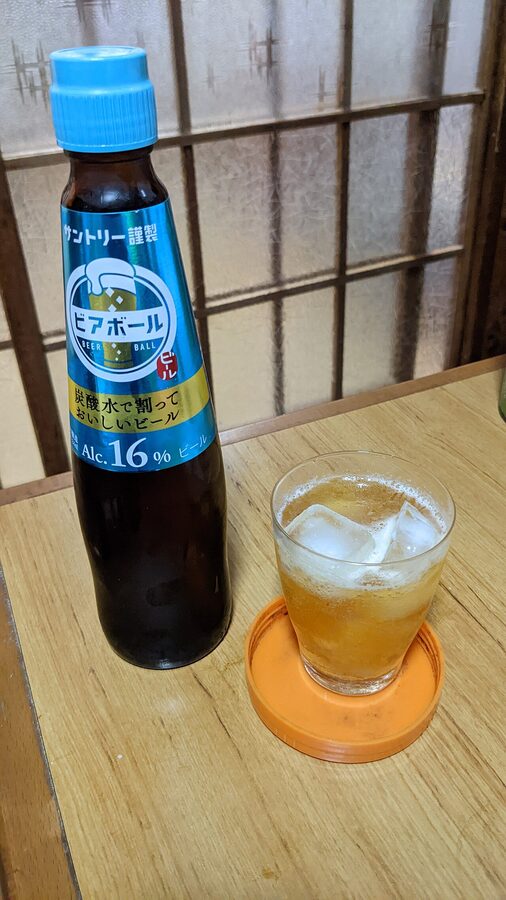
The Japanese highball (whisky and soda, ice) is the second-most-ordered drink in any izakaya after beer, and there’s a reason: it’s cheap (chain izakayas serve them at ¥380–500), low-alcohol enough to last a course, and the carbonation cuts through fried food. Suntory Kakubin, the square-bottle blended whisky, is the default base; ask for it by name if you want the chain experience or specify a single malt if you’re at a serious bar. The full geography of where to drink highballs lives in the highball culture guide.

Sake: glass first, bottle second
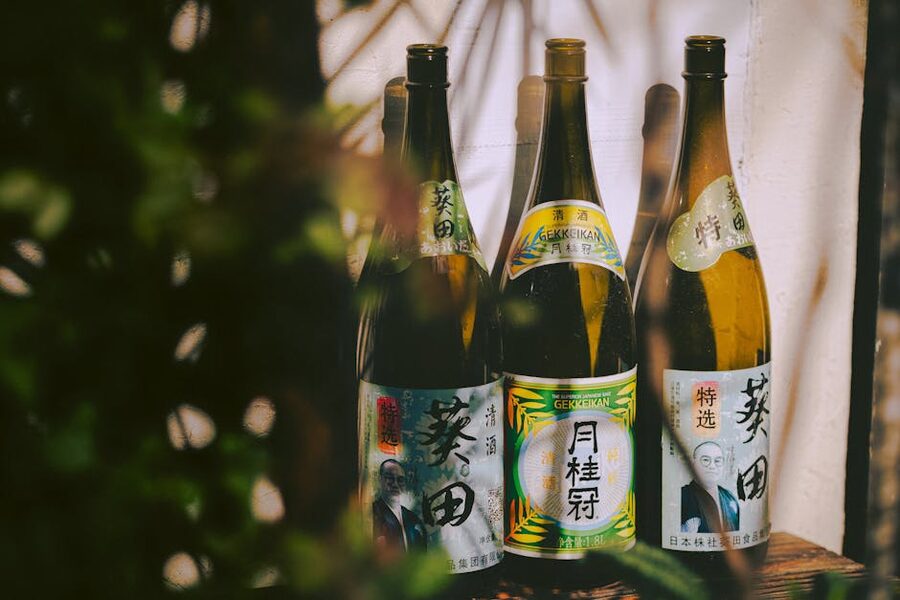
Sake by the glass is what you want as a solo drinker. A 180ml pour at a sake-focused bar runs ¥700–1,500 depending on grade; a bottle of junmai daiginjo at ¥5,000 doesn’t make sense for one person. At YATA Junmaishu Senmon in Shibuya you tell the staff what you usually like (dry, fruity, full-bodied) and they pick from the rotating board. Wine glasses, not ochoko cups, which open up the aroma. The full breakdown of styles is in the sake travel guide; how to read the labels at a shop is in the sake label guide.
Cocktails: one well-made one beats three okay ones
Tokyo’s cocktail bars work on a different scale than London or New York; they’re calmer, slower, and the bartender’s attention is on the build. As a solo woman this is where the format works hardest in your favour: the bartender isn’t checking on a table, they’re talking to you across the counter. One drink that takes ten minutes to make, paid attention to, is the right move. Don’t try to do three. The conversation is the value, not the volume. The craft cocktail bars guide has more.
Skip the chain nomihodai
The all-you-can-drink (nomihodai) sets advertised at chain izakayas like Watami or Torikizoku are designed for groups of four to eight pre-paying for a 90-minute or 120-minute window. Solo, the maths fails: you’ll get through three or four glasses, you don’t need eighteen, and you’ll be sitting next to a five-person work party that’s drowning out the room. Skip them. Pay per drink at a counter. You’ll spend less and drink better.
Outside Tokyo: Osaka, Kyoto, Sapporo, Fukuoka
Tokyo is where most first-trip solo female drinking happens, but if you’ve got more than four nights, the regional scenes are where the unguarded interesting drinking is. Three I’d queue up.
Osaka: louder, friendlier, cheaper
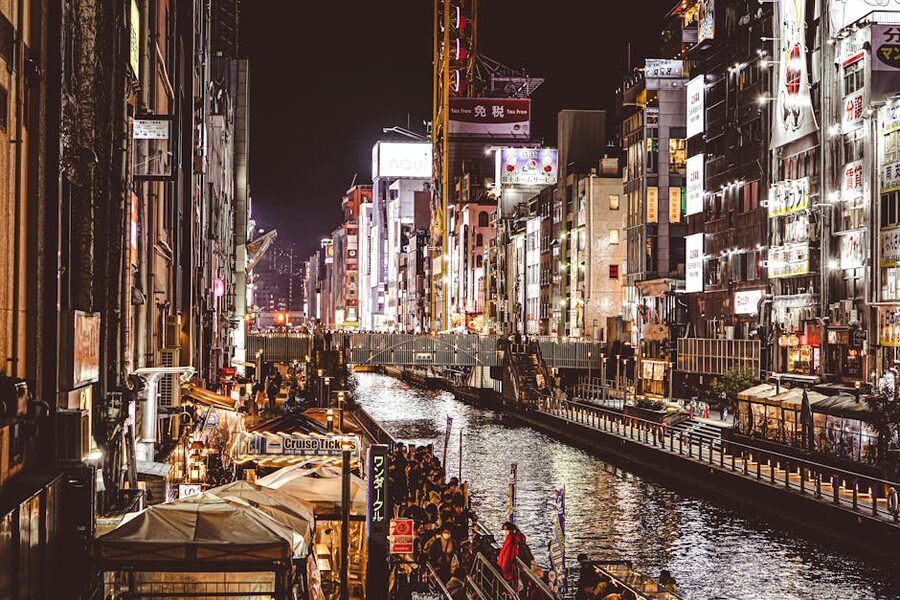
Osaka is the city where solo female friction is lowest in all of Japan, in my experience. Osakans are openly chatty, the bars are louder, and a foreign woman drinking alone gets a “nani nomu?” (what’re you drinking?) from the next stool by the second pour. Nothing creepy about it, just the local register. Namihei, a tachinomi in Namba, is the first place I’d send a solo female traveller in Osaka. The Hozenji Yokocho alley off Dotonbori has a cluster of small counter places that run from 17:00 to past midnight. The Osaka eat-and-drink guide walks block by block. For the harder-to-find traditional kakuuchi mode, see the kakuuchi piece.
Kyoto: Pontocho narrow lanes
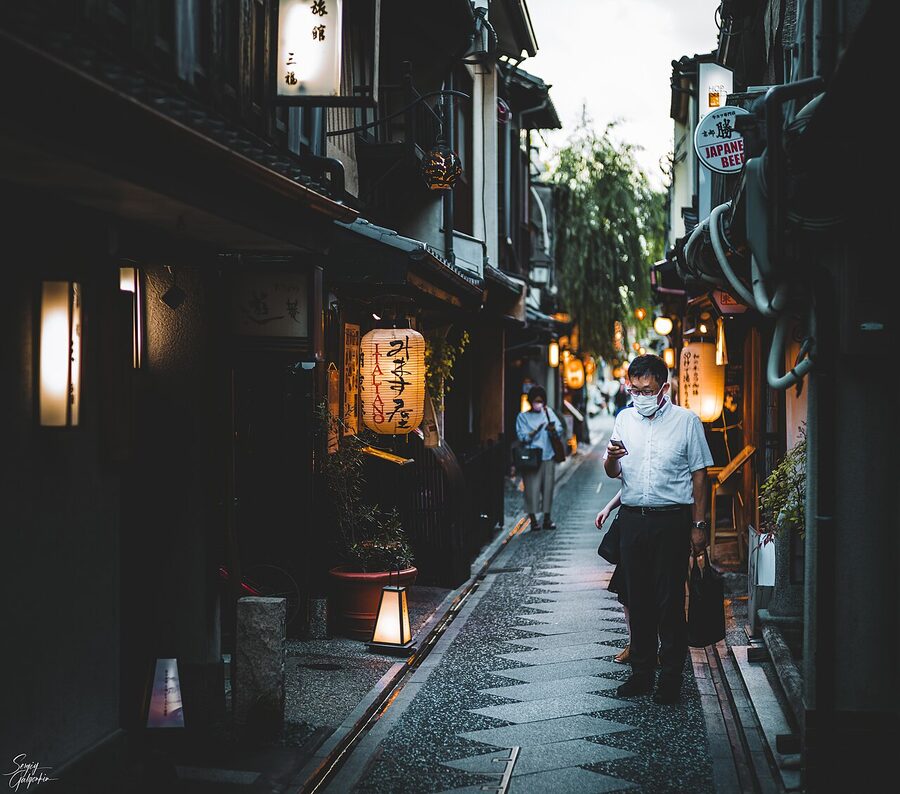
Kyoto’s drinking is centred on Pontocho, a 500-metre lantern-lit alley that runs north-south parallel to the Kamogawa river. Half the doors are kaiseki restaurants (group-and-reservation only), but the other half are wine bars, sake counters, and small jazz pubs that open from around 18:30. Sakenomi Sentaro (Pontocho-dori, look for the wood facade) does Kyoto-area sake by the glass, ¥800–1,500 a pour; the master speaks workable English and sets out a small otoshi. The longer block-by-block is in the Kyoto eat-and-drink guide.

Sapporo: cold weather, beer-and-seafood logic
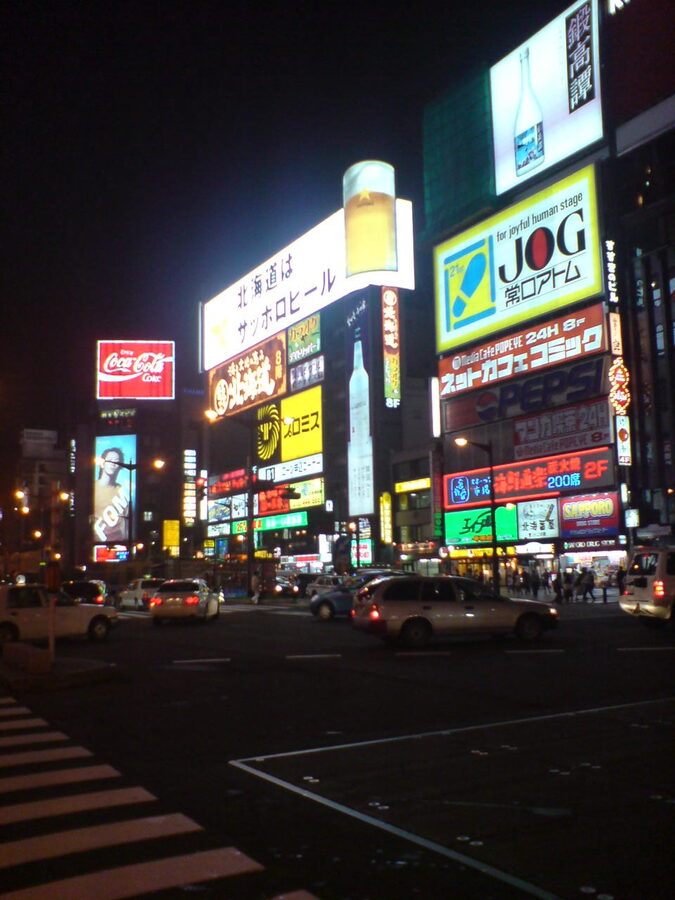
Sapporo’s drinking district is Susukino, a four-block grid of izakayas, beer halls, and the original 1881 Sapporo Beer Garden (now in a converted brick brewery). For a solo woman, Sapporo’s friction is even lower than Tokyo’s because the city is calmer and the seafood-counter format is built around eat-and-leave singles. The Sapporo guide covers it in detail. Susukino bars run later than Tokyo’s; 02:00 is normal closing.
Fukuoka: the quietest welcome
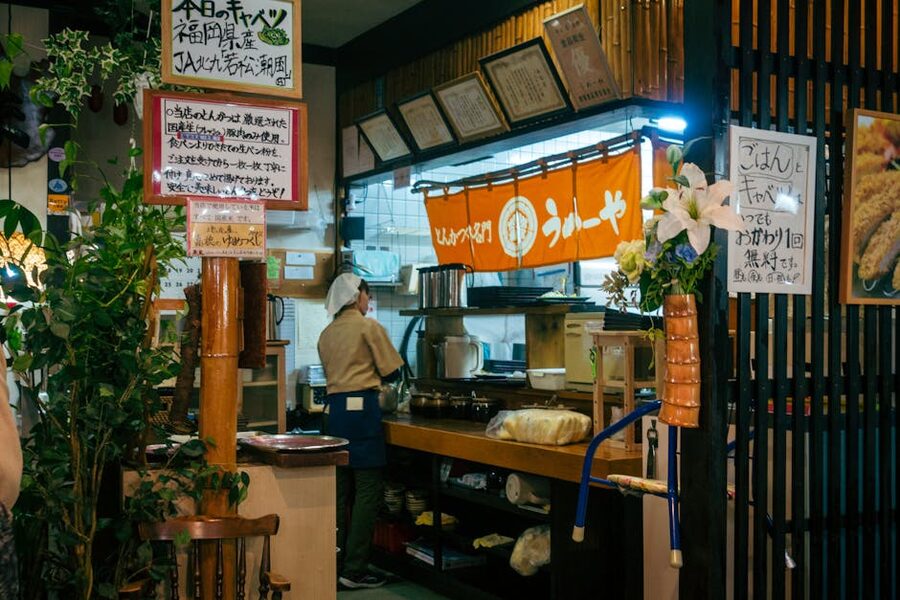
Fukuoka has the best yatai (street-food carts) culture in the country, with around 100 carts setting up at dusk along the Naka River. As a solo woman, the yatai bench is the most natural seat in Japan: you sit next to whoever else is there, the cook hands you a bowl, you pay cash, you leave. The full guide is in the Fukuoka eat-and-drink guide. For the broader practical grid see three drinking itineraries.
The friction points, and how to handle them
Plenty of guides will tell you Japan is fine for solo women and stop there. Fine, but reductive. Six things that come up and what actually works.
The “regulars only” door. Some Golden Gai and Shinjuku 3-chome bars are run as private clubs for ten to fifteen regulars; they’ll turn you away politely with “sumimasen, ippai desu” (sorry, we’re full) when they’re not. It’s not personal and it’s not a Japan-anti-foreign thing, it’s a bar-economics thing. Read the door, move on, you have forty other options on the same alley.
The phone-out shame. Reading or scrolling at the counter is normal in Tokyo. Almost every solo drinker is on a phone or a book. You don’t need to perform “engaged sociable solo traveller”; the masters and other regulars don’t expect that. If anything, looking up too eagerly reads as if you want conversation, which the next salaryman will accept the invitation for. Eyes on the glass.
The “let me buy you a drink” offer. If you don’t want it, “arigatou gozaimasu, daijoubu desu” (thank you, I’m fine), with eye contact, dismisses 90% of approaches. The other 10% the master will redirect. If you do want it, accepting once is fine; accepting a second from the same person is a signal you’ll be expected to chat for the next half hour, so commit to the conversation only if you’re up for it.
The smoke. Japanese bars enforce smoking rules unevenly. Tachinomi and old Golden Gai bars are still partial smoking. Hotel bars and Ginza cocktail places are non-smoking by default. Counter izakayas vary; ask “kin-en seki arimasu ka?” (do you have non-smoking seats?) on the way in. Smaller places will sometimes shrug, in which case you’ll smell of cigarettes when you leave.
The cash-only surprise. Plenty of small bars are cash-only and will not say so until you ask for the bill. Carry ¥15,000–20,000 in cash for a normal night out. The 7-Eleven ATMs work with foreign cards, are open 24/7, and are everywhere; that’s your fix.
The end-of-night walk. Public transport in Tokyo stops 00:30–01:30 and resumes around 05:00. Either be on a train before 00:00 or commit to the route home. Taxis are safe, plentiful, and meter-honest, but cost ¥3,000–5,000 for what’s a 200-yen subway ride. Walking is the quietest option; Tokyo at 02:00 is empty in a way few Western cities are.
Hotel bars: when you want zero friction
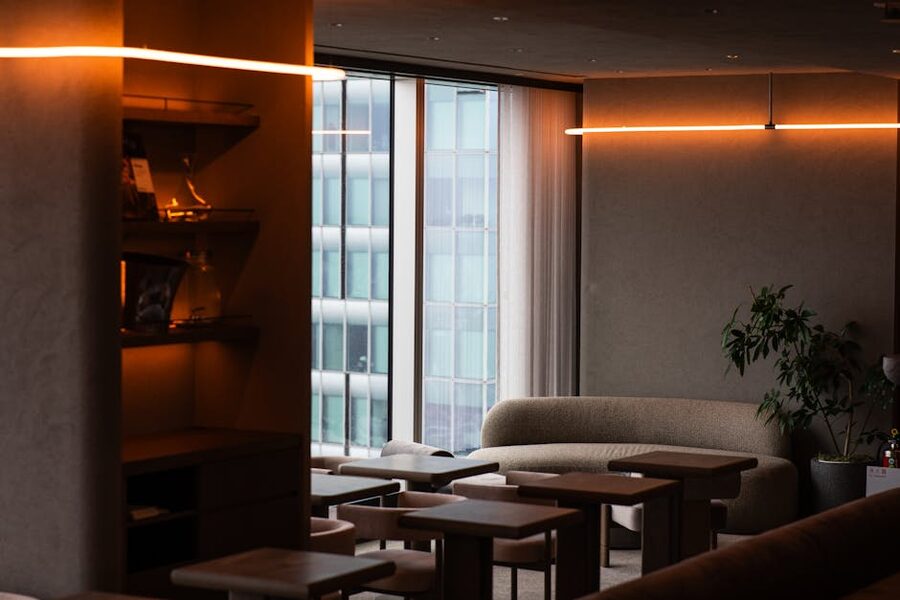
The classic solo-female-drinker move in Tokyo is the high-floor hotel bar. Lost in Translation made the Park Hyatt’s New York Bar the famous one (Shinjuku, 52nd floor, ¥2,500 cover after 20:00, jazz from 20:00). Eau de Vie in the Hyatt Regency (Nishi-Shinjuku, 3rd floor) is the quieter alternative: leather club chairs, an extensive whisky and brandy list, no music. Hotel-floor bars are the lowest-friction solo drink in Tokyo; the cover is the price of admission, the staff are trained to leave women alone, and the view does the entertainment. One night in three on a Tokyo trip should be one of these.
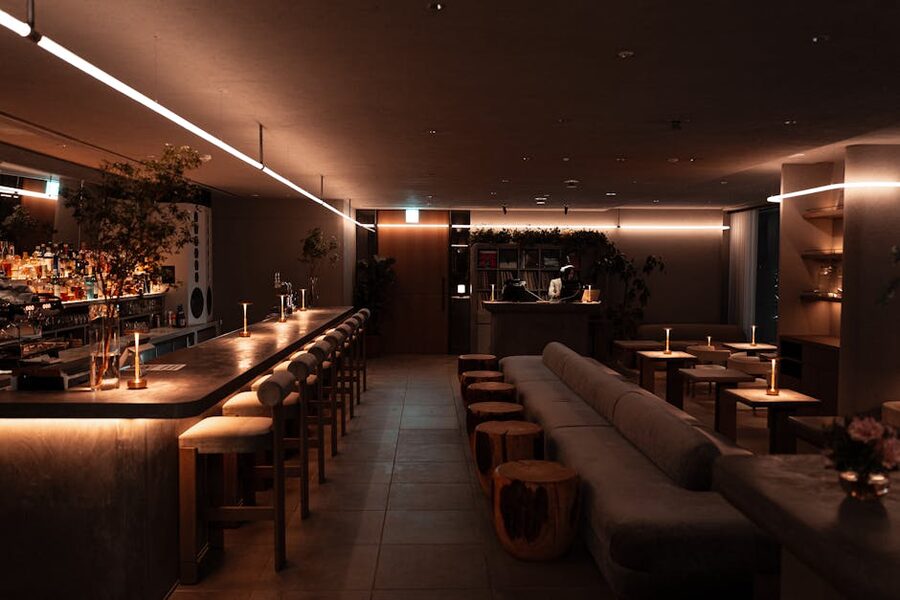
You’re paying for atmosphere, not for the drink itself, so order something that takes time to make: a Negroni, a mizuwari highball, or whatever the bar’s house special is. ¥2,500–3,500 a drink is normal; one drink, then leave. Two-drink visits to hotel bars get expensive fast.
What to wear, what to bring
Japanese drinking spots are casual by Western standards but tidy by tourist standards. Three calibrations.
For tachinomi, casual; jeans and a clean top. Trainers fine. The crowd at 19:00 is half office workers in suits, half people on their way home; you’ll fit either way.
For counter izakaya, slightly more put-together; jeans plus a blouse or a casual dress. Bag should be small enough to hook under the counter; rucksacks are awkward. Black or brown leather is the local default.
For Ginza cocktail bars, smart casual; not dress-code-required-tie smart, but no shorts and no obvious athleisure. Bar Lupin and Bar High Five have both seen enough tourist-jumper visits not to flinch, but you’ll feel more at home dressed up half a notch. A small handbag, a light coat, and a notebook is the cliché for a reason.
Bring cash, an English-Japanese phrase reference (Google Translate works fine), and a phone with a portable battery (the long evening drains it). The IC card (Suica or Pasmo) is what you use for trains; load ¥5,000 at the start and forget about it.
If you only have three nights
Three nights is enough for a complete solo-female drinking arc through Tokyo. The version I’d recommend is a tachinomi-counter-cocktail progression that builds confidence rather than testing it.
Night one, ease in: head to Shibuya around 18:30, find Tachinomi Fujiya Honten or YATA Shibuya, eat-drink for ninety minutes, walk back through Shibuya scramble. ¥2,500 spent, no reservations, lots of confidence built.
Night two, level up: counter izakaya in Ebisu or Yotsuya, somewhere with a sake list and an English-friendly master. Reservation if it’s a small place. Stay for two hours, two glasses of sake, three small dishes. ¥5,500 spent, total counter immersion, a master who’ll remember you if you come back.
Night three, treat: Ginza cocktail bar (Bar High Five, Bar Lupin, or one of the Park Hyatt floors). Reservation booked from the hotel that morning. One drink, fifty minutes, paid attention to. ¥4,500 spent and you’ve been the only person at the counter for the whole stretch.
That’s the arc. By the end of night three the solo-female-drinker thing isn’t a thing any more; it’s just what you’re doing. The next trip, you’ll book the cocktail bar first.
The seasonality detail
The drinking calendar in Japan has more shape than visitors usually realise, and it changes what’s worth ordering.
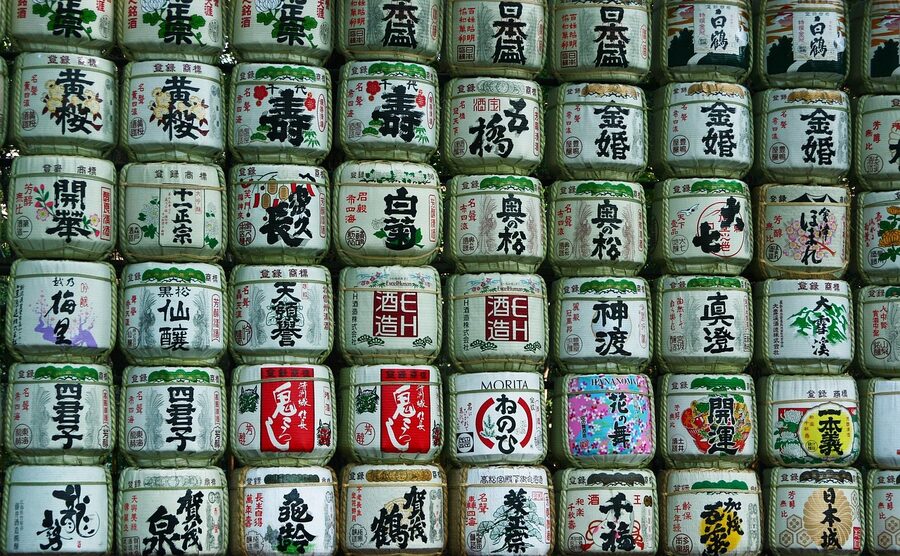
March–May is nama (unpasteurised) sake season, the spring drop. Counters in sake-focused izakayas put new rotations on the board. Hanami (cherry blossom) drinking happens outdoors on a tarp in any park; solo women on tarps are more common than you’d think. The hanami sake piece covers the cultural rhythm.
June–August is highball-and-cold-beer weather. Beer gardens (rooftop hotel bars, summer-only) open across the major cities. Cold sake (reishu) replaces room-temperature; ask for tsumetai (cold) on the order.
September–November is autumn sake (hiyaoroshi, sake aged through summer and released in autumn), the most underrated drink in the calendar. Look for the seasonal shelf. Whisky distillery tours run in October’s cooler weather; the Yamazaki vs Yoichi piece compares the two.
December–February is hot sake (atsukan) season, on every izakaya menu ¥500–800 a tokkuri. The atsukan field guide walks the temperatures. Whisky distilleries are mostly closed January–February for maintenance; book ahead if you want a winter tour. Toji-brewing season also peaks in winter; brewery tours from Tokyo are at their richest in January-February.
What this trip will and won’t do
It will not turn you into a regular at a Golden Gai bar in three days. The masters there sort regulars from visitors over months, and the boundary is real. It will not give you an authentic Japanese-only-locals night unless you speak Japanese and read kanji. It will not be a high-energy social scene the way Bangkok or Berlin is; the loud-bar density is genuinely lower than Western cities, and that’s part of the appeal, not a deficit.
What it will do: give you the solo-counter habit. Once you’ve drunk well alone in three Tokyo districts, you’ll find the equivalent in any city you go to next, because you’ve calibrated what a relaxed counter feels like. Most travellers who come to Japan as solo women report this, often before they know what to call it. The drinking culture is so geared toward the individual at the counter that it teaches you the format. After a Japan trip, the bar at home in any other country is easier.
And the second-order good thing: you’ll have learned the difference between a country that’s been built around drinking and a country that just permits it. Drinking in Japan is a logistics problem (otoshi, cash, last train) wrapped around an aesthetic problem (the right counter, the right hour, the right pour) wrapped around a hospitality problem (you’re a guest, not a buyer). Counter masters care that you eat well. Bartenders care that you taste what they made. If your image of solo female travel was sealed off in a hotel room with room service, this country is going to gently rewire it.
Quick reference: phrases that work
You don’t need fluent Japanese, but six phrases cover almost every solo bar situation. Memorise them, write them in your phone notes, you’ll use all six on a Tokyo trip.
“Hitori desu”, one person, said on entry. Master will gesture to a counter seat.
“Nama biiru hitotsu”, one draft beer. Universal opening order.
“Osusume wa nan desu ka?”, what do you recommend? Opens the master’s selection without you having to read the menu.
“Okanjo onegaishimasu”, the bill, please. Said with eye contact, gets you a slip.
“Daijoubu desu”, I’m fine. Politely shuts down a “let me buy you a drink” approach.
“Arigatou gozaimashita”, thank you very much (past tense). Said at the door on the way out. The master will say “otsukaresama deshita” back. That’s how you know you got it right.
 Drinking CultureWhy I Stopped Clinking Glasses in JapanThe first time I got a Japanese toast wrong, I was at a wedding reception in Yokohama. Ten of us…
 Drinking CultureKonbini Drinks Are a Whole Trip StrategyJapan has roughly 56,000 convenience stores. That's more outlets than McDonald's has worldwide, and the country sells about a third…
 Drinking CultureOtoso, Bonenkai, and the Hush of ShogatsuThe first person to write the recipe for otoso was a third-century Chinese physician named Hua Tuo, and he wrote…