
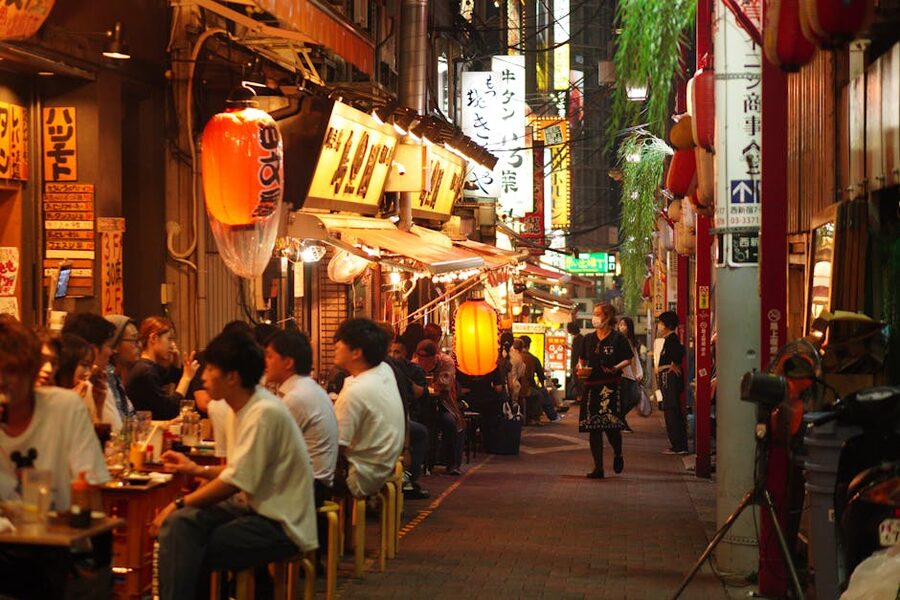
The smell hits before the sign does. Charcoal smoke and frying oil, soy and beer foam, the faint reek of cigarette ash from a bar where smoking is still legal. You stop, turn, and there’s a doorway you missed twice on the same street: a noren curtain at chest height, fluorescent strips behind it, and ten people standing shoulder to shoulder at a counter that runs the depth of a long, narrow room. No tables. No chairs. A glass of cold beer in every hand, a saucer of something fried in front of every drinker, and a bartender working three orders at once without writing a single one down.
That’s tachinomi, the Tokyo standing bar. Drink, eat, pay, leave. The whole experience often takes less than half an hour, costs ¥1,500–3,000, and produces a better story than the ¥1,800 cocktail you nearly ordered three streets back.
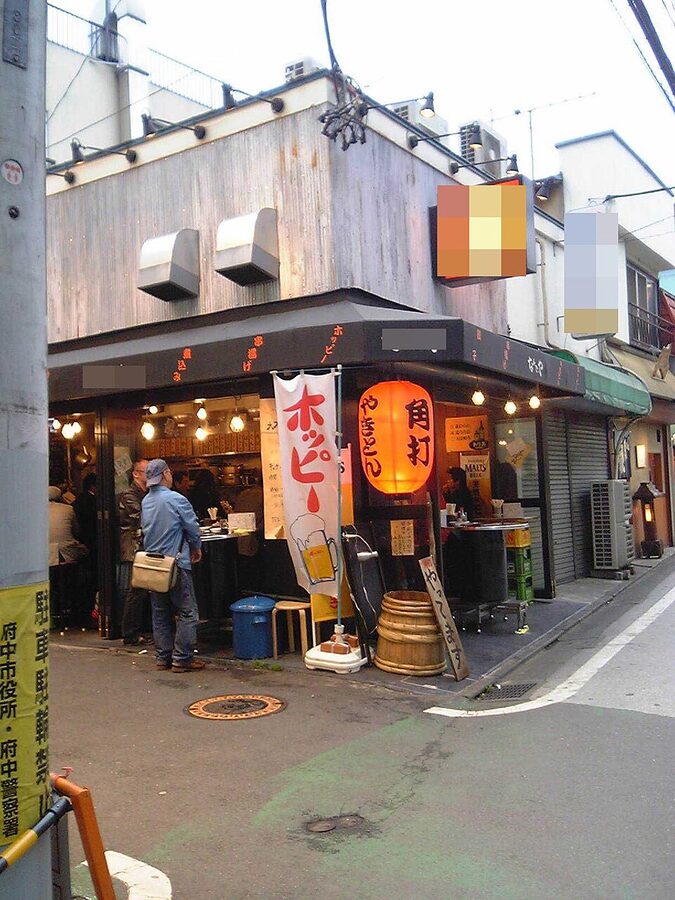

This is a guide to spending an evening in those bars. Where they are, how they work, what to drink, what to eat alongside it, and how to leave at the right moment. The whole article assumes you’ve never set foot in one. By the end you should be able to walk into Akabane Ichiban-gai cold and order three drinks and a plate of sashimi without fumbling. If you want a wider view of Tokyo’s drinking neighbourhoods, the Tokyo bars and drinks guide covers the rest of the city’s bar formats. This piece is the standing-up corner of that map.
In This Article
- What a tachinomi actually is
- The five neighbourhoods worth a night each
- Yurakucho gado-shita: the entry-level evening
- What to order at the gado-shita
- One named bar to anchor the evening
- Akabane Ichiban-gai: the senbero capital
- Tachinomi Ikoi Honten
- What else to eat in Akabane
- Shinbashi: where Friday night actually happens
- What to expect at peak hour
- Kichijoji’s Harmonica Yokocho
- Asakusa Hoppy-dori and the daytime drink
- The other yokocho worth knowing
- Nonbei Yokocho, Shibuya
- Ueno’s Ameyoko
- Sangenjaya’s Sankaku Chitai
- How tachinomi billing actually works
- The otoshi question
- What to drink, in order
- What to eat alongside
- The reliable orders
- What to skip on a first visit
- The rhythm of standing-and-leaving
- How to order without Japanese
- Cash, smoking, and the fiddly stuff
- Tachinomi etiquette, briefly
- Tachinomi as part of a bigger Tokyo evening
- One last thing: the bar you’ll find by accident
What a tachinomi actually is
The word breaks down to tachi (standing) and nomi (drinking). That’s all the marketing copy any tachinomi has ever needed. The rest follows from physics: if there are no chairs, customers don’t linger, the operator turns the floor over five or six times a night, and prices stay low because the bar is moving small drinks fast.
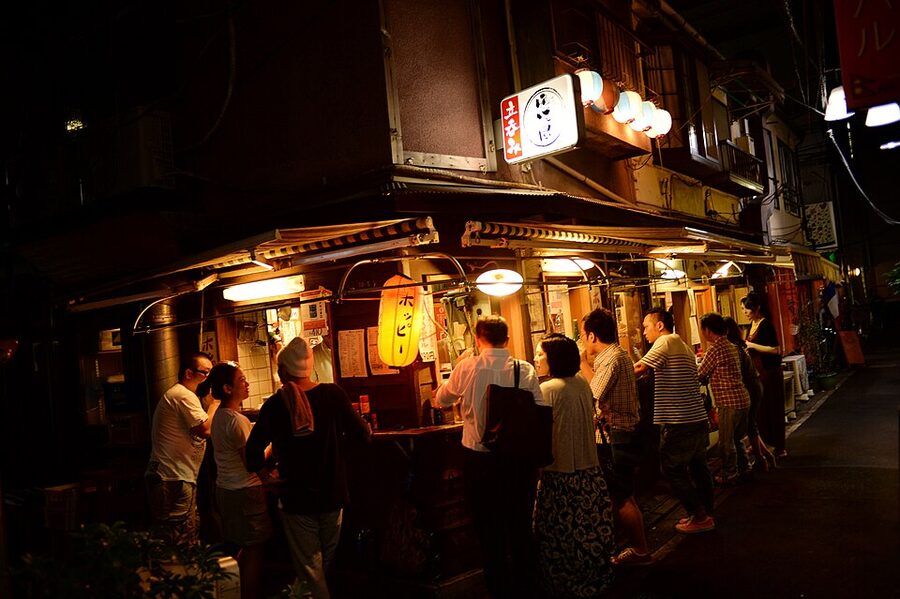

There are three rough types worth knowing before you go in.
The first is the old-school sakaba: a battered counter, plastic stools nobody sits on, a hand-written drinks list above the bar in marker pen, and a kitchen window where someone is frying ham cutlets. Hoppy and shochu at ¥250–500 a glass, simmered offal at ¥150 a bowl, total bill rarely above ¥2,000. Akabane’s Ikoi Honten is the canonical version. Indoor smoking is sometimes still legal in these older places.
The second is the kakuuchi, literally a sake shop that lets you open one of its own bottles and drink it at the back of the store. Snacks are limited (canned sardines, dried squid, peanuts). The sake selection is staggering because it’s the same shelf the shop sells from. Kanda’s Fujita Shuten is one. Kuramae’s NOMURA SHOTEN turned the format into a serious craft-spirits bar with a hundred bottles of small-distillery rum, gin and shochu.
The third is the new-wave wine or sake stand: still standing, still cheap by sit-down standards, but with proper glassware, natural wine on rotation, and a one-page food menu doing more than fried things. Monzen-Nakacho’s Wine Stand Alfie is one of the originals. Ebisu’s Buri, with its wall of cup sake bottles, sits halfway between this category and the old-school one.
The five neighbourhoods worth a night each
Tokyo has standing-bar pockets in nearly every ward, but five reward a deliberate trip. Each has its own crowd, its own price ceiling, and its own opening rhythm. If you only have one evening, pick one neighbourhood and walk it slowly. Bouncing across the city for a single famous bar wastes the geometry of the whole format.
| Neighbourhood | Vibe | 3 drinks + 2 dishes | Best for | Closest station |
|---|---|---|---|---|
| Yurakucho gado-shita | Yakitori smoke under the JR tracks, salaryman-heavy 18:00–20:00 | ¥2,000–3,000 | First evening, easy access from Tokyo Station | Yurakucho (JR Yamanote) |
| Akabane Ichiban-gai | Daytime drinking, dirt-cheap, locals all the way down | ¥1,000–1,800 | Hardcore senbero (¥1,000-and-drunk) experience | Akabane (JR Saikyo / Keihin-Tohoku) |
| Shinbashi gado-shita | Loud, packed, the spiritual home of the after-work drink | ¥2,500–3,500 | Friday-night chaos, post-meeting unwind | Shimbashi (JR Yamanote) |
| Kichijoji Harmonica Yokocho | Tiny stalls, mixed crowd, indie and retro | ¥2,000–3,000 | Calmer crawl, weekend afternoons | Kichijoji (JR Chuo) |
| Asakusa Hoppy-dori | Open-front shops, daytime drinking, tourists welcome | ¥1,500–2,500 | Combining drinks with sightseeing | Asakusa (Ginza Line) |
Honourable mentions: Ueno’s Ameyoko for fishmonger-turned-bar daytime drinking, Shibuya’s Nonbei Yokocho for tiny six-seat counters with English-speaking owners, and Sangenjaya’s Sankaku Chitai for Setagaya residents-only authenticity. I’ll come back to these.
Yurakucho gado-shita: the entry-level evening
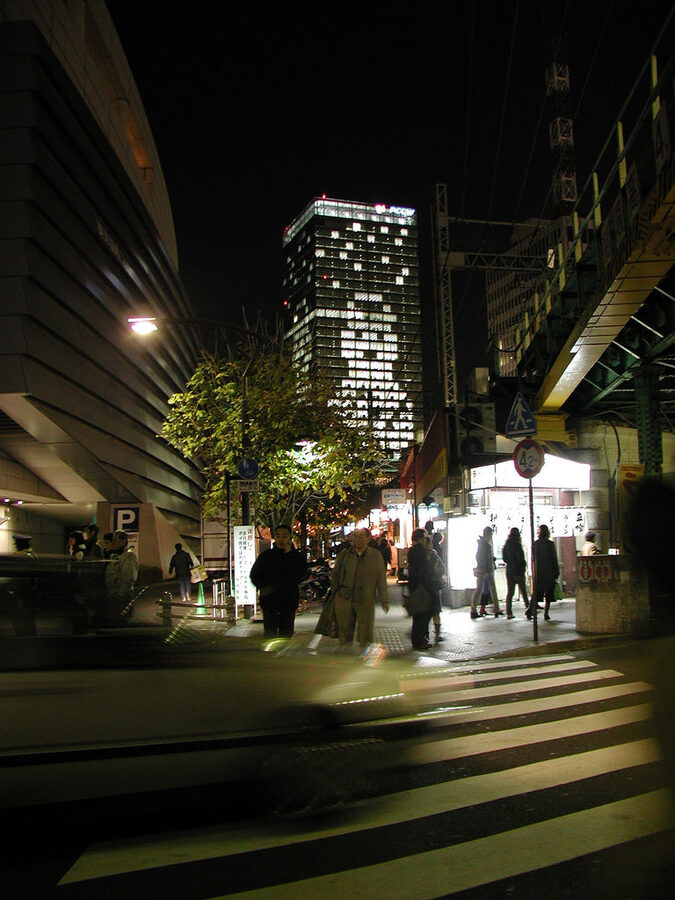

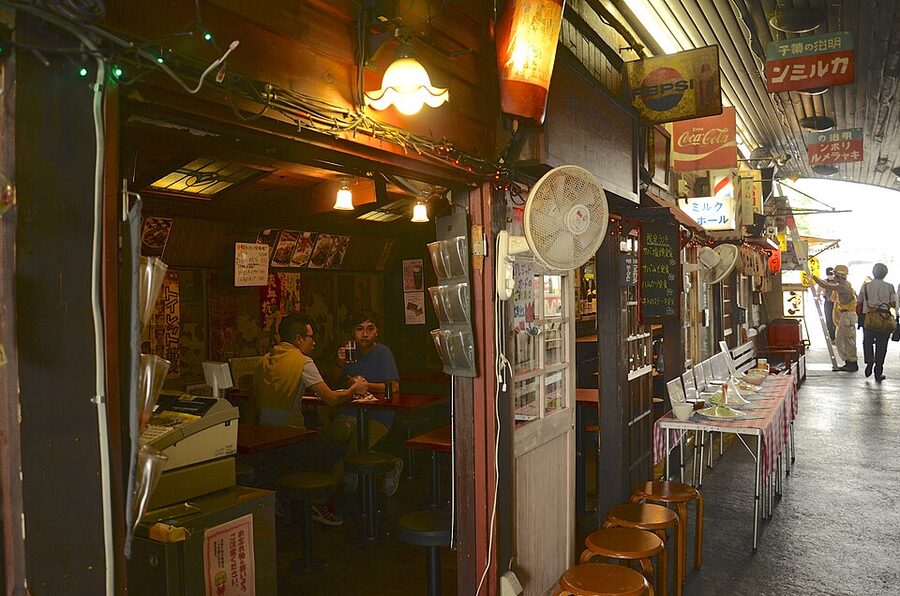
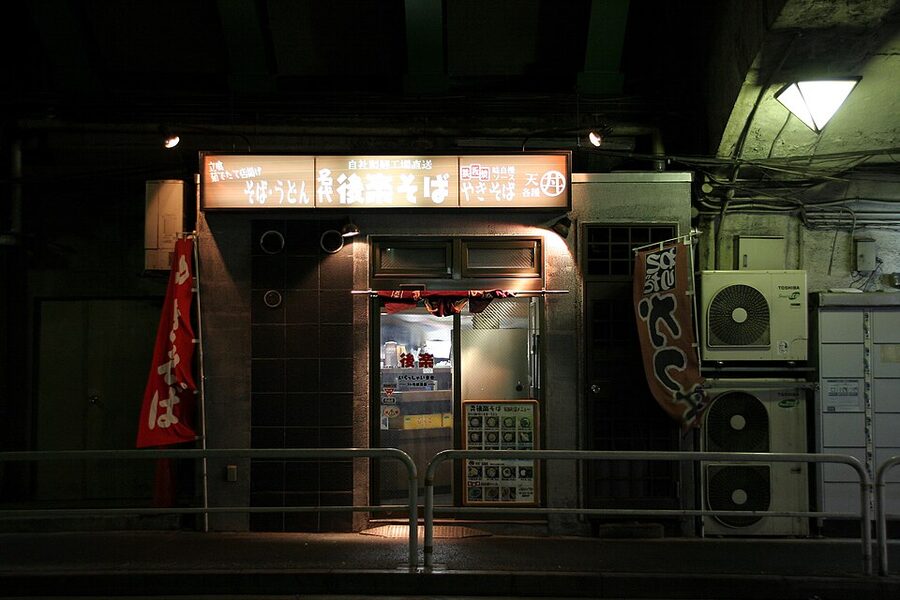
The strip of standing bars and yakitori stalls under the JR Yamanote tracks between Yurakucho and Ginza stations is the most photographed tachinomi district in Tokyo, and the easiest place to start. The gado-shita (literally “under the elevated tracks”) gives the whole stretch its low ceiling, its trapped smoke, and its train-rumble soundtrack that hits every six or seven minutes when the Yamanote passes overhead.
Stalls open from around 17:00. The crowd peaks 18:30–20:00 with office workers off the train, drops off briefly around 21:00 when the first wave heads home, and refills with a slightly drunker, more talkative second wave until close at 22:30 or 23:00. Nothing here takes reservations and nothing here cares about your Japanese.
.jpg)
What to order at the gado-shita
Beer first. Always beer first. A ¥500–600 glass of nama (draft) keeps your hands busy while you read the menu. The yakitori chef will start eyeing you within thirty seconds. Point at three skewers and hold up the right number of fingers. Standard yakitori prices here are ¥150–300 a skewer, two or three is enough for a first round.
If you want something stronger, switch to hoppy after the first beer. Hoppy is a low-alcohol malt drink mixed with a shot of cheap shochu, the original 1948 working-man’s beer substitute, still beloved in Tokyo. You order “hoppy shiro” (white) or “hoppy kuro” (black) and you get a chilled glass of shochu next to a small bottle of hoppy you pour yourself. Total ¥500–600, lasts twice as long as a beer, and looks like nothing else on the planet.
Order at least one item that involves offal. Yurakucho is built on it: simmered motsu (intestines) in dashi at ¥400, grilled tan (tongue) skewers at ¥200, kidney and liver if the chef offers them. If offal is not for you, ask for tsukune (chicken meatball, ¥200) or grilled shishito peppers (¥300) instead. There is a fine line between adventurous-traveller ordering and ordering things you actively don’t want to eat. You can stay on the safe side without missing what makes the place itself.

One named bar to anchor the evening
Most of the gado-shita stalls don’t have meaningful English names, and locals know them by signboard. You should walk into whichever one has space. But two are worth pointing out by name. Ginza Shimada, just off the strip at Ginza 8-2-8 in a 1F unit of the Takasaka Building, runs a properly refined tachinomi: chilled soba topped with karasumi (salt-cured bottarga), uni and Japanese spiny lobster on sashimi plates, sake list four pages long, glass pours from ¥800. It’s standing prices for sit-down quality. Open 17:00–23:00, closed Sundays.
And Kanemasu, across the bridge from the old Tsukiji site at Kachidoki 1-8-1, is a ten-seat counter using fish bought that morning from the wholesalers’ inner market. Raw wagyu wrapped around uni, hairy crab salad, maguro rolls (tuna sashimi rolled in nori, no rice). Glass of sake from ¥700, seafood plates ¥800–1,500. It fills up by 18:30. Arrive at 17:30 if you want a spot at the counter.
Akabane Ichiban-gai: the senbero capital
.jpg)
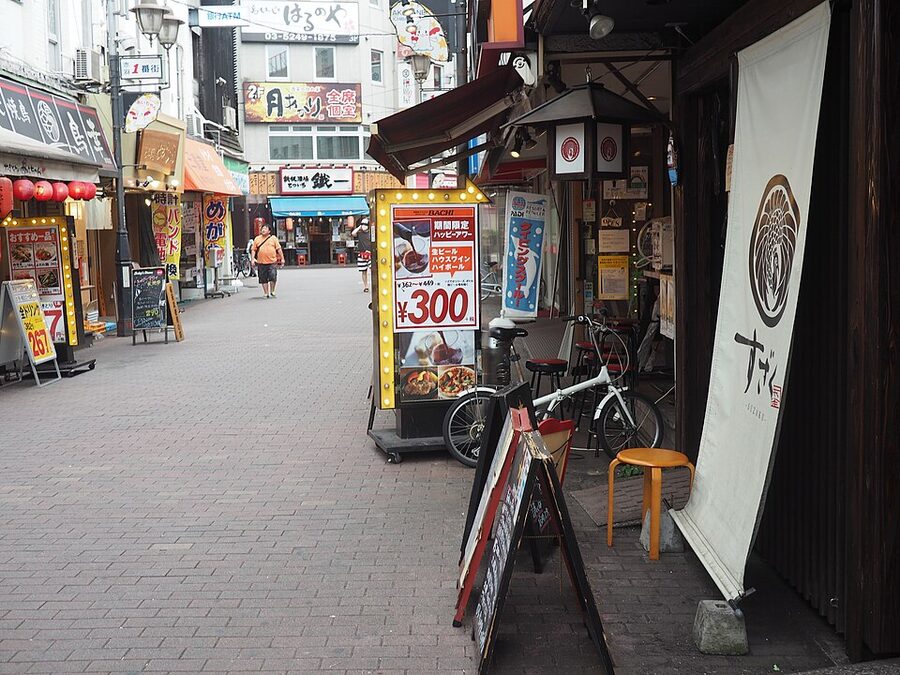
Akabane is twenty minutes north of Tokyo Station on the Keihin-Tohoku and worth every minute of it if you take cheap drinking seriously. The neighbourhood is the home of senbero (literally “a thousand yen and you’re drunk”) culture. A working-class district outside the central wards, Akabane has resisted gentrification long enough that places still serve a beer and three small dishes for under ¥1,000.
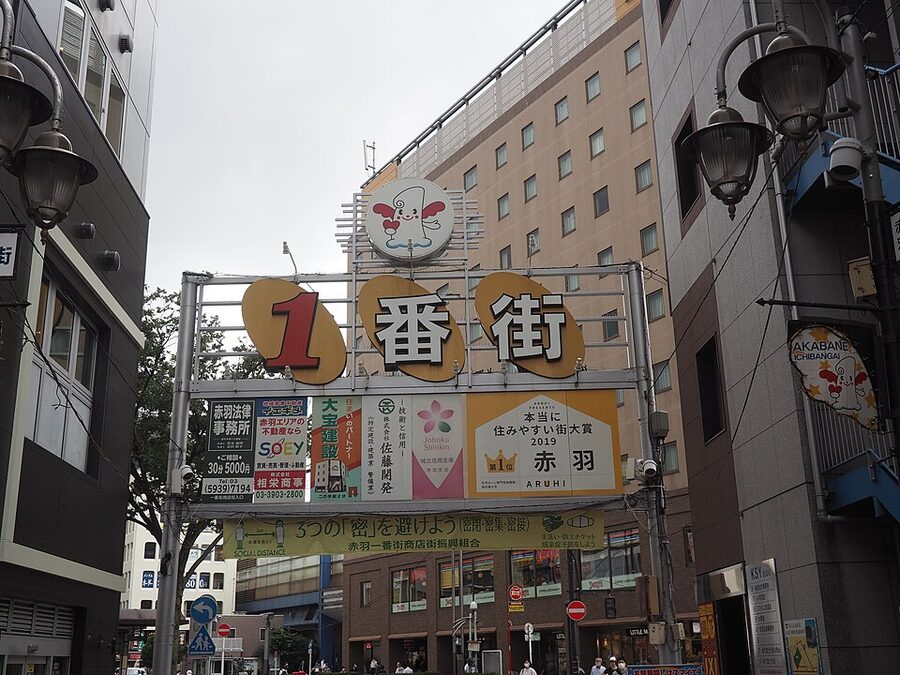
The drinking strip is Akabane Ichiban-gai, a pedestrian shopping arcade running directly off the station’s east exit. About 200 metres long and 6 metres wide, it has roughly 30 standing bars, kushikatsu joints, and motsu-ni shops crammed into its length. The whole thing opens at 11:00. Yes, eleven in the morning. By 14:00 on a Saturday it’s half full of retirees, day-shift workers off the night turn, and a slowly increasing trickle of people who came specifically to drink lunch.
.jpg)
Tachinomi Ikoi Honten
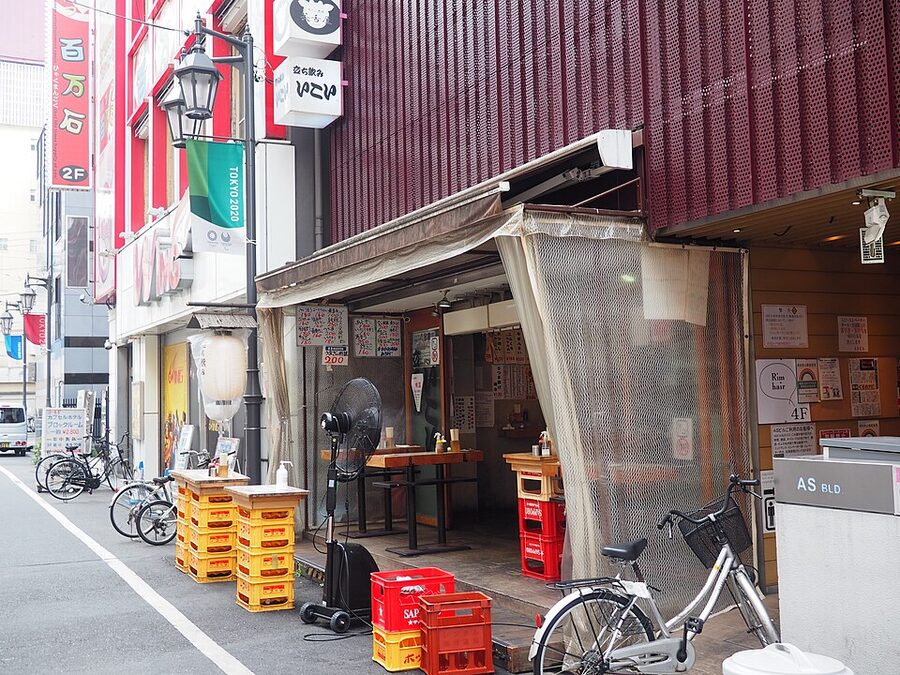
The bar that sums up Akabane is Tachinomi Ikoi Honten at Akabane 1-3-8, two minutes’ walk from the JR east exit. Opens 11:00, closes 22:00, no day off. The decor is a U-shaped counter and ten standing tables with no chairs, no ashtrays (smoking is still permitted; the floor is the ashtray), and a hand-written menu of about 70 items running ¥100–250 each.
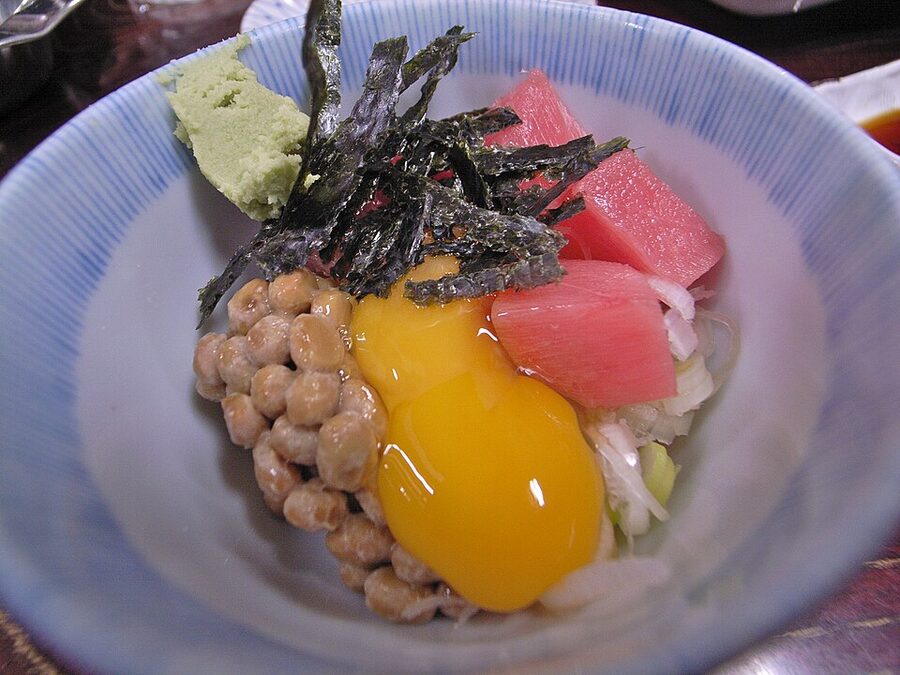
The order, if you want my version: chu-hi (shochu and soda) at ¥250, motsu-ni (simmered offal) at ¥150, fresh maguro sashimi at ¥180. Three items, ¥580 total. Add a second drink and a plate of okara or kinpira and you walk out at ¥1,000 with a meal in your stomach. Cash only, paid up-front. This is one of the few places where you queue, order, pay and then drink.

What else to eat in Akabane
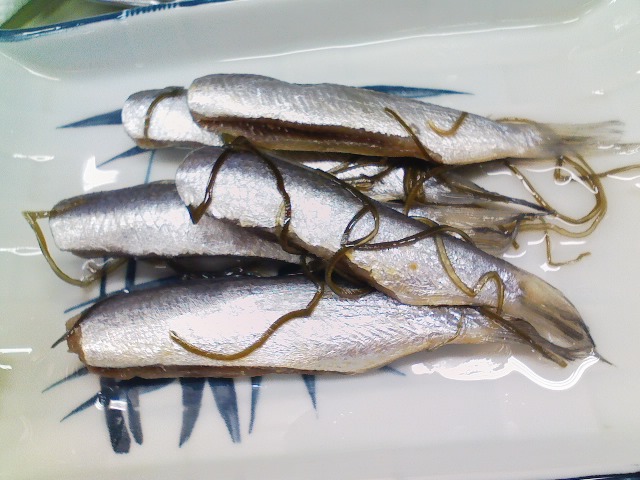
Beyond Ikoi, Akabane is a sashimi neighbourhood that doesn’t act like one. Bars buy fish from Toyosu market and pass the savings to you because nobody is paying for square footage. Marumasu-Ya, two streets over, plates mamakari (pickled gizzard shad from Okayama) and unagi off-cuts at ¥400–600. Tachinomi Marugin does ham-katsu (breaded ham cutlet) at ¥180 and a pork-bone broth poured over rice for ¥500.


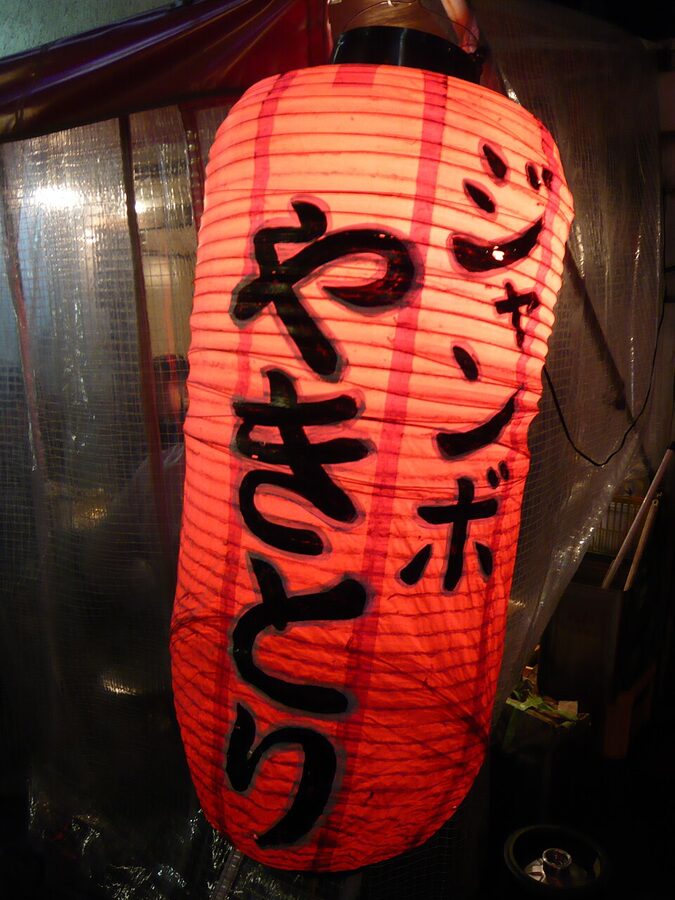
Akabane is also a yakitori district, less known than Yurakucho but better priced. Skewers run ¥100–180 each and the volume of birds going through the grills means everything’s hot.
.jpg)
Shinbashi: where Friday night actually happens
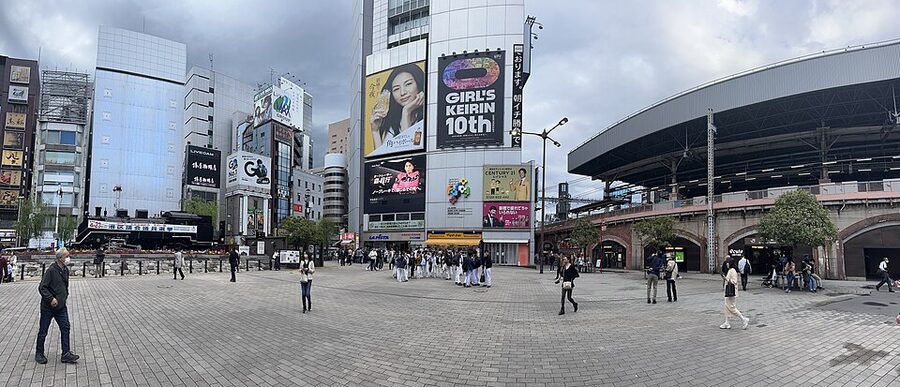

Shinbashi is the ground zero of Tokyo salaryman drinking. If a Japanese TV news crew wants to interview office workers about anything (the economy, a typhoon, the new prime minister), they set up at SL Square outside Shimbashi station and ambush whoever’s already a beer in. The station has been the city’s after-work pressure valve since the 1950s, and the tachinomi scene around the Karasumori-guchi (west exit) reflects every decade of that.
The strip starts at the station’s west exit and runs north-west under the elevated Tokaido tracks for about 250 metres. Hinomaru Shokudo, on the corner of the gado-shita right at the exit, is one of the most photographed tachinomi-and-tsukemen spots in Tokyo: standing-up ramen at one window, beer at the next.
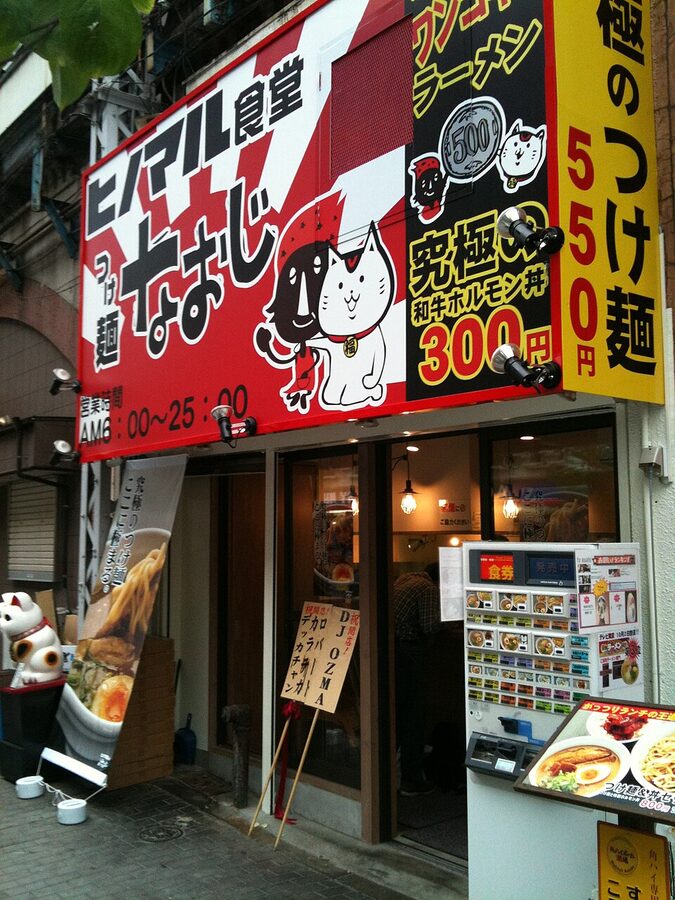
_-_%E6%96%B0%E6%A9%8B%E9%A7%85%E7%83%8F%E6%A3%AE%E5%8F%A3%E3%82%AC%E3%83%BC%E3%83%89%E4%B8%8B_(Karasumori,_Shinbashi)_(2010-05-08_17.05.43).jpg)
What to expect at peak hour
Shinbashi at 19:30 on a Friday is the loudest hour in standing-bar Tokyo. Bars are double-deep with people, the crowd has spilled onto the street with plastic cups, and the volume of laughter is genuinely unfamiliar to anyone used to Western office crowds. The hierarchical office filter that flattens conversation in daytime Japan has dropped completely. Everyone is saying what they think, often at high volume, and the staff have given up on trying to take orders by going round the bar. You call out, they call back.
It’s a much harder first stop than Yurakucho. Newcomers without Japanese can find Shinbashi disorienting, especially solo and especially before 21:00 when the crowd thins. If you’re tachinomi-curious and want to start gentle, do Yurakucho first. Come to Shinbashi after you’ve already done one round of standing-bar ordering somewhere quieter.
One named anchor: Tachinomi Ryoma at Shimbashi 2-13-3 (1F of the ALC Building) specialises in shochu, the distilled spirit. Forty-plus bottles from named distilleries in Kagoshima, Miyazaki and Kumamoto, glass pours from ¥500–900. Ask the bartender what they recommend and they’ll pour three small tasting glasses to start. Open 17:00–24:00, closed Sundays. Near a station exit, English signage on the door, beginner-friendly despite the deep specialism. The wider context for shochu is in the shochu, sake and awamori comparison; Ryoma is a good place to taste the distinction without committing to a full bottle.
Kichijoji’s Harmonica Yokocho
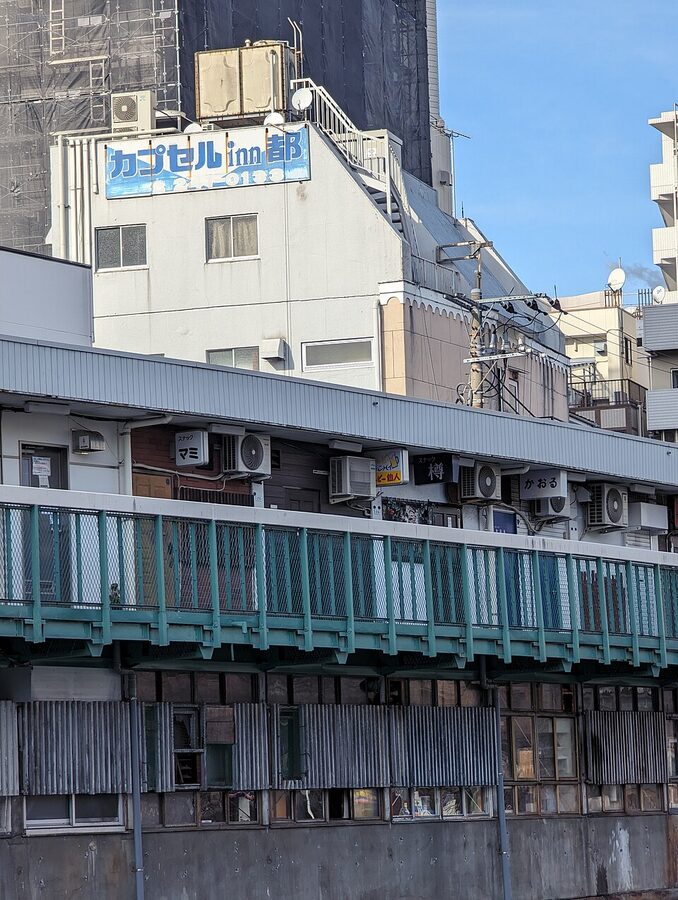
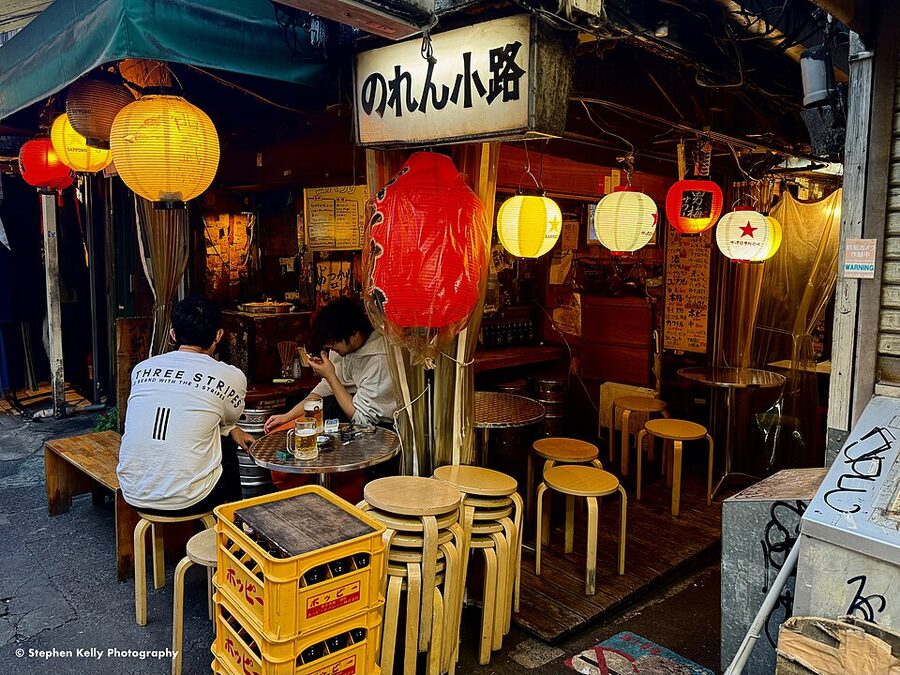
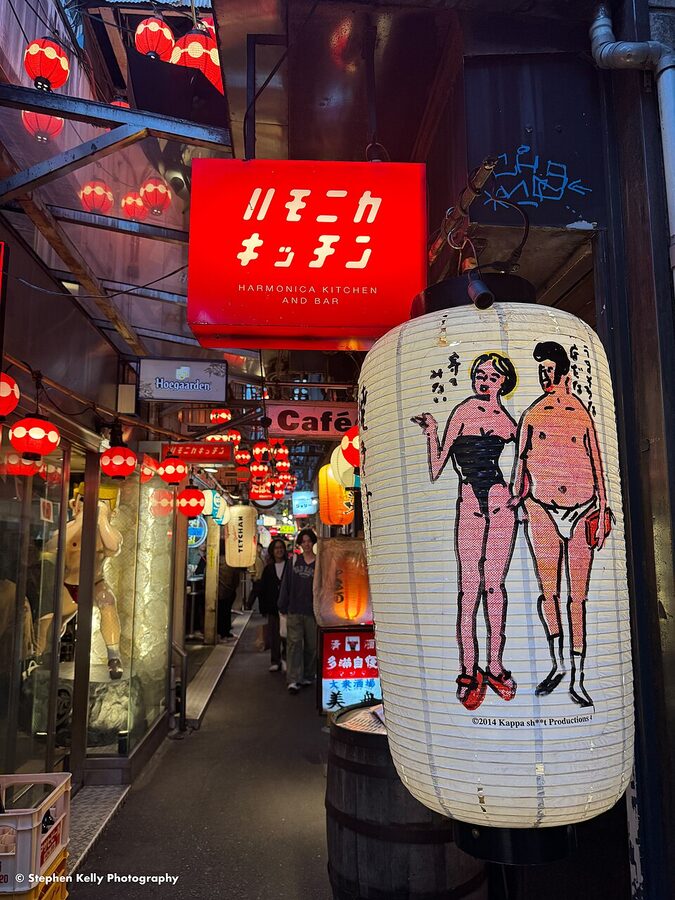
Kichijoji is on the JR Chuo line, twenty minutes from Shinjuku, and it’s where the city’s quieter drinkers go on the weekend. Harmonica Yokocho, a few minutes from the station’s north exit, is the densest cluster of tiny standing bars in the city. The lane is too narrow for two people to walk past each other comfortably. The bars themselves often hold five or six standing drinkers at most.
.jpg)
The lane opens around 11:00 for the food stalls and noodle counters, but the standing bars don’t really wake up until 16:00. By 19:00 it’s full. Most of the bars don’t post English signs, but most of them welcome walk-ins. If a stall is full, look at the next one along. The format is designed for browsing.
.jpg)
What makes Harmonica different from the gado-shita strips: the bars are separately owned, each has a clear personality, and you’re meant to bar-hop. A typical evening here is one or two drinks at three different stalls, ¥800–1,200 a stop. By the third bar the staff in your second one will already know where you went next.
Asakusa Hoppy-dori and the daytime drink
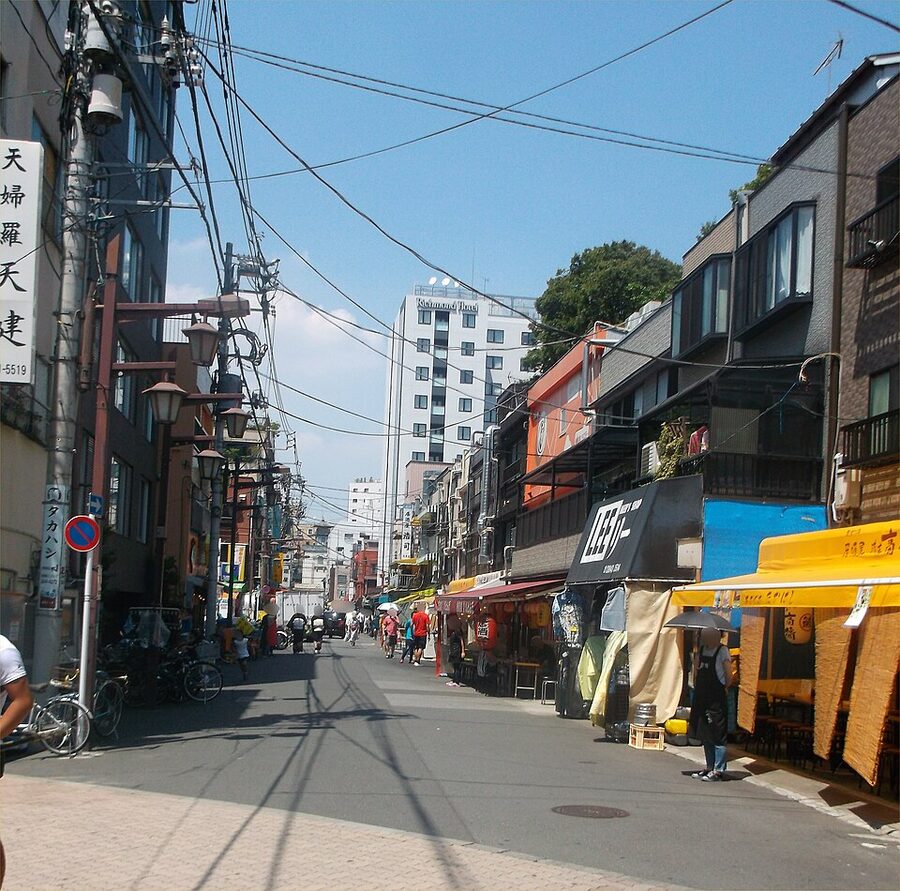

Asakusa’s standing-bar scene is the daytime version of the after-work strip. Hoppy-dori, a 200-metre alley a five-minute walk west of Senso-ji’s main hall, is named after Tokyo’s beloved beer-substitute drink and lives up to it. Bars open at 11:00, often earlier, and the format is open-front. Most have plastic chairs along the alley but the ¥500-cheaper standing seats are at the bar inside. From 14:00 onwards there are old men playing chess on overturned crates, tourists drinking hoppy at ¥400 a glass, and the smell of gyu-suji (beef tendon) stew that the entire street has been simmering since opening.
This is the easiest tachinomi initiation if you’re in Tokyo with kids, with parents, or simply not yet up for a Yurakucho-after-dark experience. Beer is a flat ¥500 most places, hoppy is ¥400–500, and the food (gyu-suji over rice at ¥700, motsu-ni at ¥500, grilled stomach at ¥400) reads as lunch as much as drinking food.
The only catch: Hoppy-dori has been touristy for a decade and a few of the bars charge tourist prices (¥700–800 per drink) without delivering. Look for boards that list prices in Japanese only. Those are the ones that haven’t reset for the foreign trade. Or come on a Tuesday morning when the foreigner crowd is thin and the pricing tightens up.
The other yokocho worth knowing
.jpg)
Nonbei Yokocho, Shibuya
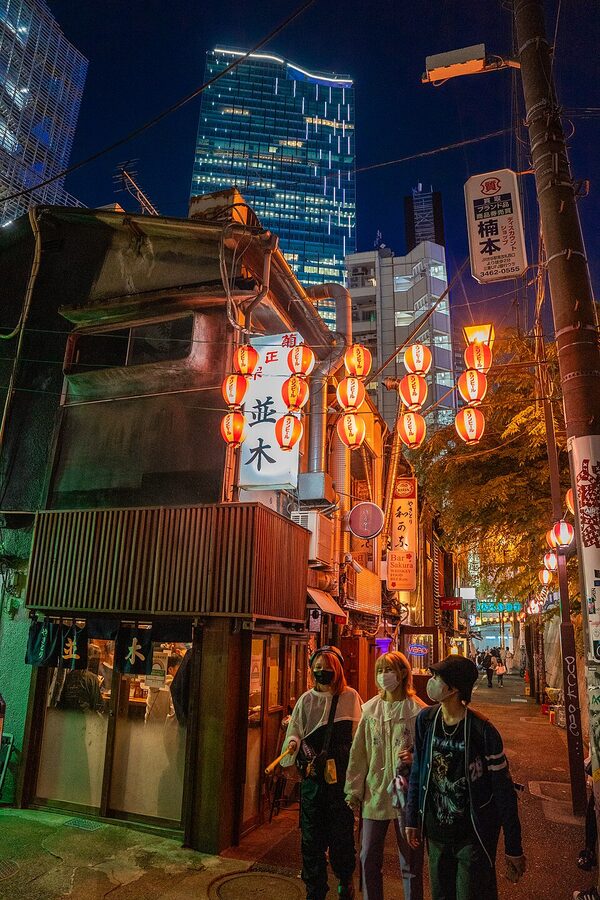
Walk out of Shibuya station’s Hachiko exit, look right, and the white shopfronts of the Yamanote retail strip will be in front of you. Behind them, on the JR side, is Nonbei Yokocho. About forty bars run two parallel lanes; roughly half are pure standing. Beer at ¥600–700, simple food at ¥400–800, and the difference from Yurakucho is that several owners speak good English. Some are first-timer-friendly to a degree that would surprise you in Akabane.
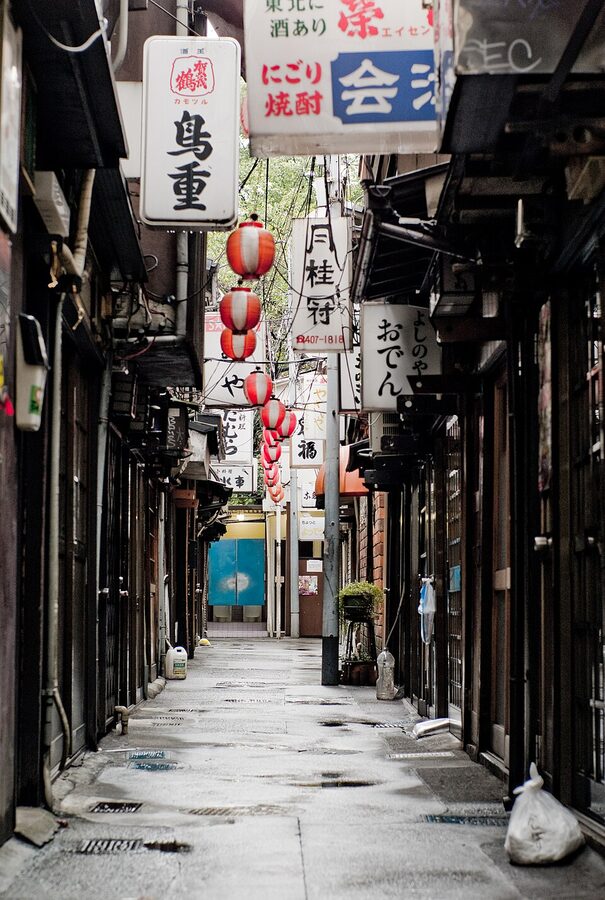

Tachigui Sakaba Buri, technically not in Nonbei but in Ebisu (Ebisu-Nishi 1-14-1, eight minutes from the south exit), is the cup-sake destination if you make it that far west. Walls lined with hundreds of named glass cups of sake, you pick by label, the bartender pours, you keep the cup until you’re done. Glass-pours ¥400–700. The bar was doing one-cup sake long before anyone called it a trend and gives you a rotating tour of small breweries you’ll never find at home.
Ueno’s Ameyoko
.jpg)
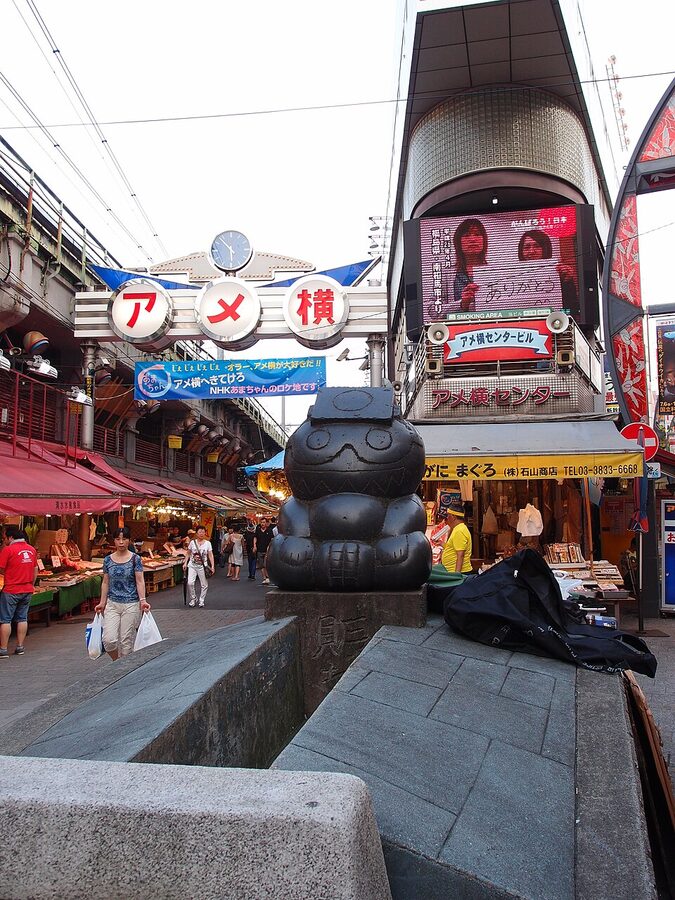
Ameyoko market under the JR Yamanote tracks between Ueno and Okachimachi stations is a daytime market that pivots into a tachinomi district from about 16:00. Fishmongers leave a counter open and pour cold beer next to the unsold tuna. Sake stalls turn the morning’s display into the evening’s drinks list. The mood is more Showa-era nostalgia than Yurakucho, the prices are slightly cheaper, and the noise levels are higher because the alley is doubling as a thoroughfare.
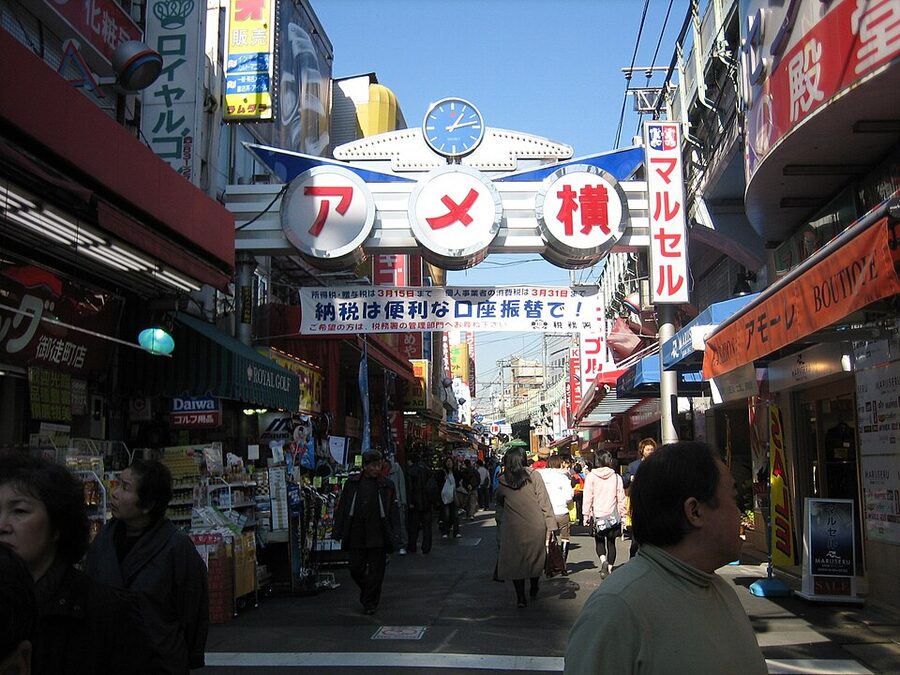

Tachinomi Kadokura at Ueno 6-13-1 (1F of the Forum-Aji Building) is the destination Ameyoko bar. Opens 10:00, closes 23:30, every day. Famous for ham-katsu (¥300, four red ham slices stacked then breaded and deep-fried), bara-yaki (¥350, sweet-soy grilled pork belly), and chu-hi for ¥250. Cash on order. A meal of all three plus chu-hi runs about ¥1,050.
Sangenjaya’s Sankaku Chitai
The Sankaku Chitai (“triangle zone”) is a wedge of pre-war wooden buildings between the two main streets that fork south of Sangenjaya station. About thirty bars in the wedge, half of them standing or counter-only, and the crowd is almost entirely Setagaya residents. Less first-time-friendly than Yurakucho or Nonbei, but more reward if you’ve already done one or two tachinomi nights and want a deeper Tokyo register. Beer ¥500, sake glass-pours from ¥600. Most places stop at 24:00 sharp.
How tachinomi billing actually works

There are three billing systems in tachinomi, and the one in front of you depends on the bar’s lineage rather than its location. Knowing which is which saves the awkward final-bill confusion that ruins a lot of first nights.
Cash-on-order (saki-barai). You order, the staff tells you the price, you pay before the drink arrives. Common at the cheapest tachinomi and the kakuuchi format. No tab, no surprise total at the end. Akabane’s Ikoi Honten and Ueno’s Kadokura both run on this system. Carry ¥100 and ¥500 coins. Small change is your best friend.
Tab system (atobarai). The staff keeps your tally in their head or on a slip behind the bar, and you settle when you leave. Most yokocho bars and the Yurakucho gado-shita stalls work this way. The bartender is keeping count of your skewers and glasses without writing it down. Do not test them on it. They are always right.
Per-glass token system. Some Showa-era bars hand you a poker chip per drink. Pay as you exchange the chip for a refill, or settle the chip count at the end. Rare now but you’ll see it in the older Akabane and Sangenjaya bars.
The otoshi question
One of the best things about tachinomi: most do not charge an otoshi, the small mandatory appetiser-and-cover that izakayas slap on the bill and that catches travellers off guard. The standing format substitutes throughput for cover charge: you’re paying for floor time with your standing-up, not with a ¥400 plate of seasonal pickled cucumber. The exception: the new-wave wine and sake stands often charge a ¥300–500 otoshi, even at standing prices. If a small dish lands at your spot before you ordered it, that’s the otoshi. Eat it. You’ve been billed for it. The full mechanics, including how to ask politely if you can refuse, are covered in the izakaya etiquette guide.
What to drink, in order
The standard tachinomi drinks pyramid, in roughly the order a regular drinks them on a single visit:
- Nama biiru (draft beer). ¥500–700. Always first. It’s cold, fast, and gives you something to hold while you scan the room. Asahi Super Dry is dominant. Some places have Sapporo Black Label or Suntory Premium Malt’s. Brand differences matter less than freshness; tachinomi turn through kegs.
- Hoppy. ¥500–600 for a set. The shochu base (called nakami) and the hoppy mixer (soto) come separately so you can re-mix to your strength. Order a refill of just the nakami for ¥200–300. Tokyo invention from 1948, still feels like a secret to most travellers.
- Chu-hi. ¥250–400. Shochu and soda water with lemon. Plainer than hoppy, much cheaper, and the workhorse drink at every Akabane bar. Lemon, grapefruit, ume (plum) and oolong-tea variants are common.
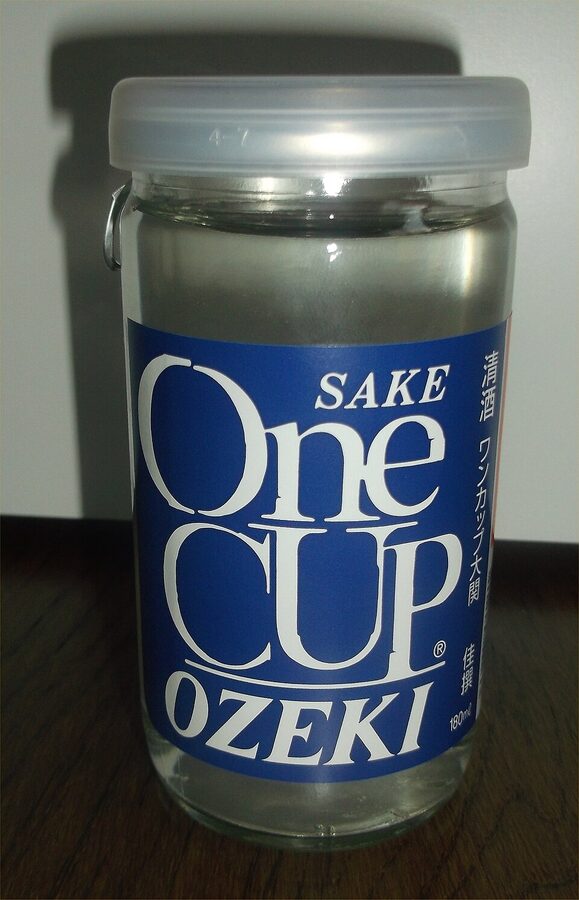
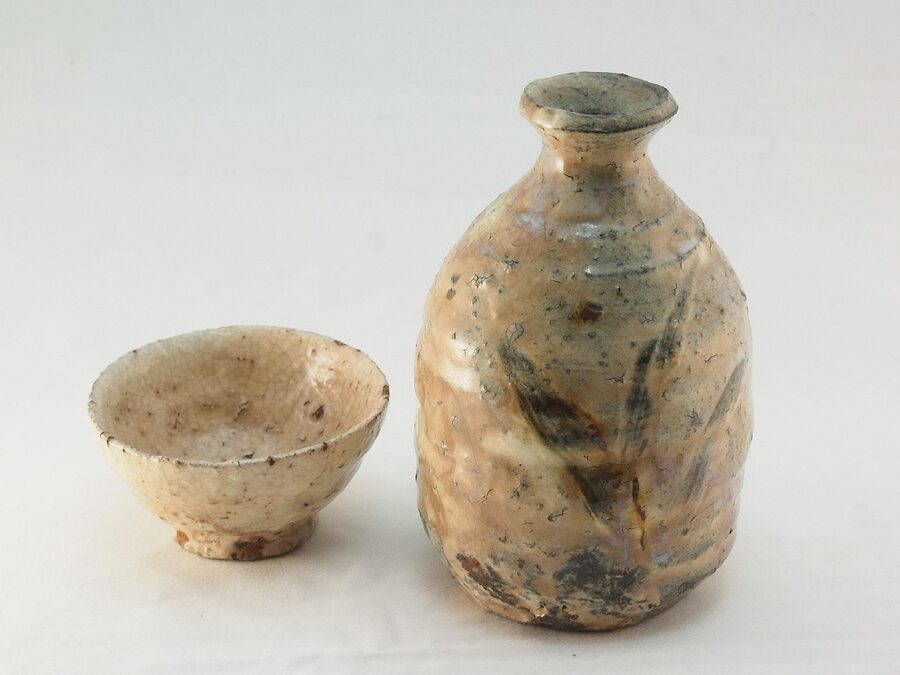
- Cup sake. ¥250–500 for a glass. The 180 ml format is the standard and lots of bars line up dozens of brewery cups against the wall. Pick by label or ask the bartender for “tsumetai” (cold) or “atsukan” (hot).
- Glass-pour nihonshu. ¥500–900. The serious sake list, served in a small wine glass or tumbler. This is the territory where junmai and ginjo and nama labels come into play. Skip the choosing and ask “omakase de” (chef’s choice). Where to start with sake terms more broadly is in the sake guide.
- Shochu by the glass or bottle. ¥400–1,000 a glass, or ¥1,800–3,500 for a 360 ml bottle you can take home if you don’t finish. Distinctive by base ingredient. Imo (sweet potato) is most common, mugi (barley) lighter, kome (rice) closest to sake.
- Whisky highball. ¥500–800. Usually Suntory Kakubin (the yellow-label house whisky) and soda. The Toranomon and Shinbashi standing bars do these well. For serious whisky drinking, the dedicated Tokyo whisky bars piece is the next stop.
What to eat alongside
.jpg)
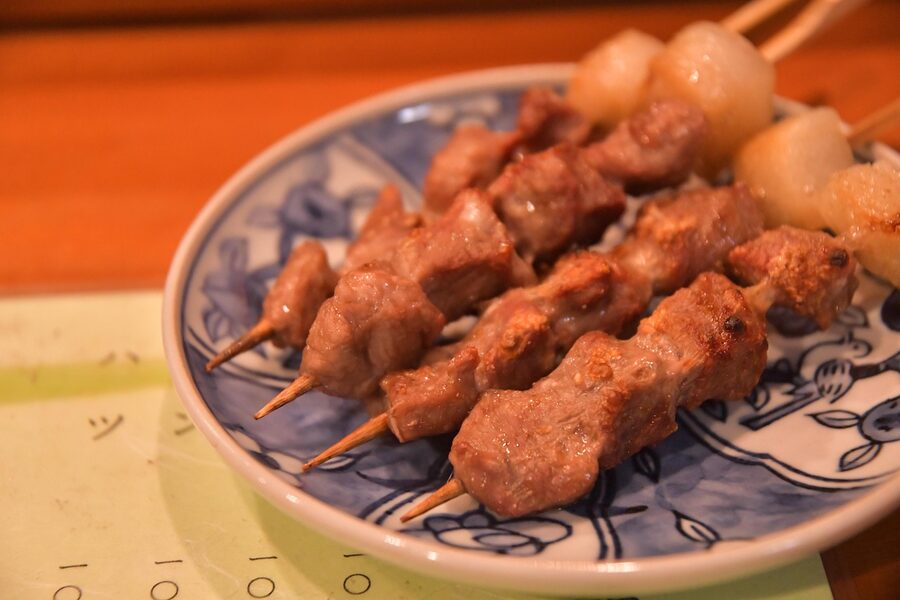
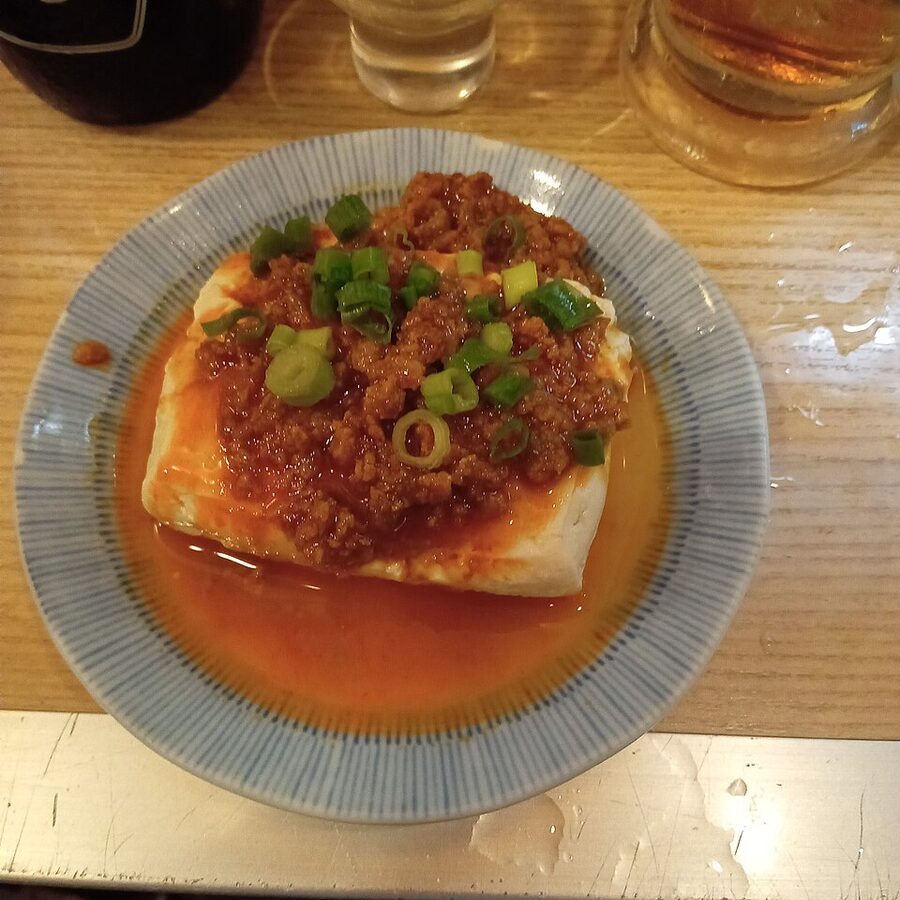
The food at a tachinomi is technically support for the drinks, but in practice you’re getting a three-or-four-plate meal at ¥1,000–1,500 alongside your ¥1,500 of drinks. The dishes are short menus of bar staples that the kitchen has been making for thirty years. Don’t expect novelty.
The reliable orders
- Yakitori, chicken skewers off charcoal, ¥150–300 each. Order three: negima (chicken thigh and leek), tsukune (meatball, sometimes with raw quail egg yolk), and kawa (skin, the crispy-skinned best skewer most tourists never try).
- Motsu-ni, offal stewed in dashi-and-miso for hours, ¥150–400 a bowl. The Tokyo version is darker and saltier than Hakata’s. Either works as bar food. Goes with chu-hi or hoppy, never sake.
- Sashimi, one or two pieces a plate, ¥180–400. The Akabane and Ueno bars source from Toyosu and the prices reflect a market-direct supply chain, not a sushi-bar margin.
- Ham-katsu, multiple slices of red bologna-style ham stacked, breaded, deep-fried. ¥180–350. Tastes exactly the way it sounds, in the best way. The textbook Showa-era bar snack.
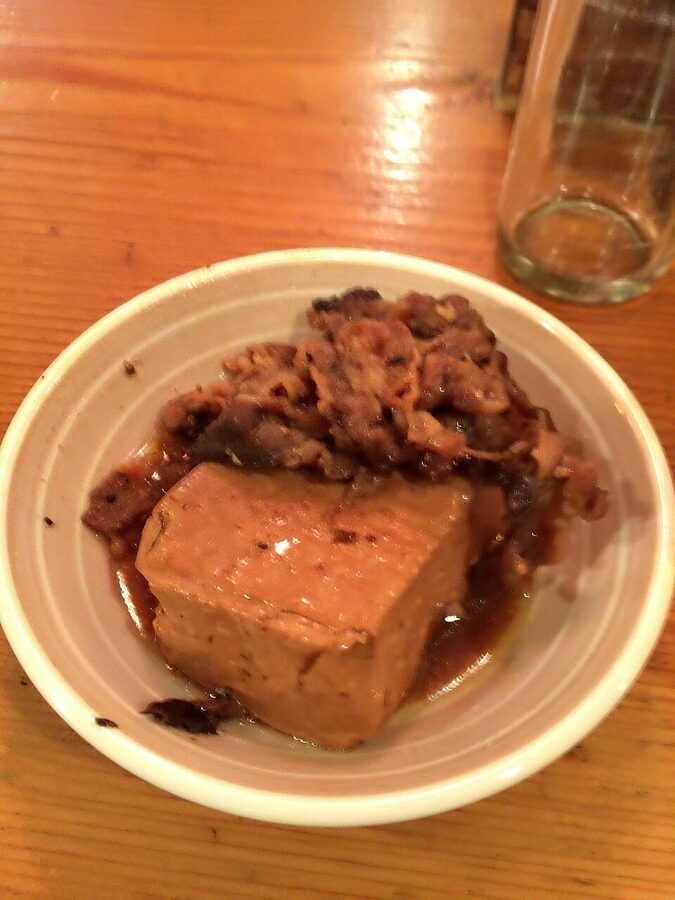
- Niku-tofu, beef and onions simmered in soy, served over tofu. ¥400–600. Eats like a small meal.
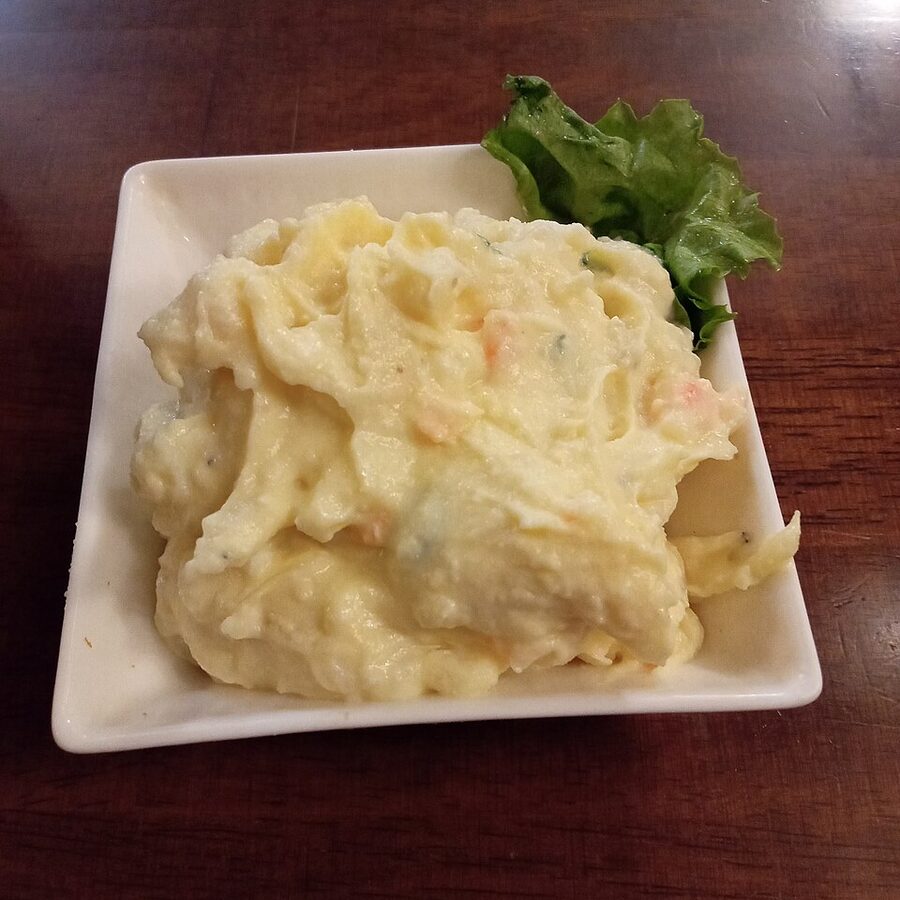
- Potato salad, yes, really. Japanese potato salad with diced ham, cucumber, and a heavy dose of mayonnaise. ¥200–400. Side for everything, served as the otoshi at some bars.
- Edamame, oshinko (pickles), takowasa (raw octopus with wasabi): the ¥200–400 fillers between courses.
What to skip on a first visit
The deep-end ordering (raw chicken, beef tendon, sea cucumber, fugu in a few rare standing bars that do it) is genuinely better at sit-down places. A tachinomi has a small kitchen and one chef working fast for a high turnover. The technical dishes that take time to prepare are not what the format does best. Save the fugu evening for a Ginza counter. Come to tachinomi for what the chef can plate in three minutes.
The rhythm of standing-and-leaving
The unwritten thing tourists miss most often is the leaving. Tachinomi work because the floor turns over. Staying for two hours nursing a single beer is the social equivalent of taking the seat without paying for it.
The rough cadence: drink 1 takes 8–12 minutes, drink 2 takes another 10–15 with a small dish, then a third drink optional and quick. From walking in to walking out, 30–45 minutes is normal. If you’re having a great conversation and want to stay, ask the bartender for a fourth round. They’ll either smile and pour, or quietly indicate the bar’s getting busy. If they pour, you stay. If not, you settle and move on.
This is also why the format is bar-hopping–native. A good tachinomi night is two or three places, an hour total at each. You eat at all of them, you drink at all of them, and you never sit down in any of them. The walking between bars, the deciding which doorway to try next, is half the experience. The Tokyo standing-bar evening is closer to a tapas crawl in San Sebastián than to a London pub crawl, and tonally closer to the night-out energy of Osaka kushikatsu joints than to a Kyoto izakaya. Deliberate, paced, and small-plate-driven.
How to order without Japanese
Tachinomi staff handle non-Japanese speakers far better than most travellers expect, mainly because they handle a high volume of speakers of any language (including drunk Japanese ones) without slowing down. The base set of phrases worth memorising:
- Sumimasen (excuse me), the all-purpose attention call.
- Nama biiru, hitotsu (one draft beer).
- Kore o, hitotsu (one of this), said while pointing at a menu item or another patron’s plate.
- Omakase de, onegaishimasu (chef’s choice, please), the magic phrase for sake selection. Never fails.
- Okanjo, onegaishimasu (the bill, please), or just an X with your two index fingers.
- Gochiso-sama deshita (it was a feast), said as you leave. Politest version of “thank you for the meal”.
The translation app on your phone is also fine. Tachinomi staff are practical. If pointing at a phone screen makes the order happen faster, that’s the better tool. Photos of menu items help even more. The point is throughput, not formality. The full menu-side phrase set is in the izakaya ordering guide.
Cash, smoking, and the fiddly stuff
A few practical things that aren’t obvious until you’re there.
Cash is mandatory. Maybe one bar in twenty takes IC cards (Suica/Pasmo); maybe one in fifty takes a Visa. Carry ¥5,000–10,000 in ¥1,000 notes and a fistful of ¥100 coins. ATMs in 7-Eleven and Lawson take foreign cards 24/7 and dispense up to ¥100,000 per transaction.
Smoking varies. Tokyo’s 2020 anti-smoking law banned indoor smoking in most bars but exempted small establishments under 100 m². Most tachinomi qualify for the exemption. Akabane bars are nearly all still smoke-friendly. Yurakucho is mixed. The new-wave wine stands tend to be non-smoking. Ask if it matters: “kin’en desu ka?” (is it non-smoking?).
Solo is normal. Tachinomi were built for the solo after-work drink. A single drinker walking in alone is not unusual at any of the bars in this guide. If anything, solo drinkers get a slightly warmer welcome than groups because they’re easier to slot into the gaps at the counter.
Toilets are sometimes shared with the kitchen. A tiny space is a tiny space. The toilet at the back of an Akabane standing bar may be one cubicle for both staff and customers, no separation. It’s the price of cheap drinks. Carry tissues; some bars don’t stock paper.
Last train or last drink. The Yamanote runs until just past midnight. Most tachinomi close at 22:30–23:00, a few at 24:00. If you miss the last train and you’re somewhere central, a taxi to a Yamanote-line hotel is ¥2,500–4,500. Cheaper than the Shibuya 03:00 surge. The same cash-only rule applies in most regional drinking districts; even a Sapporo izakaya district still runs largely on yen notes.
Tachinomi etiquette, briefly
Most of izakaya etiquette applies, but the standing format adds a few rules of its own. The full long version is in the izakaya etiquette guide. The short tachinomi-specific list:
- Pour for others, not yourself. If you’re sharing sake from a bottle (which happens a lot at the cup-sake bars), pour the other person’s first. They’ll then pour yours.
- Move when you’re done. If you’ve finished and someone’s looking for a counter spot, take a step back and let them in.
- Don’t photograph other patrons. The yokocho looks photogenic to a foreign eye. The people in it are mostly co-workers who haven’t agreed to be on Instagram. Stalls and food yes, faces no.
- Don’t bring outside food or drink. Even if the bar is open-front and you’ve got a konbini sandwich in your hand, finish it on the street first.
- Settle before you leave. Make eye contact with the bartender, mime an X with your fingers, and pay where you’re standing. Don’t drift to the door first; it confuses the tab system.
Tachinomi as part of a bigger Tokyo evening
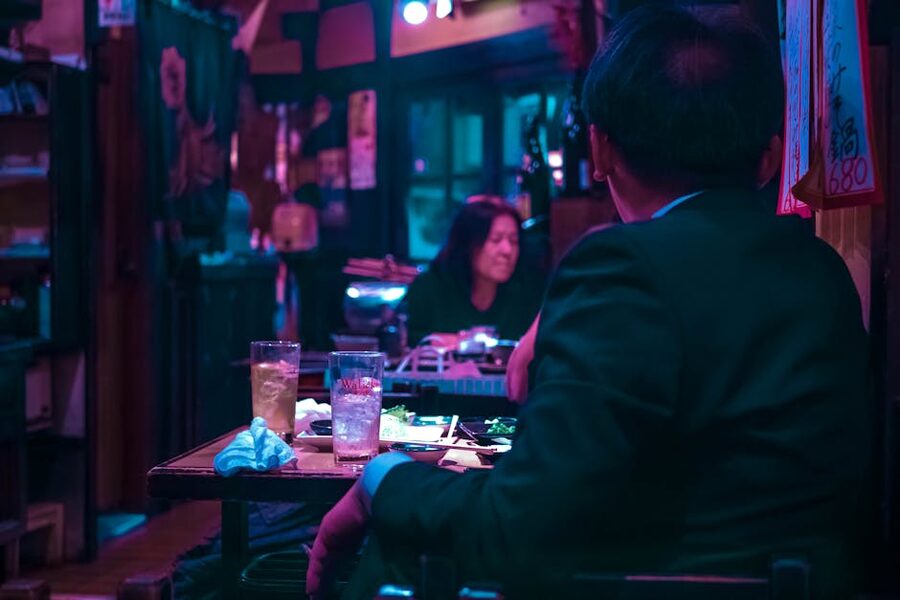
Standing bars are the easiest opening or closing chapter to a Tokyo drinking night. As a starter, they take twenty minutes, give you food, and warm up the appetite for whatever sit-down place comes next: an izakaya, a yakitori counter, a sushi bar. As a closer, a single warm sake at 22:30 in a Shimbashi tachinomi before catching the last Yamanote home is one of those scenes that justify a lot of trip planning.
The standing-bar evening also slots cleanly into the wider drinking map. If you’ve spent the day on a sake brewery tour out of Tokyo or you’re considering a whisky distillery comparison, a tachinomi night is the right way to come back to the city and get a low-key Tokyo register on the experience. If craft beer is more your speed, the Japanese craft beer scene is broadly compatible with the standing format. Many of Tokyo’s craft beer pubs run a small standing section near the door at lower prices.
And tachinomi link the city’s drinking culture to its food culture in a way that sit-down dining can’t. The same chef cooking your skewers may be the same person mixing your drink and taking your money. That collapse of front-of-house and kitchen is what gives the whole format its specific texture.
One last thing: the bar you’ll find by accident
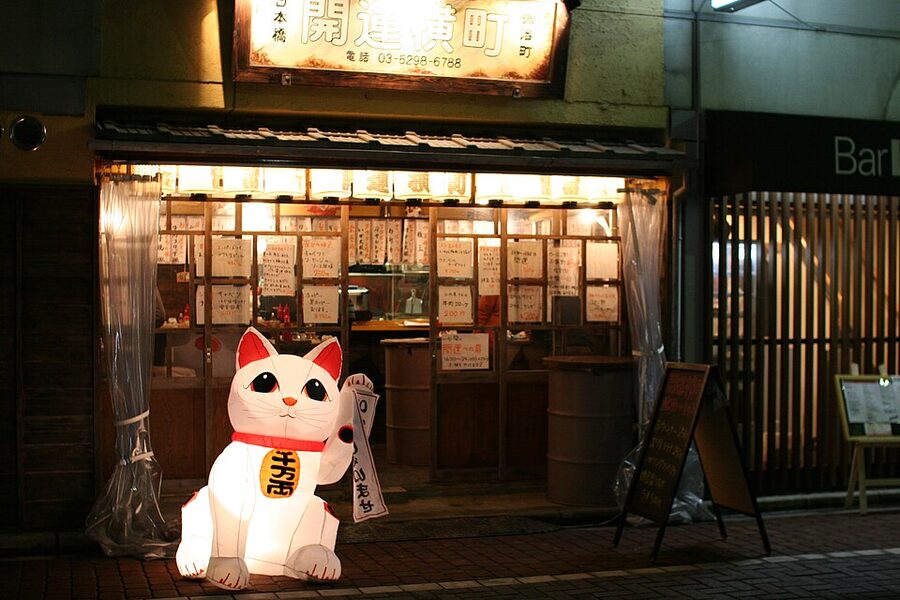

If you take one suggestion from all of this: do the named bars I’ve listed for the structure of an evening, but leave a hour at the end to walk. The best tachinomi I’ve been in were never on a list. They were doorways I stopped at because something good was leaking out. Smoke, laughter, a cup-sake bottle waving in someone’s hand. You walk in, you stand, you order one beer and one plate, and forty minutes later you’re out the door knowing the bartender’s first name. The format is built for that exact moment.
Take cash. Carry tissues. Aim for three places, eat something at each, and stop when the last train tells you to. That’s how a Tokyo standing-bar night actually goes.
 CitiesWhy Tohoku Took Over Japan’s Sake SceneThe trip almost didn't happen. I'd booked an Aomori brewery visit at the end of a rushed week, the second…
 CitiesWhy Kansai, Not Niigata, Is the Sake CapitalHyogo and Kyoto produce more sake than the next eight prefectures combined. Two of Kansai's six prefectures, side by side,…
 CitiesHokkaido Has More Whisky Distilleries Than You ThinkAsk anyone who knows a little about Japanese whisky to name a Hokkaido distillery and they’ll say Yoichi. Push them…