
I ordered otōshi three times. I didn’t realise I’d ordered it once.
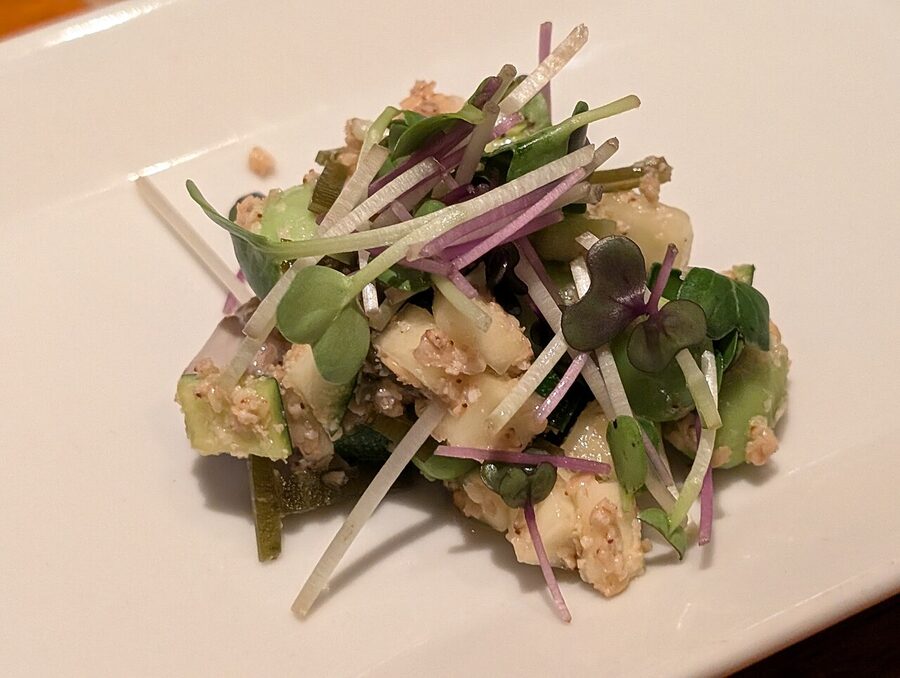
The first time I sat down at an izakaya in Tokyo, the staff brought a small dish of pickled mountain vegetables I hadn’t asked for. I ate them, smiled at the bartender, and wondered if I’d accidentally eaten someone else’s food. Twenty minutes later, on the second round, a tiny ceramic bowl of cold tofu showed up. I assumed the kitchen had sent it as a friendly gesture. By the third round (some kind of fish-and-radish thing), I was convinced the place was just generous.
It was ¥500 a head, three times. Charged silently. Item-lined on the bill at the end as otōshidai, three of them, totalling ¥1,500 before I’d touched a beer. The bartender hadn’t been generous. He’d been doing his job. I had been ordering food I didn’t know I was ordering, in a language I half-understood, in a system that nobody had explained to me when I walked in.
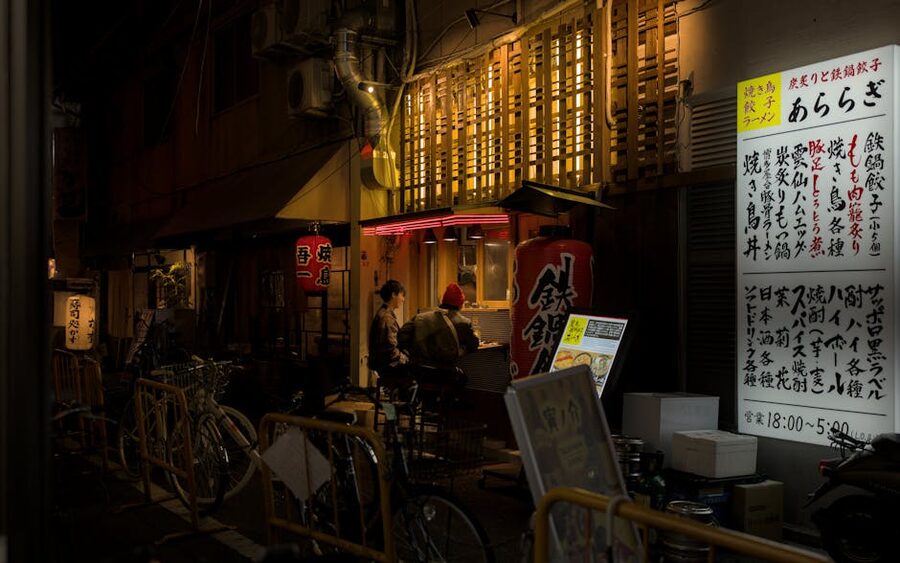
This guide is the phrase list and the system. If you’ve already read the izakaya etiquette piece, you know what NOT to do at the counter. This one is the other half: what to actually say, in what order, from the moment you push the noren curtain aside to the moment you walk back out into the alley with a stomach full of grilled chicken and a wallet only modestly lighter.
In This Article
- The order-flow at a glance
- Walking in: the door, the noren, the first three seconds
- How many of you, in Japanese
- If they’re full
- Sitting down: hot towel, otōshi, and the three-minute window
- Otōshi: the small dish you didn’t order
- The first round: drinks before food, every time
- Toriaezu nama: the universal opening line
- If beer isn’t your thing
- Sample dialogue: ordering the first round
- Reading the menu (or not reading it)
- Strategy 1: Order the moriawase (assortment)
- Strategy 2: Ask what’s good
- Strategy 3: Point at the daily-specials board
- The dish vocabulary you actually need
- Specifying salt or sauce
- How many to order, and in what order
- Calling the staff over: the bell, the tablet, the raised hand
- The bell button
- The tablet
- The raised hand
- Sample dialogue: ordering food after the first drinks
- Small things that come up mid-meal
- Asking for a refill
- Asking for the toilet
- Asking for the menu (again)
- The water question
- Special situations: nomihōdai, courses, smoking, and time limits
- Nomihōdai (all-you-can-drink)
- Course meals
- Smoking
- The two-hour time limit
- Pouring rules and the kanpai moment
- Paying: the moment you’ve been quietly counting
- Paying at the register vs the table
- Cash, card, and IC card
- Splitting the bill
- Tipping
- Sample dialogue: paying
- Walking out: the noren, the bow, the alley
- Standing-bar variant: tachinomi
- The mistakes I’ve watched travellers make
- Walking into a place that’s not actually for walk-ins
- Trying to skip otōshi
- Ordering everything in round one
- Not checking what shōchū comes with
- Asking for ice in beer
- Loud at the wrong volume
- Edge cases worth knowing
- Dietary restrictions
- Solo drinking at the counter
- Reservations
- Smoking section, again
- The phrase cheat-sheet (memorise these eight)
The order-flow at a glance
Before the phrases, here’s the shape of the evening, in the same sequence the staff will bring it to you. Memorise this and the rest follows.
| Step | What happens | What you say (key phrase) |
|---|---|---|
| 1 | You walk in. Staff calls “irasshaimase“. | “Sumimasen, [number]-mei desu” (excuse me, [n] people) |
| 2 | Staff seats you. Hot towel arrives. | “Arigato gozaimasu” (thanks) |
| 3 | Staff asks for drinks first. Always. | “Toriaezu, nama o kudasai” (a draft to start, please) |
| 4 | Otōshi arrives ordered or not. So does the menu. | Nothing yet. Read. |
| 5 | You order small plates first. | “Kore o kudasai” / “Osusume wa?” |
| 6 | Drinks arrive. Kanpai. | “Kanpai!” (toast) |
| 7 | Slower stuff (yakitori, grilled fish) lands later. | “Mou ippai, onaji mono” (one more, same thing) |
| 8 | You wind down. | “Okanjō, onegaishimasu” (the bill, please) |
| 9 | Pay at the register, not the table. | “Gochisousama deshita” (thanks for the meal) |
The whole thing takes between forty minutes and two hours. If the place is busy and someone’s queueing outside, you’ll get a polite signal that two hours is the soft limit. More on that later.
Walking in: the door, the noren, the first three seconds
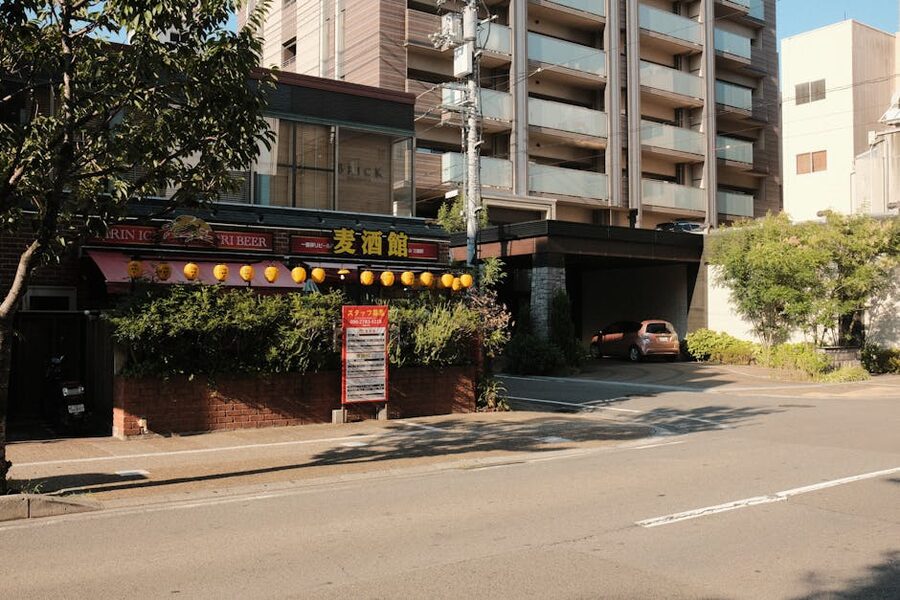
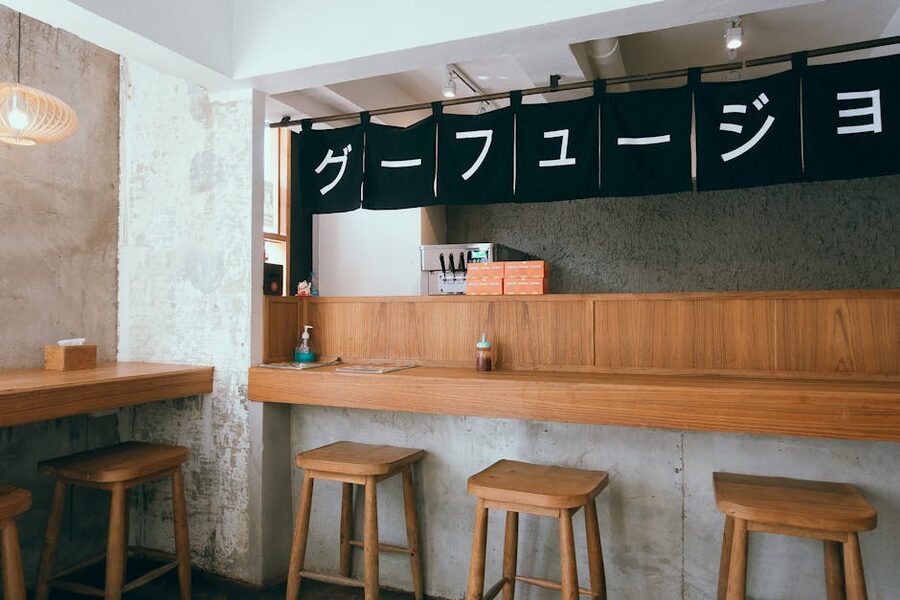
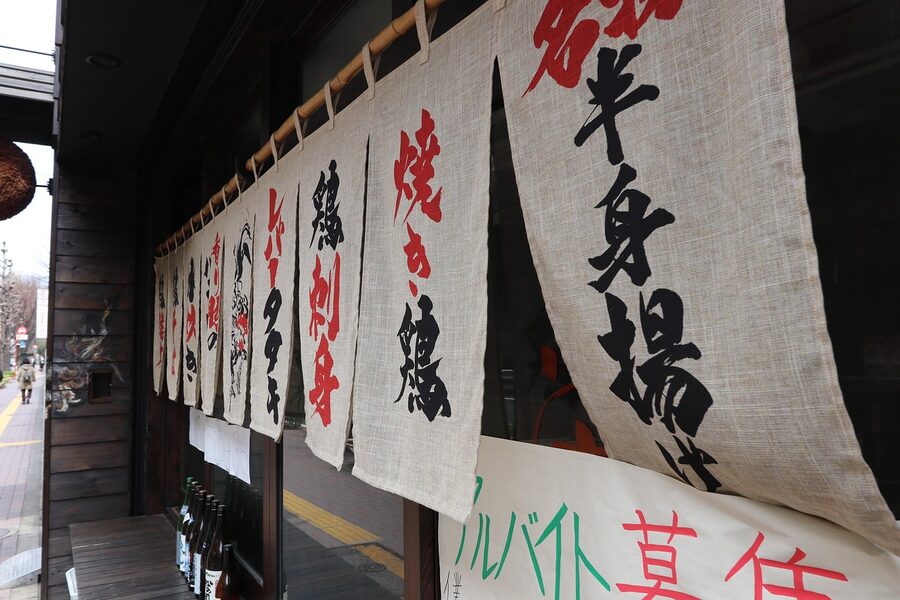
Most independent izakaya have a hanging cloth curtain (noren) over the door, a red paper lantern (akachochin) above it, and a price-marked menu board on the pavement. The presence of all three is a green light. The lantern is lit when they’re open and pulled in when they’re closed. If the noren is hanging out, they’re serving. The menu board is your second filter: if the cheapest beer is over ¥800 or there’s no English transliteration anywhere on it, you’re at a higher-end place that may want a reservation.
Push the door open. Or, at smaller places, slide it. Inside, the staff will shout irasshaimase the second you cross the threshold. This is not a question. It’s the greeting. You don’t reply to it. What they’re waiting for is the headcount.
How many of you, in Japanese
The clean phrase is “Sumimasen, ni-mei desu”, excuse me, two people. Mei is the formal counter for people; staff use it. You can use it back, or use the casual nin, or just hold up fingers. All three work. Holding up fingers is genuinely fine, and at small places it’s faster than the Japanese.
| People | Romaji | Kanji | Casual alternative |
|---|---|---|---|
| 1 | Hitori desu | 一人です | One person, gesture |
| 2 | Futari desu / Ni-mei desu | 二人です / 二名です | Two fingers |
| 3 | San-nin desu / San-mei desu | 三人です / 三名です | Three fingers |
| 4 | Yo-nin desu / Yon-mei desu | 四人です / 四名です | Four fingers |
| 5 | Go-nin desu / Go-mei desu | 五人です / 五名です | Five fingers |
| 6+ | Roku-mei desu, etc. | 六名です | Probably book ahead |
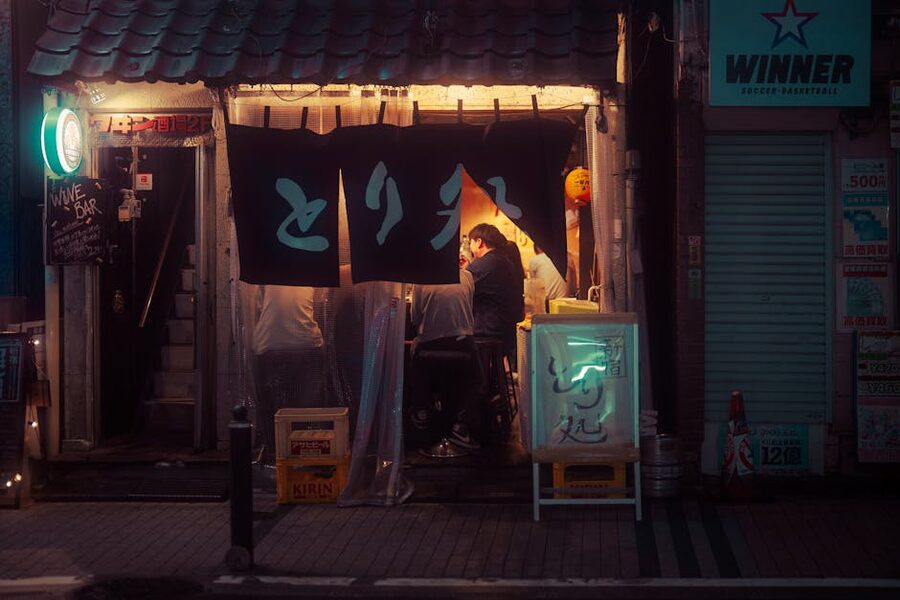
One thing worth noting: solo dining at an indie izakaya is not common. It’s done, especially at the counter (the kappo bar is set up for it), but tables are typically for two or more. If you’re alone, ask for the counter: “Kauntā wa kūiteimasu ka?” (is the counter free?). Smaller word: “kauntā wa?” with a rising tone, while pointing. Works.
If they’re full
If the place is packed, the staff will say one of two things. “Manseki desu” means full. “Yoyaku no kata dake desu” means reservations only. Either way, the response is “Sumimasen, mata kondo”, sorry, next time. Bow slightly. Walk out. Find another lantern in the alley. There will be one within a hundred metres.
Sitting down: hot towel, otōshi, and the three-minute window
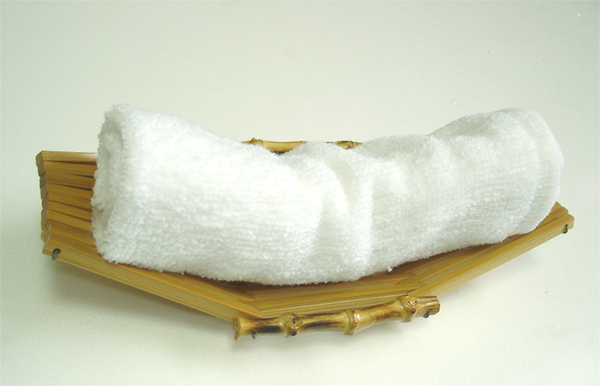
You’re seated. A staff member drops off a rolled-up hot towel (oshibori) in winter or a cold one in summer. Use it on your hands. Not your face, not your neck, not the table if a drink spills. Then they’ll set down a single sheet of paper or a tablet and say “Goyukkuri dōzo” (please take your time) or just leave you to it.
This is the three-minute window. The staff will come back for your drink order in about that long. Use it to skim the drinks page (if there is one), not the food, because they’ll ask drinks first. Always. Knowing this saves you the awkward shuffle of being asked for a beer and trying to scan eighty food items at the same time.
Otōshi: the small dish you didn’t order
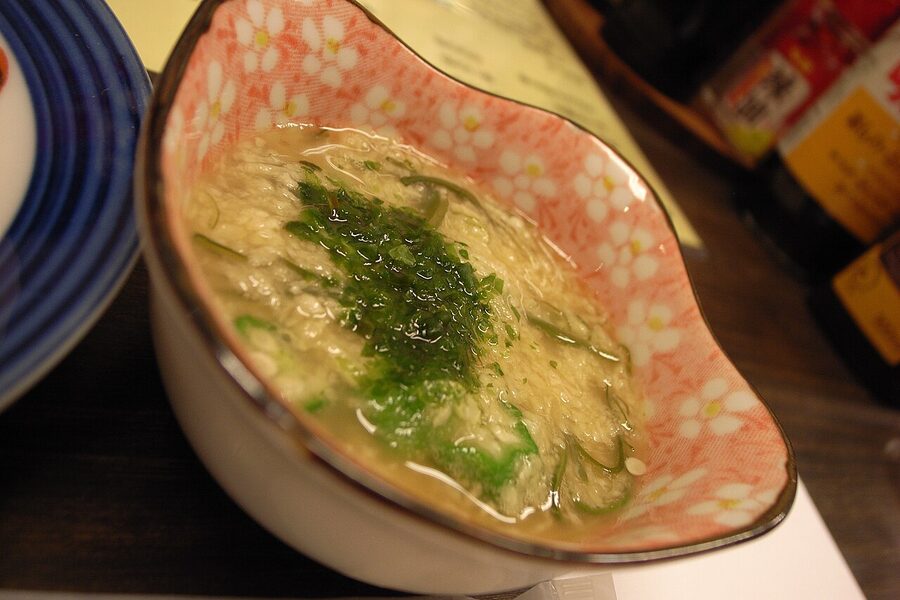
Within five minutes of sitting down, a small plate of food will appear. Pickled vegetables, a chunk of simmered taro, a dab of cold tofu, sometimes a slice of grilled fish in tiny portion. This is otōshi (お通し), also called tsukidashi (突き出し) in Kansai. It is a seating charge served as food.
You will be charged for it. The price ranges from ¥300 to ¥800 per person at most independent places, occasionally higher in Ginza or central Kyoto, occasionally absent at a chain like Torikizoku. The fee is per head, not per table. Two of you, two otōshi, two charges.
The first izakaya I went to served three rounds because each round was a different person’s otōshi (mine, my friend’s, mine again when the kitchen reset us as new diners after a long pause). I was wrong to think it was generosity. You can ask “Otōshi wa ikura desu ka?” (how much is otōshi?) on the way in if you want to know. Most travellers don’t bother and treat it as a built-in cover charge of around ¥500.
You cannot decline otōshi. You can leave it uneaten, that’s fine, no one is offended, but you’ll still pay for it. There’s a piece of context worth keeping: at independent Tokyo bars and most regional izakaya, the otōshi rotates daily based on what the kitchen is making fresh. It’s the closest thing to a chef’s whim you’ll get for ¥500.
The first round: drinks before food, every time
The Japanese drinking convention is drink-first. The staff comes back, asks “O-nomimono wa?” (drinks?), and you order before you think about food. Even Japanese tables do this. The reason given by every bartender I’ve asked is the same: a beer in your hand turns the room from a restaurant into an izakaya.
Toriaezu nama: the universal opening line
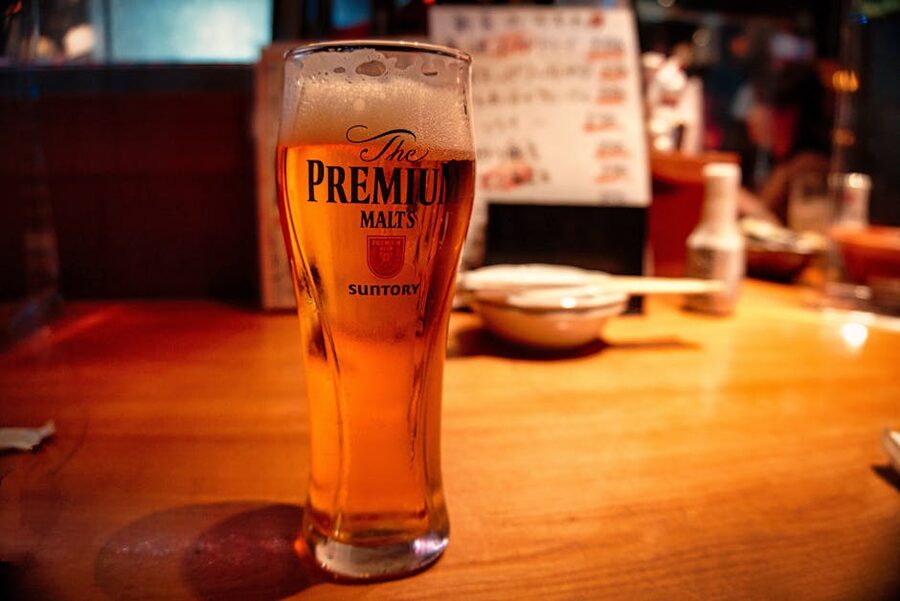
The phrase to know cold is “Toriaezu, nama o kudasai” (とりあえず生をください). It translates to “for now, a draft, please”. Toriaezu is the magic word: it means you’re committing to a beer right now and reserving the right to order more thoughtfully later. It signals to staff that you know how this works. Use it.
Nama (生) means draft. The default is one of Asahi Super Dry, Kirin Ichiban, Sapporo Black Label, or Suntory Premium Malts, depending on which contract the place has. You don’t get to pick the brand at most izakaya, you get whatever is on tap. Beer is usually ¥500–700 for a regular glass, ¥800–1,200 for a large mug.
If beer isn’t your thing
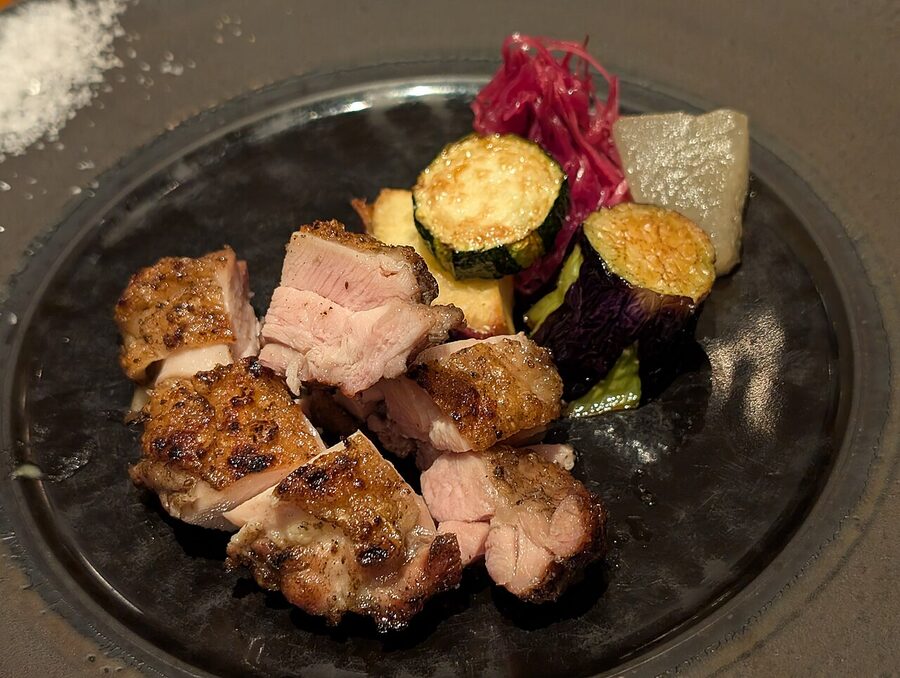
Plenty of options. The izakaya house drink menu typically runs:
- Highball (haibōru, ハイボール), Suntory whisky and soda, ¥400–600. Lighter than a beer, easier on the stomach, dominant in Tokyo bars right now.
- Lemon sour (remon sawā, レモンサワー), shōchū, fresh lemon, soda. ¥400–600. The most-ordered drink at chain izakaya for the last decade.
- Nihonshu (日本酒), what most foreigners call sake. Cold, warm, by the cup or by the bottle. Cup pours run ¥500–1,200 depending on the brewery. See the sake guide for what to look for.
- Shōchū (焼酎), distilled spirit, sweet potato or barley or rice. Served on the rocks (rokku), with hot water (oyu-wari), or with cold water (mizu-wari). ¥500–800.
- Oolong tea (ūron-cha, ウーロン茶) or green tea for non-drinkers. Often served in a beer mug so you can clink at kanpai.
If you’re sitting at a sake-focused izakaya like Sasagin in Yoyogi-Uehara, skip the beer entirely and ask the bartender what they’re pouring. You can find more on that pattern in the shōchū vs sake vs awamori piece, plus the Okinawa awamori piece if you’re heading south.
| Drink | Romaji | Kanji | Typical price |
|---|---|---|---|
| Draft beer | nama biiru | 生ビール | ¥500–700 |
| Bottled beer | bin biiru | 瓶ビール | ¥600–900 |
| Highball | haibōru | ハイボール | ¥400–600 |
| Lemon sour | remon sawā | レモンサワー | ¥400–600 |
| Sake (cup) | nihonshu (ippai) | 日本酒(一杯) | ¥500–1,200 |
| Shōchū rocks | shōchū rokku | 焼酎ロック | ¥500–800 |
| Oolong tea | ūron-cha | ウーロン茶 | ¥300–400 |
| Cold water (free) | ohiya | お冷 | Free |
Sample dialogue: ordering the first round
Here’s how the first ninety seconds go, in script form. You’re a party of two. Staff has just left an oshibori on the table.
Staff: O-nomimono wa nan ni nasai-masu ka? (What would you like to drink?)
You: Toriaezu, nama o futatsu kudasai. (Two drafts to start, please.)
Staff: Hai, kashikomarimashita. (Right away.)
That’s the entire exchange. The staff will sometimes ask “jokki desu ka? Chū-jokki desu ka?” (large mug or medium mug?), say chū-jokki (medium) unless you’re committing fully. Mediums are roughly 350 ml; large jokki are 500 ml.
Reading the menu (or not reading it)
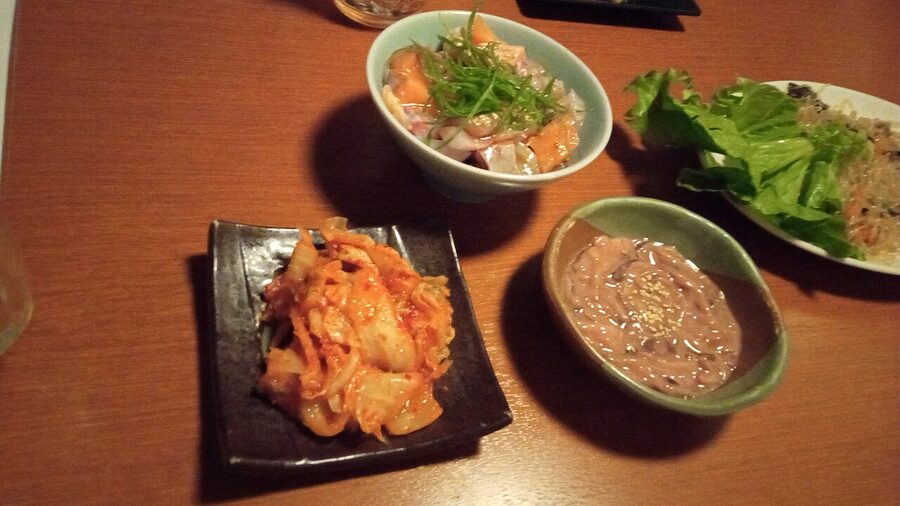
According to one Japanese restaurant data search, only about 5% of izakaya nationally have an English menu. In Tokyo it’s around 10%. So most nights, you’ll be staring at handwritten kanji on a wooden board, with no pictures. Or a tablet menu where the photos are a tenth of the size. Or a single laminated sheet with seventy items in vertical Japanese.
You have three workable strategies. They all start with admitting you can’t read it.
Strategy 1: Order the moriawase (assortment)
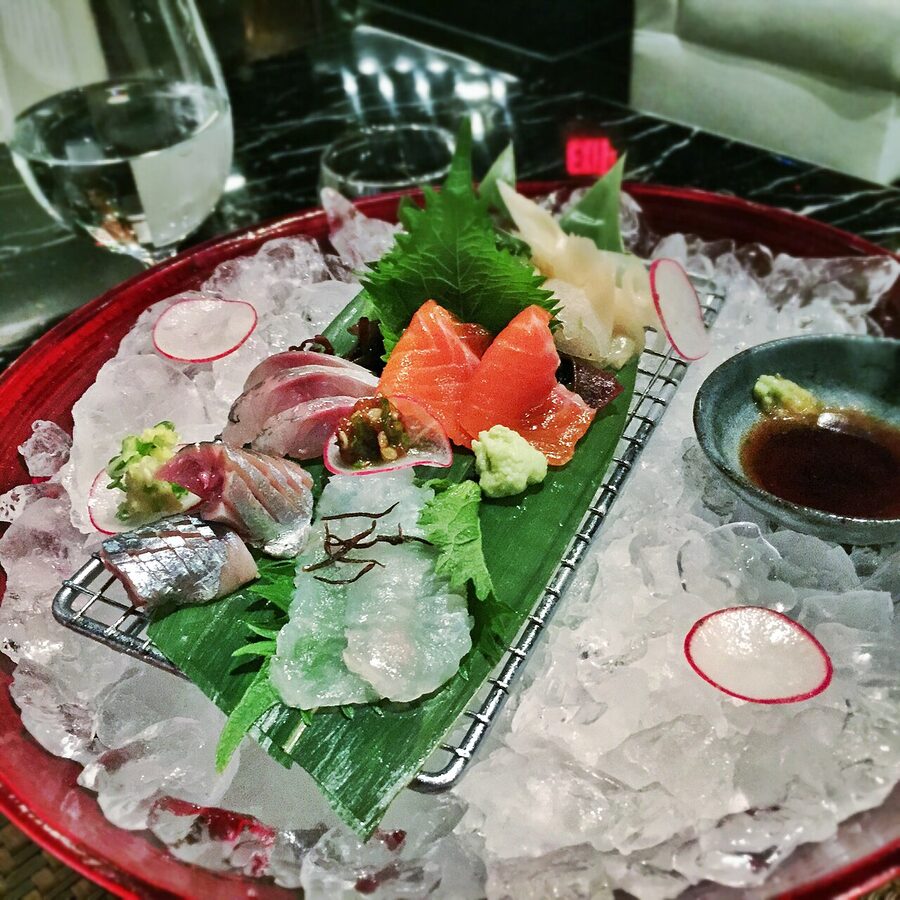
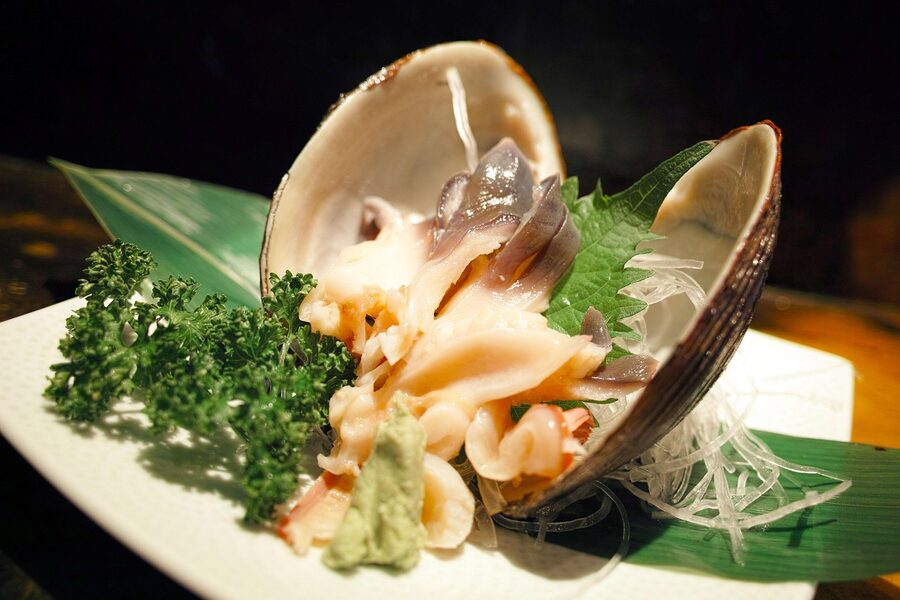
The single most useful word at an izakaya is moriawase (盛り合わせ), assortment. The kitchen picks half a dozen things and puts them on a plate. You skip the menu entirely. It works for nearly any category:
- Sashimi moriawase (刺身盛り合わせ), six or seven slices of raw fish. ¥1,500–2,500 at a normal izakaya.
- Yakitori moriawase (焼き鳥盛り合わせ), five to seven skewers, salt and tare mixed. ¥1,200–1,800.
- Tempura moriawase (天ぷら盛り合わせ), assorted tempura. ¥1,200–2,000.
- Agemono moriawase (揚げ物盛り合わせ), assorted fried things. ¥1,000–1,500.
- Tsukemono moriawase (漬物盛り合わせ), pickle assortment. ¥500–800.
In Kansai (Osaka, Kyoto), sashimi is often called otsukuri (お造り) on the menu, so you might see “otsukuri moriawase”. Same thing. You can read more about Kansai vocabulary in the Osaka eat and drink guide.
Strategy 2: Ask what’s good
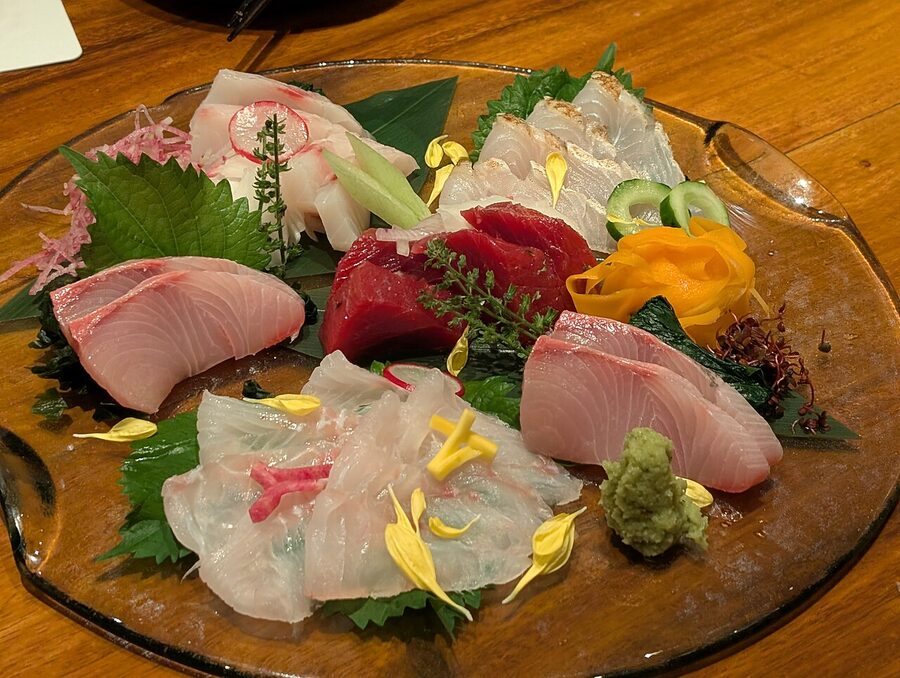
The phrase is “Osusume wa?” (what do you recommend?) or, more polite, “Osusume wa nan desu ka?“. Bartenders and waiters at indie izakaya genuinely know which fish came in fresh that morning, which sake the brewery just delivered, and what the chef is best at. They will tell you. Most of the time their answer will be the dish you should have ordered.
Refinements worth knowing:
- “Sakana de osusume wa?“, what’s the recommended fish? (魚でおすすめは?)
- “Nihonshu de amakuchi ga ii desu“, I’d like a sweet sake (日本酒で甘口がいいです)
- “Karakuchi ga ii desu“, I’d like a dry one (辛口がいいです)
- “Karui mono“, something light (軽いもの)
- “Kotteri shita mono“, something rich (こってりしたもの)
If the bartender mentions a sake brewery you don’t recognise, that’s almost always a good sign. Independent breweries beat the big four (Hakkaisan, Kubota, Dassai, Kikusui) for character every time. Trust the local pour.
Strategy 3: Point at the daily-specials board
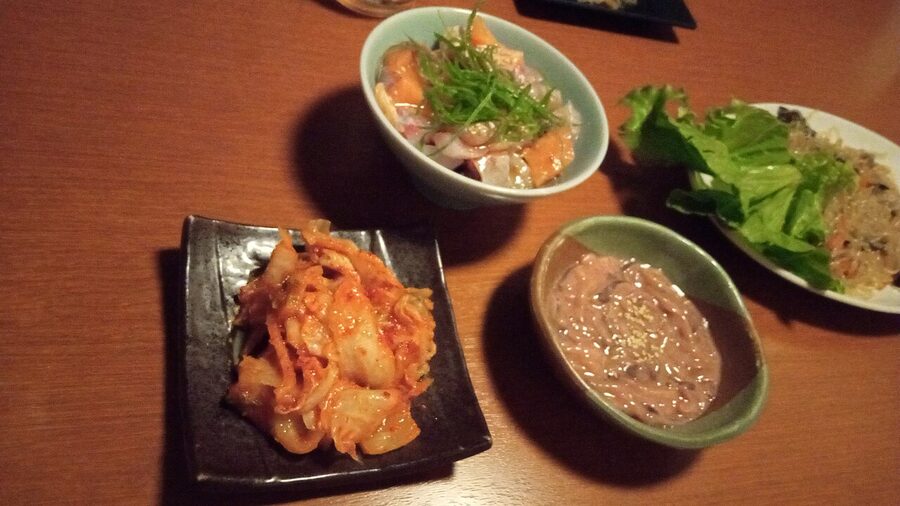
The handwritten board on the wall (kyō no osusume, 今日のおすすめ) is what’s actually fresh. Even if you can’t read kanji, the prices are in Arabic numerals. Pick three items in the ¥600–900 range, point, and say “kore o kudasai” (this, please) or “kore to kore to kore o kudasai” (this and this and this). The staff will repeat back the items in Japanese; nod.
Strategy 3 has a small risk: you may end up with an organ meat or a fermented something you didn’t expect. That’s part of it. The board changes daily because the kitchen is buying based on what looked good at the market. If you have a hard no on something, shellfish allergy, no liver, no natto, say it before you point: “Watashi wa [X] ga taberare-masen” (I can’t eat X), or in plain English, “Allergy: shellfish”. Most kitchens understand that much.
The dish vocabulary you actually need
You don’t need to read the menu, but recognising fifteen common dishes by name unlocks the entire izakaya category. These are the items that show up on virtually every menu and are worth ordering at least once.
| Dish | Romaji | Kanji | What it is | Typical price |
|---|---|---|---|---|
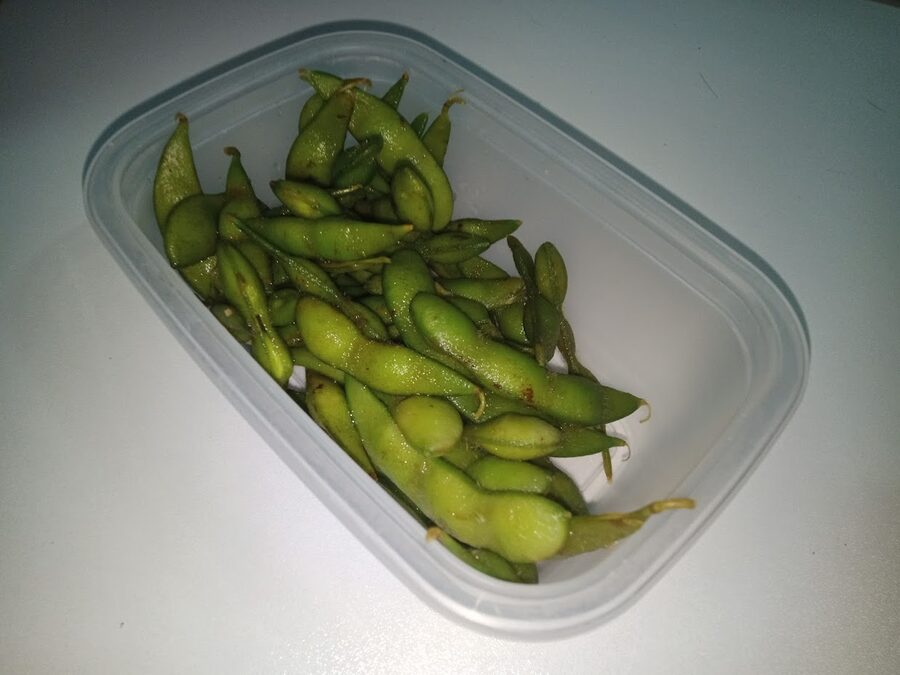
| Edamame | edamame | 枝豆 | Salted boiled soybeans, the universal opening snack | ¥400–500 |
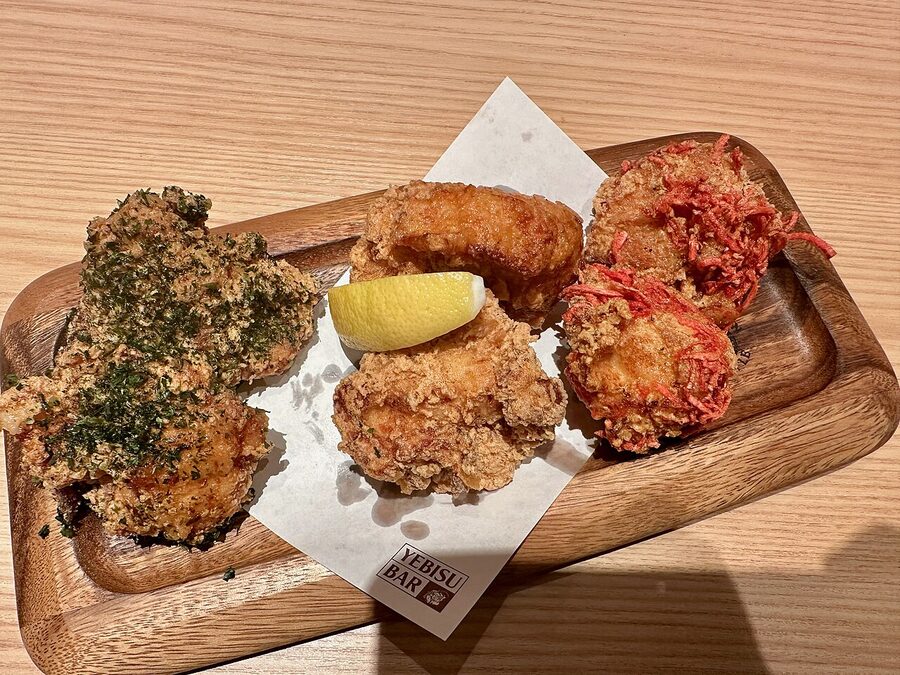
| Karaage | karaage | 唐揚げ | Japanese fried chicken, marinated in soy and ginger | ¥500–800 |
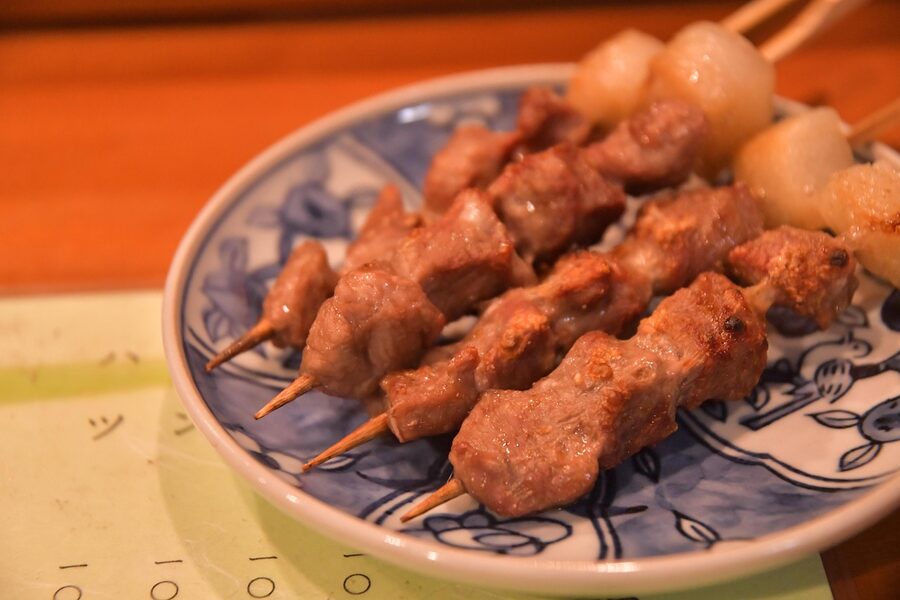
| Yakitori | yakitori | 焼き鳥 | Grilled chicken skewers, salt or tare | ¥150–300/skewer |
| Sashimi | sashimi / otsukuri | 刺身/お造り | Sliced raw fish, no rice | ¥800–2,500 |
| Tamagoyaki | tamagoyaki / dashimaki | 玉子焼き/出汁巻き | Rolled omelette with dashi | ¥500–700 |
| Agedashi tofu | agedashi-dōfu | 揚げ出し豆腐 | Lightly fried tofu in dashi broth | ¥500–700 |
| Hiyayakko | hiyayakko | 冷奴 | Cold tofu with ginger and bonito | ¥400–500 |
| Gyoza | gyōza | 餃子 | Pork dumplings, pan-fried (5–6 pieces) | ¥500–700 |
| Kushikatsu | kushikatsu | 串カツ | Skewered, breaded, deep-fried, Osaka speciality | ¥120–200/skewer |
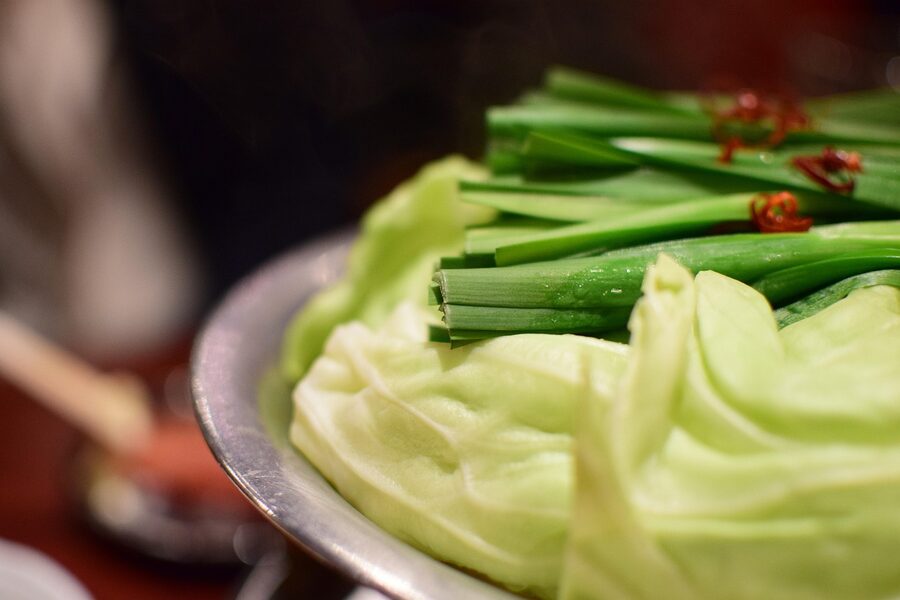
| Motsunabe | motsunabe | もつ鍋 | Offal hotpot, Fukuoka speciality | ¥1,200–1,800 |
| Yakizakana | yakizakana | 焼き魚 | Grilled fish, often mackerel or salmon | ¥700–1,200 |
| Niku-jaga | nikujaga | 肉じゃが | Beef and potato in sweet soy | ¥600–800 |
| Nankotsu | nankotsu kara-age | 軟骨唐揚げ | Fried chicken cartilage, crunchy | ¥500–700 |
| Ika somen | ika sōmen | イカそうめん | Squid sliced thin like noodles, raw | ¥800–1,200 |
| Shime saba | shime saba | しめ鯖 | Vinegared mackerel | ¥700–1,000 |
Specifying salt or sauce
For yakitori the staff will ask “Shio ka tare?” (salt or sauce?). Salt (shio, 塩) is the lighter, cleaner option. Sauce (tare, タレ) is sweet soy, brushed on while grilling. The default if you don’t answer is whatever the chef thinks suits the cut. For chicken thigh (momo) the chef will usually do tare. For chicken skin (kawa), salt. Either way, you can say “omakase de” (chef’s pick) and let it slide.
How many to order, and in what order
The shape of the meal at an izakaya is small-plate-first, slow-stuff-last. Roughly:
- Round 1 (orders alongside drinks): edamame, otōshi (already arrived), one cold dish like sashimi or hiyayakko. Three things, light, fast.
- Round 2 (after the first beer): yakitori moriawase, agedashi tofu, karaage. Four things, mostly hot, takes ten to fifteen minutes.
- Round 3 (the slow stuff): grilled fish, motsunabe if you’re in Fukuoka, nikujaga if you’re hungry. Two more, takes twenty minutes.
- Closer (only if still hungry): a starch, onigiri, ochazuke, a small ramen, or another round of yakitori.
Rule of thumb: about one dish per person per round, give or take. So a party of two ordering three rounds is somewhere between six and nine plates. With drinks, you’re looking at ¥3,500–4,500 per person all in. If you’ve never been, ¥4,000 is a fair budget for a real meal at a normal indie place.
Calling the staff over: the bell, the tablet, the raised hand
Staff at Japanese izakaya don’t hover. You call them when you need them, not the reverse. There are three signals, in order of how the table is set up:
The bell button
About half of mid-range izakaya have a buzzer at the table. It’s a flat black button or a little fob with a Japanese label that says “yobidashi” (呼び出し) or “chūmon” (注文). Press it once. A staff member will be there within a minute. Press it twice if you don’t see anyone for two minutes.
The tablet
Chains like Watami, Torikizoku, Shoya, Tsukada Nojo, and Isomaru Suisan all have table tablets now. Many are multilingual, English, Korean, simplified Chinese, traditional Chinese. The tablet shows pictures, lets you tap to order, and sends the order straight to the kitchen. You don’t need any Japanese at all. Tap the language flag at the top, browse, tap quantity, hit “order” (注文する).
The pro of tablets: you can see prices, see photos, and order without practising your pronunciation. The con: you miss the bartender’s recommendation entirely. At a chain that’s fine. At an indie counter izakaya it would be a loss.
The raised hand
At a small place with no bell and no tablet, most independent izakaya, you raise your hand and call out “Sumimasen!” (excuse me). Loudly. The room is loud, the staff is moving fast, and a polite mumble will be missed. This is one of the few situations in Japan where projecting your voice is correct. Your indoor voice is too quiet for an izakaya.
Once a staff member acknowledges you with a nod, drop your hand and wait. They’ll come over in their own time. If they don’t reach you in two minutes, raise the hand again.
Sample dialogue: ordering food after the first drinks
You: Sumimasen!
Staff: Hai!
You: Edamame to, sashimi moriawase to, karaage o kudasai. (Edamame, sashimi assortment, and karaage, please.)
Staff: Hai, edamame to, sashimi moriawase to, karaage desu ne. (So edamame, sashimi assortment, and karaage, right?)
You: Hai, onegaishimasu.
Staff: Kashikomarimashita. (Got it.)
The repeat-back is standard at most places. The point is to catch any mishearing before it goes to the kitchen. Just nod and confirm.
Small things that come up mid-meal
Asking for a refill
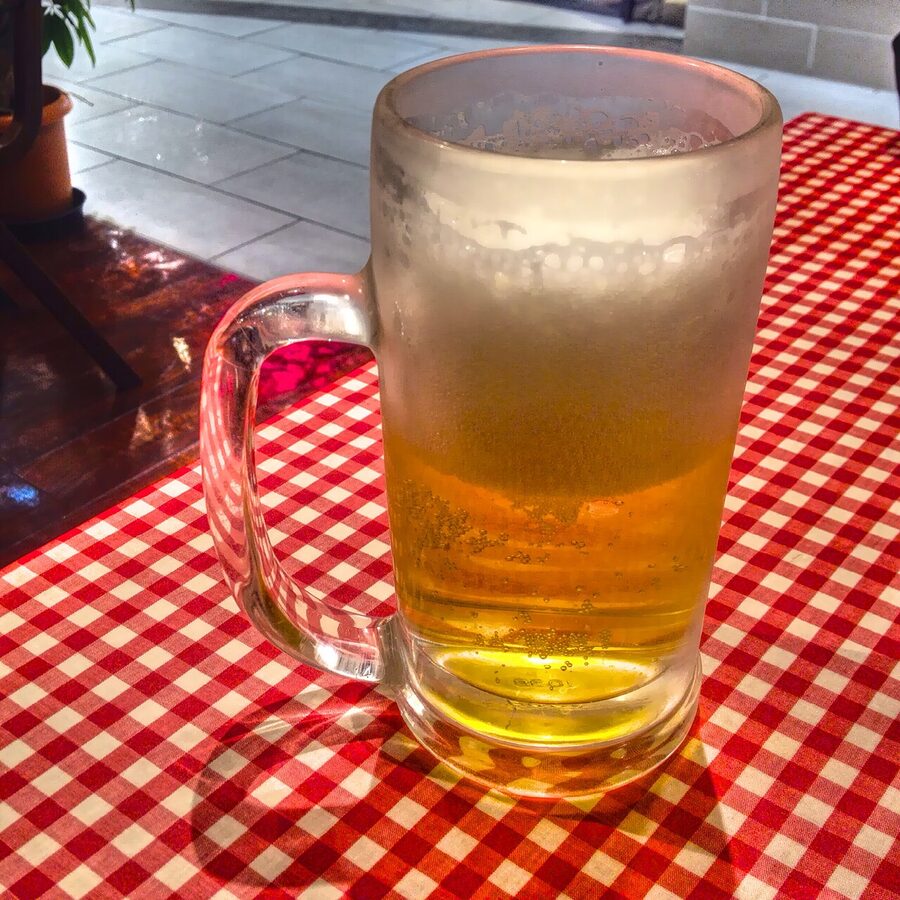
Once you’ve finished a drink and want another, the cleanest phrase is “Mou ippai, onaji mono o kudasai” (もう一杯、同じものをください), one more glass of the same. Or shorter: “Onaji mono o” with a gesture at your empty glass. Ippai is the counter for one glass; nihai for two, sambai for three.
If you want something different next: “Tsugi wa [drink] o kudasai” (next, X please). Or just point.
Asking for the toilet
“Sumimasen, otearai wa doko desu ka?” (excuse me, where’s the toilet?). Or shorter, “Otearai wa?” with a questioning tone. Sometimes “toire” (トイレ) is used. Both are understood. The staff will point. In a packed izakaya the directions are sometimes layered: outside, down the corridor, up half a flight of stairs. Don’t be embarrassed to ask twice.
Asking for the menu (again)
“Menyū o mou ichido onegaishimasu” (もう一度メニューをお願いします), menu one more time, please. Or just “Menyū o”, with an upward inflection.
The water question
Cold water (ohiya, お冷) is free at every izakaya. It comes in a glass jug or a tumbler. The waitstaff will refill it on request: “Ohiya o kudasai”. This is also the polite-insider way to order water, saying “mizu” (水) works but “ohiya” gets you a small smile.
Special situations: nomihōdai, courses, smoking, and time limits
Nomihōdai (all-you-can-drink)
Nomihōdai (飲み放題) is unlimited drinks for a fixed time, usually 90 or 120 minutes, for a flat fee of ¥1,500–2,500. The fine print: you order each drink one at a time, the menu is restricted to cheaper items (rarely premium sake), and last orders are typically thirty minutes before time’s up. There’s also tabehōdai (食べ放題), all-you-can-eat, often paired with nomihōdai.
The maths is simple. Two hours, four drinks at ¥500 each = ¥2,000 retail. If nomihōdai is ¥1,800 you break even at four. Most people drink three. So nomihōdai is usually a slight loss for the customer and a lock-in for the izakaya. The exception is large groups, where the restaurant typically requires nomihōdai or a fixed course (or both) for a booking, at which point the question is moot.
To order: “Nomihōdai o onegaishimasu” or, if a course is included, “Kōsu to nomihōdai de”. Staff will explain the menu and time limit in slow Japanese. Nod and pick a course. If they hold up a paper schedule, point at the time you arrived plus two hours; that’s your end window.
Course meals
A course (kōsu, コース) is a fixed-price set menu of five to seven dishes. They run ¥3,000–5,000 per person at most izakaya, ¥5,000–8,000 at upscale ones. They’re commonly required for parties of six or more, occasionally for any reservation at popular places. If you book a table, the question “kōsu o yoyaku shimasu ka?” (book a course?) will come up. The default answer for foreign tourists is usually no, pay individually, order what you actually want.
Smoking
Despite a 2020 indoor smoking ban, enforcement at izakaya is patchy. Many smaller places have a “smoking OK” sign on the wall (喫煙可) or a separate smoking room. If smoke bothers you, the question on the way in is “kin-en seki wa arimasu ka?” (do you have non-smoking seats?). The answer is sometimes yes (a separated section) and sometimes no (the whole place is smoking). At the latter, walk on. There are smoke-free options in every neighbourhood.
The two-hour time limit
If the place is busy and people are queueing outside, a soft two-hour cap kicks in. The staff will tell you when you sit down: “ni-jikan made desu” (until two hours). They’ll come around at the 90-minute mark and say “rasuto ōdā wa nan ji desu” (last orders are at X). At 120 minutes they’ll bring the bill. This is a courtesy of the system: it’s how izakaya distribute scarce seating in dense areas. Don’t take it personally.
Pouring rules and the kanpai moment
When the drinks land, no one touches a glass until kanpai. The whole table raises drinks, says “Kanpai!” (乾杯, literally “dry cup”), clinks, drinks. Drinking before kanpai is the rude move, even Japanese kids in their twenties wait for the toast. If a glass is delayed, everyone waits. If the delay is going to be more than a minute or two, you can raise water glasses for an interim toast.
The pouring etiquette, briefly:
- You pour for others. They pour for you. Pouring your own beer in a group of two or more is the small ungenerous move. In a group of one (you, alone), pour your own and don’t think about it.
- When someone pours for you, lift your glass off the table with both hands. Setting the glass down for them to pour into is informal-rude.
- When you pour, hold the bottle with two hands, right hand on the body, left hand supporting the bottom. The bottle’s label faces up.
- For sake from a small ceramic flask (tokkuri), hold the tokkuri’s middle, support the bottom with the left hand. Don’t grab the neck.
- Watch glasses. The unspoken rule: a near-empty glass is a request. Top it up before the person has to ask.
If you’re at a sake-focused izakaya, the etiquette tightens slightly, see the sake guide for the cup-holding details that matter when premium nihonshu is involved. For everyday beer-and-shōchū rounds, two hands on receive, two hands on give, refill before empty.
Paying: the moment you’ve been quietly counting
When you’re done, you call for the bill. The phrase is “Okanjō, onegaishimasu” (お勘定、お願いします), the bill, please. Or “Okaikei, onegaishimasu” (お会計、お願いします), same meaning, slightly more common in Tokyo. Both work. The staff will respond with “Hai, kashikomarimashita” and either bring a paper bill to the table or signal you to come to the register.
Paying at the register vs the table
Most izakaya have a cash register at the front, near the door. You pay there, not at the table. The bill is a slip of paper; you take it to the register, hand it over, settle up, and leave. A few upscale places have you pay at the table; if so, the staff will set down a small tray and you put cash or a card on it.
Cash, card, and IC card
Independent izakaya are still often cash-only, especially outside Tokyo and Osaka. Smaller places might post a sign at the door reading “Genkin no mi” (現金のみ), cash only. Have at least ¥5,000 per person in cash for any indie place you don’t know. Chain izakaya, Torikizoku, Watami, Shoya, accept all major cards (Visa, MasterCard, AmEx) and IC cards (Suica, Pasmo, Icoca). PayPay is increasingly accepted at chains too.
Splitting the bill
The default at most izakaya is one bill for the table. To split, ask “Betsu-betsu de onegaishimasu” (別々でお願いします), separately, please. This is increasingly common at chain izakaya with electronic registers; less common at small indie counters where the staff would rather you settle one way and split outside. If they say “betsu-betsu wa muri desu” (we can’t split), they mean the register doesn’t do it. Settle as one bill, divide outside.
Tipping
Don’t. There is no tipping at izakaya, ever. Leaving cash on the table is interpreted as forgotten change and the staff will run after you with it. The only acceptable equivalent is a small “gochisousama deshita” (it was a feast) on your way out.
Sample dialogue: paying
You: Sumimasen, okanjō onegaishimasu. (Excuse me, the bill, please.)
Staff: Hai, kashikomarimashita. (Right away.)
(Staff brings the bill or directs you to the register.)
Staff (at register): Yon-sen-rop-pyaku-en de gozaimasu. (That’ll be ¥4,600.)
You: Kādo de onegaishimasu. (Card, please.)
(or)
You: Genkin de. (Cash.) (hand over ¥5,000)
Staff: Yon-hyaku-en no o-kaeshi desu. Arigatō gozaimashita. (¥400 change. Thank you.)
You: Gochisousama deshita. (Thanks for the meal.)
The “gochisousama deshita” line is the polite goodbye and signals you appreciated the food. Bartenders notice. It’s the difference between “tourist who paid” and “tourist who knew”.
Walking out: the noren, the bow, the alley
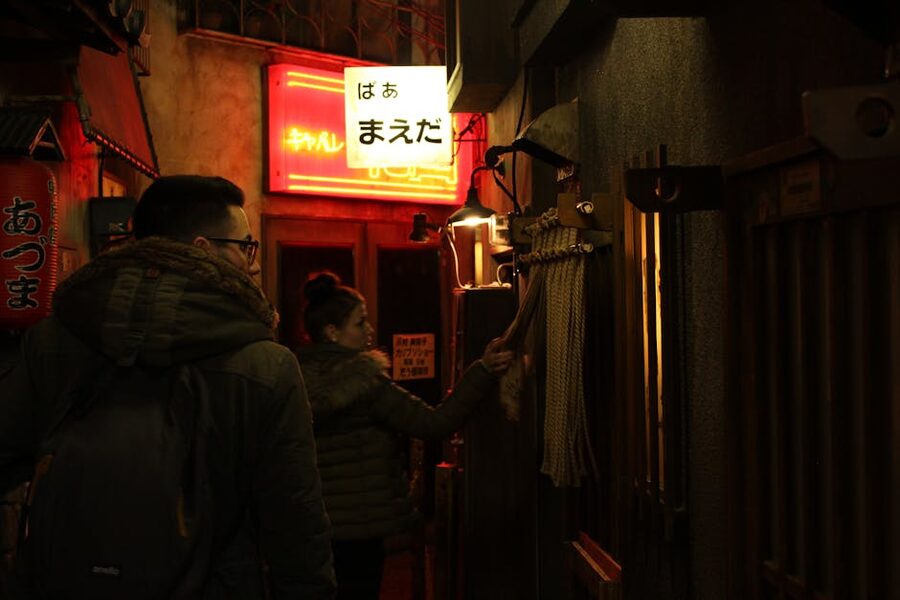
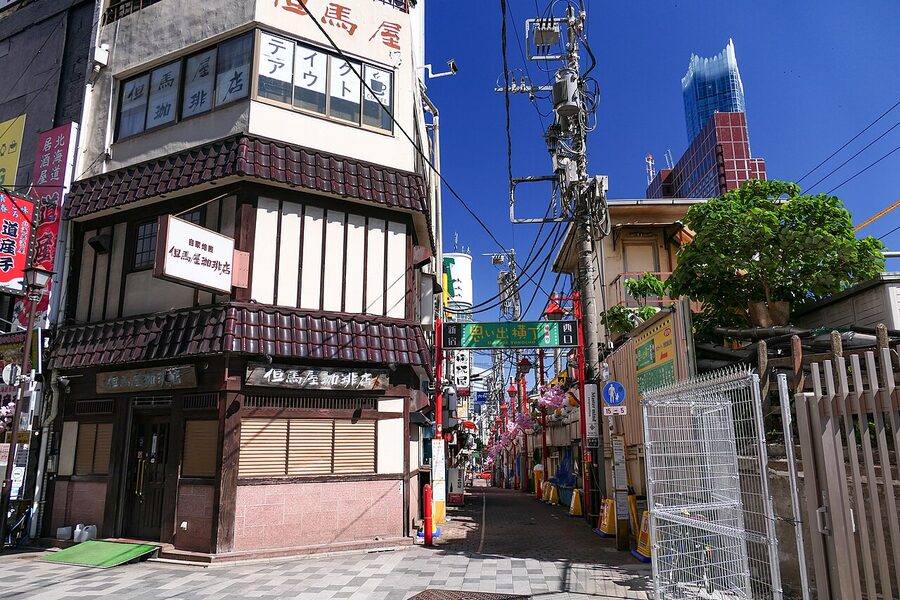
Push the door, step out, turn back briefly, and the staff will call out “Arigatō gozaimashita!” (thank you very much) on your way out. You don’t have to respond. A small nod or a “Gochisousama” is plenty.
If you arrived in a yokocho, Omoide Yokocho, Golden Gai, Ebisu Yokocho, the next bar is ten metres away. The real izakaya night is two or three places at ¥3,000–4,000 each, not one place at ¥15,000. You can read the case for that pace in the Tokyo bars and drinks guide, and the same logic applies in the Kyoto bar circuit and the Fukuoka yatai-and-izakaya scene.
Standing-bar variant: tachinomi
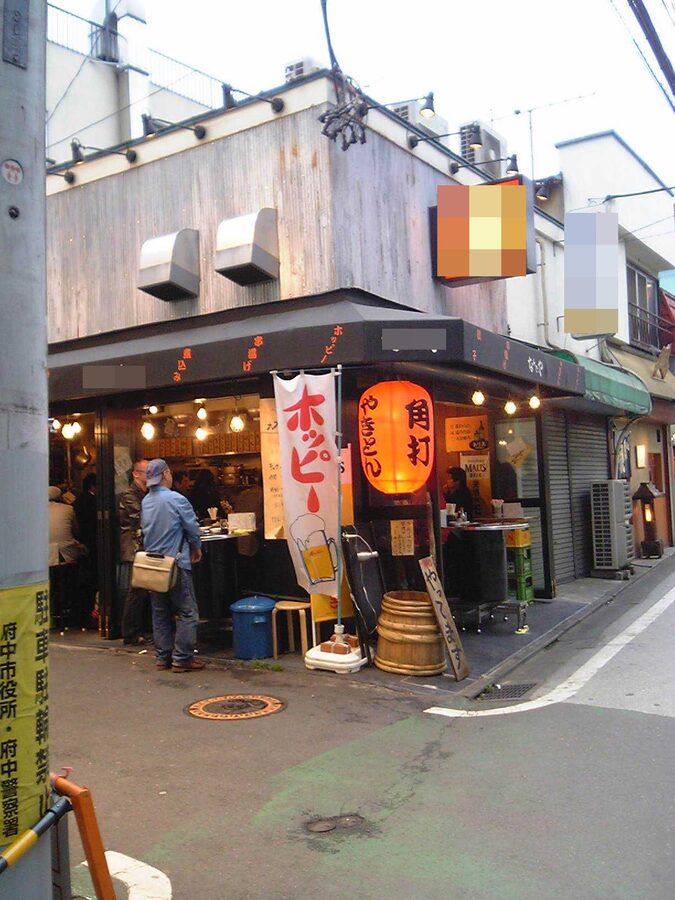
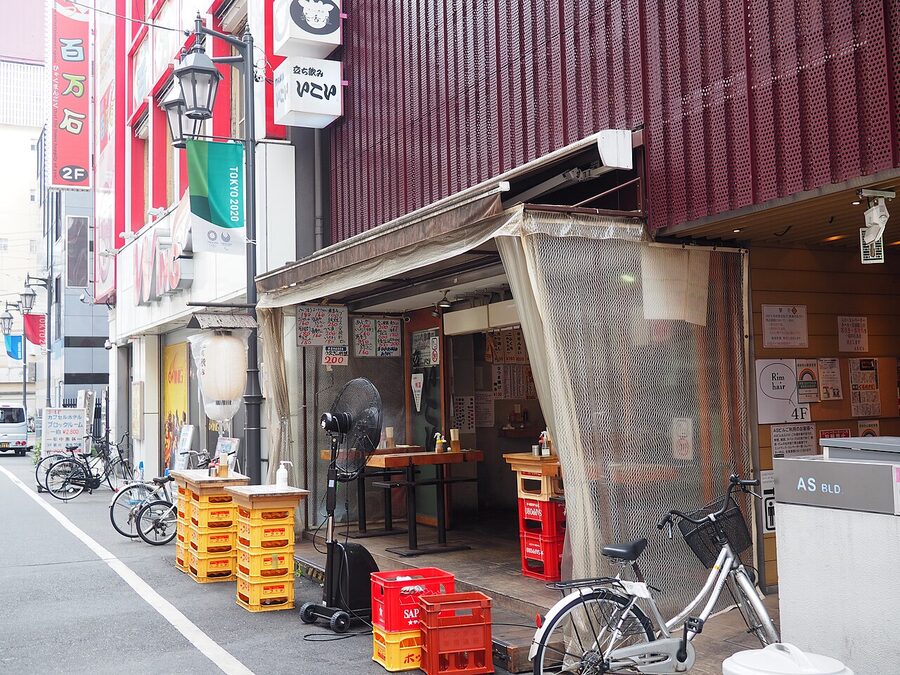
Tachinomi (立ち飲み, “standing drink”) is the cheap-and-fast cousin of the izakaya. You don’t sit. You stand at a counter, order one or two drinks and a snack, eat in fifteen minutes, and leave. Drinks run ¥200–400 a glass, snacks ¥100–300 a plate. There’s no otōshi at a tachinomi, that’s the giveaway. Tachinomi cap your spend at around ¥1,500 a head.
The phrase set is the same: toriaezu nama, kore o kudasai, okaikei onegaishimasu. The pace is faster. You can do three tachinomi in the time one izakaya takes, which is one way to pace a long night. Tokyo and Osaka have especially dense tachinomi scenes; Akabane in north Tokyo is the standing-bar capital.
The mistakes I’ve watched travellers make
A short list of the patterns I see foreign tourists fall into, in roughly the order they happen.
Walking into a place that’s not actually for walk-ins
Some lantern-fronted bars are kaiin-sei (会員制, members-only). The sign is on the door in small Japanese script. If a host meets you at the door and says “kaiin-sei desu“, smile, bow, leave. They’re not trying to be unfriendly. The bar has been pre-booked or is regulars-only.
Trying to skip otōshi
You can’t. You can ask the price (“Otōshi wa ikura desu ka?”), but you can’t decline it. Trying is the signal that says “I’m new here”. A few chains advertise no-otōshi as a feature, Torikizoku, Sukiya at certain hours, but at any indie place, otōshi is part of the deal.
Ordering everything in round one
The kitchen will send everything at once, you’ll have a cold plate next to a hot plate next to a fried plate, and you’ll feel like you ordered too much because it lands in two waves. Order in three rounds, mid-meal. The food gets to the table at the right temperature, the pace stays right, and you can adjust based on what was good.
Not checking what shōchū comes with
Shōchū (焼酎) is a distilled spirit. Order it without specifying and the staff will ask “Rokku, mizu-wari, oyu-wari?“, rocks, with cold water, with hot water. Hot water (oyu-wari) is the winter default for sweet potato shōchū (imo). Cold water (mizu-wari) is the summer default for barley (mugi). Rocks (rokku) is the year-round option. Rice shōchū (kome) is more delicate; rocks suits it. The full breakdown is in the shōchū vs sake vs awamori piece.
Asking for ice in beer
Don’t. The beer is already cold. The bartender will give you a side-eye and serve it without ice. If you want a long drink, order a highball or a sour.
Loud at the wrong volume
The room is loud. Your table doesn’t have to be. The volume rule at an izakaya is: you can be as loud as the table next to you, no louder. If the place is suddenly quiet, usually because the kitchen is mid-prep, match the room. Japanese izakaya etiquette runs on this kind of unspoken pacing, and the etiquette piece covers it in more detail.
Edge cases worth knowing
Dietary restrictions
Vegetarian, vegan, gluten-free, allergies, most izakaya can adapt, but only if you tell them at order time. The phrase patterns:
- Vegetarian: “Bejitarian desu. Niku to sakana wa taberare-masen” (I’m vegetarian. I can’t eat meat or fish).
- Allergy: “[X] arerugii ga arimasu” (I have an [X] allergy). Common ones: ebi (shrimp), kani (crab), tamago (egg), nyūseihin (dairy), komugi (wheat).
- Halal/no pork: “Buta-niku wa taberare-masen” (I can’t eat pork). Note that dashi (broth) often contains fish; for strict halal, ask “Dashi ni gyokairui ga haitte-masu ka?” (does the broth contain fish?).
Dashi is in nearly everything Japanese, miso soup, simmered dishes, dipping sauces, even some pickles. A “no fish” request gets harder than it sounds. The cleanest vegetarian options are edamame, plain agedashi tofu, salads, plain rice, and grilled vegetables. Dashimaki tamago (rolled egg) is borderline because it contains dashi.
Solo drinking at the counter
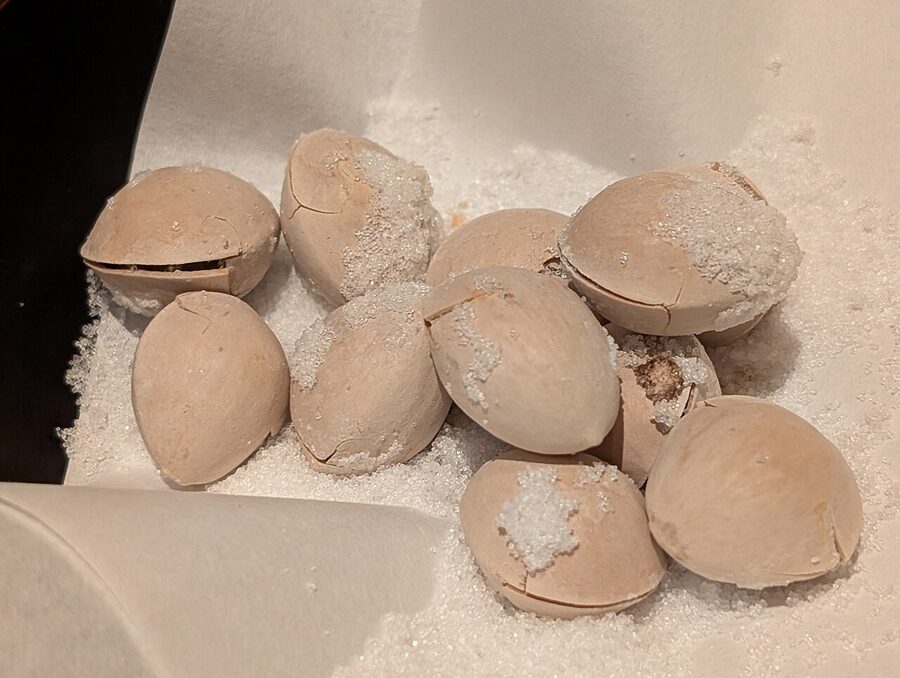
Eating alone at a counter izakaya is one of the better things you can do in Japan. The bartender talks. The regular next to you sometimes talks. Order the omakase (“Omakase de onegaishimasu”, chef’s choice) and you’ll get a guided tour of whatever is good that night. The sake brewery scene around Tokyo sometimes spills out to specific counter izakaya in Yoyogi-Uehara and Kichijoji that take this further.
Reservations
Most izakaya don’t need them on weekdays. Friday and Saturday after 19:00 in Tokyo, especially in Shinjuku and Shibuya, you should book. The phrase is “Yoyaku, onegaishimasu” (reservation, please). Online booking via Tabelog (the Japanese equivalent of Yelp) works for many places, phone reservation is still the norm at small ones. Note that some indie places ban same-day reservations entirely; if Tabelog returns “today not available”, call the restaurant directly.
Smoking section, again
If you’re sensitive to smoke, look for a “kin-en” (禁煙, no smoking) sign on the door or window. The 2020 indoor ban exempts small establishments under 100 m², which covers most independent izakaya. So most indie places are still smoking. Chains generally split smoking and non-smoking; ask “Kin-en seki o onegaishimasu” at seating.
The phrase cheat-sheet (memorise these eight)
If you’re flying to Japan tomorrow and only have time to learn eight phrases, these are the eight. They cover walking in, ordering drinks, ordering food, paying, and walking out. Everything else is a refinement.
| # | Phrase (romaji) | Kanji / kana | Meaning | When |
|---|---|---|---|---|
| 1 | Sumimasen, futari desu. | すみません、二人です。 | Excuse me, two people. | Walking in |
| 2 | Toriaezu, nama o kudasai. | とりあえず生をください。 | A draft to start, please. | First drink |
| 3 | Osusume wa? | おすすめは? | What do you recommend? | Lost in the menu |
| 4 | Kore o kudasai. | これをください。 | This, please. | Pointing |
| 5 | Kanpai! | 乾杯! | Toast! | Drinks land |
| 6 | Mou ippai, onaji mono. | もう一杯、同じもの。 | One more, the same. | Refill |
| 7 | Okanjō, onegaishimasu. | お勘定、お願いします。 | The bill, please. | Done |
| 8 | Gochisousama deshita. | ごちそうさまでした。 | Thanks for the meal. | Walking out |
You’ll be flagged as a non-native the moment you open your mouth, of course. That’s not the point. The point is that the staff sees you trying, the bartender sees you’ve read the room, and the meal happens at a slightly higher gear because of it. Japanese hospitality runs on noticing, a person who knows to say okanjō instead of just waving for the bill is a person who’s been here before, in their book, and that earns you a slightly better recommendation, slightly better seating, slightly better service.
The first time I went back to the same izakaya in Tokyo where the otōshi went sideways, I sat at the counter, ordered toriaezu nama, and the bartender slid me a bowl of pickled plum without a word. He remembered me. The pickled plum was the otōshi. It cost ¥500. I knew what it was this time, and I’d budgeted for it, and the meal was better for not being a surprise.
Walk in. Two fingers. Toriaezu nama. The rest is improvisation.
 Drinking CultureWhy I Stopped Clinking Glasses in JapanThe first time I got a Japanese toast wrong, I was at a wedding reception in Yokohama. Ten of us…
 Drinking CultureKonbini Drinks Are a Whole Trip StrategyJapan has roughly 56,000 convenience stores. That's more outlets than McDonald's has worldwide, and the country sells about a third…
 Drinking CultureOtoso, Bonenkai, and the Hush of ShogatsuThe first person to write the recipe for otoso was a third-century Chinese physician named Hua Tuo, and he wrote…