
I poured my own beer first, knocked back a long swallow before anyone else had a glass in hand, and watched the proprietor at a small Yurakucho counter freeze for about half a second. Long enough that I noticed. Short enough that he was already smiling again by the time the next person sat down. The smile was not for me. It was for the regular he was about to greet by name. I was the foreigner who had just told him, without saying a word, that I had no idea where I was.

I had read all the etiquette guides before that trip. Pour for others, do not stab chopsticks into rice, take your shoes off if the floor is raised. The lists are everywhere. They are also not the bit that catches you out. The bit that catches you out is rhythm. Pace. Where the staff stands. Whether you order food now or wait. Whether you ask for the bill or whether someone brings you a slip when they are ready. The first time you sit at a Japanese counter, the rules you read about are the easy half. The rest is the half nobody quite explains.
So this is the version I wish I had read. Specific places, specific phrases, specific yen. What to do at the counter and, more importantly, what NOT to do at the counter. Where the script changes when you walk into a standing bar. The bits the lists usually skip. Read it once before you go and you will know the shape of an evening at a Japanese pub before the first otōshi hits the table.
In This Article
- What an izakaya actually is, and what it isn't
- Walking in: the door, the greeting, "futari onegaishimasu"
- The shoes question
- Otoshi: the cover charge that confuses everyone
- The first drink, the first words
- How to order, and how not to
- What to order, in rough order
- Pouring etiquette and the senpai hierarchy
- Counter etiquette: where most travellers slip
- Tachinomi: the standing bar layer
- Chopsticks, oshibori, and the small physical things
- Smoking, private rooms, time limits
- Paying and leaving
- Cash, card, and the realistic state of payment
- What to say, what to do, on the way out
- The mistake, again
What an izakaya actually is, and what it isn't
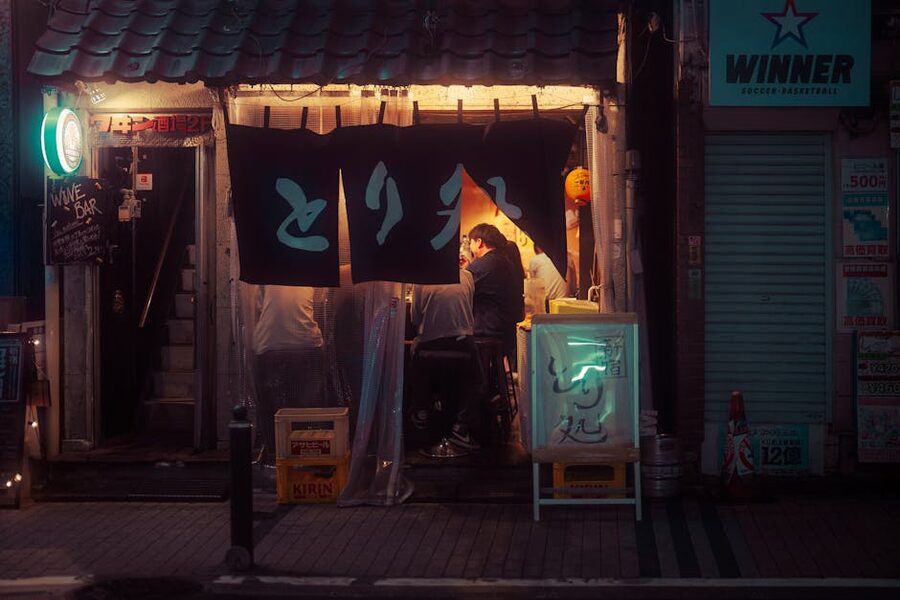
An izakaya is not really a pub the way Britain or Ireland mean a pub. The kanji literally read "stay sake shop", meaning a place where you can sit down and drink, as opposed to a bottle shop where you take it home. You sit down. You order shared dishes. You drink. The fact that you sit and stay is the whole identity, and that one detail is what shapes everything else about how the room runs.
The food is closer in spirit to Spanish tapas than to a British pub menu. Small plates, ordered in waves over an evening, designed to go with whatever you are drinking. Edamame, grilled fish, sashimi, karaage, fried tofu in dashi, yakitori skewers, occasionally a hotpot at the end. Drinks are beer, sake, shochu, sometimes whisky in highball form, fruit sours, oolong tea for the people not drinking. A meal at a normal izakaya runs ¥3,000 to ¥5,000 a person, with chains starting closer to ¥2,000 and a serious sake-focused independent climbing past ¥7,000.
For a primer on the rice wine that runs through every izakaya menu, see my guide to sake. For the spirits-side menu (shochu and awamori), see shochu vs sake vs awamori, which sorts out which of the three sitting on the back-bar is which. The whisky-bar world is a separate scene with its own etiquette, often quieter, often pricier, but the core rules I am about to describe carry over more or less intact.
What an izakaya is not: a date spot, a bar in the cocktail-list sense, a place to be quiet. The room is loud. Plates clatter. Someone's birthday is being celebrated in the corner, and you may be expected to clap. Solo drinking is fine but uncommon outside of standing bars and counter-only places. If you want a hushed cocktail in a leather armchair, you want a different category of bar.
Walking in: the door, the greeting, "futari onegaishimasu"

The first sound is irasshaimase. Welcome in, more or less. Every staff member shouts it the moment a curtain moves at the door, and you do not say anything back. A nod is fine. A small bow is generous. Saying arigatou gozaimasu like the staff just did you a favour reads as nervous, not polite.
Then the question. Almost always how many of you. Hold up fingers, or say futari (two), sannin (three), yonin (four), hitori if you are alone. The staff will take it from there: counter, table, tatami booth, depending on what is free.
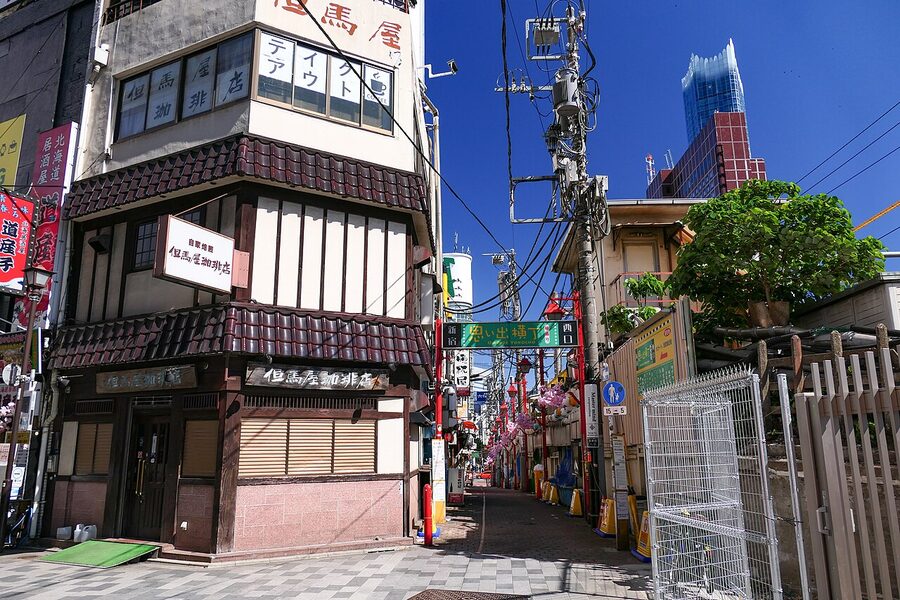
One thing that travellers mis-read as rudeness: at small places, you stand at the door until you are explicitly invited in. There may be empty stools. Do not assume those stools are yours. The proprietor is reading the room. Do you fit, are the regulars about to leave, is the back of the kitchen too slammed to take another order. The Japanese standing-bar etiquette guides are blunt about this. Wait. When they say douzo, you go in. If you push through and pick a stool unprompted you have read the room wrong, and the rest of the night will run a half-degree colder.
The shoes question
If the floor steps up onto a raised wooden platform, or if you can see other diners' shoes lined up in a slot under a bench, take yours off. The slot is the storage. Place them facing out, the way the others are. This is one of the only times in Japan you might find your shoes turned around for you while you eat. The proprietor or staff member does it as a small kindness so you can step into them on the way out.
Wear socks you would be willing to be seen in. The proprietor will not say a word, but holes are visible.
Otoshi: the cover charge that confuses everyone

Sometime in the first three minutes after you sit, a tiny ceramic dish appears. Pickled cucumbers, a spoonful of stewed offal, a few pieces of cold tofu, occasionally something seasonal and surprisingly good. This is the otōshi (sometimes tsukidashi in the Kansai region). It is also, technically, your seating charge. You did not order it. You will be billed for it. Most travellers see it as a tip you cannot refuse, which is roughly correct.
Price runs ¥200 to ¥800 per person at most regular places, climbing to ¥1,000 or more at the higher-end sake bars. If you are nervous about it, you can ask before sitting: otōshidai arimasuka? (is there a seating charge?), then ikura desuka? (how much?). Some chains have done away with otoshi entirely; some now mark it explicitly on the menu in English. A handful of newer counters even let you decline.
The Japanese consumer-side argument runs interesting. Legally, if the otoshi price is not posted before you sit, you can refuse it on contract grounds, because there was no agreed exchange. In practice, almost no Japanese diner does this. The dish is part of the deal. Refusing it reads as wanting something for nothing, and at a small counter it ends the relationship before it begins. My rule: eat it, and if the otoshi is good, ask the proprietor what was in it. That conversation has saved more evenings than any Japanese phrase I know.
The first drink, the first words
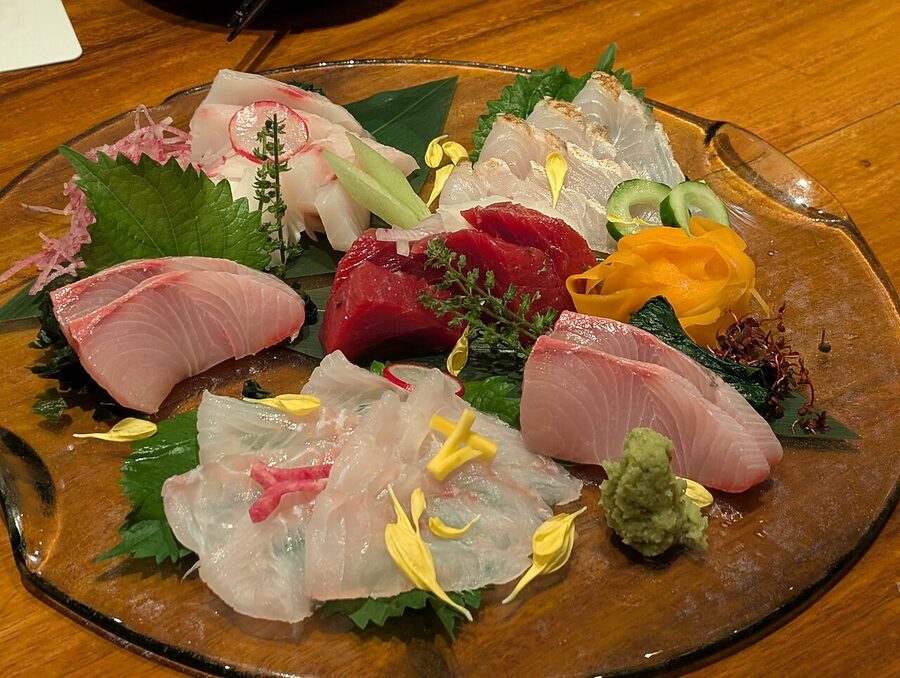

Ordering food before you have a drink is the most common rookie move I see, and the staff notice every time. The phrase to know is toriaezu biiru, which means "beer to start with", more or less. It is a half-joke half-convention; even Japanese drinkers who do not particularly want beer will say it because it gets the round in fast and lets the kitchen breathe before the first food order lands. Say it, even at 17:30, even if you are not hungry.
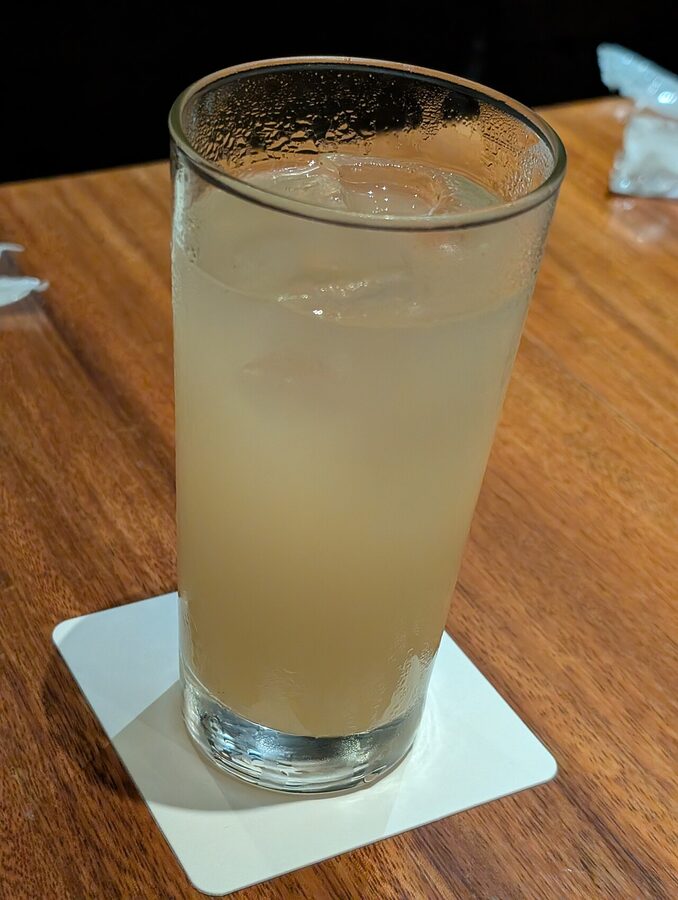
If beer is not your thing, swap it for sake (nihonshu kudasai), a highball (haiboru), a shochu mizuwari, or oolong tea (uron-cha) for the non-drinkers. The point is that one round goes in before you start picking dishes. The staff are reading you for pace, and the first drink tells them you are not in a rush.
Two notes that sound trivial but are not. First, you do not start drinking when your glass arrives. You wait for everyone to be served. The toast, kanpai, is small but mandatory; clink the glass against the others, slightly lower if the person you are clinking with is older, more senior, or your host. Second, do not pour your own first drink. If the bottle is on the table, somebody else pours yours and you pour theirs. If it is a draught beer arriving in individual glasses, this rule is moot, but anything bottled, and the pouring becomes the thing.
How to order, and how not to
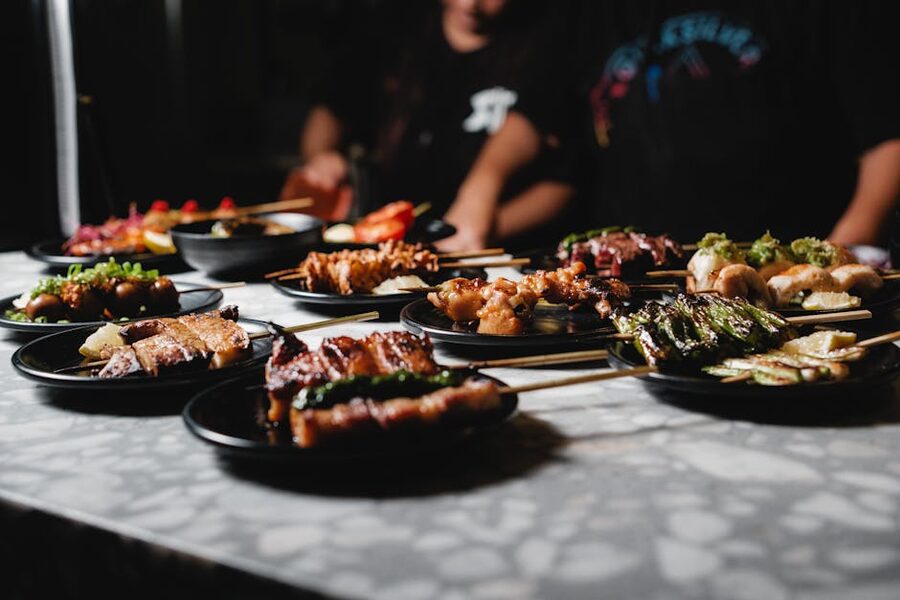
The Japanese pacing rule is the one nobody tells you. You do not order everything you want at once. You order in waves. Two dishes when the first drink lands, ideally one slow (a grilled fish, a hot plate) and one fast (edamame, a salad, pickled cabbage). When those arrive, you order two more. The rhythm of the kitchen wants this; if you fire eight dishes at the start, the slowest one arrives cold to a table already full. The Japanese-language drinking guides make this point in almost exactly those words, and it is the single biggest practical etiquette difference between an izakaya and a Western restaurant.
To get the staff's attention, you say sumimasen (excuse me) at a volume just above the room. This sounds wrong if you grew up in a culture that whispers for service. It is not rude. They cannot help you if they cannot hear you. You will get a hai! back from somewhere in the kitchen and a member of staff will appear within ten seconds, no matter how packed the room is.
If the menu is intimidating, ask: osusume wa nan desuka? (what do you recommend?). At sake-led places the staff will usually ask you back: amakuchi (sweet) or karakuchi (dry). Pick a side and they will pour you something good. If you do not feel confident reading the menu at all, point at someone else's table. The international gesture for "what is that, I want one" works in every country, including this one.
What to order, in rough order
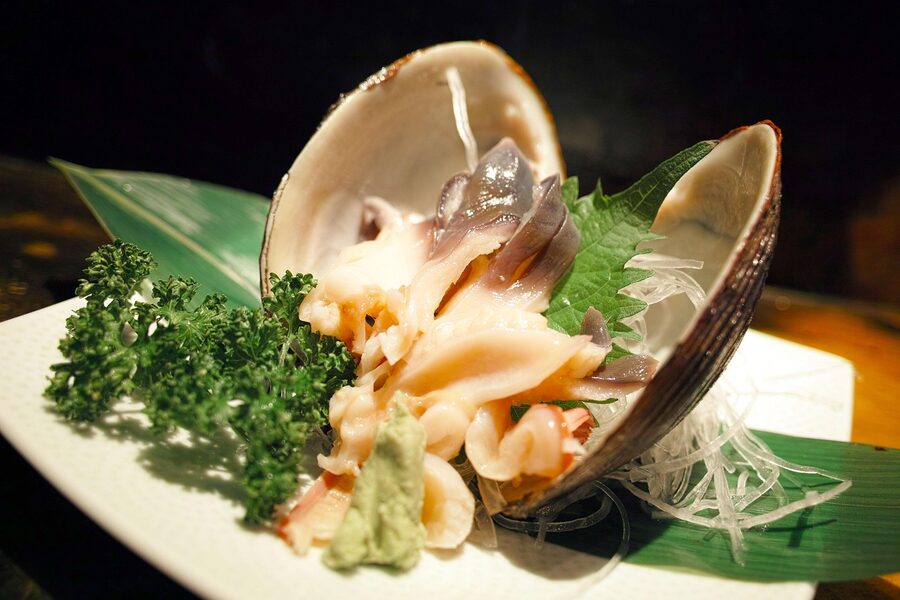
- Round one (with the first drink): edamame, a salad or some pickled cabbage, sashimi if the place is good for fish.
- Round two: yakitori skewers, karaage (fried chicken), agedashi-tofu (fried tofu in dashi), dashimaki tamago (rolled omelette with seafood stock).
- Round three: a grilled fish, more skewers if the place is yakitori-focused, a more interesting drink.
- Closer: ochazuke (rice with green tea poured over), a small bowl of ramen, or onigiri. The Japanese tradition of finishing with rice or noodles is real and worth honouring; it settles the alcohol and the bill at the same time.
If your group is more than three, this is the only way the kitchen will keep up.
Pouring etiquette and the senpai hierarchy

Bottled beer comes in a 600 ml format meant for sharing, a chu-bin or medium bottle, in pubspeak. There will be small glasses, one per person, beside it. Your job is to pour everyone else's. Their job is to pour yours. You do not pour your own. If your glass is empty, someone at the table will eventually notice and reach for the bottle. If they do not, hold up the bottle yourself and offer to refill someone else's. The implicit signal is that you would like a top-up, and you will get one back.
The hierarchy bit is real but applies most strongly when you are out with Japanese colleagues. The most junior person fills the boss's glass first; the boss does not pour their own at all. As a foreign drinker at a casual table you are more or less exempt from this: pour for whoever is empty, accept whatever comes back. At more formal dinners (a client meeting, an introduction with somebody's parents), pay closer attention. When clinking glasses, the most senior person's glass goes highest. Yours touches theirs lower down.
Hold the bottle with two hands when you pour for somebody senior, with the second hand resting near the wrist of the pouring hand. When somebody pours for you, hold your glass up off the table with two hands, even if it feels theatrical. You are receiving the gesture, not just collecting beer.
Sake gets its own riff: the small ceramic tokkuri bottle pours into ochoko cups; same rule, somebody else pours yours, you pour theirs. If sake comes in a square wooden masu cup with a glass inside it (a mokkiri presentation), the cup is overfilled into the masu on purpose; you pick up both and sip from the glass first, then tip whatever spilled into the masu back in or drink it from the corner.
Counter etiquette: where most travellers slip
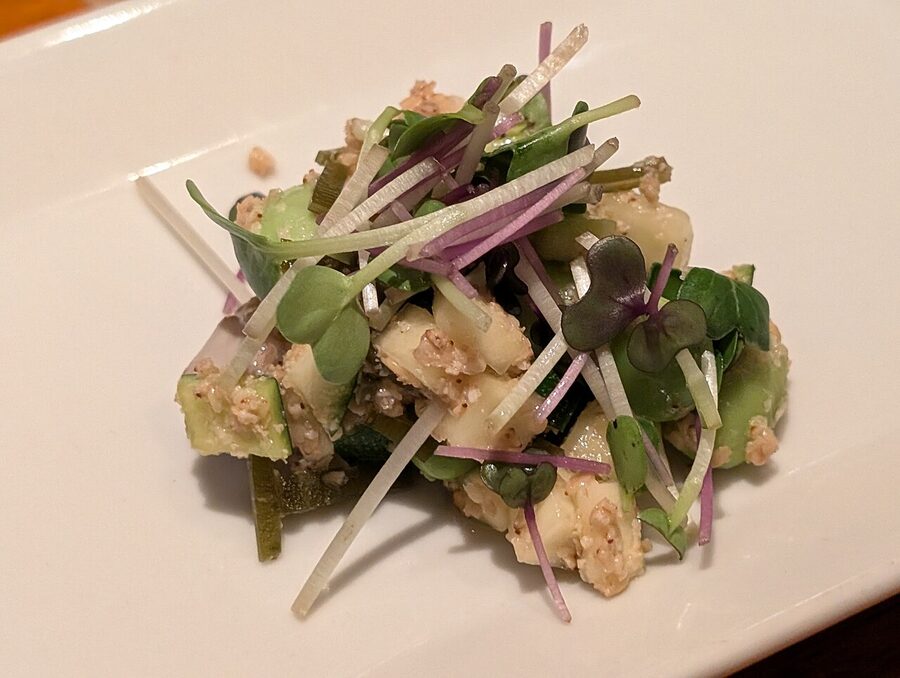

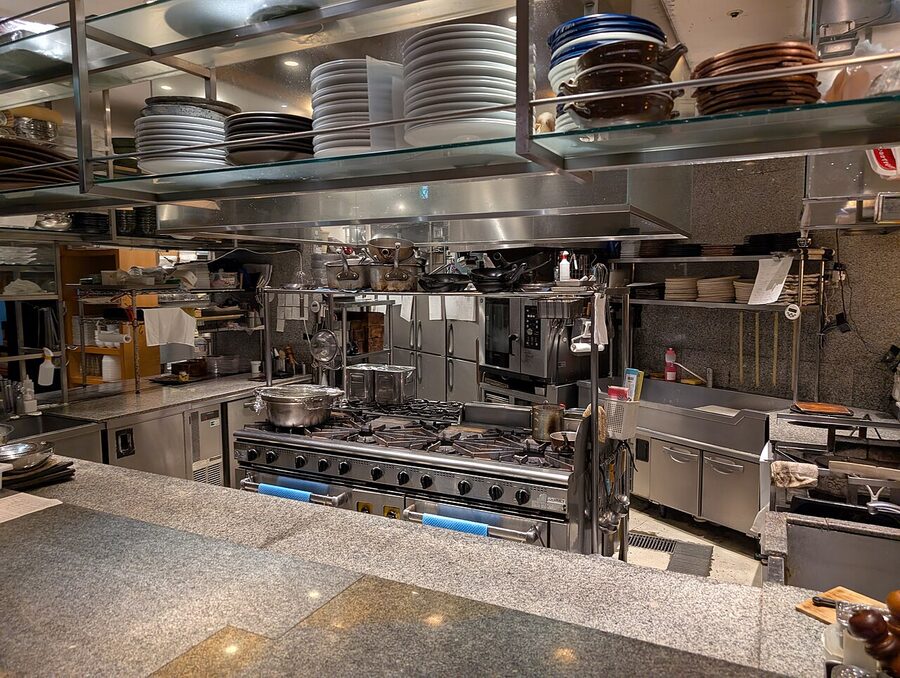
The counter (kounta) is where the unwritten rules tighten. You are now sitting at the kitchen. The proprietor is two feet away, working in front of you, and your behaviour is part of his evening, not background. This is the bit the etiquette lists usually skim past.
A handful of things the regulars do without thinking, that are easy to miss the first time:
- Do not lean on the counter. Especially not with elbows on the prep side. The counter is a working surface. Leaning into it puts your forearms across the proprietor's knife path. Keep your hands and forearms on your own side of the wood.
- Do not stack things on the counter. Bag on the floor under the stool, phone in your pocket or face-down beside your glass. Counters at small places are narrow on purpose. A camera, a guidebook, a tourist map laid out across the wood reads as inconsiderate before you have done anything wrong.
- Do not call out the proprietor mid-task. If he is plating something, slicing something, or talking to a regular, wait. The sumimasen volume rule still applies, but you also need to read whether he can answer. If he is looking up, you can speak; if his head is down, you cannot.
- Do not photograph aggressively. A quick shot of your plate is fine almost everywhere. A flash, a long studio set-up of the proprietor at work, a portrait without asking: these are all read as rude. If you want the shot, wait until there is a pause, then ask: shashin daijobu desuka?
- Do not overstay. When your last drink is at the bottom and you have not ordered for ten minutes, you are tying up a stool. Either order another round, or call for the bill. The Japanese drinking guides make a small but pointed observation: a glass empty at the counter for too long signals to the proprietor that you have lost interest, and that is mildly insulting on a busy night.
What the counter gets you in return is the part nobody tells you to come for: a running conversation, a tasting flight you did not order, the fish that came in that morning and was not on the menu, the recommendation that turns into the second round. The trade is your attention. Stay engaged, and the night opens up. Sit there with your phone face-up the whole time, and you get exactly what you ordered, no more.
Tachinomi: the standing bar layer
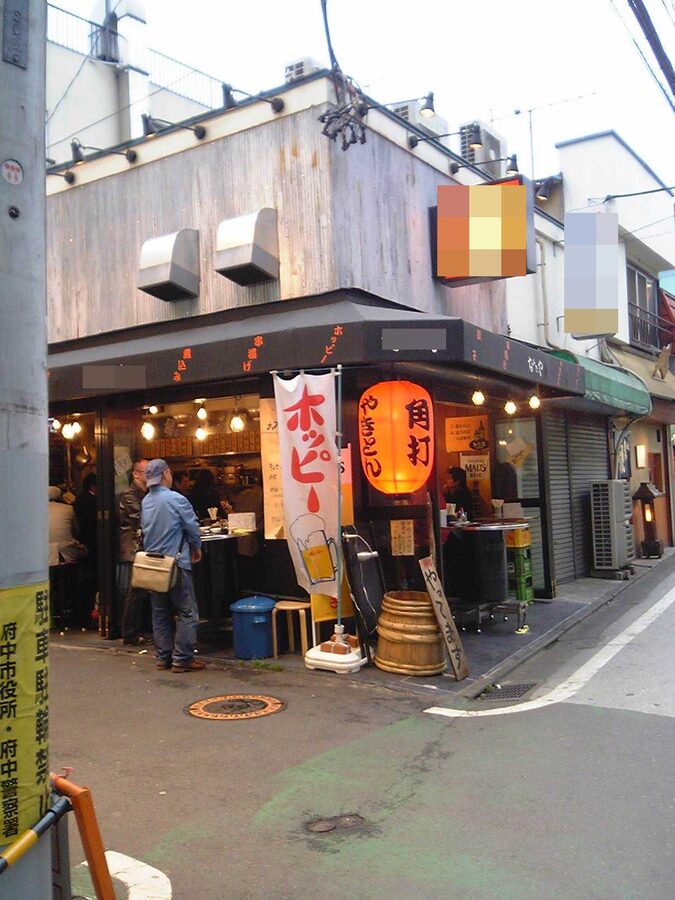

A tachinomi is a standing bar: no stools, no tables, just a counter you lean on for as long as the night holds you. The cheapest examples land in the senbero category, slang for "a thousand yen and you're drunk" (¥1,000, three drinks, a little plate). Banpaiya in Koenji is the model. The Japanese-language guides cite it everywhere because everything actually comes in under ¥1,000 for a quick stop, and the place has expanded across Tokyo. There are tachinomi in Ueno's Ameya-Yokocho, in Yurakucho under the train tracks, in Shibuya tucked behind the bigger restaurants, and a long strip in Tennoji in Osaka.
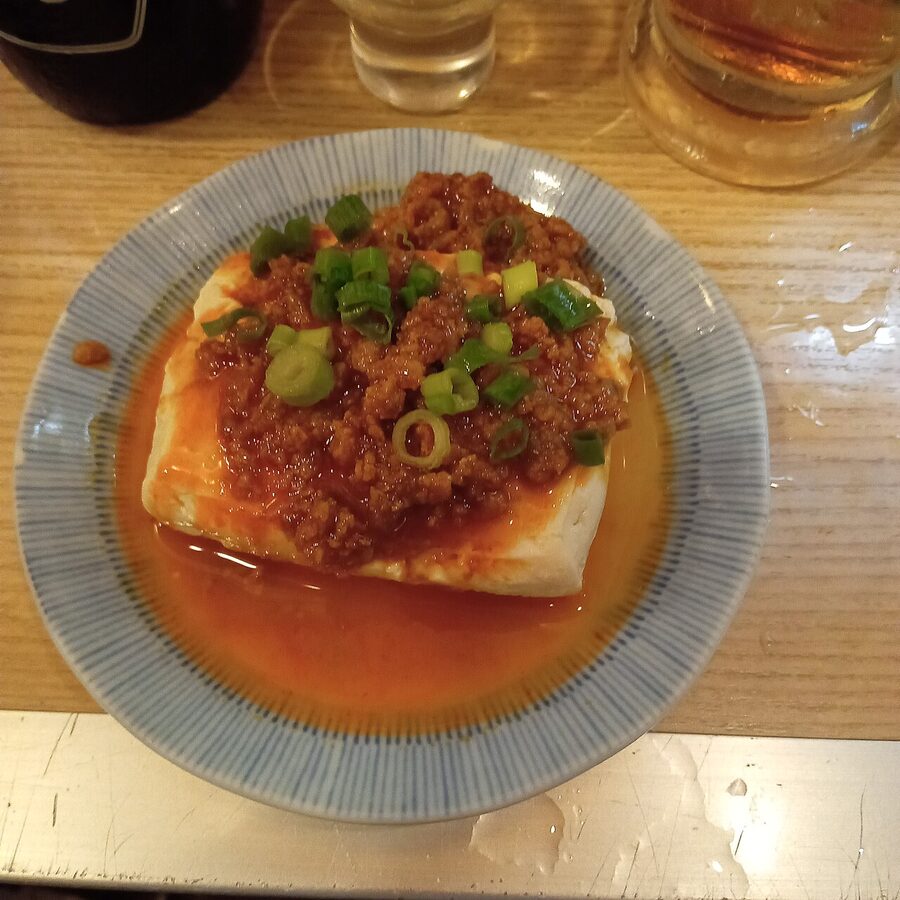
_03.jpg)
The standing-bar etiquette is its own small subculture, and the Japanese consumer guides take it seriously. A few things a tachinomi changes:
- Wait at the door. Because there are no allocated stools, the proprietor decides whether the room can take you. They will catch your eye and gesture. Until they do, you are a person standing outside considering it. This sounds excessive. It is not. A tachinomi at peak runs on inches.
- Do not occupy a wide footprint. Bag at your feet, not on the counter, not on the bar rail. If the room fills, you compress. If you cannot compress further, you finish your drink and leave. This is unwritten and absolute.
- Order tighter. One drink and one snack at a time. Tachinomi are run with thin staffing (usually one or two people behind the counter), and they hate batched orders that block the queue. The Japanese guides specifically warn against shouting for service when the staff are visibly slammed.
- Pay as you go, sometimes. Some tachinomi work on a chip system: you order, the staff pulls a small token, you settle on the way out. Some are pay-per-drink, in which case the cash goes in a tray and the change comes back. The mechanic is clear in 30 seconds of watching.
- Talk to the next person, do not perform. Tachinomi are conversational by design. The person next to you may chat to you, and turning the chat down is rude. Keep the volume conversational, not theatrical. The Japanese standing-bar etiquette pieces describe this as "blending into the scenery of the shop", a phrase I love because it is exactly right.
- The shochu bottle-keep system. Some tachinomi let you buy a whole shochu bottle, write your name on the label, and store it on a shelf for next time. That bottle stays for one month at a typical place, three at a more relaxed one. When you finish your share, you put the bottle back in its labelled slot. You do not take it home.
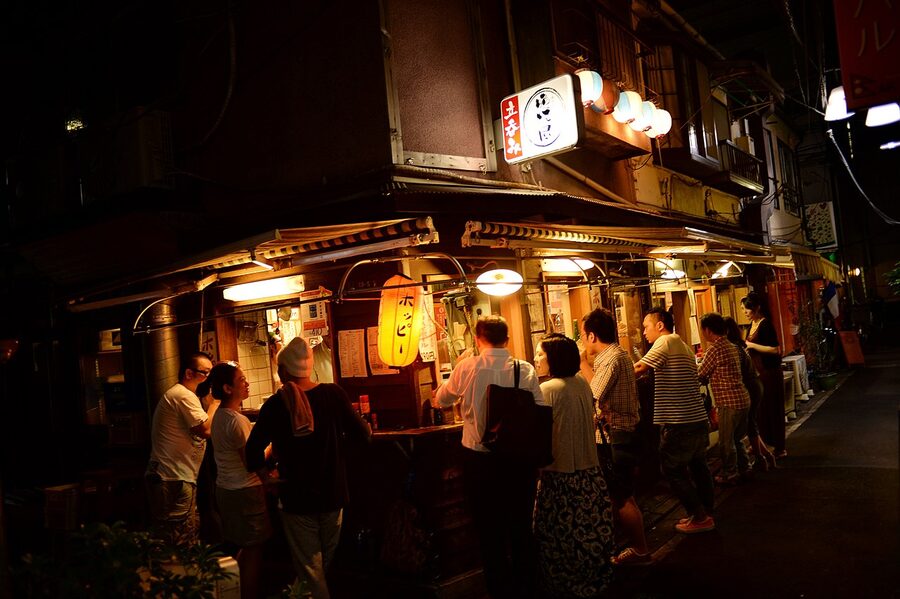

If you have only had one Japanese drinking experience and it was a chain izakaya, a tachinomi will recalibrate what you think of as a Japanese bar. They are louder. Cheaper. More conversational. Often run by the proprietor solo, and the regulars know each other.
Chopsticks, oshibori, and the small physical things
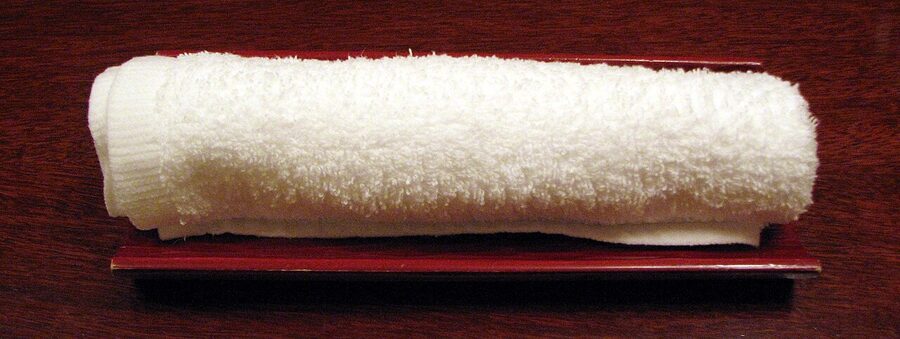

The list of small physical missteps is shorter than the etiquette guides make it sound. Here are the ones that actually matter:
- The oshibori is for your hands. The hot rolled towel that arrives at the start cleans your hands before you eat. Wiping your face with it, while you will see middle-aged Japanese businessmen do it on a hot August evening, reads as a bit rough. At a counter, definitely not.
- Chopsticks vertical in rice is taboo. Vertical chopsticks in a rice bowl resemble the offering at a Japanese funeral. This is the one universally-known etiquette point and also the one that almost never comes up in practice. At an izakaya, chopsticks rest on the chopstick rest (hashioki), not in your food. If there is no rest, lay them flat across the rim of your plate, parallel to the edge of the table.
- Chopstick-to-chopstick passing is taboo. Same reason: at a funeral the cremated bones are passed chopstick-to-chopstick into an urn. To pass a piece of food, set it down on a small plate and let the other person pick it up.
- Use the back end of your chopsticks for shared plates. If you are picking food off a communal dish onto your own, flip your chopsticks around and use the un-used ends. Your saliva-side does not touch shared food. Almost no Japanese diner under thirty does this rigorously, but it is still polite at a more formal table.
- Toilet slippers stay in the toilet. Many izakaya have a separate set of slippers inside the bathroom. Step into them when you go in. Step out of them, and back into your own shoes or slippers, when you leave. Walking out into the dining room in toilet slippers is the small classic mistake every traveller makes once and remembers forever.
Smoking, private rooms, time limits
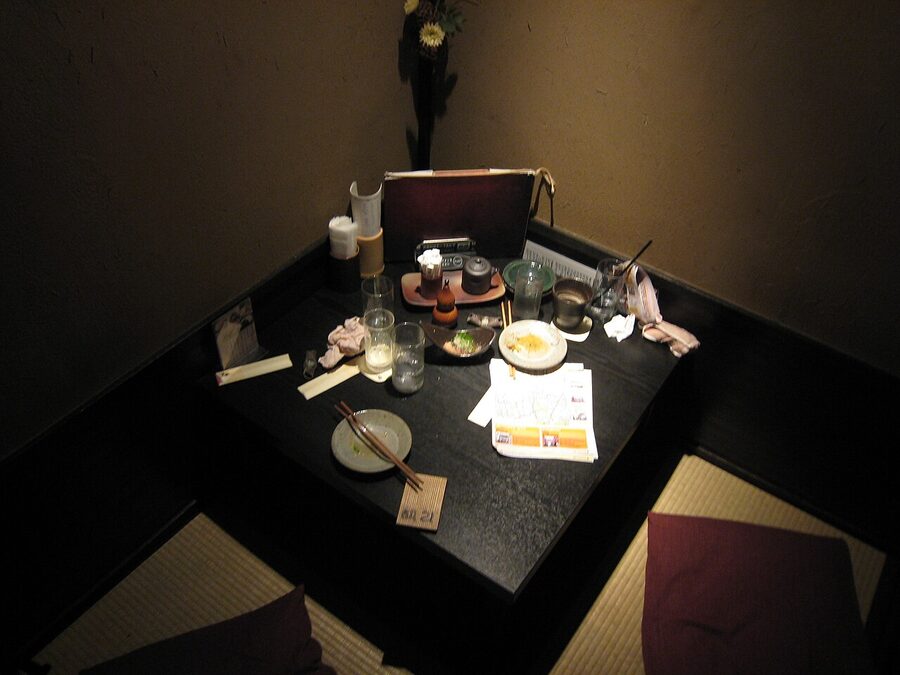

Japan's indoor smoking ban came into force in April 2020, and it is enforced unevenly. Many izakaya have a Smoking OK sign on the door, which means a designated section indoors, sometimes the whole place. The non-smoking sections are sometimes a wall away from the smoking section with no real partition, and a windless evening will leave you smelling of it regardless.
If you want to avoid smoke entirely, two phrases help. Kinen seki onegaishimasu (non-smoking seat please) at the door, and koshitsu arimasuka? (do you have a private room?). The private room is the cleanest workaround in older establishments. It usually has its own door and ventilation, often costs an extra ¥500 to ¥1,000 per person, and is the only practical option for a group of six or more.
Time limits are real. A standard table is two hours from when you sit down, on busy nights only, and the staff will signal half an hour before. Last order, sometimes called out as "rasuto oda", is usually 30 minutes to an hour before close. That is the time the kitchen stops accepting new dishes. Drink last orders may be later than food last orders. If you hear a member of staff going around saying it, take the cue: order what you actually want one more of, then settle the bill.
Nomihōdai (all-you-can-drink) plans normally run 90 to 120 minutes, with last orders 30 minutes before. The catch is the menu. The included drinks list is short, the speed of service mysteriously slows once you are committed, and the "deal" only works if you can pace four or five drinks in 90 minutes. For a foreign solo visitor, regular ordering almost always works out cheaper. For a group of six on a Friday night, nomihōdai plus a fixed course is the standard kanji (group-organiser) solution, and the price you negotiate up front saves the awkward bill-splitting.
Paying and leaving
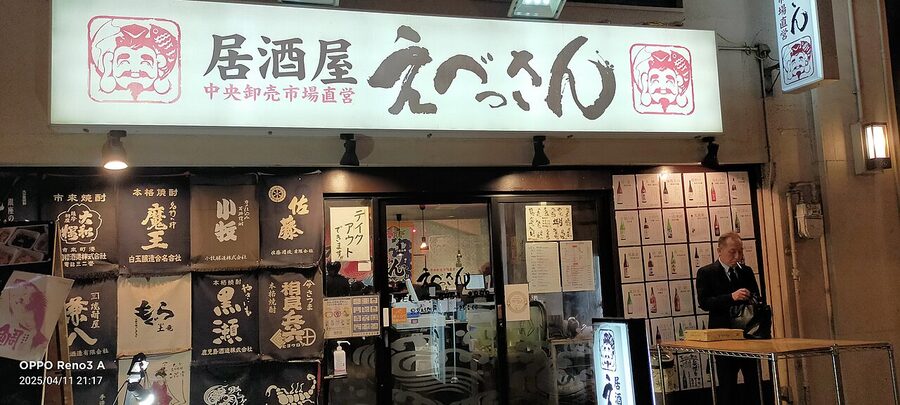

To get the bill, you say okaikei onegai shimasu (the bill, please). Some places will write you a slip; some places have a slip already growing on a clip at your table; some have it sitting in a discreet wooden holder and you bring it to the register on the way out. Watch what other tables are doing for the local pattern.
You almost always pay at the register near the door, not at the table. Two reasons: the cash drawer is up front, and your departure is a public moment. The proprietor looks up, says arigatou gozaimashita, and you say gochisousama deshita (thank you for the meal) on the way out. Try this once and you will see why it is the better arrangement than the Western table-payment shuffle.
Splitting the bill is the norm in groups, but the Japanese version is simpler than the Western item-by-item version. Total divided by heads. The Japanese phrase is warikan. If you try to calculate exactly what each person ordered, you will not lose face exactly, but you will read as fussy. Pay your share, round up if you had a more expensive drink than the others, and move on. Tipping is not done. Trying to leave a tip will sometimes get you chased down the street with the change. Just pay the bill.
Cash, card, and the realistic state of payment
Old izakaya are still cash-only. The Japanese-language drinking guides specifically warn drinkers to confirm cash availability before ordering, especially at the older tachinomi. Newer chains take card, IC travel cards (Suica, Pasmo, Kitaca), and increasingly PayPay. The pattern is rough but reliable: chain izakaya in major-city station districts almost always take card; an independent in a yokocho or under the train tracks may not. Look for the small sticker on the door. Visa, JCB, PayPay logos mean cashless is fine. No stickers, ATM nearby, do not be the person who learns this at the register.
Carry a few thousand yen in cash for any indie place you have not been to before. The convenience-store ATM is twenty steps away in any major city; the embarrassment of being short at the till at a small bar lingers longer.
What to say, what to do, on the way out
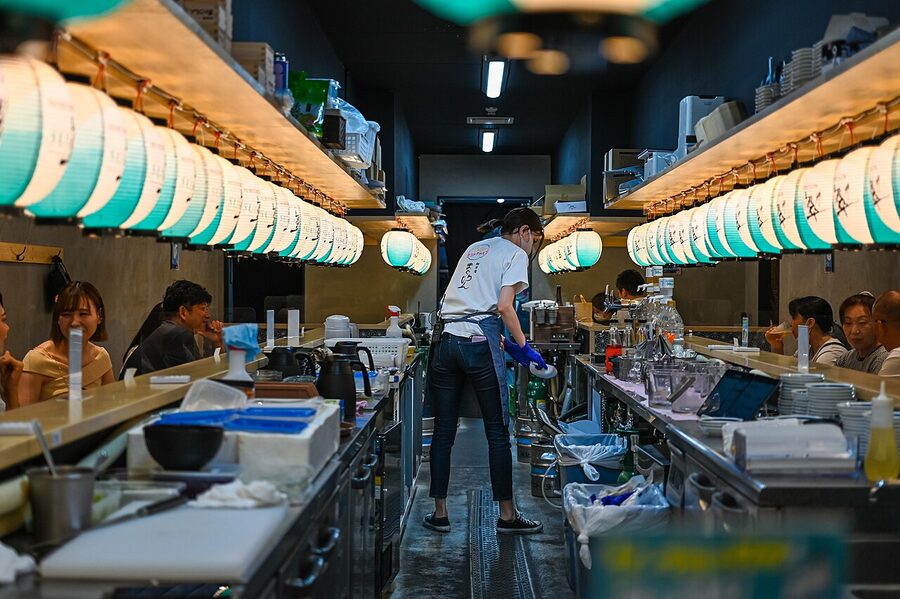

Gochisousama deshita, meaning thank you for the meal, on your way out. It is not optional, and it is not formal in the way English "thank you for the meal" sounds. It is a routine acknowledgment of a meal that just happened. The proprietor will say arigatou gozaimashita at the same moment, and the door curtain will fall behind you, and the next pair will already be ducking under it.
If you genuinely enjoyed the place, say so. Oishikatta desu (it was delicious) or otoshi ga oishikatta desu (the otoshi was delicious) is a small kindness that the proprietor will remember. They get this from regulars; getting it from a foreign visitor on a Tuesday makes their week.
The mistake, again
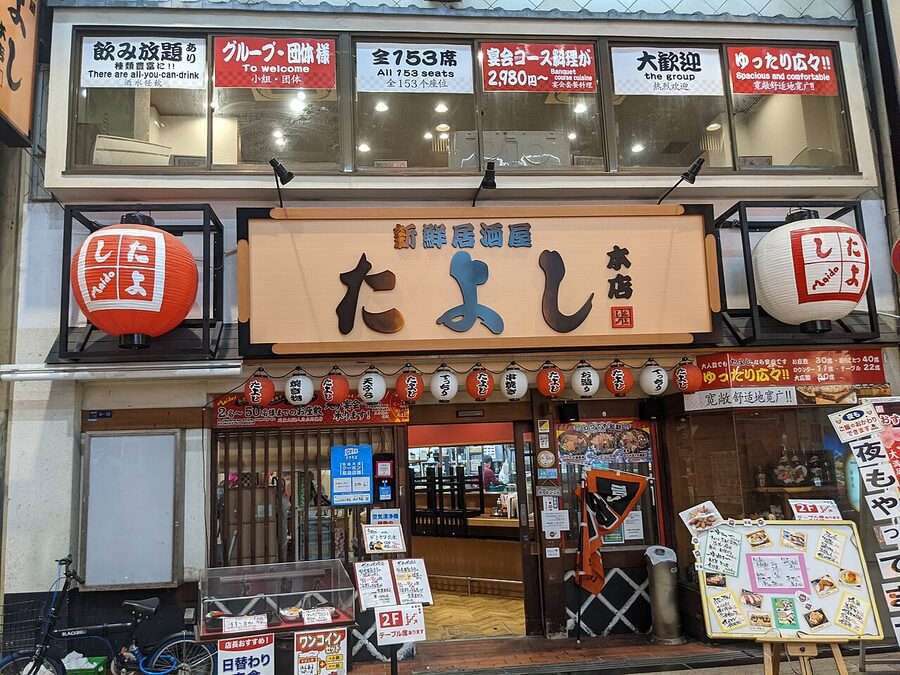

The night I poured my own beer in Yurakucho, I noticed about ninety seconds later, apologised to the proprietor with a small bow and the words sumimasen, hajimete na node (sorry, this is my first time), and the second half of the evening became a different evening. He poured my next beer himself. He asked where I was from. He recommended a junmai I had not heard of and gave me a half-pour to try. The whole register of the night shifted because I admitted, plainly, that I had got it slightly wrong and was happy to be corrected.
That is the only etiquette rule that matters more than any of the specific ones above. Show up paying attention. Catch your own mistakes when you can, apologise lightly when you cannot, ask the questions in your worst Japanese, and the proprietor will meet you most of the way. The lists exist to give you the shape. The shape is just so you can stop thinking about the shape and start drinking. For where to drink it, that is the rest of the site.
 Drinking CultureWhy I Stopped Clinking Glasses in JapanThe first time I got a Japanese toast wrong, I was at a wedding reception in Yokohama. Ten of us…
 Drinking CultureKonbini Drinks Are a Whole Trip StrategyJapan has roughly 56,000 convenience stores. That's more outlets than McDonald's has worldwide, and the country sells about a third…
 Drinking CultureOtoso, Bonenkai, and the Hush of ShogatsuThe first person to write the recipe for otoso was a third-century Chinese physician named Hua Tuo, and he wrote…