
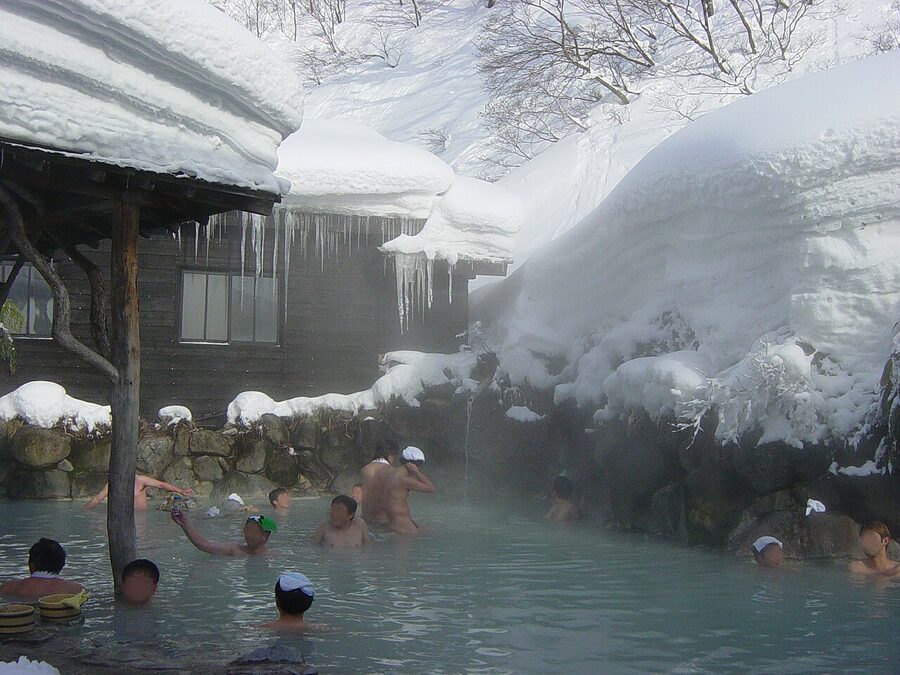
The first sound is the knock of the wooden bath bucket against the stone rim, and then the slow tip of the small ceramic flask into a cedar cup the size of a large thimble. Steam comes off the water at a height somewhere around your collarbone. It is January in Akita, the bath outside, the snow on the eaves of the old wooden building behind you holding the kind of weight that means it has been there since November. Inside the bath house someone is laughing softly at someone else’s joke. The cedar smells of resin and old wood. The sake in the cup is unpasteurised, served cold, brewed maybe seventy kilometres south of where you’re sitting. You take a sip. You sink a little lower. The first thing you notice is that the heat has already taken the alcohol straight to your head.

Drinking culture at a Japanese onsen ryokan is not really one culture. It’s five separate moments, each with its own rules, its own drink, and its own physical risk. The check-in beer at the lounge counter is not the same as the cold sake floating in a wooden tray on the bath water, which is not the same as the formal pour at the start of kaiseki, which is not the same as the post-dinner whisky in the corridor lounge, which is not the same as the small glass of sake some traditional inns put on the breakfast tray. Most English-language guides treat the whole thing as a single etiquette question. It isn’t.
This is what I wish someone had told me before my first ryokan stay. Not the basic shower-before-the-bath stuff, which exists in every onsen guide already (and which I’ve covered in other pieces about how to plan a drinking trip in Japan). The drinking-specific stuff: when, what, what it costs, what to skip, when to stop, and the three kinds of inn where alcohol is genuinely the point of the place rather than an upsell.
In This Article
- The five drinking moments at a ryokan
- Welcome at the lounge counter
- What I’d order at the lounge
- Sake in the bath
- Where you can actually do this
- The temperature problem
- Why cold not hot
- Drinking with kaiseki dinner
- How the dinner pour actually works
- What things actually cost
- The bring-your-own question
- The post-bath nightcap
- What to drink late
- What to skip
- Breakfast sake
- The three kinds of ryokan where drinking is the point
- The local-prefecture sake specialist
- The brewery-attached or distillery-attached inn
- The tasting-flight ryokan
- Bringing alcohol to a ryokan
- The room minibar question
- Where to actually buy
- The medical bit, expanded
- What rural ryokan get right that city hotels don’t
- Niigata: rice country, sake country
- Akita: the cedar baths
- Hyogo: the Kinosaki seven-bath crawl
- Yukata, etiquette, and the quiet stuff
- What to skip, what’s overrated
- One-night vs two-night
- Summer versus winter
- The drinking-the-spring-water question
- The bill at checkout
- If you’ve never done this before
- The thing I keep coming back to
The five drinking moments at a ryokan
Plot the day. You arrive around 15:00, you leave around 10:00, and in between you bathe two or three times and eat twice. There are five points where someone might offer you a drink, and at each one the etiquette is slightly different.
| Moment | Time | Typical drink | Cost band | What to know |
|---|---|---|---|---|
| Welcome / lounge | 15:00–17:00 | Welcome tea, sometimes a free local sake taster | Free or ¥0–500 | Often the best free drink of the stay; ask if they have a local jizake |
| In-bath sake | 16:00–19:00 / 22:00–24:00 | Cold sake on a wooden tray that floats | ¥800–1,500 per flask | Available only at certain inns; one flask is one bath, no more |
| Kaiseki dinner | 18:00–19:30 | Beer, sake, sometimes umeshu or shochu | ¥700–1,500 per glass; bottle ¥1,800–3,500 | The pour is generous; the price is not |
| Post-bath nightcap | 21:00–24:00 | Highball, beer, whisky from the lounge | ¥800–1,800 per glass | Often a self-serve fridge or honesty bar; this is when locals drink |
| Breakfast sake | 07:30–09:00 | One small ochoko of cold sake | Free at some inns, ¥500 at others | Decline politely if you have to drive |
Below I’ll go through each one in order, then come back to the question of which ryokan are actually worth choosing for the drinking specifically. Because there is a category of inn where the sake list is the reason you booked, and there is a much larger category where the drinks are simply along for the ride. They are not the same trip.
Welcome at the lounge counter
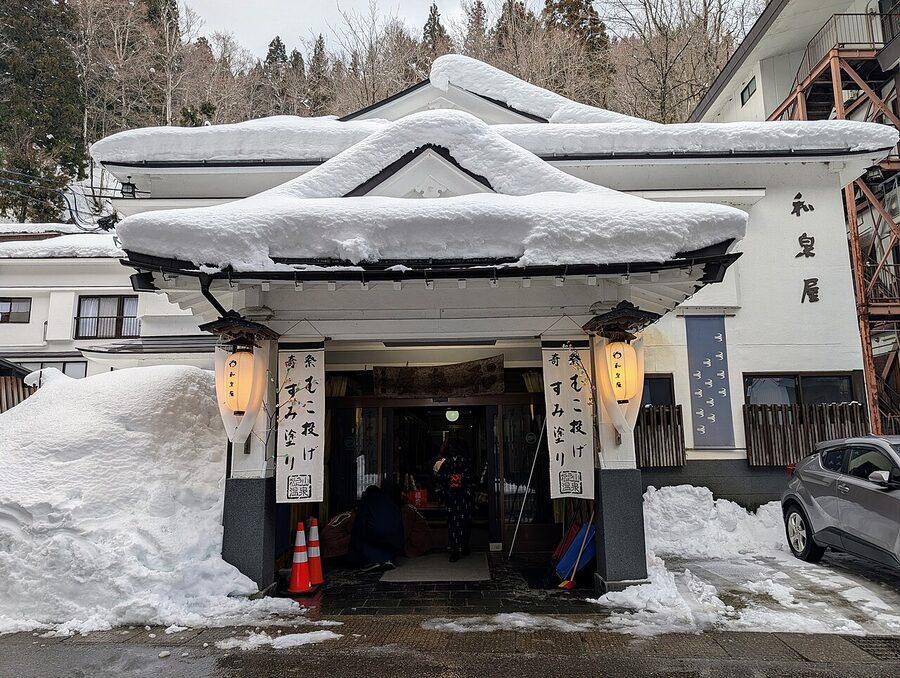

Check-in at most ryokan runs from 15:00 to 17:00. You take off your shoes, you write your name in a guestbook, you accept a hot towel. Then there’s a moment, while a member of the front desk is explaining the bath times and the dinner time and the breakfast time, when they sometimes ask: would you like a drink while we finish this?
What’s coming next, depending on where you are, is one of three things. The most common is green tea with a small sweet, free, no question. The second is a half-glass of beer or a shot of amazake, the sweet, low-alcohol fermented rice drink that some inns make in-house in winter. The third, and the one I’d watch for, is a free taster of the local sake.
Inns in sake regions sometimes offer a one-cup taster of a local brewery’s house pour. It is small, often around 30 millilitres, and it’s almost always good. You won’t see this advertised on the booking site. It’s the kind of thing that happens once you arrive. If you’ve checked in at a ryokan in Niigata, Hyogo, Akita, or Nagano and they don’t offer one, ask. The phrase is “jizake no shisaku wa arimasu ka?” which roughly means “do you have a taster of the local sake?” and almost always produces a small ceramic cup full of something interesting, on the house.
This is also the moment to ask three follow-up questions. Where is the local brewery? Are they open for tasting? And do they have a house bottle that you can drink with dinner that isn’t on the printed menu? At a good ryokan the front desk knows the answers cold. Brewery visits are easier to plan from a ryokan than from a city hotel, because the inn often has a relationship with the brewery and can book you in.
What I’d order at the lounge
If there’s no free taster on offer and you want to drink something while the rest of the check-in process plays out, the answer is almost always cold beer. A bottle of Asahi or Sapporo, around ¥700 for a tall one, drunk slowly in your room while you change into the yukata. Not a cocktail, not whisky. The lounge is not built for serious drinking and the bar staff (if there’s a bar at all) are usually the front-desk crew handling something else. Save the proper drinks for after dinner, when the lounge is set up for it.
Sake in the bath
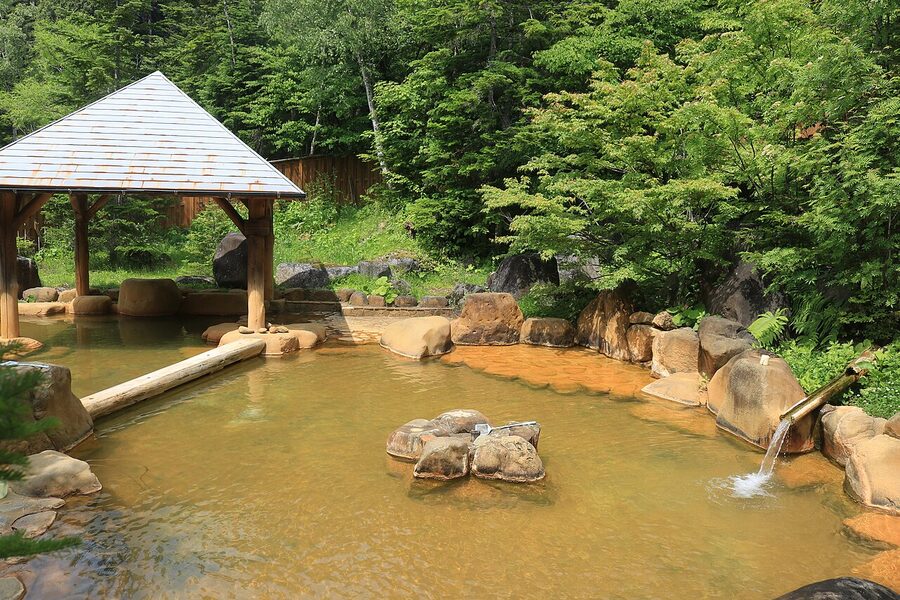
Drinking sake in the bath is the picture every Western guide uses for “ryokan culture”, and it’s the part most travellers actually misunderstand. The image is real. The reality is more limited.
The version you see in Japanese promotional photos works like this: a small wooden tray, the size of a side plate, floats on the bath water. On the tray is a ceramic flask of cold sake (tokkuri) and one or two small cups (ochoko). You sit in the bath, the tray drifts around at chest height, you pour and drink slowly. The Japanese phrase is “kaeshi-zake” or sometimes simply “furo-zake“, bath-sake.
It looks easy. It is not always available, and where it is, the rules are stricter than the photos suggest.
Where you can actually do this
Most public onsen ban food and drink in the bath area. The list of inns where in-bath sake is offered is shorter than you’d think. The ones that do it tend to be in the ¥25,000-and-up bracket and tend to fall into one of three categories: a private in-room bath (kashikiriburo) where the rules are yours; a high-end mixed-gender outdoor bath (konyoku rotenburo) at a remote inn that’s been doing it since before the modern hygiene rules tightened; or a season-specific event like Hokkaido’s “yuki-mi-zake” (snow-viewing sake) at places like Noboribetsu Onsen’s Daiichi Takimotokan, where for an hour or two each evening the rotenburo has a pour-station beside it.

If you’re staying in a more standard ryokan with a public indoor bath, you can’t bring sake into the bathing area itself. You can however ask for a small flask delivered to your room, take it into your in-room private bath if you have one, or drink it on the bench just outside the public bath where the relaxation chairs and the water cooler live.
The temperature problem
The medical issue is real, not an old wives’ tale. The Japanese Spa Association, the body that licences hot-spring resorts, formally advises against drinking alcohol in the bath. The mechanism is straightforward: hot water dilates blood vessels, lowering blood pressure; alcohol does the same thing; the combination drops your blood pressure faster than your body can compensate, which is why the textbook hot-spring fatality is a healthy adult who got into a 42-degree bath after a beer. Public onsen post a sign at the door with the same warning. The Japanese term for the resulting faint is “nobose“, which roughly translates as “rising heat to the head”, and the fix is to lie flat with your feet up and drink water.
The version of bath-sake that works without putting you on the floor is small, cold, and short. One ochoko cup, around 30 to 40 millilitres, of cold sake, drunk slowly during a single 10-minute soak. Not a flask. Not standing in the bath. Not after a beer at check-in. If you’ve already had two pints in the lounge, skip the in-bath round and save it for dinner.
Why cold not hot
If sake is offered in the bath, it’ll be cold. There’s a logic to this beyond the obvious one. Hot sake (atsukan) and a hot bath together accelerate the heat-into-the-head problem. Cold sake, ideally from a brewery within a hundred kilometres of the inn, gives you the contrast: hot water on your skin, cold liquid in your throat. There’s a whole separate piece on when hot sake is the right call. The bath is not it.
Drinking with kaiseki dinner
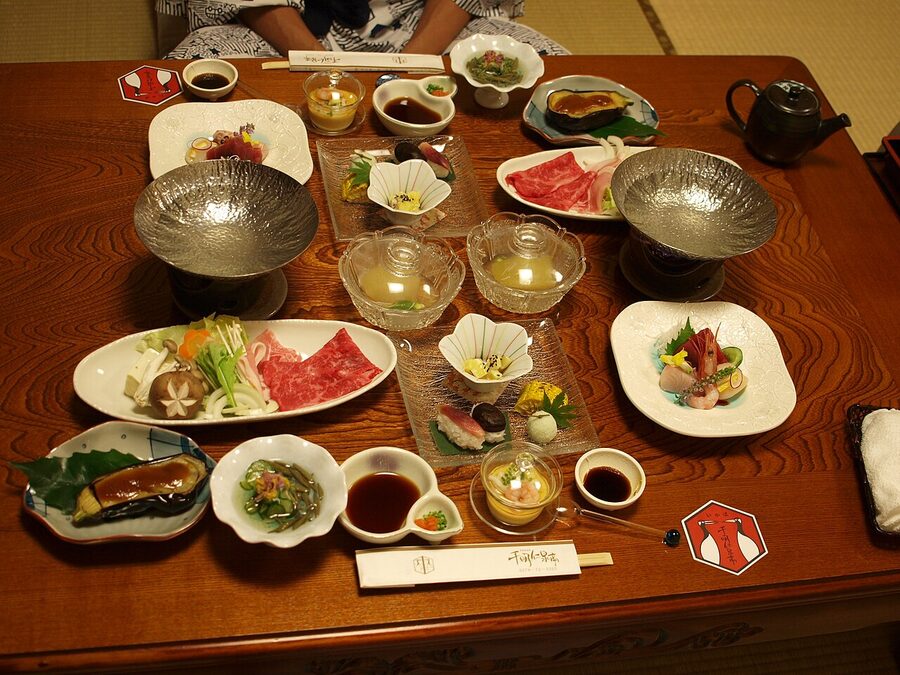

Dinner is when the drinking actually happens at most ryokan. Kaiseki, the multi-course meal that defines a proper ryokan stay, runs around fifteen items over an hour and a half. The food rolls in at a steady tempo. The drinks list does not. You order once, near the start, and what you ordered will be on your bill at the end even if you didn’t finish it.
How the dinner pour actually works
The structure varies by inn, but the most common pattern is this. You sit down. A waiter (at high-end inns this is your personal nakai, the room-attendant who handles your meals and turndown) hands you a single sheet drinks menu. Bottles, glasses, sometimes a tasting set. Beer is at the top. Sake is in the middle. Wine and shochu are below.
Order your first drink immediately. The food starts arriving within minutes and you do not want to be looking at a menu when the first tsukidashi appetiser lands. The standard opening order is a large beer, around 633ml, between ¥800 and ¥1,200, served in a glass with the bottle alongside. Pour for the person across from you first; they’ll pour for you. This is one of the few moments where the pour-for-others-first rule still genuinely matters in modern Japan, because everyone at a kaiseki dinner is doing it.
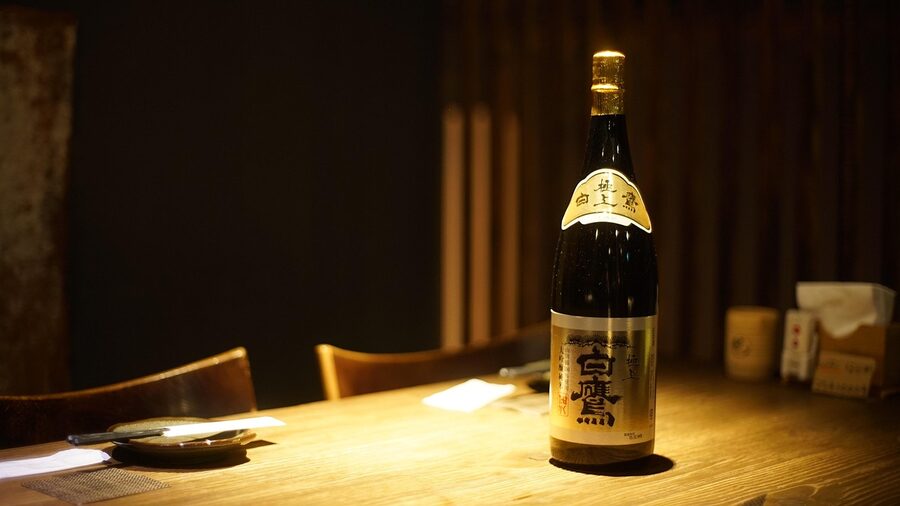
What I’d actually do, having now done this in close to twenty different ryokan, is order the beer for course one, switch to a sake tasting set for courses two through eight, and finish with whatever the inn is pushing as a digestif: usually a small glass of umeshu, the plum liqueur, or shochu on the rocks. The sake tasting set is the move. It’s usually three or five 30ml-to-50ml pours of different bottles, often including the local brewery, often around ¥1,800 to ¥2,500. You learn more about local sake from one tasting set than from a single bottle.
What things actually cost
This is the part the booking sites don’t show you. A two-person kaiseki dinner with a bottle of beer each, one tasting flight to share, and a digestif each will add roughly ¥6,000 to ¥8,000 to the room bill. A single bottle of premium junmai daiginjo sake for the table can run ¥6,000 by itself. The total dinner-drink bill at a 30,000-yen-a-night ryokan can easily double if you go into the upper-end bottles.
I find this both fair and slightly grating. Fair because the inn is buying small lots of regional sake at retail and pouring them with no markup either way; you’re paying restaurant prices, not bar prices. Grating because there’s no reduced-portion option for solo travellers, who often face a “bottle or flask” choice when 90ml of one specific sake is what they actually want.
The bring-your-own question
Can you bring your own bottle? Almost universally no. The same way you wouldn’t take a sandwich into a sushi counter. There is one exception: at the more relaxed family-run rural inns, especially in Tohoku and the San’in coast, the answer can be “we’d prefer you didn’t but we’ll lend you a glass”. This has happened to me twice. Both times the proprietor asked what I’d brought, took an interest, and didn’t charge a corkage fee. Don’t expect this. Don’t ask at any inn that has a printed drinks menu more than one page long.
If you really want a specific bottle, the workaround is to drink it in your room before dinner, not at dinner. Most ryokan rooms have a kettle, two cups, a small fridge, and a low table. The room is yours; the dining room is the inn’s.
The post-bath nightcap
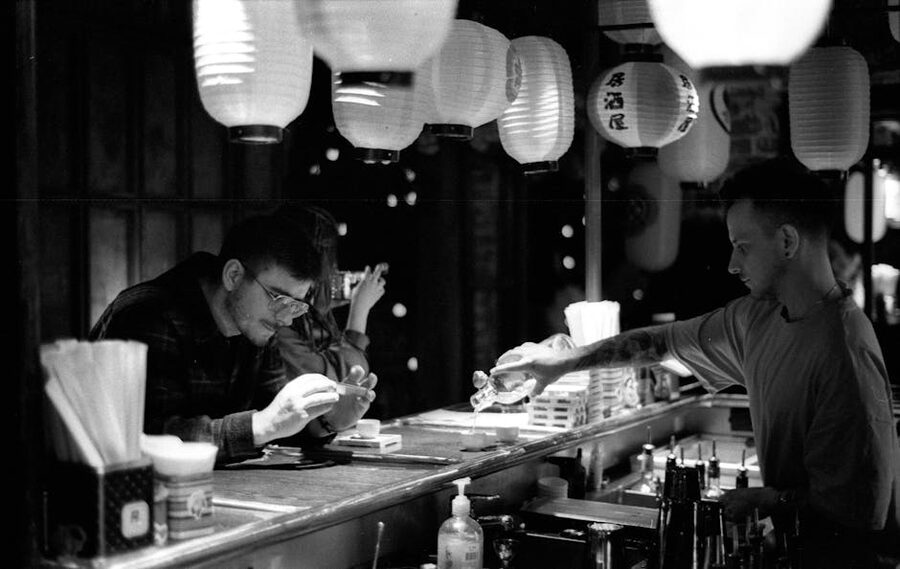
After dinner, after the second bath, around 21:30, the inn quiets down. The big group at the next table has gone to their room. The corridors smell of cedar and the soap from the bath. This is the best drinking hour of a ryokan stay, and most foreign guests miss it because they’ve already gone to bed.
What’s open at 22:00 depends on the size of the place. A 30-room ryokan often has a small bar in the lobby, staffed by one of the front-desk crew, with a list that includes whisky, highballs, the local sake, and a few cocktails (badly made; skip them). A larger inn will have a proper standing bar, more bottles, and bartender who knows what they’re doing. A smaller, family-run inn may have nothing more than a fridge in the corridor with bottled beer and a notebook to write your room number.
The notebook system is genuinely good. You take a 350ml beer, you write your room number and “1” against it, you go and sit by the lounge fireplace, and at checkout the total is added to your bill. There’s no markup of note. Beers run ¥500 to ¥700, the same as a convenience store down the road. The honesty of the system reflects something about how rural Japanese inns work: nobody is going to cheat the inn out of a 600-yen beer.
What to drink late
By this hour, you’ve already had bath-sake and dinner-sake. What you want is a) something different, b) something that won’t compound the dehydration. The two things that work, in order: a Japanese highball (whisky and soda, ideally Suntory Kakubin if it’s a chain ryokan or a proper bar pour at a higher-end one) and a 350ml beer. Both lighter on alcohol per volume than dinner sake. Both rehydrate, sort of, in the sense that the soda content compensates for the spirits.
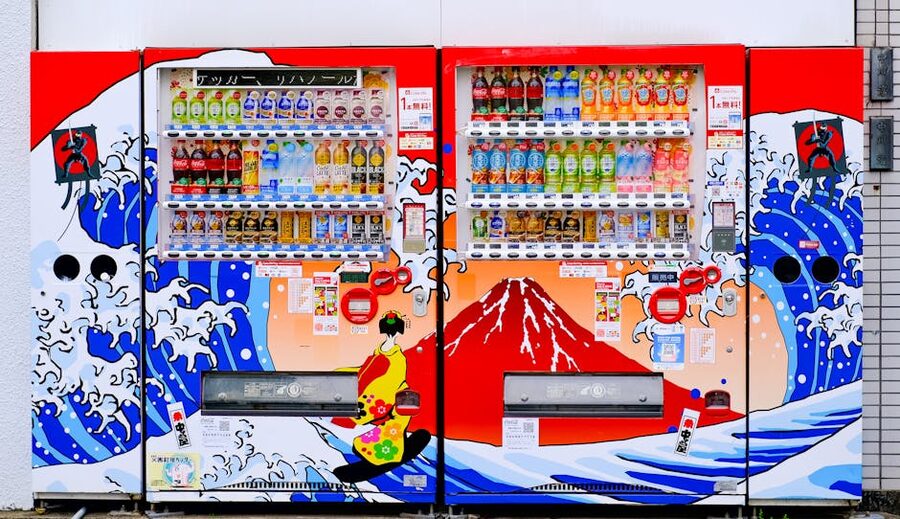
The third option, easily missed, is a corridor vending machine. Older onsen towns like Beppu, Kusatsu, and Kinosaki have hallway vending machines that sell beer and sometimes cup sake (single-serving 180ml glass cups, usually around ¥300). Cold, decent, and the only drink available at 02:00 if you’ve woken up restless.
What to skip
Cocktails at a ryokan bar. Almost universally bad. Wine: the by-the-glass options are tired bottles that have been open for days, and the bottles are marked up like a Tokyo hotel bar. Anything imported and elaborate. The lounge stock is built around what the inn buys most of, which is Japanese beer, Japanese whisky, and the local sake. Drink within that triangle and the quality is fine. Drink outside it and it isn’t.
Breakfast sake
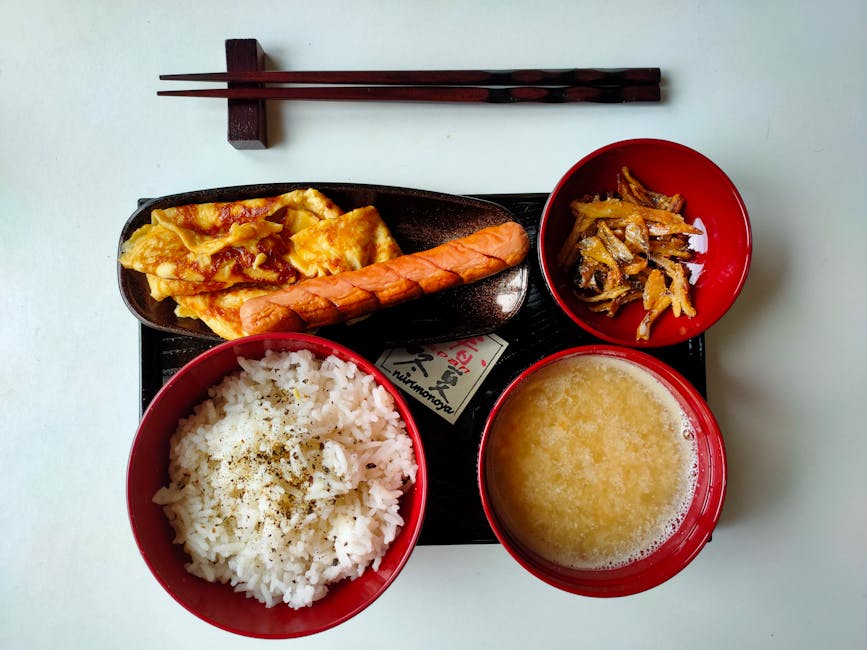
This one surprises Western guests. At some ryokan, particularly in sake regions and especially in winter, the breakfast tray includes a small ochoko with a single 30ml pour of cold local sake. It’s the same idea as a glass of mimosa at a hotel breakfast, only the cultural register is completely different. You can drink it. You can decline it. You shouldn’t pretend to drink it and pour it into the soup.
The drink is called “asazake“, literally “morning sake”. It dates to a period in Japanese rural life when sake was a daily-life drink, not a special-occasion drink, and the idea was to warm yourself before going out into the cold. It survives in ryokan culture as a kind of ceremonial pour at certain inns, and as an actual drink at older fishing-village or mountain-village inns where the locals still take a small one before leaving the house in winter.
If you have to drive that day, decline politely. The phrase is “kuruma na node“, which means “because I’m driving”, and nobody will be offended. Japan has a zero-tolerance drink-driving law and 30ml of sake will not put you over but the inn will not want any ambiguity. If you’re catching a train, drink it. The novelty alone is worth it once.
The other breakfast drink is a small glass of amazake, sweet, low-alcohol or alcohol-free fermented rice. This is non-negotiable in winter at a good rural inn. It’s hot, it’s thick, it tastes like rice porridge and pear, and after a morning bath in a snow-covered outdoor pool it is one of the best drinks in the country. Cup it in two hands and drink it slowly while the breakfast tray is being cleared.
The three kinds of ryokan where drinking is the point
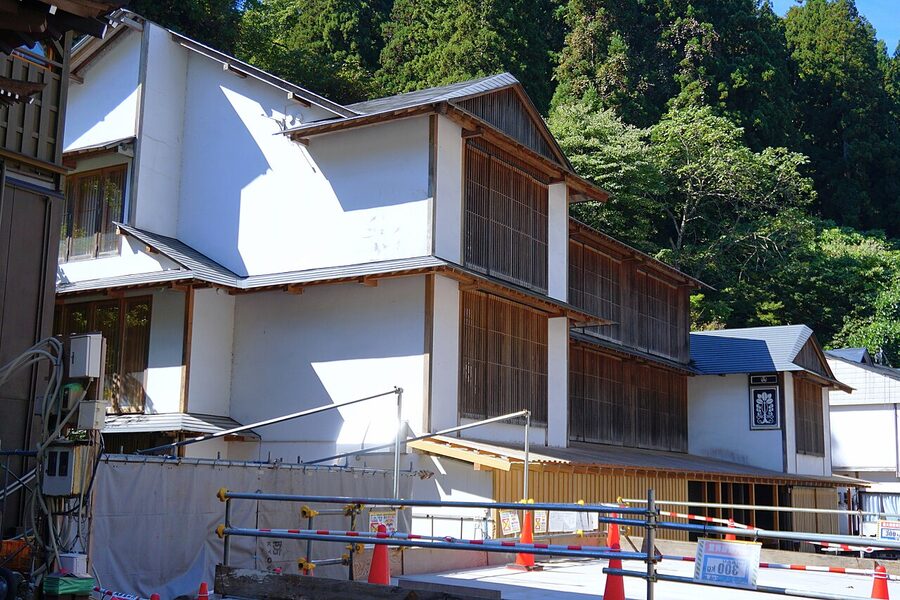

Most ryokan are not built around drinking. The bath is the point, the food is the point, the room is the point, and the sake is just there. But there is a small category of inns where the drinks list is the headline feature, and if you care about drinking specifically, these are the places worth filtering for.
The three categories I’d plan around:
The local-prefecture sake specialist
An inn that pours every brewery in its prefecture. The strongest example I know of is in Yamagata: Yudagawa Onsen Kyubei Ryokan, a small inn in Tsuruoka City that stocks all 18 sake breweries of the Shonai region and pours them in private rooms with kaiseki. You can do a full Shonai tasting flight without leaving your futon. Other prefectures with similar specialists: Niigata (the Yuzawa and Echigo-Yuzawa onsen towns have inns that lean heavily into local jizake), Akita (Tazawako and Nyuto Onsen), Ishikawa (Yamashiro and Yamanaka). The signal to look for in the listing: “jizake no shu” or “all-prefecture sake stock”, phrases that won’t translate cleanly but that the inn’s website will display in Japanese with proudly written brewery counts.
The brewery-attached or distillery-attached inn
An inn whose owners also run a brewery or distillery, or who have a deep historical relationship with one next door. The classic case is the Echigo region, where some inns in Niigata are physically attached to small kura sake breweries and tasting is built into the stay; another is in Hokkaido, where a couple of ryokan near Yoichi sit close enough to the Nikka distillery that whisky pours feature on the menu. Yoichi distillery itself is doable as a half-day from the right ryokan.
The tasting-flight ryokan
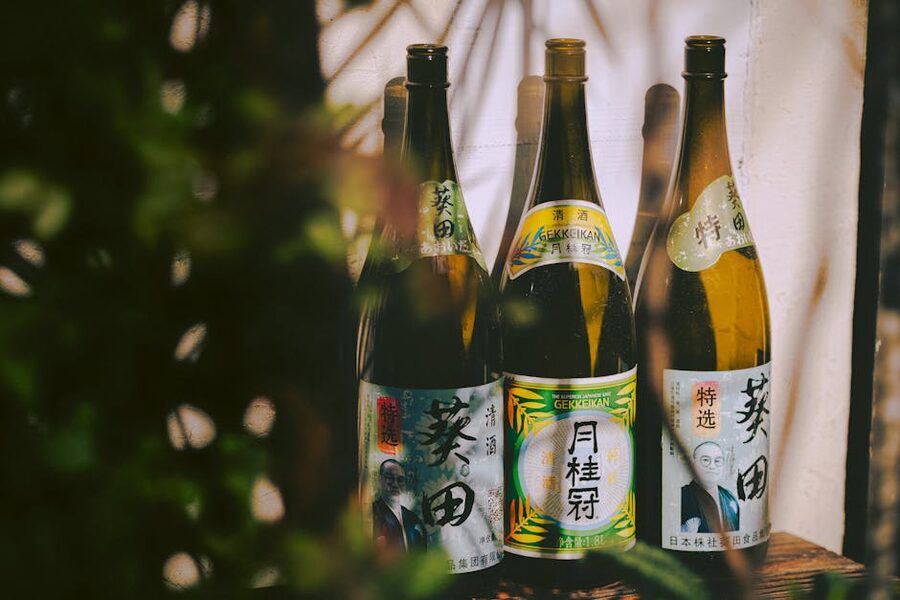
An inn that has formalised a tasting-flight option as part of dinner or as a standalone late-night offering. Pricing is usually ¥1,800 for three pours, ¥2,800 for five. The flight is picked by a staff sommelier or by the proprietor, and a card or a chalkboard explains each pour. This format is more common at modern-leaning inns in Tokyo’s surrounding hot-spring belt (Hakone, Atami, Izu) than at deep-traditional inns. If your trip is short and you want to taste a range without committing to a brewery tour, this is the move. The Tachibana-Shimaya in Hakone is one of the better-known examples.
Bringing alcohol to a ryokan
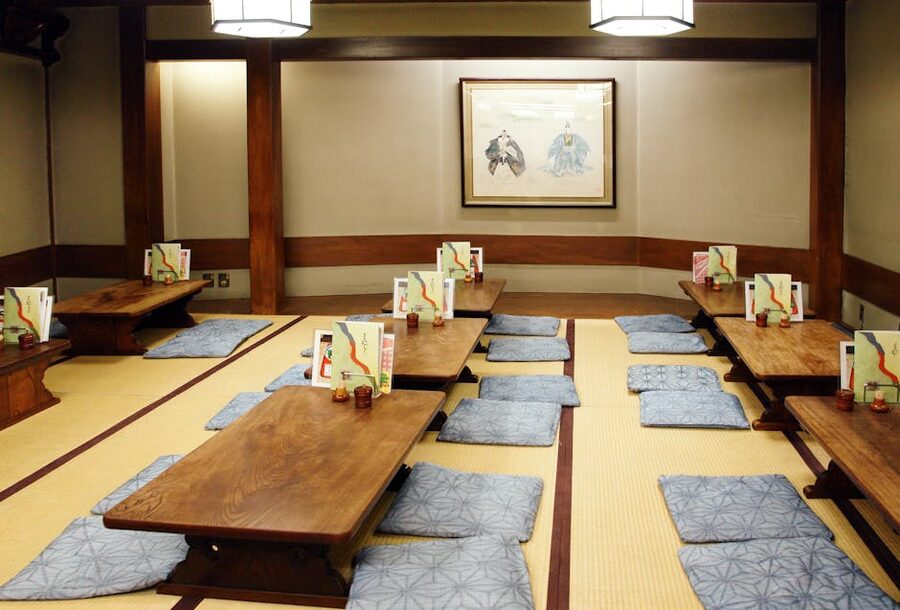
Bringing your own alcohol into a ryokan room is fine, almost everywhere. The line in question is drinking it at dinner (no, almost always) versus drinking it in your room (yes, almost always). The other line is taking it into the bath (no, never, including the in-room private bath at most inns).
The practical implication: if you stop at a sake shop on the way to the inn and pick up a 720ml bottle of something specific, you’ll be drinking it in your room, on the tatami, around a low table, with whatever snacks the inn provides as your otsumami. This is genuinely one of the best ways to drink in Japan. The room is quiet, the snacks are well-chosen, the futon is being laid out by someone you can’t see, and the sake from the local sakaya is fresher than what you’d get on most restaurant menus.
The room minibar question
Most ryokan rooms have a small fridge stocked with beer, soft drinks, and sometimes a single can of cocktail. The pricing is hotel-bar level: a 350ml beer at ¥800, a small bottle of sake at ¥1,500. The fridge is honour-system; you write what you took on a small card, slide it under the door at checkout. You can also use the fridge to store your own bought drinks. Move the inn’s stock to one shelf and put yours on the other; this is normal and expected. Just don’t drink the inn’s beer thinking you bought it, because you’ll see it on the bill and the inn won’t be wrong.
Where to actually buy
For better-than-minibar prices and a wider range, find the local sakaya, the dedicated alcohol shop, on your way to the inn. Every onsen town has one within a five-minute walk of the bus stop. They keep cold sake in a refrigerated case at the back, room-temperature bottles up front, and a handwritten chalkboard listing the day’s recommendations. A 720ml bottle of premium local sake will cost ¥2,000 to ¥3,500. The same bottle at the inn will cost double.
If you’re already in town and missed the sakaya, the convenience store is the fallback: cup sake at ¥300 each, large beers at ¥400, the One-Cup Ozeki line of small ready-pour sakes that’s a Japanese drinking-culture institution. Not as good as a fresh bottle, but good enough for the room.
The medical bit, expanded
I noted earlier that the alcohol-and-bath problem is real. Here’s the longer version. A 41-degree bath, the temperature of a typical Japanese furo, raises your core temperature roughly one degree per ten minutes. It also drops your blood pressure by about 10 to 15 mmHg by dilating peripheral blood vessels. Two beers’ worth of alcohol drops your pressure by roughly the same amount. The combination can drop pressure enough to cause syncope, the technical term for fainting, which in a hot bath means going under the water.
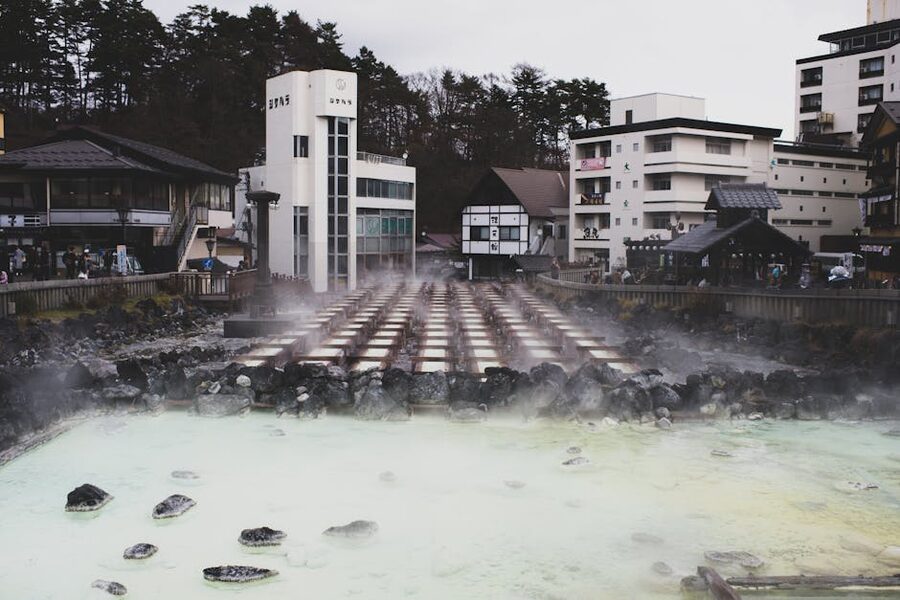
The Japan Spa Association and the Japan Hot Spring Climatology Society both publish formal guidance: avoid alcohol within an hour before bathing, avoid bathing within an hour after a heavy meal, and limit bath sessions to fifteen minutes for healthy adults. Some onsen towns post bilingual versions of this at the public bathhouse entrance. Kusatsu’s main bath, Sainokawara, has the warning in five languages.
The practical version of all this:
- One drink before the bath is fine; two is not.
- If you’re going to drink in the bath, make it cold, small, and short. One 30ml ochoko, ten-minute soak.
- Drink water between baths. Every onsen has a free cold-water dispenser at the changing room exit; use it.
- If you feel light-headed in the bath, get out, sit on the edge, breathe. Don’t try to stand and walk.
- Save the heavy drinking for after dinner, after the last bath, in the lounge or the room.
This is the same logic that drives the price-and-portion structure of budget drinking on a Japan trip: small servings, frequent water, no marathon sessions. The onsen culture aligns with that. The bath is doing half the work the alcohol would normally do; you don’t need to drink as much to feel as much.
What rural ryokan get right that city hotels don’t
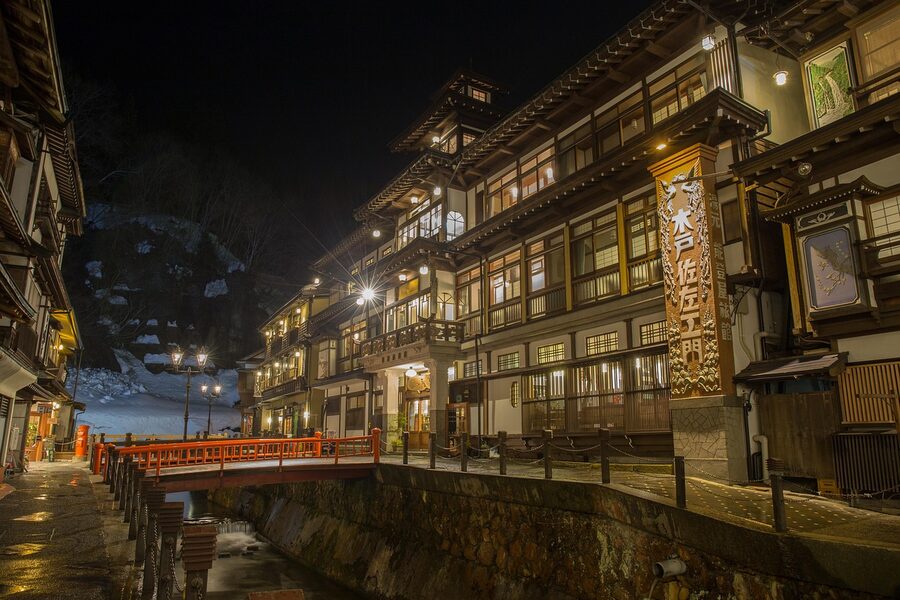
If I had to point to one thing rural onsen ryokan do better than any city accommodation in Japan, it’s the integration of the drink with everything else. The beer is local, the sake is local, the food is local, the water you bathed in is local, and the bartender or proprietor pouring your drink at midnight knows the brewery owner by name. None of this is true at an urban hotel.
The result is a kind of round-trip drinking experience that doesn’t really exist outside this format. You arrive in a town, you taste the local jizake at check-in, you eat with it at dinner, you take a bath in the same water that the brewery pulls from on its uphill side, and you wake up in the morning to a small breakfast pour of the same drink. That’s the version of “drinking culture at an onsen ryokan” that’s worth structuring a trip around. Compare with the city-bar version of drinking in Tokyo, which is wider and deeper but completely uncoupled from place.
Niigata: rice country, sake country
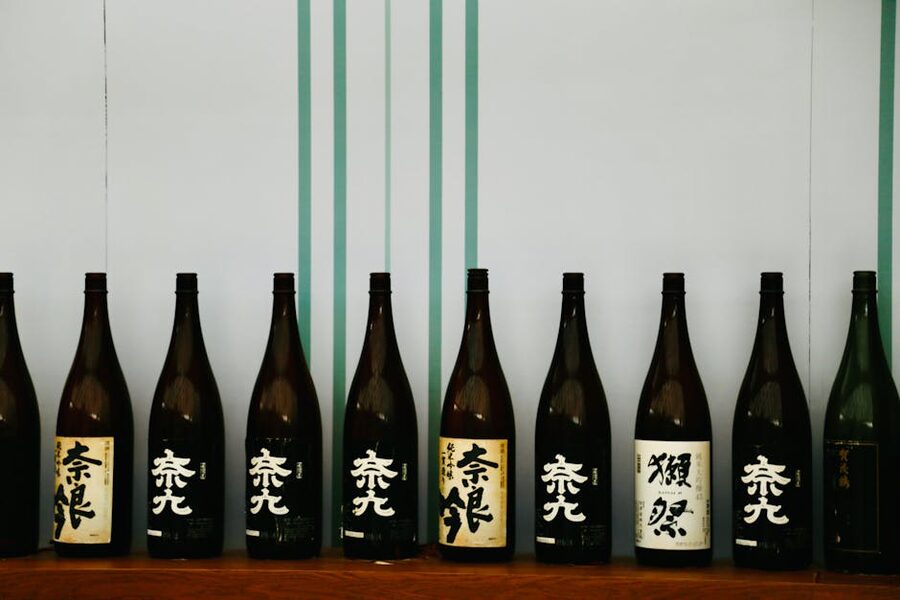
Niigata, in the snow country on the west coast, is the prefecture I’d choose for a single drinking-focused ryokan trip. The reasons are practical. Rice country means sake country: there are around 90 active breweries, more than any other prefecture. The onsen towns of Yuzawa, Echigo-Yuzawa, and Matsunoyama are within a two-hour shinkansen ride from Tokyo. The famous “all-prefecture sake stand” at Echigo-Yuzawa station, “Ponshukan”, lets you taste from 100+ Niigata sake brands for ¥500 before you’ve even reached your inn. A two-night trip to a sake-focused Niigata ryokan can pack in more than a week of city tasting. There’s a fuller treatment in my piece on the Niigata sake region.
Akita: the cedar baths
Akita’s claim is more atmospheric. The Nyuto Onsen valley in the western mountains, particularly the inn called Tsurunoyu, runs an outdoor mixed-gender bath that’s been doing the cold-sake-on-a-tray pour for at least three centuries (the photo at the top of this article was taken there). The local sake is from the Aramasa brewery in Akita City, an hour’s drive away, and it’s one of the most respected modern-traditional sake makers in Japan. You can request the Aramasa pour at dinner; the inn keeps a small allocation. The bath is at 47 degrees, the snow is a metre and a half in February, and the sake is cold. Few drinking experiences in Japan are this complete.
Hyogo: the Kinosaki seven-bath crawl
.jpg)
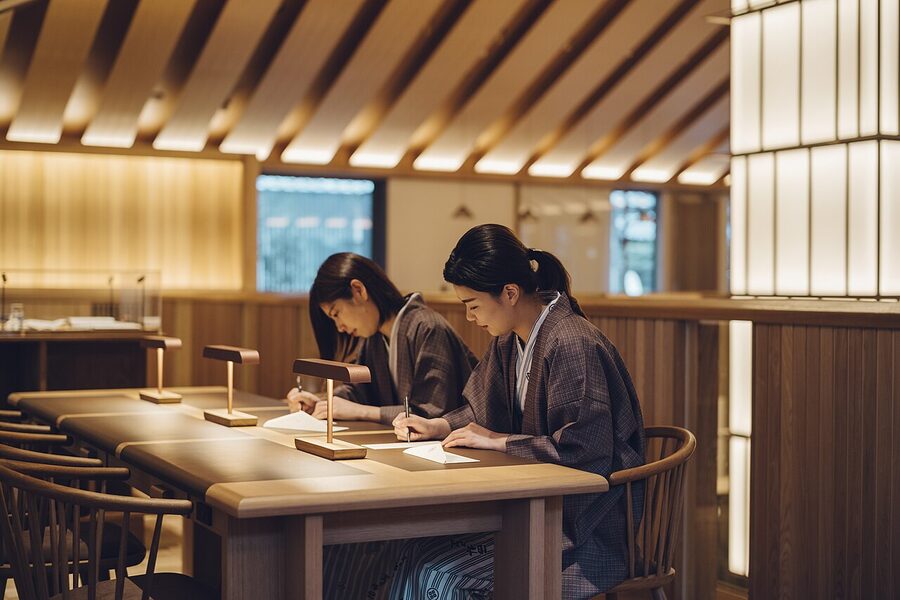
Kinosaki Onsen on the Sea of Japan side has seven public baths along a single canal-lined street. The format is unique: stay at any of the 70-plus inns and you get a wooden pass that opens all seven baths. You walk between them in your yukata and geta, often via a 10-minute riverside route. Between baths there are tachinomi-style stand-up bars on the street selling local sake by the small cup, ¥500 a pour, and tiny izakaya selling crab cakes for the same. The right way to do Kinosaki is bath, sake, walk, bath, food, walk, bath, sake. The one-night minimum doesn’t really do it justice; book two. There’s an overlap with my tachinomi piece in terms of format but the Kinosaki version has better water and worse music.
Yukata, etiquette, and the quiet stuff
.jpg)
A few practical things that are not strictly drinking but that affect the drinking experience:
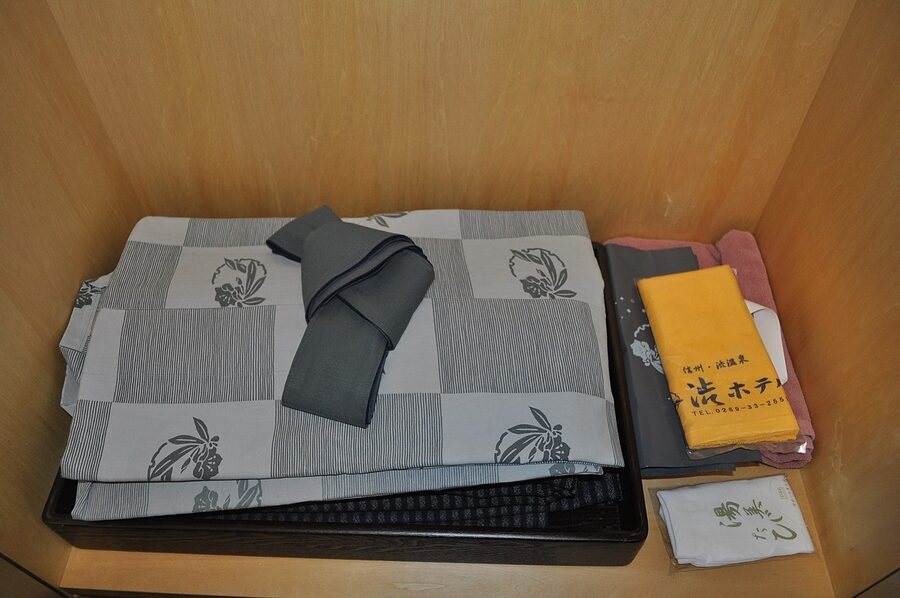
The yukata is your dinner uniform. Don’t change into street clothes for dinner. The cotton robe with the wide sleeves is what you wear to the dining room, to the lounge bar, and to breakfast. Tied left-over-right, never the other way (right-over-left is funeral). The obi belt sits at the navel. There is a coordinated jacket called a haori for cold weather. Most ryokan provide all of this, sized roughly. If you’re tall (over about 175cm for men, 165cm for women), ask at check-in for a longer one. They have them; they don’t always offer them.
Pour for others first. When the beer comes at dinner, fill the other person’s glass. They’ll fill yours. This applies at the lounge bar too if you’re drinking with another guest or the staff. It does not apply when you’re alone, in which case you pour your own and nobody minds. The phrase is “oshaku“, roughly “respectful pour”, and it’s the one piece of drinking etiquette that genuinely transmits across language barriers.
“Kanpai” before the first sip. Hold the glass with one hand, the bottom supported with the other if it’s a small cup. Touch glasses lightly with everyone present. Drink. The phrase is universal and uncomplicated and you’d insult the meal by skipping it.
Don’t pour your own first. If you’re with a Japanese host, let them pour for you, then take the bottle and pour for them. The reverse, pouring for yourself first, reads as graceless. Foreigners get a lot of slack on this one but it’s nice to do it right.
Take the room slippers off at the tatami edge. The corridor is slippers, the tatami is socks. The toilet has its own pair of slippers (often a different colour) which you change into when you go in and back when you come out. This sounds silly until you realise that at midnight, after three drinks, the wrong slipper combination is the most common ryokan etiquette mistake foreigners make.
What to skip, what’s overrated
Things I’d actively pass on at a ryokan, even good ones:
The room-service “free welcome drink” at chain ryokan. Big-name chains like Daiwa and Hatago Hotels offer a “welcome drink” voucher in the lobby. It’s almost always domestic chu-hi or a vending-machine sake. Take the green tea instead.
Hotel-style cocktails at the lounge bar. Anything with three ingredients and a paper umbrella. The lounge bar is built for beer, whisky, sake, and shochu. Asking for a margarita produces something that’s not quite right.
Wine. Japanese wine has improved enormously in the last decade, but ryokan lists are usually three years behind the curve. The wine is poured from open bottles that have sat behind the bar for who knows how long. Stick with the drinks the inn knows.
The expensive “premium sake” upgrade. If the menu offers a normal sake set at ¥2,000 and a premium sake set at ¥5,500, the upgrade is rarely worth the difference. The premium tier is one bottle of daiginjo with a polishing rate around 50%; the standard tier is three bottles of differently styled regional sake. The variety is more interesting than the prestige.
Drinking through the night. The bath is the point. The single best meal of the trip is breakfast, and breakfast at 07:30 with a hangover is misery. Two real drinks at dinner, one nightcap, sleep by 23:30. This is the rhythm the inn is designed around. Trying to drink through it doesn’t work.
One-night vs two-night
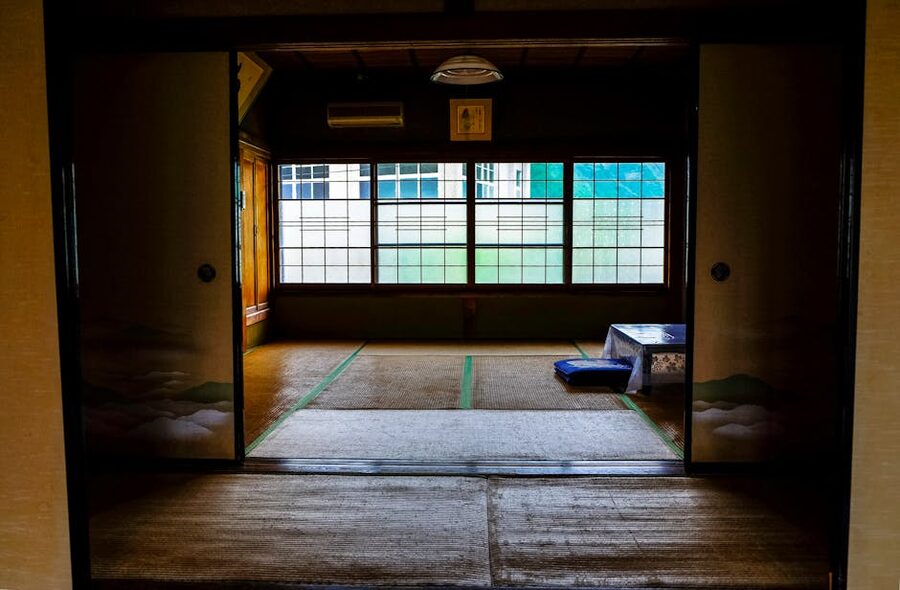
Most ryokan operate on a one-night-with-dinner-and-breakfast model. You can do it. I’d argue strongly for two nights wherever the schedule allows.
The argument is structural. On a one-night stay, you arrive late afternoon, you bathe twice, you eat a long dinner, you sleep, you eat breakfast, you leave by 10:00. There’s no buffer. If the dinner pour was bigger than expected, the breakfast is rough. If you wanted to walk through the onsen town’s sake shops, there’s no time. If you wanted to do an early-morning pre-bath walk to the brewery up the hill, there’s no time.
On a two-night stay, the structure relaxes. The first dinner is the introduction; the second is where you order with knowledge. The first night you try the house sake; the second you try the one the proprietor talked about over your first dinner. The morning of the second day is yours: brewery visit, walk, second breakfast, second long bath. You leave in the afternoon, full, properly tired, and having actually understood the place.
The cost difference is real but not as large as you’d think. Most ryokan offer a 10-15% discount for the second consecutive night. A ¥30,000-per-night room becomes maybe ¥55,000 for two. For the difference between actually-experiencing a place and rushing through it, this is one of the better-value upgrades on a Japan trip.
Summer versus winter
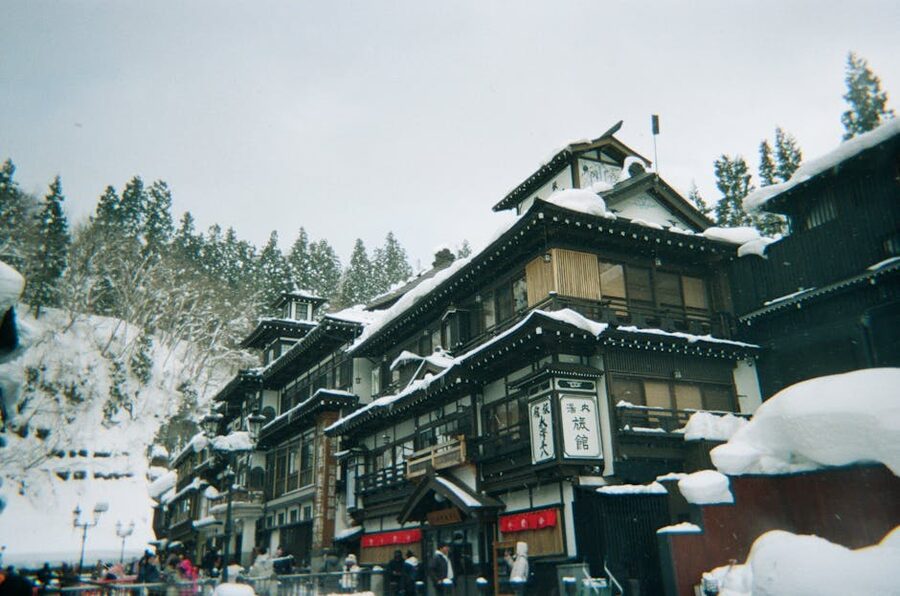
Onsen culture is associated with winter for a reason: the cold air outside makes the hot water more pleasurable, the snow makes the rotenburo photograph beautifully, and the seasonal Japanese palate leans toward heavier food and warming sake in December and January. December to February is the peak ryokan season, with prices to match.
Summer changes the drinking equation. Hot sake is replaced with cold sake in the dining room. The breakfast pour, where it exists, is more often replaced with cold barley tea. The lounge bar shifts toward cold beer and highballs rather than whisky-and-soda. Some inns with summer rotenburo serve cold beer poolside in the late afternoon, which doesn’t happen in winter for obvious reasons.
Three other seasonal notes:
Spring (March-May) is hanami season at city ryokan with garden views. Cherry blossom + sake is its own ritual; I’ve covered it in the hanami piece.
Autumn (October-November) is hiyaoroshi season: the autumn-release sake that’s been aged through summer is at peak right when the leaves turn red. Most rural ryokan put the local hiyaoroshi on the dinner menu in this window. Worth asking for.
The “May Golden Week” gap. Late April to early May is a paid holiday period. Booking goes mad and prices double or triple. If your trip overlaps Golden Week, plan a city stay rather than a ryokan, and save the ryokan for the shoulder weeks before or after.
The drinking-the-spring-water question
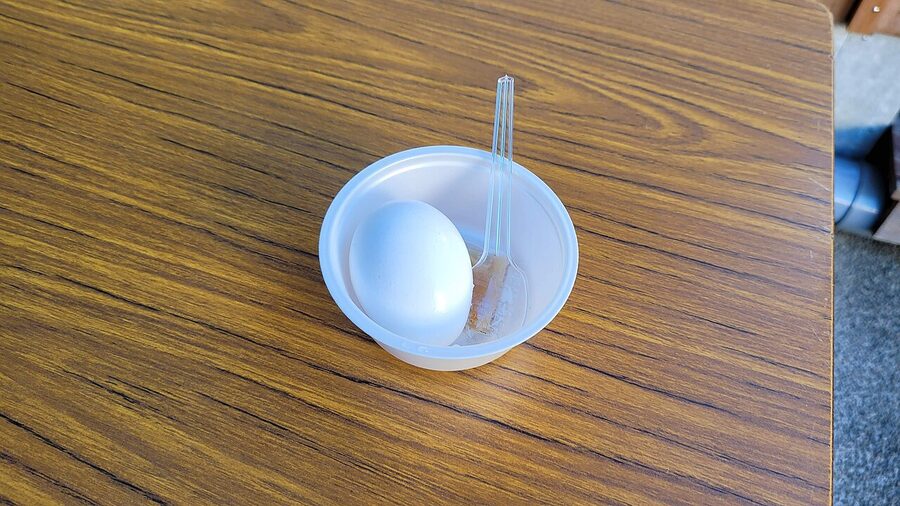
This is a side question that I get asked a lot, and that almost no English guide covers correctly: can you drink the onsen water itself? In some places, yes, deliberately, as part of the experience. The Japanese term is insen, drinking-spring; it’s specifically licensed by the Ministry of Health and indicated by a small sign at a fountain or stone basin near the bath house.
The Japan Spa Association formally classifies which onsen waters are drinkable and posts the licence at the source. The ones I’ve drunk from: Kusatsu (gritty, sulphurous, said to help digestion), Arima in Hyogo (ferrous, faintly metallic, definitely not delicious but worth the sip), and Yufuin in Oita (clear, slightly briny, mineral). Drink 100ml, slowly, from a paper cup or your own clean cup, half an hour before a meal. That’s the formal recommendation. It’s not pleasant, but it is interesting, and it’s the part of “drinking culture at an onsen” that most travellers skip entirely.
What’s not drinkable: anything from the bath you’re sitting in (different water from the drinking spring, even at the same site), anything with a sign that doesn’t explicitly say “insen” or “nomeru” (drinkable), anything that’s been sitting in an open container.
The bill at checkout
Checkout is around 10:00 at most ryokan. The bill at the front desk is itemised in a way that often surprises foreign guests because the drinks line is sometimes separate from the food line. A typical breakdown:
- Room rate (per person, two-meal-inclusive)
- Service charge / consumption tax
- Onsen tax (a small per-person municipal levy, ¥150-300)
- Drinks consumed at dinner (itemised by drink)
- Drinks consumed from the room fridge or hallway honour bar
- Any extras (massage, late-checkout, paid private bath)
The dinner-drinks line is usually the variable. Two beers and a tasting flight for two people: around ¥6,000. Two bottles of sake, two beers, and a digestif each: around ¥14,000. A long evening with multiple bottle pours: easily ¥25,000 on top of the room. The drinks are not where the inn makes its primary profit, but they are not loss-leaders either; expect to pay roughly what you would at a moderate Tokyo restaurant.
One thing worth doing at checkout: ask for the receipt itemised in English if you want to remember what you drank. Most inns will print a Japanese-only invoice, but the front desk can usually re-print with English item names. This is also the moment to ask for the bottle name of anything you particularly liked, so you can find it in a sake shop later.
If you’ve never done this before
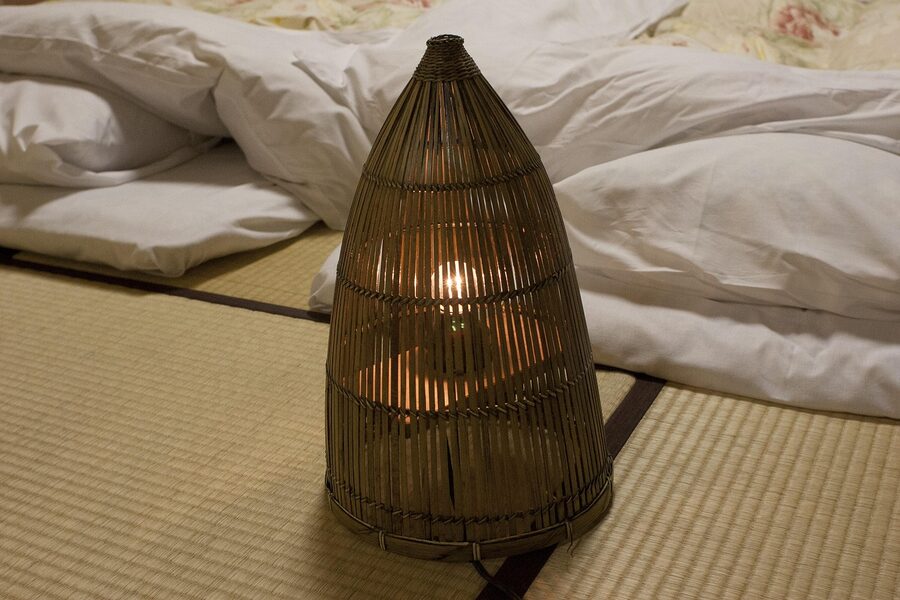
Three things I’d plan around if it’s your first ryokan stay and the drinking is a real interest, not an afterthought:
One. Pick a region known for sake first, an onsen town second. Niigata, Yamagata, Akita, Nagano, Hyogo, Hiroshima, Fukushima. The bath quality is comparable across most onsen regions; the sake quality is not.
Two. Book the inn through the inn’s own website where possible, in part because you can call ahead about the drinks list. Even an English-language email asking “do you have a tasting flight option at dinner?” or “do you stock the local sake from [brewery name]?” will get a useful answer 80% of the time. The booking aggregators don’t show this kind of information.
Three. Build a rest day after. Two nights at a serious ryokan, especially one with strong sake on offer, is a more drinking-heavy stretch than most travellers plan for. The day after is best as a low-key onward train day, not a hike day. Drinking on the shinkansen the next morning is also its own thing, but with a coffee in your other hand.
The thing I keep coming back to
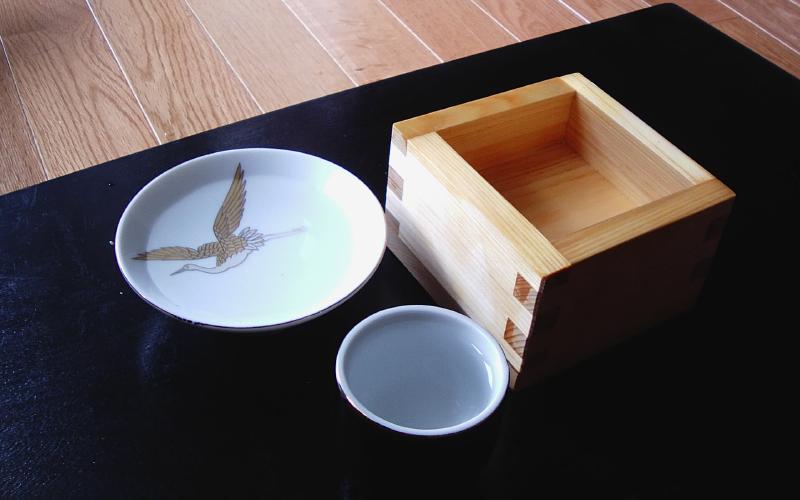
The drinking culture at a ryokan is the most coherent drinking culture in Japan, and the one that travellers most often half-experience. The country’s sake breweries and the country’s onsen towns evolved alongside each other, in the same rural valleys, drawing on the same water tables. The food evolved to match. The pour at dinner is local because the brewery is local. The bath is hot because the geology is volcanic. The cup is small because the night is long.
The version of the trip that works is the slow version. One bath, one cup. Then dinner. Then another bath, then a beer in the corridor. Then sleep. The version that doesn’t work is the marathon: three bottles at dinner, a fourth in the lounge, the alarm at six the next morning. The inn is built for one of these and not the other.
The first sake I had in a ryokan, more years ago now than I’d like to admit, was a small cup of cold Kikusui at a wooden bench just outside a public bath in Nyuto Onsen. It was the third sip that did it: cold liquid in the throat, hot water still in my skin, the snow on the eaves outside the dressing room. I remember exactly what the cup looked like. I don’t remember what I had at dinner.
 Drinking CultureWhy I Stopped Clinking Glasses in JapanThe first time I got a Japanese toast wrong, I was at a wedding reception in Yokohama. Ten of us…
 Drinking CultureKonbini Drinks Are a Whole Trip StrategyJapan has roughly 56,000 convenience stores. That's more outlets than McDonald's has worldwide, and the country sells about a third…
 Drinking CultureOtoso, Bonenkai, and the Hush of ShogatsuThe first person to write the recipe for otoso was a third-century Chinese physician named Hua Tuo, and he wrote…