
The first thing you notice is the smoke. Charcoal smoke, the lighter-fluid kind nobody admits to using, drifting between the lower branches of a hundred-year-old somei-yoshino. Then the sound, which is plastic on plastic: the click of a paper cup against a 300ml bottle of nama sake, the crinkle of a konbini bag, the squeak of new sneakers on a blue tarp that someone’s coworker laid down at 06:00 to hold the spot. By 14:00 there is no walking room on the central avenue at Ueno. By 16:00 the petals start coming down whenever the wind moves, and the air smells like charcoal and cherry blossom and the inside of a 7-Eleven, and someone you’ve never met is pouring you a cup of warm sake from a bottle they bought at the station because that’s what hanami is.
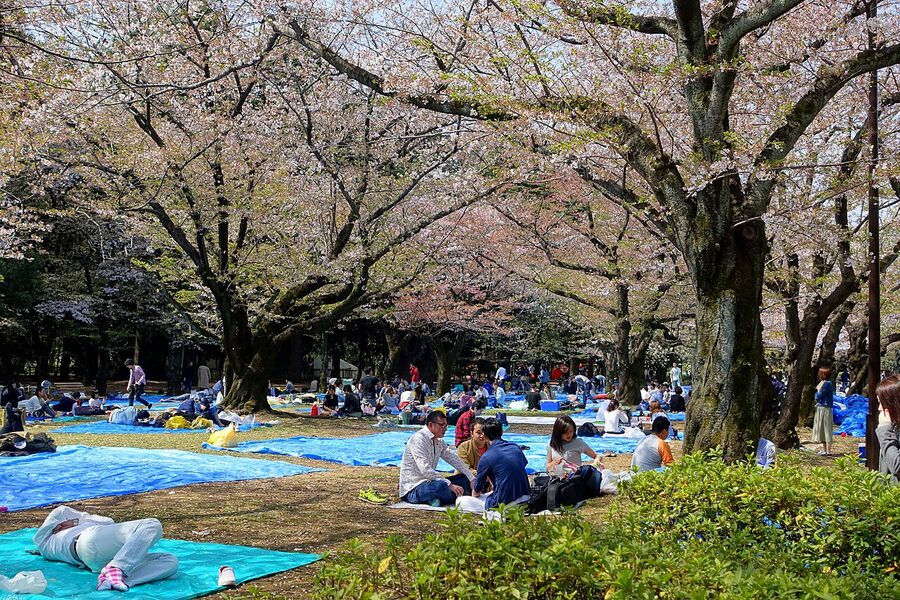

This is what people mean by hanamizake, sake under the cherry blossoms. It’s the most public, most relaxed drinking event of the Japanese year, and if you time a trip for it, you don’t need a reservation, a guide, or a plan more complicated than “buy one bottle and one bento at the station closest to a park”. You do need to know which parks are actually for drinking and which look perfect on Instagram but ban alcohol on the lawn. You need to know which sake is in season the week you’re there. And you need to know that what looks like a rowdy festival in Tokyo is a quiet picnic in Kyoto, and that the best blossom photo of the trip might come from a park in Aomori in late April after Tokyo has already gone green. Most of which my sake guide doesn’t cover, because hanami sake is its own thing.
In This Article
- What hanami sake actually is
- Quick comparison: where to actually go
- The mechanics: tarp, cup, charcoal
- The blue tarp
- The cup
- The shichirin
- The bento
- What to drink under the trees
- Shinshu (新酒): the new-rice release
- Shiboritate (しぼりたて): just-pressed
- Nama (生): the unpasteurised
- Beer, chu-hi, and the rest
- The named parks, in detail
- Yoyogi Park, Tokyo
- Ueno Park, Tokyo
- Maruyama Park, Kyoto
- Osaka Castle Park
- Hirosaki Park, Aomori
- Chidorigafuchi, Tokyo (boats)
- The Tokyo bonus: Inokashira and Meguro
- Bloom timing windows by city
- Konbini hanami in twenty minutes
- Reading the konbini sake label
- Etiquette traps
- Hanami when the weather doesn’t cooperate
- The other drinks
- The historical postscript
What hanami sake actually is
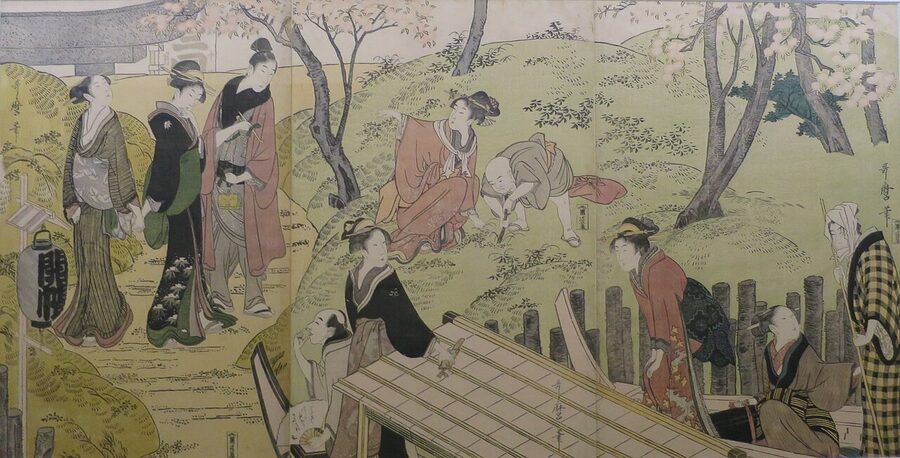
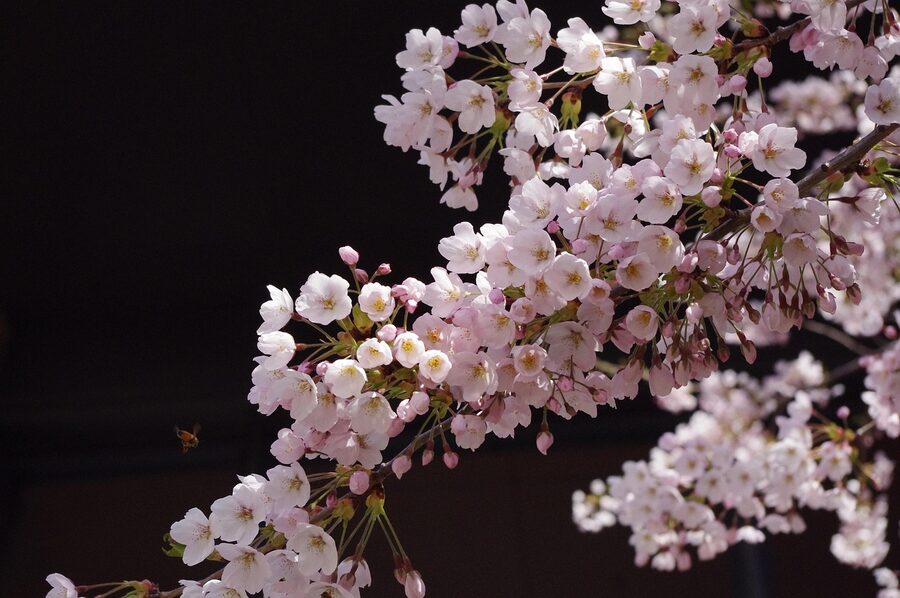
Hanami means flower viewing. Hanami-zake (花見酒) is the sake you drink while you’re doing it. The pairing isn’t accidental. It’s old. The earliest records of cherry-blossom drinking parties in any organised form trace to a 1598 event held by Toyotomi Hideyoshi at Daigoji Temple in Fushimi, Kyoto, where 700 cherry trees were planted for the occasion and famous sakes from across Japan were poured for invited guests. The Edo period (1603–1868) is when the practice came down from court use to the streets, helped along by the eighth shogun Tokugawa Yoshimune planting thousands of cherry trees in the 1720s along Asukayama, Sumida-zutsumi, and Koganei-zutsumi specifically to give the common people somewhere to picnic.
There’s also the agricultural side. Cherry blossoms bloom in the same window when farmers historically transplanted rice. The cherry tree was associated with the rice god (the kura in sakura connects to ancient names for the spirit of harvest), and the spring drinking ritual was a way of welcoming the god of the year’s rice down from the mountains. Sake is the drink the rice god takes for an offering. So the connection runs through both ends of the year: spring blossom, autumn rice, winter brewing, spring sake released. Drinking sake under the trees is the closest a modern Japanese spring gets to a fertility rite, even if nobody under sixty would say it that way.
The word hanamizake itself, in its current popular form, comes from a classical rakugo (sit-down comedy) story, also called Hanami-zake, in which two friends borrow three sho of sake from the local sake shop, plan to sell it for ten sen a cup at the cherry trees, and finish the lot themselves before they get there. The story made the word stick. So when a sake brewery puts “hanami” on a label in March, the joke is older than they are.
Quick comparison: where to actually go
The big six. Five practical dimensions. The full per-park notes are further down.
| Park | City | Peak bloom | Vibe | Drink-friendliness | Walk from station |
|---|---|---|---|---|---|
| Yoyogi Park | Tokyo | late March, early April | loud, party | excellent. Alcohol allowed everywhere on lawns | 3 min from Harajuku |
| Ueno Park | Tokyo | late March, early April | busy, family-mixed | good. Central avenue only, side paths posted | 2 min from Ueno |
| Maruyama Park | Kyoto | late March, early April | medium, refined | good. Alcohol allowed, no open flame | 10 min from Gion-Shijo |
| Osaka Castle Park | Osaka | late March, early April | relaxed, big | excellent. Alcohol and shichirin allowed in Nishinomaru (¥350) | 5 min from Osakajokoen |
| Hirosaki Park | Aomori | late April, early May | festival, lit-up | excellent. Festival stalls pour all day | 15 min from Hirosaki Station by bus |
| Chidorigafuchi | Tokyo | late March, early April | quieter, photo-walk | limited. No picnicking, drink on the boat (¥800/30 min) | 5 min from Kudanshita |
The vibe column is the one most guides skip. Yoyogi and Hirosaki are loud-loud. Maruyama is medium. Chidorigafuchi is for walking and photographing, not for sitting. Pick the one that matches what you actually want to do that afternoon.
The mechanics: tarp, cup, charcoal
The whole physical setup of a hanami picnic in Japan is the same one you’ll see on Edo woodblock prints from the early 1800s, with two updates: the tarp is now plastic, and the sake comes in a paper cup. Everything else has carried over.

The blue tarp
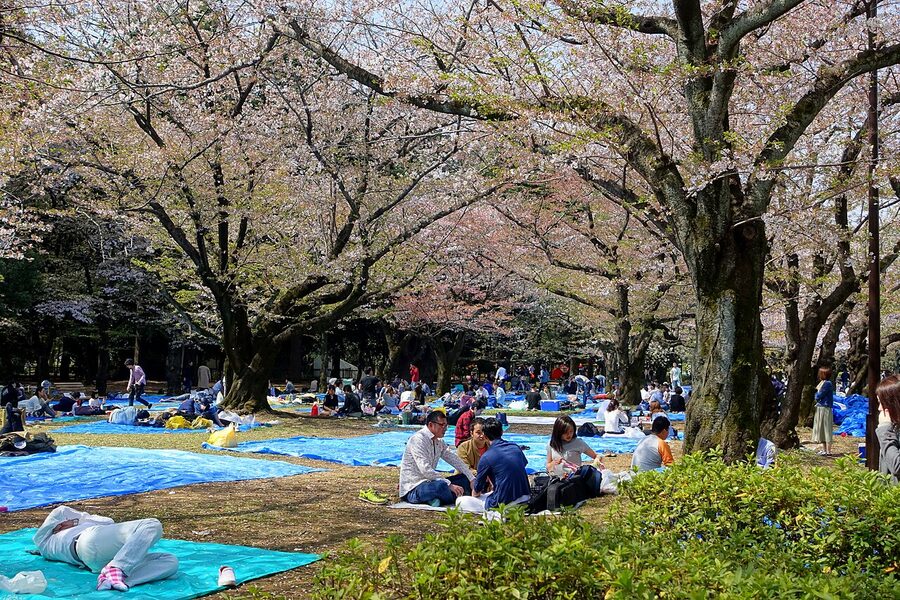
The standard-issue hanami tarp is a thin blue plastic sheet sold as a rejaa shiito (leisure sheet) at any 100-yen shop, Don Quijote, or Daiso. The 90 by 180cm size is ¥110, which is enough for two people; the 270 by 270cm size is ¥330 and sits four. Bigger groups buy two or three and overlap them. Office groups buy industrial-grade ones the size of a parking spot and the new hire of the team turns up at 06:00 on a Friday to lay it down and physically hold the territory until lunchtime, when the rest of the team arrives. This is not a joke; it is a job assignment.
You take your shoes off when you step onto the tarp. The tarp is treated like the inside of a house. Leave your shoes at the edge of the tarp, soles down, facing outward so you can step into them when you stand up. Eating with shoes on the tarp will get you stared at; once you’ve clocked the rule once, you don’t forget it.
The cup
Glass is banned in most Tokyo public parks during hanami. There are signs in red. The standard substitute is a 200ml clear plastic cup or a paper cup, both available in 50-pack sleeves at any konbini for ¥200 or so. Six people, twelve cups, you swap them as the sake changes. Don’t bring a wine glass. Don’t bring your nice ochoko. The whole thing is designed to be replaceable.
The shichirin
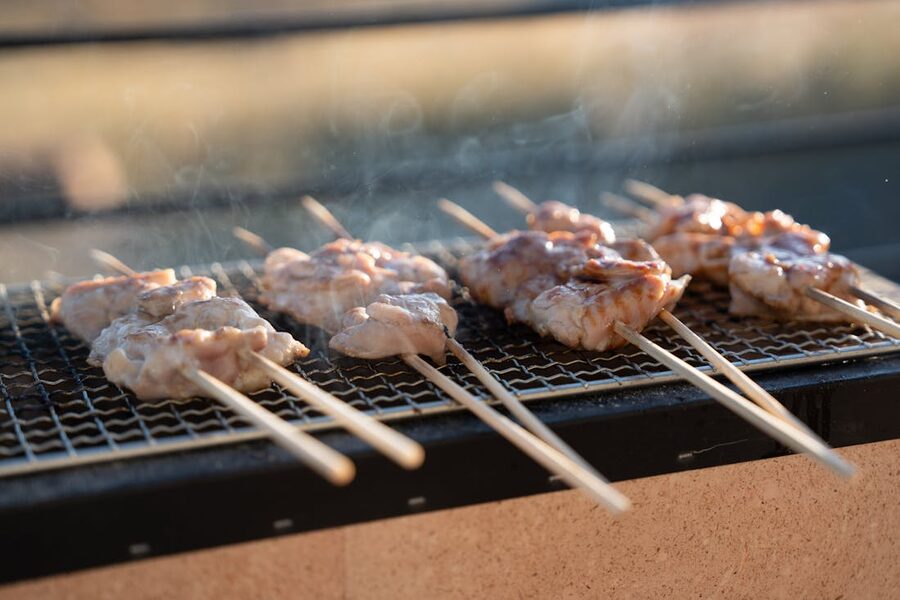
A shichirin is a small portable charcoal grill, traditionally a clay-and-ash drum about the size of a basketball, that takes a single layer of binchotan or oak charcoal and grills four skewers at a time. Buy a disposable one (the foil-pan kind sold seasonally at home centres for ¥980) or rent at the bigger parks. The catch: Tokyo metropolitan parks (Yoyogi, Ueno, Inokashira, Shinjuku Gyoen) ban open flame. Period. Bring it and you will be asked to put it away. Osaka Castle Park, most Kansai parks, and the festival grounds at Hirosaki and Hakodate allow it. Check the park website the week of, because the rule sometimes flips year-to-year.
The bento
The convenience-store bento is the right answer. Lawson, FamilyMart, and 7-Eleven all roll out hanami-specific bento from late February. They cost ¥398–680, contain pink-themed onigiri (sakura ebi rice, pickled ume), chicken karaage, tamagoyaki, two pieces of sweet inarizushi, and one or two sakura mochi. They’re engineered for cold eating. If you want to drink and not cook, the konbini bento is the entire meal solved. The sake and food pairings piece goes deeper into what works with cold sake; the short version is that konbini karaage and a cold junmai are nearly perfect for the temperature you’re drinking at.
What to drink under the trees
Spring is when sake breweries release the freshest stuff of their year. From late February through mid-April, three categories show up that you only see at this time:
Shinshu (新酒): the new-rice release
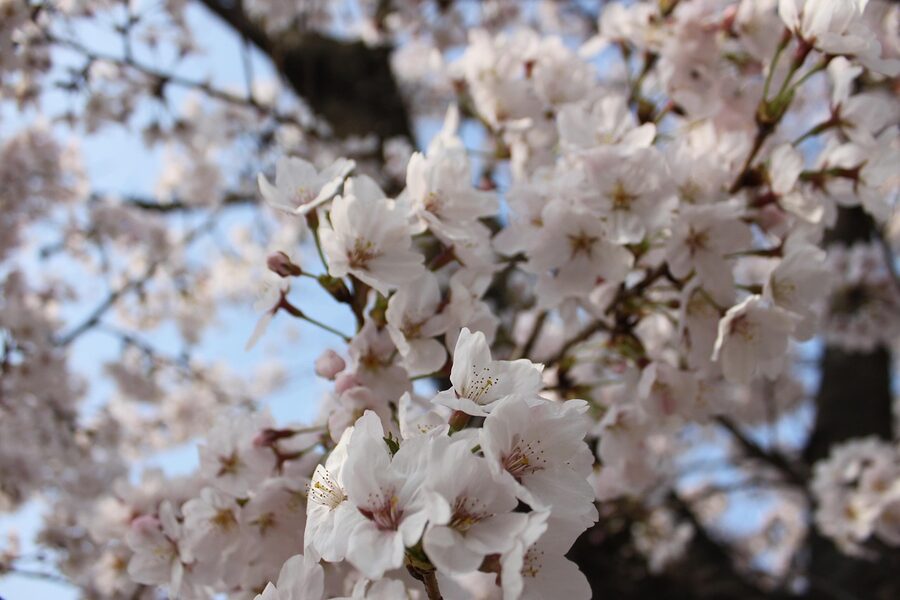
Shinshu is the year’s first commercial release of sake brewed from the most recent rice harvest. Breweries start brewing in October–November, and the first bottles ship from late February through March. Look for “新酒” on the label, or for a release-month banding (“しぼりたて新酒”, fresh-pressed new sake). Expect a forward, slightly raw, almost mineral character with a touch of CO2 still dissolved from the press tank. It tastes new, in the precise sense that the wine industry uses for primeur.
Recommended easy ones for a picnic:
- Hakkaisan Shinshu (Niigata): clean, dry, ¥500–700 for the 300ml at the konbini.
- Daishichi Shinshu (Fukushima): rounder, kimoto-style, harder to find, worth it.
- Dassai 23 Shiboritate (Yamaguchi): the picnic flex if you’re willing to spend ¥3,000 on a 300ml bottle.
Shiboritate (しぼりたて): just-pressed
Shiboritate means “freshly pressed” and is usually unpasteurised or pasteurised once. The flavour is loud, slightly sparkling, alive. It is the sake equivalent of just-baked bread. Cold serve only; a shiboritate at room temperature in the sun is a mistake you only make once. Most are released between January and April and do not keep past the season.
Nama (生): the unpasteurised
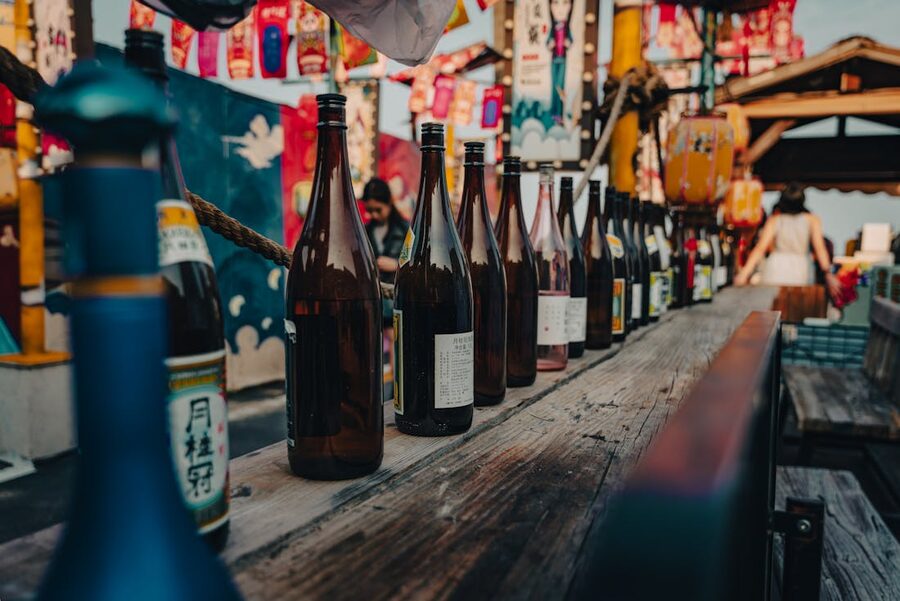
Nama, or more precisely nama-zake, is sake bottled without the second pasteurisation, which means it has to stay refrigerated. The flavour is fruitier and more aromatic; for a hanami afternoon in 12–15°C weather, this is the best version of sake to be drinking. The catch is the konbini cold chain. Lawson and 7-Eleven stock nama in their refrigerator section during the season; FamilyMart is hit-or-miss. If the bottle has been sitting on a non-refrigerated shelf, it is not nama any more, regardless of what the label says. Walk away.
Beer, chu-hi, and the rest
Sake is traditional but not compulsory. A 2018 Weathernews survey of 13,000 Japanese hanami-goers had beer at 33 per cent and sake at 19 per cent of first-drink-of-the-day choices, with chu-hi and wine taking most of the rest. Cold beer in a 350ml can (Asahi Super Dry, Sapporo Black Label, Yebisu) is the practical default; Japanese craft beer doesn’t really show up at hanami because the cans are bigger and harder to keep cold, but a cold Yo-Ho Suiyobi-no-Neko works fine if you bring an ice pack.
The chu-hi (canned shochu highball) deserves a separate note. The seasonal sakura-can chu-hi released in March every year is a marketing exercise more than a flavour innovation, but the ¥180 price point and the convenience of a 350ml can make them the easy default for a casual hanami. Strong Zero, Hyoketsu, Sumikiri are the three big lines. The taste is mostly sweet pink water; nobody pretends otherwise. (For context on chu-hi’s relationship to highball, the highball culture piece covers the chain side of the same drink family.) If you want something more grown-up that still works outdoors, dry shochu over ice in a pre-made highball can like Iichiko or Kuro Kirishima also holds up. That’s the case the iichiko brand makes for shochu as a flexible hanami drink, and it is a fair point.
The named parks, in detail
Yoyogi Park, Tokyo
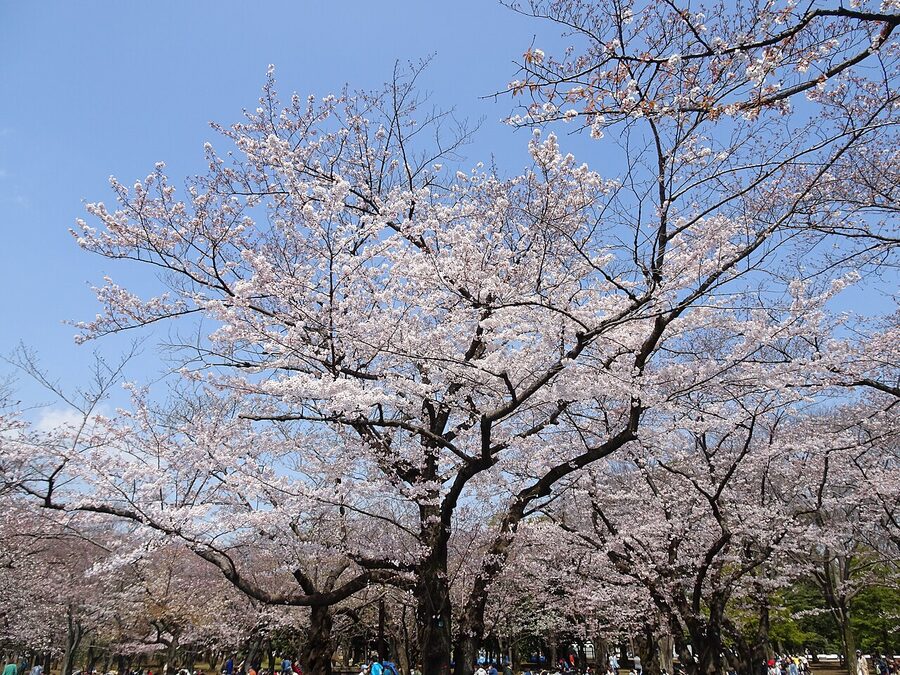
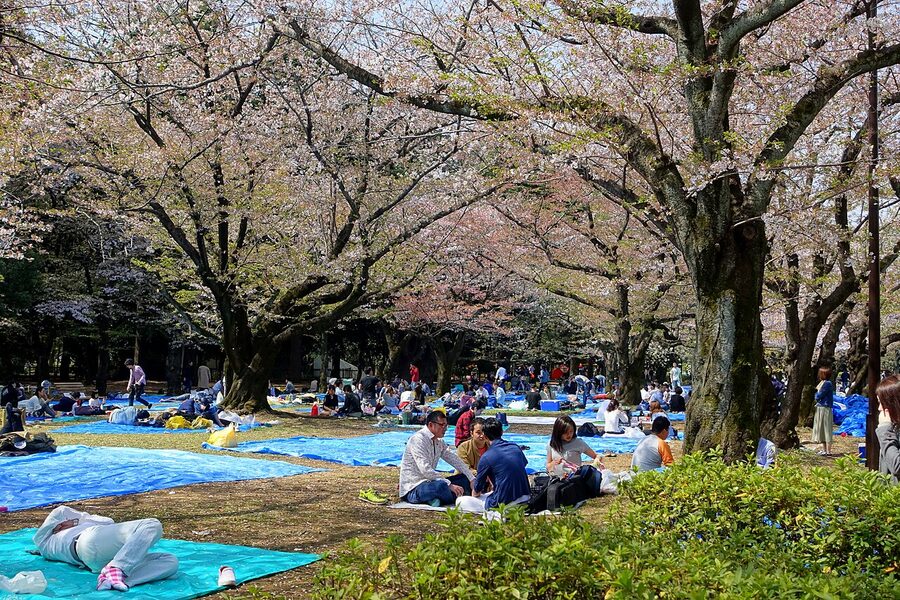
The loudest hanami in Tokyo. Yoyogi covers 54 hectares between Harajuku and Shibuya, has about 800 cherry trees, and allows alcohol everywhere on its lawns with no time restriction. There are no picnic tables. There is no glass. There is no fire. There is also no quiet; on a peak Saturday in early April this is functionally a music festival without a band, with a permanent low murmur of conversation across the open lawn.
What to do: enter from Harajuku Station’s Omotesando exit. There’s a Lawson 100 metres before the park entrance on Inokashira-dori; it stocks 300ml shinshu and nama for ¥500–700 a bottle from late February. Buy two bottles, one bento per person, six paper cups, an ice pack. Walk into the park, find the central lawn, lay your tarp; in March the lawn is firm, not muddy. The food-stall row near the Harajuku-side entrance has yakitori, takoyaki, and karaage stalls running 11:00–18:00 during peak weeks. Bottle range from the festival stalls: ¥500–700 cup-sake. The walk from the park to Tokyo’s drinking neighbourhoods is short; from Yoyogi you can finish a hanami at 17:00 and be in Shimokitazawa by 17:45.

Ueno Park, Tokyo
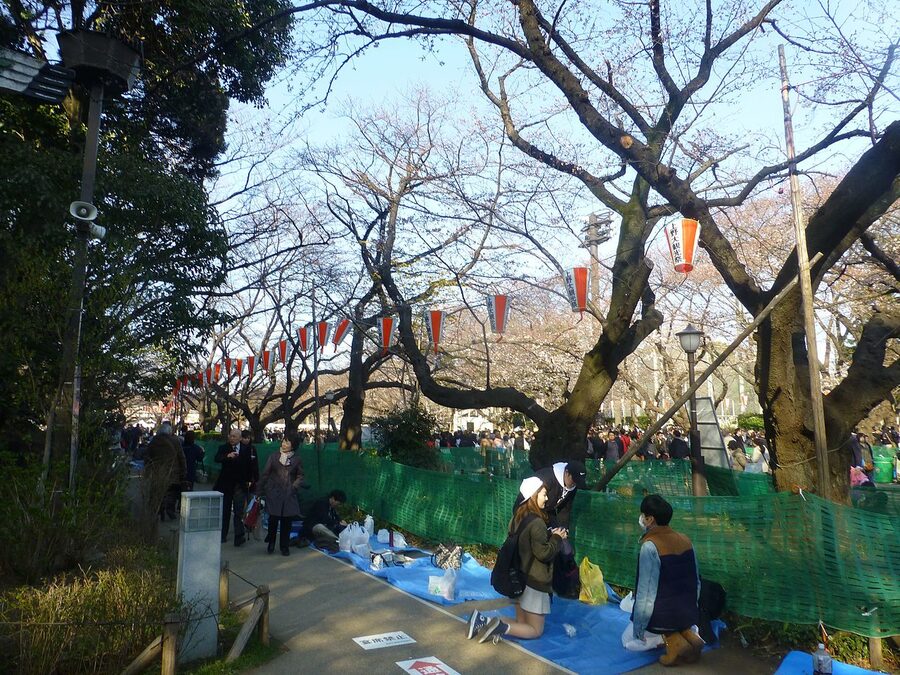
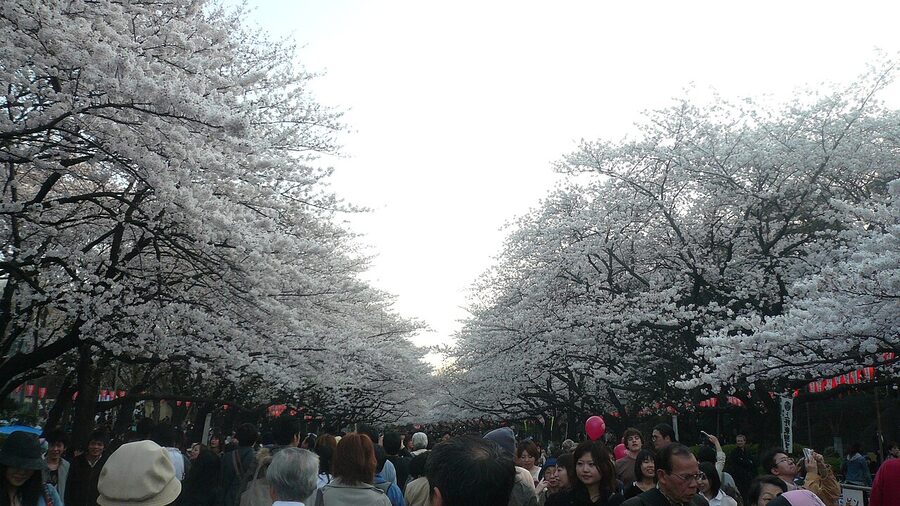
The original people’s hanami spot. Ueno was opened to the general public in 1873 and has roughly 1,200 cherry trees lining the 800-metre central avenue from Ueno Station to Tokyo National Museum. The crowd skews older, more family. There are food stalls. There is also a strict alcohol-permitted-only-on-the-central-avenue rule that the park enforces with hi-vis-jacketed staff during peak weeks; the lawn behind the museum and the stretches near Tokyo Bunka Kaikan are picnic-allowed but no-alcohol.
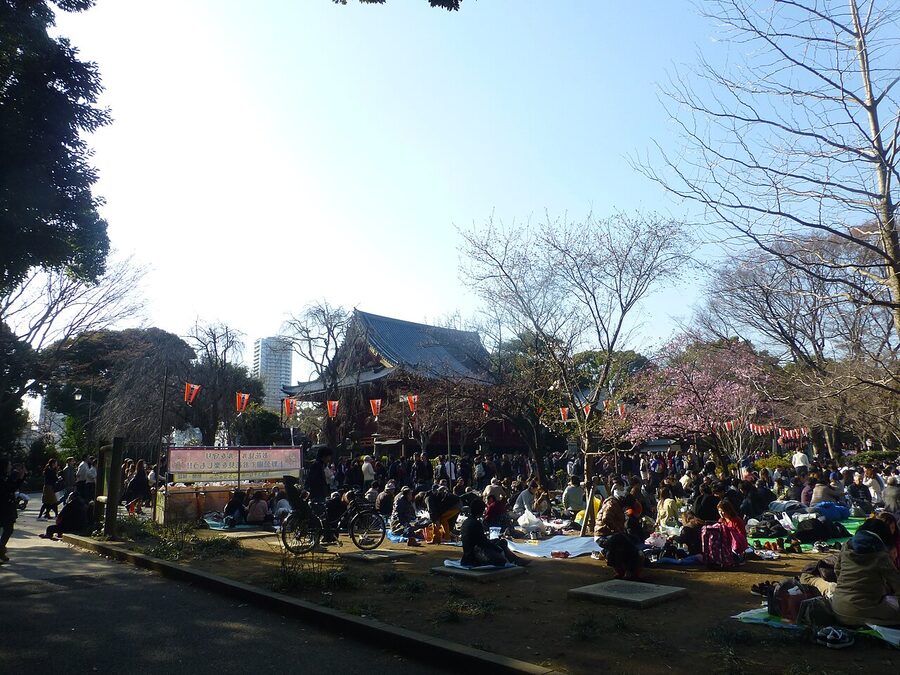
What to do: arrive early or arrive late. 10:00 on a Saturday in peak week is already too late for a central-avenue spot; go again at 17:30 and you’ll find the outgoing-tide of the day’s drinking, when the offices have packed up and the dinner crowd is moving in. Shinobazu Pond, at the south end of Ueno, is the second-best part of the park: pedal-boat rentals at ¥800 for thirty minutes, no alcohol restriction on the boats, and the boat dock has a small kiosk that sells canned beer. Take a 180ml cup-sake on the boat and you’ve found one of the best forty-five-minute experiences of the trip.

For after, Yushima and Okachimachi (one stop south of Ueno) have the best concentration of tachinomi standing bars within a fifteen-minute walk: Daitoryo and the alleys behind Ameyoko close at midnight and run all day during festival weeks.

Maruyama Park, Kyoto
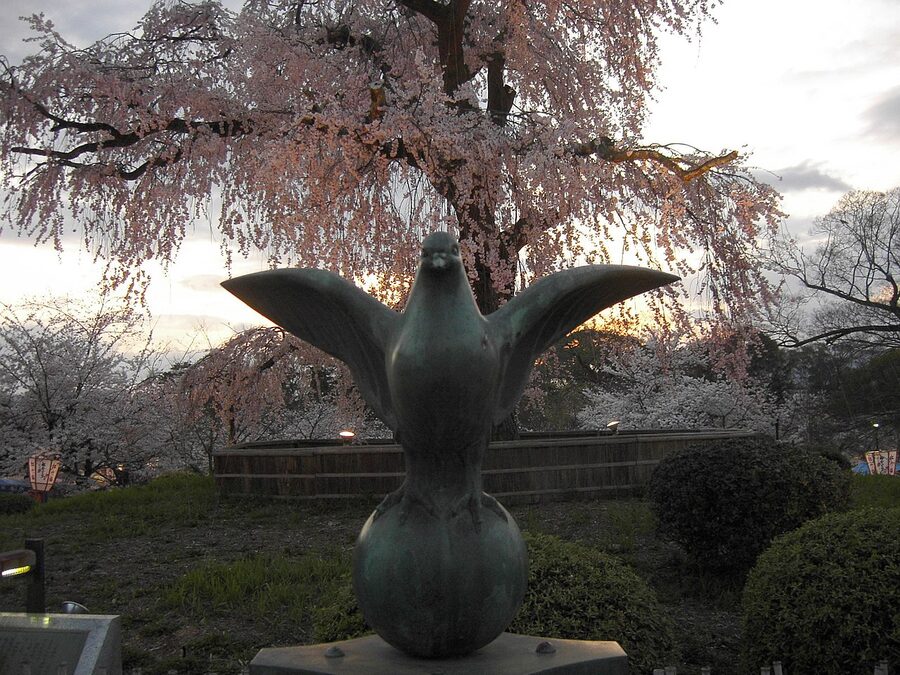
The oldest public park in Kyoto, opened in 1886, sits behind Yasaka Shrine in the Higashiyama district. About 680 cherry trees. The famous one is the central shidare-zakura (weeping cherry, called Gion-no-yozakura, “the Gion night cherry”), an 80-year-old replacement for the original tree that died in 1947. It is lit at night during peak bloom, mid-March to mid-April, until 22:00.
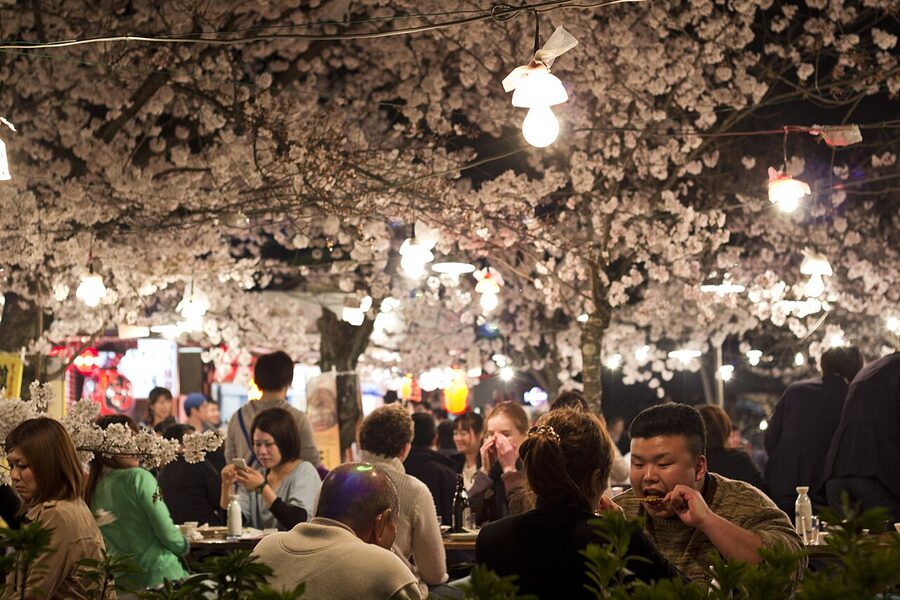

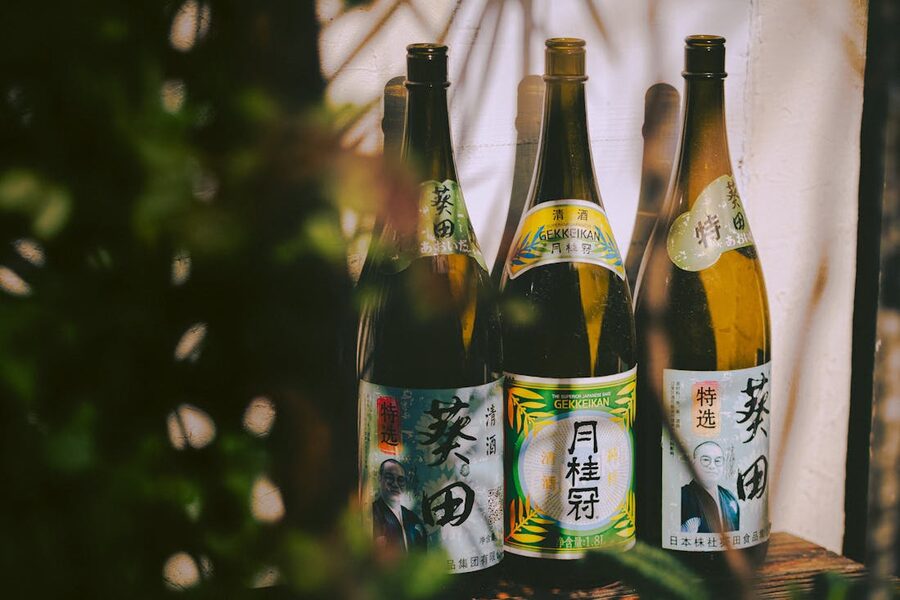
The vibe at Maruyama is calmer than Yoyogi. The crowd is older. The drinking is real but it’s drinking conversation, not drinking party. Pop-up stalls during peak bloom run all day from converted sheds along the central path: bottle-pour Fushimi sake (Gekkeikan, Kizakura, Tamanohikari) for ¥600–800 a 200ml paper cup, salt-baked sweetfish (ayu) for ¥400 a skewer, grilled squid for ¥500. The Fushimi connection is worth knowing: Fushimi is a Kyoto neighbourhood about 20 minutes south by train, one of Japan’s two great sake-brewing centres along with Nada in Kobe, and the local sake at Maruyama is from those breweries.
.jpg)
What to do: arrive 11:00, walk slowly through the central path, take photos at the weeping cherry, find a bench around the central pond, drink one cup-sake and one bottle of beer for two hours, walk on. From Maruyama, the Gion drinking district is a 5-minute walk; Pontocho along the river, ten more minutes. The full Kyoto eat-and-drink guide covers the after-hours options once you’ve packed up the tarp.
Osaka Castle Park
.jpg)
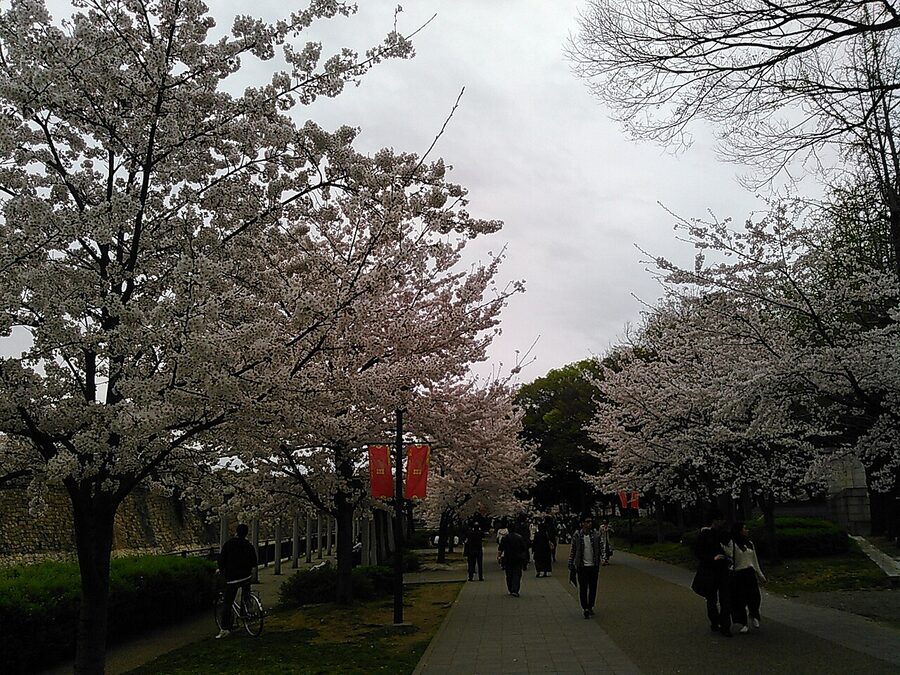
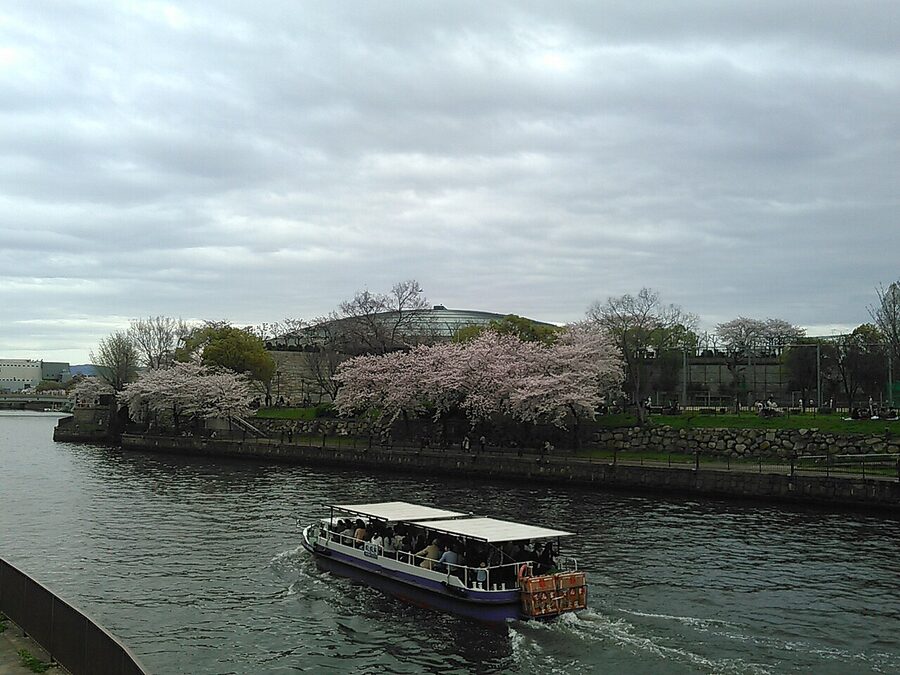
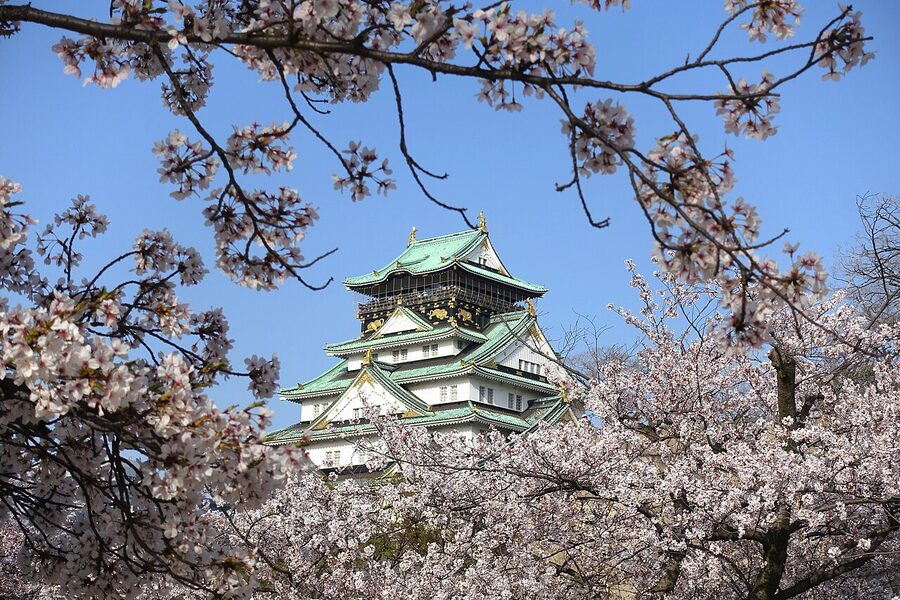
Osaka does hanami like Osaka does everything: bigger food, more grilled-on-site, no pretence. Osaka Castle Park has roughly 3,000 cherry trees spread across 100 hectares. The Nishinomaru garden inside the inner moat (¥350 entry, 09:00–17:00 in season, longer hours during the night illumination) is the picnicking core. The outer park lawns are free and busy. Open flame and shichirin grills are allowed in Nishinomaru during peak weeks. This is one of the few major Japanese parks where you can legally fire up a small grill, and it changes the food side of the picnic completely.
.jpg)
What to do: enter via Morinomiya Station, stop at the Family Mart on the southeast corner before you go in (the only nearby konbini that reliably stocks chilled nama and the seasonal canned chu-hi range), walk five minutes north into Nishinomaru, lay tarp on the western side facing the keep, set up a disposable shichirin if you brought one. Skewers from the in-park food stalls: ¥300 each, ¥500 for the wagyu ones. Beer-cart pours: ¥500. Sake-cup pours: ¥600–700 from a Settsu-area brewery (Akishika, Ohyama). The whole Osaka eat-and-drink scene sits a fifteen-minute train ride away once you’ve had enough sun.

Hirosaki Park, Aomori
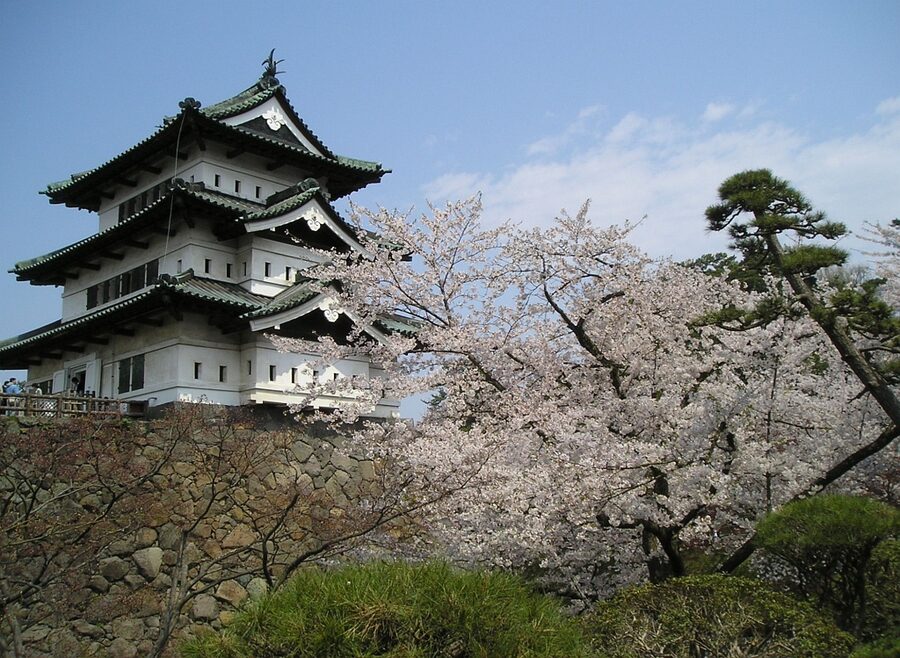
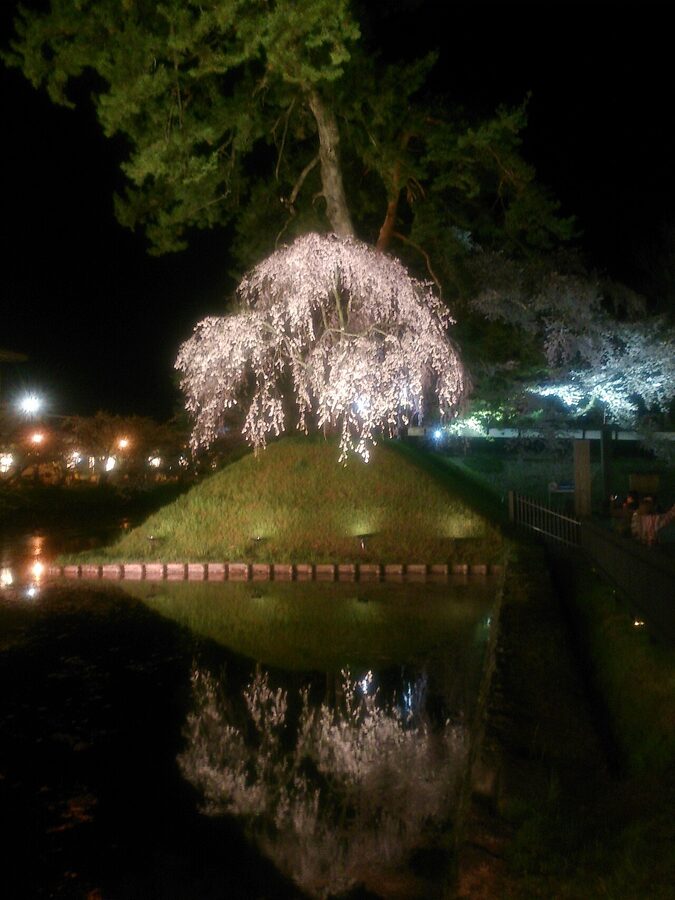
The best hanami in Japan if you’re willing to fly two hours north of Tokyo. Hirosaki Park has 2,600 cherry trees on the grounds of the seventeenth-century Hirosaki Castle, peaks late April to early May (Golden Week, the first week of May), and runs the Hirosaki Sakura Festival every year since 1918. There is a 200,000-paid-attendees-per-day weekend rush during peak. There are stalls. There is night illumination until 22:00 every night of the festival. Local sake is everywhere: Toyo no Sakura, Joppari, Tamura no Tatsumi from Aomori prefectural breweries, all served in ¥500 plastic cups along the inner-park stall row.

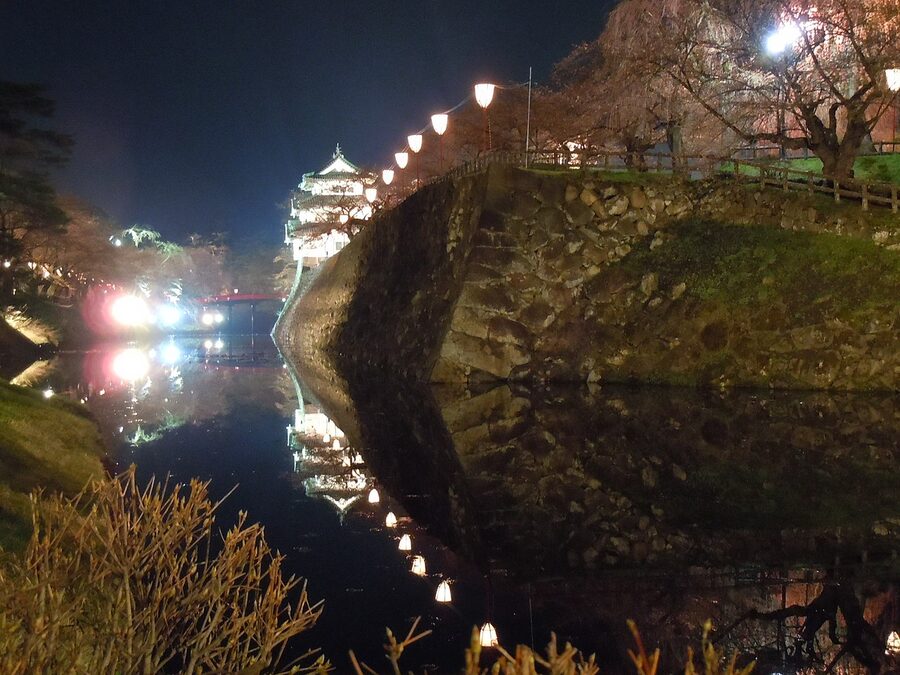
The signature feature is hanaikada (花筏), the “flower raft”: a few days after peak bloom, the petals fall onto the moat and form a continuous pink layer that drifts with the wind. The west moat is the prime photo spot for it. Go on day three or four after peak bloom is announced.
_-_panoramio_(2).jpg)
What to do: take the JR Tohoku Shinkansen to Shin-Aomori (3h from Tokyo), then JR Ou Line 35 minutes to Hirosaki Station. Bus from the station to the park: 15 min, ¥200. Park entry is free during festival hours; only the inner garden has a paid ¥320 zone. The festival stalls run 09:00–21:00 most days, until 22:00 on weekends. Hot sake from a stall, ¥400 a paper cup, is the only time you should drink hot sake outdoors in Japan; the temperature in late-April Aomori is genuinely cold by the time the lights come on.

Chidorigafuchi, Tokyo (boats)
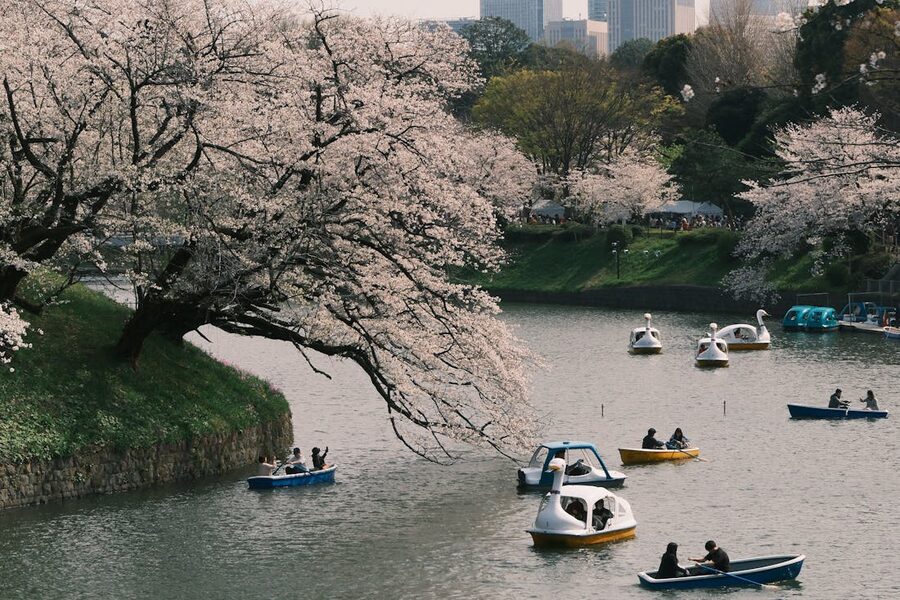
Not a picnic park. Chidorigafuchi is the moat on the north side of the Imperial Palace, lined for 700 metres with old cherry trees that arch over the water. There’s no tarping. There is rowboat rental at the boat house from 09:30 to 17:30 in season, ¥800 for thirty minutes plus ¥500 returnable deposit. You take a single bottle of cold sake and two paper cups onto the boat. You row a slow loop. The blossoms close in over the water until you’re effectively under a pink ceiling. It is the single most photogenic thirty minutes of any Tokyo trip in early April. Queue from 09:00 on a weekend; by 11:00 the wait is two hours.
The Tokyo bonus: Inokashira and Meguro
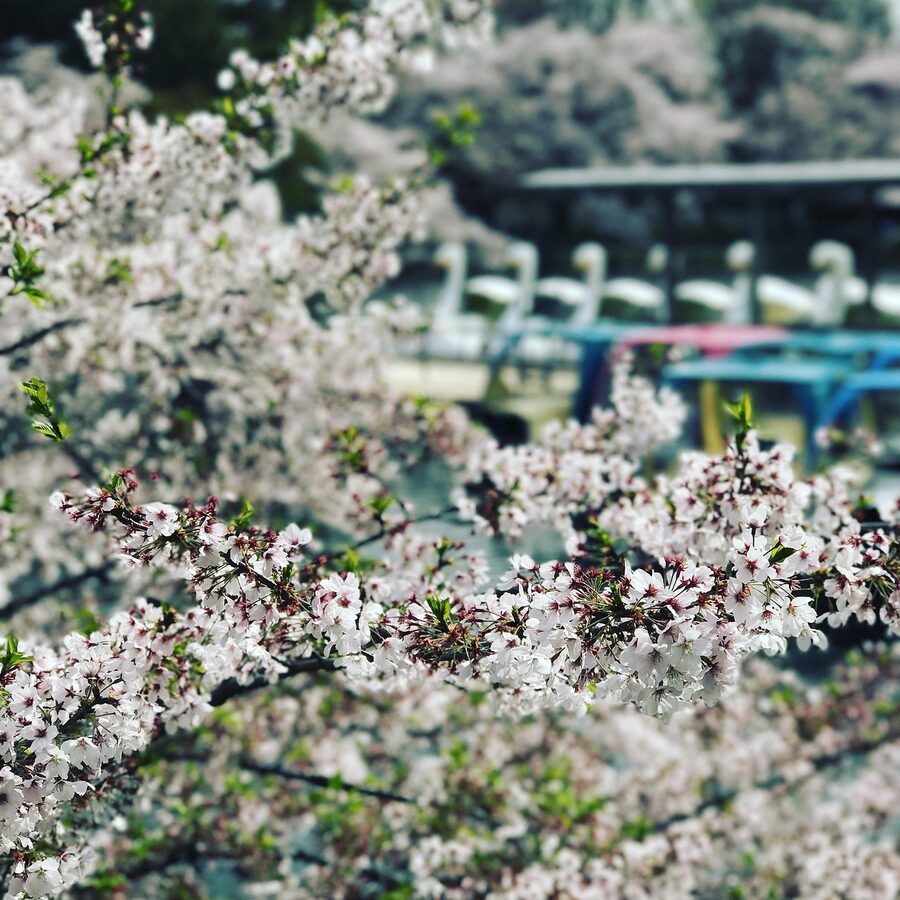
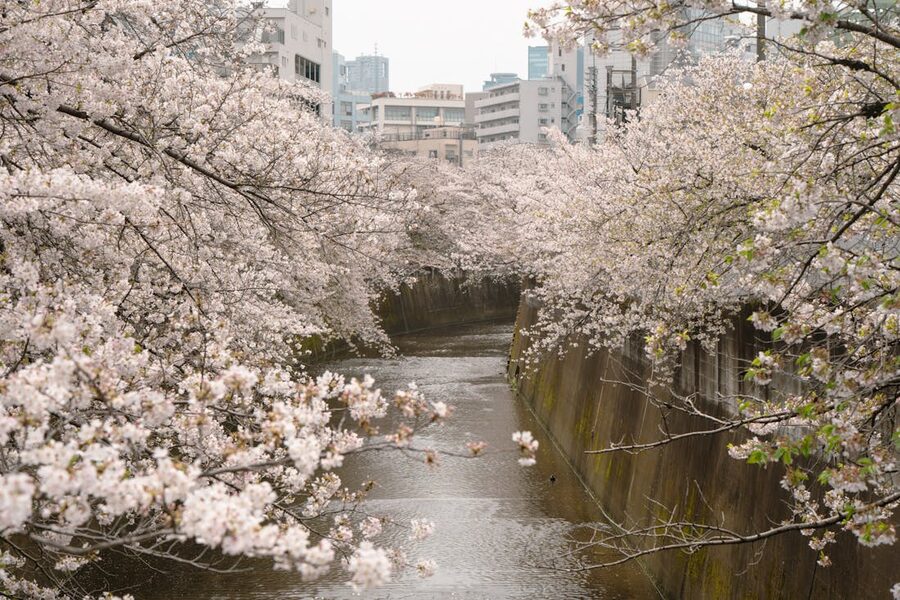
If Yoyogi is too loud, swap for Inokashira (Kichijoji, 25 min west of Shinjuku) or the Meguro River walk (Naka-Meguro Station). Inokashira allows alcohol on lawns and has swan boats at ¥800 for thirty minutes; Meguro River is a 4km riverside walk with about 800 cherry trees and food-stall pop-ups serving Champagne (yes), beer, and sake at ¥500–1,000 a cup, with no formal picnic area. Walking-and-drinking is the Meguro mode; sit-and-drink is the Inokashira mode.
Bloom timing windows by city
The cherry-blossom front (sakura zensen) moves north across Japan from late March to mid-May. Pick your trip date by the front, not the airline price.
| City | Region | Typical first-bloom | Peak bloom | Festival end |
|---|---|---|---|---|
| Fukuoka | Kyushu | 20 March | 26 March – 2 April | 5 April |
| Tokyo | Kanto | 22 March | 28 March – 5 April | 8 April |
| Kyoto | Kansai | 24 March | 30 March – 7 April | 10 April |
| Osaka | Kansai | 25 March | 30 March – 8 April | 11 April |
| Kanazawa | Hokuriku | 1 April | 5 – 13 April | 17 April |
| Hirosaki | Tohoku | 22 April | 27 April – 5 May | 7 May |
| Sapporo | Hokkaido | 28 April | 3 – 10 May | 14 May |
The dates above are 30-year averages from the Japan Meteorological Agency. Real-year variation is roughly ±5 days. Weathernews and Japan Meteorological Corporation publish updated forecasts from January, refined every two weeks; the forecasts get accurate two weeks out from peak. If your trip is fixed and the bloom shifts, the answer is to chase the bloom north or south by train: from Tokyo, three hours by Shinkansen takes you to either Fukuoka (south) or Hirosaki (north), which together cover almost the whole April window. Sapporo has the latest peak in any major city, and the festival runs into Golden Week.
Konbini hanami in twenty minutes
The whole picnic, assembled from a single 7-Eleven, in roughly twenty minutes:
- One leisure sheet. The 100-yen shop next door if the konbini doesn’t have one. ¥110.
- Two sake bottles. One 300ml shinshu (Hakkaisan or Kubota Senju), ¥500–700. One 180ml cup-sake (Gekkeikan or Ozeki One Cup), ¥220. Both go in the konbini cooler bag.
- One ice pack, ¥120, or two cans of frozen sports drink as substitutes.
- Six paper cups. ¥200 sleeve. You’ll waste four; that’s the point.
- Two hanami bento. ¥398–680 each.
- One pack of karaage from the hot-food bar, ¥380. Eat it warm, share before it gets cold.
- Two cans of cold beer as backup. Asahi or Yebisu, ¥240–310 each.
- One pack of dried squid (surume), ¥480. The actual best sake snack.
- One pack of edamame, ¥180.
- Wet wipes and a small rubbish bag. Bring the bag back out; do not leave it in the park.
Total: roughly ¥3,500–4,500 for two people. Cheaper than dinner anywhere in central Tokyo and a better story. The full drinking itineraries piece has variants on this for non-hanami days; for now, this list is what you actually buy.
Reading the konbini sake label
The konbini sake shelf in spring is overwhelming. Quick rules of thumb:
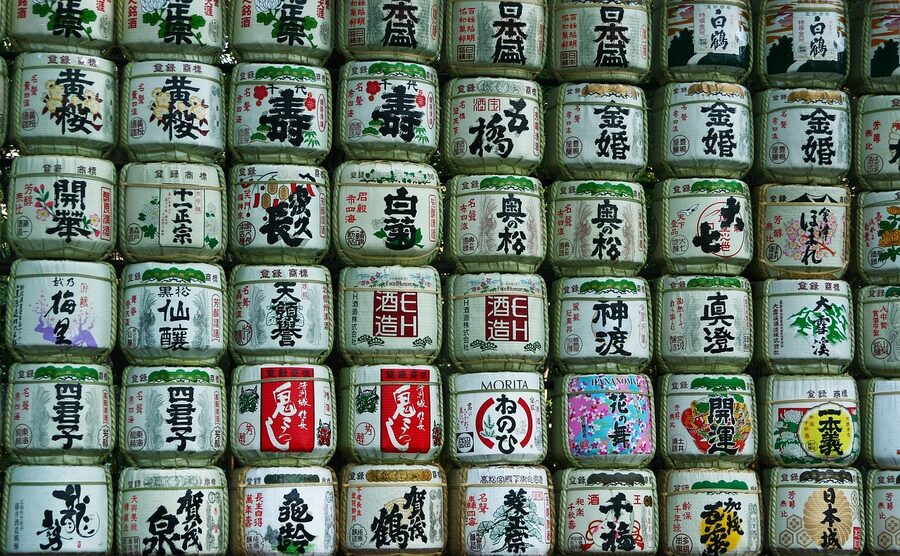
- Look for 新酒 (shinshu, new sake), しぼりたて (shiboritate, fresh-pressed), or 生 (nama, unpasteurised) on the label. Any one of these and you’re drinking spring-only stock.
- Avoid futsu-shu (普通酒), the cheap large-volume cooking-grade sake. The shelf has it. The 1.8 litre paper-carton format is a giveaway. For a picnic you want a 300ml or 500ml bottle.
- SMV (the +/− number on the side) of around +3 is dry middle-of-the-road, −3 sweet. Picnic weather suits dry; a hot afternoon makes a sweet sake feel cloying.
- Junmai = pure rice. Honjozo = rice plus a small added neutral spirit. For picnic drinking, both are fine; honjozo holds slightly better at warmer temperatures.
The full label decoder is in the sake label guide. For hanami, the headline rule is just to buy a bottle that says “新酒” or “しぼりたて” somewhere on the label, and you’ll be drinking what the brewery is most proud of that month.
Etiquette traps
The unwritten rules are looser than at an izakaya, but they exist.
Pour for others first. When you take a bottle out, fill the cup of the person next to you before you fill your own. They’ll do the same in return. The Japanese word is oshaku (pouring), and at hanami in particular the practice gets observed even with strangers on the next tarp; if a stranger leans over and offers you a top-up, accept with two hands on the cup.
Don’t pour your own first. Wait. Someone will get to you. If nobody does after a minute, pour for the person opposite, then yourself.
Take your shoes off when you step on the tarp. Already covered. Worth repeating because it’s the rule visitors break first.
Don’t climb the trees. Don’t pull on branches for photos. Don’t pick blossoms. The trees are old and fragile and there are cameras everywhere and you will go viral, in the bad way.
Don’t bring glass. Already covered. The signs at every park entrance say it. People still try; you don’t need to be one of them.
Bring your rubbish out. Almost no Japanese park has bins inside; you carry your own bag, sort burnable from PET from cans on the way out, dump in the station bins. Leaving the bag on the tarp when you walk away is a tourist tell that locals notice immediately.
Don’t crash a stranger’s tarp. The tour-guide quote in one of the early Japan Experience pieces is sharp on this: in Japan, you don’t invite yourself to a hanami; you get invited. The cosplayers and the office groups are not interested in your presence on their tarp. If you’re standing with a bottle and looking lost, someone friendly will eventually wave you over; that’s the only way it works.
Public urination is illegal but common. Don’t. Use the konbini you bought your sake from, or the park toilets, which are heavily over-subscribed during peak weeks; queue.
Don’t smoke under the trees. Most parks are non-smoking. Smokers congregate at the designated smoking-corner near the main gates.
Hanami when the weather doesn’t cooperate
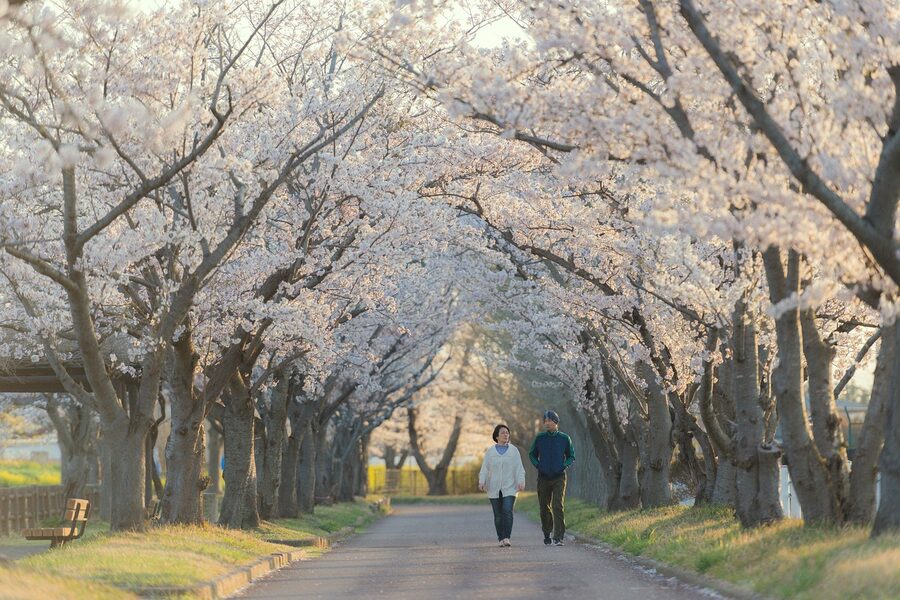
Hanagumori (花曇り, cherry-blossom haze) is the term for the cloudy, slightly chilly days that come during peak bloom; locals will tell you it’s the most authentic hanami weather, partly because the diffuse light makes the blossoms look more uniform. Hanabie (花冷え, cherry chill) is when a cold snap drops the temperature into single digits during peak. Hanafubuki (花吹雪, blossom blizzard) is the day after peak when the wind takes the petals down all at once. All three are real Japanese terms for real hanami situations, and none of them ruin the picnic.
Backup plans: the cheap Japanese hotel-room-with-window-onto-blossom is a perfectly fine hanami if it rains. So is a sake bar with a window onto a riverside tree. There’s a reason every drinking neighbourhood on every drinking itinerary includes a couple of cherry-tree-adjacent bars; the smarter ones publish bloom-status photos on their Instagram in March.
The other drinks
If sake isn’t for you, hanami still works. The 2018 Weathernews data put beer at 33 per cent for women and 36 per cent for men of first hanami drinks. Beer is fine. Asahi Super Dry, Sapporo Black Label, Kirin Ichiban Shibori, Yebisu, the four big names, ¥240–310 in a 350ml can at the konbini. Cold is the only critical variable; bring an ice pack. Japanese craft beer doesn’t really show up at hanami because the bottle format is wrong, but the canned versions of Yo-Ho Yona Yona and Suiyobi-no-Neko both fit the picnic.
Shochu is the under-appreciated hanami drink. The Iichiko brand makes the case in their seasonal campaigns: shochu works hot or cold, the alcohol is high enough that a small portion does a long afternoon, and the imo and mugi varieties pair fine with grilled food. Mix one part shochu, two parts cold green tea or oolong, in a paper cup; that’s a reasonable hanami long drink. Or take a pre-mixed Kuro Kirishima can.
Wine. Sparkling wine especially shows up at hanami in surprising amounts, and the food-stall set in Meguro and Naka-Meguro now sells Champagne flutes for ¥1,000–1,500. Worth knowing, not worth pursuing as the main play.
Chu-hi, the canned shochu highball. Already covered. Strong Zero, Hyoketsu, Sumikiri, ¥180–240 a 350ml can. The sakura-can seasonal release every March is more marketing than flavour, but the price and the convenience are real.
The historical postscript
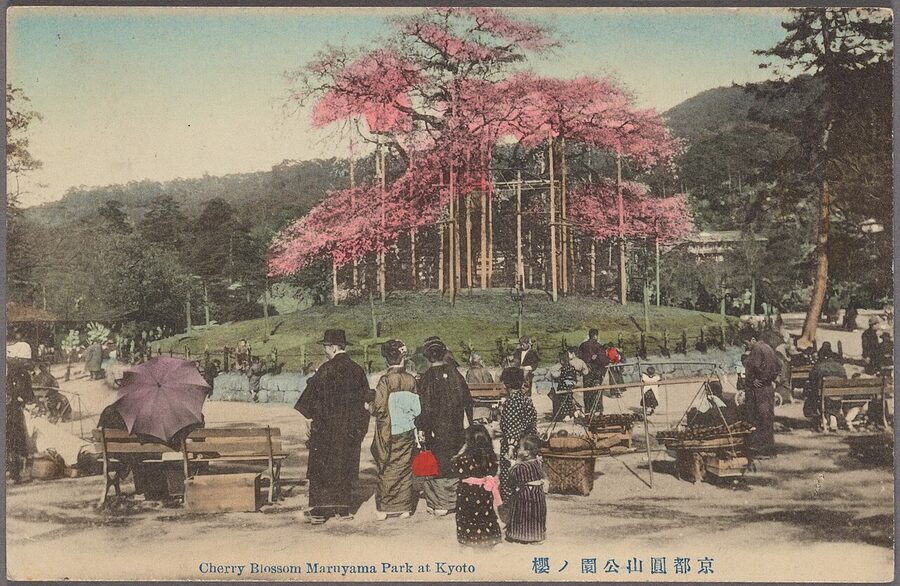
I keep coming back to one thing. The hanami drinking habit doesn’t look like much from inside a Japanese spring; it’s low-key, picnic-style, no costume. But the same activity in any other culture would be either a religious festival, a music festival, or both. There is no alcohol-restricted-zone walking required. There is no “have your ID ready” line. There is just a public park, a tree at full bloom, and a culture that decided in the 700s that the right response was to bring sake and friends and sit down. Most countries have lost that kind of public-drinking norm or never had it. Japan keeps it because the sake industry, the rice industry, the festival industry, and the average salaryman’s social calendar are all locked into the same one-week window.
If you do this once, you’ll work out which kind of hanami you like. The loud Yoyogi version, where you came for the people-watching as much as the blossoms. The slow Maruyama version, where you came for the trees first and the sake second. The Hirosaki festival version, where you came for the night-illumination and you stayed because the ¥400 hot sake at the stall was good enough that you went back twice. None of these requires a guide. It only requires that you’re in the right park on a peak-bloom Saturday with a 300ml bottle of new-rice sake and a paper cup. The rest works itself out, and the petals come down whenever the wind gets bored.
If the trip you’re planning extends past the bloom window, the same drinking neighbourhoods are cheap any time of year, just without the petals. But for the bloom week itself: konbini, paper cup, blue tarp, friends, one bottle of new-rice sake, repeat for the next four hours. That’s the entire instruction set.
 Drinking CultureWhy I Stopped Clinking Glasses in JapanThe first time I got a Japanese toast wrong, I was at a wedding reception in Yokohama. Ten of us…
 Drinking CultureKonbini Drinks Are a Whole Trip StrategyJapan has roughly 56,000 convenience stores. That's more outlets than McDonald's has worldwide, and the country sells about a third…
 Drinking CultureOtoso, Bonenkai, and the Hush of ShogatsuThe first person to write the recipe for otoso was a third-century Chinese physician named Hua Tuo, and he wrote…