
The bowl came down on the counter at Amatsubo just before nine on a wet March evening, kaisendon piled until the rice underneath had given up trying to be visible. Sweet shrimp, snow crab, yellowtail, two kinds of tuna, salmon roe in a glossy heap, and on top of that the proprietor laid down a sheet of Kanazawa gold leaf with the seriousness of a craftsman. I had eaten in Tokyo two days earlier and Tsukiji had felt like a museum compared to this. That was the moment Kanazawa earned its detour. Three trains north of Kyoto, a city most travellers still skip, with a fish market the locals actually shop at, a sake culture older than most countries, and a bar district that wakes up about the time Kyoto goes to bed.

This guide is the version I wish I had on the train in. Where to eat that the locals queue for, where to drink sake the way Kanazawa drinks it, which Kanazawa-only dishes are worth planning your day around, and how to fit a 400-year-old sake brewery, a kakuuchi standing-bar, and a counter izakaya into one evening without missing the last bus back to your ryokan.
In This Article
- Kanazawa is its own eating-and-drinking city
- Where to base yourself, at a glance
- Omicho Market: the Kanazawa kitchen
- Kaisendon and the rice-bowl economy
- Conveyor sushi at Mori Mori, Iki-Iki Tei, and Mawarusushi Ponta
- Nodoguro at Itaru, the rosy seabass everyone is talking about
- The Kano-gani window: late November through March
- The five Kanazawa specialities to plan a meal around
- Kanazawa curry, the dark roux that took over Japan
- Kanazawa oden, broth-driven not soy-driven
- Hanton rice, the post-war omurice that should not exist
- Jibuni, the duck dish that explains the rest of the meal
- Noto beef, the wagyu rival you have not heard of
- Kanazawa is a sake town and you should drink like one
- Fukumitsuya, 400 years inside the city
- Yachiya, Yoshida and Shata: the breweries beyond the city
- Where to drink the city sake without leaving Korinbo
- SAKE Shokudo at the station, if you have an hour
- Kakuuchi: drinking in the corner of the bottle shop
- The bars of Korinbo, Katamachi, and Tatemachi
- Bonkunen, the jazz bar that has been doing it since 1992
- Kanazawa Music Bar and the local-gin movement
- Londonya, the British-style hold-out
- Furansu Cocktail Bar and the post-dinner second move
- Higashi Chaya: teahouses, ice cream, and one quiet sake bar
- Fukumitsuya Higashi for a slow tasting
- Horaido for matcha that earns the gold leaf
- Hun + GO Cafe and the Noto milk question
- Practical: getting there, getting around, when to come
- When to come
- Reservations and reality
- A two-day eat-and-drink plan that actually works
- Day 1
- Day 2
- Etiquette, costs, the things nobody mentions
- What to read before you book
Kanazawa is its own eating-and-drinking city
People call it Little Kyoto because of the geisha districts. The food has nothing to do with Kyoto. Kanazawa sits on the Sea of Japan with the Noto Peninsula curling out behind it, and that geography decides everything on your plate: the deep-water rosy seabass called nodoguro, the snow crab the locals call kano-gani, the cold-water sweet shrimp, and the cultivated rice and water that made the city a sake town centuries before it became a tourist one. Add Kaga ryori, the local court cuisine of the old Maeda fiefdom, and you have a city whose food culture is genuinely its own thing, not a Kyoto cover band.

The drinking culture is what makes this a stop on a drinker’s itinerary rather than just another bullet-train pause. Three threads worth knowing about going in: the breweries (Fukumitsuya in the city has been at it since 1625), the kakuuchi tradition (you drink at the corner of the bottle shop, standing, no menu), and the bars in Korinbo and Katamachi a few minutes’ walk south of Kenrokuen. There is also a respectable Kanazawa whisky scene, mostly small bars carrying a few hundred bottles between them, and the Hokuriku craft beer presence is growing in the back streets near the river. None of this is well-known abroad, which is the point.
Where to base yourself, at a glance
Four areas matter for eating and drinking. Pick your hotel based on which one fits your trip; the rest are short walks or one bus ride away.
| Area | Best for | Walk to Omicho | Verdict |
|---|---|---|---|
| Kanazawa Station | One-night stops, sushi at Maimon and Mori Mori inside the station | 15 min | Convenient, charmless. Fine if you arrive late. |
| Omicho / Owari-cho | Eating mornings at the market, walking to Higashi Chaya in 12 min | 0 min | The eater’s base. Walk-out, sushi, walk-back. |
| Korinbo / Katamachi | Bar nights, sake bars, the cocktail scene, Tatemachi izakayas | 15 min | The drinker’s base. Quietest in the morning, loudest at 23:00. |
| Higashi Chaya | Geisha-district atmosphere, teahouse mornings, Fukumitsuya Higashi tasting | 12 min | Beautiful, sleepy after 18:00. Two nights max. |
I have stayed in all four. If you are coming for the food and drink and have just two nights, base yourself somewhere between Omicho and Katamachi. The walking line between the two is a kilometre and you can do it after dinner under the eaves of the old town when it is raining, which it usually is.
Omicho Market: the Kanazawa kitchen
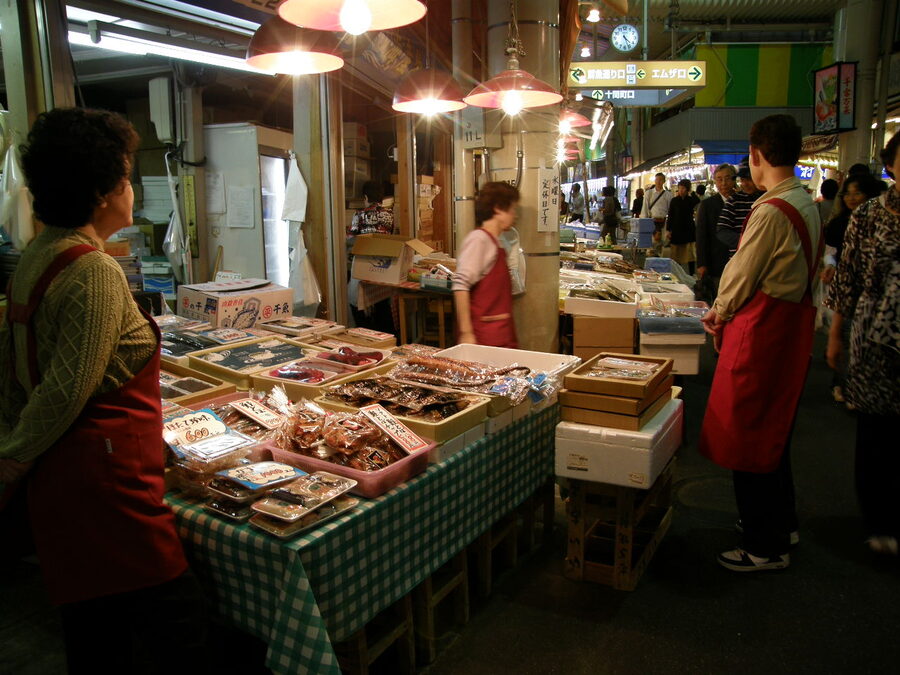
Omicho has been the city kitchen for 300 years. About 170 stalls and 40-odd restaurants stretch over a covered network of arcades right in the middle of town, and unlike Kyoto’s Nishiki Market it is not (yet) a tourist set piece. Local restaurants buy here. Old residents pull suitcases through it. You will see chefs in chef’s whites talking to fish dealers at 08:30 over a stack of rosy seabass on ice. Walking through eating, by the way, is officially banned in the market itself; you are meant to stand at the stall to eat or take it home. Most stalls have a small corner where you can stand and eat.
Kaisendon and the rice-bowl economy

If you do nothing else in Kanazawa, eat one kaisendon at Omicho. The bowl is just sushi rice with a wild assortment of raw fish piled on top, and Omicho’s version is among the best in Japan because the source is fifteen metres behind the kitchen. Two places I will queue for: Hira-i in the Ichiba-kan upstairs (their signature 14-topping bowl runs around ¥2,900, and the cold queue at 11:30 moves faster than it looks), and Ushioya, a smaller sashimi counter behind a retail fish stall, where the bowl is closer to ¥3,000 with miso and pickles included. Both close around 17:00. The line gets unbearable from 12:00 to 13:30 on weekends; eat at 11:00 or after 14:30. Yellowtail is the one to look for in winter; sweet shrimp is good year-round.
Conveyor sushi at Mori Mori, Iki-Iki Tei, and Mawarusushi Ponta
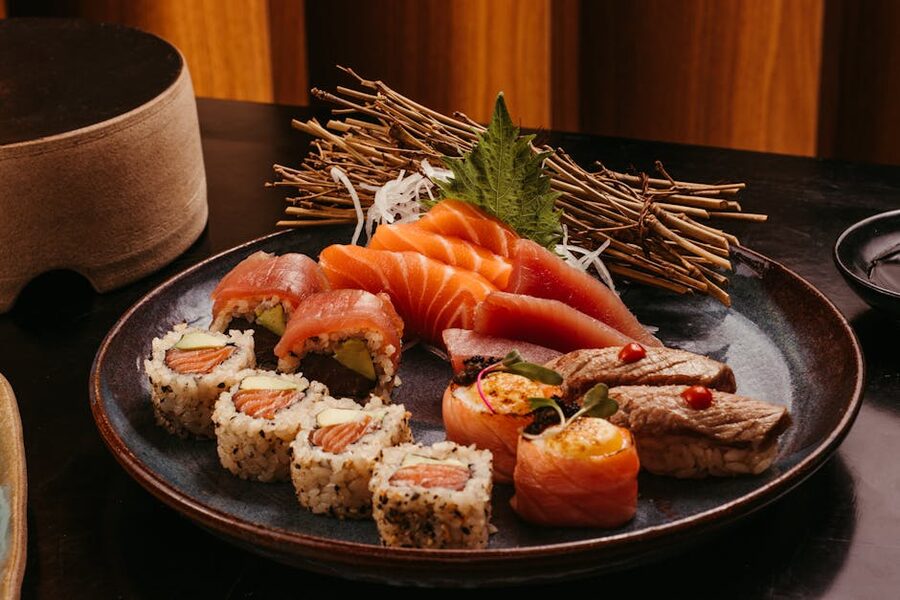
Kaiten-zushi (the conveyor kind) in Kanazawa is a level above what most travellers expect from the genre. Mori Mori Sushi on the corner of Shimoomicho is the easy pick at lunch: chef’s-choice plate around ¥2,080, individual nigiri from ¥200, hours 10:00–17:30, closed Tuesdays. Order the nodoguro if it is on the board, the zuwaigani nigiri in season, and the hotategai any time. There is a second branch in the station, but the original feels more like the city.
Iki-Iki Tei is the other Omicho conveyor and slightly cheaper, more local and less photographed; ask for the omakase plate and trust the chef. Mawarusushi Ponta, two kilometres northwest of the station in a non-touristy warehouse district, is the deal hunters’ answer: fifteen-piece sushi sets from around ¥1,280, and the soup is made with whole fish parts so you mind the bones but get all the flavour. Ponta is a 25-minute walk from the station or 8 minutes by bus; worth it on a slow afternoon.
Nodoguro at Itaru, the rosy seabass everyone is talking about
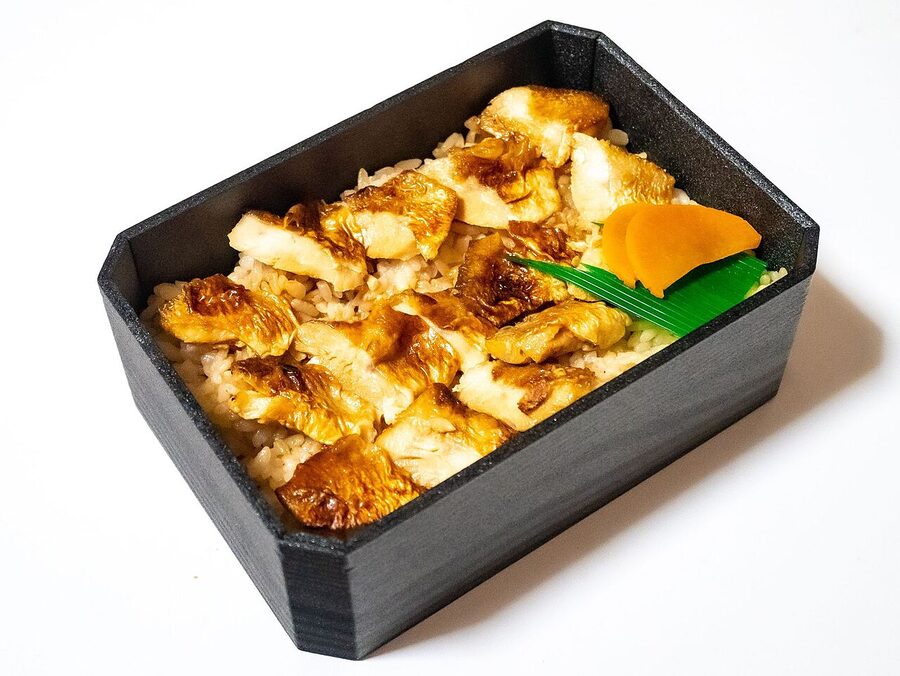

Nodoguro (literally “black-throat”, aka rosy seabass or akamutsu) is the fish Kanazawa is genuinely famous for among Japanese diners. White flesh with the fat profile of tuna belly. Locals call it shiro-no-toro, the white tuna toro. Nodoguro Meshi Honpo Itaru in Katamachi 2-7-5 turns it into a meal in three acts: thick slices of grilled nodoguro over sesame-flecked miso rice; then the same rice topped with the dashi made from nodoguro bones and head simmered for six hours in kombu. Phone is 076-233-1147, lunch 12:00–14:00 and dinner 17:30–20:00 last orders, closed Sundays. Reserve. The set runs around ¥3,500 and it earns it. The bones-broth course is the part you remember.
You can also order nodoguro on its own as sashimi or salt-grilled at most counters in Omicho and at Maimon Sushi inside the station. The salt-grill is the simplest treatment. The skin should be crisp and the fat should bead.
The Kano-gani window: late November through March
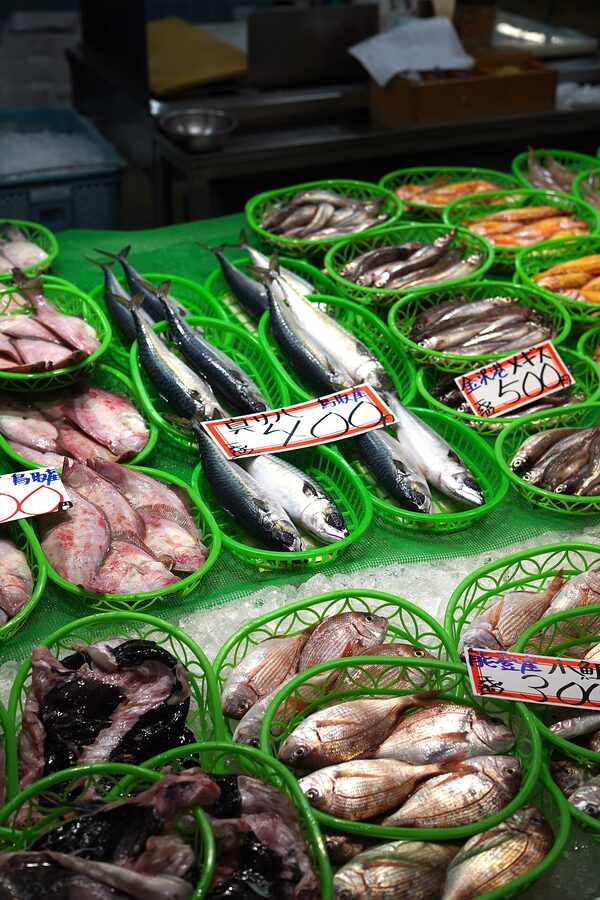

If you visit between 6 November and 20 March, you are inside the kano-gani season. Kano-gani is the local trade name for male zuwaigani (snow crab) landed at Ishikawa ports, identifiable by the blue tag on the claw. Whole crabs at Omicho run from around ¥6,000 to ¥20,000+ depending on grade and size; the high-end ones are auction-priced and worth it once. If you are not eating one whole, the cheaper play is to order a kani-mei kaisendon in season at Hira-i, or step into one of the standing fish-tasting bars where you can have one leg at a time. Outside the window, do not order “Kanazawa snow crab” anywhere; it is imported. Order the sweet shrimp instead.
The five Kanazawa specialities to plan a meal around
Beyond the seafood, Kanazawa has a handful of dishes you literally cannot eat anywhere else (or can, but only as a tribute). Each has at least one canonical restaurant, and they break the day up nicely between sushi at noon and sake at night.
Kanazawa curry, the dark roux that took over Japan
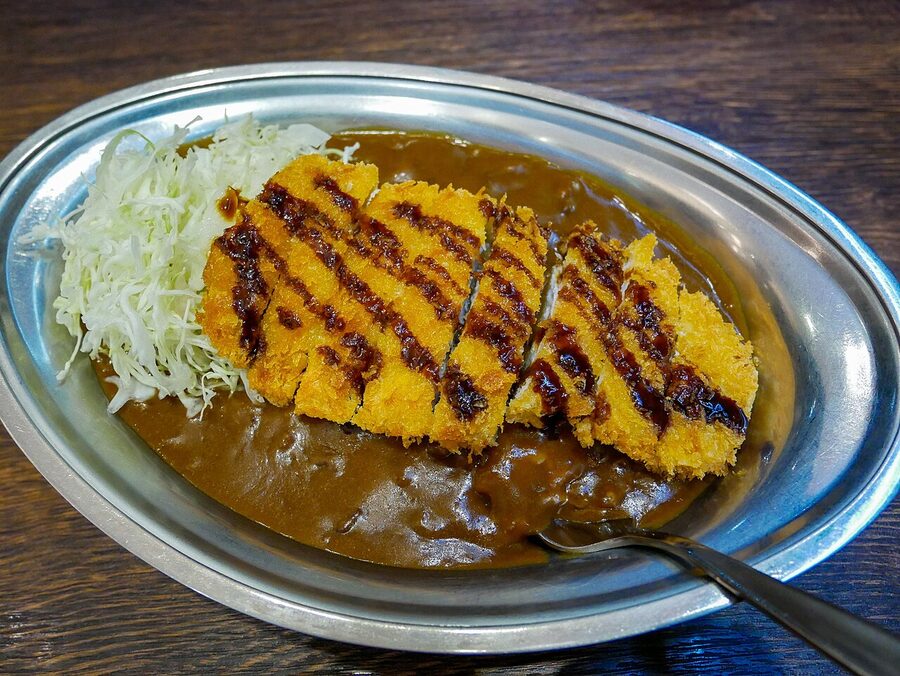

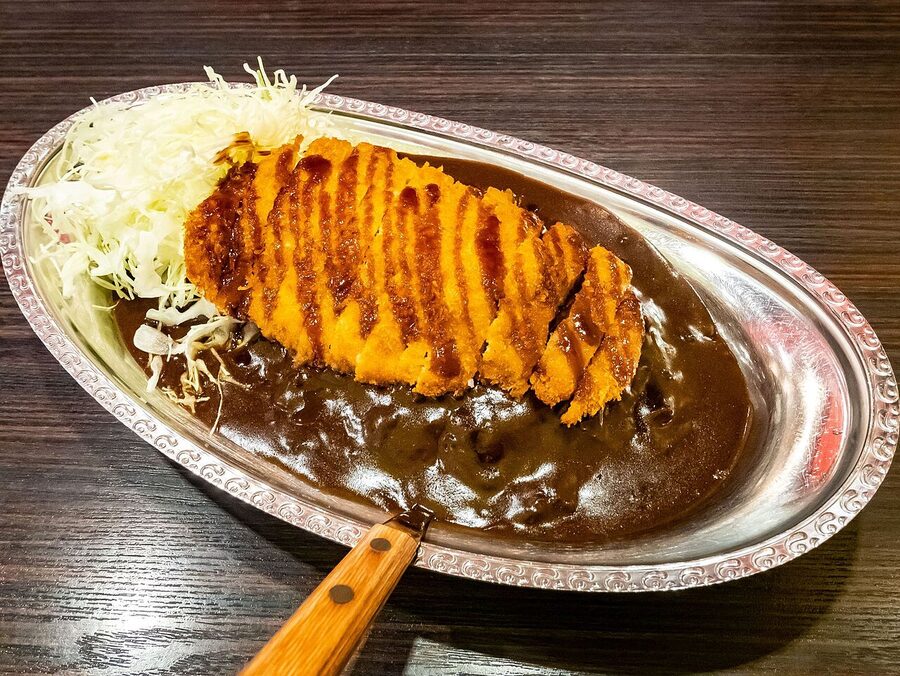
Kanazawa curry is its own thing. The roux is dark, almost black-coffee brown, much thicker than a Tokyo house curry, with a gravy-like cling. The plate is stainless steel, the rice is mounded under it, the cabbage is shredded raw on the side, and you eat with a fork that has a slotted serrated edge. There is no formal definition; the style emerged from a handful of Ishikawa diners through the 70s and 80s and went national after Go!Go!Curry exported it to Tokyo in 2004.
The two heritage names are Curry no Champion (Champion’s Curry) and Go!Go!Curry. Champion’s near Omicho serves the L-katsu (pork cutlet curry) under ¥1,000 with the bare-bones plate-and-fork treatment; Go!Go!Curry on the first floor of Kanazawa Station is the chain version and convenient if you have ten minutes between trains. The local thinking spot is Kanazawa Curry Laboratory, where you build your own (three roux strengths, three rice types, twenty toppings); the Premium Noto Pork Cutlet add-on is the only correct choice. They are a five-minute walk from the station’s east exit.

Note for sake-tour planners: Kanazawa curry is the heaviest, most stomach-coating lunch you can eat in Japan. Order the small. You will thank yourself five hours later when you start drinking.
Kanazawa oden, broth-driven not soy-driven
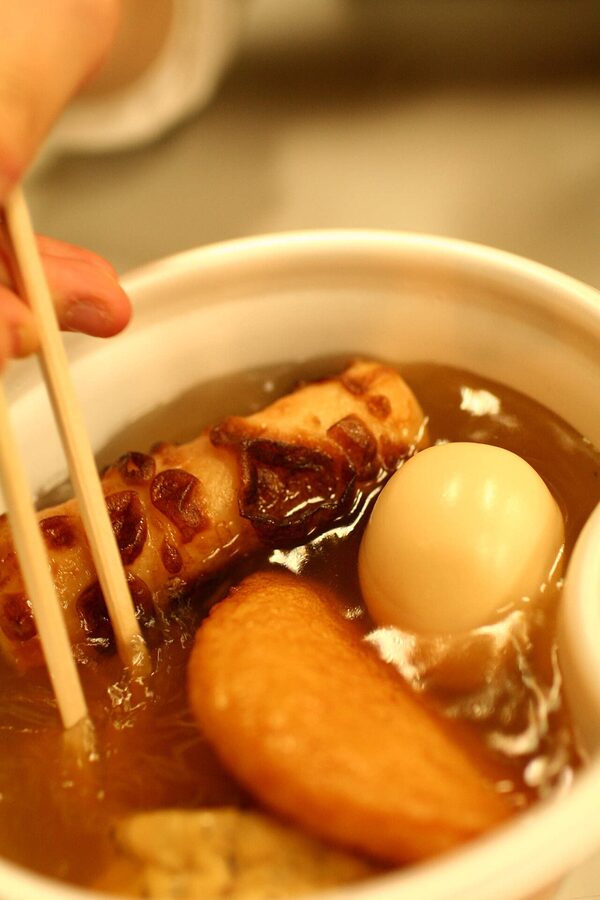

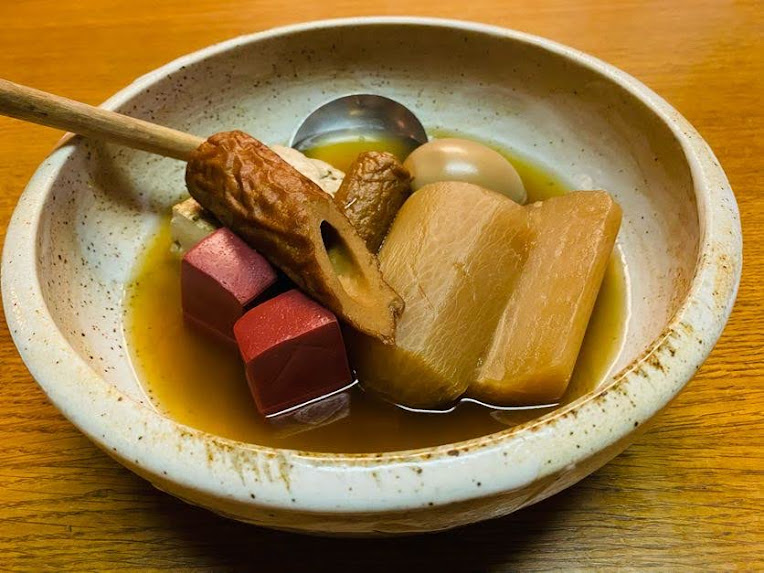
Oden is everywhere in Japan in winter, but Kanazawa’s version is distinct: the dashi is made from kombu, katsuobushi, and niboshi, and it is sweetened with Ono shoyu, the locally produced soy that has a softer, almost honey-coloured profile. The signature is kanimen, a snow-crab shell stuffed with the crab miso and the picked-over crab meat, simmered in the broth. Order it with baigai (sea snail), fukashi (steamed fish-paste cylinder), and kuruma-fu (the wheel-shaped wheat gluten that drinks up the broth like a sponge). Cash, ¥150–500 per piece, you point at what you want.
Worth the queue: Akadama Honten in Katamachi (since 1927, the most famous, expect to wait), Oden Takasago in Korinbo (smaller, locals’ choice), and Kanazawa Oden Ippukuya inside Omicho (lunch friendly). Akadama runs 17:00–23:30 daily; the queue starts at 17:30 and the last seat is usually claimed by 19:00.
Hanton rice, the post-war omurice that should not exist
Hanton rice is the strangest thing on a Kanazawa menu and I love it. A bed of ketchup rice, an omelette over the top, deep-fried white fish or prawn on the omelette, and tartar sauce and ketchup drizzled across. The story goes that the chef at Grill Otsuka came back from a trip to Hungary in the 1960s with a memory of fried carp on egg over pasta, and he reverse-engineered it for the local market. Now it is the city’s most photographed dish that nobody outside the prefecture has heard of.
Grill Otsuka in Kaguramachi (close to the Nagamachi samurai district) is the originator. Open 11:00–14:45 and 17:00–19:50, closed Wednesdays. A small portion runs around ¥1,250 and is more food than the menu suggests; the white-fish version is the original, the prawn version is the Instagram one. Skip if you do not love an omelette; eat it for breakfast if you do.
Jibuni, the duck dish that explains the rest of the meal
Jibuni is a Kaga ryori survivor: duck (or chicken) sliced thin, dredged in flour, simmered briefly in a sweet broth thickened by the flour itself, served with seasonal vegetables and a dab of sharp wasabi. It is the dish that tells you you are in a city with old-money food traditions; the Maeda court ate it. Most kaiseki menus in Higashi Chaya put a small jibuni course in the middle. Kayuan in Nagamachi is the casual lunchtime way to try it for around ¥1,500–2,000; Gyohan on the eastern edge of the samurai district is the alternative if Kayuan is closed (it is closed Tuesdays and Wednesdays).

Noto beef, the wagyu rival you have not heard of
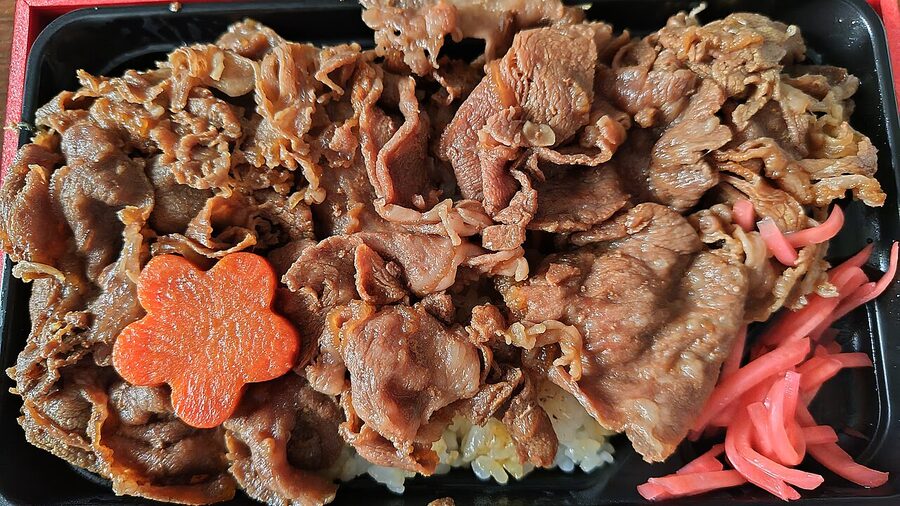
Noto-gyu is the local wagyu: black-haired Japanese cattle raised in Ishikawa, A3 grade or higher, marbled but with high oleic acid that gives it a softer melt and less of the sticky-fat finish you sometimes get with A5 Kobe. Ushiju Teraoka, a five-minute walk from the station’s tsuzumi-mon (drum gate), serves it as ushimabushi (Noto beef hitsumabushi) over rice in three courses: plain, with condiments, and finally with house dashi as ochazuke. Around ¥3,800–5,500. Fuwari in Higashiyama is the izakaya version: charcoal-grilled Noto pork and beef alongside the wild mountain vegetables and pressed sushi with horse mackerel and shiso. Fuwari is one of the best izakaya nights in the city. Reserve, especially at weekends.
Kanazawa is a sake town and you should drink like one
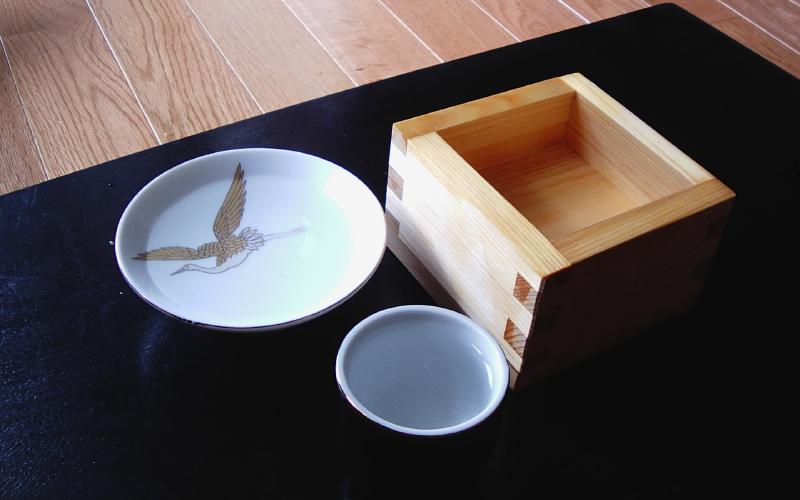
Ishikawa runs from the Sea of Japan to the Hakusan mountains, and that water plus the rice grown in the snowmelt-fed paddies is what makes the sake. Kanazawa’s style is generally cleaner and more food-aligned than Niigata’s flintier tanrei karakuchi, with rounder umami and a finish that does not fight with seafood. There are about 30 active breweries in Ishikawa Prefecture; three names you should plan around if drinking is half the trip.
Fukumitsuya, 400 years inside the city
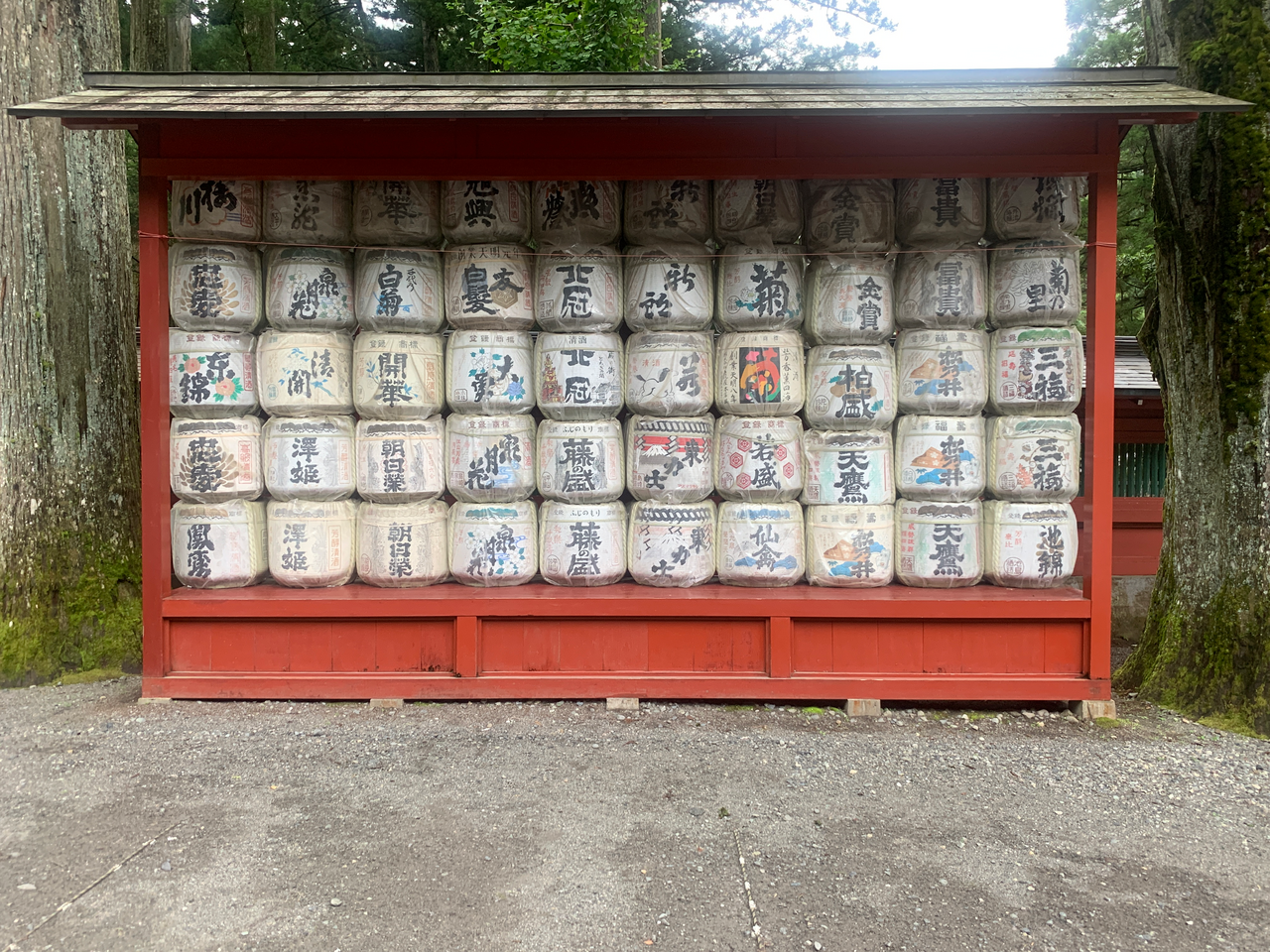

Fukumitsuya Sake Brewery at 2-8-3 Ishibiki is the city’s grandfather, founded in 1625, still owned by the same family. Their Sake Shop Kanazawa stocks every label they make plus sake-fermented sweets, sake-yeast cosmetics (yes, really), and lacquerware tasting cups. Open 10:00–18:00 daily, no closing day.
The brewery tour runs from November through March only (Mondays, Fridays, and Saturdays at 15:00), costs ¥3,300, and books out a month ahead in winter. White coats and masks for hygiene. After the tour you taste the lineup and shop. If you cannot make the brewery, walk to Fukumitsuya Higashi at 1-14-9 Higashiyama in the Higashi Chaya district. Same hours, less of a tour, more of a drinking room. Their flight of three flagship sakes plus a sake ice cream is around ¥1,500. Their flagship Kaga-tombi is dry, mineral, and pulls hard for grilled fish; ask the bartender for a pour with the seasonal otsumami.
Yachiya, Yoshida and Shata: the breweries beyond the city
Two of Ishikawa’s best breweries sit just outside Kanazawa and are easy day trips by local train. Yachiya Sake Brewery in Ohicho (15 min by city bus) has been going for nearly 400 years and runs short tours twice a day at 13:30 and 15:00 (reservations only, phone 076-252-7077, closed Sundays). The shop sells the sake plus drinking vessels for it.
Yoshida Sake Brewery in Hakusan City makes Tedorigawa, named after the river that feeds the brewery; soft, slightly fruity, easy on the palate, low ABV (around 13%), one of the rare Hokuriku sakes that newcomers to nihonshu tend to love on the first sip. Shata Sake Brewery (also Hakusan, founded 1823) is the home of Tengumai, a heavier, more umami-driven sake with sharp acidity that finds gear when you put it next to oily fish. The brewery itself is closed to tours but the on-site shop has a tasting bar and is worth the trip if you are already in Hakusan for the river or the mountains.
Where to drink the city sake without leaving Korinbo
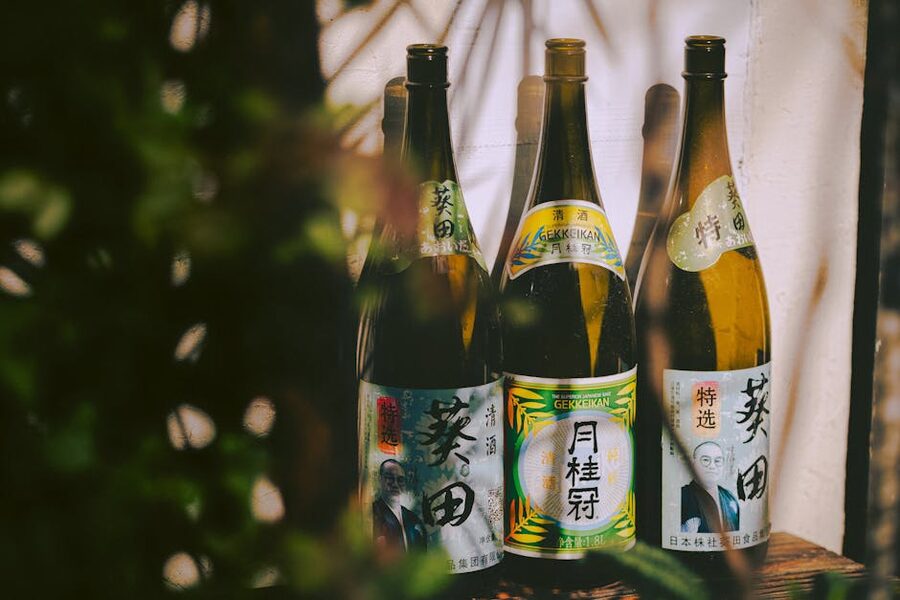
If you cannot make a brewery or a Higashi Chaya tasting, the city itself has the best sake-bar density in Hokuriku. Sake Bar Kanazawa Shu Shu at 5-10 Oyamamachi keeps about 100 labels and runs a three-flight comparison nightly (the master picks the daily three, around ¥1,500–2,000), counter-only, walk-ins until 21:00, closed Mon–Wed. The fish dishes lean simple and right: aji-tataki, salt-grilled nodoguro, sashimi of whatever Mori Mori sold at lunch.
Japanese Sake Bar Ikiyoi at 1-5-26 Katamachi is more local-feeling and looks intimidating from the street. Walk in. The owner will ask what you usually drink, then talk you through Ishikawa labels you won’t see at home. Open 19:00–24:00 only. Daigo at 19-4 Yasuemachi is the volume play: 500+ labels, three nomihodai courses including the ¥4,500 two-hour all-you-can-drink that covers about 400 of them. Closed Sundays. If a sake-flight crawl is your evening, do Shu Shu first while the master is still pouring carefully, then walk south to Katamachi for Ikiyoi or Daigo by 21:30.
SAKE Shokudo at the station, if you have an hour
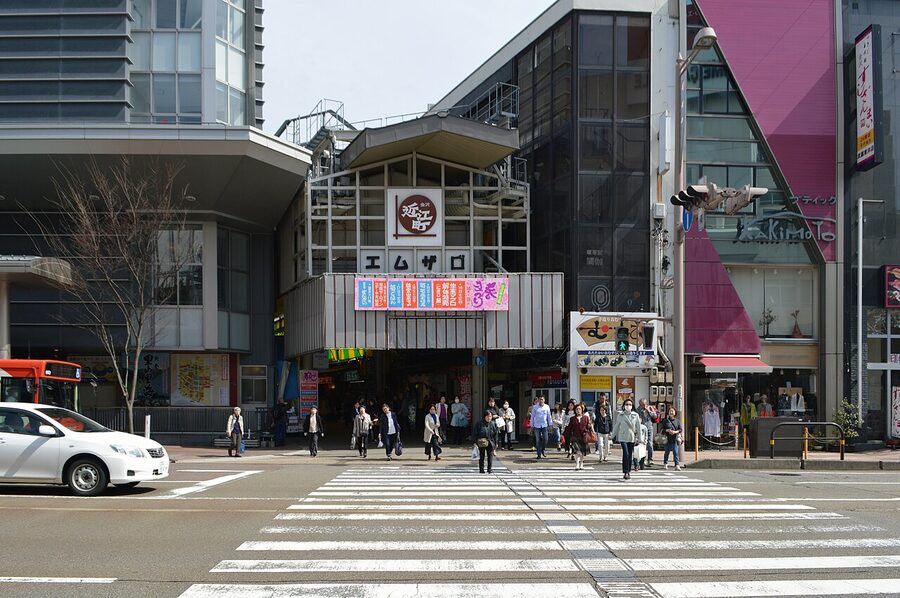
For travellers stopping over without a hotel, SAKE Shokudo by Noguchi Naohiko Sake Institute on the second floor of the Hyakubangai shopping arcade inside Kanazawa Station is the painless option. The Noguchi institute represents 11 prefectural breweries with a rotating lineup; the daily tasting flight is around ¥1,500 with paired snacks. They open from 11:00 most days, close around 21:00. Less atmosphere than a Korinbo bar, more efficient for a layover. The Hokuriku Shinkansen connects Kanazawa to Tokyo in about 2 hours 30 minutes, which means it is genuinely possible to pop in for a tasting on a sake-tour day from the capital.
Kakuuchi: drinking in the corner of the bottle shop
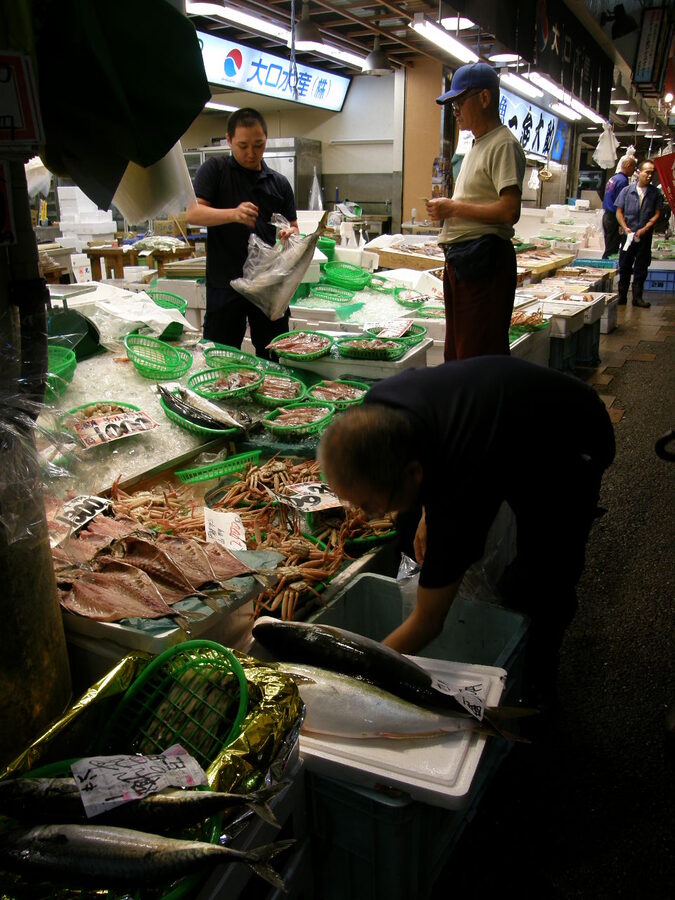

Kakuuchi is the Hokuriku tradition of drinking in the corner of a sake retail shop, standing, by the bottle you just bought. The name comes from drinking at the kado (corner) of the shop, possibly drinking from the corner of the wooden masu cup, possibly both. It used to be a labourer’s after-shift ritual; now it is a halfway house between a brewery tasting and a bar. You point at what you want, the shop pours a tokkuri, you drink it standing among the shelves. Snacks are usually konbini-tier or whatever the shop has. Cash. About ¥500–800 per pour; some shops do flights of three for ¥1,200.
Sugihara Sake Shop at 2-7-1 Hirooka is the Kanazawa kakuuchi locals will send you to. Weekdays 09:30–19:30, Sundays and holidays 10:00–18:00, no closing day. Walk in around 17:30 and you will find office workers in suits hunched over the standing rail with sake glasses; ask for the daily "recommend three" (osusume san-shu) and they will pour from whatever they think is drinking well that week. Higashiyama Syuraku at 1-25-5 Higashiyama is the Higashi Chaya kakuuchi, less local feeling but better for a daylight tasting flight if you are walking the geisha district. Open 10:00–17:00, irregular closing days.
If you want to study the format more deeply, the Tokyo brewery-day-trip guide covers the standing-bar variants nearer the capital, and the tachinomi guide walks through the related standing-bar idea in the city context. Kanazawa kakuuchi is older and quieter than the Tokyo standing bars; it is also closer to the source.
The bars of Korinbo, Katamachi, and Tatemachi
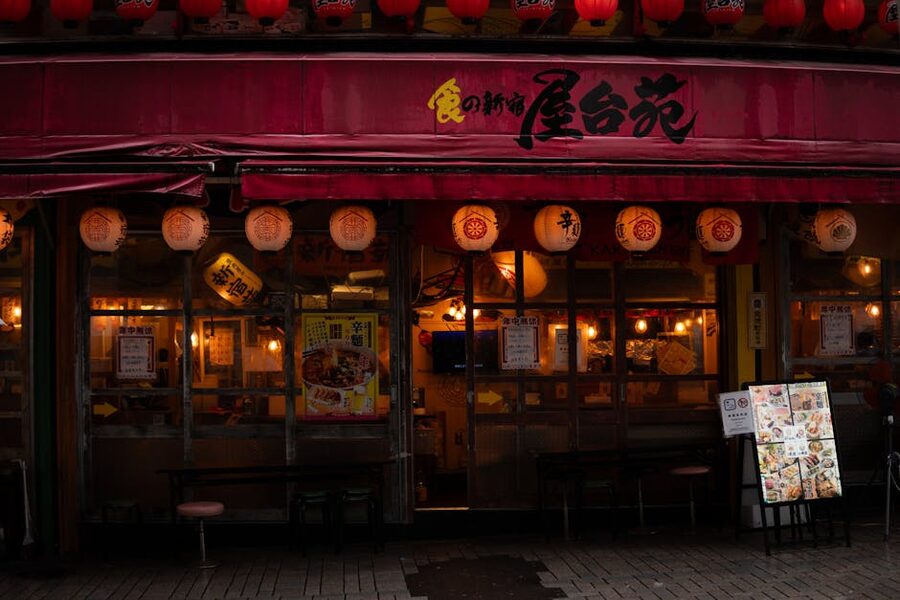
Most travellers walk Katamachi during the day on the way to the Sai River and miss what the area actually does. After dark, Korinbo to Katamachi is the densest bar zone in Hokuriku: izakayas, sake bars, cocktail rooms, jazz holes, and an unusual concentration of British- and European-themed pubs left over from a 1990s flush of Hokuriku money.
Bonkunen, the jazz bar that has been doing it since 1992
Bonkunen at 6-22 Oyama-machi is a working jazz bar, not a jazz-themed bar. Open since 1992. Lunch 12:00–14:00, dinner and bar 17:00–24:00, weekends from 12:00–20:00; closed third Sunday and the following Monday. The curry on the lunch menu has its own following; the master’s drinks list runs short and well-chosen. The two seats at the right end of the counter are the ones where you can hear the kit clearly without conversation drowning it. The owner will direct you there if it is a quiet night and you ask.
Kanazawa Music Bar and the local-gin movement
Kanazawa Music Bar on the ground floor of Kaname Inn Tatemachi at 41 Tatemachi runs an unusual list for the area: about thirty Japanese craft gins (including Wa Bi Gin from Kyoto and Mizu from Kagoshima) and a seasonal cocktail menu built around local Ishikawa ingredients. Yuzu, Noto sea salt, Hakusan rice shochu, and the persimmons that show up in autumn cocktails. Lunch and cafe 11:30–15:00; dinner and bar 18:00–26:00 (Saturday all-day), closed Wednesdays. Hotel guests get a happy hour. The terrace seats open in summer and autumn, and the city quiets down after midnight enough that you can sit out and hear the river one block south.
Londonya, the British-style hold-out
Londonya at 1-12 Katamachi is the city’s longest-running British-pub format. Whisky list runs short but well-chosen, the Kilkenny pour is decent, and the bar food (calamari, fish and chips when there’s mackerel) is better than it has to be. Open 17:00–25:00, irregular closing days. The architecture is by Australian designers and feels like a London Soho bar that lost its lease and emigrated; it is the answer to anyone in your group who has had enough sake by hour three.
Furansu Cocktail Bar and the post-dinner second move
Off the main grid in Katamachi, the Furansu Cocktail Bar on Tatemachi-suji does single-batch infusions with regional fruit (the persimmon-and-Lapsang riff in autumn, the spring sansho old fashioned) and a list deep enough to spend an evening on. Fullmoon Cafe, two streets over in the black-and-white-signs zone Katamachi locals call kuro-cho, is the dive answer: cheap pours, regulars in their fifties, music on a loop. Different end of the spectrum, both worth the second-move walk after dinner. If you want a deeper read on the kind of cocktail bar Kanazawa tries to imitate, the Tokyo craft cocktail guide covers the original templates.
Higashi Chaya: teahouses, ice cream, and one quiet sake bar
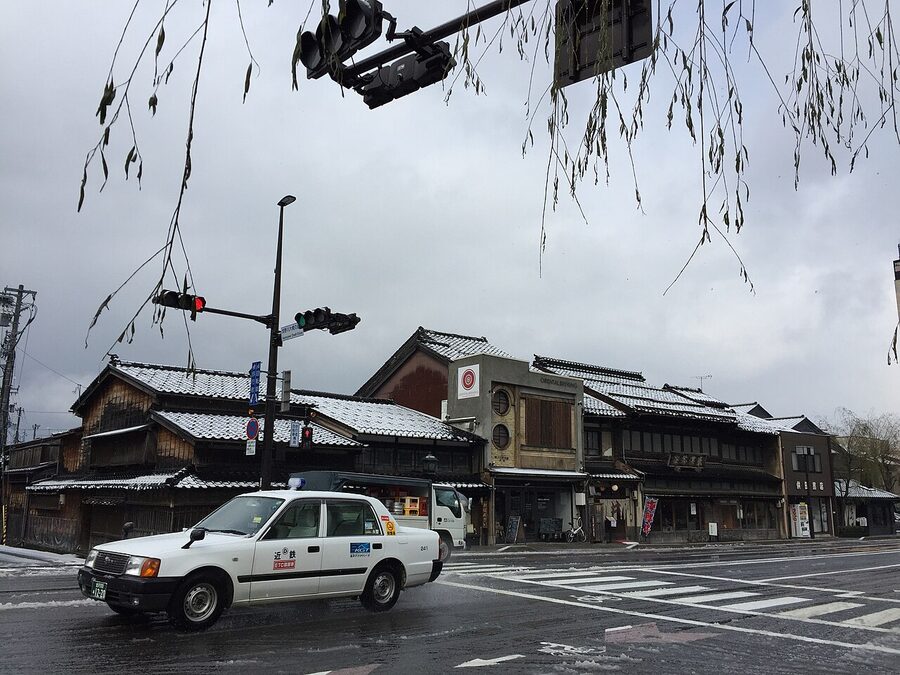

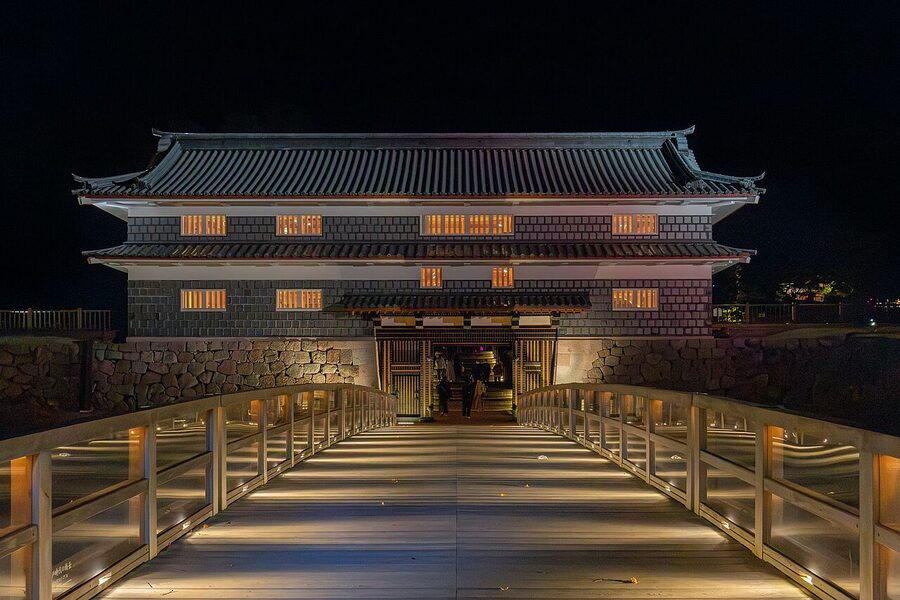
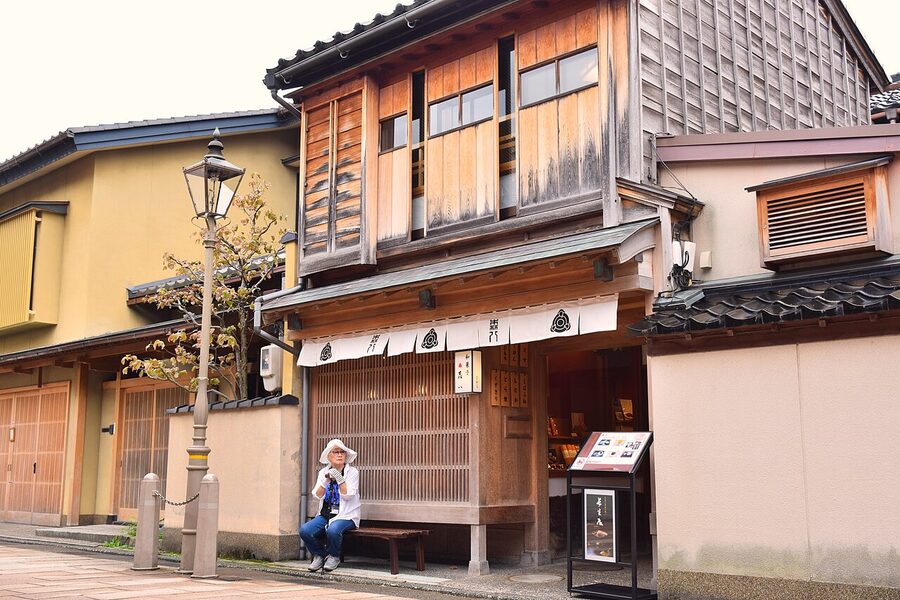
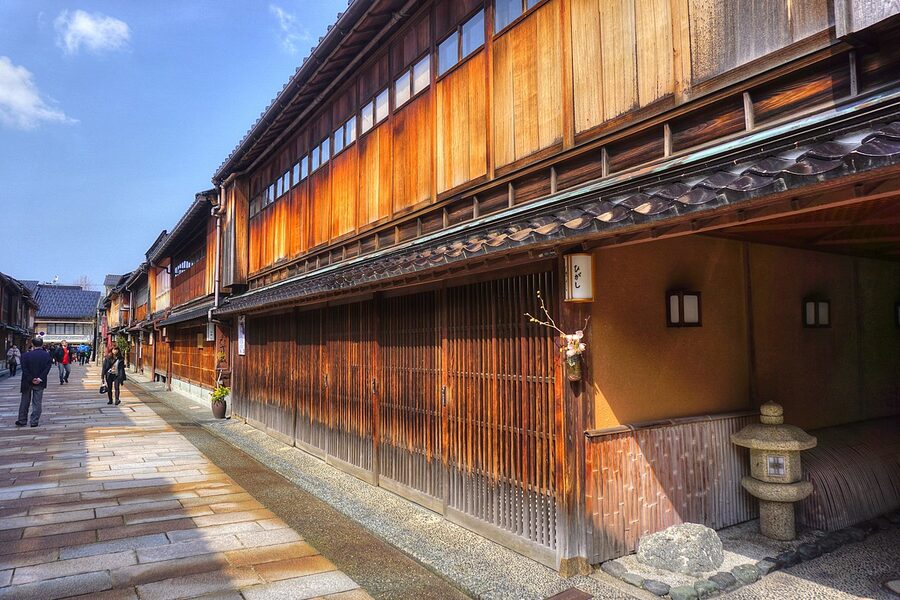
Higashi Chaya is the largest of Kanazawa’s three geisha districts, the touristy one (the locals’ own one is Kazue-machi, on the west bank of the Asano River), and the one with the best teahouses to look in on. It is a 12-minute walk from Omicho or 8 minutes by Loop Bus. The crowds peak between 13:00 and 16:00 on weekends; arrive at 09:00 or stay until 17:00 when the day-trippers pull out.
.jpg)
Fukumitsuya Higashi for a slow tasting
I covered Fukumitsuya Higashi in the sake section. Worth repeating here because it is the right move when you are walking the Chaya district and want a sit-down pour that is not coffee. Order the three-flight, ask for which one pairs with the seasonal otsumami (the chef does small fish dishes, sometimes a bowl of crab miso, depending on the day), and let the bartender pace you. About 45 minutes is right.
Horaido for matcha that earns the gold leaf
Inside Kenrokuen between the Katsurazaka and Renchimon gates, Horaido is the matcha-and-wagashi stop most travellers miss because they are heading to the more famous teahouse exit. Sit on tatami, look at the Gyokusen-in garden, drink a bowl of bitter matcha, eat one well-made wagashi sweet for around ¥800. They also do a gold-leaf-covered matcha ice cream which is, yes, a gimmick (the gold leaf has no flavour, it sticks to your lips, and you get exactly one good photo out of it). I recommend it once and I would never order it twice. The matcha bowl is the actual reason to go.
Hun + GO Cafe and the Noto milk question
If you are walking from Higashi Chaya back to the city, Hun + GO Cafe is the Noto-milk ice cream stop. Two flavours per cup, the milk-and-matcha is the right combination, and the milk genuinely tastes different from anywhere else in Japan because Noto Peninsula dairy is its own quirk. Around ¥500 per cup. Skip the gold leaf upgrade unless you have not had it elsewhere. Petra Bake & Coffee on the edge of Omicho is the alternative for an oat latte and a banana bread on the way to the market in the morning.
Practical: getting there, getting around, when to come
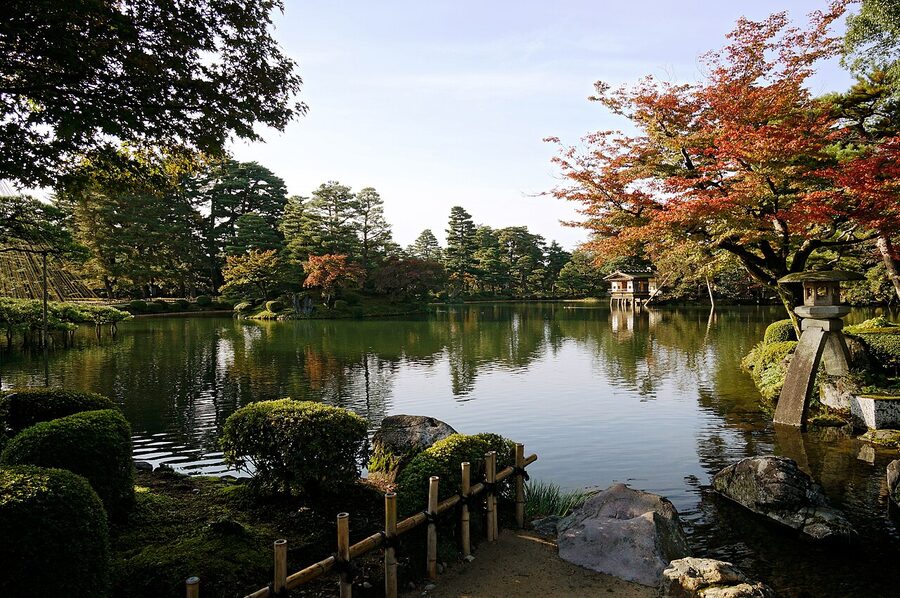

Kanazawa is on the Hokuriku Shinkansen. From Tokyo: about 2 hours 30 minutes direct, around ¥14,000 reserved one-way. From Kyoto and Osaka: 2 hours 15 minutes via the Thunderbird limited express to Tsuruga and a Hokuriku Shinkansen connection (the through-running used to make it 2:15 direct, but the Tsuruga–Kyoto extension is still in build phase as of writing; check current routing). The JR Pass and the Hokuriku Arch Pass both cover it. Most travellers staying overnight come in by Shinkansen and leave the same way; if you are doing a Kanazawa-to-Takayama-to-Shirakawa-go loop, the Nohi bus is the connecting move.
Inside the city: walk where you can. The Loop Bus (¥200 single, ¥500 day-pass) circles the main sights every 15 minutes and is useful for the airport, the suburbs, and the rain. The food and drink zones are a kilometre across at most. Forget the taxi unless it is past midnight and raining hard, in which case rank up at the station or call from your hotel.
When to come
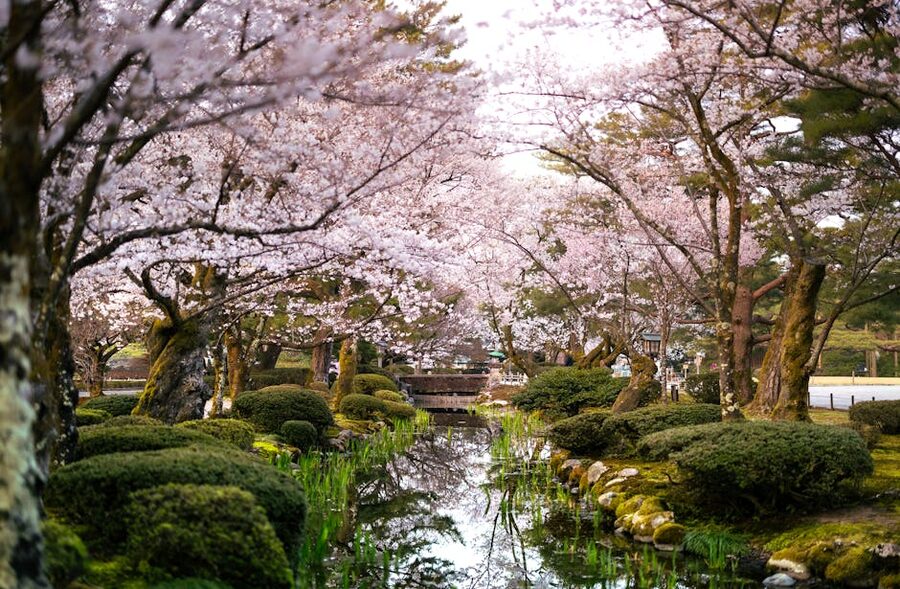
Late November to mid-March if you are here for the kano-gani window and the brewery tours. Early April for cherry blossom along the castle moat and the spring nama sake release; you can taste the unpasteurised drop at most of the city sake bars from late March. May and October are the fair-weather months when the gardens look their best and nothing is closed. August is hot and humid and most chefs use the slow week to take their summer break, so check listings before you book a specific izakaya. The cherry-blossom drinking culture is more developed in Kanazawa than most travellers expect; the moat-side benches around the castle fill up with picnickers and tarp-laid sake on warm April evenings.
Reservations and reality
Kanazawa is not Kyoto. You can usually walk into kaisendon counters at Omicho before 11:30 and after 14:30 with no wait; same for the kaiten-zushi conveyors. Counter izakayas and the high-end places require reservations; Fuwari, Akadama Honten oden, Itaru nodoguro, Zeniya kaiseki all want you to book. Sake bars are walk-in until 21:00, then the Korinbo and Katamachi bars get tight. Ramen Taiga’s queue starts a half-hour before opening.
A two-day eat-and-drink plan that actually works

This is the version I would write for a friend taking the Tokyo train in tomorrow morning.
Day 1
- 09:00 – Coffee and pastry at Petra near Omicho. ¥500.
- 10:30 – Walk Omicho Market. Try the Noto beef nigiri at Tabemono Ushioya, a kani-cream croquette at Omicho Korokke (¥380), and the Kanazawa pudding at the in-market shop near gate 18.
- 11:30 – Kaisendon at Hira-i upstairs in the Ichiba-kan. The 14-topping bowl, ¥2,900. Add miso for ¥200.
- 13:30 – Kenrokuen via the Loop Bus. Matcha and wagashi at Horaido, ¥800.
- 15:30 – Walk to Higashi Chaya. Fukumitsuya Higashi, three-flight tasting plus otsumami, around ¥1,800.
- 17:30 – Walk back across the river to Korinbo. Stand-drink at Sugihara Sake Shop. Three pours and a bag of senbei.
- 19:30 – Akadama Honten oden if you got the reservation; otherwise Fuwari izakaya in Higashiyama for charcoal-grilled Noto pork and Hokuriku sake. Around ¥5,000 a head.
- 22:00 – Bonkunen jazz bar for one nightcap. Counter seat right side. Closing time is 24:00 sharp.
Day 2
- 10:00 – Breakfast at Hun + GO Cafe (Noto milk and matcha ice cream over coffee).
- 11:00 – Hanton rice at Grill Otsuka. The white-fish version, ¥1,250.
- 12:30 – Stroll Nagamachi samurai district, jibuni at Kayuan around ¥1,800.
- 14:30 – Fukumitsuya Sake Brewery tour if November to March (¥3,300, reserve a month ahead). Otherwise, the Sake Shop on Ishibiki for a flight at the counter.
- 17:30 – Sake Bar Shu Shu in Korinbo. Three-flight comparison, around ¥1,800.
- 19:30 – Itaru in Katamachi for the nodoguro meshi. Reserve.
- 21:30 – Kanazawa Music Bar for a craft gin or a yuzu old fashioned. Or Londonya if you are sake-out.
- 23:00 – Katamachi back to the hotel via the river. The shinkansen out is best caught after 09:00 the next morning, with one more bowl of kaisendon at Mori Mori inside the station.
If you are extending past two nights, day three is for the brewery day trips: Yachiya in town, Yoshida or Shata in Hakusan City. The day-trippers guide to brewery day trips from Tokyo covers the format if you want a primer.
Etiquette, costs, the things nobody mentions
Most counter izakayas charge an otoshi (a small obligatory appetiser, around ¥300–500). Itaru, Akadama, Fuwari all do. It is not a scam, it is the cover charge in disguise. Pour for whoever is with you before pouring for yourself; if your tokkuri runs out you get refilled rather than refilling yourself. Cash is still common at smaller izakayas and almost universal at the kakuuchi shops. The Loop Bus and the city buses take Suica and Pasmo. Izakaya etiquette in general covers the rest of the rules; how to actually order covers the pointing and grunting that gets you fed in a Kanazawa counter when nobody on staff speaks English.
Budget reality check: a serious eating-and-drinking day in Kanazawa runs ¥10,000–15,000 a head with two sit-down meals and four drinking stops. You can do a tighter version for around ¥6,000 by skipping the high-end nodoguro counter and sticking to kaiten-zushi at lunch. The budget guide goes deeper into the cheap-good ratio across the country.
What to read before you book
If sake is the reason you are coming, the sake guide sets up the styles and terminology and the label-reading guide is the field manual for working out what you are looking at on a Kanazawa retailer’s shelf. The sake-food pairings piece covers what to drink next to what; Niigata’s sake region is the comparison piece for travellers deciding between a Niigata trip and a Kanazawa one (Kanazawa wins on food, Niigata wins on rural brewery atmosphere).
If this is part of a wider Japan eat-and-drink loop, the Kyoto guide and the Osaka guide are the obvious neighbours; Tokyo bars and drinks is the pre- or post-Kanazawa companion. Up the Sea of Japan coast there is Sapporo for crab and whisky bars; down the inland sea there is Fukuoka for tonkotsu and yatai. Kanazawa fits between the two as the crab-and-sake city the rest of the country quietly likes more than it admits.
The bowl that started this guide is still the moment I think about when I think about Kanazawa. Yellowtail and gold leaf, eight thirty in the evening, one cup of cold Tedorigawa next to it, the rain making a soft sound on the awning over the entrance. Three trains north of Kyoto, more than worth the detour, more than worth the second night.
 CitiesWhy Tohoku Took Over Japan’s Sake SceneThe trip almost didn't happen. I'd booked an Aomori brewery visit at the end of a rushed week, the second…
 CitiesWhy Kansai, Not Niigata, Is the Sake CapitalHyogo and Kyoto produce more sake than the next eight prefectures combined. Two of Kansai's six prefectures, side by side,…
 CitiesHokkaido Has More Whisky Distilleries Than You ThinkAsk anyone who knows a little about Japanese whisky to name a Hokkaido distillery and they’ll say Yoichi. Push them…