
How does a city smaller than Yokohama end up with the loudest, most stubborn street-food culture left in Japan? Fukuoka does it the same way it does everything else: late at night, on a stool that wobbles, with a paper lantern over your head and a bowl of pork-bone broth that came out of a pot that hasn’t been switched off in years.
I’ve eaten in this city across three trips and lost count of the yatai I’ve sat at. The pattern was the same each time. Walk along the Naka river just after 18:00, watch the carts roll out, find one with two empty stools, sit down, and start ordering before you’ve even decided what kind of night you wanted. By 23:00 you’ll know more about Hakata ramen, mugi shōchū, and the difference between hitokuchi gyoza and the version your hometown serves than you ever wanted to.

This guide is the version I wish someone had handed me on the first morning. Where to actually go, what to actually order, what each neighbourhood is good for, and which Kyushu drinks pair with which Fukuoka food. Yatai gets pride of place because nowhere else in Japan still does it like this. But the city is also a serious shōchū bar town, a Hakata-ramen pilgrimage city, and the place where you can eat raw mackerel without flinching. All three of those things matter.
In This Article
- Why Fukuoka punches above its weight
- Yatai 101: how the carts actually work
- Nakasu vs Tenjin vs Nagahama vs Daimyo: which yatai zone for which night
- Nakasu: the lanterns-on-the-river one
- Tenjin: the everyday one
- Nagahama: the ramen one
- Daimyo and Imaizumi: the third-night zone
- Hakata ramen: the bowl, the seven words, the queue
- Where to eat the bowl
- Beyond ramen: the dishes you have to fit in
- Motsunabe (the offal hotpot)
- Mizutaki (the chicken hotpot)
- Hitokuchi gyoza (the bite-sized version)
- Mentaiko (the spicy roe)
- Goma saba (the sesame mackerel)
- Yaki-ramen (the fried one)
- Hakata udon (the soft one)
- Yakitori and skewers
- Kyushu shōchū: why this matters more in Fukuoka than anywhere else
- The five styles, by what’s in the still
- How to order shōchū in Fukuoka
- Where to drink shōchū in Fukuoka
- The Tenjin and Daimyo bar crawl, briefly
- Where to stay if eating and drinking is the point
- Getting around, getting in, getting out
- When to come
- One night, three nights, five nights
- The four mistakes I see most
- What this city is, and what it isn’t
Why Fukuoka punches above its weight
It’s the sixth-largest city in Japan and roughly a thousand kilometres from Tokyo. Most first-time visitors skip it because it sits off the Golden Route, which has been Fukuoka’s good fortune. Land prices are lower than Osaka or Kyoto, the airport is twelve minutes by subway from the centre, and the food culture grew up serving Hakata’s port workers and Kyushu’s salarymen rather than Western tourists.
The yatai survived because the city decided they should. After Japan tightened street-food rules in the 1960s, Fukuoka kept its carts running and eventually built a permit system that protects roughly 100 stalls. A commission now approves new yatai concepts, which is why you can sit at one stall eating French escargot and at the next one eating Sri Lankan curry, with a Hakata ramen counter twenty paces in either direction.
If you’ve already read the Tokyo bars guide or the Osaka eat-and-drink guide, you’ll feel the contrast immediately. Fukuoka is calmer. Tenjin’s drinking streets are loud but not aggressive. You can eat extremely well here on ¥3,500 a day, and you can also burn ¥15,000 at an omakase counter and not feel cheated.
Yatai 101: how the carts actually work
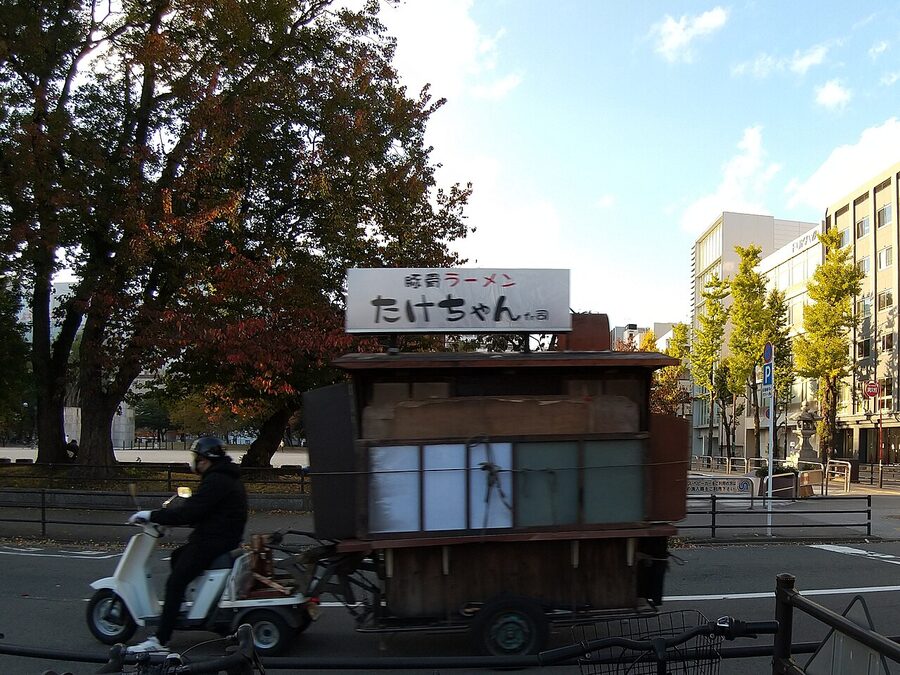
A yatai is not a food truck. It’s a wooden cart, two wheels, a canvas roof, a counter that seats six to ten people shoulder to shoulder, a small charcoal grill or pot inside, and a paper lantern over the door telling you the name of the place. The carts get towed to a parking lot every morning around 04:00 and rolled back out around 17:30 to the same spot every night. It’s been done this way for over eighty years.

Hours run roughly 18:00–01:00, with most stalls closing on Sundays and during typhoons (no canvas roof survives a real one). Cash is still common. About a third of the more visited stalls now take cards or PayPay, but plan for cash and you’ll never be embarrassed.
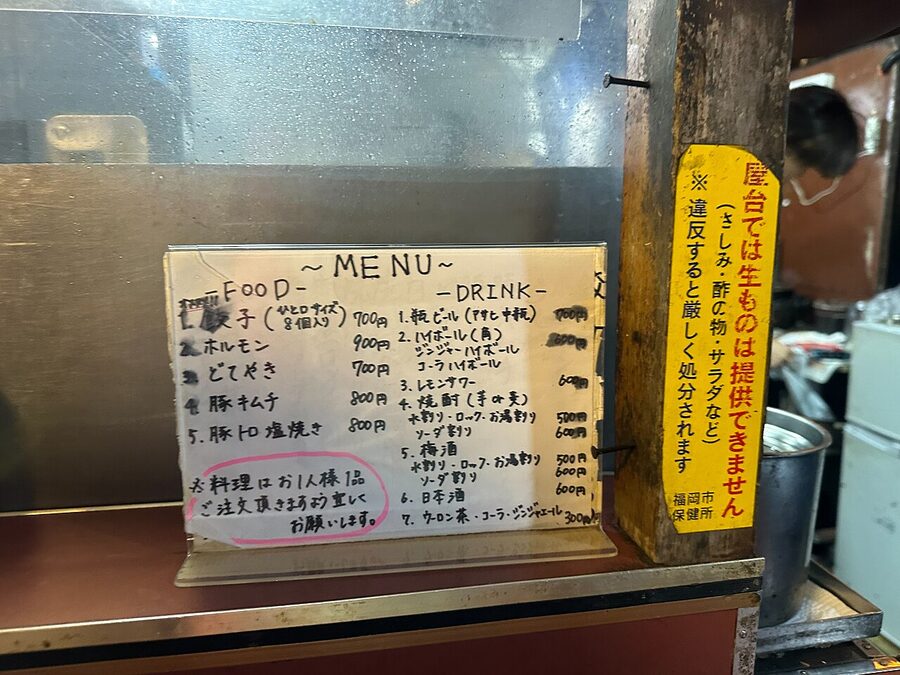
Pricing is the thing first-timers worry about most. A typical small dish runs ¥500–900. Yatai ramen is ¥800–1,100. A glass of beer is ¥500–700, a shōchū highball ¥500–700, a small bottle of sake ¥800–1,200. A dinner of three small plates plus two drinks lands around ¥3,000–4,500 a head. There is no otōshi (cover charge plate) at most yatai, which is one of the things that makes them feel different from a regular izakaya. A few stalls now charge a ¥500–1,000 cover, especially the newer ones. Look at the price board outside before you sit; if there isn’t one, keep walking.
Etiquette is short. Sit anywhere there’s an empty stool, even if it puts you next to strangers. Order one drink and one dish to start. Put your bag on your lap, not on the next stool, because seats are precious. Don’t take the stool for three hours; an hour is the unspoken limit if there’s a queue forming. Pay when you leave by saying “okanjō onegaishimasu”. Tipping doesn’t happen in Japan and yatai is not the place to start.

For the rule book that sits behind all of this, see the dedicated izakaya etiquette guide. Yatai is izakaya in miniature, on wheels, in the open air, with the same unwritten rules.
Nakasu vs Tenjin vs Nagahama vs Daimyo: which yatai zone for which night
Most articles tell you to go to Nakasu and stop there. That’s a tourist read. Fukuoka has four yatai pockets and they each behave differently. Pick the one that fits the night you actually want.
| Zone | Stalls | Vibe | Best for | Walking from Hakata Stn |
|---|---|---|---|---|
| Nakasu | ~20 along the river | Lantern-lit, postcard-perfect, half tourists | First night, photo set, ramen | 15 minutes |
| Tenjin (Watanabe-dōri / Showa-dōri) | ~30 spread across blocks | Office workers, mixed crowd, more variety | Drinking, international yatai | 25 minutes (or 1 stop on the subway) |
| Nagahama | ~5 near the fish market | Old-school, ramen-first, blue-collar | Tonkotsu pilgrimage, late shift | 30 minutes |
| Daimyo / Imaizumi | Sparse, a few mavericks | Newer concepts, design-led | Second or third night | 30 minutes |
If you have one night, do Nakasu first because the river is theatrical and the stalls are dense enough that you can stall-hop without crossing a road. If you have two, push to Tenjin on the second; the food has more range and the queues are shorter. If you have three, do a Nagahama lunch (the ramen yatai there open at 11:00 in some cases) and a Daimyo or Imaizumi dinner.
Nakasu: the lanterns-on-the-river one
.jpg)
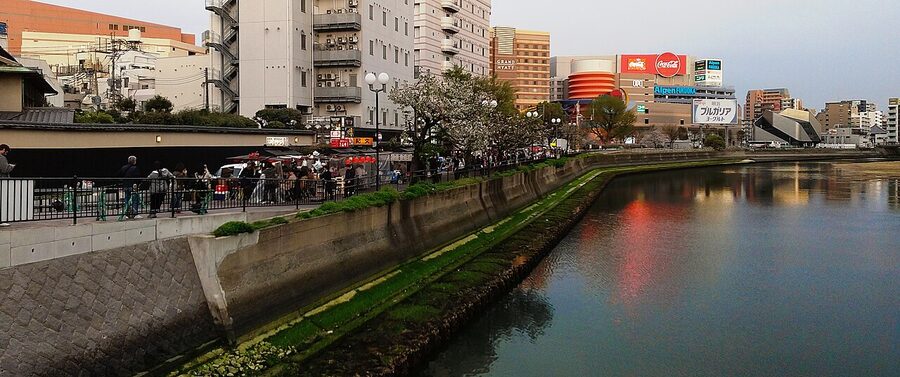
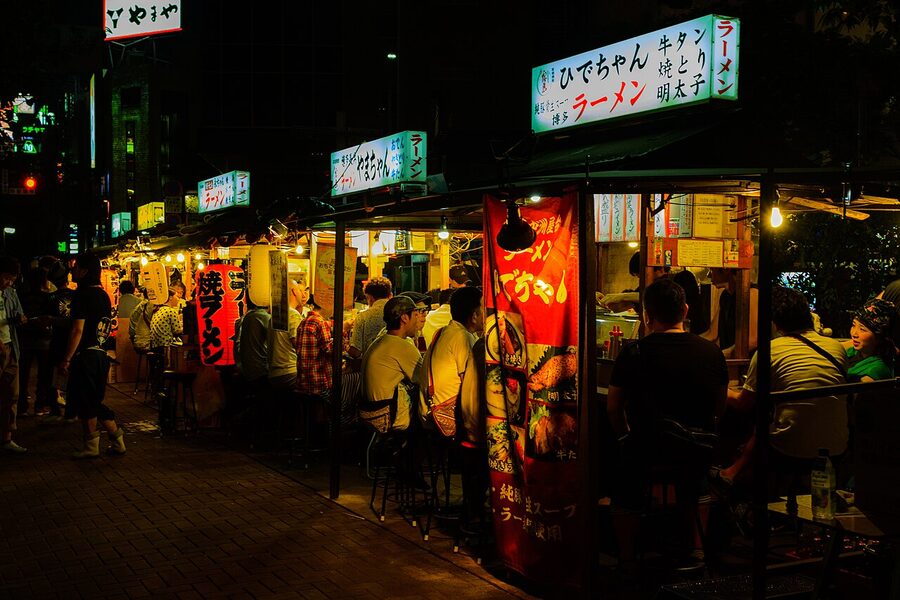
Nakasu is the photogenic one and the busiest one. Twenty-odd stalls line the east bank of the Naka river between Nakasu Kawabata Station and the Fukuhaku Deai-bashi bridge. The view across the river toward the neon hostess clubs is the postcard. The crowd is roughly half locals and half visitors on a normal weeknight, and 70/30 toward visitors on a Saturday.
What works here: the spectacle, the proximity (you can hop three stalls in 90 minutes), and the range. What doesn’t: queues from 19:00 onward at the named stalls, and a drift toward English-friendly menus that usually means slightly higher prices. A bowl of yatai ramen here typically runs ¥900–1,100, against ¥800–900 at a quieter strip.
Stalls worth pointing at:
- Genkai : the second-oldest yatai in Fukuoka, run by an octogenarian master and his wife. Tempura is the order: pork cutlet, lotus root, shiitake, single shrimp, all in a light, airy batter. Bring cash and order a Suntory bottle. Allow 60 minutes minimum.
- Yatai Chusuke : near the north end. Hitokuchi gyoza, the pan-fried “one-bite” Hakata version, made by the owner at speed-of-machine pace. Eight pieces is ¥500–600. Pair with cold beer.
- Kokinchan : the stall said to have invented yaki-ramen in the 1960s. Stir-fried ramen noodles with vegetables, pork, pickled ginger, egg, and a tangy brown sauce. Not pretty. Worth the ¥800.
- Kagoshima Yocky : mentaiko tempura is the move. Pollock roe in a light tempura batter, served with cold beer or a shōchū highball.
Stalls close occasionally for the master’s day off; if Genkai’s lantern isn’t lit, walk five paces and try the next one.
Tenjin: the everyday one
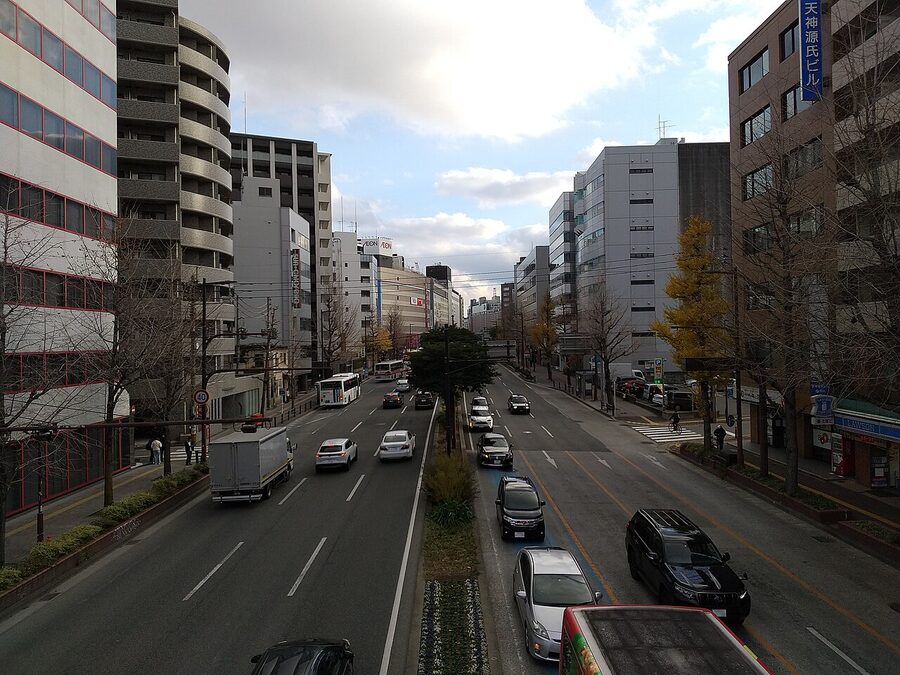

Tenjin is where Fukuoka office workers actually drink. The yatai are spread across about ten blocks, mainly along Watanabe-dōri south of the Mitsukoshi department store, plus a smaller cluster on Shōwa-dōri. The stalls are quieter individually because they’re not on a single river strip; you walk between them. That’s a feature, not a bug. You’ll pass three closed shutters, a 7-Eleven, a glowing red lantern at the corner, and start over.
Worth crossing town for:
- Chez Remy : on a side street outside a sporting-goods mall. Remy himself is French, the staff is French, and they sling escargot, quiche, and shrimp in butter and garlic. The crowd is loud, packed, and reservations don’t exist. The novelty stops mattering after one bite.
- Telas mico : bright blue stall, run by Kensuke Kubota, a former Zuma London sushi chef. Tandoori chicken, pork-belly tacos. The point is that yatai is not a tradition in amber; it’s a working format.
- El Bajón : jerk chicken and Sri Lankan curry on a Showa-dōri side strip. Three neighbouring stalls there break the format on purpose.
- Yatai Bar Ebi-chan : technically a yatai but really a cocktail bar in stall form. Campari flag on the wall, retro posters, a real cocktail list. ¥900–1,200 a drink, which is roughly the same as a Tenjin standing bar.
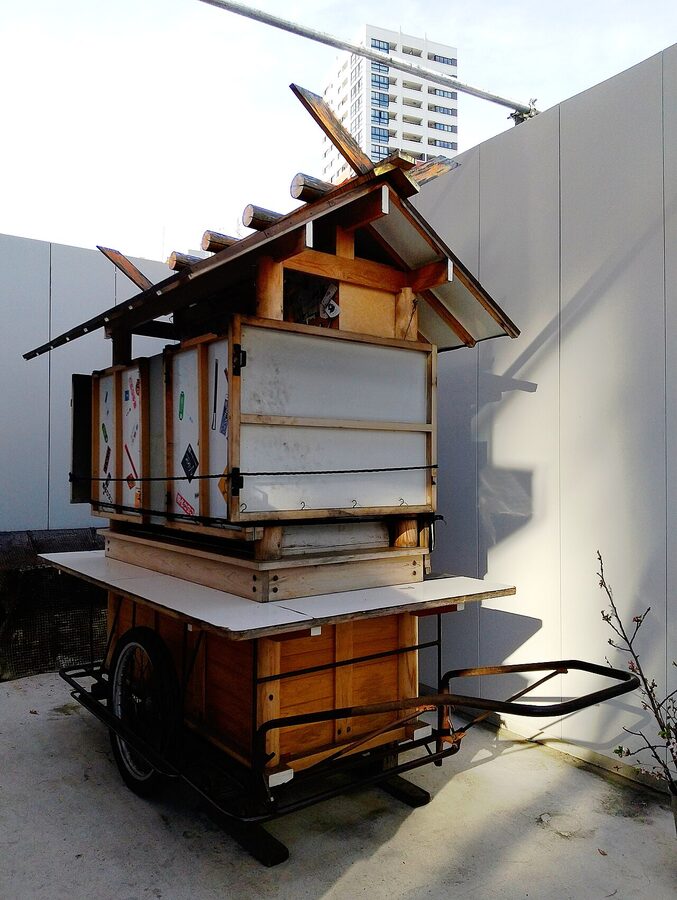
- Yatai Keiji : on the west side near Kego Park. The cart was built by the second-generation owner Abe (a carpenter) to look like a Shintō shrine. Miso-marinated cod, Japanese classics with fine-dining plating. Operates a waitlist (a first among yatai) so you don’t queue on the pavement.

Nagahama: the ramen one
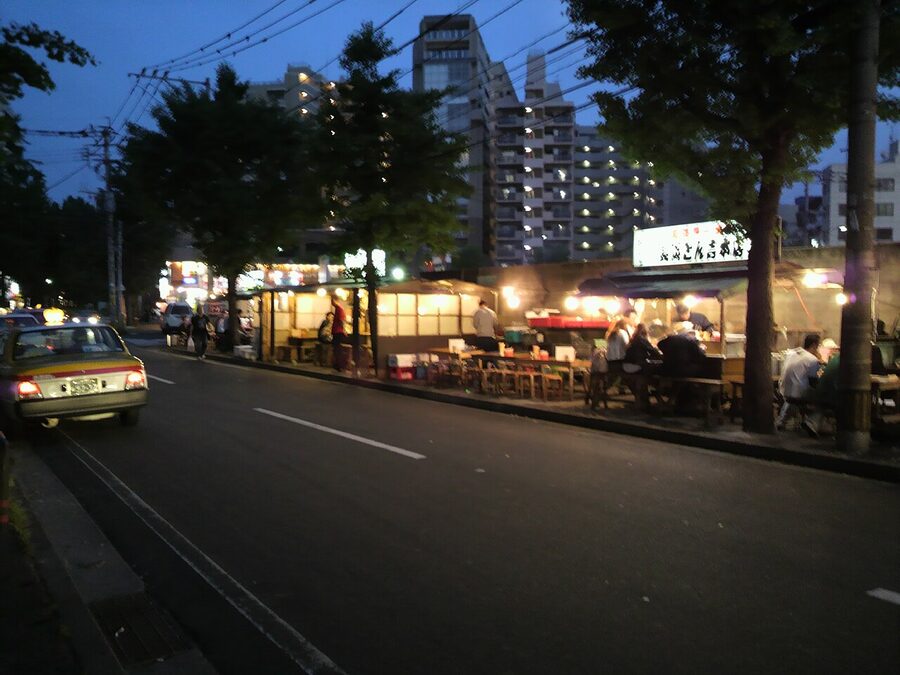

Nagahama sits a 25-minute walk west of Tenjin, on Naka-ku’s coastal edge near the wholesale fish market. The yatai here are fewer, older, and oriented around tonkotsu ramen because they originally fed the fish-market workers on early shifts. Ganso Nagahamaya, a few minutes inland from the strip, has been serving the lightest, milkiest tonkotsu in the city since the postwar years. ¥500 a bowl, opens at 04:00, runs to 01:45 next day. If you’re flying out at dawn, breakfast at Ganso Nagahamaya is the right last act.
Daimyo and Imaizumi: the third-night zone
Daimyo is the tighter of the two, a few blocks west of Tenjin. The yatai are sparse but the standing bars and small izakayas are dense. Imaizumi, just north, has a younger crowd and a few newer restaurants worth stopping in. Walk Imaizumi looking up: there’s a quiet wine bar above a bicycle shop on the corner of Imaizumi 1-chōme, fine for a quick second drink.
Hakata ramen: the bowl, the seven words, the queue
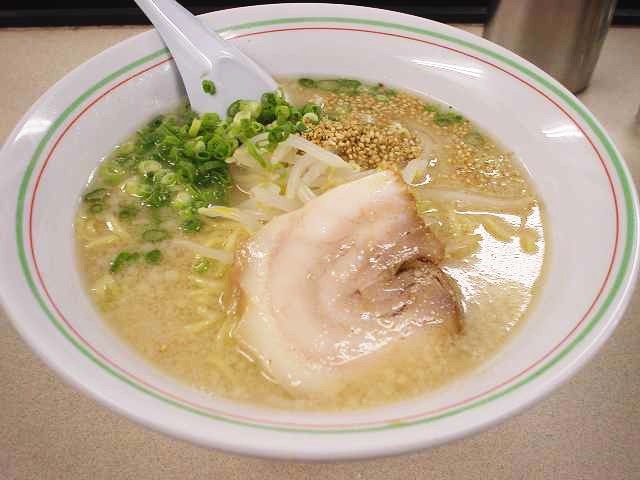

Hakata ramen is what most of the world calls tonkotsu. Pork bones boiled hard for eight to twelve hours, sometimes longer, until the marrow comes out and the broth turns the colour of half-and-half. Thin straight noodles, often around 1.2 mm. Chashu pork, green onion, sometimes wood-ear mushroom, sometimes a soy egg, almost always condiments at the table: pickled red ginger (beni shōga), karashi takana (mustard greens fried with chili), grated raw garlic, sesame seeds.
You will be asked how firm you want your noodles. The seven words to remember:
- yawarakai : soft. Do not order this.
- futsū : normal.
- katai : firm.
- barikata : extra firm. The local default.
- harigane : literally “wire”, barely cooked. Choose this only if you know what you’re doing.
- konaotoshi : a flash dunk. The flour is barely off the noodle.
- kaedama : not a firmness, but the thing to order halfway through. A second portion of noodles to add to your remaining broth, usually ¥100–200. Hakata noodles soften fast; this is why kaedama exists.
Order barikata first time. Switch to katai if it’s too firm. Skip yawarakai. The thin straight noodle exists to be eaten while it’s still chewing back.
Where to eat the bowl
Ganso Nagahamaya (Chuo-ku, Nagahama 2-5-25, 1F). 04:00–01:45 daily. Cash. ¥500 base bowl. The shop’s signature is a shredded chashu instead of slices, and the broth is the milkiest in the city; some say overdone, some say perfect. I’m in the perfect camp.
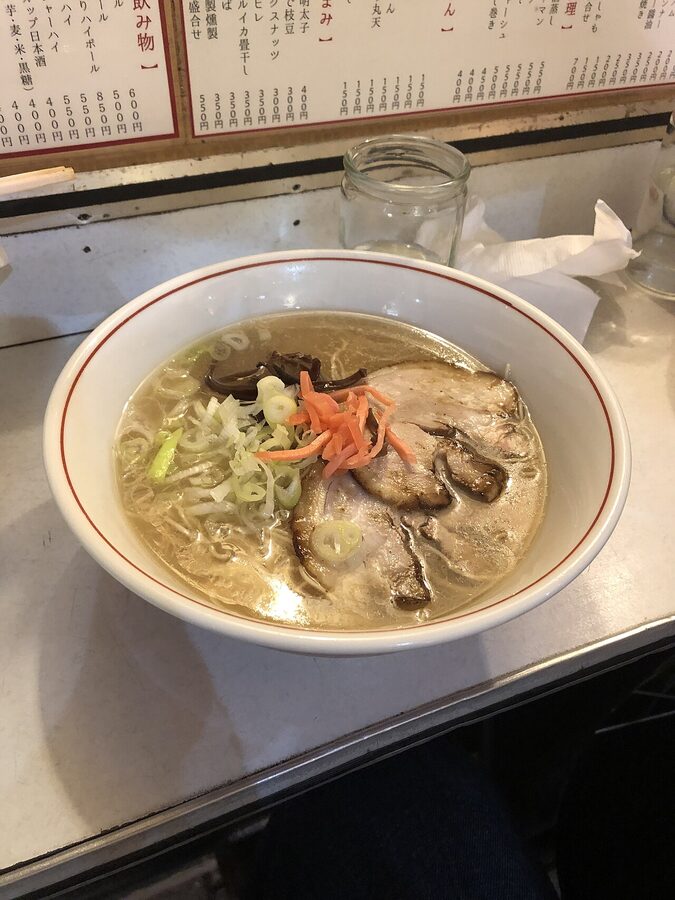

Hakata Issou (Hakata-ku, Hakataekihigashi 3-1-6). 11:00–24:00 daily. The locally agreed best, often called the city’s most balanced bowl. There will be a queue at lunch and dinner. Move quickly when you reach the front; the staff will pressure you to slurp at pace.
Ippudo Daimyo (Chuo-ku, Daimyo 1-13-14). 11:00–22:00 daily. The original location of the now-global chain. Order the Shiromaru Classic, ¥850, with kaedama. Then walk three blocks and try a non-chain shop to compare; the contrast is the lesson.
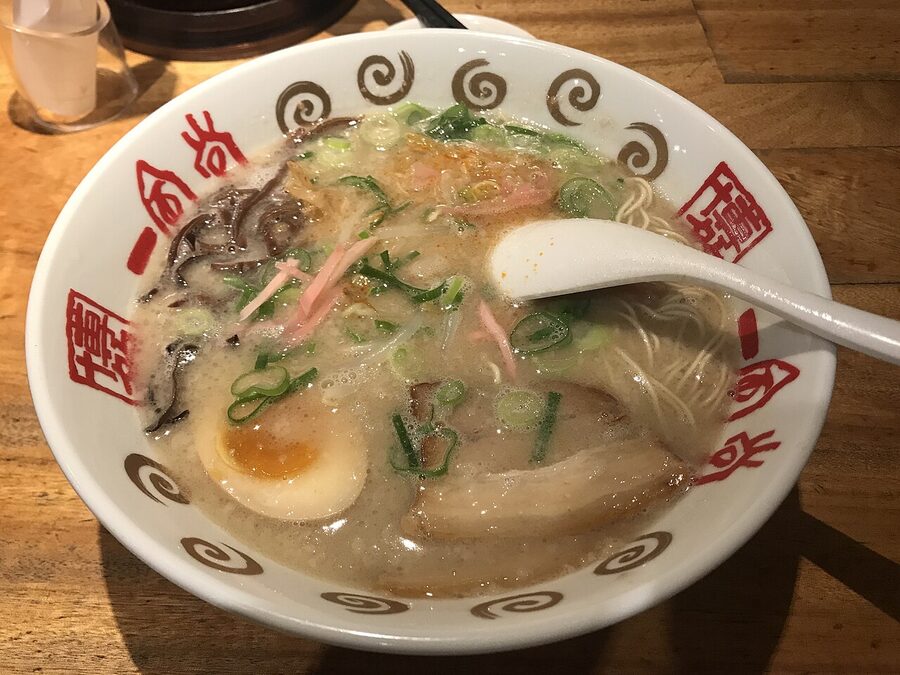

Ichiran (Hakata-ku, Nakasu 5-3-2 is the original Nakasu branch). 24 hours. The chain everyone knows: solo booths, a slip of paper to mark every preference (broth richness, fat level, garlic, spice level, noodle firmness, chashu, green onion), no human contact required. It’s a real Hakata bowl despite the format. The Nakasu original runs a 15-minute drum performance on Saturdays at 20:00 if you want the show.
Hakata Ikkousha (multiple locations; Hakata-eki at Hakata-ku, Hakataekihigashi 3-23-12). 11:00–23:30 Mon–Sat, 11:00–21:00 Sun. Sit at the counter so you can watch the broth being assembled.
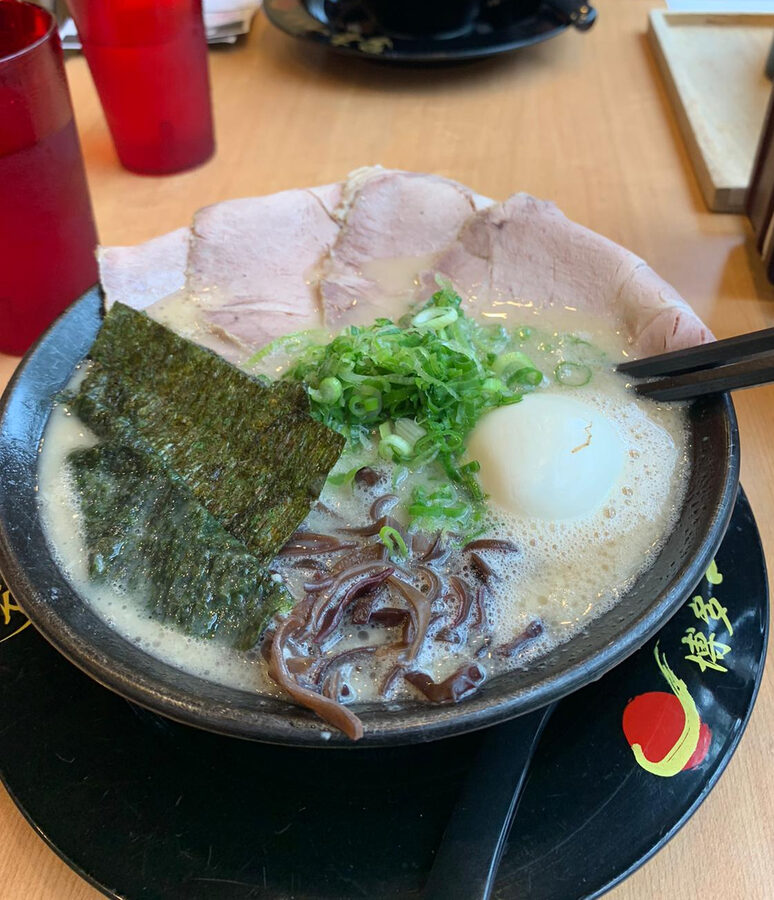

Shin Shin (Tenjin Honten, Chuo-ku, Tenjin 3-2-19). 11:00–03:00. A Fukuoka chain, less rich than Issou, often less of a queue. Worth a stop if you’re in Tenjin and not ready to walk.
The pricing reality: a bowl runs ¥500 (Ganso Nagahamaya, oldest of the old) to ¥1,100–1,200 (the Nakasu yatai versions of tonkotsu). Most sit-down ramen shops are ¥750–950. Add a kaedama for ¥100–200, an egg for ¥100, gyoza for ¥400–500. A solid two-shop ramen run is ¥2,000.
Beyond ramen: the dishes you have to fit in
Motsunabe (the offal hotpot)
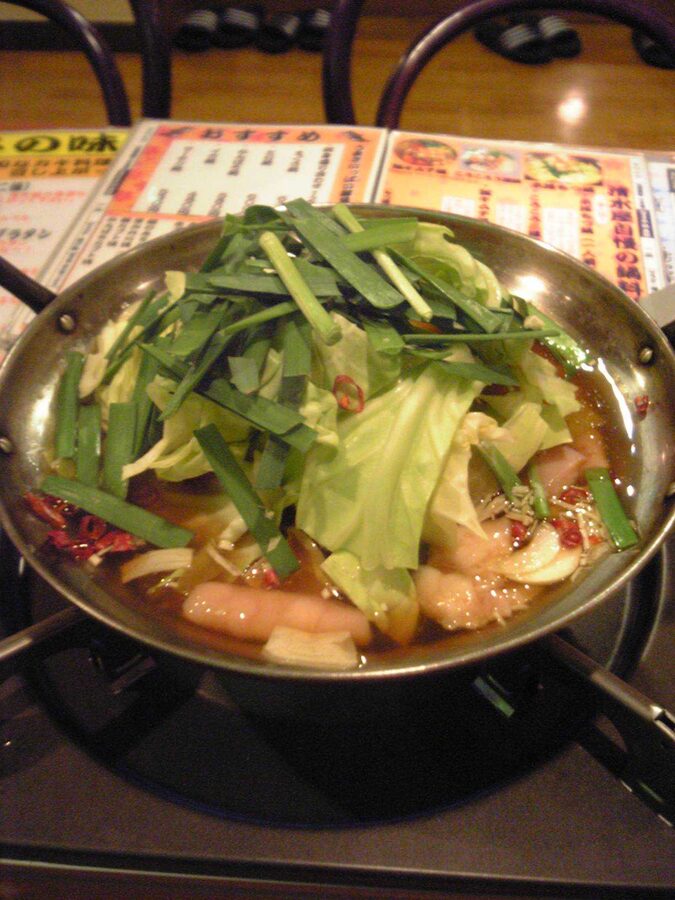

Motsunabe is offal hot pot. Tripe and intestines (the motsu), cabbage, chives, garlic, chili, simmered in either a soy or miso broth. The fat from the offal melts into the broth and turns it into something lush and round, less harsh than a Korean equivalent and not at all funky if it’s done right. Cold weather food, ideal December–February, but on the menu year-round.
Where: Maedaya Motsunabe Nakasu (Hakata-ku, Nakasu 1-2-3, riverside) is the most accessible spot for first-timers. English menu. 17:00–24:00 Mon–Fri, lunch service Sat–Sun from 11:00. A two-person pot is around ¥3,200, plus shimekata (the rice or noodles you finish the broth with) at ¥400. Lock in soy broth (shōyu) on your first visit; switch to miso the second time.
Drink with: a mugi shōchū highball. The barley does what beer does for cabbage and offal, but cleaner. More on mugi in the Kyushu shōchū section below.
Mizutaki (the chicken hotpot)
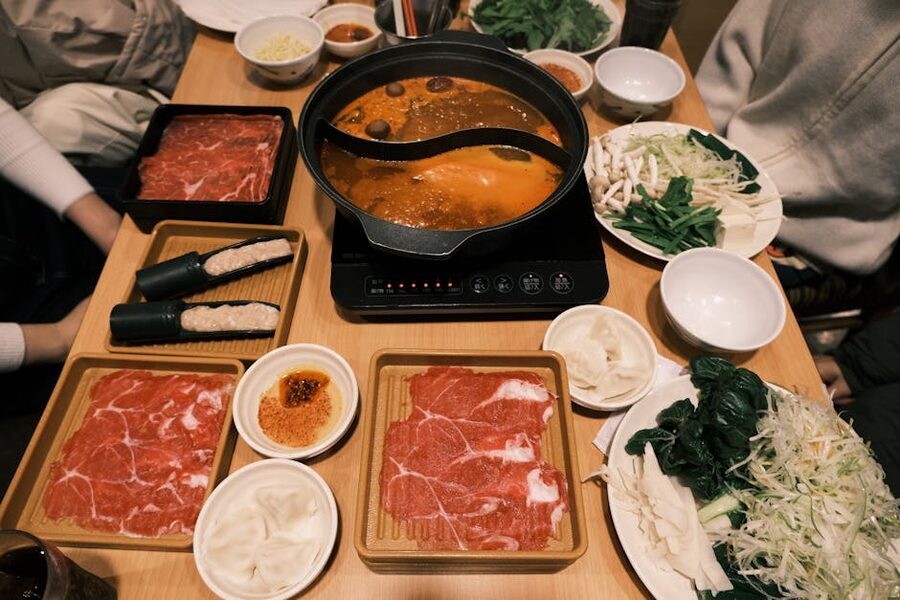
Mizutaki is the older Hakata hotpot. Whole bone-in chicken, simmered for hours in plain water with no seasoning, until the broth turns silky-white from the collagen. The drill is: first they pour you a small cup of unseasoned broth (drink it as is, salt to taste); then chicken pieces with a ponzu citrus dipping sauce; then vegetables in the broth; then a finish of rice porridge or noodles. It is more refined than motsunabe, slightly more expensive, and the closest you’ll get to a Hakata wedding-table dish.
Where: Hakata Hanamidori (Hakata-ku, Hakataeki Chuogai 1-1, in the JR Hakata City building). 11:00–23:00. The chicken is jidori (free-range), and the staff will cook the first round at your table. English menu, set meal around ¥4,500–6,500 a head. Reservations recommended for dinner. Mizutaki Nagano (Chuo-ku, Imaizumi 2-1-23) is the older option, less polished, lunch from 12:00 and dinner until 22:00, closed Sundays. Cash.
Drink with: a junmai sake from a Kyushu brewery if you want the Hakata pairing. The chicken broth is so delicate that bigger flavours flatten it. Skip imo shōchū here.
Hitokuchi gyoza (the bite-sized version)
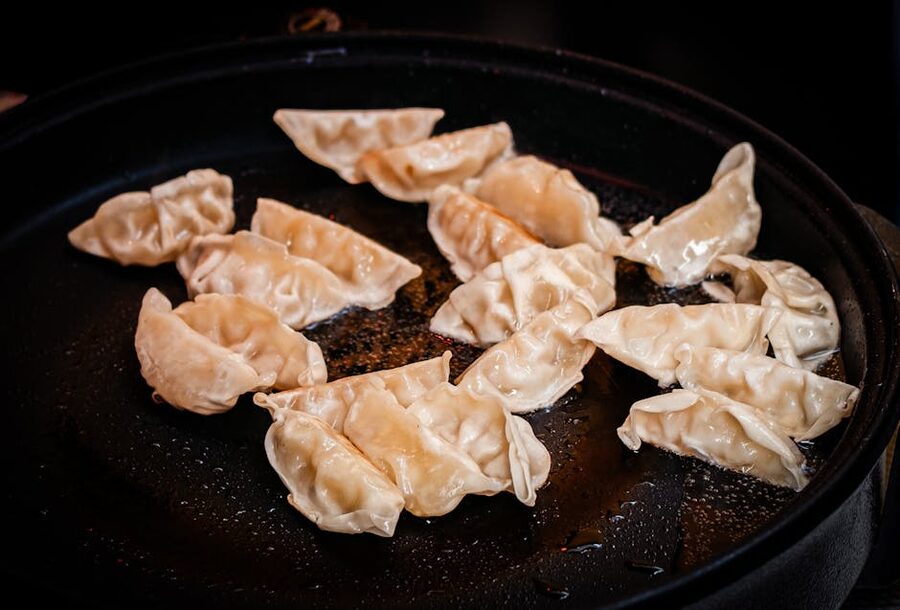
Fukuoka was one of the earliest Japanese cities to absorb the gyoza, thanks to its proximity to China. The Hakata version is small, “one-bite” size, and almost always pan-fried in an iron skillet so they come out with a crispy lattice between them. Eight to ten pieces is one order, ¥500–700. Most stalls and izakayas serve them with a small dish of yuzu kosho, the Kyushu chili-yuzu paste; that, not vinegar, is the local move.
Where: Tetsunabe (Hakata-ku, Nakasu 2-4-19, the Deaibashi branch). 17:00–24:00. The gyoza arrives in the same iron pan it cooked in. One drink minimum order. Yatai Chusuke in Nakasu does the speed-cooking version. Hakata Gion Tetsunabe (Hakata-ku, Reisenmachi 2-5) is the original; same pattern, slightly older feel.
Mentaiko (the spicy roe)
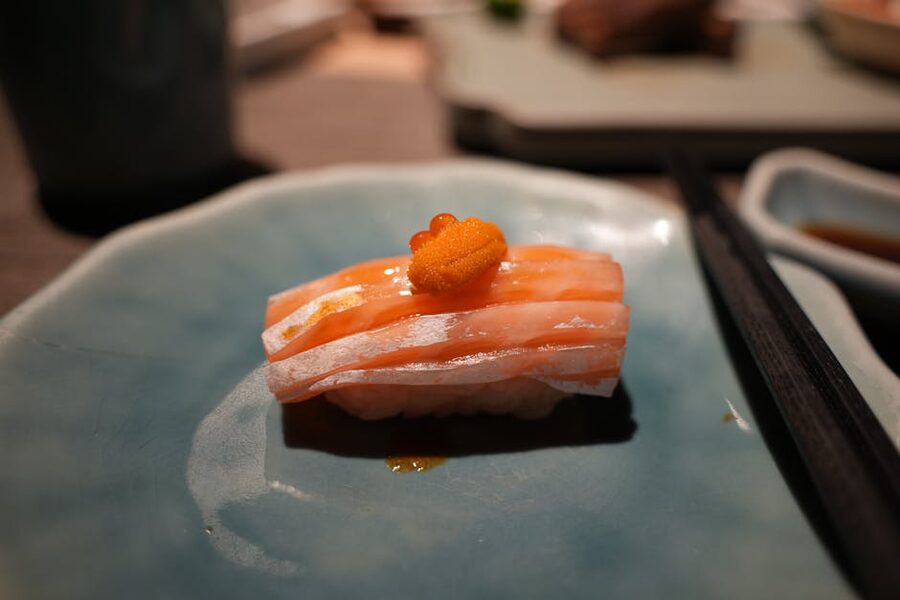
Mentaiko is pollock roe cured in salt and chili. It was introduced to Japan in 1949 by Toshio Kawahara, who adapted a Korean ingredient for Hakata palates, and it stayed. The flavour is briny, gently spicy, intensely savoury. You’ll see it on rice in breakfast, in onigiri filling, on top of buttered toast at a kissaten, rolled inside tamagoyaki at a yatai, and as the topping for a plate of pasta in a ten-seat trattoria in Daimyo.
Where to actually eat it as a meal: Ganso Hakata Mentaiju (Chuo-ku, Nishi-Nakasu 6-15) is the dedicated mentaiko-set restaurant; the Mentaiju is mentaiko marinated and wrapped in kelp, on top of hot rice. 07:00–22:30. Pain Stock Tenjin (Chuo-ku, Tenjin 3-7-26) makes the city’s most-talked-about mentaiko baguette; queue forms by 08:30, closed Mondays. The Full full Hakata (Hakata-ku, Hakata Ekimae 2-3-12) is the second-best mentaiko bread, less of a queue. Closed Tuesdays.
Drink with: anything cold and clean. Beer is fine. A junmai-shu cuts the salt better than people expect.
Goma saba (the sesame mackerel)
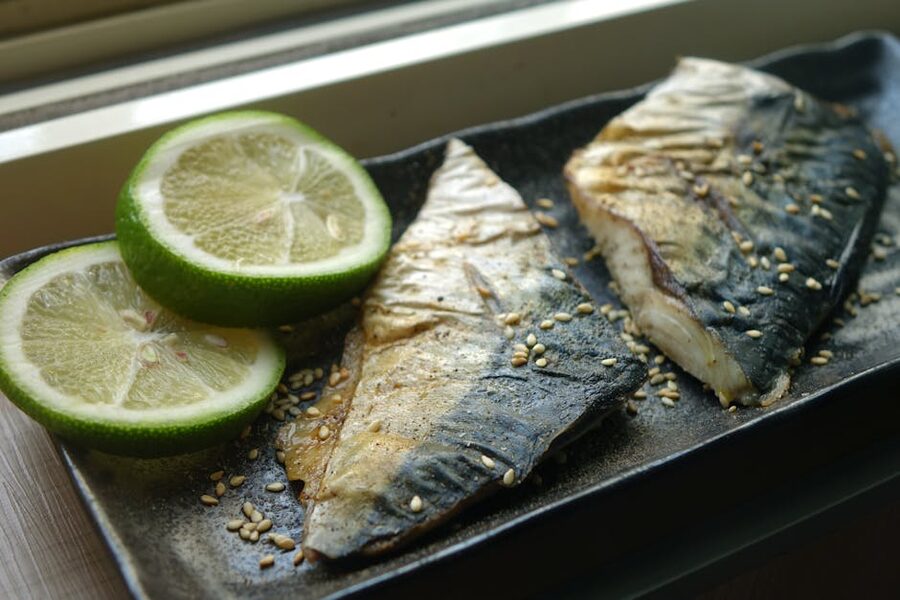
Mackerel is usually grilled or pickled because it spoils fast. Hakata Bay catches it close enough that here, almost uniquely, it’s served raw. Goma saba is sliced raw mackerel tossed with toasted ground sesame, soy, mirin, sake, and sometimes shiso or ginger. Eat it on rice or as a side; pour the dashi on top in the ochazuke style if you want it warm. An izakaya owner I asked told me he wouldn’t serve it in summer because the fat content is wrong; cooler months are the right time.
Where: any decent izakaya in Hakata or Tenjin will have it on the menu in autumn or winter. Genkai Sushi (Hakata-ku, Reisenmachi 2-1) does an outstanding version; the lunch set is ¥1,800–2,500 and includes goma saba plus a small chirashi. Closed Sundays.
Drink with: a junmai sake or a kome (rice) shōchū over a single ice cube. Don’t drown it.
Yaki-ramen (the fried one)
Hakata invented this. Ramen noodles, stir-fried with vegetables, pork, beni shōga, egg, in a tangy brown sauce, cooked on a flat-top in a yatai, served on a small plate at the end of the night. The classic origin is Kokinchan in Nakasu (mentioned earlier), but most yatai will have a version. Not pretty. Fills the gap between the second beer and the cab home.
Hakata udon (the soft one)
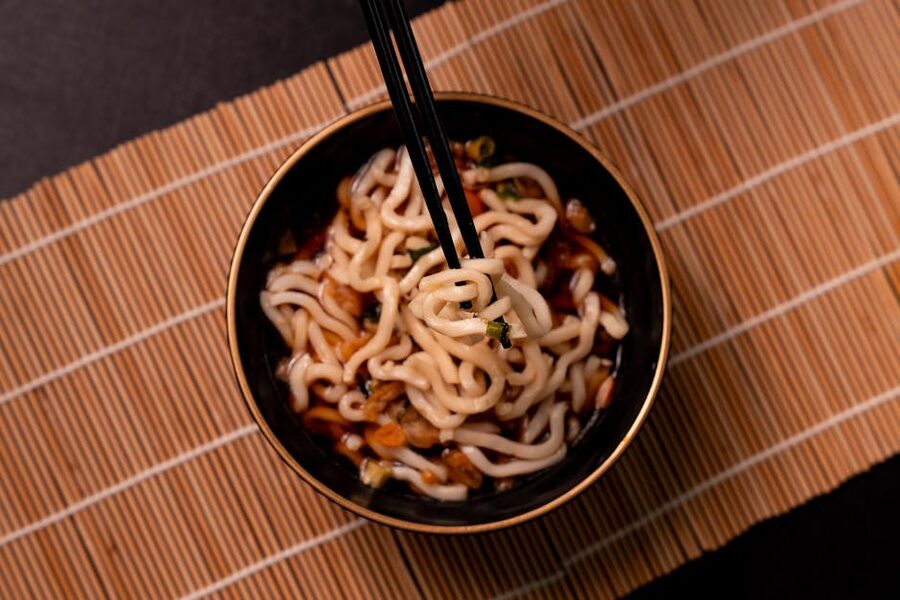
Udon is said to have been brought to Japan from China through Hakata’s port in the 13th century, which makes Fukuoka one of the dish’s two birthplaces. Hakata-style udon is unusually soft, almost without bite; the noodles practically slide. The broth is sweet, sardine-stocked, and warming. Goboten (burdock-root tempura) is the canonical topping, sometimes maruten (fish-cake tempura) or a soft poached egg.
Where: Daigaku Udon (Chuo-ku, Akasaka 2-1-12, near Akasaka station). 11:00–15:00 weekdays, hard to get into at peak. Udon Taira (Hakata-ku, Hakataeki Higashi 1-2-12). Open at 07:00, perfect for a pre-Shinkansen breakfast. Menya ISHII (Chuo-ku, Watanabe-dōri 4-7-25) for the mentaiko kamatama butter udon, a modern Fukuoka invention; closes when noodles run out, get there early.
Yakitori and skewers
.jpg)
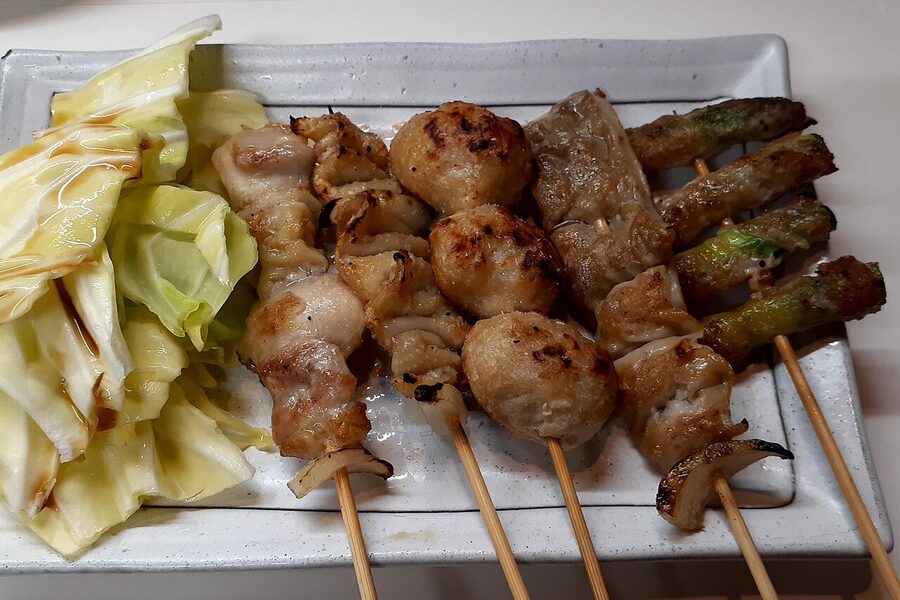
Yakitori in Hakata means a wider menu than most cities: chicken parts, yes, but also pork belly, pork rolls around vegetables, and an abundance of kawa (chicken skin) skewers, which are the local move. Kawa is wrapped tightly around a skewer, grilled slowly until it’s crisp on the outside and rendered to almost-jelly inside, brushed with tare. Order three. Pair with cold beer or a chuhai.
Where: Matabee Tenjin (Chuo-ku, Tenjin 3-9-31, basement). 17:00–24:00. Counter and tables. Famous for kawa, with a five-day-marination process. Orenokushi Sabuchan (Chuo-ku, Imaizumi 1-19-22). 17:00–24:00. Smaller, neighbourhood feel. Hiyoshimaru (Chuo-ku, Yakuin 3-12-9). 18:00–01:00. The youngest of the three, a Yakuin spot worth the walk.
Kyushu shōchū: why this matters more in Fukuoka than anywhere else
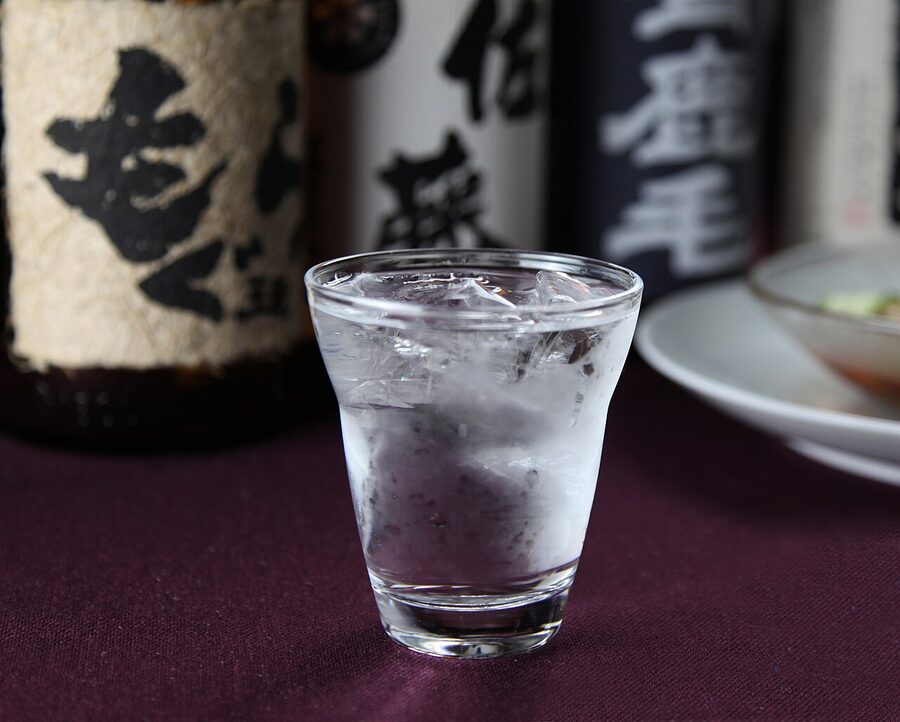
You can drink whatever you like in Fukuoka, but if you don’t drink shōchū here you’ve miscalculated. Kyushu makes more than 90% of Japan’s shōchū, and the city sits at the centre of the country’s mugi (barley) shōchū belt. Each prefecture leans on a different base ingredient, and the differences are real, not marketing. If sake is Kyushu’s polite cousin, shōchū is the cousin who actually lives there. The site’s full breakdown is in the shōchū vs sake vs awamori guide; here is the Fukuoka-specific shorthand.
The five styles, by what’s in the still
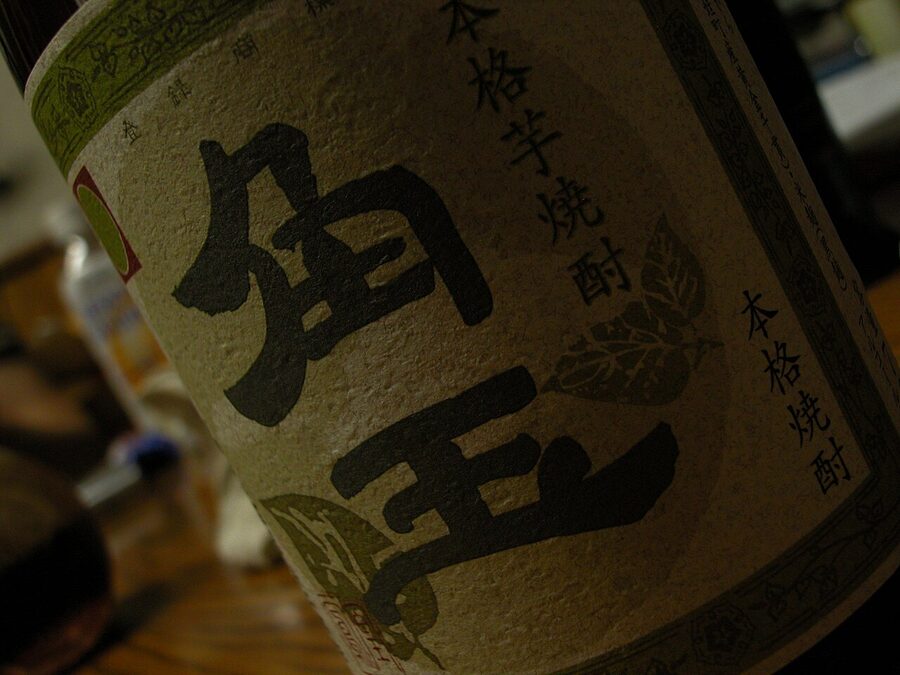
- Mugi shōchū (barley). Fukuoka and Oita are the heart of mugi production. The flavour is the cleanest of the major styles: dry, slightly nutty, sometimes with a hint of cocoa or roast. This is the gateway shōchū for most travellers. Iichiko Saiten (Oita) and Kannoko (Kumamoto, but mugi-leaning) are easy starting points. Iki Island (off Nagasaki) holds the WTO geographical indication for mugi shōchū and only seven distilleries are still active there.
- Imo shōchū (sweet potato). Kagoshima territory, and the most flavour-forward of the styles. Earthy, sometimes sweet, with a punch of yam-character that some drinkers love and others hate at first. Mori Izo, Kuro Kirishima, and Satsuma Hozan are the names you’ll see most often. The “Satsuma Shōchū” GI from Kagoshima is the imo equivalent of the Iki mugi GI.
- Kome shōchū (rice). Kumamoto-led, with the Kuma valley making the WTO-protected Kuma Shōchū style. Cleaner than imo, slightly fuller than mugi, often the best food-pairing shōchū because it doesn’t dominate.
- Soba shōchū (buckwheat). Miyazaki, developed in the 1970s. Light, slightly sweet, the most beginner-friendly of the styles outside mugi. Unkai is a common Tenjin pour.
- Kokutō shōchū (black sugar). Made only on the Amami Islands between Kyushu and Okinawa; outside Amami it’s taxed as rum. Round, slightly sweet, surprisingly versatile. Asahi (the Amami brand, not the beer) is the easy entry.
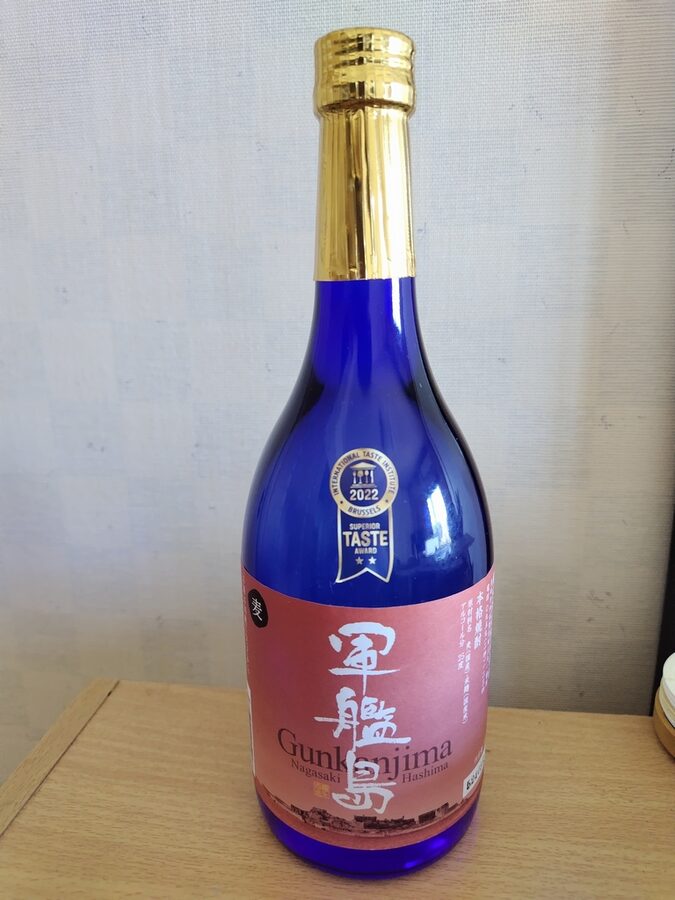

Kasutori shōchū is the sixth style, distilled from sake lees, and it’s particularly common in Fukuoka and Saga. The taste is slightly funky, full of residual sake character, sometimes with a hint of fruit. Fukuoka’s sake breweries (and there are a number, the Itoshima area in particular has good ones) often distil their lees into kasutori, then the lees from that get used as fertiliser for next year’s rice. It’s a closed loop, more interesting on paper than on the palate sometimes, but worth tasting once.
How to order shōchū in Fukuoka
The serving styles are simple, and getting them right is half the experience.
- Rokku (on the rocks). One large ice ball, glass, no water. Best for imo and aged kome.
- Mizuwari (split with cold water). Roughly 1:1 or 6:4, your call. The default for sit-down restaurants.
- Oyuwari (split with hot water). Hot water poured first, shōchū second, no stir. The local winter pour, particularly with imo. Brings out the aromatic top notes.
- Sodawari / highball. Soda water, ice, a slice of lemon. The yatai default, particularly with mugi.
- Stretto (straight). Rare. Save it for a flight at a dedicated bar.
If you want a serious shōchū bar pour, ask for “honkaku shōchū” (single-distillation shōchū, the real stuff, not the industrial blended kourui).
Where to drink shōchū in Fukuoka
.jpg)
Shōchū Bar Habana (Chuo-ku, Daimyo 1-3-26, second floor). 19:00–02:00. Closed Sundays. About 200 bottles, the bar prides itself on Kyushu-only labels. Pay around ¥700–1,200 a glass plus an ¥800 cover. Cash and cards.
Shōchū Dining Robaroku (Chuo-ku, Imaizumi 1-19-13). 17:00–01:00. A larger space with food, ideal if you want a four-glass shōchū flight with snacks; ask for the “tabekurabe” pairing, which is roughly ¥3,500 with five small dishes.
Honkaku Shōchū Bar Kura (Chuo-ku, Nishi-nakasu 5-1-7). 18:00–midnight. Smaller, eight stools, the kind of place where the master pours something the regulars don’t get a chance at if you ask the right questions.
If you only do one shōchū session in Fukuoka, do a Habana flight (mugi, kome, imo, kokutō, four small glasses for ¥2,500–3,000) and pair with a Hakata bar’s late-evening menu of edamame and cheese.
The Tenjin and Daimyo bar crawl, briefly
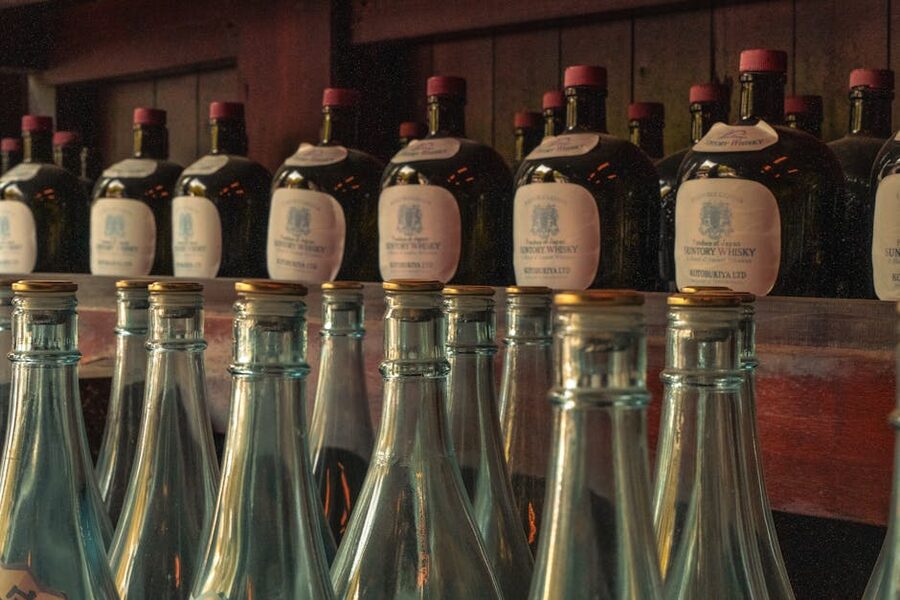
Fukuoka’s Tenjin and Daimyo neighbourhoods carry a quietly serious Japanese whisky-bar scene. Bar Higuchi (Chuo-ku, Daimyo 2-9-25, fourth floor) does Japanese whisky verticals, including occasional Yamazaki and Hakushu independent bottlings; ¥1,500–3,500 a pour, ¥1,200 cover, reservations recommended. Bar Rossini (Chuo-ku, Tenjin 2-12-1, sixth floor) is more cocktails-and-classics, an elegant room with one ice carver and a 50-bottle whisky list. Bar Oscar (Chuo-ku, Imaizumi 1-12-25) sits at the centre of the Imaizumi small-bar cluster; a good one to walk into without a plan.
For full guidance on Japanese whisky bars (and the difference between drinking Yamazaki here vs in Osaka), the Japanese whisky guide covers the playbook.
For tachinomi (standing bars) and izakayas more broadly, Daimyo has the highest density. Tachinomi Yajirobei (Chuo-ku, Daimyo 1-9-15) is a no-fuss standing-only joint with mugi shōchū highballs and yakitori, an ¥800–1,200 round per person if you’re quick. Izakaya Hakata Hyottoko (Hakata-ku, Reisenmachi 7-1) is the post-yatai option when the carts shut at 01:00.
Where to stay if eating and drinking is the point
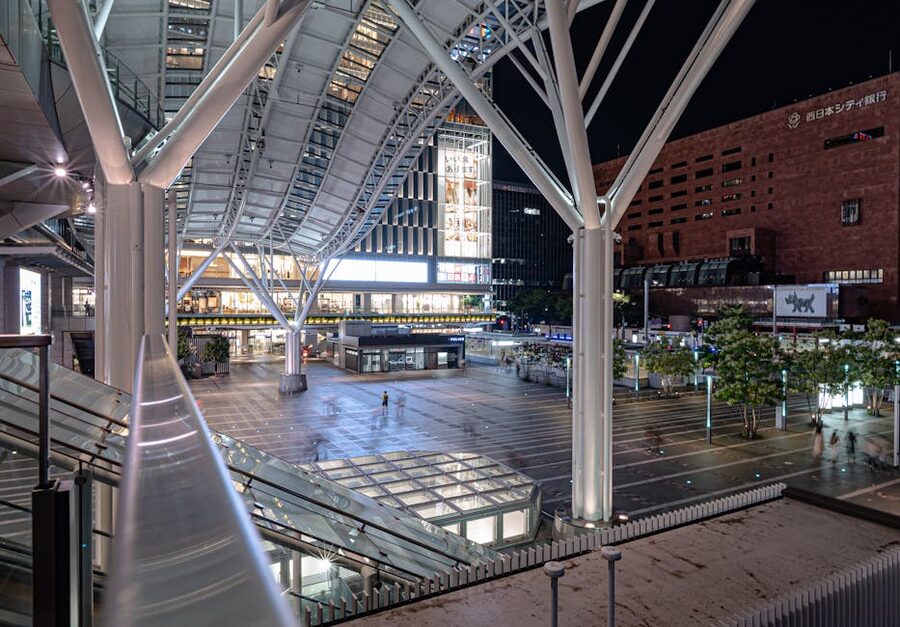
Three brackets, picked for proximity to the food rather than swimming-pool counts.
Nakasu (inside the yatai zone). Walk home after the last stall instead of taking a cab. Loud until 02:00 in summer. The OneFive Villa Fukuoka (Hakata-ku, Nakasu 3-7-24), ¥14,000–18,000 a night. Hotel Hakata Nakasu Inn (Hakata-ku, Nakasu 5-2-18), ¥8,000–12,000 budget.
Hakata Station (the practical one). Five-minute walk from Issou and the Shinkansen platforms. Grand Hyatt Fukuoka (Hakata-ku, Hakataekimae 2-2-1), ¥30,000–55,000 splurge. Nishitetsu Hotel Croom (Hakata-ku, Hakataekimae 1-17-6), ¥13,000–18,000.
Tenjin (the bars zone). Closer to whisky bars and the better yakitori. Hotel Monterey La Soeur (Chuo-ku, Tenjin 2-8-27), ¥14,000–20,000.
Stay in Nakasu the first night for the yatai walk, move to Hakata or Tenjin from night two if you have a long trip, otherwise pick one and stay put. Fukuoka is small.
Getting around, getting in, getting out
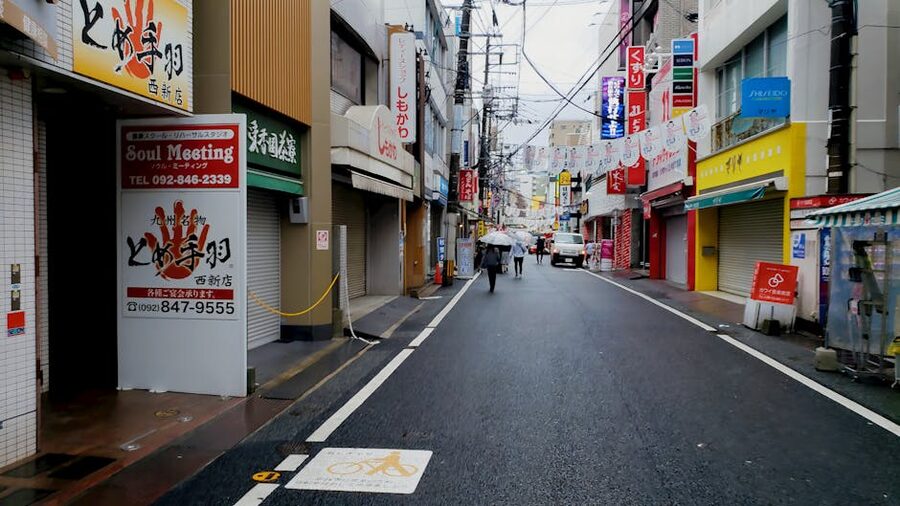
Airport. Fukuoka Airport (FUK) is two subway stops from Hakata Station, twelve minutes on the Kuko Line, ¥260 with an IC card. There’s almost no reason to take a taxi from the airport unless you have huge luggage; even then it’s ¥1,800–2,500 to Tenjin or Nakasu.
Subway. The Kuko Line connects Airport, Hakata, Nakasu-Kawabata, Tenjin, Akasaka, and Ohori-Koen. The Hakozaki Line runs north-south. The Nanakuma Line covers Daimyo and Yakuin. An IC card (Hayakaken, Suica, ICOCA, Pasmo all work) is the right way to pay; a one-day subway pass is ¥640 if you’ll do four-plus rides.
Walking. The yatai zones are walkable to each other. Nakasu to Tenjin is fifteen minutes by foot, ten by subway with the wait. Tenjin to Daimyo is five minutes. Hakata Station to Nakasu is fifteen minutes. The whole eat-and-drink core fits inside a 2-kilometre square.
Taxis. Plentiful and not expensive by Japanese standards. Base fare is ¥670, then about ¥90 per 280 metres. A Nakasu-to-Hakata-Station taxi at 01:00 is around ¥900–1,200.
When to come

Fukuoka has a temperate, slightly humid climate; cherry blossom is late March to early April, and the autumn-leaf season runs late November through mid-December. The yatai run year-round, including in the rain, but typhoons (August–September) shut them on the worst days.
If you can pick a date, October–November is the smartest time. Cool enough to want a hot pot, warm enough to walk the river. Mackerel is in season, mizutaki broth is at its richest, and the queues are shorter than in cherry-blossom or Yamakasa-festival weeks.
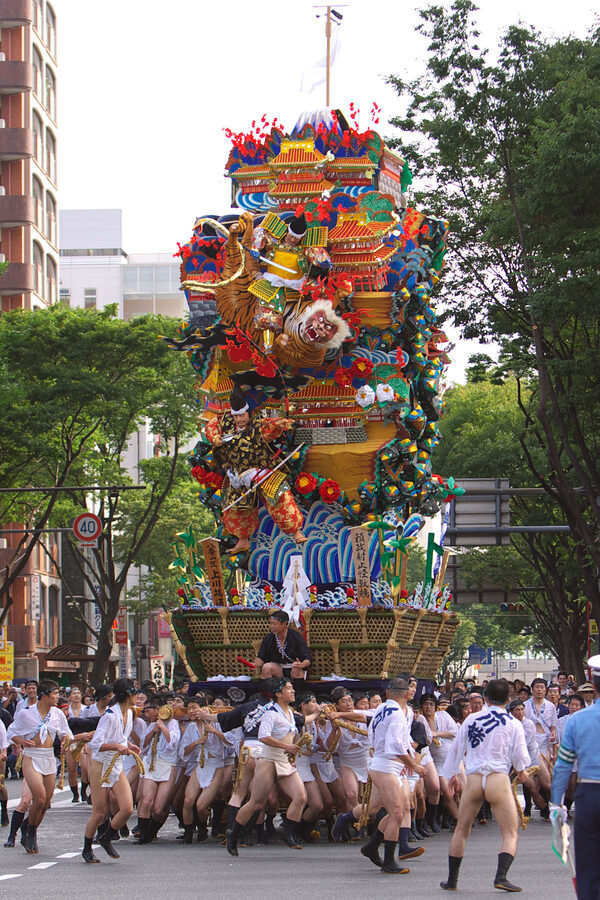
If you can’t avoid summer: come for Hakata Gion Yamakasa. Every July 15 the city runs a 5-kilometre dawn race of hand-carried festival floats; the streets are closed, locals turn out at 04:30, and the post-race breakfast at any open Hakata-area shop is the city at its purest.
One night, three nights, five nights
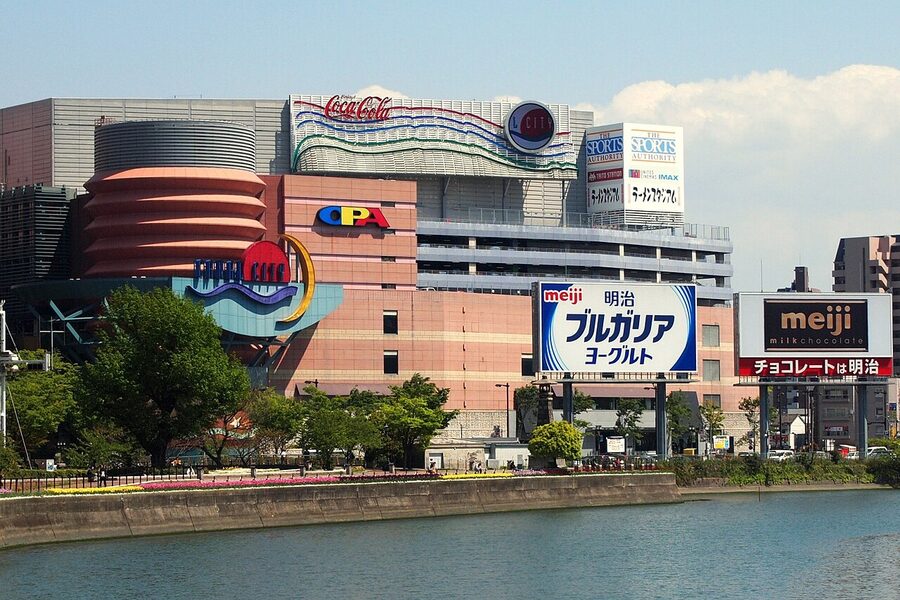
If you only have one night: ramen lunch at Issou (or a Hakata Station ramen for proximity), short Tochoji or Canal City walk in the late afternoon, dinner at three Nakasu yatai (Yatai Chusuke for gyoza, then Genkai for tempura, then a ramen yatai for the ritual), final drink at Bar Higuchi.

If you have three nights: night 1 Nakasu yatai walk plus Hakata Station ramen lunch. Night 2 motsunabe at Maedaya, Tenjin yakitori at Matabee, finish on a shōchū flight at Habana. Night 3 mizutaki at Hakata Hanamidori for an early dinner, then Daimyo and Imaizumi small-bar crawl. Lunch days: Issou, Ganso Hakata Mentaiju, Daigaku Udon.
If you have five nights: add a Nokonoshima island ferry day with goma saba lunch, an Itoshima coast day with a ryokan stay or sake-brewery visit, and a yatai second pass to do Tenjin and Yatai Keiji’s waitlist properly. By night five you’ll be ordering kawa skewers and barikata noodles without thinking about it.
The four mistakes I see most
- Going to Nakasu and only Nakasu. It’s beautiful on the river but it’s also the only zone that has been fully tourist-discovered. One yatai night in Nakasu, then move.
- Ordering yawarakai noodles. Nobody from Hakata orders them soft. The thin straight noodle exists to be eaten while it’s still firm; soften it and you’ll wonder why everyone keeps talking about Hakata ramen.
- Skipping shōchū because the bar list is in Japanese. Tell the bartender what you ate and they’ll point at the right bottle. The system works.
- Trying to do both lunch ramen and a yatai dinner the same day, both in Nakasu. You’ll be too full to enjoy either. Eat one in Nagahama or Hakata Station for lunch, then a yatai sampler for dinner. One bowl plus three small plates is a working strategy.
What this city is, and what it isn’t

Fukuoka isn’t a high-cuisine city in the Kyoto sense. The Michelin density is lower, the kaiseki scene quieter, and the omakase bar count is below what Tokyo or even Osaka offers. What it is: the most concentrated working street-food culture left in Japan, the deepest bench of pork-bone ramen anywhere on Earth, and the only city in the country where you can sit down at a wooden cart at 22:30 and eat a tempura plate served by a man who has been frying that tempura for fifty years.
Eat there. Drink there. Order shōchū the second night. Skip yawarakai. Pay your bill at every stall before you ask for the next stall recommendation; the master who pours your shōchū highball will point you to the next master, and you’ll do that until somebody mentions it’s almost 02:00 and you should walk back to your hotel before the rain starts. That’s a Fukuoka night, and on a quiet evening it’s the best version of Drinking Japan there is.
 CitiesWhy Tohoku Took Over Japan’s Sake SceneThe trip almost didn't happen. I'd booked an Aomori brewery visit at the end of a rushed week, the second…
 CitiesWhy Kansai, Not Niigata, Is the Sake CapitalHyogo and Kyoto produce more sake than the next eight prefectures combined. Two of Kansai's six prefectures, side by side,…
 CitiesHokkaido Has More Whisky Distilleries Than You ThinkAsk anyone who knows a little about Japanese whisky to name a Hokkaido distillery and they’ll say Yoichi. Push them…