
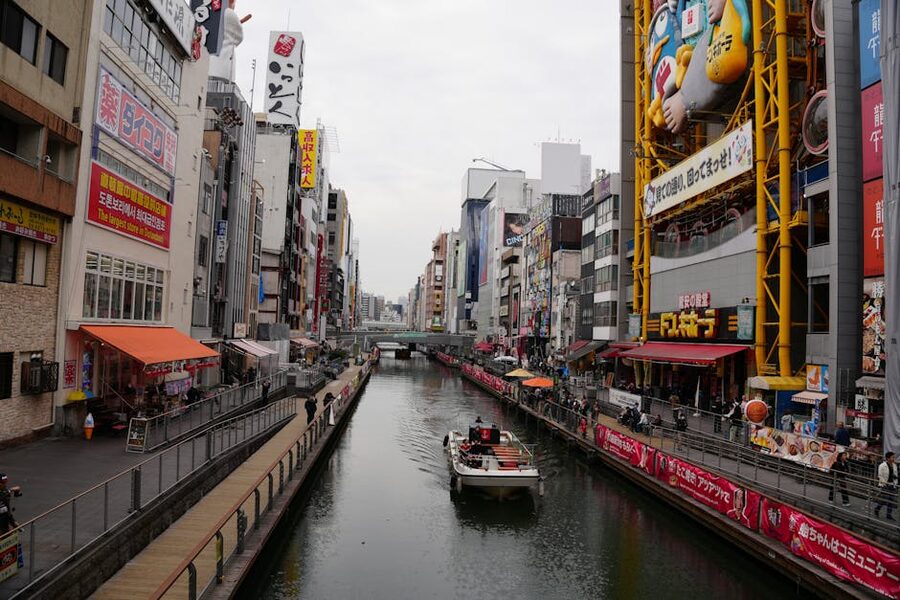
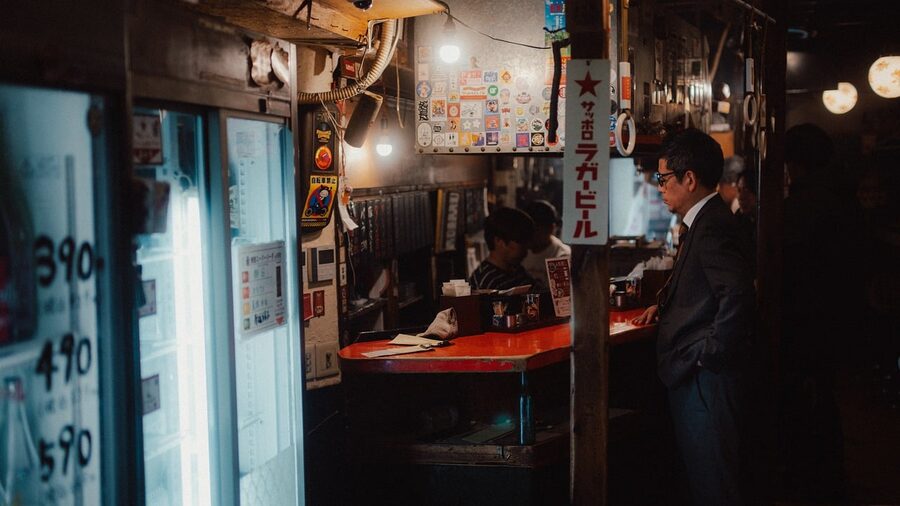
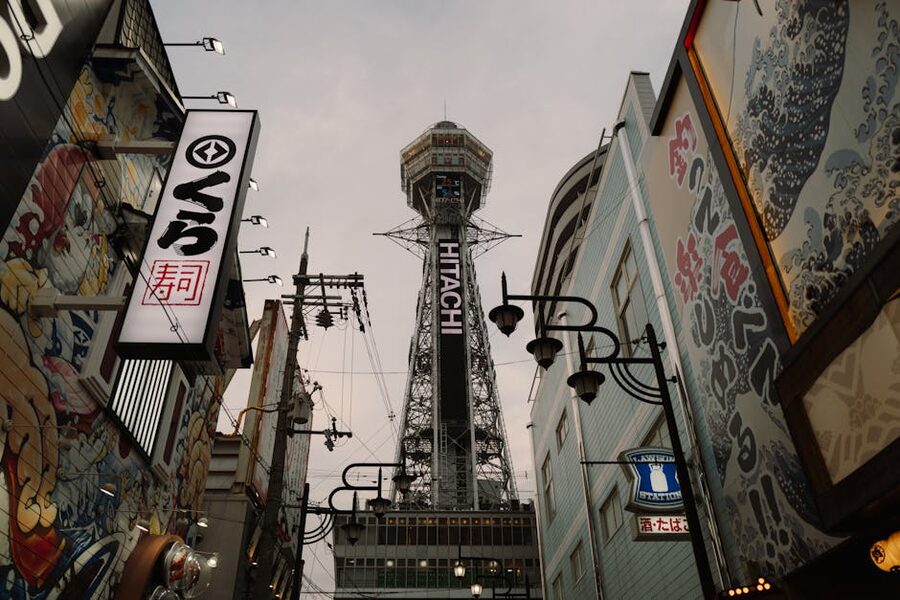
The first kushikatsu I had in Osaka was a single skewer of pork belly at a counter in Shinsekai, around 18:30 on a Wednesday in October. The man behind the fryer dropped six bullets of breaded skewers into the oil at once, lifted them out about ninety seconds later, and slid them onto a wire rack. I dipped one into the steel cup of brown sauce, ate it with cold Asahi from a glass mug, looked up at the Tsutenkaku tower already lit yellow against the dusk, and thought: this is why I came. Two skewers and one beer for under ¥800, no reservation, no English menu, an old guy beside me ordering his fifth round and his second can of cup sake. Osaka’s eat-and-drink reputation is built on small moments like that, repeated in counter after counter across half a dozen neighbourhoods, every night of the week.

This guide is the city pillar in the Drinking Japan series, focused on eating and drinking in Osaka. It covers the neighbourhoods you’ll actually want to spend time in, the food the city is famous for and how to recognise the difference between a tourist version and the real thing, the drinks scene from chain beer halls to one-counter standing bars, and a few rules of behaviour that will save you from being the person every Osakan complains about. If you’re planning your first or fifth trip, this is the long version of the answer to “where should I eat in Osaka”. I assume you’ve already read the broader Japan pieces on sake and Japanese whisky, and the basics of izakaya behaviour; this is the city-specific layer.
In This Article
- What “kuidaore” actually means
- Where to eat and drink: neighbourhood at a glance
- Dotonbori: the famous strip, with caveats
- Namba and Sennichimae: the wider catchment
- Kuromon Ichiba Market
- Shinsekai: the kushikatsu and beer answer
- The kushikatsu rule
- Specific kushikatsu places to know
- Beer with kushikatsu
- Tsutenkaku and the rest of Shinsekai
- Tenma and Tenjinbashi: where Osakans actually drink
- What a tachinomi actually is
- Tenma places to know
- Fukushima: the under-the-radar district
- Where I’ve eaten and would go back
- Kitashinchi and Umeda: the high end
- What to drink in Osaka
- Beer
- Sake
- Shochu and chu-hai
- Whisky
- Food specifics: what to order, where
- Takoyaki
- Okonomiyaki
- Negi-yaki and ika-yaki
- Kitsune udon
- Beef and offal: yakiniku and motsu-nabe
- The Osaka day, hour by hour
- Practical etiquette and a few traveller mistakes
- Don’t walk and eat
- Don’t double-dip the kushikatsu sauce
- Pour for others first
- Cash, queue, and time
- Where this leaves you
What “kuidaore” actually means

You’ll see the word everywhere: kuidaore. The straight translation is “to eat oneself broke” or, more colloquially, “eat yourself into bankruptcy”. The actual meaning is closer to “Osaka people will spend their last yen on food, in preference to almost anything else, and have done so for centuries.” This is not marketing. The city was the rice-trading capital of Edo-period Japan (“tenka no daidokoro”, the country’s kitchen), and even today the per-capita restaurant density in central Osaka is higher than in Tokyo. The food culture is built on volume, value, and lack of pretension. A 600-yen lunch set is not a deal here, it’s the norm.
What this means for you, as a traveller eating in Osaka:
- Plan to graze. Three full meals a day is a Tokyo travel pattern. In Osaka the rhythm is one decent breakfast, then snacks and small plates from about 14:00 to 22:00, with a beer or two threaded through the afternoon.
- Carry cash. The famous places usually take card now, but the small standing bars and family takoyaki stalls still don’t.
- Don’t over-order at any one place. Two okonomiyaki in two restaurants beats one okonomiyaki and a side at one.
- The cheap thing on the menu is often the best thing on the menu. The signature dishes are not where Osaka chefs cut corners.
The other thing that surprises people: drinks pricing. A 350ml draught of Asahi Super Dry at a Shinsekai counter runs about ¥500. The same beer at a Ginza hotel bar in Tokyo is ¥1,200. Sake by the cup, even the better stuff, sits between ¥400 and ¥700 in most Osaka izakayas. This is one of the few places in Japan where you can actually drink seriously without spending seriously.
Where to eat and drink: neighbourhood at a glance
Six neighbourhoods do the heavy lifting. Here’s what to expect from each, what to spend, and the type of night each one is for.
| Neighbourhood | Best for | Typical spend | Closest station | Vibe |
|---|---|---|---|---|
| Dotonbori | Famous-name street food, the photo-op canal | ¥3,000–5,000 | Namba (5 min walk) | Touristy, loud, photogenic |
| Namba & Sennichimae | Mid-tier okonomiyaki and izakaya, Kuromon market | ¥2,500–5,000 | Namba (direct) | Busy, wider mix of locals than Dotonbori |
| Shinsekai & Tsutenkaku | Kushikatsu and beer, old-school cheap | ¥2,000–3,500 | Shin-Imamiya / Dobutsuen-mae | Retro, gritty in places, cheap |
| Tenma & Tenjinbashi | Standing bars, locals’ yokocho, late nights | ¥1,500–3,500 | Tenma / Ogimachi | Locals’ drinking quarter, weeknight-friendly |
| Fukushima | Younger crowd, craft beer, izakaya, sushi | ¥3,000–6,000 | Fukushima / Shin-Fukushima | Under-the-radar, bookable |
| Kitashinchi & Umeda | The high end: kaiseki, whisky bars, hotels | ¥6,000–25,000 | Osaka / Umeda / Kitashinchi | Suits, quiet, expensive |
If you only have one night, do Shinsekai for kushikatsu and beer, then walk twenty minutes north into Namba. If you have two, swap one of those for Tenma. Save Dotonbori for an hour at sunset rather than a full meal. Kitashinchi is for a different trip, or a different budget.
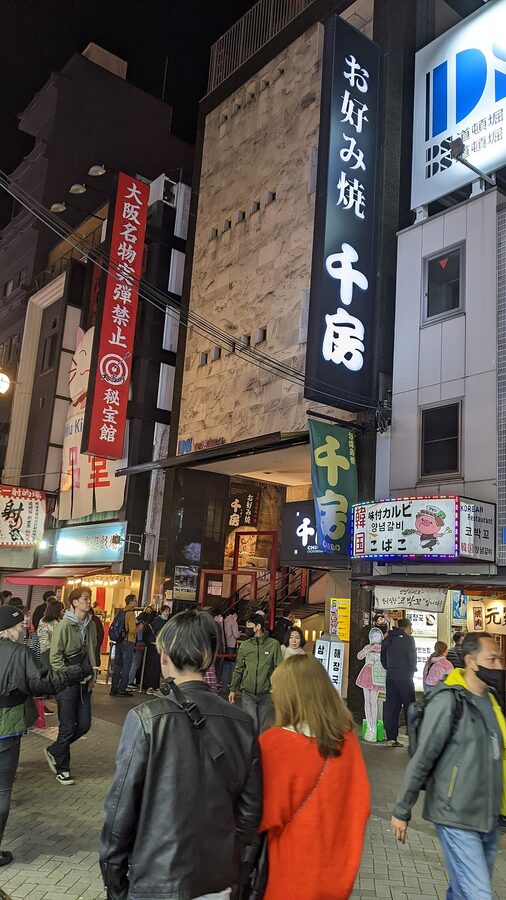
Dotonbori: the famous strip, with caveats
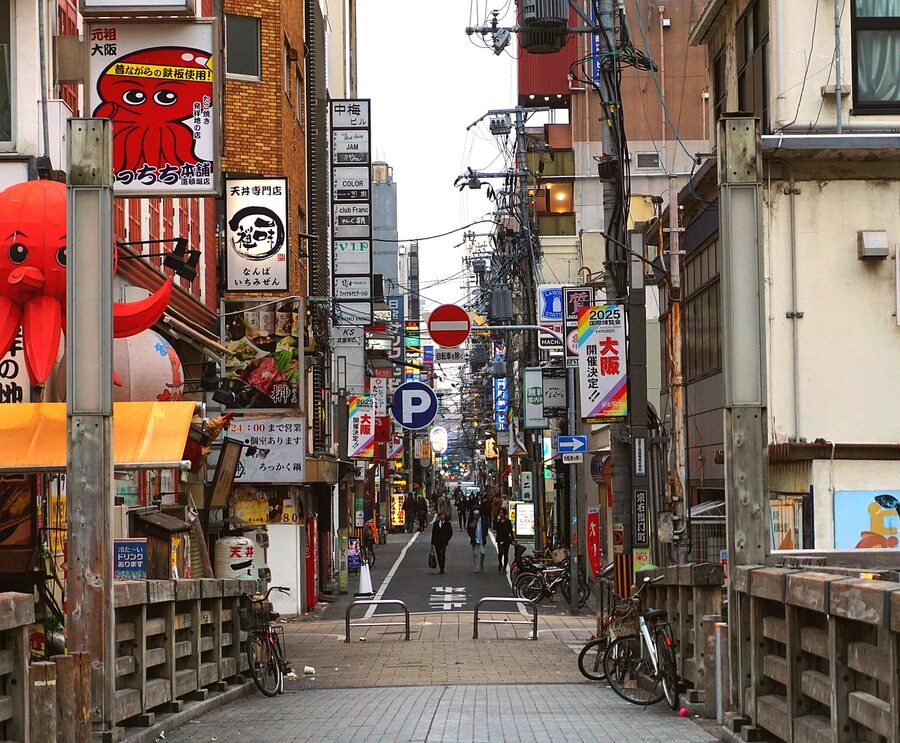
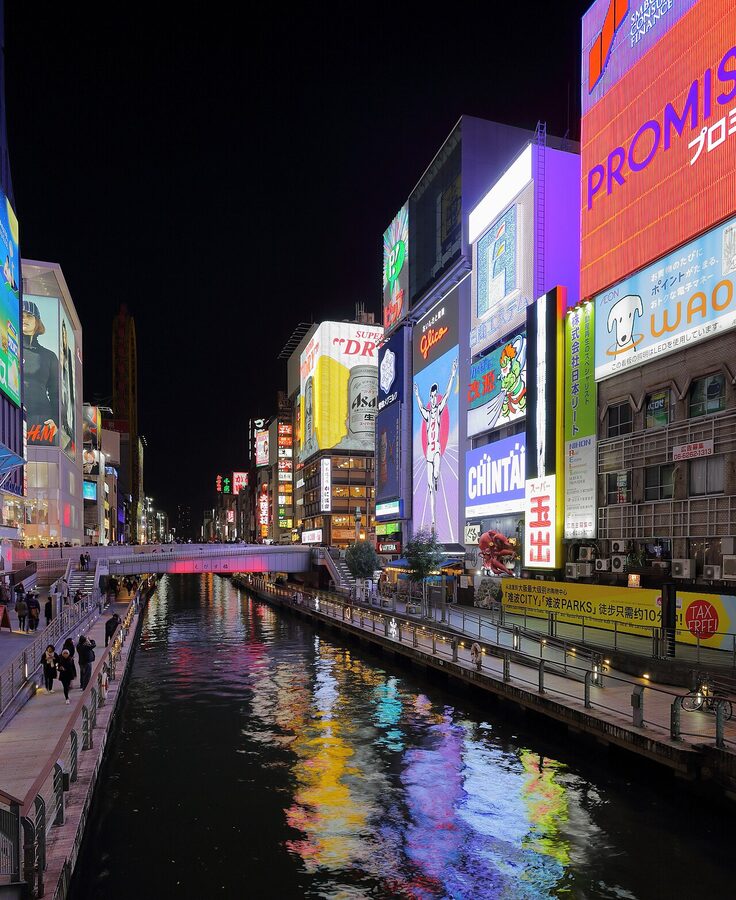
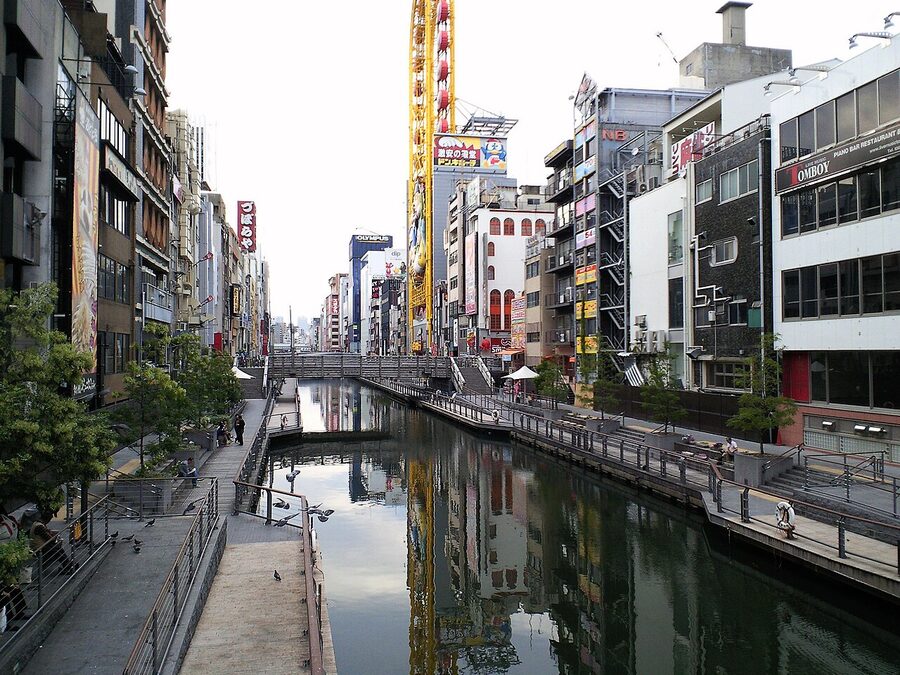
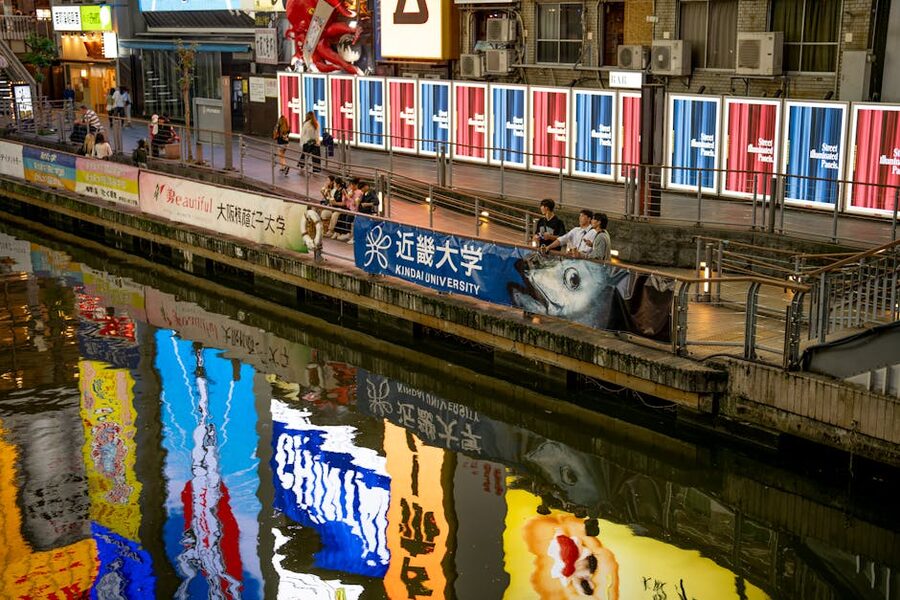
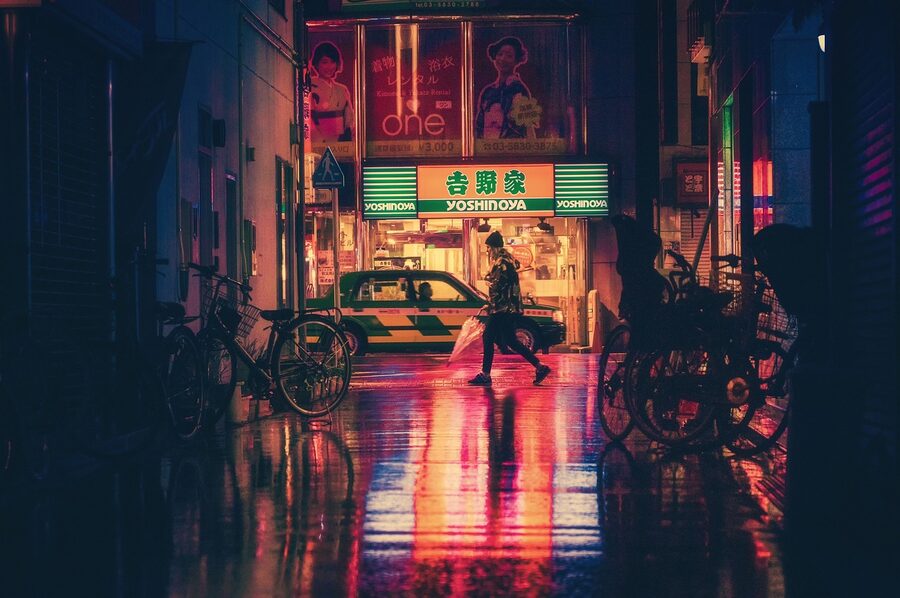
Dotonbori is the canal you’ve already seen on Instagram. The 600-metre stretch between Ebisu Bridge and Nipponbashi has the Glico runner, the giant moving crab outside Kani Doraku, the 3D blowfish lantern at Zuboraya’s old site, the dragon at Kinryu Ramen. It’s the postcard. It’s also where the food prices are highest and the kitchens cut the most corners, because nobody’s coming back for seconds.
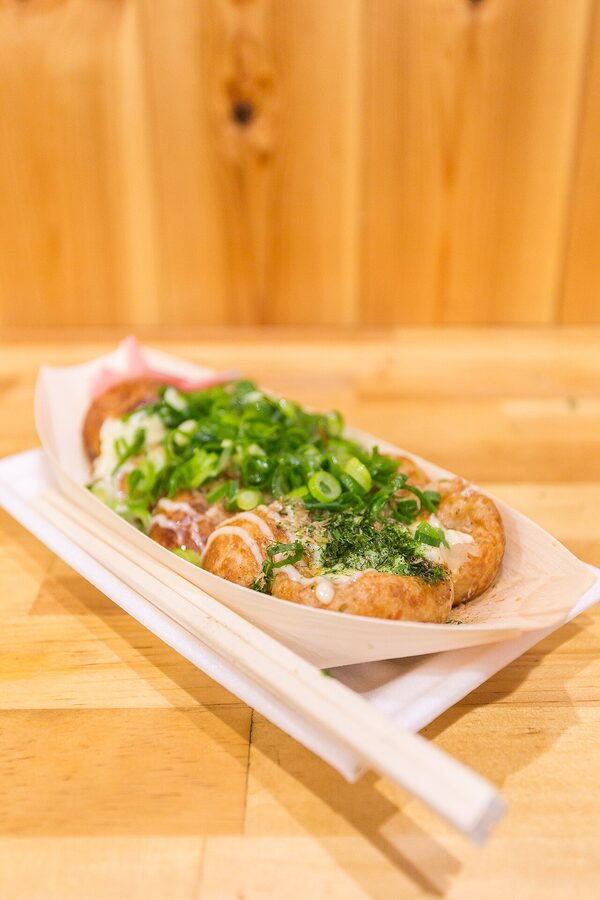
Treat Dotonbori as a single visit, not a meal plan. Walk it once between 18:00 and 20:30, when the signs are fully lit. Eat one or two snacks, take the canal photo from Ebisu Bridge, and move on. The thing to actually eat here is takoyaki from a stall (not a sit-down restaurant), specifically:
.jpg)
- Takoyaki Doraku Wanaka, 11-19 Nanbasennichimae, Chuo-ku. Eight pieces for ¥600. Open 11:00–22:00. The cheese-and-mentaiko version is worth the extra ¥100.
- Honke Otako, 5-7 Nanbasennichimae. Open from 11:00 to roughly 23:00 most days, sometimes longer on weekends. The original since 1957. They put the dashi in the batter rather than slathering sauce on top, which is the way it should be done.
- Takoya Dotonbori Kukuru (本店), 1-10-5 Dotonbori. The “bikkuri takoyaki” with a whole tentacle hanging out is a bit of a stunt, but the regular ones are good. About ¥700 for eight.

What to skip on Dotonbori: the giant crab restaurant unless someone else is paying, the kushikatsu chains (you’ll do better in Shinsekai), and any okonomiyaki place with photos of the food on the wall outside. The okonomiyaki to eat is one street back, not on the main drag.
One drinking note for Dotonbori: don’t try to find a serious sake bar here. The good Osaka sake bars are in Tenma and Fukushima. What you can find is decent beer, especially at Beer Belly Tenma‘s Dotonbori-area sister venues if any are running, or just at one of the Yebisu Bar branches that are dotted around. For something more interesting, walk five minutes north to Hozenji Yokocho, a 60-metre stone-paved alley that survived the war: cheaper drinks, kitchens that take pride.

Namba and Sennichimae: the wider catchment
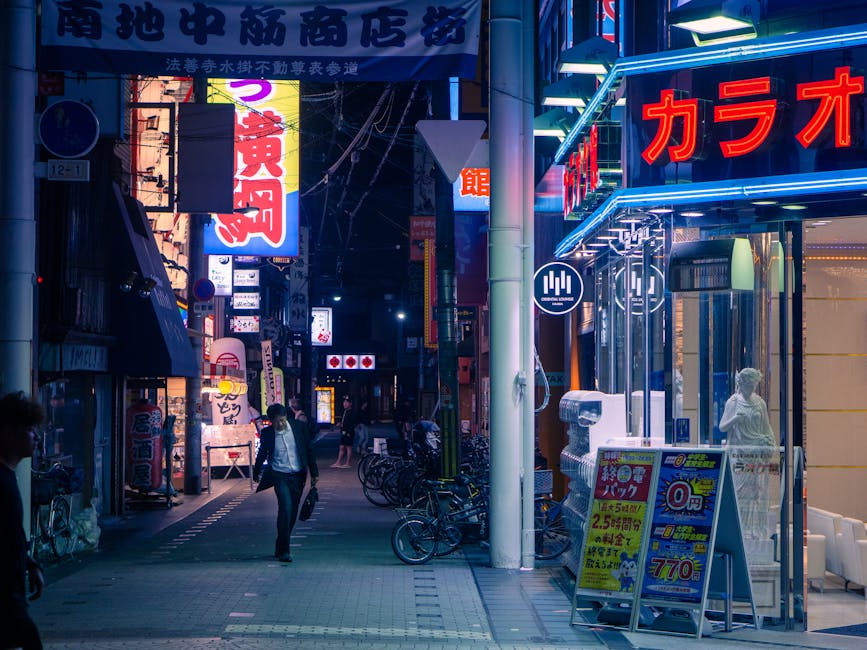
Namba is what Dotonbori would be if it were less self-conscious about itself. The streets immediately around Namba Station and across the Sennichimae shotengai are denser in restaurants per square metre than the canal strip, mostly under the radar of the photo-driven crowds, and run by the same kitchens that wouldn’t take a Dotonbori address if you offered it. This is where most of my Osaka meals end up actually happening.
The Sennichimae arcade itself, a covered shopping street running roughly south from Dotonbori, has more straightforward okonomiyaki and yakitori than the canal block by a wide margin. The strip cuts through some of the best counter restaurants in the city. Three to know:
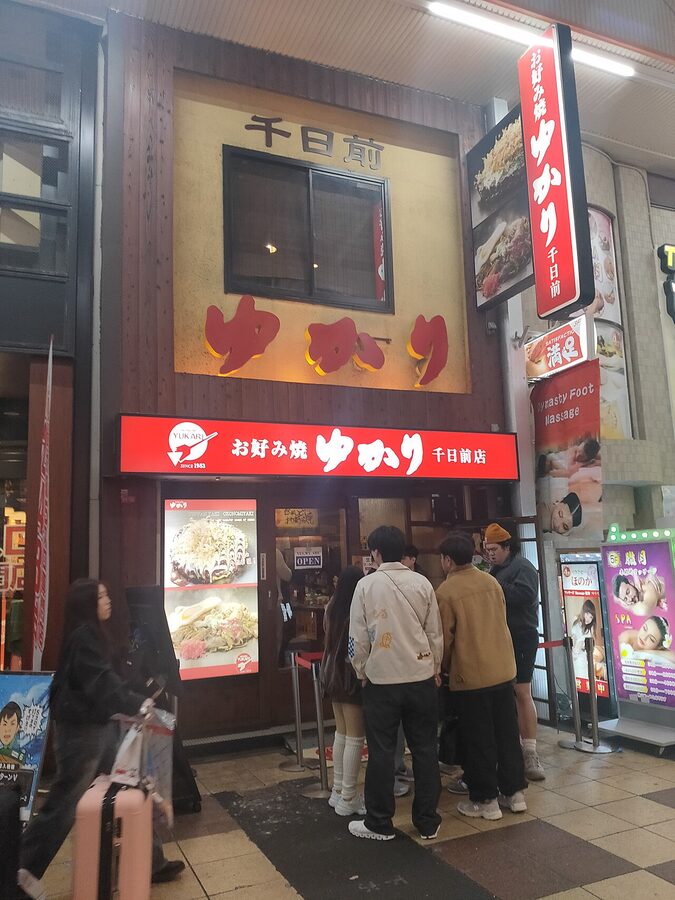

- Okonomiyaki Yukari Sennichimae, 11-9 Nanbasennichimae. Open 11:00–22:30. Cash and card. The pork-and-leek version (¥1,250) is the order. They cook it for you on the counter teppan; you don’t have to do the spatula work yourself, which I prefer because mine always falls apart.
- Mizuno, 1-4-15 Dotonbori (technically just on the Dotonbori side). Open since 1945. The classic mix-everything-into-the-batter pork okonomiyaki, ¥1,400. Long queue from about 17:30, so go at 11:30 for lunch instead.
- Chibo on Dotonbori (above) is the brand most travellers reach first; it’s reliable rather than great. If you want excellent, walk to one of the smaller places.

Kuromon Ichiba Market
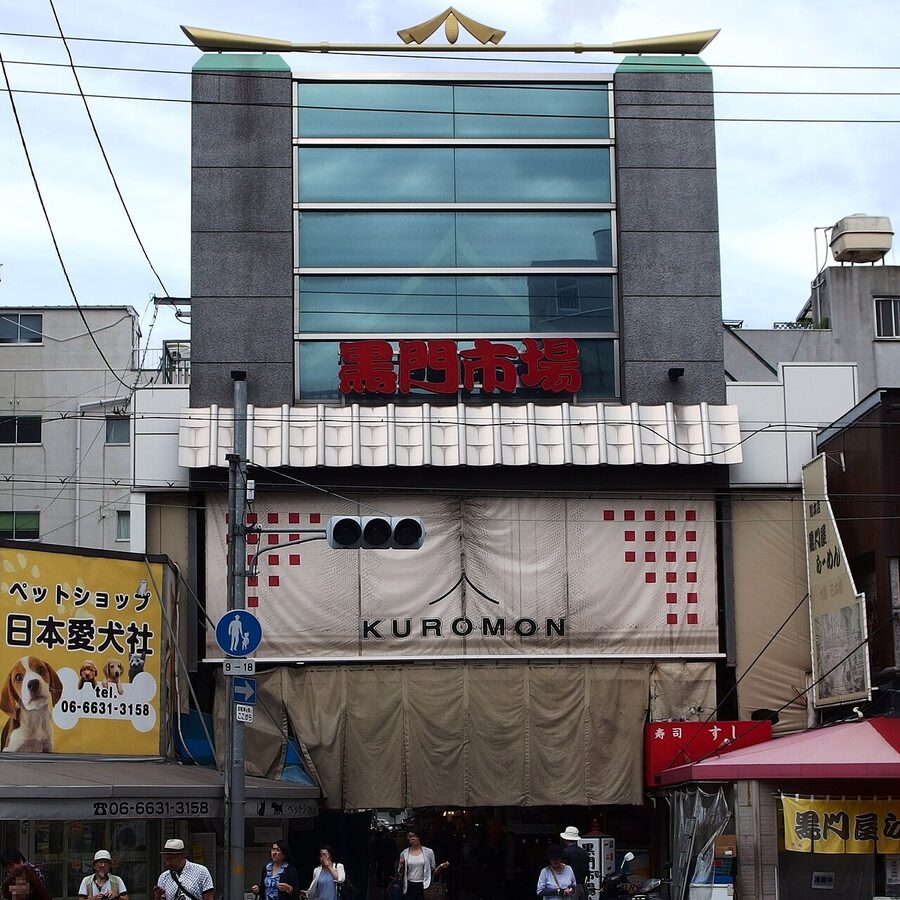

The 600-metre Kuromon Ichiba arcade, ten minutes’ walk east of Namba Station, is technically a market that’s been here since the 1820s, supplying the city’s restaurants with fish, knives, and produce. Tourism reshaped half the stalls into grilled-to-order seafood counters in the 2010s, which is now the main draw for visitors. The mix is fine, with caveats: you’re paying tourist prices for fish you could eat fresher in a sushi counter elsewhere.
What to do at Kuromon: get one grilled scallop (¥500), one piece of seared otoro on rice if it’s freshly cut (¥700–1,000 depending on stall), and a knife shop visit even if you don’t buy. Skip the multi-piece sushi sets that pre-cut hours earlier. Hours are roughly 09:00 to 17:00, with most stalls open by 09:30 and the cooked-food places running until 18:00 on weekends.
Shinsekai: the kushikatsu and beer answer
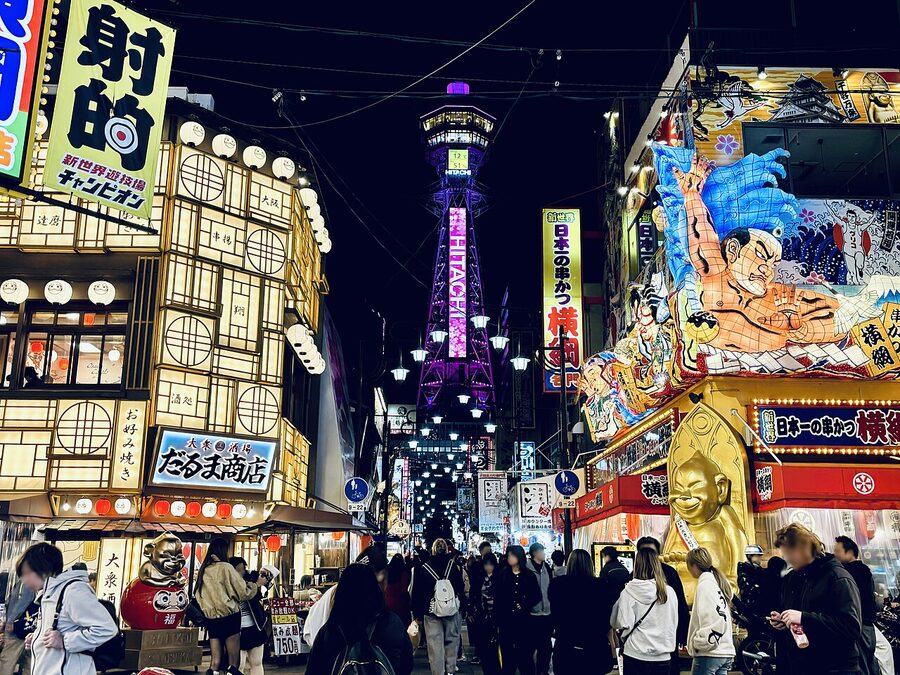
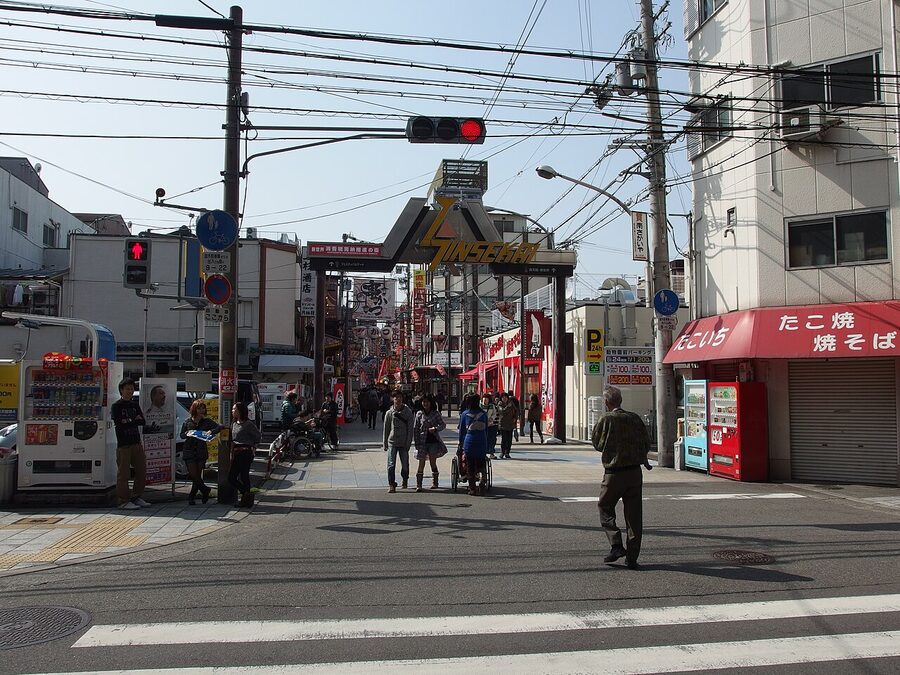
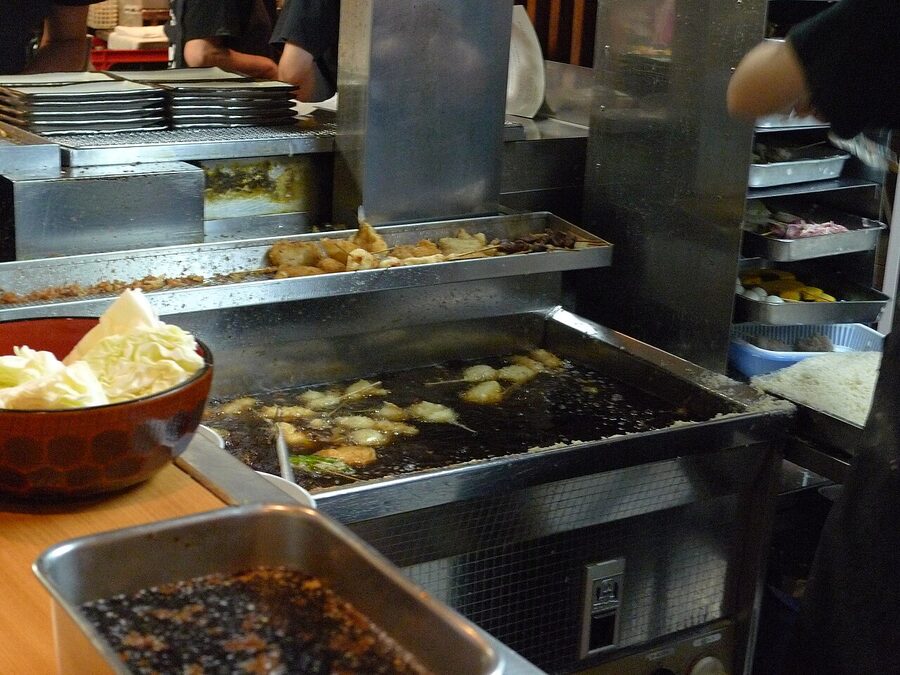
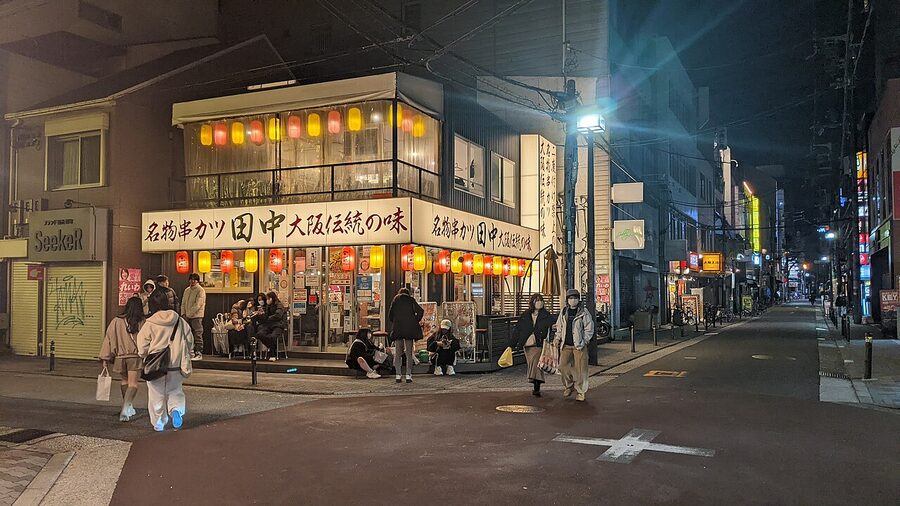
If I had to pick one Osaka neighbourhood to send a first-time visitor to, it would be Shinsekai, not Dotonbori. The streets are smaller, the prices are lower, the kitchens have been doing the same thing since 1956, and the Tsutenkaku tower at the centre means you can’t really get lost. It’s the home of kushikatsu, deep-fried skewered everything, served at standing or counter places that double as beer halls. A ten-skewer meal with two beers comes in around ¥2,500. There is nowhere else in Japan that delivers this much for that money.
.jpg)
The kushikatsu rule
.jpg)
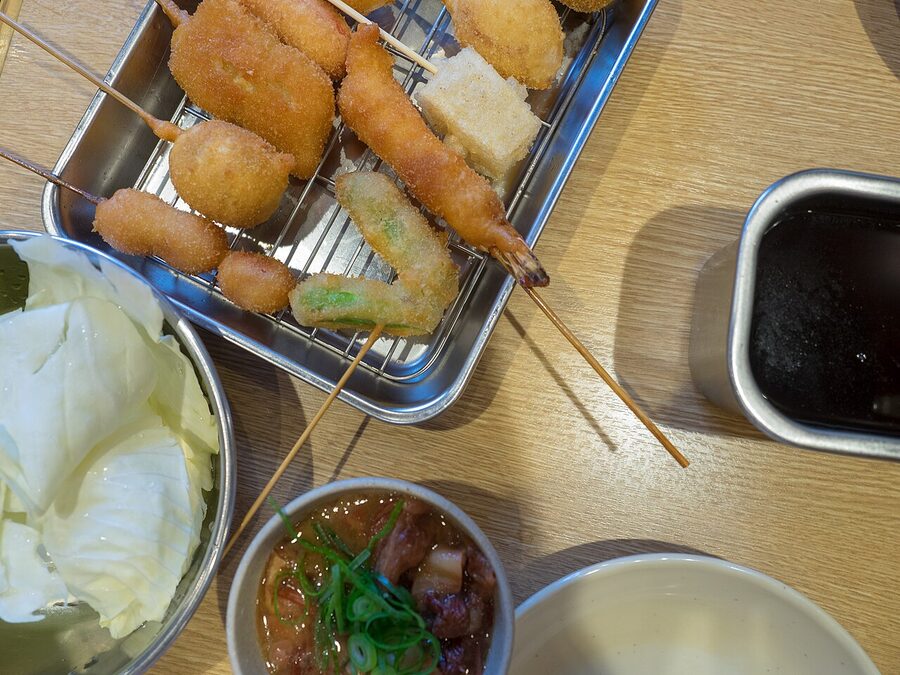
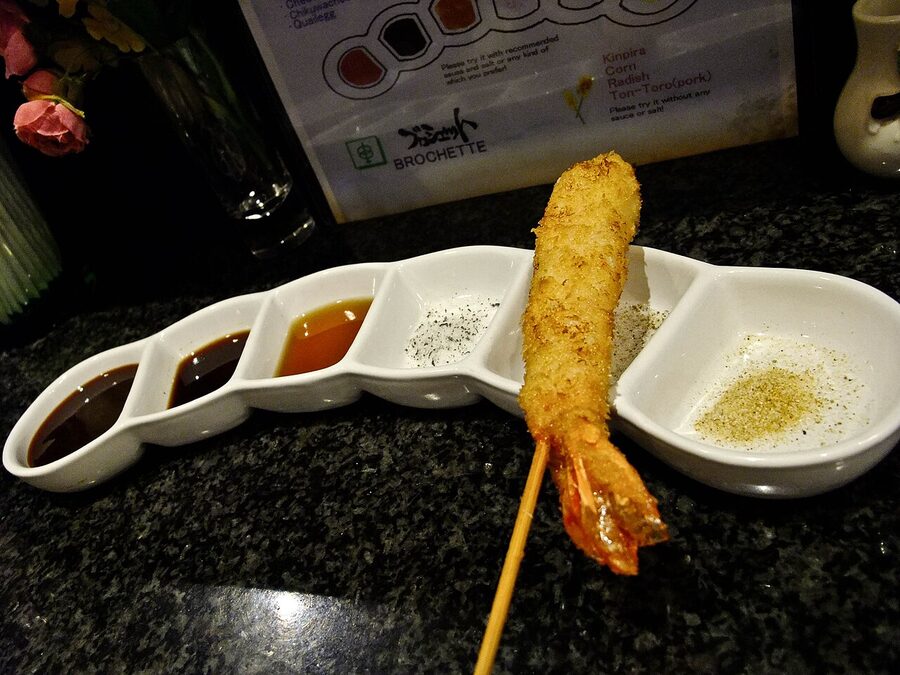
One rule, painted on the wall of every kushikatsu place in the city: no double dipping. Each table has a steel cup of brown sosu (a thin Worcestershire-style sauce, slightly sweet, a bit malty). You dip your skewer once, before you eat. Once you’ve taken a bite, the skewer doesn’t go back in. The free cabbage on the side is for scooping more sauce onto the skewer if you want it. Double-dippers are why the cabbage exists.
.jpg)
What to order, in order: the omakase or set first (the cook chooses), so you don’t have to read the menu while ordering your first beer. Pork (buta), beef (gyu), chicken (tori), and one or two vegetables (lotus root, onion). Then go again with the more interesting ones: quail egg, asparagus wrapped in pork, mochi cheese, the prawn. Most places price each skewer between ¥120 and ¥250. Cap yourself at twelve to fifteen skewers if you want to walk home; everyone over-orders the first time.
.jpg)
Specific kushikatsu places to know
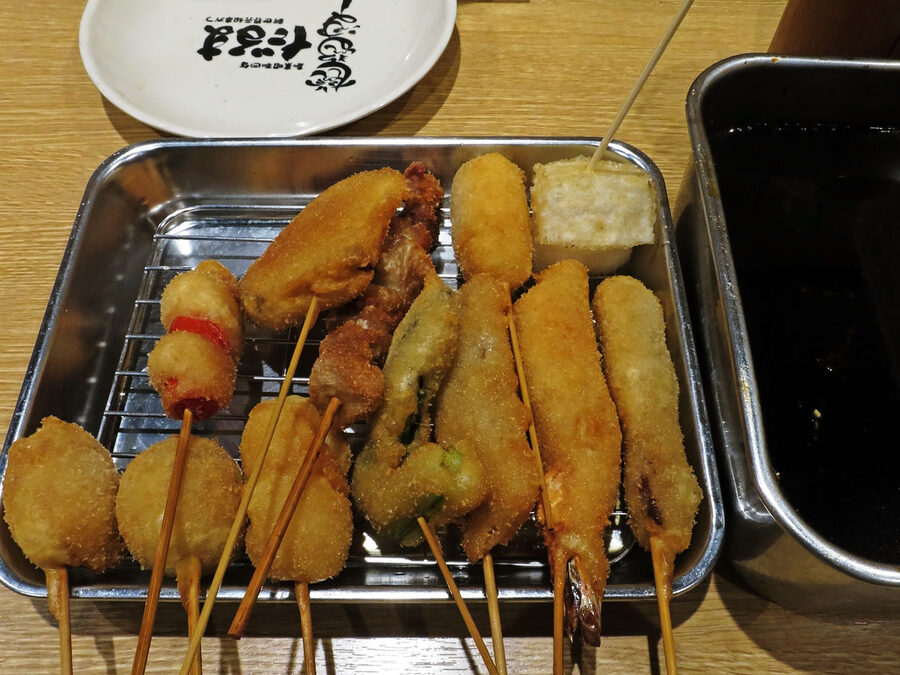

- Kushikatsu Daruma (Tsutenkaku Honten), 2-3-9 Ebisu-Higashi, Naniwa-ku. Open 11:00–22:30. The original since 1929; the angry-chef logo is everywhere now but this is where it started. The set is ¥1,200 for eight skewers; expect a 20-minute queue at 18:30 most nights. The branches in Dotonbori and Namba run the same menu but the Tsutenkaku one is the location to do it in.
- Kushikatsu Yaekatsu, 3-4-13 Ebisu-Higashi. Older than Daruma’s reputation suggests, family-run, no queue most nights, sets from ¥1,000. Cash only. Open 10:30–20:30, closed Thursdays.
- Tengu, 2-3-14 Ebisu-Higashi. The third name in the trinity. A bit more polished than the other two. Sets from ¥1,300. Open 10:30–21:00.

Beer with kushikatsu
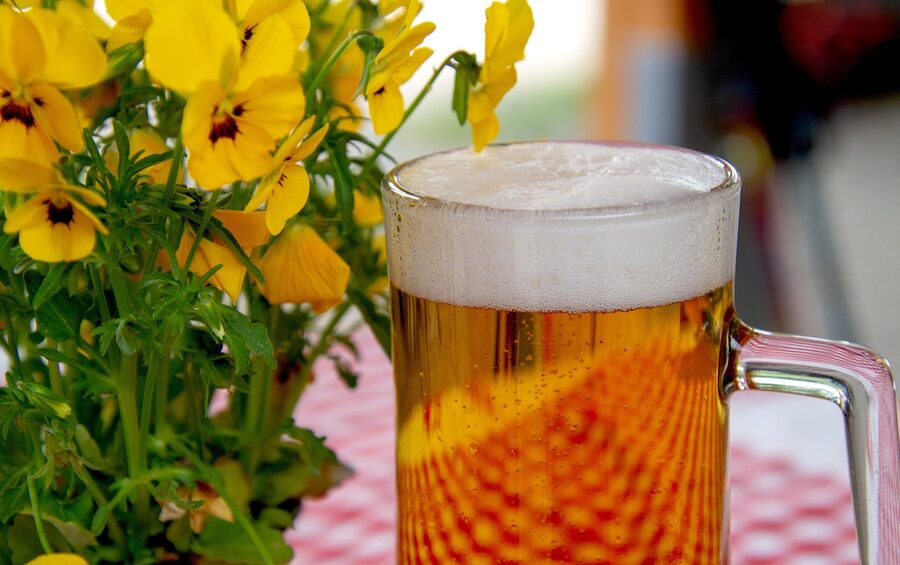
Asahi was founded in Osaka in 1889 (the original brewery is in Suita, ten kilometres north of the city centre), and Asahi Super Dry is what most kushikatsu counters pour by default. A 350ml glass mug runs about ¥500, sometimes ¥450 for the first one. If you want something that isn’t draught lager, ask for a highball (whisky soda, usually Suntory Kakubin in the cheap places, ¥450) or a chu-hai (shochu and soda with citrus, ¥400). Don’t ask for craft beer at a kushikatsu counter; they don’t have it and it would feel wrong with the food anyway.
Tsutenkaku and the rest of Shinsekai
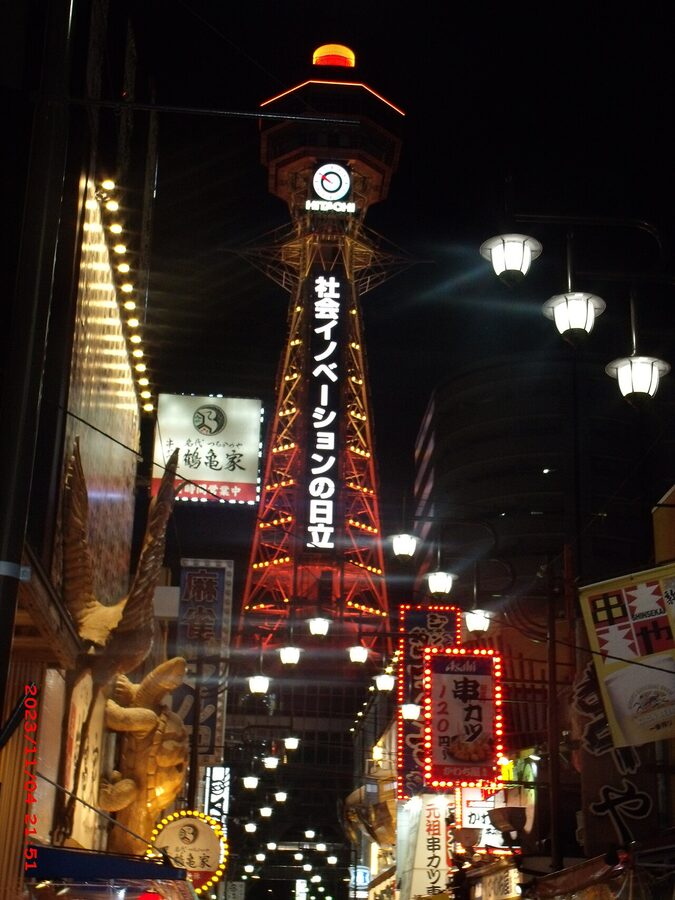
The tower itself is worth fifteen minutes if you want the view, ¥900 for the regular observation deck and ¥3,000 for the open-air “Tenbo Paradise” rooftop. The colour-of-the-lights weather code: red top means tomorrow’s clear, orange means cloudy, white means rain. The locals don’t check the weather app for tomorrow morning, they look at the tower from the train.
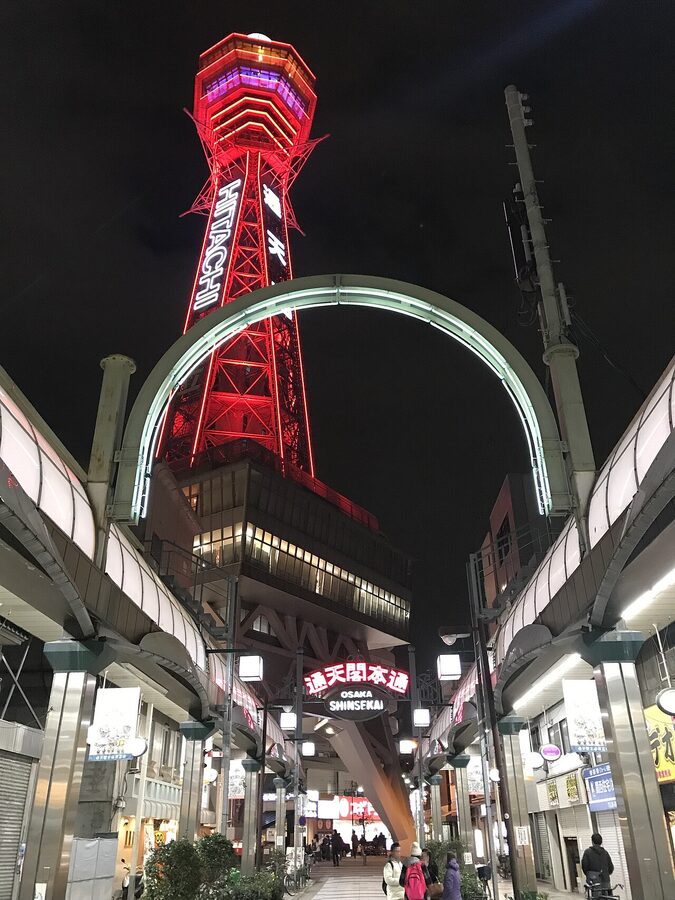

To get to Shinsekai: Dobutsuen-mae (動物園前) on the Midosuji line, or Shin-Imamiya on the JR loop. Either way it’s a five-minute walk to the tower. Don’t get off at Tennoji and walk south: that’s a long detour through office blocks.
Tenma and Tenjinbashi: where Osakans actually drink
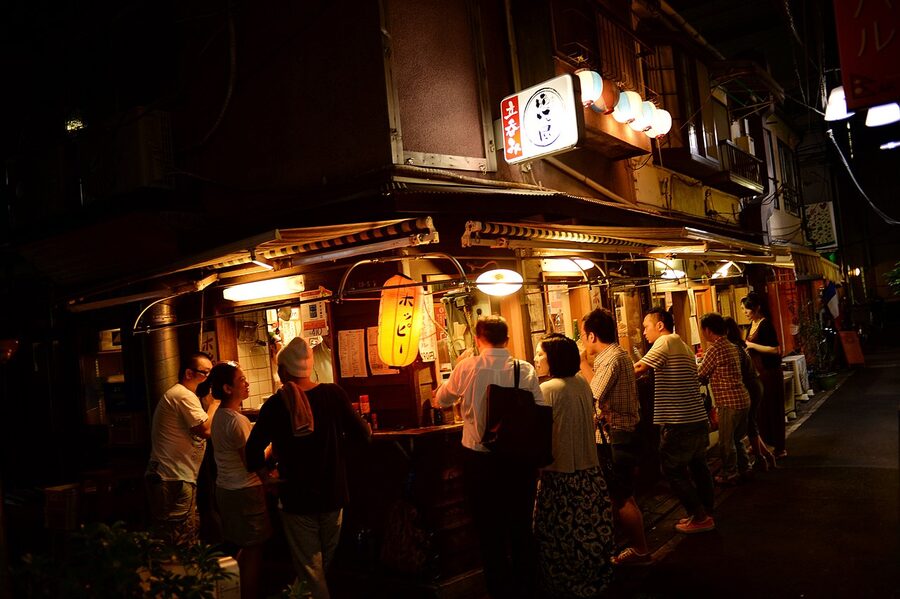

Tenma is the neighbourhood Osakans send each other to when the question is “where should we drink tonight, but cheap”. It sits about ten minutes north of the city centre on the JR loop (Tenma station) or Osaka Tenmangu on the Tanimachi line. The reason to come is the Tenjinbashi-suji shotengai, which at 2.6 kilometres is the longest covered shopping street in Japan, and the dense lattice of standing bars (tachinomi), small izakayas, and yakitori counters running off it.
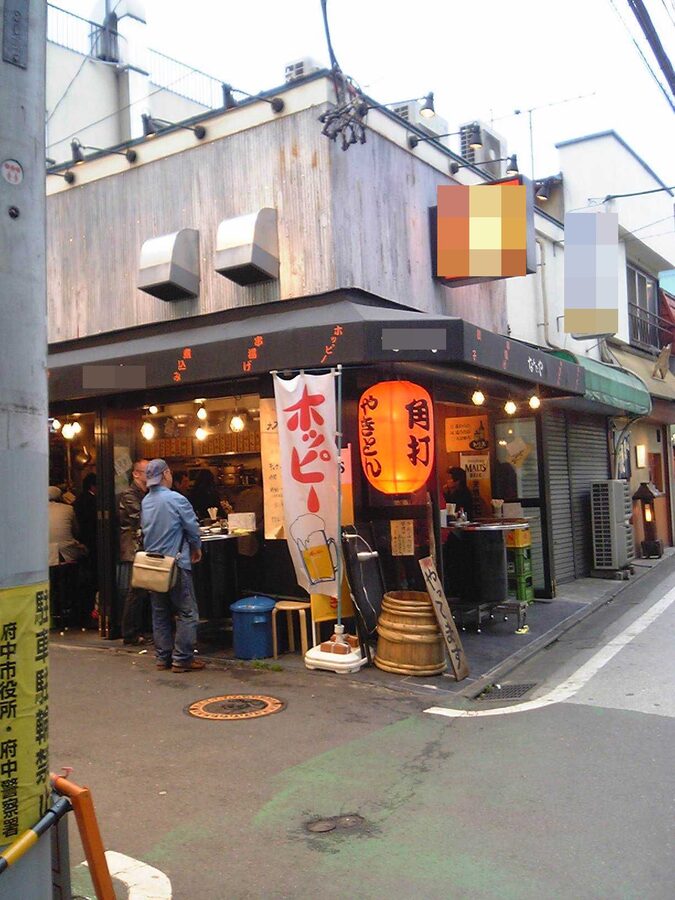

What a tachinomi actually is
A standing bar is exactly what the kanji says, a place where you stand to drink. The format is older than the modern izakaya: drink fast, eat fast, leave for the next one. Most tachinomi seat four to eight people if they have any seating at all, otherwise it’s standing room around a counter. Drinks are always cheap (¥300–500 for shochu highballs, beer, glass-pour sake), the food is short-menu (3–6 items, often written in chalk), and the average stay is 30 to 45 minutes before you move on.
Three things to know before you walk in:
- Otoshi. An obligatory small dish, ¥300–500, brought to you whether you ordered it or not. It’s a cover charge in food form. The good places make it a real dish; the cheap places give you a saucer of pickles. Read more on this and other rules in the izakaya etiquette guide; tachinomi follow most of the same rules just faster.
- Cash. About a third of tachinomi don’t take card. ATMs are in 7-Eleven and Family Mart on every corner.
- Pour for others first. If you’re drinking with someone you’ve just met, fill their glass before yours. They’ll fill yours back. This is the single rule of group drinking in Japan and it applies even harder when there are six of you crammed standing around a counter.
Tenma places to know
- Tachinomi Sasashu, 2-2-12 Tenjinbashi. About 200m north of Tenjinbashisuji 6-chome station. Open 16:00–23:00. The sake list is 30 deep; ask for the regional jizake set, three small cups for ¥1,200, and you’ll cover three different prefectures.
- Sakaba Toyo, in the alleys off Tenjinbashi 5-chome. Yakitori-led, with a dozen counter seats and another dozen standing. The chicken cartilage and chicken neck are the orders. Average bill, ¥2,500.
- Beer Belly Tenma, 4-4-4 Tenjinbashi. The Minoh Beer brewery’s tap room. About fifteen taps from one of Japan’s better small breweries, including the famous Stout and the Yuzu White. Pints ¥850–1,100. Open 14:00–23:30. Closed Mondays. This is the easy “I want craft beer in Osaka” answer.
One layout note: Tenjinbashi-suji is split into chome 1 through 6, and each chome has its own personality. Chome 1 (closest to Osaka Tenmangu shrine) has the touristy old-Osaka sweet shops; chome 5 and 6 have the densest cluster of bars. If you’re spending an evening, start at the north end (Tenjinbashisuji 6-chome station) and work south on foot.
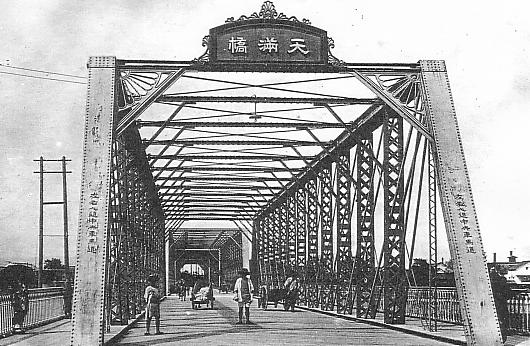
Fukushima: the under-the-radar district
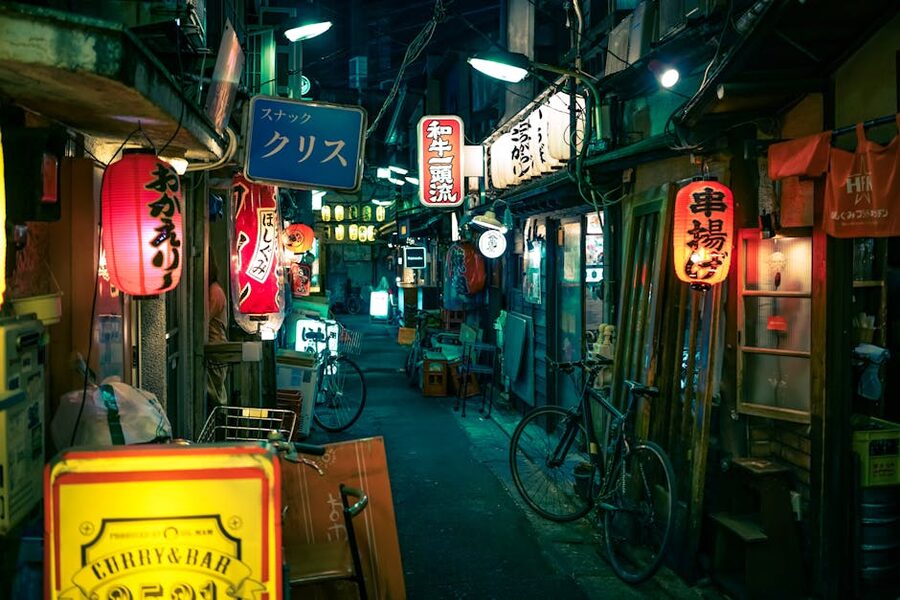
Fukushima sits one stop from Osaka station on the JR loop, north-west of Umeda. The neighbourhood used to be unremarkable office-tower territory; in the last decade it has become the city’s quietly serious eating-out district, full of izakayas, sushi counters, and craft beer bars that prefer reservations to walk-ins. If you’re staying in or near Umeda for a business trip and don’t want to fight Dotonbori crowds, this is your district.
What Fukushima does well: small sushi counters under ¥10,000 a head, dedicated craft beer bars, and a younger and less suit-heavy crowd than Kitashinchi. What it doesn’t do: kushikatsu, takoyaki, the famous Osaka tourist food. Different remit.
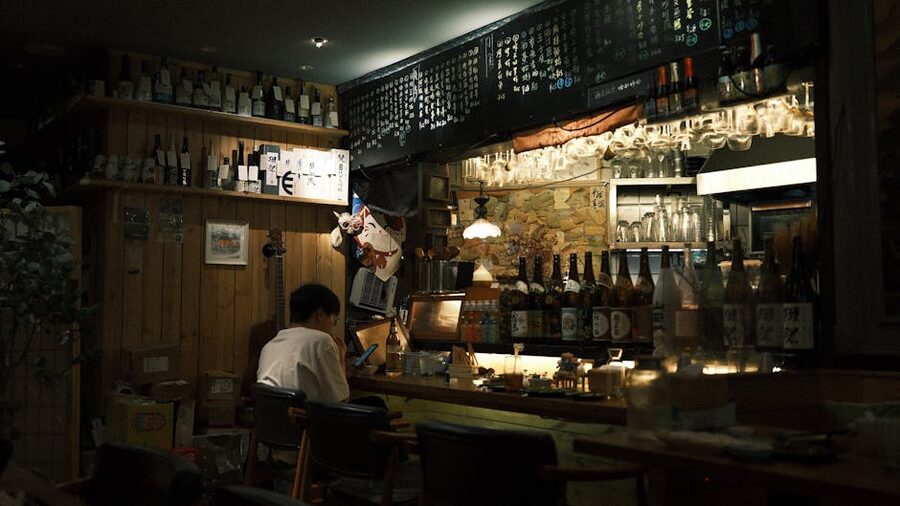
Where I’ve eaten and would go back
- Tachinomi Tomi, 2-1-3 Fukushima. A standing bar with a serious sake list, more than 40 labels by the cup. ¥500–800 per pour. Open 17:00–23:00. Closed Sundays. Pair the sake with the daily-special sashimi.
- Beer Cafe Numazuya, 7-1-9 Fukushima. Eight craft taps, mostly Japanese (Minoh, Yo-Ho, Baird), some imports. Pints ¥900–1,200. Decent fish-and-chips type small plates. Open 17:00–01:00.
- Sushi Kakehashi (寿司かけはし), 2-7-9 Fukushima. Counter sushi, omakase only, ¥6,000–8,000 lunch and ¥12,000 dinner. Reservations a week ahead.
If craft beer is the main reason you’re heading to Osaka, build the trip around an evening in Fukushima rather than expecting craft taps in Dotonbori. The full city whisky bar selection sits more in Kitashinchi (below) but the craft beer is here.
Kitashinchi and Umeda: the high end
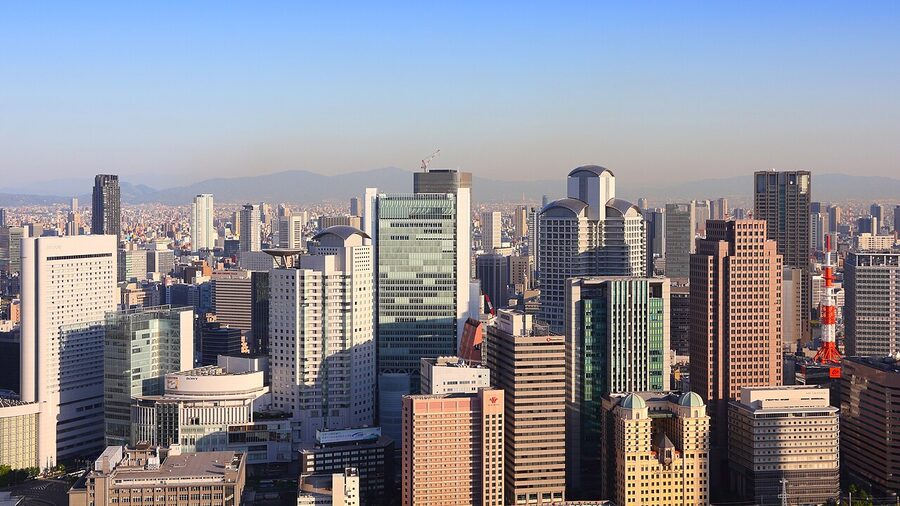

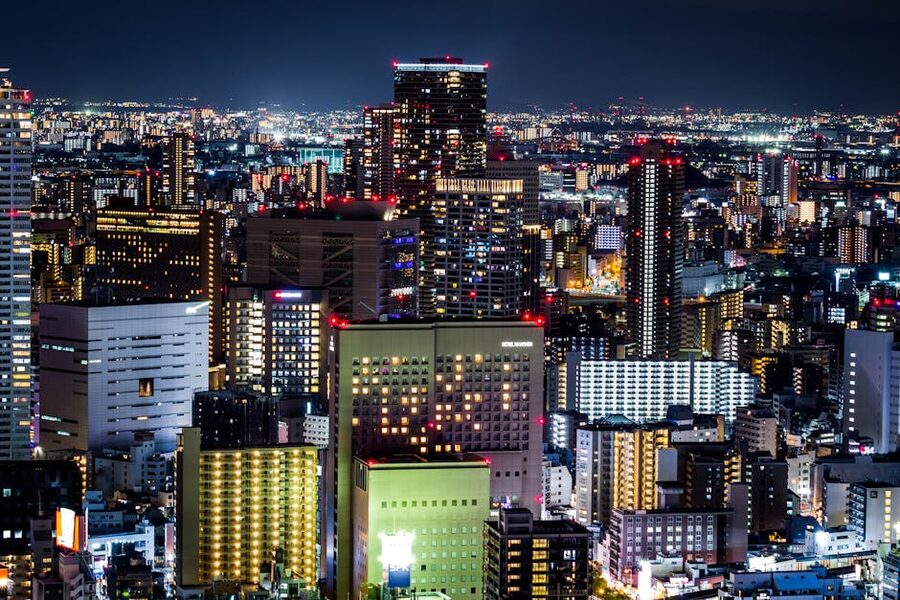
Kitashinchi (literally “northern new district”) is Osaka’s salaryman entertainment quarter. It sits south of Osaka Station / Umeda, four blocks tightly packed with hostess clubs, expense-account sushi counters, and members-only whisky bars. The name carries weight in the way “Ginza” does in Tokyo. Most travellers don’t go here, and most who do, go because someone Japanese is paying. The pricing is correspondingly Tokyo-level, sometimes higher.
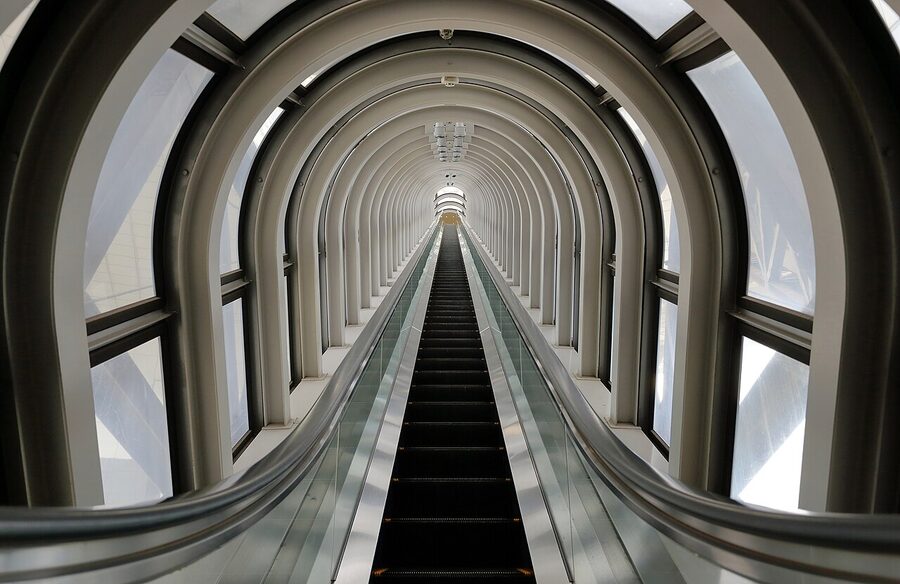

What Kitashinchi is genuinely good for: serious whisky bars (think 200-bottle backstores, Yamazaki 18 by the glass for ¥3,500–5,000, master bartenders who’ve been making the same Highball since 1985), and a handful of high-end sushi counters where reservations a month ahead are the norm. The food side overlaps heavily with what would equally exist in Tokyo’s Ginza or Kyoto’s Pontocho. The drinking side is more locally interesting because Osaka has a different bar culture than Tokyo: less hush, more talk.
If you do one thing here: book one drink at one named whisky bar, treat it as a destination, and leave once you’ve had the drink. Don’t try to bar-hop Kitashinchi the way you would Tenma. The pricing model assumes you’re sitting for an hour with two drinks and a small plate, total ¥5,000–8,000.
What to drink in Osaka
Beer
Osaka is Asahi country. The flagship Super Dry has been brewed in Suita since 1987, and it’s what every counter, izakaya, and convenience store fridge will pour you first if you say “beer please”. A 350ml draught (生 / nama) runs ¥500 in casual places and ¥800 in mid-tier. It’s a clean, dry rice-adjunct lager designed to go with strong-flavoured food, which is what 80% of Osaka cooking is.
For something else, look for these:
- Suntory Premium Malts on draught, slightly fuller body than Asahi, more bread-y. Suntory is a Kansai company; Premium Malts is brewed at the Kyoto factory.
- Sapporo Black Label, the underdog of the big four. Fewer places have it on draught.
- Minoh Beer, the Osaka-region craft brewery from Minoh city, just north. The Stout and Yuzu White are the standouts. Find it at Beer Belly Tenma or Numazuya in Fukushima (above).
- Imperial Yamato Beer, the smaller Osaka craft brewery. Their pilsner is on a few Tenma taps.
Sake
Osaka itself isn’t a major sake-producing prefecture, but Itami in neighbouring Hyogo and Kyoto’s Fushimi are 30 minutes away by train, and most decent Osaka izakayas pour from both. Expect to pay ¥500–800 per cup (90–120ml) at a tachinomi, ¥1,000–1,500 at a mid-tier izakaya. The cheap house sake (酒, sake, served warm in winter) at a kushikatsu counter is fine, not interesting; if you want to taste the regional good stuff, ask for a jizake selection.
For a primer on the styles you’ll see on the menu, check the sake guide. The shorter version: junmai is the rice-water-yeast-only sake, drier and more food-friendly. Junmai ginjo and junmai daiginjo are more polished, more aromatic, less food-friendly. Honjozo has a small amount of added alcohol, drinks lighter. For pairing with kushikatsu and yakitori, junmai is the pick. For sashimi or sushi, junmai ginjo. The comparison piece covers how sake stacks up against shochu and awamori if you want to swap.
Shochu and chu-hai
Shochu is Japan’s distilled spirit (rice, barley, sweet potato, or buckwheat-based), 25% ABV typically. In Osaka it shows up two ways: neat-on-the-rocks at a more serious izakaya, ¥500–700 per glass, or stretched into chu-hai with soda and citrus, ¥350–450 per glass. The chu-hai is the unofficial Osaka summer drink. Order it lemon (lemon sour) or grapefruit; the canned versions in 7-Eleven are also fine for konbini drinking.
Whisky
Suntory’s Yamazaki distillery is 30 minutes by train from Osaka station (towards Kyoto), and Osaka punches above its weight on whisky bars as a result. Most Kitashinchi bars carry Yamazaki 12, 18, and the no-age-statement Distiller’s Reserve; the Hibiki blends; Hakushu; sometimes Yoichi from Hokkaido. Expect ¥1,500 per pour for the youngest, ¥3,500–5,000 for an 18-year, plus a ¥500–1,500 cover charge.
For the lay of the land at Suntory whiskies and Nikka, see the Japanese whisky guide. Short version for Osaka specifically: order the highball (whisky soda, usually Kakubin, sometimes Yamazaki Distiller’s Reserve) at a counter, and don’t try to negotiate on what bottle they’re using; the bartender’s choice on highball whisky is also a courtesy gauge of the room.
Food specifics: what to order, where
Takoyaki
.jpg)
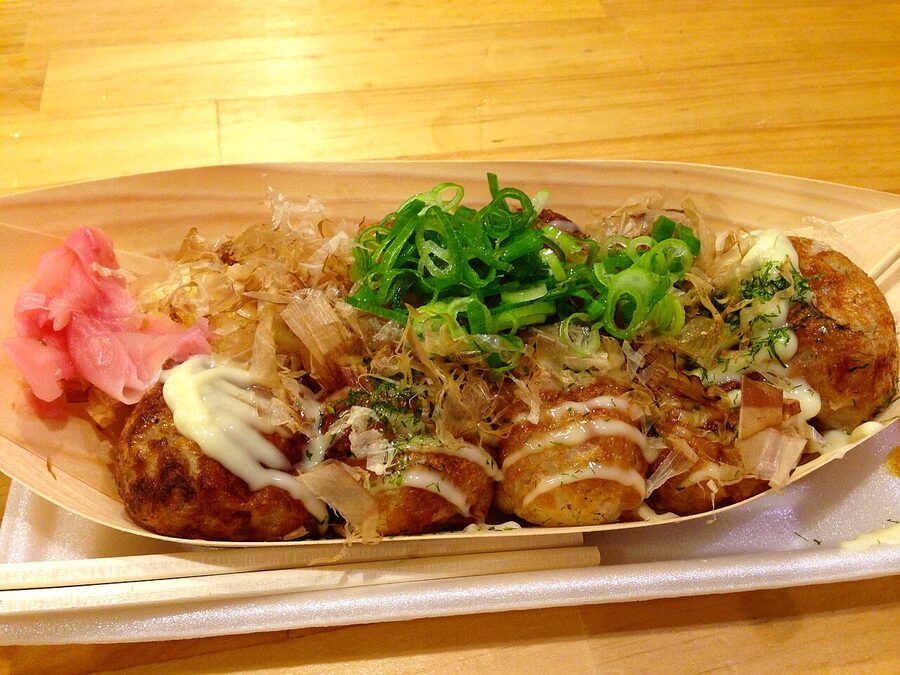
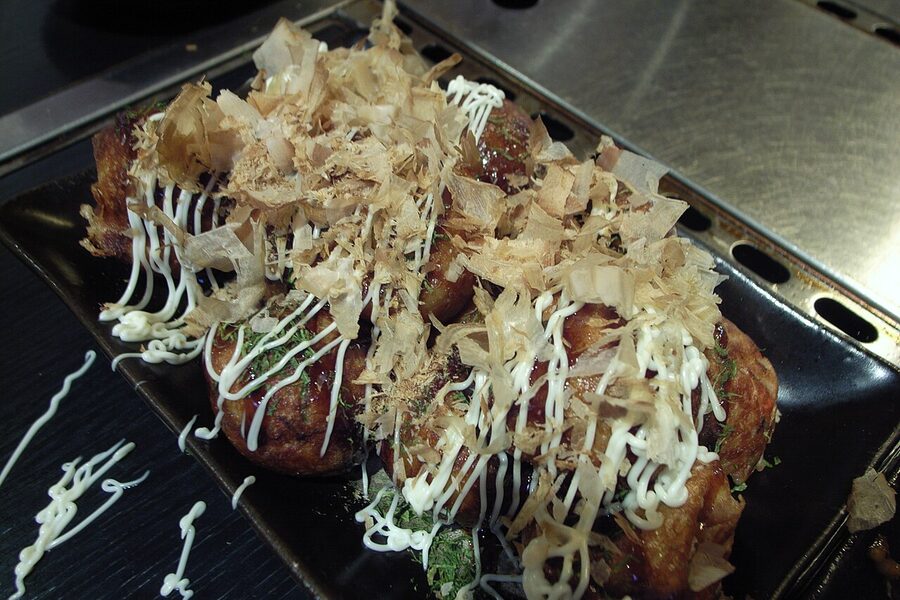
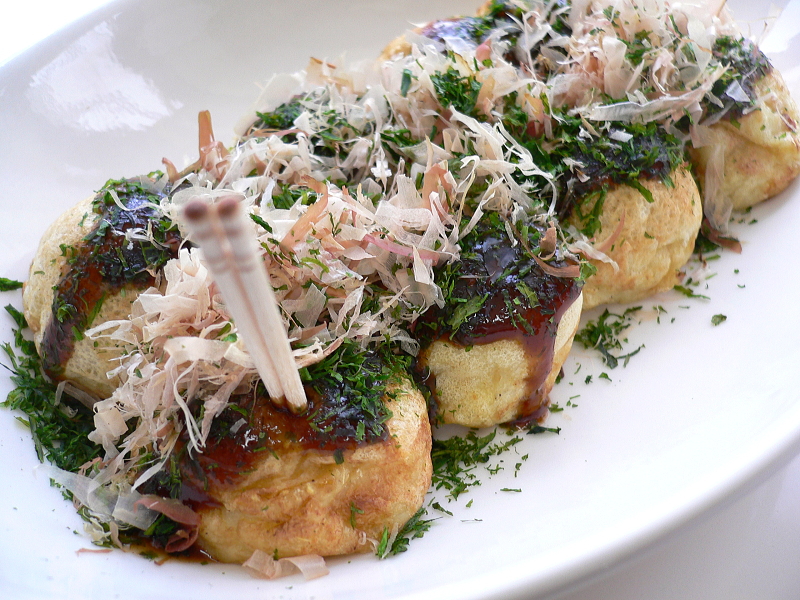
The Osaka takoyaki rule: smaller-stall, made-to-order, eaten standing within five metres of where they were cooked. Six to eight pieces per order, ¥500–700, batter that should be just-set on the inside (so the first one burns the roof of your mouth, every time). Kewpie mayo is non-negotiable. The dashi is in the batter, so the brown takoyaki sauce on top should be a thin glaze, not a layer.

Okonomiyaki
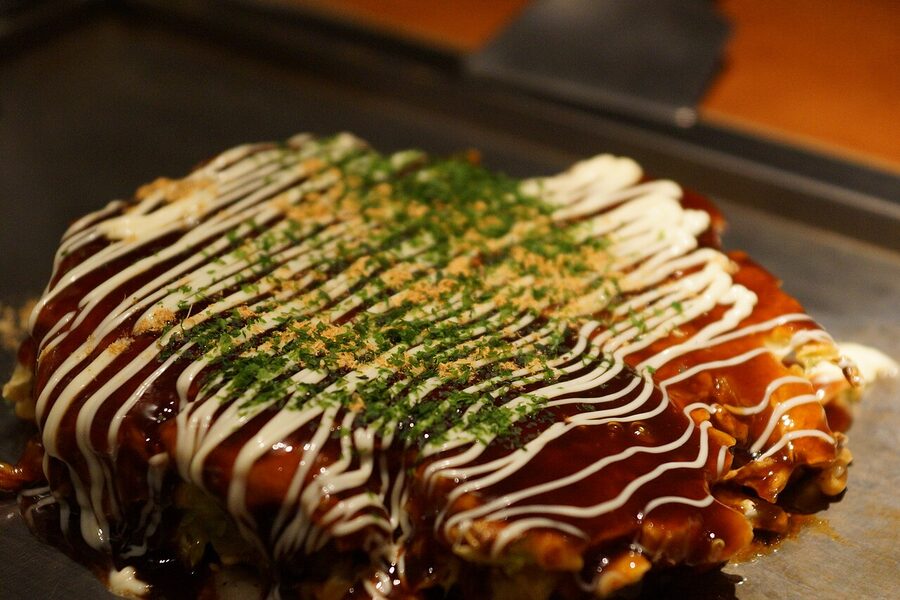

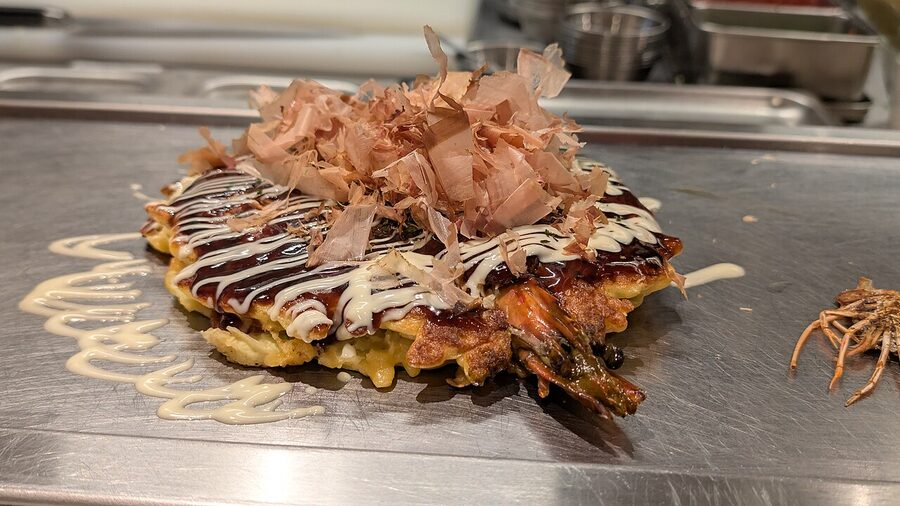
Different from the Hiroshima version. Hiroshima style layers the cabbage, noodles, and pancake separately on the griddle. Osaka style mixes everything into the batter first, then cooks it as one thicker pancake. The order is usually pork (buta-tama, ¥1,000–1,300) or seafood (mikkusu, ¥1,300–1,500). Most Osaka okonomiyaki places have a teppan in the middle of the table; the cook does the work.
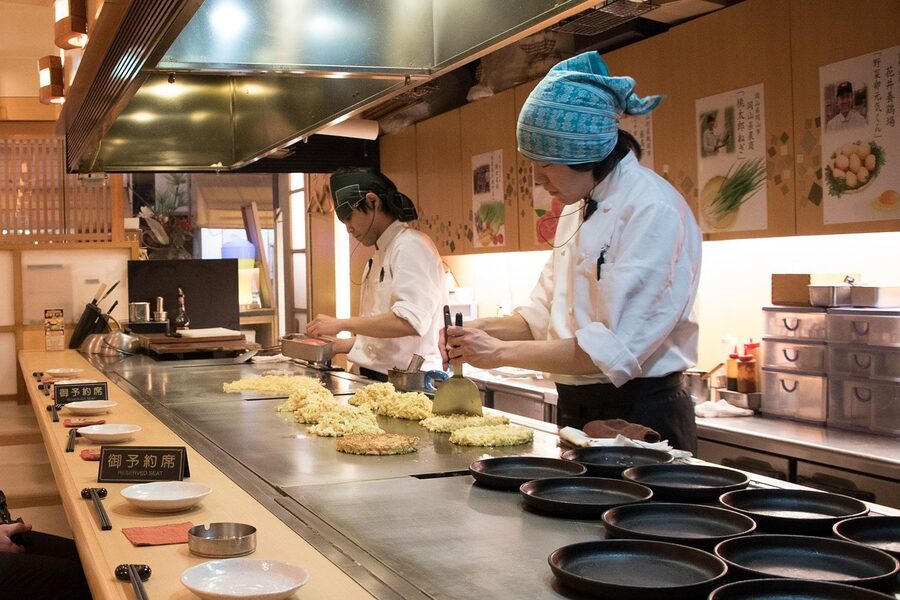
One regional twist worth ordering at least once: modan-yaki, an okonomiyaki with a pancake of yakisoba noodles inside. About ¥1,400. It’s the Osaka teenage version of the dish, late-night-friendly. Chibo, Mizuno, and Yukari all do good ones.
Negi-yaki and ika-yaki
Two cousins worth a stop. Negi-yaki is okonomiyaki’s thinner, scallion-heavy cousin, lighter, often eaten as a starter. The original is at Yamamoto Honten in Juso (one stop north of Umeda on the Hankyu line; about ¥900 a piece). Ika-yaki is squid-and-batter pressed flat in a hot sandwich press, ¥200–300 from the food halls of Hanshin and Hankyu department stores at Umeda. The most under-rated ¥200 in the city.
Kitsune udon
Osaka’s udon broth is lighter and more kombu-led than Tokyo’s bonito-driven version. Kitsune udon, topped with a slab of sweet simmered fried tofu, is the Osaka invention. About ¥700–900 in any standalone udon shop. Mimiu Honten in Hirano-cho claims to have invented udon-suki (a hot pot version) and is worth a visit if you’re already in Honmachi.
Beef and offal: yakiniku and motsu-nabe
Tsuruhashi, Osaka’s Korean-Japanese district two stops east of the city centre on the JR loop, is the yakiniku centre of western Japan. Thirty-something Korean-style grills are within a five-block radius of Tsuruhashi station. Average bill, ¥3,000–5,000 per person for a full grill set with two beers. Yakiniku Tsuruhashi Sumiyaki Genchan is a reliable mid-tier choice; the higher-end ones cap out around ¥10,000.
The Osaka day, hour by hour
Treat this as an outline of an actual day rather than a schedule.
- 10:00 – 12:00. Kuromon Ichiba market, before the cooked-to-order stalls get rammed. Buy a piece of grilled scallop and a 350ml beer.
- 12:30 – 14:00. Lunch okonomiyaki at Mizuno or Yukari Sennichimae before the queue extends past 30 minutes.
- 14:30 – 17:00. Walk Dotonbori once. Take the canal photo from Ebisu Bridge. Eat one takoyaki order from Wanaka or Honke Otako; take it down to the Tombori River Walk to eat. Skip every restaurant that has photos of the food on the wall.
- 17:30 – 19:30. Train to Dobutsuen-mae or Shin-Imamiya. Walk into Shinsekai. Kushikatsu at Daruma honten or Yaekatsu, two beers, two rounds of skewers. Look up at Tsutenkaku.
- 20:00 – 22:00. Loop train north to Tenma. Two tachinomi stops on Tenjinbashi-suji: one sake-led (Sasashu), one yakitori-led. Total spend ¥3,000.
- 22:00 onward. If you still have it in you, one drink in Fukushima or Kitashinchi. Otherwise back to the hotel: most Osaka counters close by midnight, the late-night options are mostly chain izakayas at that point.
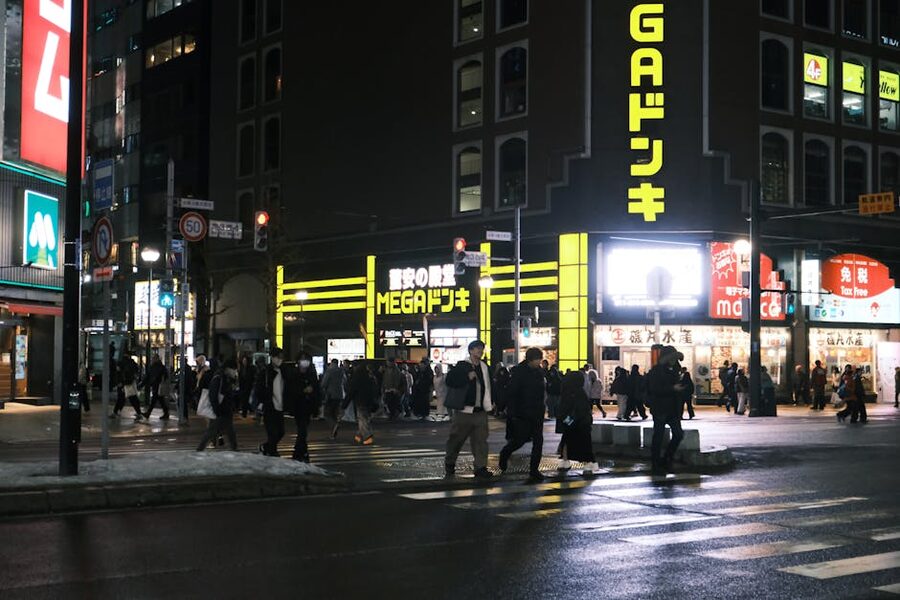
Practical etiquette and a few traveller mistakes
Don’t walk and eat
The single rule Osakans complain about with foreign visitors: eating while walking down a busy shotengai. The takoyaki you bought from Wanaka is meant to be eaten standing within five metres of the stall, by the small counter the stall has out front. Carrying it down Dotonbori while bumping into people on a Saturday night is the move that makes the whole street resent you. Same with most other street food. Stand still, eat, then walk.
Don’t double-dip the kushikatsu sauce
The single rule the kushikatsu places paint on the wall in three languages. One dip per skewer. After the bite, use the cabbage to scoop more sauce on. The reason: the brown sauce is communal, sometimes a single steel cup for the whole counter. Once you’ve eaten off the skewer, you’re putting your saliva back in the shared sauce. The locals genuinely care about this one.
Pour for others first
Standard izakaya etiquette, even harder when you’re shoulder-to-shoulder at a tachinomi. If you’re sharing a bottle (sake bottle, large beer bottle), fill the others’ glasses first, then they fill yours. Don’t fill your own; that’s a small-but-real awkwardness. The full version is in the izakaya etiquette guide.
Cash, queue, and time
Carry ¥10,000 in cash. The mid-range and high-end places take card; the cheap places, the ones that are actually best, often don’t. The good takoyaki and tachinomi places do not take card. ATMs in 7-Eleven and Family Mart take foreign cards reliably.
If a queue is moving, get in it. If a queue is static at 18:30, the place is famous, the kitchen has stopped accepting orders for the next hour, or both. Find the next door down. There’s always a next door down in Osaka.
Last orders: most kitchens stop taking food orders 30 minutes before official closing. If a place “closes at 23:00”, that means food until 22:30 and drinks until 23:00. Plan accordingly.
Where this leaves you
Two days in Osaka covers most of the eat-and-drink agenda above; three buys you Fukushima or Tsuruhashi as well. Don’t try to do all six neighbourhoods in one trip; pick the two or three that match the kind of night you want, and let the others wait. Most travellers leave Osaka full and a little drunk, with a faintly sticky finger from the kushikatsu sauce, having spent less than they expected. That’s the city working as designed.
If you’re heading north to Kyoto next, the contrast hits hard: Kyoto eats more politely, drinks more politely, and costs more. If you’re heading west to Fukuoka, you’ll find a similar food-first city that drinks even later. The Tokyo equivalent is a wholly different beast: more expensive, more compartmentalised, more bookable. Osaka is the one where you can still walk into a counter at 19:30 with no plan and get fed.
 CitiesWhy Tohoku Took Over Japan’s Sake SceneThe trip almost didn't happen. I'd booked an Aomori brewery visit at the end of a rushed week, the second…
 CitiesWhy Kansai, Not Niigata, Is the Sake CapitalHyogo and Kyoto produce more sake than the next eight prefectures combined. Two of Kansai's six prefectures, side by side,…
 CitiesHokkaido Has More Whisky Distilleries Than You ThinkAsk anyone who knows a little about Japanese whisky to name a Hokkaido distillery and they’ll say Yoichi. Push them…