
The first time I got a Japanese toast wrong, I was at a wedding reception in Yokohama. Ten of us at a round table, a glass of champagne in front of every plate, and a microphone open to a senior colleague who took ninety seconds to thank his hosts before raising his arm and saying the only word I’d been waiting for. Kanpai. I clinked my glass against my neighbour’s so hard I nearly cracked the rim, leaned in for a second clink with the man across the table, and grinned like an idiot. Nobody else clinked. The room had bowed slightly, lifted glasses to eye level, said the word, and sipped. The senior at the end of the table caught my eye and gave me the smallest, kindest shake of his head. I had brought a beer-garden reflex into a wedding hall.

That was the moment I understood that kanpai isn’t one ritual. It’s three or four, layered on top of each other, with rules that flip depending on who’s at the table and what kind of glass is in your hand. A traveller arriving in Japan picks up the word in five minutes, and assumes that’s the whole story. It isn’t. The mistake I made cost nothing more than mild embarrassment, but the reason it happened is worth a longer look. Kanpai sits at the centre of a working knowledge of izakaya etiquette, business drinking, weddings, brewery tasting rooms, and the bonenkai you’ll get dragged to in late December. Get the word right and you’ve solved one syllable. Get the gesture right and you’ve solved the actual greeting.
In This Article
- What kanpai actually means
- The mistake nobody warns you about
- Why glasses get clinked at all
- Three kinds of kanpai you’ll meet
- What people actually drink for the first kanpai
- Lower your glass
- Nobody pours their own first drink
- Otsukaresama: the politer alternative
- Kenpai is not kanpai
- The first sip and what happens after
- The water-toast superstition
- The kinds of glassware that change the script
- Where you’ll meet kanpai on the road
- At an izakaya
- At a tachinomi (standing bar)
- At a sake brewery
- At hanami (cherry blossom drinking)
- At a wedding or banquet
- At a bonenkai or shinnenkai
- At a sushi counter
- At a kakuuchi
- At an onsen ryokan
- On the shinkansen
- Kanpai when you’re drinking alone
- The otoso New Year toast and other seasonal variants
- Why younger Japanese drinkers say kanpai less
- What you actually want to remember
- What I learned from getting it wrong
What kanpai actually means
.jpg)
The kanji are blunt. 乾 means dry. 杯 means cup. So kanpai reads as something close to “drain the cup”, a borrowing from Chinese where the toast still operates that way (gan bei, said over a small spirit, expects you to put it down in one). Korean shares the same reading: geonbae. Cantonese, gom bui. The literal demand to empty the glass is a regional inheritance.
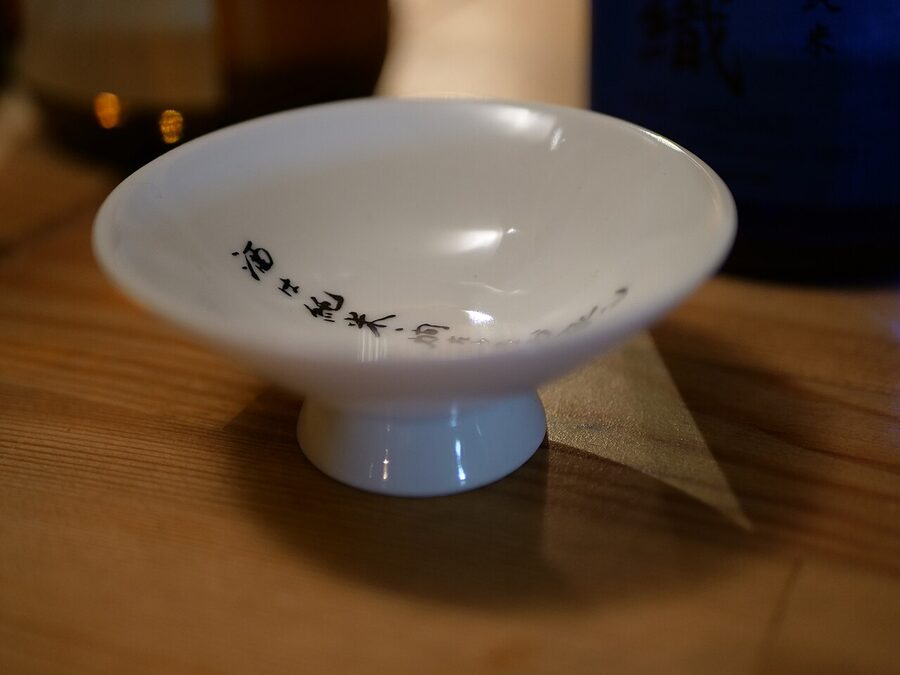
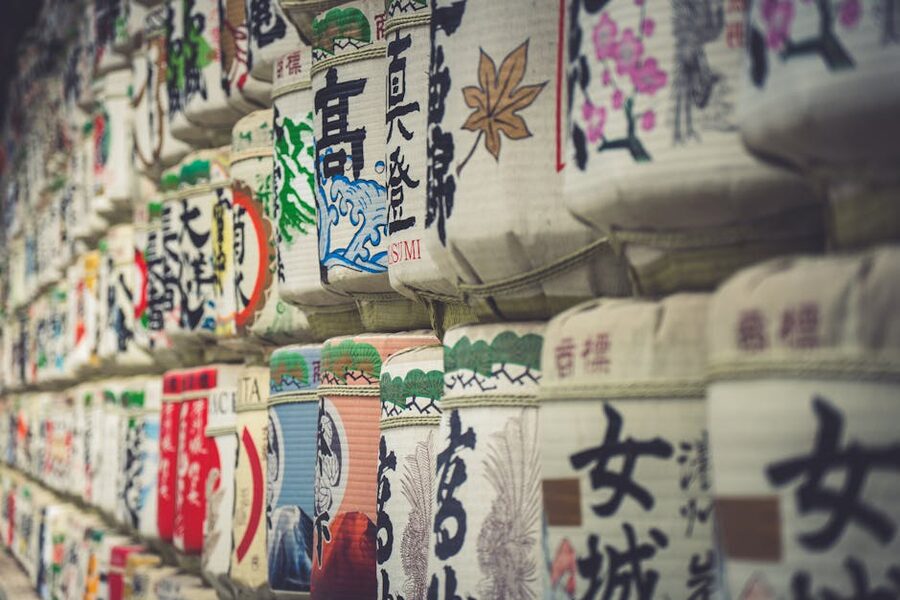
Modern Japan has softened it. You can still drink your beer in one go after the toast and impress your hosts (or worry them). With sake, gulping after kanpai gets read as ignorance. The point of a small ochoko is to take a sip, set the cup down, and go again. The vessel is part of the message. A pint glass holds an instruction. A 60-millilitre ochoko holds an invitation.
One thing the language does enforce: kanpai is the starting gun. You don’t sip beforehand. The first beer sits in front of you, condensation gathering, while the most senior person at the table figures out whether to give a small speech or just raise the glass. The collective pause before that first sip is the part Westerners find strangest, and it’s the part the host is most aware of.
The mistake nobody warns you about
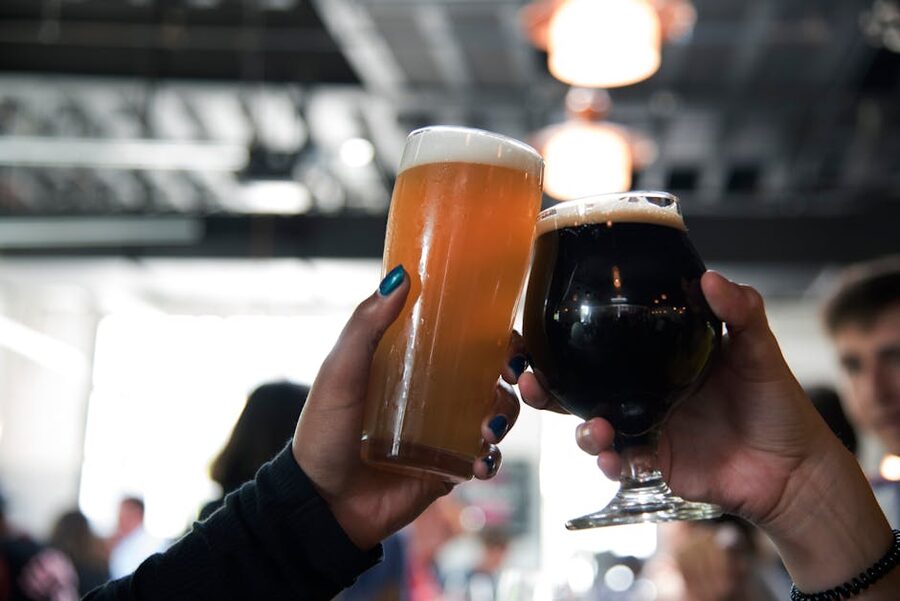
The clink is the trap. Foreign visitors arrive carrying the European reflex (touch glasses, hard, with eye contact, big smile) and apply it everywhere. In casual settings it’s fine. At a beer garden, with a heavy mug, it’s expected. In a formal dining room with thin glassware or any kind of ceramic ware, it’s a small social error you won’t be told about.
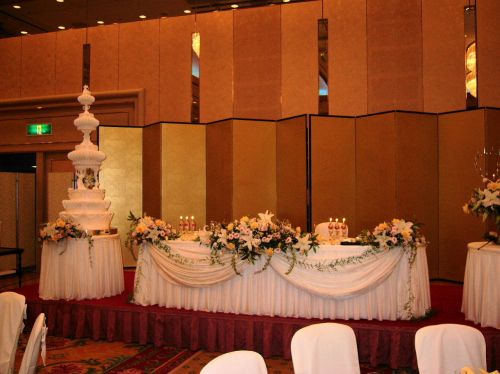
The Japanese expression for the misuse is wonderful. 器が泣く. Utsuwa ga naku. The vessel cries. Knock two delicate cups together and you have made them cry, which means you have failed the host who chose to put nice ware on the table. The polite move is to lift the glass to eye level, exchange a small bow with the people around you, sip, exchange another small bow, and set the glass down. No clink at all. At a wedding the entire room does this in unison and the only sound is fabric and breath.
The cutoff isn’t subtle once you know it. Beer mug? Clink. Plastic chuhai can? Clink. Champagne flute at a wedding? Don’t. Crystal wine glass at a kaiseki dinner? Don’t. Earthenware sake cup at a brewery’s tasting room? Don’t. The host is the signal. If the glassware is something you’d be embarrassed to break, leave it untouched. The bow does the work.
Why glasses get clinked at all
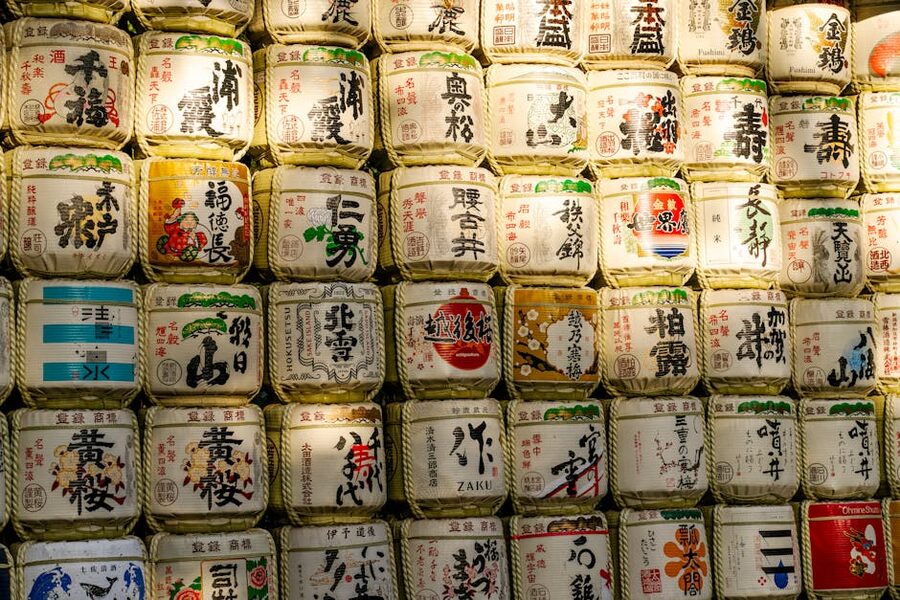
One of the strange facts I picked up reading around this is that clinking glasses isn’t a Japanese invention at all. It came from Europe, and the origin theories are competing folk tales. The popular European version says drinkers used to slosh their cups together so the wine spilled between them, proving nobody had poisoned anyone. Another version says ancient Greeks clinked to scare away evil spirits. A third version says it just felt right because the sound is satisfying and the gesture symmetrical. Pick whichever explanation amuses you. None of them are Japanese.
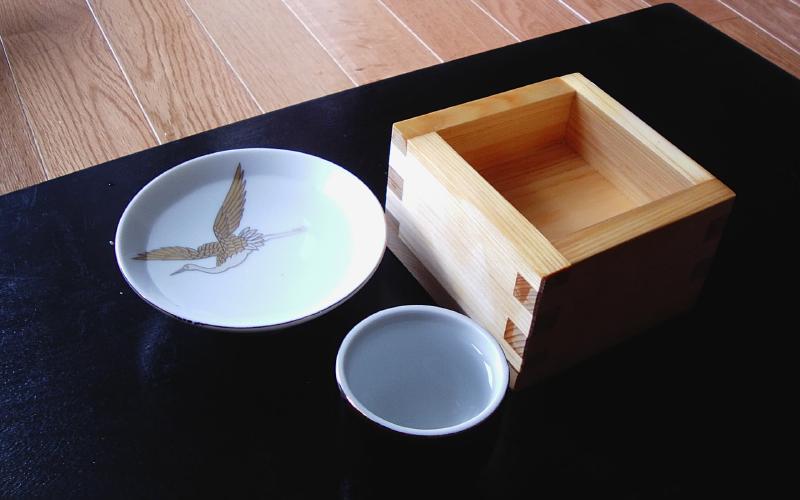
Japanese hospitality, in contrast, treats the cup itself as the centre of the moment. The vessel, especially anything ceramic, is too valuable and too fragile to be banged together casually. The host has chosen the ware. Treating it carefully is part of recognising the host. This is why kanpai in older or more formal Japanese contexts means lift, meet eyes, sip, and let the cup breathe. The clink is a borrowed gesture that arrived in Japan with beer halls in the late nineteenth century and stayed for casual settings only.
Once you know that, the etiquette stops feeling complicated. It’s not that Japan added an arbitrary rule about not clinking. It’s that the rest of the world added an arbitrary rule about clinking and Japan resisted it for the contexts where the cups were precious.
Three kinds of kanpai you’ll meet
It helps to put them side by side. The same word covers three different scripts, and a traveller’s job is to read which script is running.
| Setting | Glassware | Clink? | What you say | What follows |
|---|---|---|---|---|
| Casual izakaya, friends | Beer mug, highball glass, plastic chuhai can | Yes, lightly | Just kanpai | Drink at your own pace, top up each other’s glasses |
| Business nomikai, after-work drinks | Beer mug, sake cup, sometimes wine | Light clink with peers, lower your glass under the senior’s | Otsukare-sama desu, then kanpai | Pour for your boss before yourself, never refill your own cup first |
| Wedding, formal banquet, kaiseki | Champagne flute, wine glass, sakazuki | No | Kanpai, after the speech | Wait for everyone to be seated, lift glass to eye level, exchange bows, sip, applaud |
Within those three rows, almost every drinking situation in Japan finds its slot. A craft brewery’s tasting flight on a Saturday morning is row one. A client dinner in a hotel restaurant is row two with the dial pushed toward row three. A funeral reception is in its own category and the word is different (more on that further down).
What people actually drink for the first kanpai
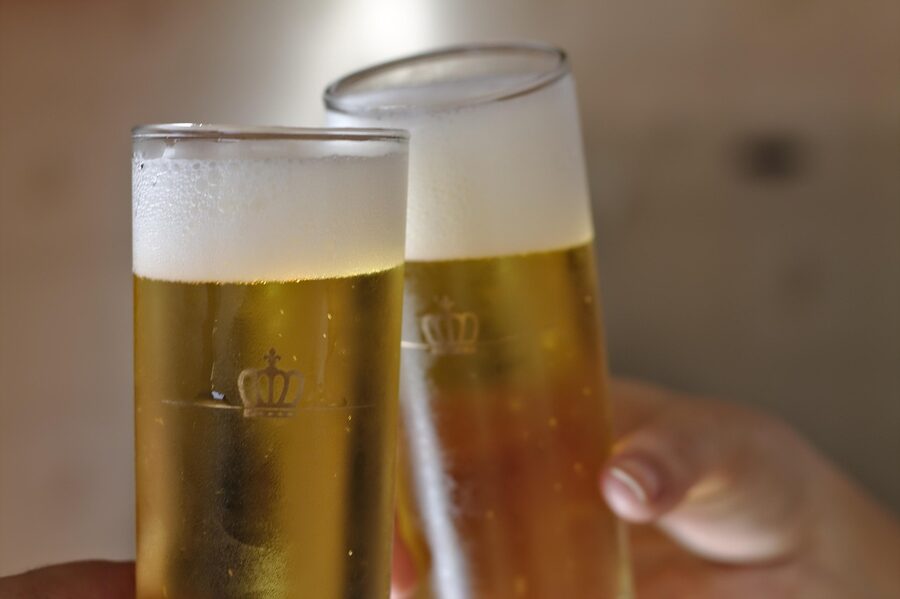
The first round at a Japanese drinking session is usually beer. There’s a near-stock phrase for it, toriaezu biru, which translates roughly to “beer first” or “for now, beer”. Restaurants treat it as a sensible default because everyone gets the same thing, the kitchen pours it fast, and the kanpai can happen within minutes of sitting down. It saves the table from the awkwardness of having mismatched drinks while half the room is still ordering.
This isn’t a rule, just the easiest path. Some tables open with a round of highballs instead, especially in whisky-friendly bars. Others go straight to nihonshu if the place is sake-focused, which is almost universal at Tokyo’s sake bars and at any brewery’s tasting counter. At a winter izakaya I’ve sat down at tables that opened with hot sake (atsukan); at summer ones, with frozen highballs in glass jugs the size of my forearm.
The thing to know as a traveller is that whatever the first round is, you wait until everyone has theirs before kanpai. If your beer arrives and the person across from you is still being served, your beer sits. If your sake hasn’t been poured yet because the bottle is heating in the warmer, the kanpai gets pushed back two minutes. Time the toast to the slowest drink at the table.
For the more involved menu choices, our sake travel guide and the sake-vs-shochu-vs-awamori breakdown cover what to actually order beyond the standard beer. The toast doesn’t change. The order does.
Lower your glass
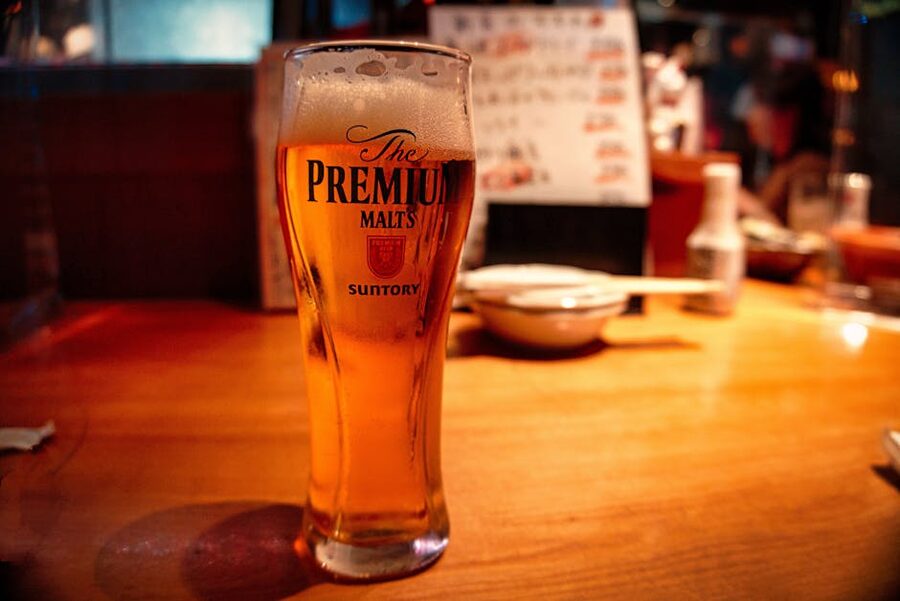
This is the rule that actually catches travellers in business contexts, and it’s almost invisible until somebody points it out. When you’re toasting with a senior, your glass should be at a slightly lower height than theirs at the moment of contact. Same height reads as same rank. If you’re new at the company, the new colleague at the client’s office, or just younger by enough, your glass is the lowest in the room.
The mechanic is small. Hold your beer mug with both hands. As you reach forward to clink with your boss, drop your wrist a centimetre. Their mug touches yours nearer the top, yours nearer the side. They’ve registered the gesture without thinking about it. So have you.
I find this the easiest rule to follow because it gives the body something to do. Without it, my hands wandered. With it, I had a small precise motion to focus on, which kept me from saying something idiotic in Japanese while the toast was happening. A useful side benefit.
Nobody pours their own first drink
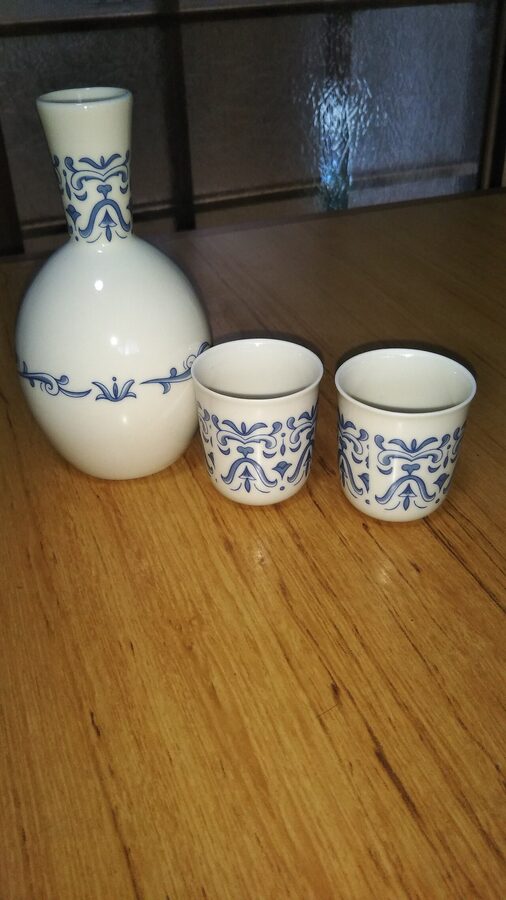

The pouring rule is the second-biggest practical thing to know, and it pays off across every kind of drinking session in Japan. You pour for your neighbour before you pour for yourself. Your neighbour pours for you. Your boss pours for everyone within reach, and then somebody pours for the boss. The chain is the point.
The mechanics: bottle in your right hand, label facing up so the receiver can see what they’re being given. Left hand under the body of the bottle, supporting it. Tilt slowly, finish gently. The receiver lifts their glass with both hands, slightly tipped toward you to make the pour easy. After the pour, take a sip immediately rather than letting it sit. The first sip closes the loop.
If your own glass is empty, don’t fill it. Find a half-empty bottle nearby and offer to pour for someone else. They’ll usually refill yours in return. If absolutely nobody is offering, you can ask quietly: onegaishimasu, or mou ippai onegaishimasu for “one more, please”. Self-pour is fine in casual settings with friends. In business or formal settings it reads as a small failure of attention.
The Japanese phrase for the act of pouring is oshaku. It’s a verb, a relationship, and a low-stakes way to start a conversation with someone you’ve never met. Pour for the colleague across the table, ask a small question while you pour, and the evening has begun.
Otsukaresama: the politer alternative
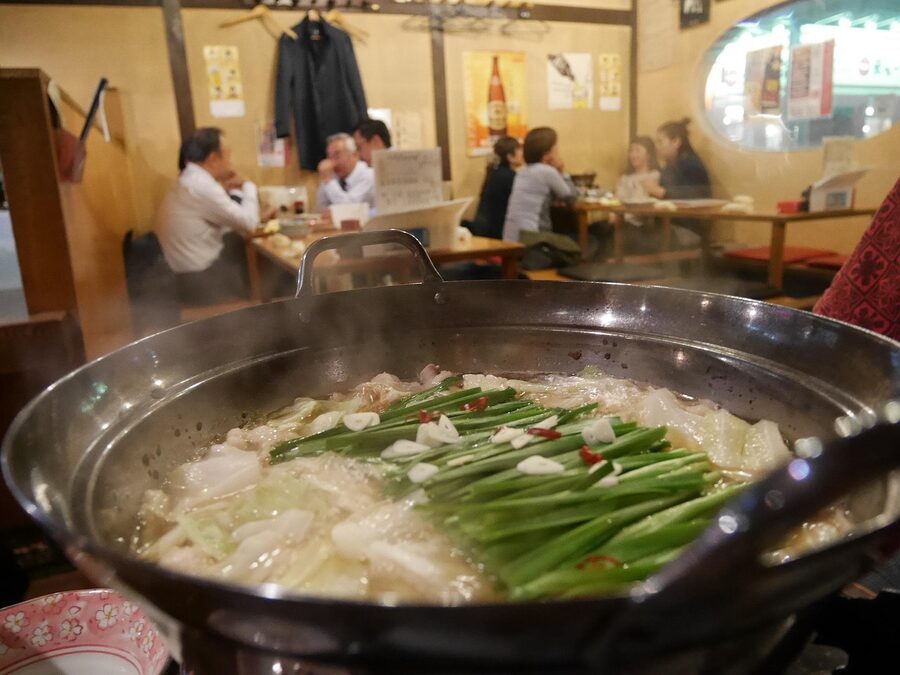
This is the alternative phrase that travellers almost never learn. Otsukare-sama desu, often shortened to otsukare, means roughly “thank you for your hard work, you must be tired”. It’s said at the end of the workday and at the start of after-work drinks. In many business settings the toast becomes otsukare-sama desu, kanpai, the two phrases run together. Or sometimes just otsukare-sama desu is enough on its own.
The phrase carries a register that kanpai alone doesn’t. Kanpai is celebratory, festive, all-ages. Otsukare-sama is acknowledgement. It says: I see that you spent the day doing things, and I see that drinking now is part of recovering from that day. In an office context, especially when there’s any age or rank gap at the table, leading with otsukare-sama shows the kind of attention seniors notice.
For a traveller, you almost never need to use it. But you’ll hear it constantly, and once you can recognise it, the tone of any after-work session in Japan starts making more sense. The bonenkai (year-end work party) and shinkansen-kai (welcoming new staff) both start with otsukare-sama rather than kanpai. By the second drink the word relaxes back to plain kanpai.
Kenpai is not kanpai
Now the one most likely to embarrass. Kenpai, written 献杯, is the toast at funerals and memorial services. The first character means “to offer”. It’s the same shape as kanpai except the gesture stays low, the volume stays quiet, and nobody is celebrating anything. Mistake it for kanpai at a wake and you’ve made a serious error.
Foreign visitors hardly ever attend Japanese funerals, so this is more a piece of vocabulary than a practical risk. But it’s worth knowing because the two words sound almost identical to a Western ear. If you ever hear the word at a hushed gathering with white flowers, you’re at a wake, the toast is kenpai, and the rule is hold the glass low, don’t smile, sip without sound. Walk in confused and saying kanpai would be a memorable mistake. None of the friendly handbooks mention it.
The first sip and what happens after
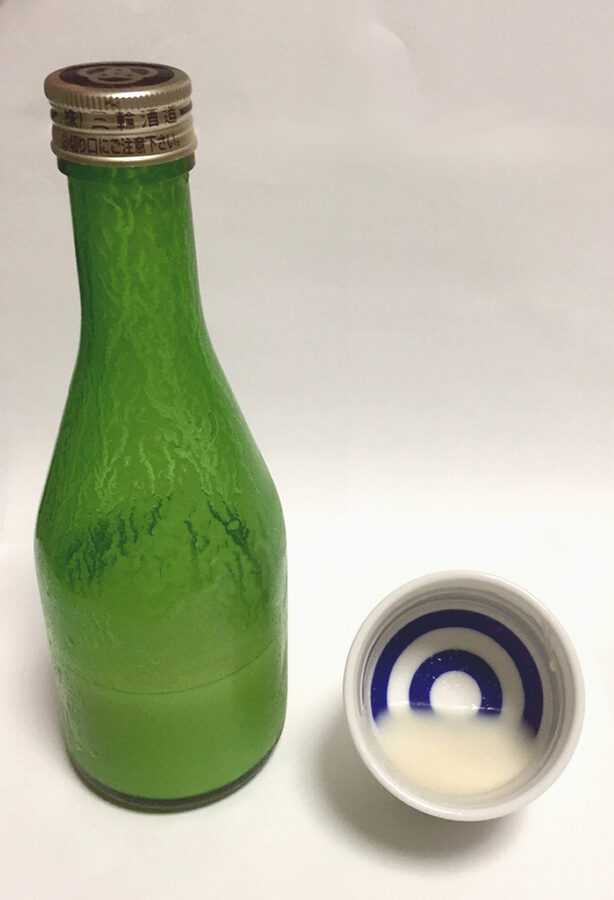

The toast is the start, not the end. After the first sip you’re in the territory of pouring for others, accepting refills, and reading the table. A few small things to know.
The classic instruction for sake says drink the cup in three: a small sip first, a slightly larger middle sip, a small finish. This is loose advice. With a 60-millilitre ochoko it can mean three actual sips, or it can mean letting the cup take twenty minutes. The principle is don’t down it, don’t sit on a full cup forever, and let the cup empty enough that someone can refill it. A guideline I’ve heard at breweries: leave the cup at about a third before you set it down for a top-up.
If you’re being poured for and you don’t want any more, there are two polite signals. Cover the cup or glass with your hand, palm down, gently. Or wait until your cup is still full and gracefully decline the offer of a top-up. Refusing the second pour is fine. Refusing the first pour is awkward unless you’ve explained at the start that you don’t drink alcohol.
Japanese drinking culture is permissive about non-drinkers, contrary to what older English-language sources suggest. A traveller who orders soft drinks or oolong tea throughout the meal is fine in most company. The sticking point is the kanpai itself. You raise something. Tea works. Water mostly works (with a small superstition I’ll mention in a minute). Holding an empty glass is fine if you’re between drinks. The gesture matters more than the liquid.
The water-toast superstition
Worth knowing, even if it sounds odd. There’s a folk belief in Japan that toasting with water is a final farewell, the kind of thing you’d do at a funeral or before a soldier ships out. Older attendees might glance at a guest who toasts with plain water. Younger Japanese will not care. If you don’t drink alcohol, the safer move is to ask for tea, juice, or a non-alcoholic beer (nonaru biru) for the toast specifically, even if you’re nursing water for the rest of the meal. It costs nothing and avoids a small cultural friction.
I’ve toasted with water at casual dinners in Tokyo with no comment. I’ve also seen an older host at a more formal table swap a guest’s water for cold tea before the kanpai. The host wasn’t being officious. He was filling in a small gap in the room. Take it as a kindness if it happens to you.
The kinds of glassware that change the script
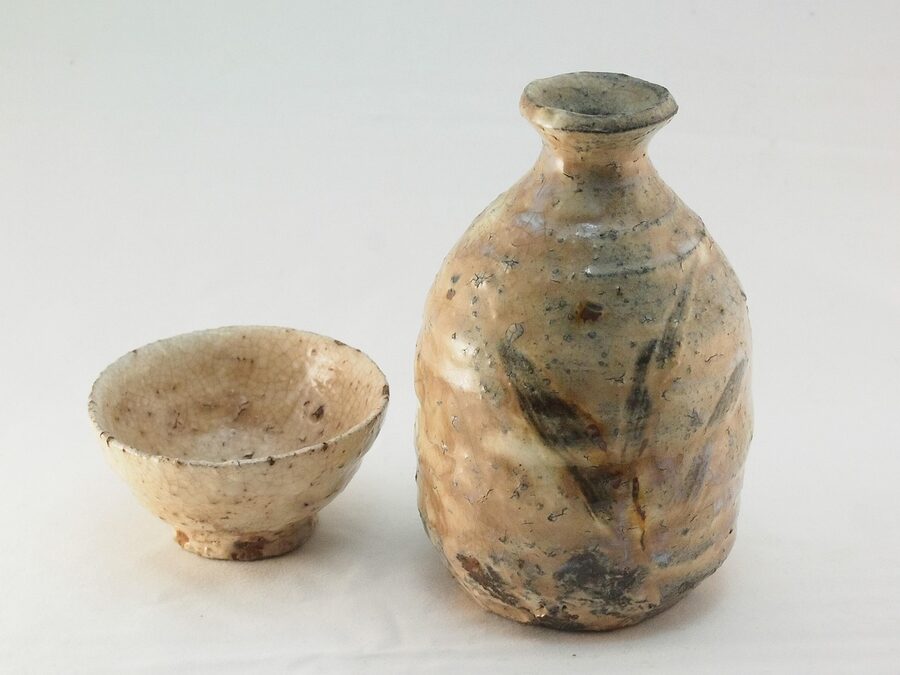
Glass shapes are signals. Walking into a place and clocking the ware is the fastest way to know which kanpai script you’re about to run.
Beer mug. Heavy, glass, you can clink it as hard as you like and the only complaint will be foam. The quickest possible kanpai is here, and the only failure mode is doing it too quietly to be heard.
Highball glass. Most likely a thin rocks glass with a tall pour. Clink lightly. The glass is more delicate than a mug but built for use, so a soft tap is fine.
Chuhai can or plastic cup. Hanami (cherry blossom viewing) and outdoor festivals run on these. Tap them together with abandon. The matsuri (festival) crowd has no formality budget.
Wine glass. Light hand. A nudge of the bowl, not the rim. At restaurants where the somm is doing the pouring you should not clink at all, just lift and meet eyes.
Champagne flute. Lift, eye contact, no clink. Wedding rule.
Sake cup, ochoko or sakazuki. Lift, eye contact, sip. Some breweries with their own bar will do soft taps among the staff during a casual evening; visitors should follow rather than initiate.
Earthenware mug. Coffee shop and certain izakaya use these for shochu mizuwari or oyuwari. Heavy enough to clink, distinctive enough to break. Tap gently if anyone else is. Otherwise lift and bow.
Where you’ll meet kanpai on the road
The phrase shows up at almost every kind of drink session a traveller is likely to walk into. Knowing the script for each context saves you a lot of polite confusion.
At an izakaya
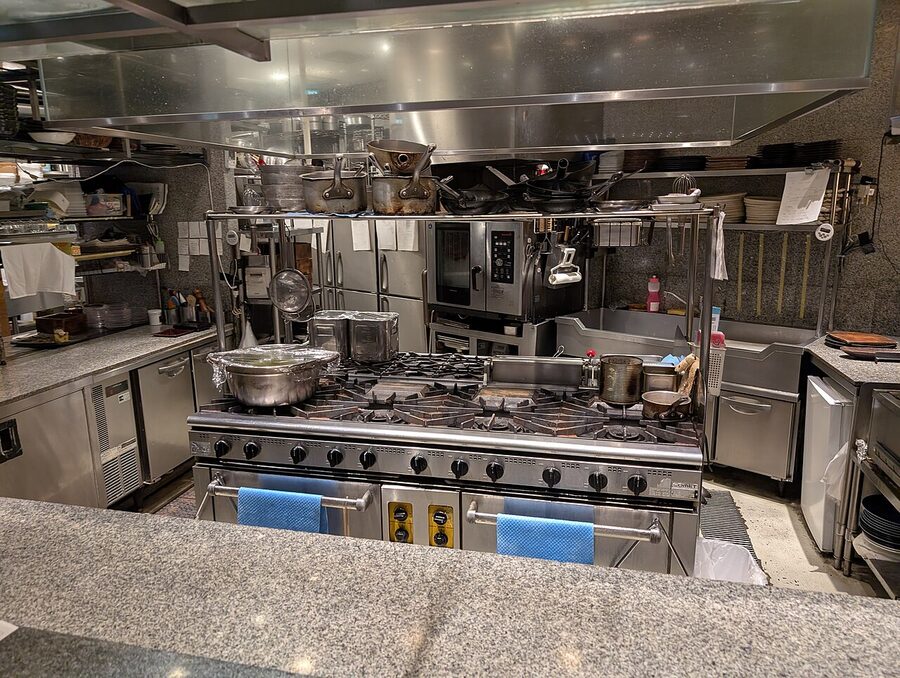
The default. You sit, you order the first beers (or a single round of highballs if the table prefers them), you wait for everyone to have something in front of them, you say kanpai, you clink, you drink. The whole thing takes ten seconds. If somebody’s drink hasn’t arrived yet, you wait. Hard rule. I learned this watching a table of four wait an entire eight minutes for the fourth glass before anyone said the word, and it set the tone of the evening more cleanly than any speech.
For a fuller breakdown of how the rest of the visit goes (ordering, otoshi, pouring sequences, the bill), the izakaya ordering guide has the practical playbook.
At a tachinomi (standing bar)
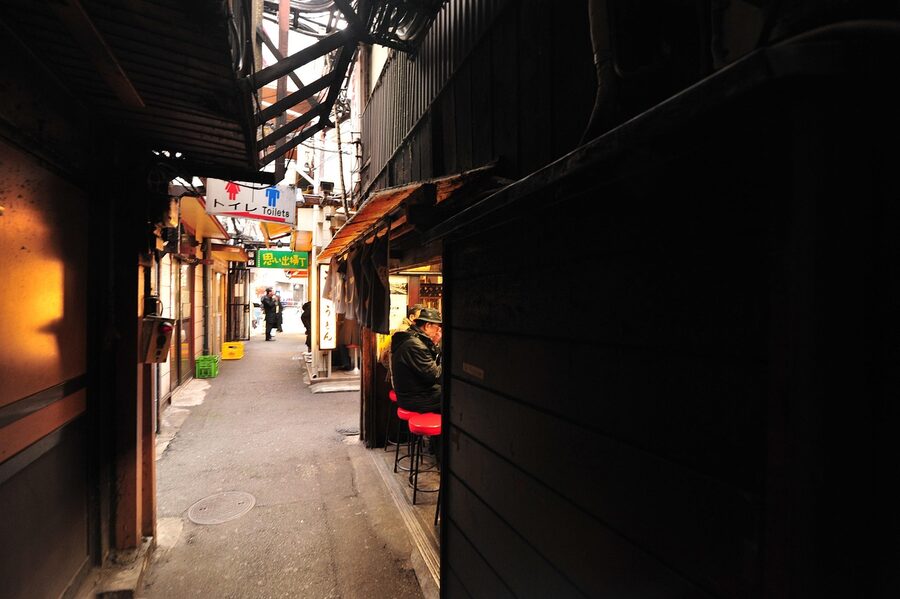
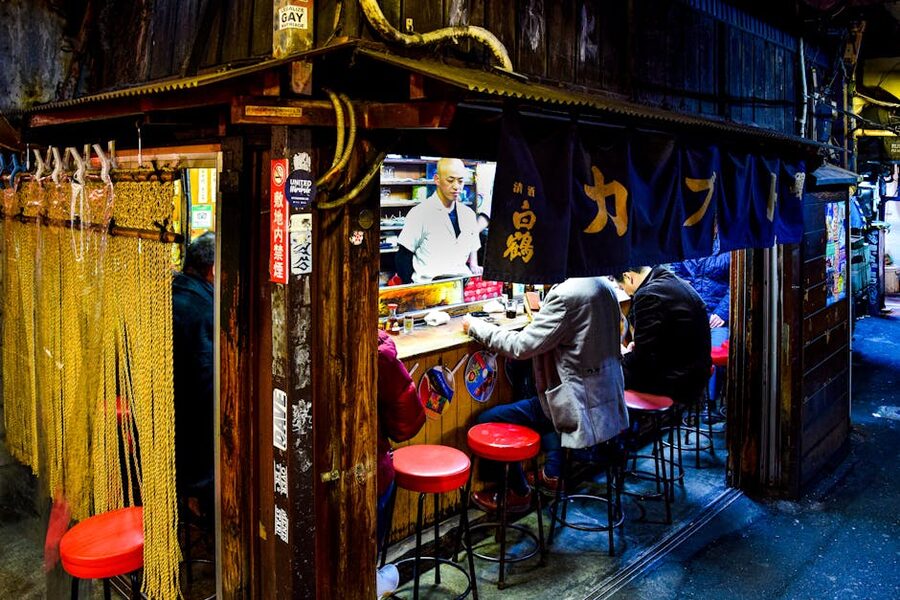
The standing bar runs on its own dial. There’s no table to organise around, no senior to defer to, just whoever’s already at the counter when you walk in. A stranger may turn, lift their glass, and say kanpai to nobody in particular. You raise yours back. The exchange is closer to a head-nod than a ceremony. Tokyo’s tachinomi scene runs almost entirely on this kind of friendly low-grade greeting.
At a sake brewery
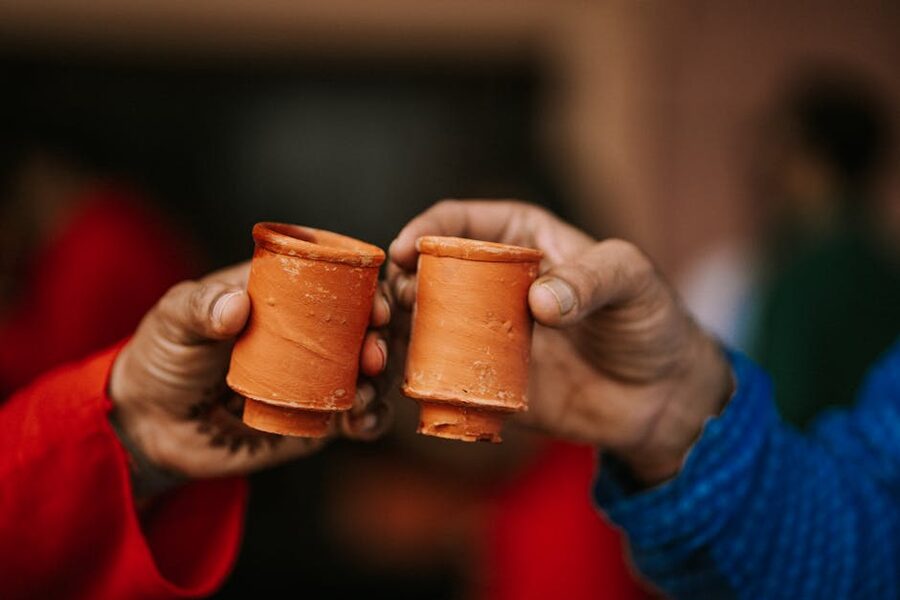
Brewery tasting rooms run more formal than izakaya. The staff pour, the visitors hold the cup with two hands, and the first sip happens after a quiet kanpai with the brewer or the staff member running the tasting. Nobody clinks. The cups are usually too small or too valuable for it. Lift, meet eyes, sip, set down, listen. Sake tasting rooms in particular run with the calm of a tea ceremony.
At hanami (cherry blossom drinking)
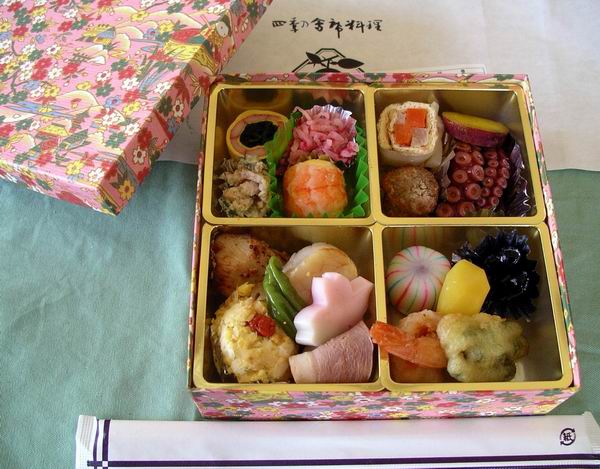

Cherry blossom drinking under a tarp in Ueno or Yoyogi is the loudest, most informal kanpai in the country. People shout it. Strangers from the next tarp join in. Plastic cups crash together. There’s no rank to defer to. There’s no senior glass to drop your own under. It’s the moment Japanese drinking culture lets the brake off, and travellers can join without thinking about etiquette beyond not falling backwards into someone else’s lunch. The tarp is the whole rule.
At a wedding or banquet
Already covered in the opening. Lift, eye level, no clink. The senior or master of ceremonies times the toast. You wait until your assigned table is full and the speeches have ended. The first sip of champagne or sake then happens together. Applaud after.
At a bonenkai or shinnenkai
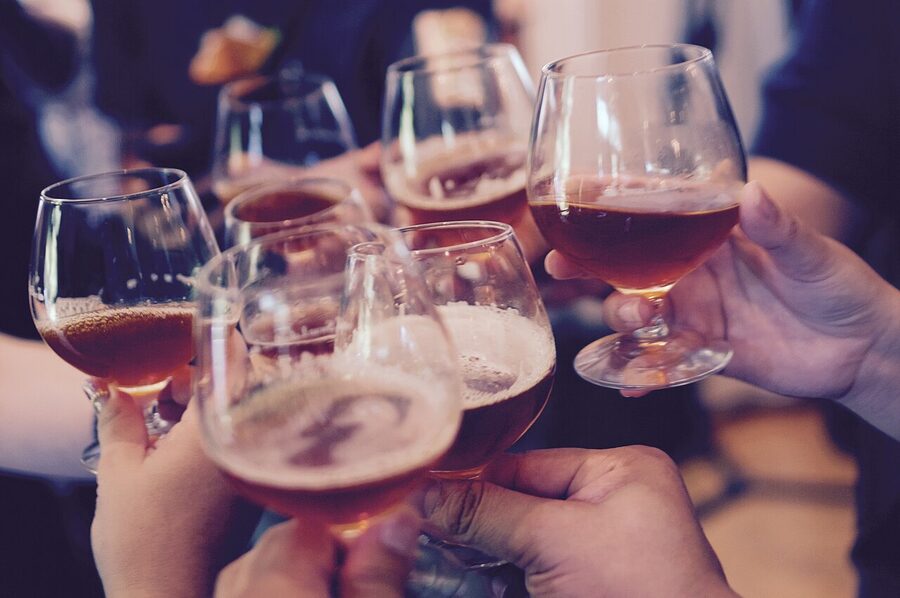
The end-of-year and start-of-year corporate parties are the heaviest formal toast a typical traveller might be invited to. A senior gives a short speech (sometimes a long speech), the room raises glasses to eye level, says kanpai, sips, applauds. After that the rules relax. By the third drink the table is in row-one mode, with junior staff pouring for seniors, seniors pouring back, and the room reorganising as people stand up to greet other tables. The reset is part of the design.
At a sushi counter
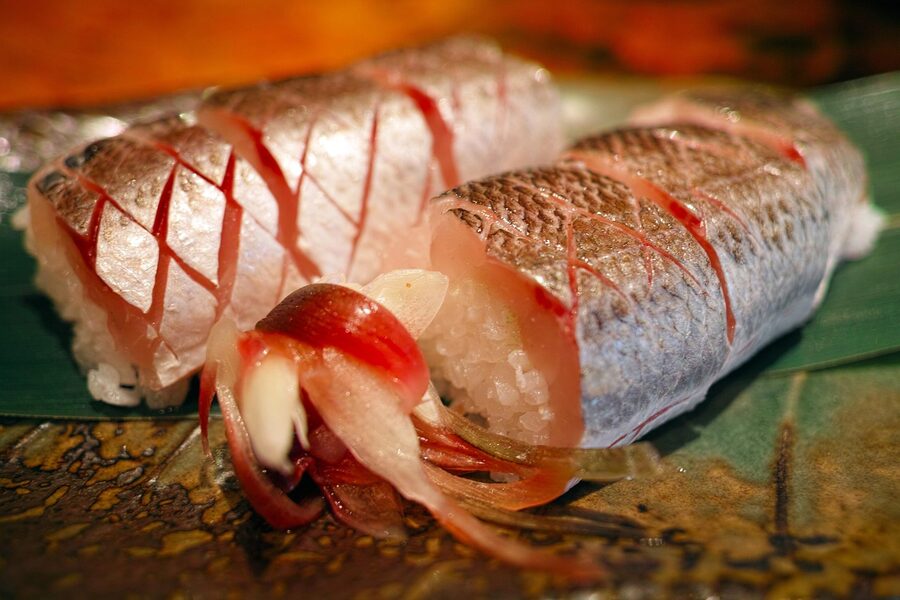
Counter sushi in Japan plays the toast quietly. Two people on a couple of stools, one beer between them, the chef’s eyes tracking what comes next. You meet glasses gently, sip, set down. The chef sometimes pours himself a small cup at the back of the bar and joins, which is one of the better unscripted moments in a Japanese meal. There’s a whole separate piece on pairing sake with sushi; for the toast itself, treat the counter like a small intimate kaiseki. No rim-clink. The sushi-shop ware tends to be the proprietor’s pride, which is reason enough.
At a kakuuchi
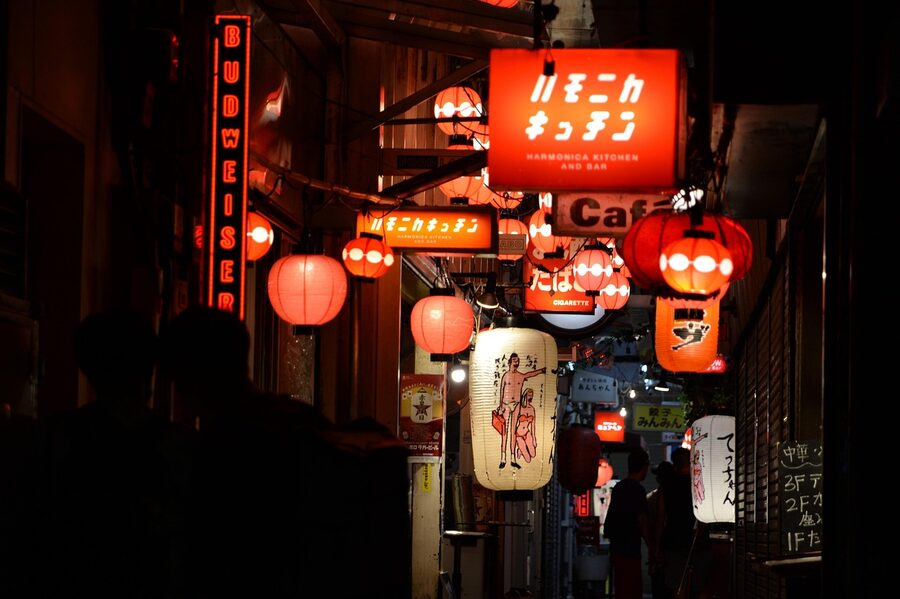
The kakuuchi is a Japanese phenomenon worth its own visit. A liquor shop with a corner of standing space, a single shelf, and customers paying retail prices for in-store drinking. The kanpai there is the most casual in the country. You buy your one cup of sake, you stand at the counter, you raise it to nobody in particular, and somebody usually raises theirs back. The whole transaction takes about twelve minutes from walking in to walking out. It’s the kanpai for a working person on the way home, and the etiquette barely exists beyond don’t be a creep and don’t take up too much space.
At an onsen ryokan
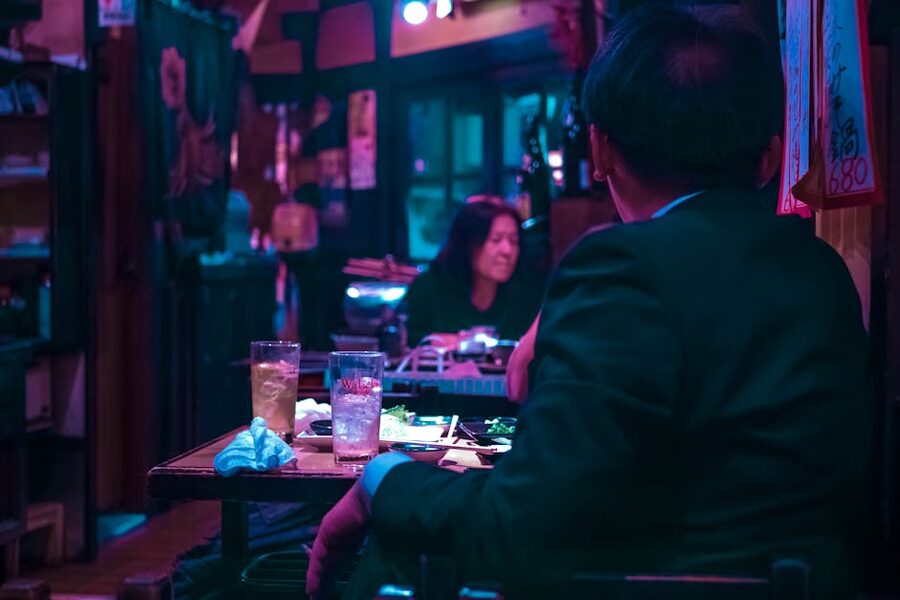
If you’ve stayed at a ryokan with a kaiseki meal, you’ve probably been through this without realising it was a kanpai at all. The host or the okami often pours the first cup of sake themselves, you raise the cup gently, exchange a small bow, and sip. There’s no clink because there’s almost never glass on the table; you’re holding ceramic. The whole evening sits in row three of the table above. The onsen drinking guide covers the wider etiquette of drinking around hot-spring inns, which is its own quiet tradition.
On the shinkansen
The shinkansen kanpai is its own micro-genre. A pair of friends, two cans of sapporo, a vibrating tray table at 280 km/h. The toast is a quick clink and a quiet word. The conductor doesn’t mind. The neighbours mostly don’t notice. The shinkansen drinking guide goes deeper into the etiquette of train drinking, but the kanpai itself is just a softened version of the casual one.
Kanpai when you’re drinking alone
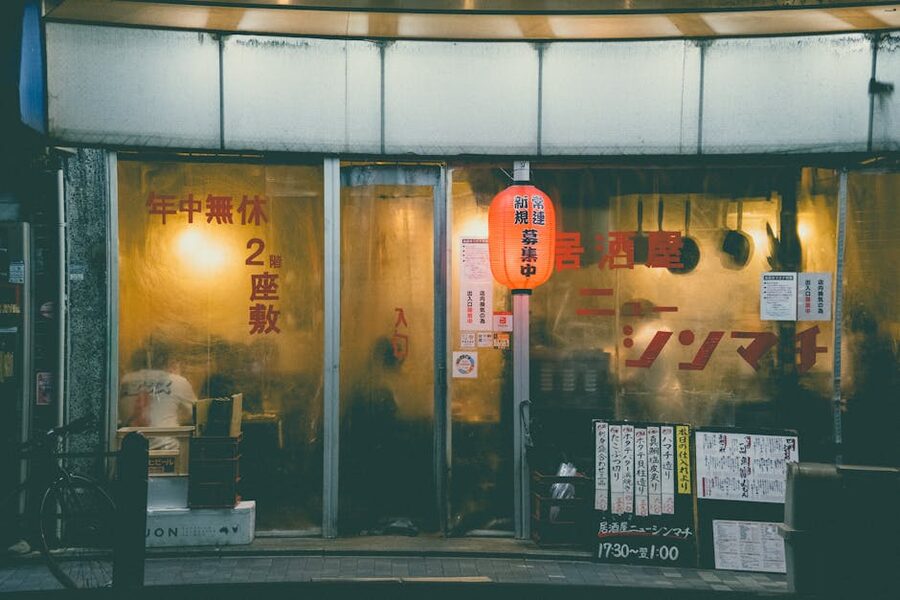
Solo travellers in Japan run into the kanpai question in a different way: who do you toast with when you’re sitting at the counter alone? The honest answer is that you don’t have to. Lifting your beer and just drinking is fine. But there are two soft conventions worth knowing.
First, if the proprietor pours your drink, a small lift of the glass and a quiet kanpai back at them is graceful. They’ll often nod or even pour themselves a quick cup to match yours. Second, if you’re at a counter with regulars, somebody will often invite you in with a glass-lift across the bar after you’ve been there a while. The toast is the door opener. Solo women drinking in Japan in particular often find that this small lifted-glass exchange shifts a counter from “tourist alone” to “guest at the bar”. A small thing, with disproportionate effect.
The otoso New Year toast and other seasonal variants
.jpg)
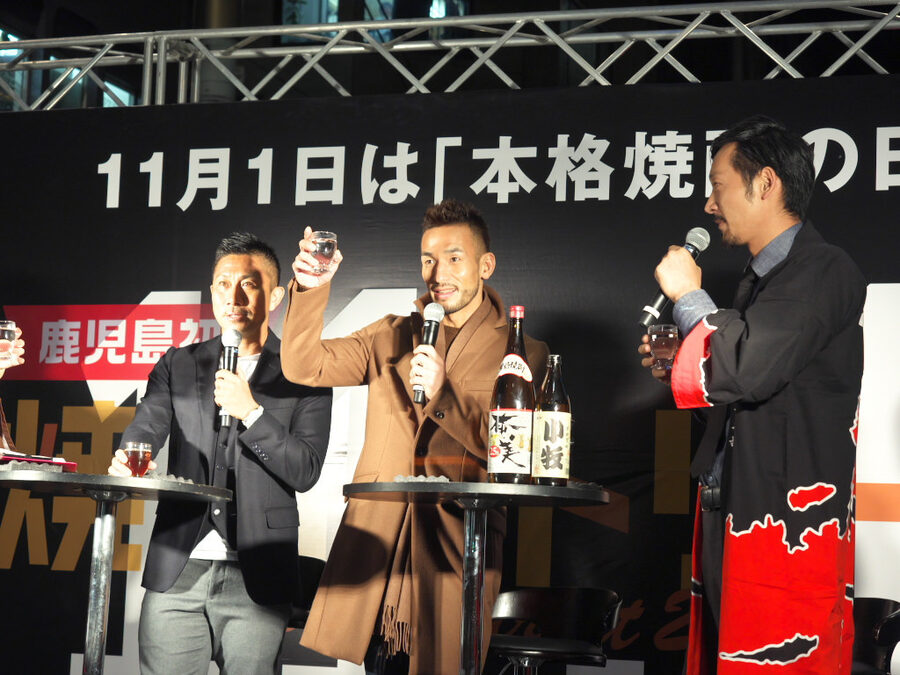
Some seasonal occasions have their own twist on the toast. New Year is the obvious one. The first sake of the new year is traditionally otoso, a spiced medicinal sake that hasn’t been brewed for taste so much as for ceremony. The toast around it is closer to a family ritual than a cheer, and three generations might share three sips from the same cup before anyone says kanpai at the family table. The otoso New Year guide covers the full ceremony.
Hanami in spring relaxes everything I’ve said about formality. Beer festivals in summer hand you a paper cup and you toast whoever’s nearby. Bonenkai in late December run heavy on sake and a slightly subdued otsukare mood, since they’re closing out the work year. Each context shifts the kanpai by a notch. The traveller’s job is to read which notch is operating.
Why younger Japanese drinkers say kanpai less
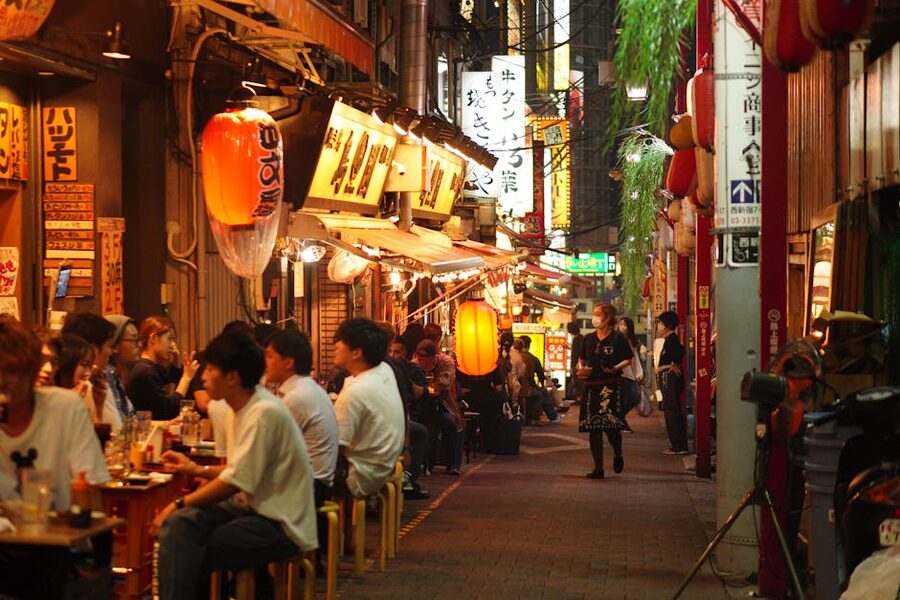
One thing that has shifted in the last decade: among younger Japanese drinkers, the formal kanpai has loosened. You’ll hear table-toasts in English (“Happy Friday”, “Merry Christmas”), in Japanese seasonal phrases (yorokoshiku, tanoshiku), or just a smile and a clink with no word at all. The senior-respect mechanics still apply in business contexts, but at a Friday-night izakaya with a group of twenty-somethings you’re allowed to be casual.
This matters because guidebooks tend to over-describe the formality. They make it sound like every table in Japan runs a microscope over its glass-heights. Most don’t. Most kanpai in Japan is closer to a happy social pause than a ceremony. The depth of the rules is real, but the depth shows up at the edges, not the centre.
What you actually want to remember
If you came here for the short version, here it is.
- Wait for kanpai before you sip. Always. Even if you’re parched.
- Beer mug, plastic cup, casual setting: clink lightly.
- Champagne flute, wine glass, ceramic ware, formal setting: lift, eye contact, no clink.
- If a senior is at the table, your glass is lower than theirs at the moment of contact.
- Pour for others before you pour for yourself.
- Use both hands when receiving a pour.
- Right hand on the bottle’s body, left hand under it, label up, when pouring.
- If you don’t drink, ask for tea or juice and toast normally. Plain water has a small superstition attached.
- At funerals or wakes, the word is kenpai, not kanpai. Quiet, low glass, no smiles.
- In a long drinking session, sip rather than down a sake ochoko. Down a beer mug if you want.
What I learned from getting it wrong
The wedding clink stuck with me longer than it should have. For a few weeks afterwards I was overcautious, lifting my beer mug like a sakazuki at hanami, getting laughed at by friends. Then it settled. The pattern is mostly common sense once you’ve read the room a few times. Heavy mug, casual? Clink. Delicate ware, anyone with grey hair at the table? Don’t.
The deeper thing kanpai taught me is that Japanese drinking culture treats the moment of starting as part of the meal. The collective pause before the first sip isn’t theatre. It’s a way of saying: we’re here, all of us, and the next two hours start now. The clink, when it happens, is the punctuation. When it doesn’t happen, the bow is the punctuation. Either way the room agrees together that the evening has begun.
It’s the opposite of the Western reflex, which is to grab the drink and start sipping the moment it lands. Two ways of doing the same thing. The Japanese version takes ten seconds longer and gathers the table into one shared opening. After enough rounds, you stop noticing it’s a rule. You just notice when you’re in a room of people who have forgotten it, and how it feels different.
The next time you raise a glass at a table in Japan, you’ll know exactly which version of kanpai is running. Get the gesture right and the word looks after itself.
 Drinking CultureKonbini Drinks Are a Whole Trip StrategyJapan has roughly 56,000 convenience stores. That's more outlets than McDonald's has worldwide, and the country sells about a third…
 Drinking CultureOtoso, Bonenkai, and the Hush of ShogatsuThe first person to write the recipe for otoso was a third-century Chinese physician named Hua Tuo, and he wrote…
 Drinking CultureIs Drinking Alone in Japan Awkward as a Woman?Is drinking alone in Japan awkward as a woman? I asked myself that on the bullet train to Tokyo with…