
Japan has roughly 56,000 convenience stores. That’s more outlets than McDonald’s has worldwide, and the country sells about a third of the world’s 7-Eleven coffees out of them. The drinks fridge in any one of them runs four metres long, stocks more than a hundred SKUs, and rotates seasonal flavours in and out about as fast as a department-store food hall.
Which means that for a traveller, the konbini drinks aisle is not a fallback. It’s a strategy. You can shape an entire day around it: hangover recovery at 07:30, a hot canned coffee on the platform at 09:15, ice-cold barley tea after a temple climb at 13:00, a chu-hi to nurse on a park bench at 18:00, hot sake out of the heated cabinet on the way back to the ryokan at 22:45. None of this requires you to step into a single restaurant.

This guide is the pour-by-pour version of that day. I cover the alcoholic side at length because that’s why a drinks-focused site is writing about konbini in the first place, but you’ll get just as much practical use out of the non-alcoholic half. Both halves are the same shelf.
In This Article
- The chains, and why which one matters less than you think
- What’s actually different chain-to-chain
- The fact you’ll keep noticing: how much shelf space drinks get
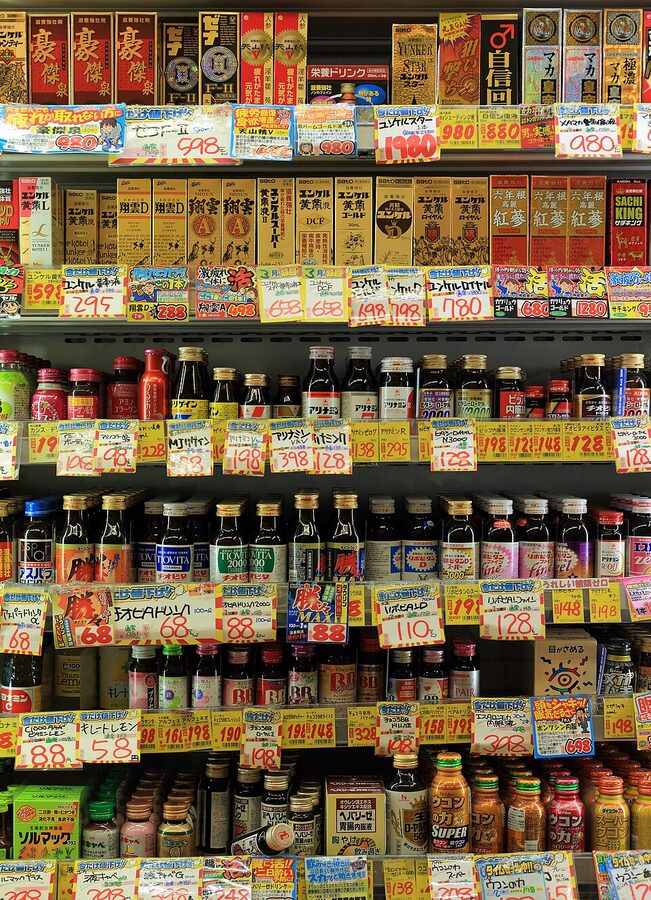
- The non-alcoholic shelf, in the order I actually use it
- Green tea, cold and unsweetened
- Barley tea (mugicha) for hot weather
- Pocari Sweat and the rehydration shelf
- Canned coffee, Japan’s national drink
- Hot drinks in winter, the heated cabinet
- The counter coffee, separately
- The alcohol shelf, walked top to bottom
- Chu-hi: the category that runs the whole shelf
- Beer: the reliable middle of the fridge
- Highball: whisky and soda in a 350ml can
- Sake at the konbini, and why you shouldn’t dismiss it
- Wine, shochu, and the rest
- Pairings: the konbini meal that costs ¥800
- Seasonal and regional notes
- Spring
- Summer
- Autumn
- Winter
- By region
- Practical things to know
- Where you can drink it
- The takeaway question, am I allowed to walk out with an open beer?
- Payment, and the IC card thing
- Recycling
- One-line answers to the questions you’re going to have
- What I actually buy on a typical Japan trip
The chains, and why which one matters less than you think
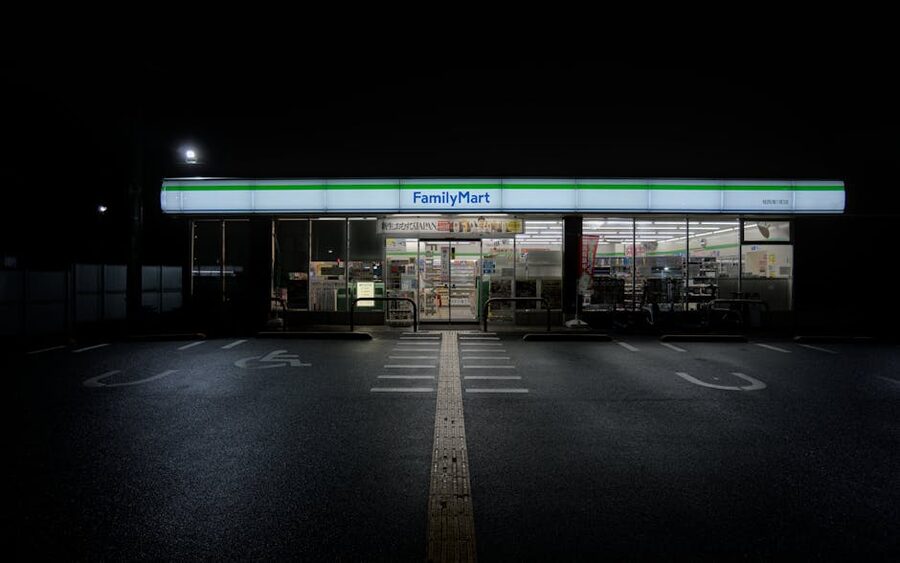
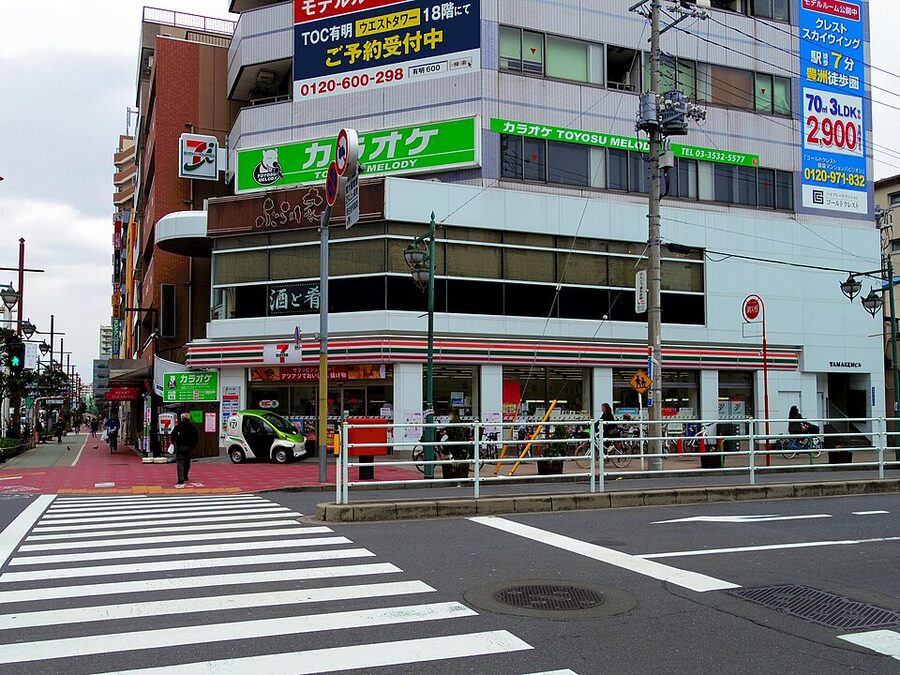
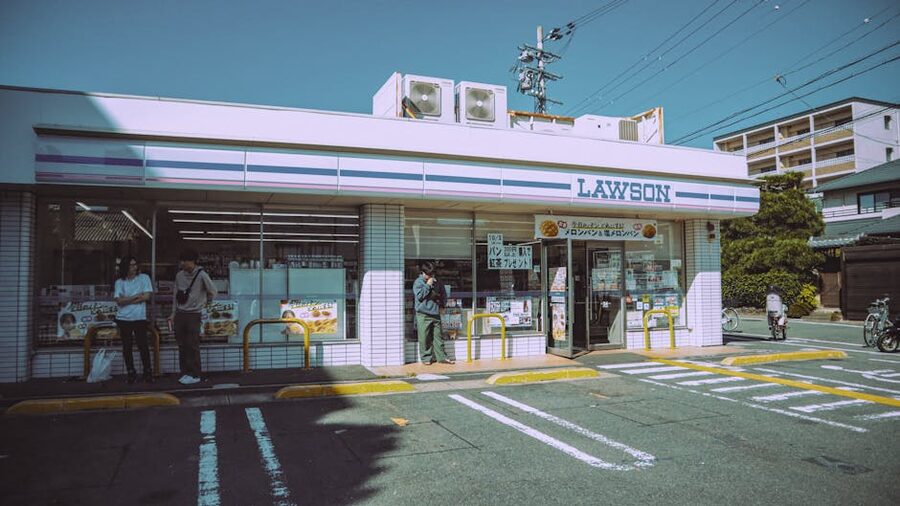
You’ll see three big logos almost everywhere: 7-Eleven (the navy, red, and orange stripes), FamilyMart (green and blue), Lawson (the white-on-blue milk-bottle logo from a Cleveland dairy that closed in 1985 in the US and now exists almost entirely as a Japanese chain). 7-Eleven has the most stores, FamilyMart has the second most, Lawson the third.

The drinks selection at all three is more than 90% identical. Suntory, Asahi, Kirin, Sapporo, Coca-Cola, Itoen and a few smaller players supply almost everything you’ll see, and they supply all three chains the same way. Where the chains diverge: 7-Eleven runs a wider own-brand range under the Seven Premium label, including a few drinkable own-brand wines and a decent shochu. FamilyMart leans hardest on the hot drinks counter and has the most aggressive seasonal-flavour push on chu-hi. Lawson has the best private-label drip coffee and a tighter selection of cold sake in the chiller.
What’s actually different chain-to-chain
| Chain | Strongest drinks pick | Skip-this | Best for |
|---|---|---|---|
| 7-Eleven | Seven Premium own-brand sake cup, drip coffee at the counter, wider chiller wine | Their hot-drinks cabinet (smaller than the others) | The morning grab. Best coffee, best onigiri pairing. |
| FamilyMart | Famima Cafe lattes, Asahi chu-hi exclusives, hot canned coffee in winter | Anything labelled “Famichicki” if you’re vegetarian | Late-night hot drinks. The cabinet is enormous. |
| Lawson | Machi Cafe coffee, the cold sake chiller, Premium Roll cake to pair with it | Their canned tea range is thinner than 7-Eleven’s | Cold sake, late evening. Best for a hotel-room nightcap. |
| Mini-stops, NewDays (station kiosks), Daily Yamazaki | NewDays at JR stations have the best on-platform sake selection | Tiny chains have inconsistent stock, sometimes no chu-hi at all | Train travel only. Don’t go out of your way. |
Pricing is regulated tightly enough that the same can of Asahi Super Dry will cost the same to within ten yen between any of the three. Don’t shop around for price. Shop around for whichever konbini happens to be closest to where you already are.
The fact you’ll keep noticing: how much shelf space drinks get
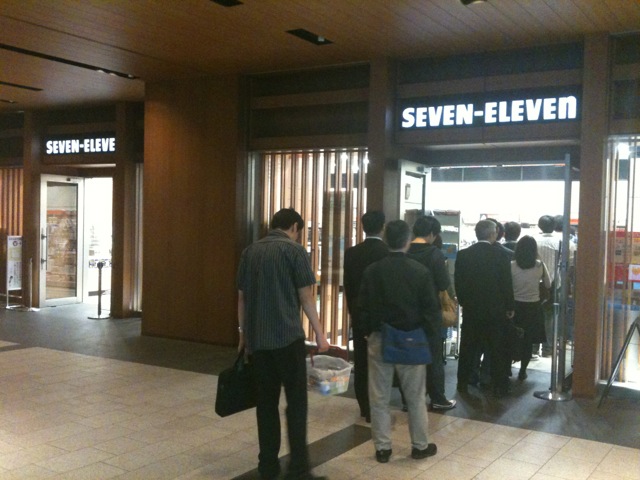

Walk into any branch and roughly a third of the floor is drinks. There’s the long open chiller wall on one side, a heated cabinet for hot canned drinks somewhere near the door in winter, the alcohol section at the back, the dairy section beside it, and a coffee machine at the counter. That ratio is not an accident. Konbini are designed around drink-and-snack purchases, not weekly groceries, and the average customer spends about three minutes in the shop. The drinks cabinet is right where you can see it the moment you walk in.
For a traveller this layout means you can usually scan and pick a drink without fully entering the store, and you won’t queue more than two minutes even at peak times. It also means the staff don’t blink at someone who walks in just for one drink. Convenience is the entire point of the format.
The non-alcoholic shelf, in the order I actually use it
Skip the imported sodas. Japan has a hundred-year domestic drinks industry that does softer, less sweet, and more interesting things than Coca-Cola does globally, and the konbini chiller is where you sample it.
Green tea, cold and unsweetened
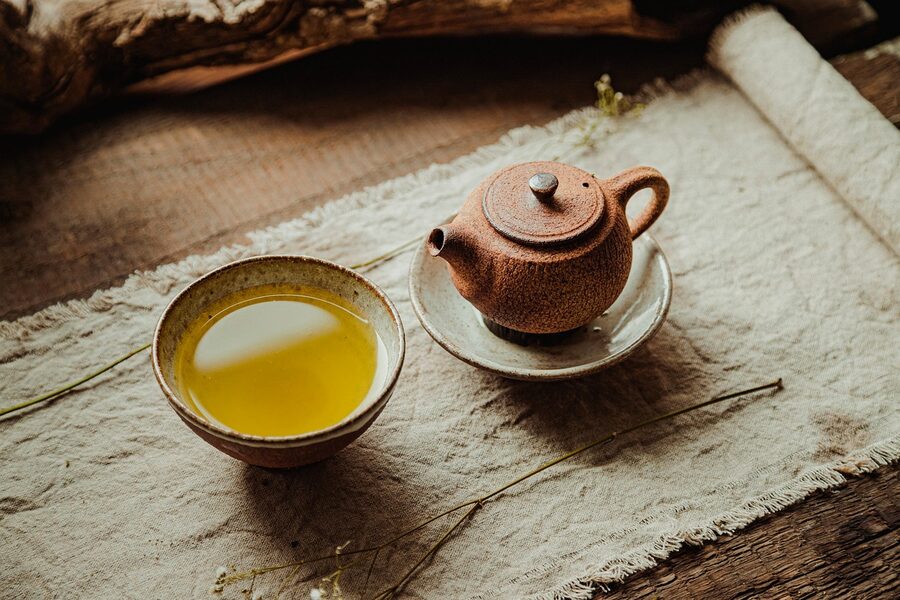
This is the single drink I buy more of than any other when I’m travelling here. Itoen’s Oi Ocha (in the green PET bottle, around ¥160 for 525ml) is the bestseller and the safest choice. Suntory’s Iyemon and Kirin’s Namacha sit beside it in slightly differently-balanced versions. They’re all unsweetened, all served chilled, all between 10–25kcal a bottle, and all rotate through seasonal blends, first flush in spring, hojicha-blend versions in autumn, deep-roast in winter.
If your palate is calibrated to American or European bottled drinks you’ll find the first sip startlingly bitter. Give it three or four sips and the sugar craving disappears. By day three of a Japan trip you won’t want anything sweeter again.
Barley tea (mugicha) for hot weather
From May through September the chiller fills up with one-litre bottles of mugicha, roasted barley tea, served cold, no caffeine, no calories, faintly nutty, profoundly hydrating. This is what Japanese households drink instead of water in summer, and the konbini stocks it in 600ml and 2-litre formats from Itoen, Suntory, and the in-house brands. About ¥120 for 600ml. Pour it over the ice in your hotel-room ice bucket if you want a long drink that isn’t a chu-hi.
You’ll see houji-cha (roasted green tea) in the same chiller in cooler months. Same calorie profile, deeper flavour, less astringent than green tea.
Pocari Sweat and the rehydration shelf
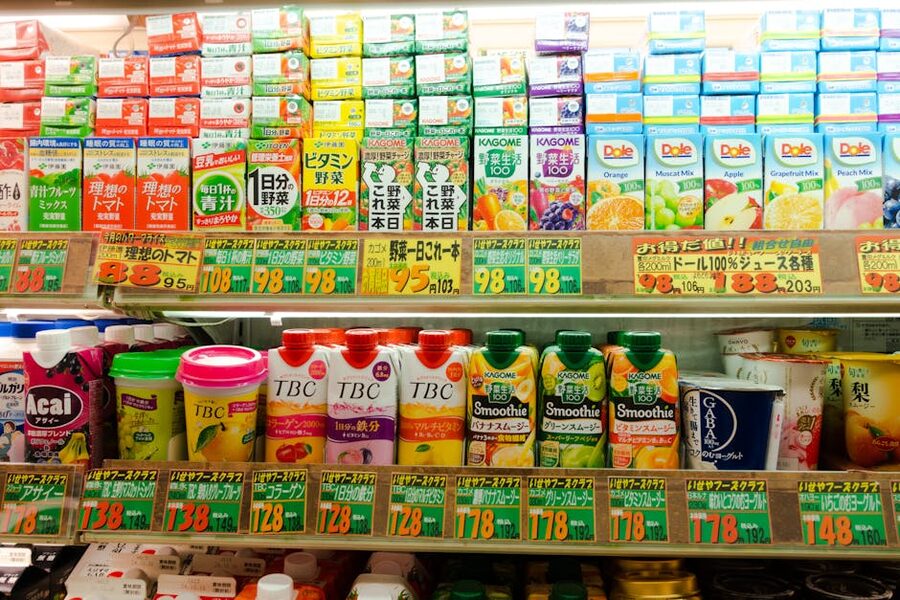
If your itinerary includes any of: a long-haul flight in, summer humidity, a hangover, an onsen visit, or a temple climb in July, you’re going to want one of these. Pocari Sweat (the iconic blue-and-white can or PET bottle, ¥130–160) is an isotonic drink developed by Otsuka Pharmaceutical in 1980 to replicate medical drips. It tastes like grapefruit-flavoured saline, and it works better than water for actual rehydration.
The category is called “sports drink” in Japanese (supotsu dorinku), and Pocari has serious competitors: Aquarius (Coca-Cola Japan, slightly less salty, more citrus), DAKARA (Suntory, leaner, less sweet), Amino Value (more amino-acid loaded). For a hangover I’d go Pocari every time. For straight hydration on a hot day, Aquarius is gentler. There’s also a powder version sold in five-stick boxes you can mix into hotel-room water if you want to plan ahead.
Sitting beside the sports drinks you’ll find a row of small brown glass bottles that look medicinal, that’s because they basically are. Eiyo dorinku (energy drinks like Lipovitan D, Oronamin C) are the spiritual ancestor of Red Bull, started in Japan in 1962, and contain caffeine plus B vitamins plus various herbal extracts. They cost ¥100–200 a bottle and are commonly drunk straight before a hangover. Whether they actually work depends on what you believe. They certainly taste like medicine.
Canned coffee, Japan’s national drink
.jpg)
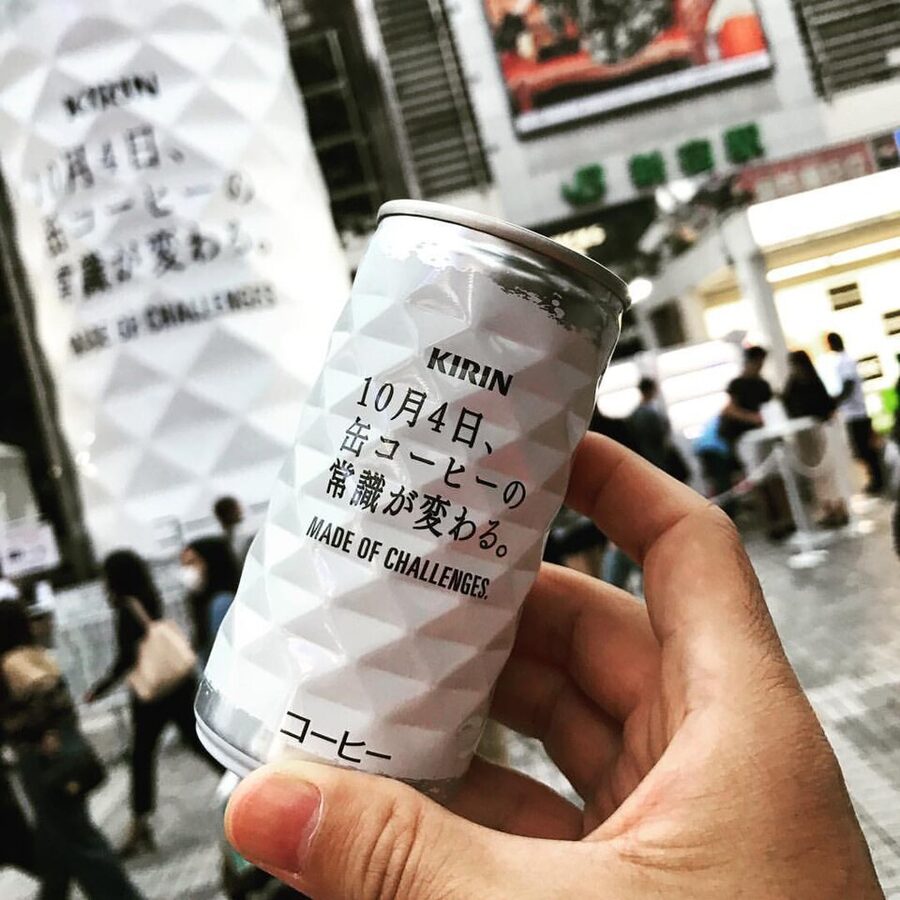
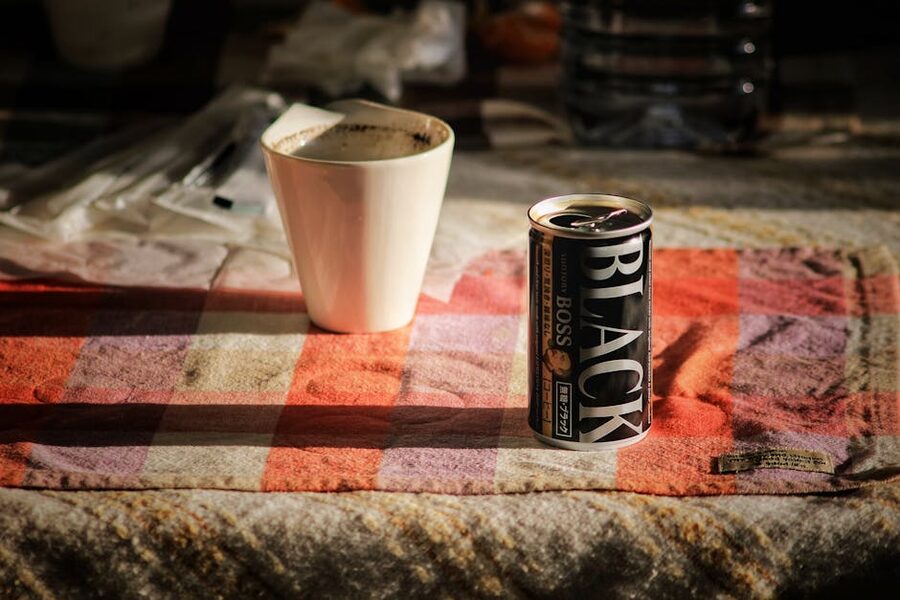
Suntory BOSS, Asahi Wonda, Kirin Fire, Pokka Sapporo. The big four. Each runs about a dozen sub-variants, black, slightly sweet, milky-sweet, full-on cafe-au-lait, espresso strength, double sugar. The whole genre exists on a sweetness curve, and you read the can like a wine label: “甘くない” (not sweet) on a black can means actually black; “微糖” (microsugar) means slightly sweetened; “カフェオレ” (cafe au lait) is full milk-and-sugar territory.
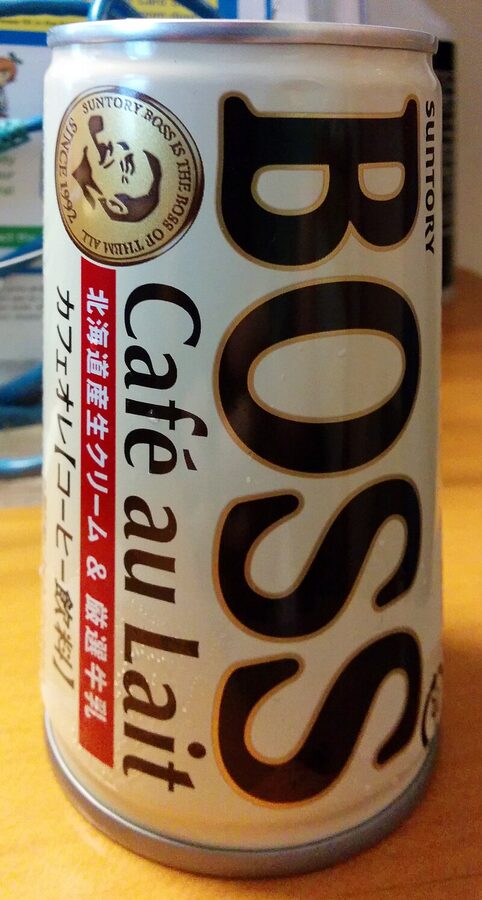

If you want espresso-equivalent strength go Suntory BOSS Black or Asahi Wonda Morning Shot. If you want a creamy commute-coffee go BOSS Cafe au Lait, Wonda Kafeore, or any Kirin Fire. Around ¥130–160 a 185ml can. The can is small because Japanese canned coffee assumes you’re drinking it in one sitting, not nursing it for an hour.
Hot drinks in winter, the heated cabinet
.jpg)
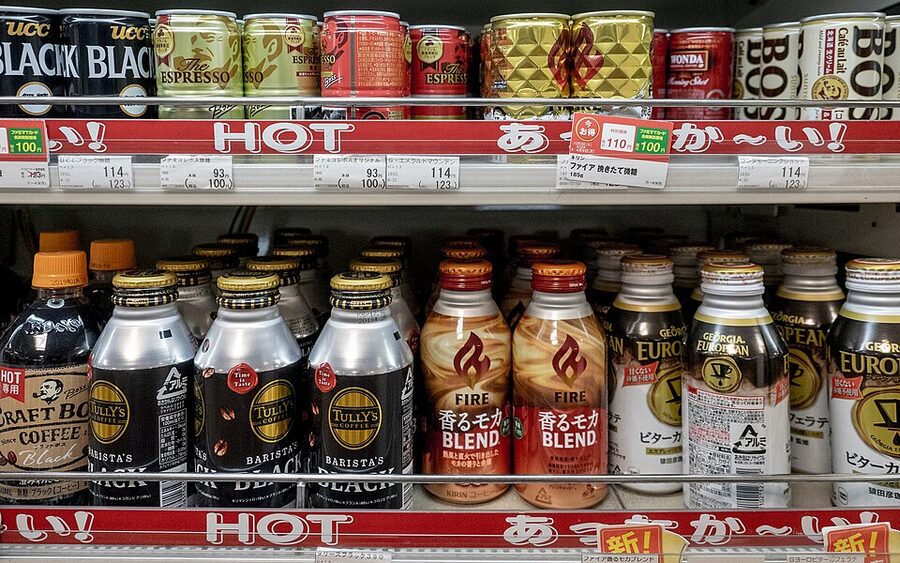
Roughly from November through March every konbini wheels out a heated cabinet, usually a freestanding glass case with red lighting near the front of the shop. Inside: hot cans of coffee, the same ones from the chiller, plus genmaicha (brown rice tea), shoga-yu (ginger water), and corn-soup-in-a-can which is genuinely good if you’re cold and hungry at a station and don’t want to sit down for a meal. The cans come out at about 55 to 60 degrees Celsius, so cradle them in your hands first before drinking.
This is also where you’ll find atsukan in late winter, pre-warmed one-cup sake. I’ll come back to that. But the same cabinet stocks the non-alcoholic side, and the corn soup is a sleeper pick after a long cold walk.
The counter coffee, separately
Don’t ignore the ¥110 drip coffee at the counter. Each chain has its own brand, Seven Cafe at 7-Eleven, Famima Cafe at FamilyMart, Machi Cafe at Lawson, and all three are markedly better than the canned versions. You order at the till, the staff hands you a paper cup with a barcode-printed lid, you take it to a machine on the side and press the button matching what you ordered. The output is an actual fresh-brewed drip cup, not instant.
Lawson’s Machi Cafe is widely regarded as the best of the three among Japanese coffee writers, with 7-Eleven a close second. FamilyMart’s lattes are stronger than the espresso shots in chains like Doutor and Tully’s, which is faint praise but useful information.
The alcohol shelf, walked top to bottom
.jpg)
Almost every konbini in Japan sells alcohol, and they sell it the same way they sell everything else: chilled, single-serving, branded so heavily that you can read the can like a menu. ID checks happen at the till, you may be asked to tap a touchscreen confirming you’re 20 or older. They almost never check tourist passports. The legal drinking age is 20.
You can also drink in public almost anywhere. Trains, parks, station benches, the riverside, there’s no street-drinking ban, and the cultural code is “be quiet about it”. A can of beer on a Tokyo park bench at 18:00 is unremarkable. The same can outside a residential building at 02:00 is a different story; respect the volume.
Chu-hi: the category that runs the whole shelf
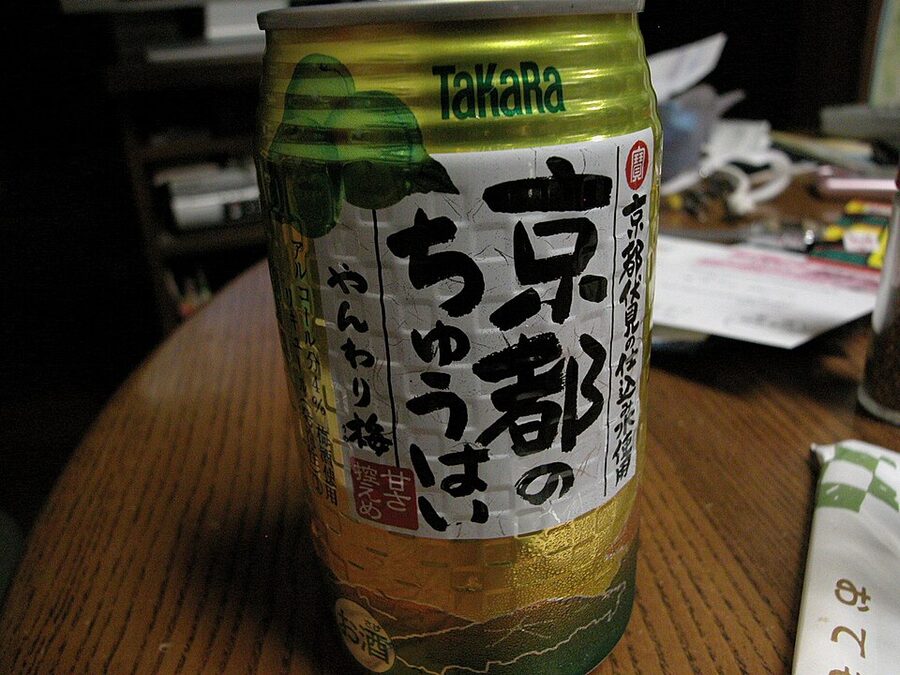
The largest section of the alcohol fridge by volume isn’t beer. It’s chu-hi (チューハイ), short for “shochu highball”, though almost none of it is actually made with shochu anymore. Modern canned chu-hi is fruit-flavoured carbonated alcohol, usually vodka-based, ranging from 3% to 9% ABV.
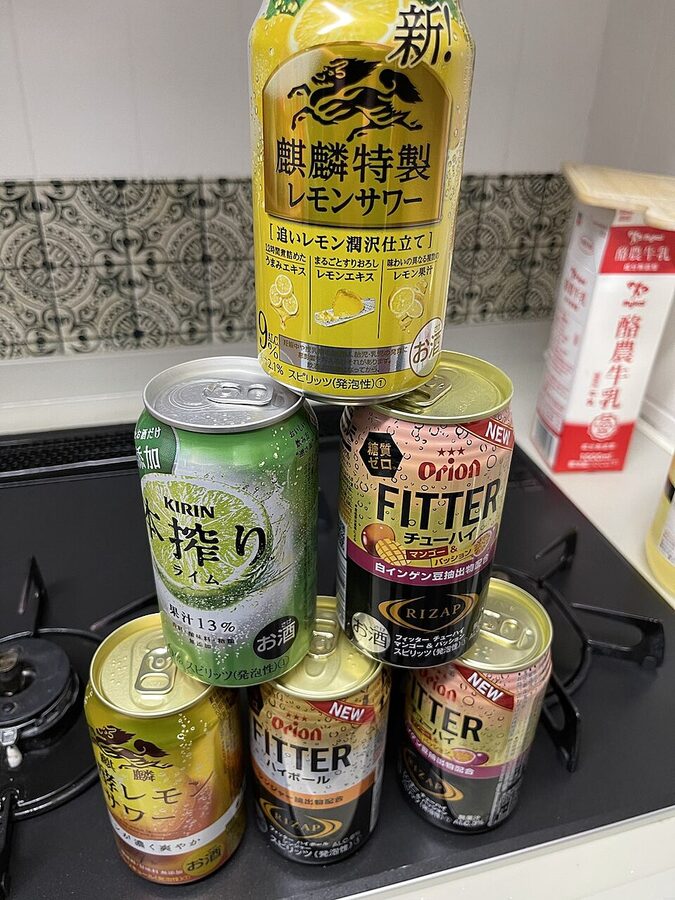

The shape of the category, from softest to hardest:
- Suntory Horoyoi, 3% ABV, the lightweight option, marketed in pastel cans with deliberately cute branding. Around ¥140 for 350ml. White peach, cassis, and grapefruit are the durable flavours; sakura, muscat, and yuzu come and go seasonally. Drinks more like fizzy juice than alcohol.
- Kirin Hyoketsu, 5% ABV, transparent can, lemon-and-grapefruit forward. Suntory makes a comparable brand called Kodawari Sakaba. Around ¥160 for 350ml.
- Asahi Slat / Takara Lemon, 5–7% ABV middle range, more juice-heavy, sometimes pulpy.
- Suntory -196 Strong Zero, 9% ABV, the infamous one, ¥160–180 for 350ml. Made by freezing whole fruit at -196°C and crushing it into the base liquor, hence the name. Its reputation as Japan’s national hangover-machine is earned: one 500ml can contains the alcohol of about 2.5 cans of beer.
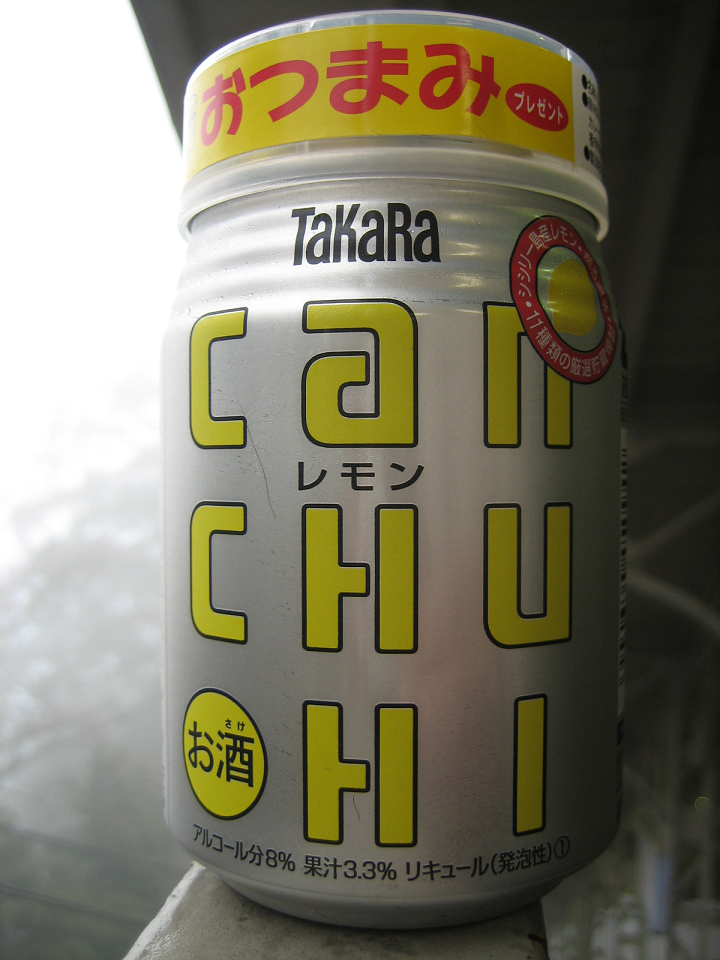

If you only buy one chu-hi to understand the category, get a Suntory -196 Lemon at 7%. It’s the brand’s middle-weight version, the lemon flavour is unfussy, and it pairs cleanly with a konbini onigiri or yakisoba. If you only buy one to actually enjoy, get a Horoyoi white peach. Don’t lead with a Strong Zero unless you’ve eaten dinner. The internet’s nickname for it is “tactical chemistry”, which sounds like a joke until you wake up the next morning.
For more on the country’s drinking-on-a-budget side and how the chu-hi shelf fits into a wider Japan-trip economy, see how cheap drinking in Japan actually gets.
Beer: the reliable middle of the fridge
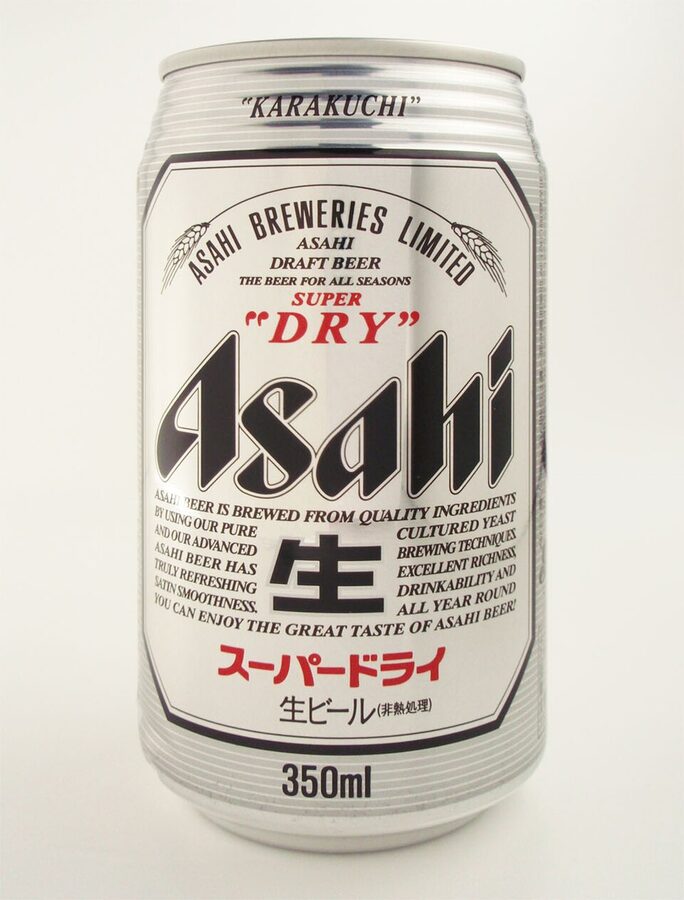

You’ll see four mainstream beer brands at every konbini: Asahi Super Dry, Kirin Ichiban Shibori, Sapporo Black Label / Yebisu, and Suntory Premium Malt’s. All four are decent at room temperature, very good chilled, and recognisably distinct from each other once you’ve drunk a few. Around ¥230–260 for a 350ml can, ¥310–360 for 500ml.
The Japanese category to know about is happoshu and “third-category” beer (新ジャンル, shin janru). These are low-malt or malt-free brews engineered around tax brackets, Japan taxes beer per malt content, and brewers reformulated to dodge the higher band. The result is sub-¥200 cans that taste mostly like beer with the body removed. Useful if you’re stocking a hotel-room cooler. Less interesting if you only buy one.
For craft, the konbini coverage is thin but improving. 7-Eleven’s Seven Premium range now stocks a few national craft labels, usually Yo-Ho’s Yona Yona Ale and Suntory’s craft seasonal, and Lawson sometimes carries them too. Don’t expect more than two or three SKUs. If you’re hunting craft beer seriously, see the craft beer guide instead, konbini is not where you find the good stuff.
Highball: whisky and soda in a 350ml can
The whisky highball, in canned form, is one of the great konbini exports. Suntory’s Kakubin Highball uses the Kakubin (square-bottle) blended whisky, the same one in every standing-bar machine in Japan, pre-mixed with soda water at around 7% ABV. Around ¥200 for 350ml. There’s also a 9% Kakubin Strong, a Jim Beam highball (FamilyMart often has the exclusive on this), and a Nikka Black canned highball that runs at 8%.
It’s not bar-quality, obviously. The whisky is fine but unremarkable, the soda goes flat faster than a hand-mixed drink, and the citrus garnish is missing. But for a balcony drink at sunset before you head out, it’s the cleanest, driest can on the konbini shelf. Pair with anything salty.
For the bar version of the same drink, the actual Japanese highball culture, what to order in a Tokyo whisky bar, why the ratio matters, there’s a separate highball deep-dive on the site, and the Tokyo whisky bars guide covers where to actually drink it well.
Sake at the konbini, and why you shouldn’t dismiss it
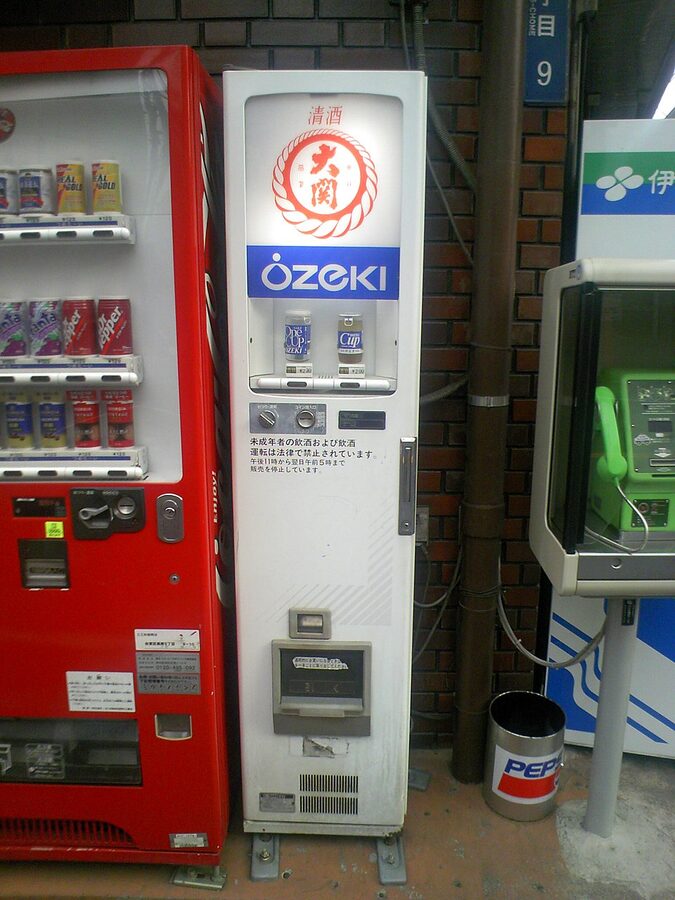
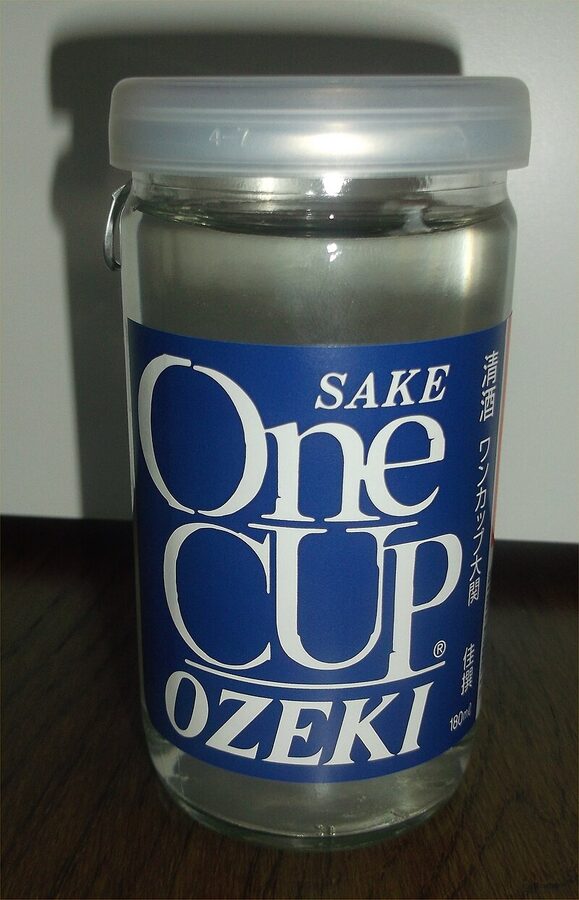

The Tokyo Weekender takes the position that konbini sake is faintly disreputable. I disagree. The 180ml one-cup format (wan-kappu in Japanese) was a 1964 innovation by Ozeki, a major Hyogo brewery, and the modern selection is genuinely good. You’ll find:
- One Cup Ozeki, ¥220–260, the original, dry-leaning honjozo style. A legitimate everyday drinking sake.
- Gekkeikan, Kikumasamune, Hakutsuru, large-brewery one-cups, usually slightly sweeter than Ozeki.
- Mini-bottles (300ml), typically including a junmai or junmai ginjo from the same big-brand brewers, ¥400–600.
- Onikoroshi cartons, the 200ml Tetra Pak with a straw, the dry-and-cheap drinker’s friend, ¥180.
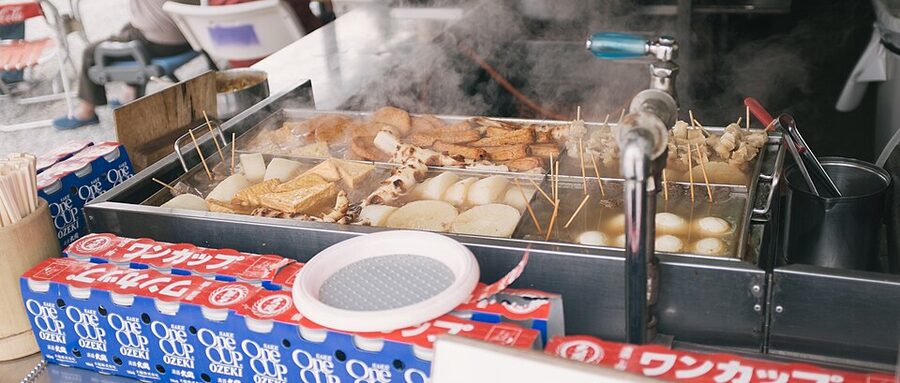
If you want hot sake on a winter evening, the heated cabinet stocks one-cups already warm. They come out at proper drinking temperature, around 50°C, and the ceramic-style cups will be hot to the touch, let it sit on the counter for a minute. For more on the format and timing of warm sake, see the atsukan field guide.
.jpg)
If you’re already starting to take sake seriously, see the broader sake travel guide for what to look for in a brewery visit; the label-reading guide for what the kanji on a one-cup actually mean; and what to eat with sake for the food-pairing side. The konbini’s not a substitute for any of those, but it’s where most travellers actually first taste it.
Wine, shochu, and the rest
Konbini wine is fine. Don’t let anyone tell you otherwise. The 7-Eleven Premium range includes a Chilean Cabernet and an Italian Pinot Grigio in the ¥500–800 range that drink at supermarket level, not great wine, not terrible wine, the kind you might bring to a casual lunch. Single-serve 187ml bottles in screw-cap exist, often Mercian or Suntory house labels, and they’re useful for an in-room glass without committing to a bottle.
Sparkling wine in a can, Chantaile, Sapporo Sparkling, Suntory’s various entries, is more variable. The dry ones are fine. The sweet pink ones are aggressively sweet. About ¥400 for 200ml.
Shochu and umeshu cups exist but are thin on the konbini shelf. You’ll find a Iichiko mizuwari (shochu and water) can, a couple of umeshu rocks cans, and that’s mostly it. For the proper shochu and umeshu category, the shochu vs sake vs awamori comparison covers what’s worth seeking out beyond the konbini, and the umeshu guide goes into where to actually drink it.
Pairings: the konbini meal that costs ¥800
Half the point of buying drinks at a konbini is that you can build an entire meal around them in the same shop. I have eaten dozens of konbini dinners, mostly in hotel rooms, mostly when I came back from a long day’s walking and didn’t want to sit down again. A working playbook:
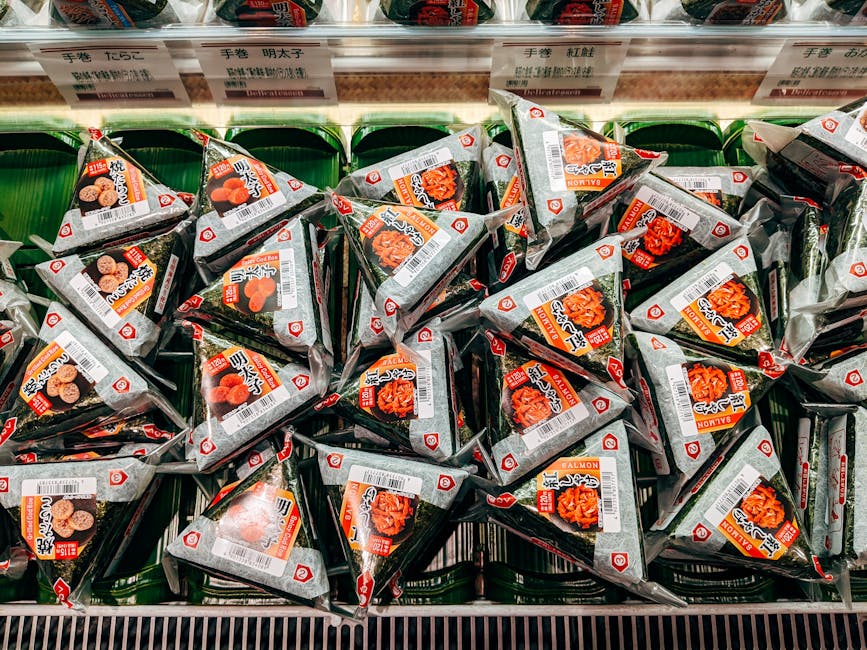
- Beer + onigiri + karaage. ¥230 beer, ¥160 tuna-mayo onigiri, ¥220 hot karaage from the counter. Total around ¥610. The konbini equivalent of a pub plate.
- Highball + edamame + ham-cheese baguette. ¥200 Kakubin highball, ¥180 frozen edamame from the freezer (microwave at the till for free), ¥320 baguette. Around ¥700.
- One-cup sake + oden + smoked-cheese cubes. Winter only. ¥240 sake, ¥500 for three oden pieces from the dashi pot at the counter, ¥220 smoked-cheese pack. Around ¥960. The most authentically Japanese konbini meal you can build.
- Chu-hi + cup yakisoba + yokan. ¥160 Strong Zero (which I am still warning you against), ¥230 cup yakisoba (microwave it), ¥120 yokan (sweet bean jelly) for dessert. Around ¥510. Cheap, fast, and you’ll regret the morning after.
- Cold green tea + tamago sando + roll cake. The classic non-alcoholic train ride. ¥160 tea, ¥220 egg-salad sando, ¥230 Lawson Premium Roll. Around ¥610.
The sit-down equivalent at a chain izakaya runs ¥2,500–3,500 per person minimum, before drinks. If you want the proper bar version of any of this, the site’s izakaya guide covers what to expect and order; how to order in Japanese handles the language; Tokyo standing bars cover the cheaper-and-better-than-konbini option. Konbini eat-in is fine, but it’s not a substitute for the full thing.
Seasonal and regional notes
Spring
March through May the chu-hi and chocolate aisles flip almost entirely seasonal. Sakura-flavour everything, sakura latte at the counter, sakura Horoyoi, sakura mochi at the till. Pink labels everywhere. Cold sake in the chiller is at its peak quality (the new spring batch, shinshu, comes out around mid-March). For hanami picnics, the konbini is where the entire country provisions itself; see cherry-blossom sake culture for what to actually buy.
Summer
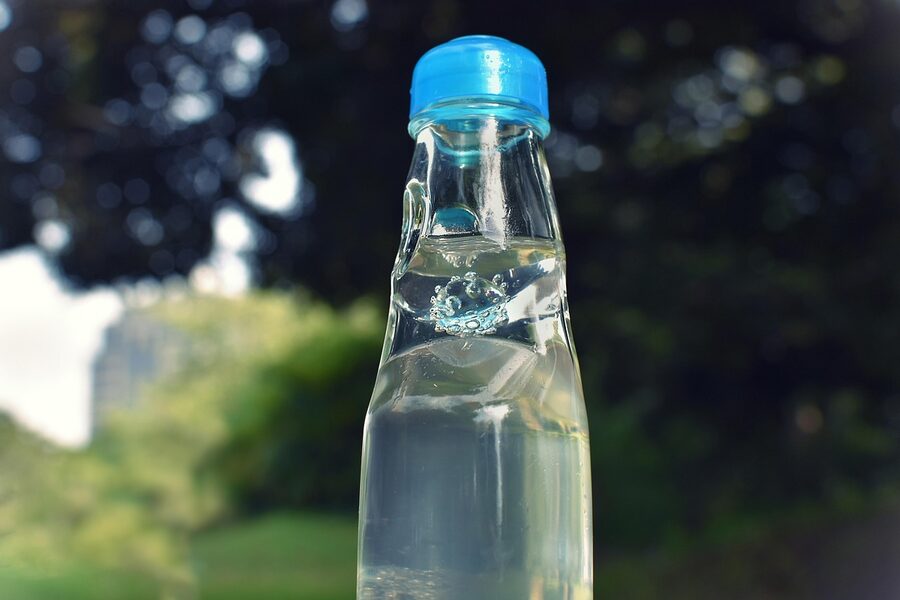
The chiller goes to mugicha, hojicha, citrus drinks, and shaved-ice-flavoured everything. Ramune (the marble-stopper bottle from the 1880s) shows up in summer mostly. Yuzu chu-hi is a summer regular. Cold sake (hiyazake) is the right form here, never warm. Plenty of fruit-juice lassi-style drinks at the dairy section.
Autumn
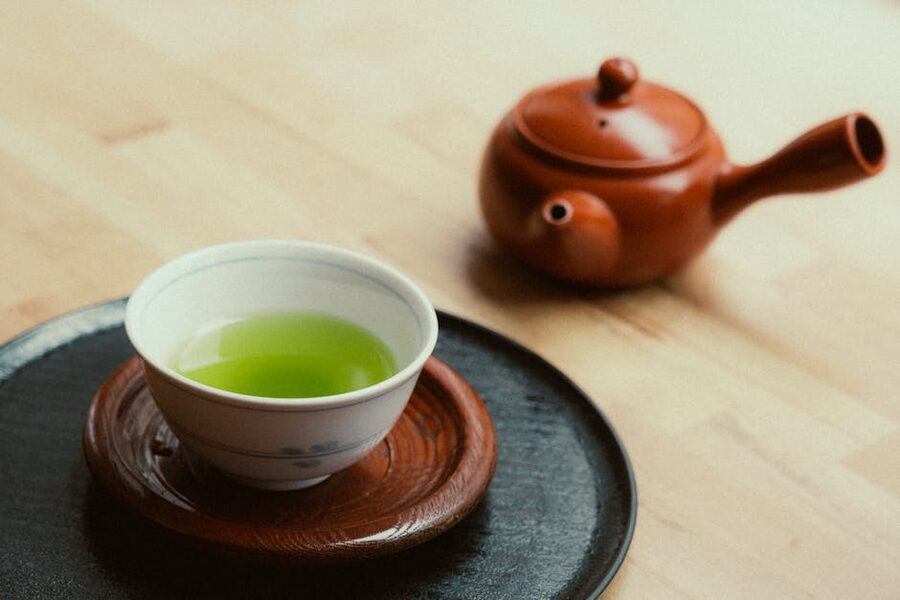
Hojicha and chestnut go into everything. Sweet potato (satsumaimo) flavour appears in chu-hi, in lattes, in pastries. Beer drinks autumn lagers from the major breweries. Slightly thicker drinks across the board.
Winter
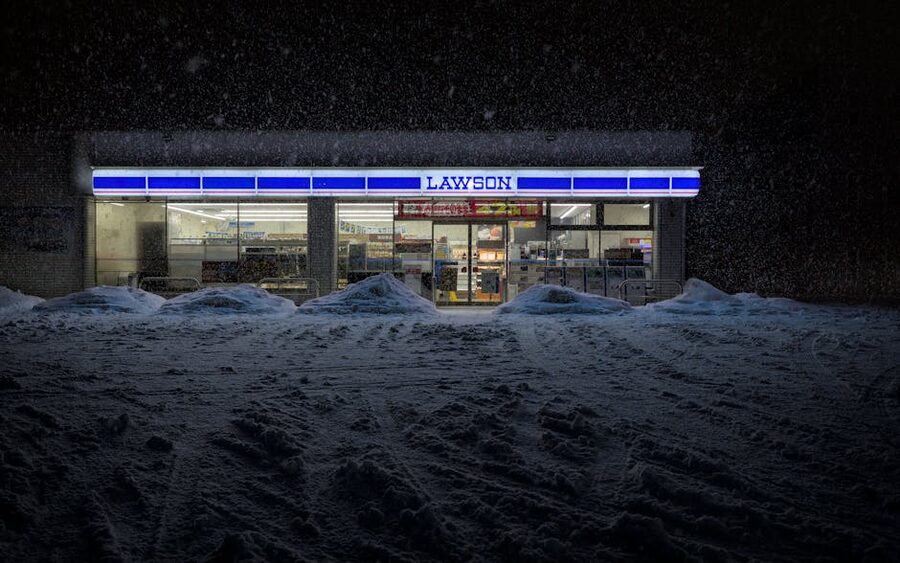
The heated cabinet wakes up. Atsukan (warm sake) appears. Hot canned coffee everywhere. Corn soup-in-a-can. Yuzu citrus in tea. Limited-edition winter beers from Asahi and Sapporo. Otoso (spiced sake) appears around New Year, see the New Year drinking guide for what to look for.
By region
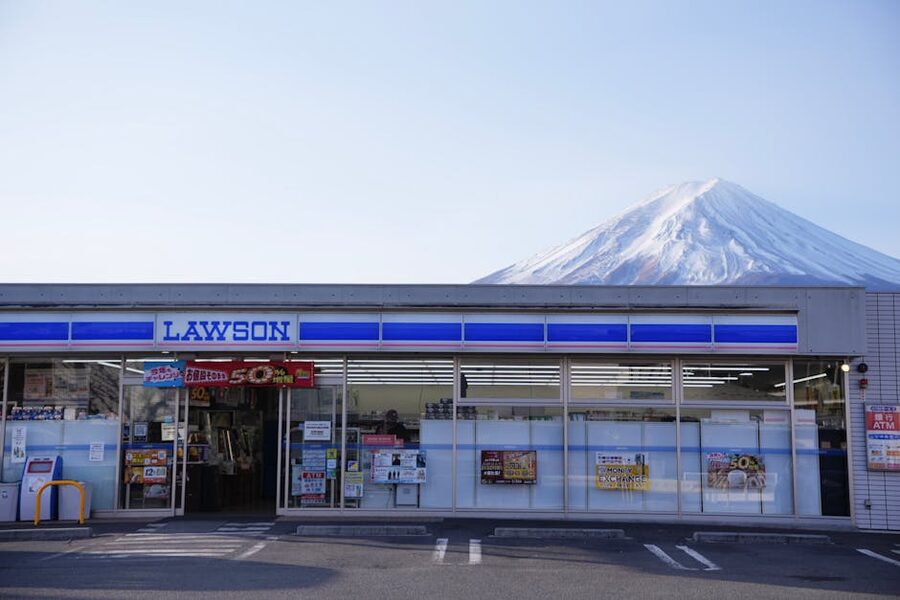
The shelf is mostly national, but a few regional drinks show up consistently:
- Hokkaido: Sapporo Classic beer (officially Hokkaido-only, though it leaks into Tokyo); Yoichi-area whisky highball variants in the better Lawsons.
- Tohoku and Niigata: a thicker sake selection in any konbini, including local one-cups, see the Niigata sake-region guide.
- Kansai: a mix of Kyoto-themed teas (Itoen has a Kyoto-region green tea bottling) and Osaka-leaning chu-hi flavours.
- Kyushu: more shochu in the chiller, occasional umeshu cans, and Asahi’s Fukuoka-only beer variant.
- Okinawa: completely different fridge. Awamori one-cups, Orion beer instead of Asahi, sata-andagi-flavoured drinks. See the Okinawa awamori guide; the konbini there feels like a different country.
Practical things to know
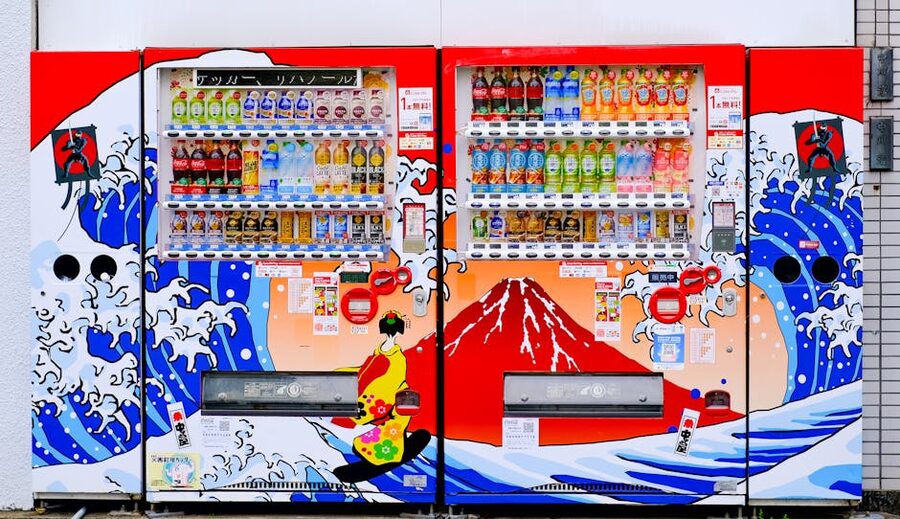
Where you can drink it
Trains: yes, even on the shinkansen and most inter-city expresses. The shinkansen drinking piece covers the etiquette in full, but the short version is that on the Tokaido or Sanyo run you’ll see businessmen drinking beer and sake openly. On commuter trains it’s frowned upon, especially at peak hours. Parks: yes, anywhere, no permit needed. Outside a 7-Eleven on the kerb: technically yes, but watch the volume, especially in residential neighbourhoods.
Hotel rooms: yes, almost universally. Your business-hotel minibar is overpriced and small; the konbini downstairs is everything you need.
The takeaway question, am I allowed to walk out with an open beer?
Yes, but the konbini staff usually won’t open it for you. You crack the can yourself once you’re outside, unless you’re at one of the increasingly common eat-in counters that some larger konbini have built. There’s no brown-bag culture here; you can carry an obviously open can in plain sight, and as long as you’re not noisy or stumbling, no-one cares.
Payment, and the IC card thing
Every konbini takes Suica, Pasmo, ICOCA, and the other JR-affiliated IC cards. Tap-and-go is faster than cash. Foreign credit cards work at all three big chains, contactless or chip. QR codes (PayPay, Rakuten Pay) are the local favourite but don’t matter for travellers.
If you’re using cash, the standard practice is the small tray at the till. Place coins and notes in the tray rather than handing them to the cashier directly.
Recycling
There are usually three bins outside the konbini: one for cans, one for PET bottles, one for combustibles. Empty your drink in the bin, drop the can into cans, the bottle (if you’ve used it) into PET. The lids and labels often go into different bins; in practice, dropping it whole is fine for travellers.
One-line answers to the questions you’re going to have
Cheapest drinkable thing on the shelf? Suntory Boss Black 185ml can, ¥110.
Cheapest beer? Asahi or Kirin “third-category” 350ml, around ¥130–160.
Cheapest way to get tipsy? A Suntory -196 Strong 9% can at ¥180, but it’s a false economy. You’ll spend twice that on the next morning’s Pocari and aspirin.
Best non-alcoholic drink? Itoen Oi Ocha green tea. By a mile, year-round.
Best winter drink? Hot one-cup Ozeki from the heated cabinet, with oden, on a cold platform.
Best summer drink? Cold mugicha (barley tea), 600ml, around ¥120.
Hangover drink? Pocari Sweat first, then a Lipovitan D, then black coffee. In that order.
Most photogenic can? Suntory BOSS Black, the brown can with the cigar-chomping working-man on it. Or any of the Hokkaido-only Sapporo Classic seasonal designs.
Worst drink on the shelf? The pink fizzy “fruit cocktail” Sapporo cans aimed at the office-girl summer market. Tastes like cough syrup with bubbles. Skip.
Will the staff judge me for buying ten cans at 11pm? No. They have seen worse, every night, since 1974.
What I actually buy on a typical Japan trip
Morning: a hot can of BOSS Black on the platform, ¥130. Mid-morning: an Itoen Oi Ocha to take into a temple, ¥160. Lunch with onigiri: an Asahi Wonda canned coffee or a Pocari Sweat, depending on weather, ¥130. Late afternoon: a beer or a 5% Hyoketsu chu-hi on a park bench, ¥230. Pre-dinner if I’m not going out: a Kakubin highball back at the hotel, ¥200. Late: maybe a hot one-cup sake before bed, ¥240.
Total for a full day’s drinking, alcoholic and non, eaten and drunk between trains and walks: about ¥1,090, which is less than one cocktail at an upmarket bar. The konbini hasn’t replaced the bars, the breweries, or the izakayas for me, see the drinking itineraries for what those evenings actually look like, but it’s the spine the rest hangs off. Shape your day around the chiller and your trip will go further than you thought it could.
 Drinking CultureWhy I Stopped Clinking Glasses in JapanThe first time I got a Japanese toast wrong, I was at a wedding reception in Yokohama. Ten of us…
 Drinking CultureOtoso, Bonenkai, and the Hush of ShogatsuThe first person to write the recipe for otoso was a third-century Chinese physician named Hua Tuo, and he wrote…
 Drinking CultureIs Drinking Alone in Japan Awkward as a Woman?Is drinking alone in Japan awkward as a woman? I asked myself that on the bullet train to Tokyo with…