
The first time I met someone who really knew awamori, his name was Tanaka and he was the kind of cellar guide who calls every barrel by its volume in kame, the earthenware jars Okinawan distillers have used for centuries. I was standing with him in the wooden cellar at Chuko Distillery in Tomigusuku, fifteen minutes by bus from Naha city centre, and he was telling me how the smell I was breathing in was the smell of forty-five thousand bottles of aged spirit slowly losing alcohol through cork and clay. “Three percent a year,” he said. “If you don’t seal the jar properly, in twenty years a forty-four-percent awamori turns into a watery thing under twenty. Most people don’t know that.” He poured a thimble-sized cup, said this one was twelve years old, and waited.

Awamori is the oldest distilled spirit in Japan and almost no traveller arrives in Okinawa knowing what to do with it. You order beer at the airport, Orion, you eat goya champuru for lunch and rafute for dinner, and somewhere along the line a small bottle with an Okinawan label appears on the table and someone tells you it’s the local thing. That part is easy. What’s harder is figuring out which one to order, where it actually comes from, why some bottles cost ¥1,500 and some cost ¥30,000, and what to drink it with so the meal makes sense. This is the article I wish I’d had.
In This Article
- What awamori actually is
- How it differs from shochu and sake at a glance
- Naha distilleries you can reach without a car
- Zuisen Distillery, Shuri
- Sakimoto and Mizuho, also in Shuri
- Chuko, the wooden cellar in Tomigusuku
- Masahiro, Itoman
- Beyond the city: distilleries that need a car or a tour
- Helios in Nago
- Onna Distillery, Onna Village
- Taragawa, Miyako
- Kusu: aged awamori and why it’s the point
- Naha bars to drink awamori in
- Karakara to Chibuguwa
- Awamori Pub Yomitan Monogatari
- The AWAMORI KAN, Shuri
- Awamori with Okinawan food
- Goya champuru
- Rafute
- Soki soba and umibudo
- Tofuyo and tomi-yaki
- Yonaguni hanazake and habushu: the strong stuff
- Habushu: the snake bottle
- The small islands: Kume, Miyako, Ishigaki, Hateruma
- Kume Island
- Miyako
- Ishigaki
- Hateruma
- Drinking culture: the awamori toast and the kachashi at the end
- Otoshi, kīpu, and what to expect on the bill
- The wider picture: shochu, sake, and how awamori fits in Japan
- Getting around Okinawa: practical bits
- What to bring home
- One last thing: the question to ask
What awamori actually is
Awamori is rice spirit. That’s the short answer. The longer one is more interesting: it’s made with long-grain Thai indica rice, not Japanese japonica, fermented with a black koji mould that grows native to Okinawa, and distilled exactly once in a pot still. Most awamori comes out of the still at around 30–43% alcohol. There are forty-six licensed distilleries in production today, scattered across Okinawa’s main island and the smaller ones, and they make a spirit Okinawans have been drinking, gifting, and warming themselves with since the fifteenth century.
If you’ve read the shochu vs sake vs awamori piece, you’ll know the headline difference: sake is brewed and never distilled, shochu is single-distilled but uses a wider range of base ingredients (sweet potato, barley, rice, even buckwheat), and awamori is shochu’s much older and stranger Okinawan cousin. The black koji is the main thing that sets it apart. The mould pumps out citric acid as it works, which keeps fermenting batches from spoiling in Okinawa’s heat, and lends the finished spirit a particular dryness that goes well with pork fat and oily fish.
Single distillation matters too. A second distillation strips compounds out, smooths the spirit, and gives you something cleaner but flatter. Awamori is left rougher on purpose. The texture and the long aftertaste are part of why aged awamori, called kusu, develops the way it does. More on kusu below.
How it differs from shochu and sake at a glance
Three lines, no more, because the long version is in the linked piece:
| Spirit | Process | Base | ABV | What it tastes like |
|---|---|---|---|---|
| Sake | Brewed, not distilled | Polished japonica rice + yellow koji | 14–17% | Floral, melon, sometimes mineral. Drinks like wine. |
| Shochu | Single distillation | Sweet potato, barley, rice, others + white or black koji | 20–30% | Earthy, savoury. Often diluted with hot or cold water. |
| Awamori | Single distillation | Long-grain Thai indica rice + black koji | 25–43% (60% on Yonaguni) | Dry, peppery, with a long mineral finish. Aged kusu picks up vanilla and caramel. |
Naha distilleries you can reach without a car
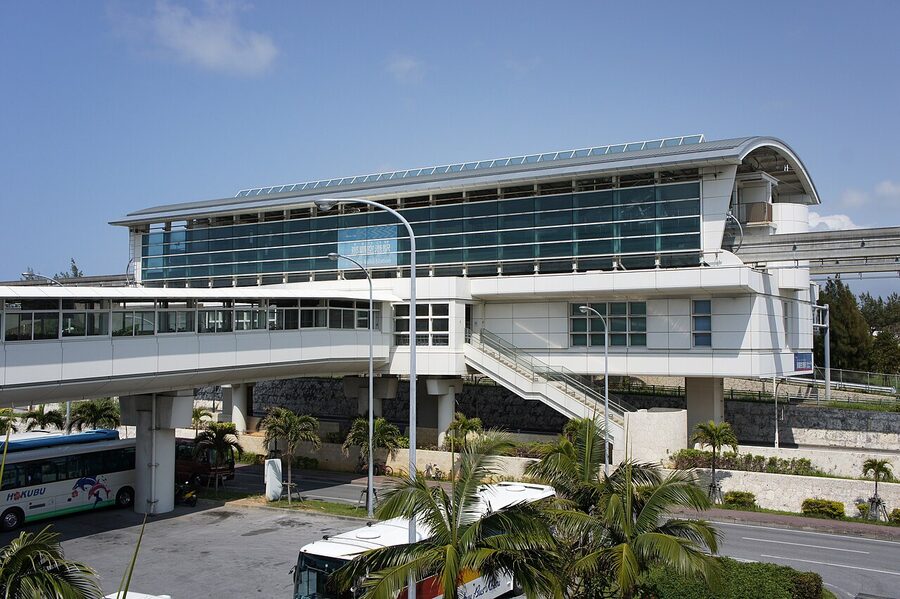

Most awamori distilleries are on the main island and most of those are inland or in coastal towns where buses are infrequent. If you’re train-only on the Yui Rail, three are realistic: Zuisen (a 10-minute walk from Shuri Station), Sakimoto (15 minutes from Shuri Station, mostly window-tour), and Mizuho (a longer walk from Sueyoshi or a 5-minute taxi). Add Chuko if you’re willing to take the bus to Tomigusuku, and Masahiro in Itoman if you have a half-day. Everything else needs either a rental car, a taxi, or a tour bus.
Zuisen Distillery, Shuri
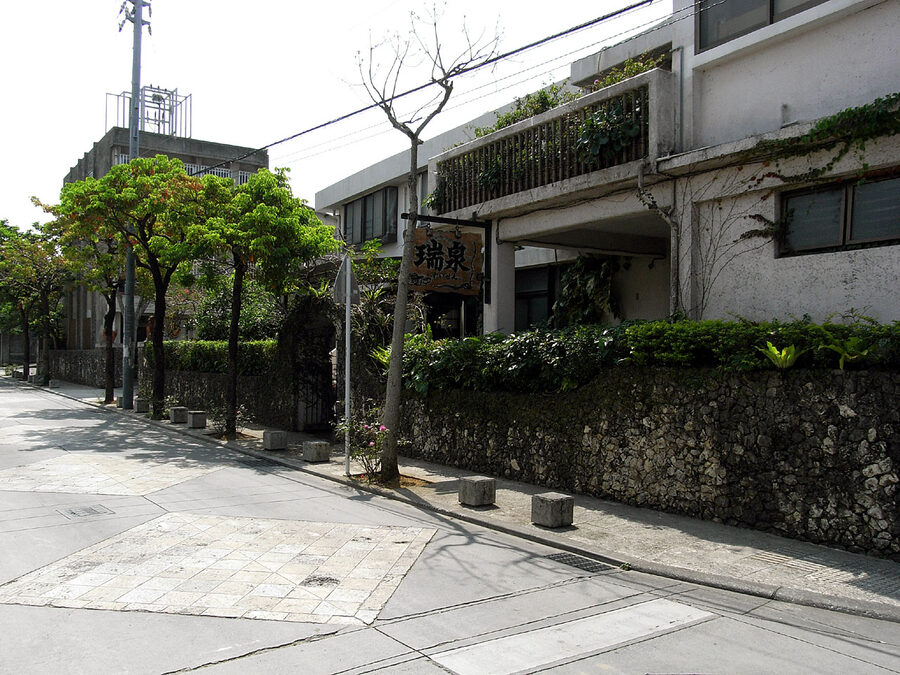

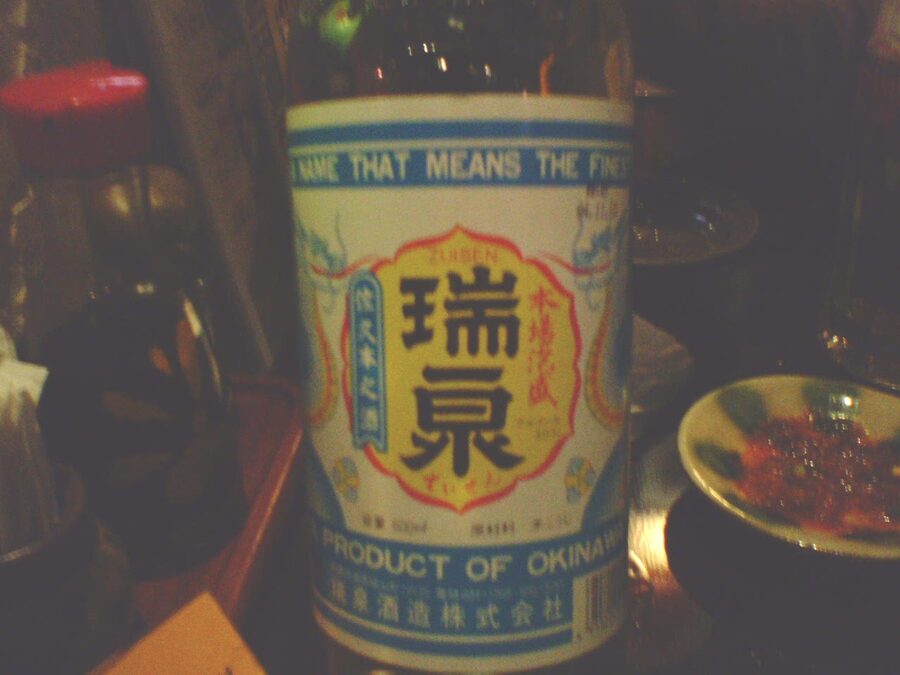
Zuisen is the easiest distillery in Okinawa to reach. Founded in 1887, it sits in the old shurisanka district where awamori production was once limited by royal decree to three neighbourhoods. You walk down a residential street from Shuri Station for about ten minutes and the distillery appears under a wall of vines. The tour is self-guided, free, no reservation needed: a short video on the top floor, fermentation tanks visible behind glass on the way down, and a tasting room at the ground level.
Hours: 09:00–17:00 weekdays, last entry 16:30. Closed Sundays, public holidays, and the second and fourth Saturday of each month. Their flagship Zuisen is a young, dry awamori at ¥1,500 for a 720ml bottle. If you’re going to splash out, ask for the Omoro range, an aged kusu line that runs ¥3,000 to ¥15,000 depending on age. The eight-year Hakuryu, sold in the United States, is what most overseas drinkers learn the brand on first.

Sakimoto and Mizuho, also in Shuri
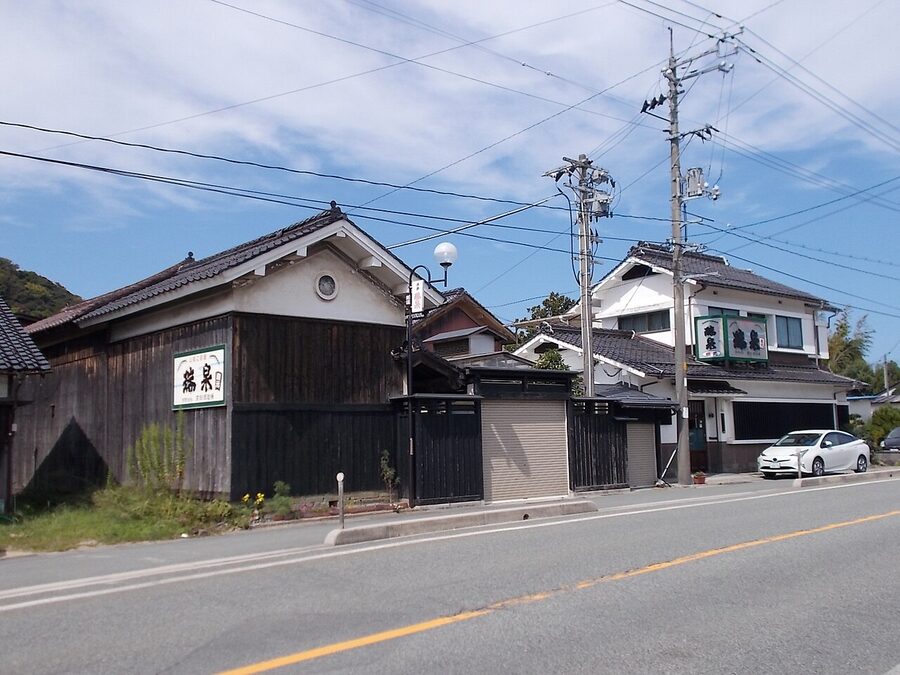

Sakimoto Distillery, founded in 1902, makes one of the most respected kusu lines in Okinawa: their three-year is what locals reach for at festivals. The proprietor’s grandfather is the one folk songs got written about, the man who pulled koji-coated straw mats out of the bombed-out distillery in 1945 and used them to restart fermentation when no one else had any starter culture left. They’ve since moved a small operation into the Ryukyu-mura theme park, which means you can only tour them through glass, but the tasting flight at the end is worth the visit.
Mizuho Distillery, founded in 1848, is the oldest distillery still operating under one family. They were one of the original three-neighbourhood Shuri producers and they call themselves “kusu pioneers” with some justification: they were the first to commercially bottle aged awamori in the modern sense, in the 1980s. Their twelve-year and twenty-year bottles are not cheap (¥8,000 and ¥25,000 respectively) but they’re what to taste if you want to understand what kusu can become.
Chuko, the wooden cellar in Tomigusuku
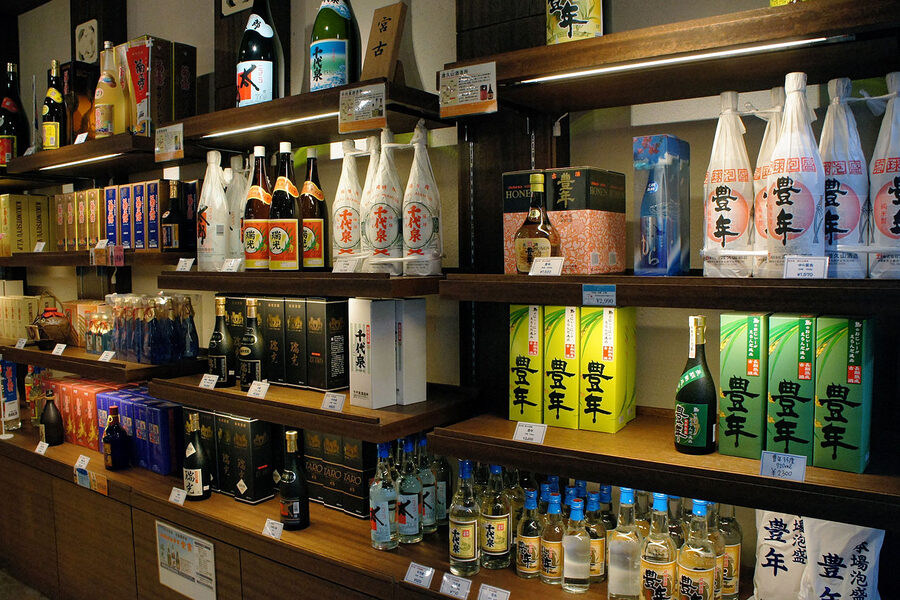

Chuko is the distillery I opened this article in. Founded in 1949, it’s a 25-minute bus ride south of Naha (Bus 89, get off at Ganaha, walk three minutes), and it’s the only distillery in Okinawa where you can see the entire operation under one roof: rice steaming, koji incubation, fermentation, distillation, the on-site kiln where they fire their own kame jars to keep alcohol from leaking, and the wooden cellar where 45,000 bottles of kusu are sleeping at any given time. The tour runs every half hour from 09:00 to 17:30. They close on January 1. Reservation by email ([email protected]) is recommended but walk-ins are usually fine on weekdays. Free.
The wooden cellar alone is worth the trip. Wooden architecture is rare in Okinawa, where the climate eats timber, and Chuko’s old building is one of the few survivors of the war. Inside lie eight gigantic vats, the 45,000 bottles, and 800 named jars. Tastings cover ten different awamori, free, including non-alcoholic koji drinks for anyone driving. The flagship Chuko is ¥1,400 for a 720ml bottle. The 25-year kusu, only sold here, is ¥30,000 and you may need a credit card.
Masahiro, Itoman
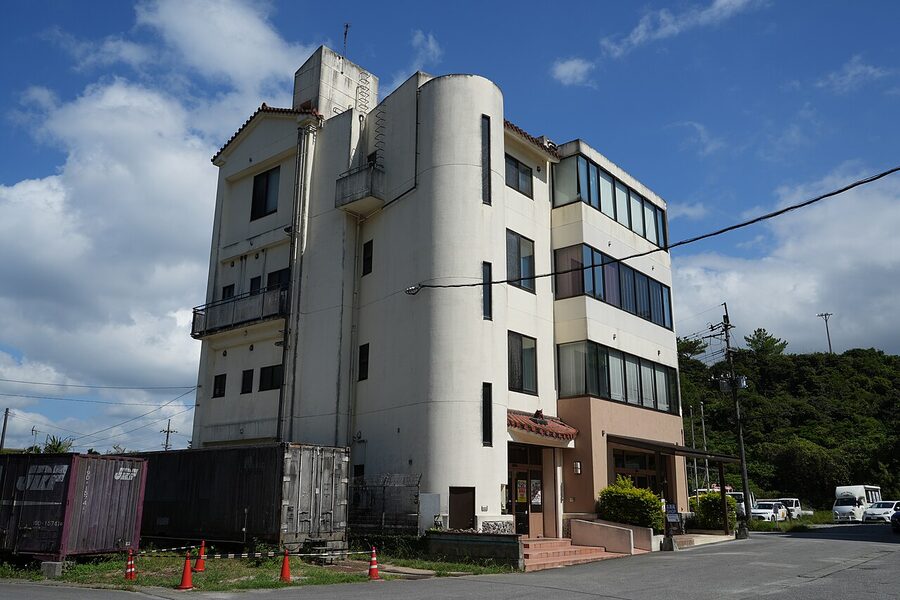

Masahiro is the easiest of the southern distilleries if you’ve been over to the Peace Memorial Park or Himeyuri in Itoman and have an afternoon left. Founded in 1883, it sits at 5-8-7 Nishizaki, Itoman City, has a free self-guided tour from 09:00 to 17:30 weekdays (last entry 16:30), and a gallery upstairs that walks you through the history of the family that built the place. Their main bottle, simply called Masahiro, runs ¥1,200. They also make Shimauta, a softer easier-drinking awamori that’s the one I’d recommend for a first taste.
Beyond the city: distilleries that need a car or a tour
If you’re renting a car, three more are worth the drive. None of them is on a train line. None has English staff to speak of. All three return more atmosphere than the urban distilleries do.
Helios in Nago
Helios sits in Kyoda, Nago, in the north of the main island. They’re the largest awamori producer by volume, they also make rum and gin, and the visitor centre is a proper tourist operation with a tasting bar, a restaurant, and a shop. Tour times are 10:30, 13:30, 15:00 daily, about an hour, ¥500 per person. Closed Wednesdays, public holidays, and over New Year. Online reservation required (helios-shop.jp). It’s the easiest distillery to do as a half-day from Naha if you’re driving up to Churaumi Aquarium or the northern reefs anyway.
Onna Distillery, Onna Village
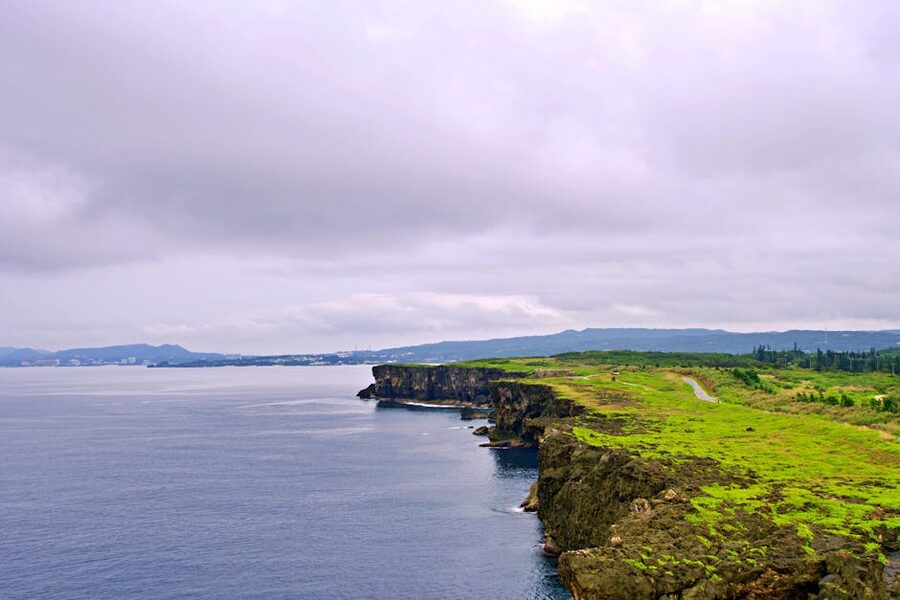
Onna Distillery is in the village of the same name, halfway up the western coast on the resort strip. They’re open 08:30–17:00 weekdays and 08:30–12:00 Saturdays, closed Sundays. Reservation required (098-966-8105). The tour is short, the distillery is small, and the appeal is location: you’re fifteen minutes from Manza Beach and ten from the Cape Manzamo overlook, so it slots into a beach day. Their flagship Manza is ¥1,300 for a 720ml.
Taragawa, Miyako
Taragawa is on Miyako Island, two hours by plane from Naha, and they’ve done something no mainland distillery does: aged some of their kusu in a natural limestone cave under the village of Sunagawa. The cave maintains 19–21°C year-round, ideal for slow aging, and the tour walks you through the limestone chambers with a glass at the end. Tour times: 10:00, 11:00, 13:30, 15:00 weekdays, ¥500 per person, 45 minutes, reservation required (0980-77-4108). Their cave-aged Ryukyu Ohcho line is the standout, ¥5,000 to ¥20,000 depending on age.

Kusu: aged awamori and why it’s the point
The first time I drank a properly aged kusu, I understood why some bottles cost more than my flight to Naha. Young awamori is sharp and dry, useful as a cocktail base or with strong food, not really something to sit with on its own. Kusu is what awamori becomes after three years or more of slow aging in clay or steel: the rough edges round off, the spirit picks up vanilla and burnt-caramel notes, the alcohol stops feeling like alcohol and starts feeling like the warmth in the room.

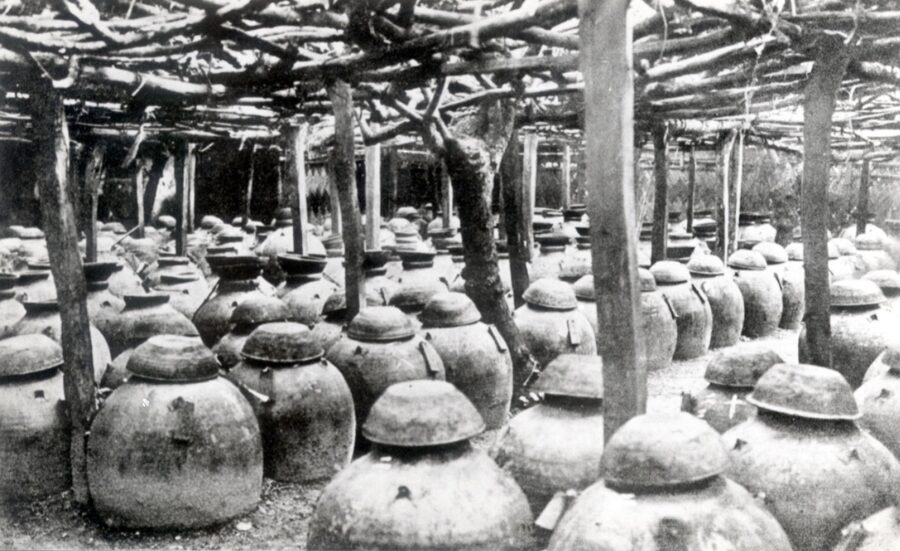
Three years is the legal minimum, but the local term kusu only really makes sense at five years and up. Real connoisseurs talk about ten and twenty years; the very rare bottles, mostly destroyed in the war, used to be over a century old. The technique is straightforward in theory and brutal in practice. You age awamori in kame, the unglazed clay jars, and you keep the seal perfect. Any leak means alcohol escaping (about 3% a year), and over twenty years a 44% awamori can drop to under 20%, becoming, in the words of one distillery I visited, “a watery shadow of itself.” Chuko fires their own jars to make sure no alcohol escapes through microscopic cracks. Other distilleries argue about glaze versus no-glaze. Mizuho swears by kame; Sakimoto blends kame-aged with steel-tank-aged. Both make spirits I’d happily drink.
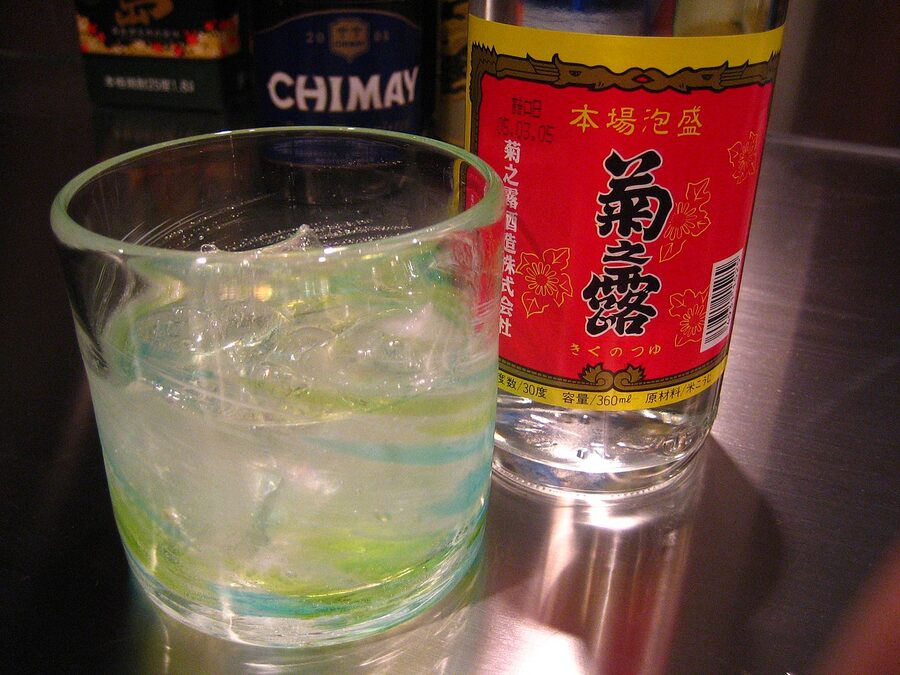
The traditional way to drink kusu is the same way you drink the young stuff: in a thimble-sized cup called a chibuguwa, sipped slowly, aroma first. Some people pour kusu into a champagne glass to get more of the vanilla note rising off the surface. I prefer it in the cup, because the cup is what every Okinawan I’ve ever drunk with hands you. There’s also a serving vessel with two openings called a karakara, designed so you pour with one hand and don’t touch the lip; if you see one in a bar, you’re in a serious establishment.
Naha bars to drink awamori in
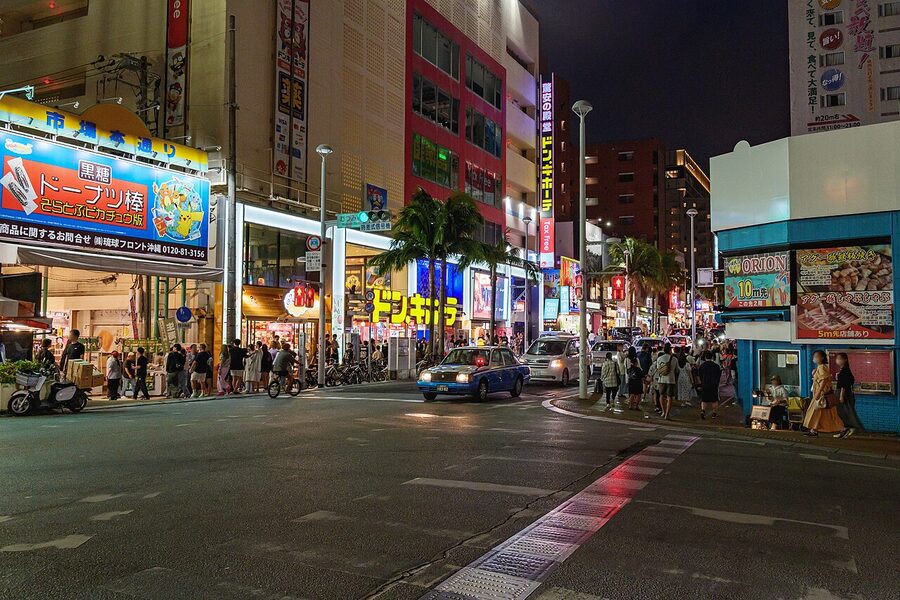

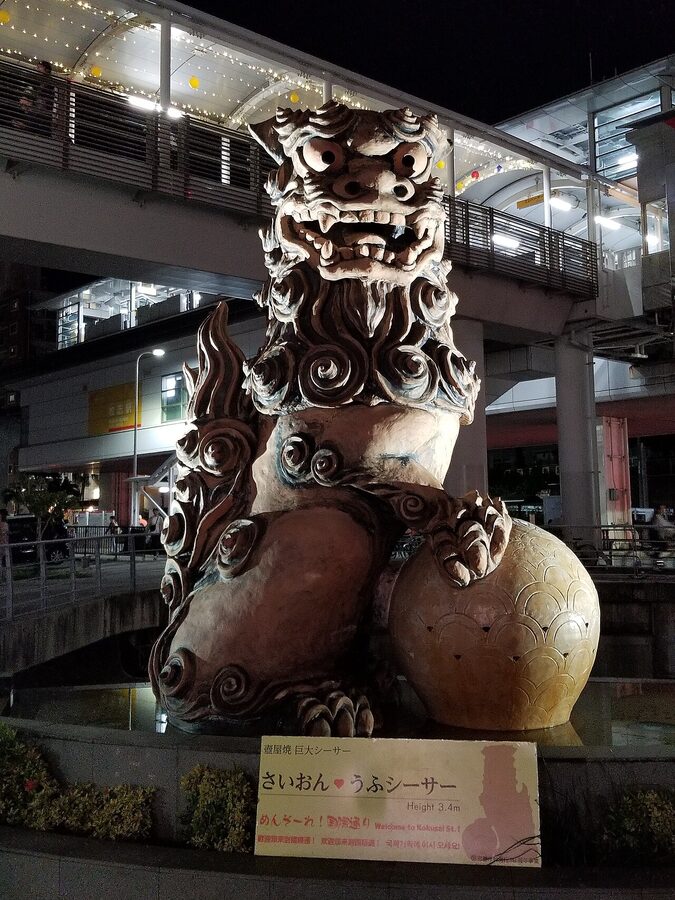
Kokusai-dori is the long souvenir-shop street that runs through central Naha and almost every traveller walks down it once. The awamori bars worth your time are mostly off it, a block south in the Sakurazaka entertainment district, or in the side alleys of the Heiwa-dori covered arcade. Three I keep coming back to:
Karakara to Chibuguwa
Karakara to Chibuguwa, named for the two awamori serving vessels above, is run by a government-certified Awamori Meister, which sounds like a sommelier title invented by a tourism board but is actually a real qualification, several years of training and an exam covering production, history, and tasting. The bar is on the second floor at 3-15-15 Kumoji, Naha, a five-minute walk from Miebashi Station. Hours 18:00–24:00, closed Sundays, no cover charge but an otoshi snack is ¥500. The wall behind the bar is lined with about 200 different awamori, including kusu up to 30 years old, and the meister will pour anything from a tasting flight (¥1,500 for three) to single pours of the rare bottles (¥800–3,000). If you only have one awamori bar in your trip, this is mine.
Awamori Pub Yomitan Monogatari
Yomitan Monogatari is in Yomitan Village, about 40 minutes north of Naha by bus, and it’s the one to make a special trip for. Yomitan is home to Higa Distillery, makers of the famous Zanpa awamori, and this izakaya carries the entire Higa range alongside other Yomitan-area producers. The food is proper Okinawan kitchen work: the squid-ink soba is what most people remember, but the pork ribs and the simmered tofuyo (fermented tofu, a local delicacy that pairs perfectly with old kusu) are equally good. Cover ¥500, glass pours from ¥600, dinners average ¥3,000–5,000 a head with a few drinks. Walk-ins fine on weekdays; reserve on Friday and Saturday.
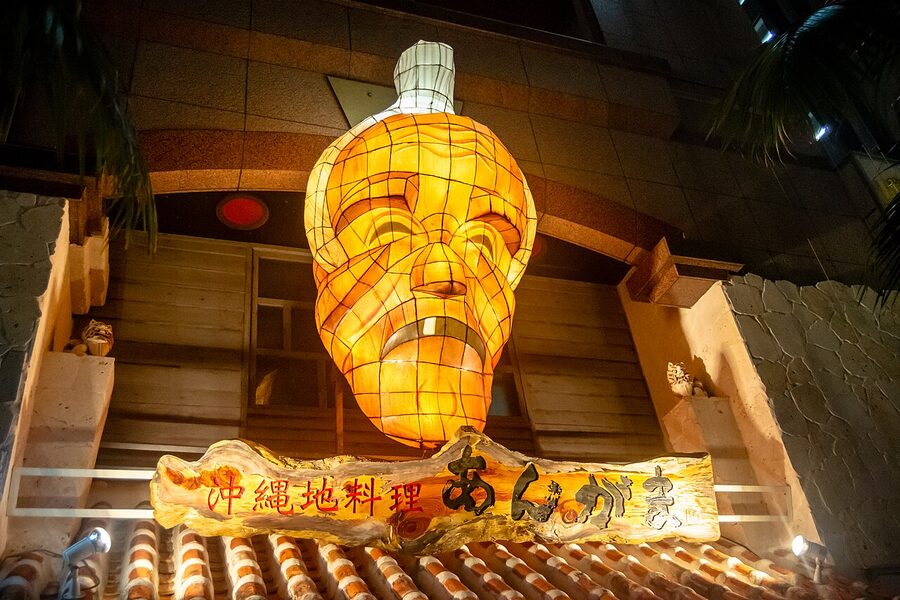

The AWAMORI KAN, Shuri
The AWAMORI KAN isn’t exactly a bar. It’s a tasting hall and shop in the Shuri Castle district that stocks over 1,000 different awamori from more than 200 brands. You pay ¥1,000 for a tasting flight of any five awamori in the catalogue, including rare aged bottles, and you can buy by the bottle on the way out. It’s open 10:00–19:00 daily, closed Tuesdays. If you have any interest in seeing the breadth of awamori in one room, this is the place. Pair it with a Zuisen tour and you’ve done your full Shuri afternoon.
The AEON liquor shop on the second floor of AEON Mall Okinawa Rycom in Kitanakagusuku also stocks awamori from every active distillery. It’s less atmospheric but useful if you want to bring a specific bottle home and you don’t have time to track it down at the source.
Awamori with Okinawan food
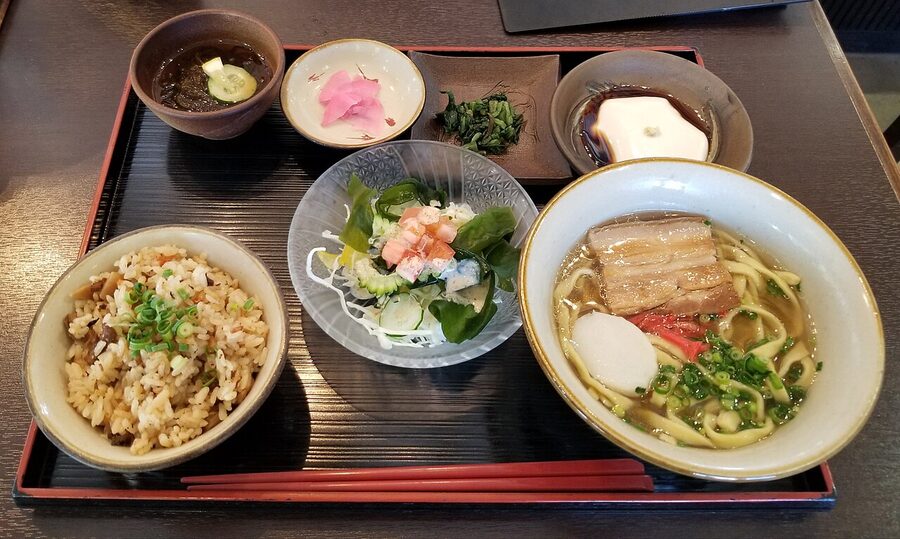

The pairing logic is straightforward. Awamori is dry and high-acid, so it cuts through fat. Okinawan food is heavy on pork, oily fish, and pickles, so it loves the spirit. Most izakaya menus print awamori suggestions next to dishes; if they don’t, the rule is: young awamori with rich, fatty, or salty dishes; kusu after the meal as a digestif, not with food.
Goya champuru
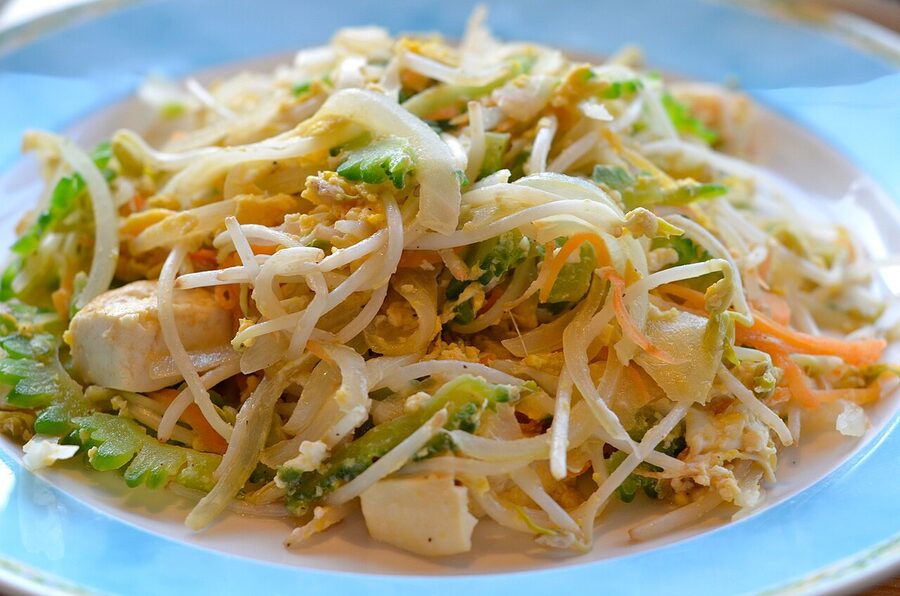

Goya is the bitter melon, deeply alkaline and a bit medicinal, stir-fried with tofu, eggs, and pork. Young awamori on ice handles the bitterness without flattening it, the way a beer would. Order it at any neighbourhood spot. It will be on the menu.
Rafute
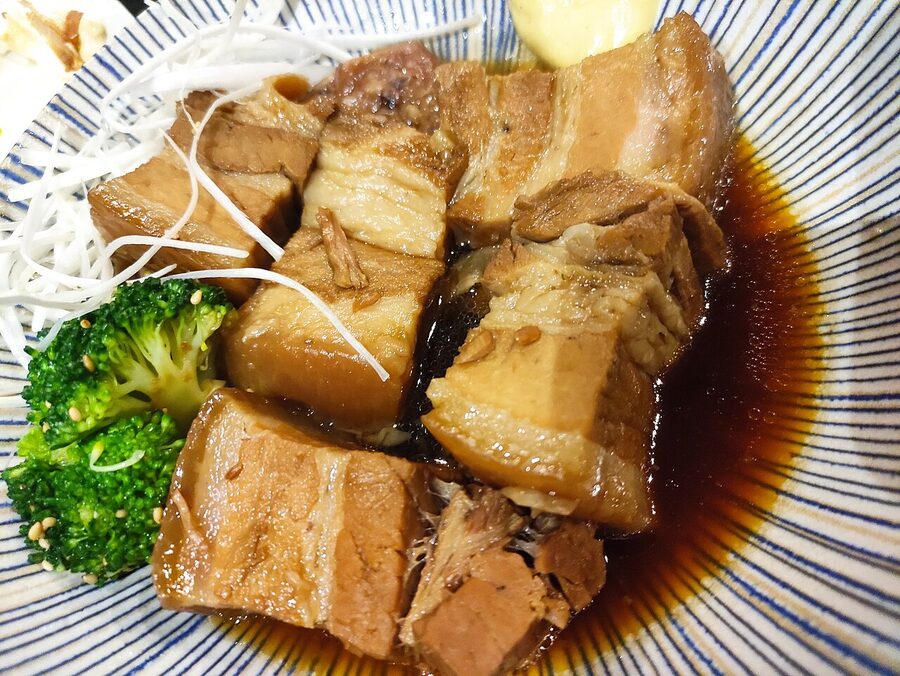

Rafute is pork belly braised for hours in awamori, dark soy, and Okinawan brown sugar until the fat collapses. This is where awamori-in-the-glass and awamori-in-the-pot meet. A six-year kusu, slightly warmed (not hot, just bath-temperature) is what most chefs in Naha pour for it. The vanilla in the kusu picks up the sugar in the braising sauce, and you forget how much pork fat you’re eating.
Soki soba and umibudo
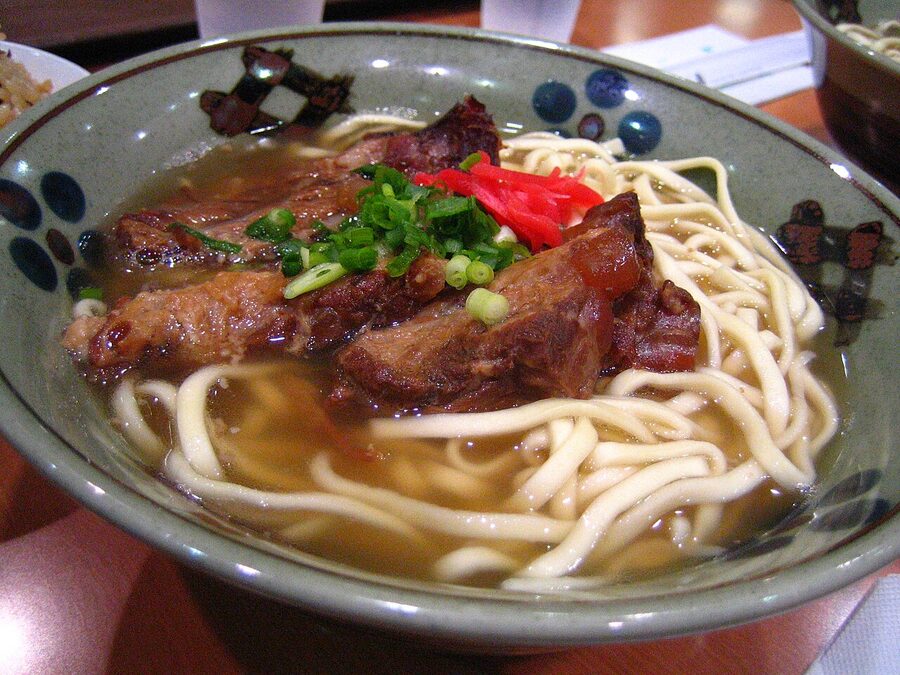

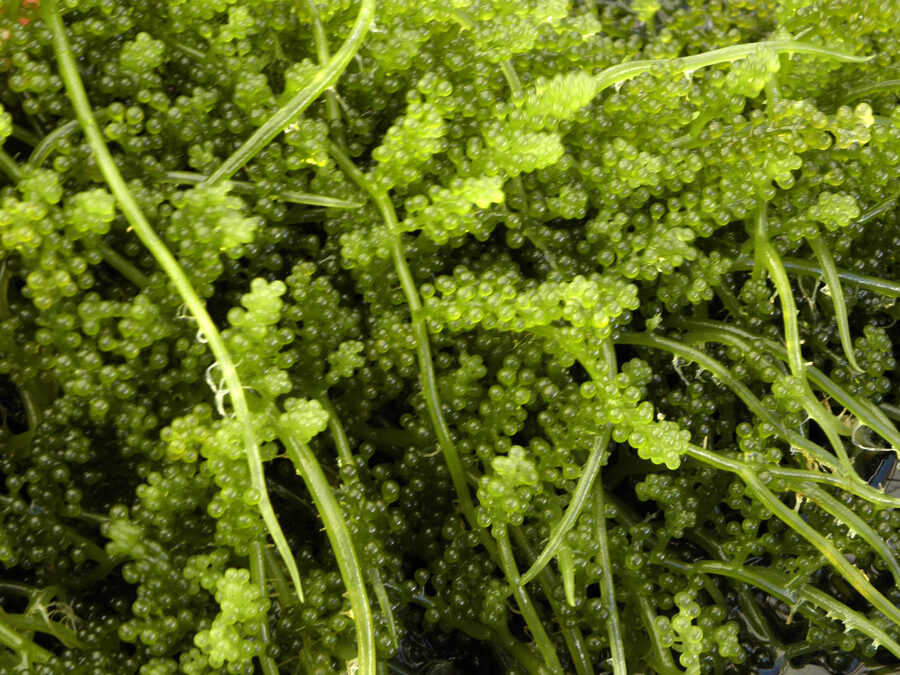
Soki soba is Okinawa’s noodle dish: thick wheat noodles, clear pork broth, simmered pork ribs on top. It’s a lunch food, not really a drinking food, but if you want awamori with it, order a small glass on the side rather than the proper drinking pour. Umibudo, the sea grapes that pop in your mouth like caviar, are the perfect bar snack with young awamori on the rocks. Both are everywhere.

Tofuyo and tomi-yaki
Tofuyo, the fermented red-brick-coloured tofu cubes, are Okinawa’s answer to blue cheese. They’re salty, funky, and intense. Eat them in a tiny portion with kusu and you’ll see why locals call this combination “the old men’s nightcap.” Tomi-yaki, salt-grilled rabbitfish, is harder to find but worth ordering when you do; the salt and the gently-bitter fish skin work with both young awamori and a five-year kusu.
Yonaguni hanazake and habushu: the strong stuff
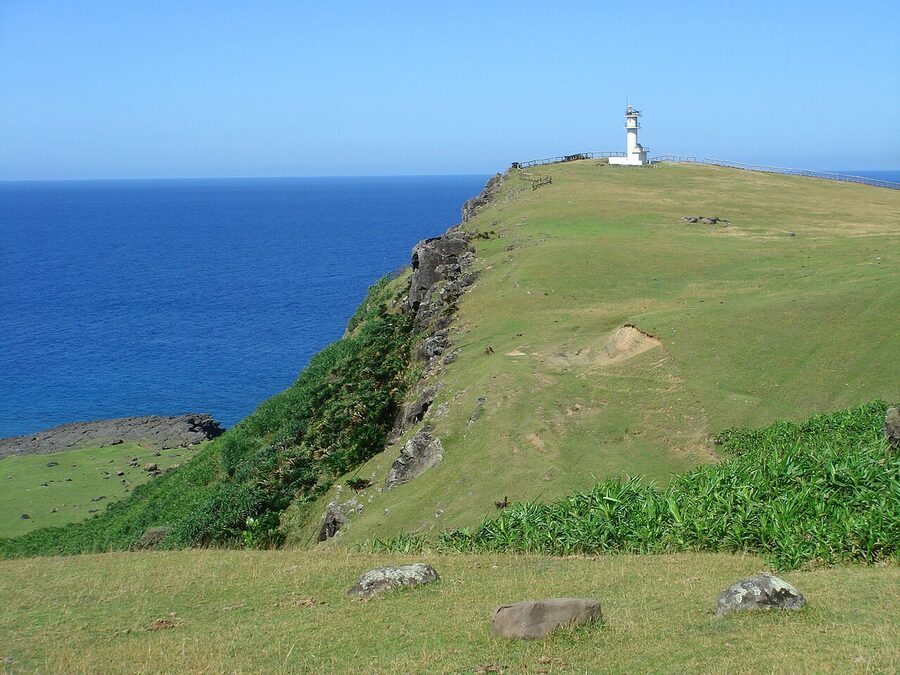

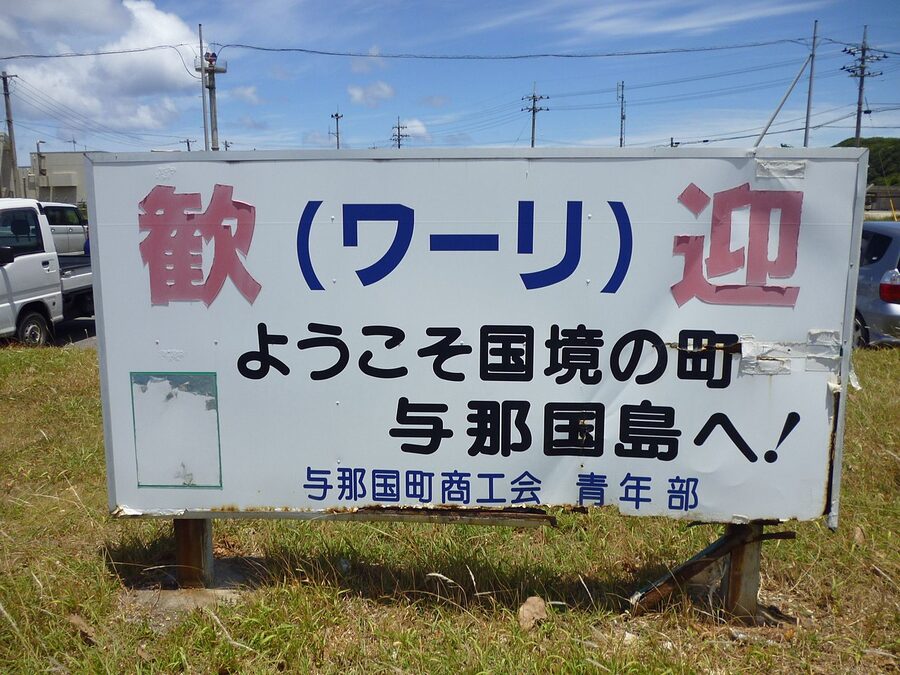
Yonaguni is the westernmost island of Japan, closer to Taiwan than to mainland Okinawa, with a population of about 1,500 and three small distilleries. It’s also the only place in the country where you’re legally allowed to bottle alcohol above 45%. The reason is religious: hanazake, literally “flower liquor,” is the first run off the still, the strongest fraction, and it’s used in traditional Yonaguni ceremonies. Donan Hanazake from Donan Distillery hits 60%. Yonaguni and Maifuna, from Sakimoto and Iruwami respectively, also produce hanazake, all in the 45–60% range. You can buy them, you can drink them, you can take them home.
Hanazake is not for sipping at body temperature. The traditional way is to take a single small sip on the rocks. The melt slows the alcohol enough to let you taste through it. Anything else is a bad night.

Habushu: the snake bottle
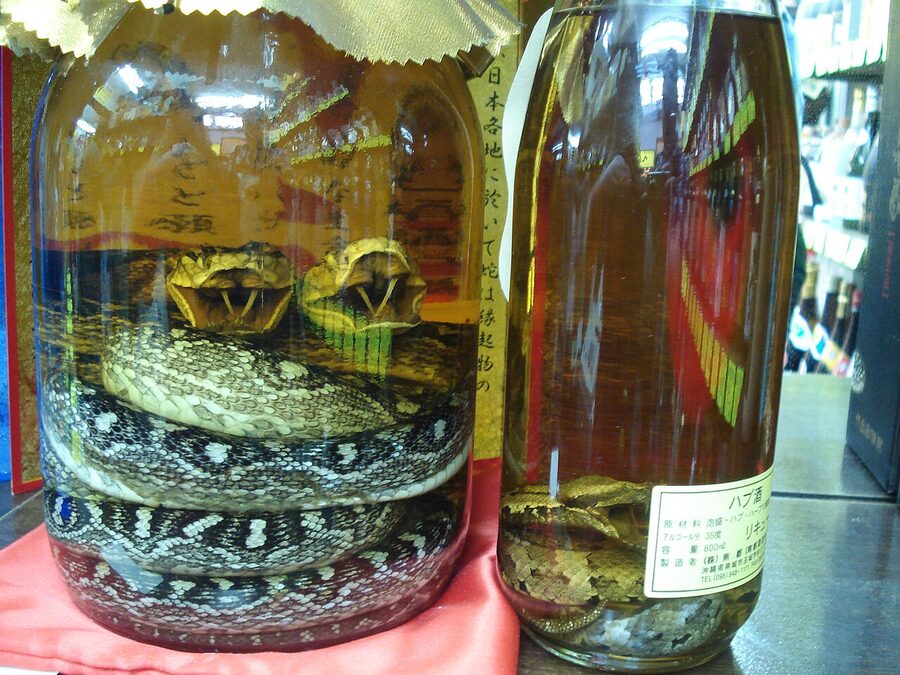

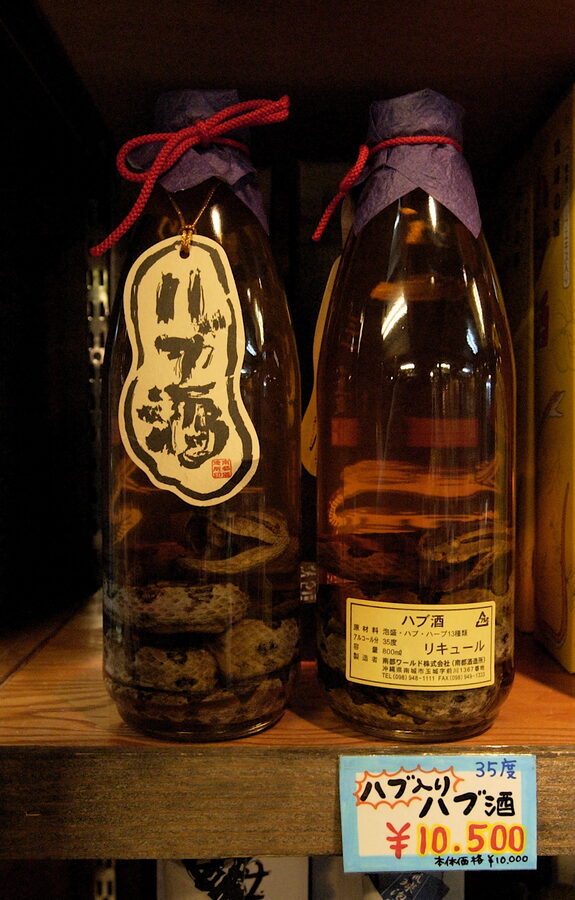
Habushu is a bottle of awamori with a venomous habu snake coiled inside it. You’ll see them on shelves in every souvenir shop on Kokusai-dori, you’ll see them in glass cases at every roadside stop. The price is the giveaway. A ¥3,000 bottle is awamori with herbs and a token snake. A ¥30,000 bottle is the real Yonaguni-style preparation: the snake fasted alive, then steeped in three successive alcohols, the final being awamori with brown sugar and herbs. The snake’s digestive system is cleaned out so the spirit doesn’t taste of fish.
The venom is denatured by the alcohol; habushu is safe to drink. It’s also rough, herbal, faintly medicinal, and worth ordering once. Most decent awamori bars carry one bottle of a good habushu and pour small glasses (¥800–1,500) for curious travellers. Skip the supermarket bottles. They’re for the souvenir trade.

The small islands: Kume, Miyako, Ishigaki, Hateruma
Awamori has a regional accent. Mainland Okinawa makes the bulk of the production but every island makes its own variations, and the local versions are the ones to buy on the spot because the bottles often don’t leave the island.
Kume Island
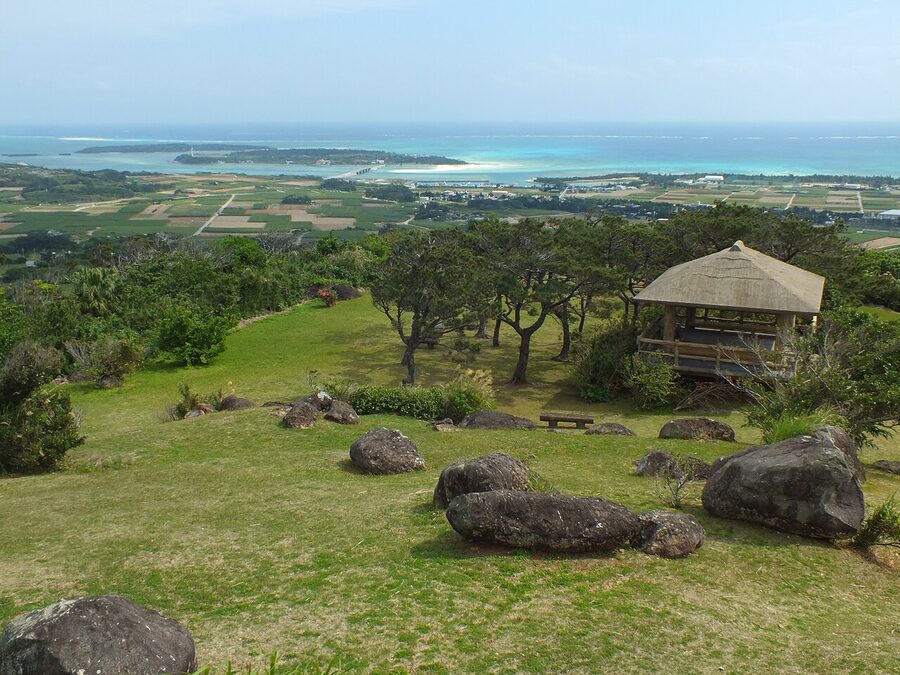

Kumejima makes Kumesen, an 8-year kusu that has the longest run of overseas exports of any awamori brand. The distillery, Kumejima no Kumesen, is in Nakazato Village, and they’ve been pushing into European and East Asian markets for the last decade. Kumesen is sweet by awamori standards, with a fresh tropical-fruit lift that the mainland kusu doesn’t quite have. If you’re flying to Kumejima for the Hatenohama sandbar, give them an afternoon.
Miyako
Miyakojima has six distilleries. Taragawa is the famous cave-aged one I covered above. Kikunotsuyu, founded 1928 in Hirara, is the local everyday brand and the bottle most Miyako restaurants pour by default. Miyanohana, from Irabu, is a smaller producer with a beautiful name (literally “the flower of Miyako”) and a fruity profile that’s good with the local seafood. Buy any of them at the distillery if you can; the prices are 20% lower than in Naha airport.
Ishigaki
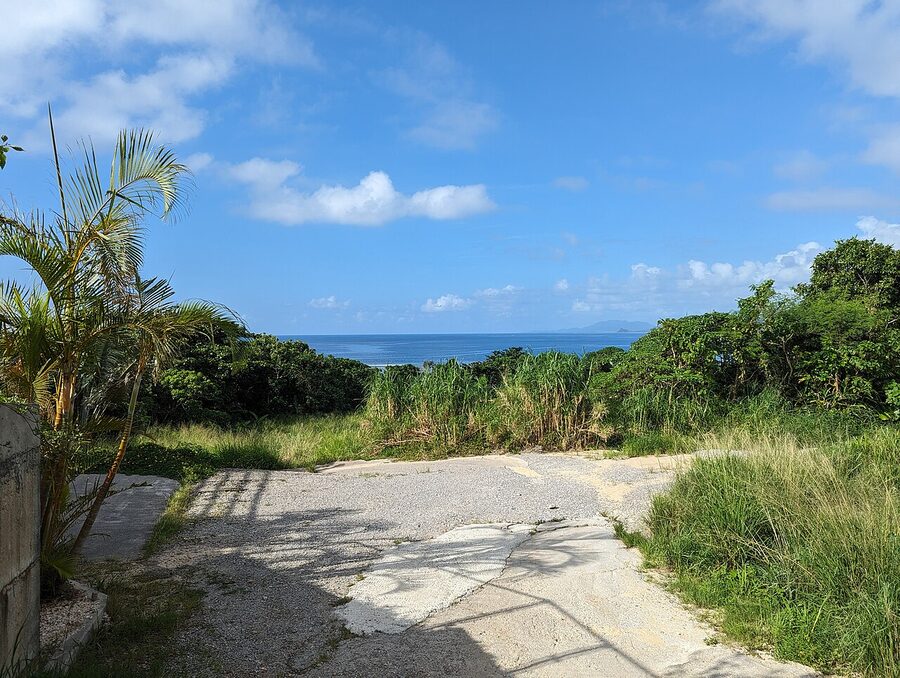
Ishigaki has four distilleries: Ikehara, Yaesen, Takamine, and Tamanaha. Yaesen is the easiest to visit, in Ishigaki city, and they run a free 30-minute tour with tasting (10:00, 11:00, 13:00, 14:00, 15:00 weekdays, no reservation). Their flagship Yaesen 30-degree is ¥1,200. The reason to come, though, is Kuroshinju, their black-pearl kusu line: aged in the warmer Yaeyama climate, which speeds maturation, the seven-year tastes like a ten or eleven from the main island. Pour it at room temperature and don’t cut it with anything.
Hateruma
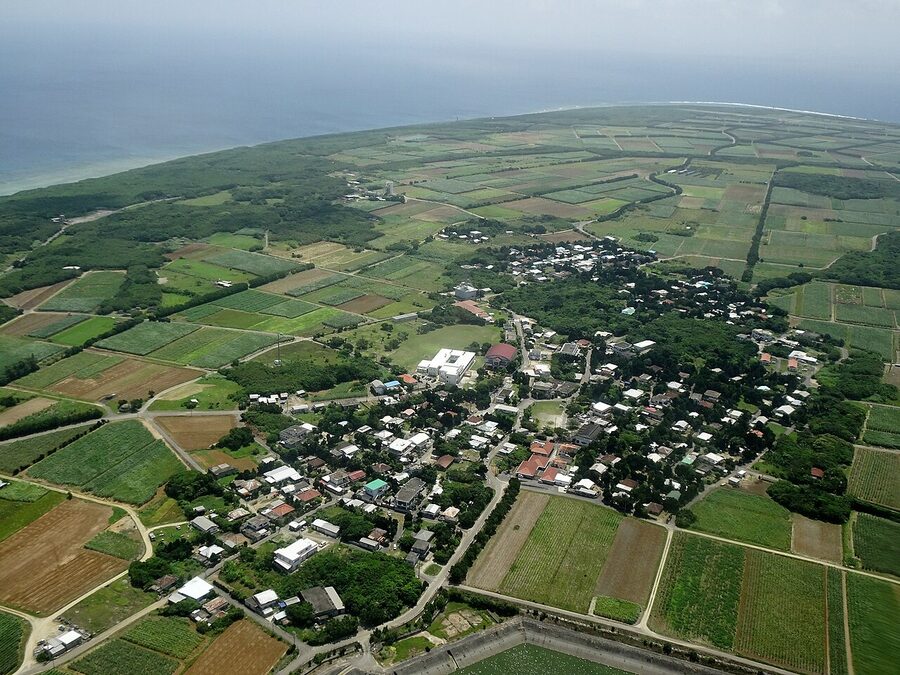

Hateruma is the southernmost inhabited point in Japan, two hours by ferry from Ishigaki, and it has one distillery, Hateruma Distillery, that makes one awamori, called Awanami. They sell almost the whole production on the island. Tours aren’t formally offered. If you find yourself there for the night sky (Hateruma has the best stargazing in Okinawa), buy a bottle from the village shop and drink it with the host of whatever guesthouse you’re staying in. That’s how the locals do it.
Drinking culture: the awamori toast and the kachashi at the end
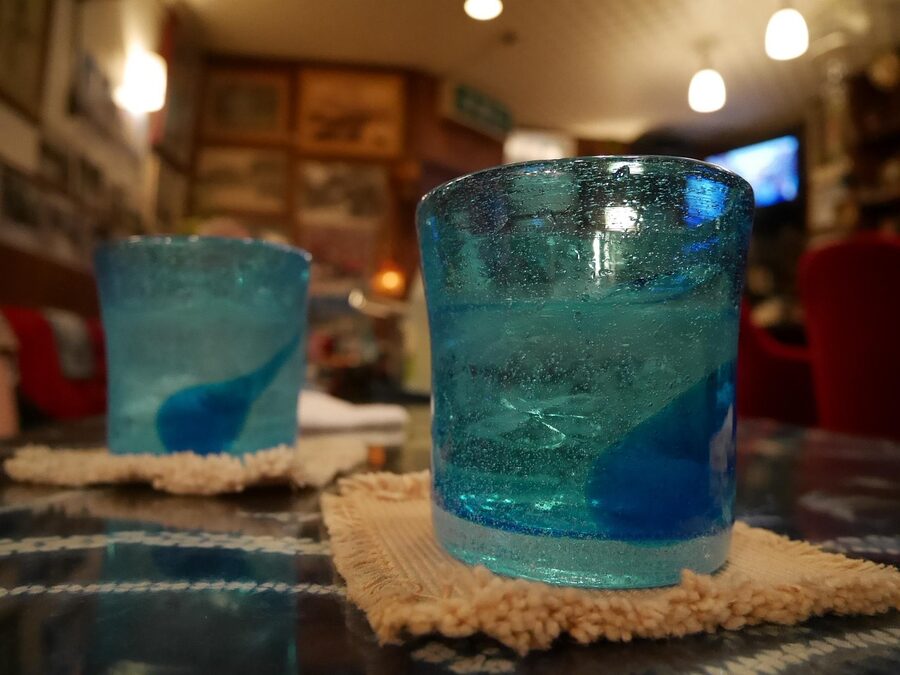
The Okinawan toast is not kanpai. It’s karii, sometimes karii-sabira, and it precedes the first drink at every meal that involves alcohol. Hold the glass at chest height, look around at everyone you’re drinking with, say “karii,” then sip. The phrase is shortened from a much longer benediction wishing happiness on everyone present. It’s the kind of small thing that, once you do it, locals warm to you considerably.
The other thing to know about: kachashi, the Okinawan freestyle dance that breaks out at the end of any wedding, festival, or long drinking party. Hands raised over your head, fingers loose, hips moving sideways. The music speeds up, the dance speeds up. If a sanshin player starts up at the bar, this is what’s coming. Do not refuse. Stand up.

Otoshi, kīpu, and what to expect on the bill
Most Okinawan izakaya charge an otoshi, a small mandatory snack that comes with the cover, between ¥300 and ¥800 a head. It’s automatic, it’s not optional, and arguing it off the bill marks you as a tourist trying to game a system that’s been running for decades. The izakaya etiquette piece covers the practical mechanics of ordering, paying, and the otoshi convention if you want the longer version.
Awamori glass pours run ¥500–800 for young flagship bottles, ¥800–1,500 for kusu in the five-to-ten-year range, and ¥2,000–3,500 for the rare bottles at meister bars. Bottle keeping (kīpu) is common: you buy a 720ml of your favourite, the bar labels it with your name, and it sits behind the counter for next visit. Most kept bottles run six months. Mention this to the bar if you’re coming back.
The wider picture: shochu, sake, and how awamori fits in Japan
Awamori is officially classified as a type of shochu by Japanese tax law (honkaku awamori, “true awamori,” is a legally protected designation), but in practice it sits in its own category. Most mainland Japanese drink it rarely. Most Okinawans drink it daily. The mainland palate, schooled on sake and barley shochu, often finds awamori too sharp, too dry, too unfamiliar. Outsiders who like Scotch tend to take to kusu fast.
If you’re putting together a wider drinking-Japan trip, this is where the cluster connects. The sake guide covers the brewed-rice side, and if you want to see brewing in person on the way through Honshu, the sake brewery tours from Tokyo piece pairs naturally with this one. The Japanese whisky guide covers the post-war single-malt obsession. Awamori sits below both of them in profile and above both in age. Six hundred years of Okinawan distilling makes it the country’s oldest distilled spirit by a comfortable margin.
For city eat-and-drink combinations on the way down to or up from Okinawa, the Fukuoka eat-and-drink guide is the most natural stopover (Fukuoka is the closest mainland city, two hours by plane from Naha and a major shochu and yatai town in its own right). Going the other way, Sapporo sits at the opposite end of the country and runs a very different beer-and-seafood drinking culture, useful as the contrast leg if you want to bookend a Japan trip from southernmost to northernmost. Osaka and Kyoto work better as front-loading legs of a trip; Tokyo is where most Okinawan-themed bars in mainland Japan operate, including a handful of awamori-only specialist places in Shinjuku and Setagaya, and a short walk from many of the Tokyo whisky bars in Ginza if you want a contrast pour after dinner.
Getting around Okinawa: practical bits
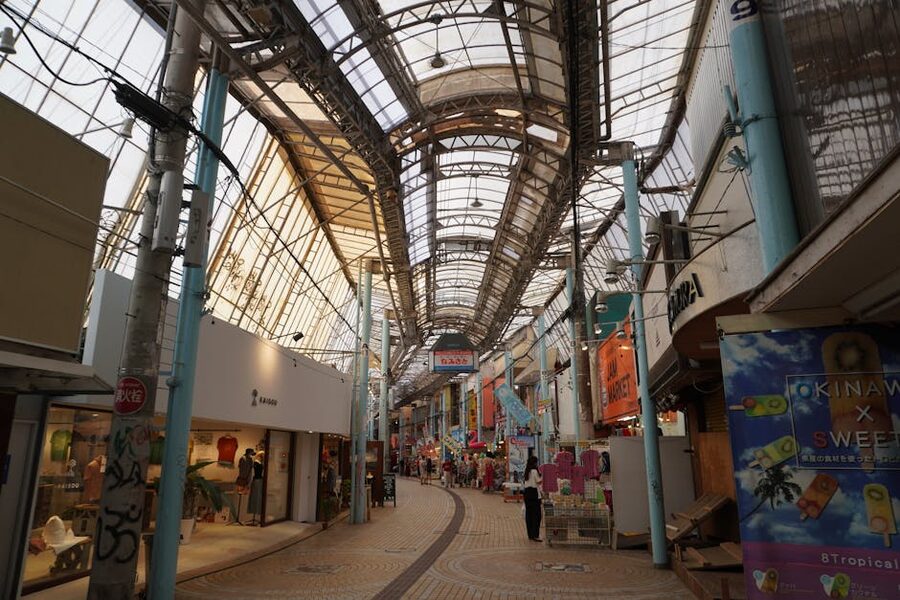
Yui Rail is the only train, runs north-south through Naha from Naha Airport to Tedako-Uranishi, and gets you to Shuri (for Zuisen and the AWAMORI KAN) and Asato (for the Heiwa-dori district). Day pass ¥800. Anything beyond Naha city is buses. The Okinawa main island bus network is dense but slow: budget two hours from central Naha to Nago, three to anywhere on the Yanbaru coast.
If you’re hitting more than two distilleries outside Naha, rent a car. International driving permits are accepted; pickup at Naha Airport is straightforward; rates run ¥5,500 a day for a small car. Drinking-and-driving laws in Japan are strict, the threshold is effectively zero, and the police take it seriously. Most distilleries provide non-alcoholic koji drinks for the designated driver.
Taxi from central Naha to Chuko Distillery: about ¥2,500. To Masahiro: about ¥3,500. To Helios: too far, take a bus or rent. Within Naha, taxis are cheap and useful for the awkward last fifteen minutes from a bus stop to a bar.
What to bring home
Three bottles, at most:
- A young flagship awamori from a distillery you visited (¥1,200–2,000), to remember the place.
- A kusu in the five-to-ten-year range (¥3,000–8,000), to drink slowly over a year.
- Either a Yonaguni hanazake (¥2,500–4,000) for the curiosity, or a habushu (¥3,500 minimum for a real one) if you want the conversation piece.
Aged kusu over twenty years is too expensive to bring back as a souvenir unless you genuinely know what you’re doing with it. Save those for inside Japan, where they’re still expensive but at least the price reflects the cellar fee, not the long export route.
One last thing: the question to ask

If you only ask one thing at any awamori bar in Okinawa, ask the bartender what they’re drinking that night. Don’t ask for “the most popular,” don’t ask for “what tourists like.” Ask what they’re drinking. They’ll pour you something off the back shelf, often a small kusu from a distillery you’ve never heard of, often something that’s been sitting in a kame for fifteen years that they bought as a wedding present and forgot about. That’s the bottle you came for. That’s the one you’ll remember when you’re home.
Mr Tanaka at Chuko poured me his pick at the end of my tour. I won’t tell you which one. You’ll get your own.
 CitiesWhy Tohoku Took Over Japan’s Sake SceneThe trip almost didn't happen. I'd booked an Aomori brewery visit at the end of a rushed week, the second…
 CitiesWhy Kansai, Not Niigata, Is the Sake CapitalHyogo and Kyoto produce more sake than the next eight prefectures combined. Two of Kansai's six prefectures, side by side,…
 CitiesHokkaido Has More Whisky Distilleries Than You ThinkAsk anyone who knows a little about Japanese whisky to name a Hokkaido distillery and they’ll say Yoichi. Push them…