
The third nigiri at Sushi Sho in Yotsuya was where it landed for me. Hokkaido shima-aji, brushed with a single drop of soy, the rice still warm. The pour beside it was a junmai from Akita served at room temperature, almost room-cool, in a small ochoko cup. One bite, one sip. The fish stopped tasting like fish and started tasting like a thing the rice and the drink had been built to hold up. That was the moment I stopped ordering whatever sake the menu listed first and started paying attention.

This is a guide for the version of you who’s about to sit down at a Japanese sushi counter, or a kaiten chain, or an Osaka standing-bar sushi joint, and wants to know what to actually pour. The answer is mostly sake. Sometimes it’s beer, occasionally shochu, and once in a while a high-acid Japanese white wine that hides on the bottom of the menu. None of it has to be expensive, and almost none of it has to be pretentious.
I’ll cover sake first because it deserves the most space. Then beer, shochu, sparkling sake, and what to do with green tea (the answer is “drink it but not yet”). I’ll cover red shari versus white shari and why it should change what you order. I’ll cover temperature, which most travellers ignore and which is the single biggest dial you have. And I’ll talk about what happens when the wine list is real, because in 2026 some good Tokyo sushi places have started pouring assyrtiko alongside the toro and it’s not as silly as it sounds.
In This Article
- The shortest possible version
- Comparison table: what to pour with what
- Why sake works with sushi at all
- The sake categories that matter at a sushi counter
- Honjozo – the workhorse
- Junmai – the all-rounder
- Junmai ginjo and ginjo – the aromatic pour
- Kimoto, yamahai, namazake – the wild ones
- Temperature is the secret dial
- Counter omakase: how to drink your way through it
- Counter etiquette: pouring, ordering, paying
- Red shari versus white shari and why it should change your sake
- Regional matches: drink the local sake
- Tokyo / Edomae
- Niigata
- Hokkaido
- Ishikawa and Kanazawa
- Kansai (Osaka, Kyoto)
- Kyushu
- Beer and sushi: better than people say
- The kaiten-zushi reality
- Sparkling sake: when it actually earns its place
- Shochu and umeshu: the rare-but-good options
- Wine at the sushi counter: when it works
- Tea: the after-pour, not the with-pour
- What I order at three actual counter types
- The ¥3,500 kaiten lunch (Sushiro, Kura, Genki)
- The ¥8,000 mid-range counter omakase (Tokyo, neighbourhood-level)
- The ¥25,000 high-end omakase (Sushi Sho, Sushi Saito-tier)
- Common mistakes and what to do instead
- What to ask the counter, in Japanese, when in doubt
- Bottles to actually look for
- The pairing nobody gets right and the one you should remember
The shortest possible version
If you’re scanning this on your phone five minutes before a reservation:
- Default sake: dry junmai, served cool but not iced, prefecture matched to where you are if possible. Niigata if you’re in Tokyo. Hokkaido if you’re in Sapporo. Ishikawa if you’re in Kanazawa.
- White fish, shellfish, lean tuna: light, dry sake (a junmai or honjozo, not a heavily-aromatic ginjo).
- Fatty tuna, eel, ikura, uni: something with weight – aged junmai, a kimoto or yamahai, or a slightly warmed sake (40–45°C).
- Vinegar-heavy nigiri (kohada, saba, shime-saba): sake with acidity. Yamahai, kimoto, or namazake. Avoid the soft, sweet, fruity ginjo.
- Sweet glazed pieces (anago, tamago): dry sake, definitely not sweet. Kill the sugar with kireji (“clean cut”).
- Beer, not sake: kaiten-zushi at a chain, conveyor belts, station-platform counter sushi. Match the speed of the meal, not the food.
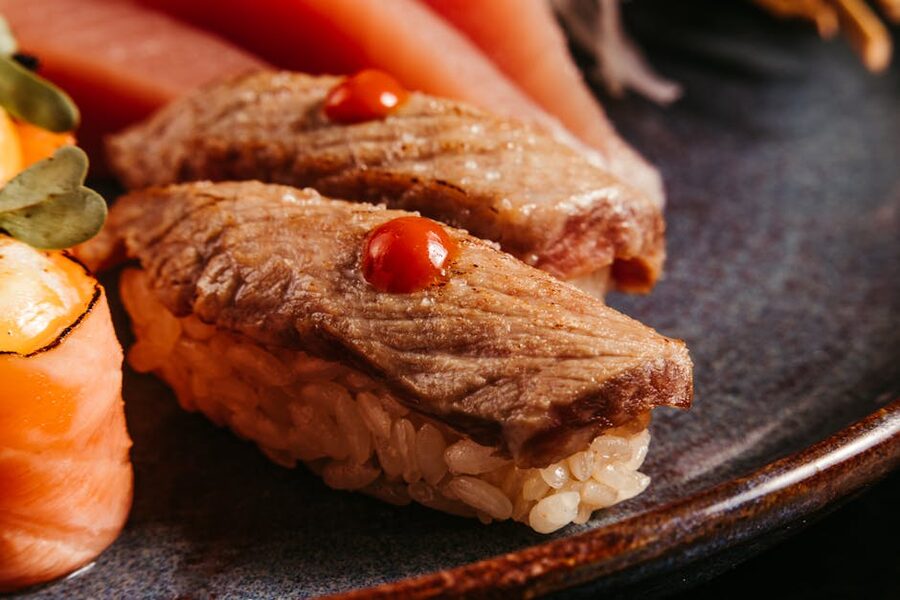
Comparison table: what to pour with what
The way I think about this when I sit down: I picture the sushi rolling out in three rough flavour zones (light/clean, oily/rich, sour/salty), and I pick a pour for each. Here’s the table I’d give a friend who asked.
| Sushi style | Best pour | Temperature | Why it works |
|---|---|---|---|
| White fish (tai, hirame, suzuki) | Honjozo or light junmai | 10–15°C (cool) | Subtle umami, no aromatics overpowering the fish |
| Lean tuna akami | Dry junmai or junmai ginjo | 10–15°C | Acidity cuts the iron, dry finish keeps it lean |
| Fatty tuna (chu-toro, o-toro) | Aged junmai or kimoto | 15–20°C (room) or 40°C warm | Body matches body, warmth amplifies umami |
| Salmon (sake) | Junmai with mineral edge | 10–15°C | Salmon is fattier than people think; needs cleansing |
| Yellowtail (hamachi, buri) | Junmai ginjo | 10–15°C | Slight fruit lifts the buttery oil |
| Mackerel, gizzard shad (saba, kohada) | Yamahai or kimoto | 15–25°C | Sake’s own acidity meets vinegar acidity |
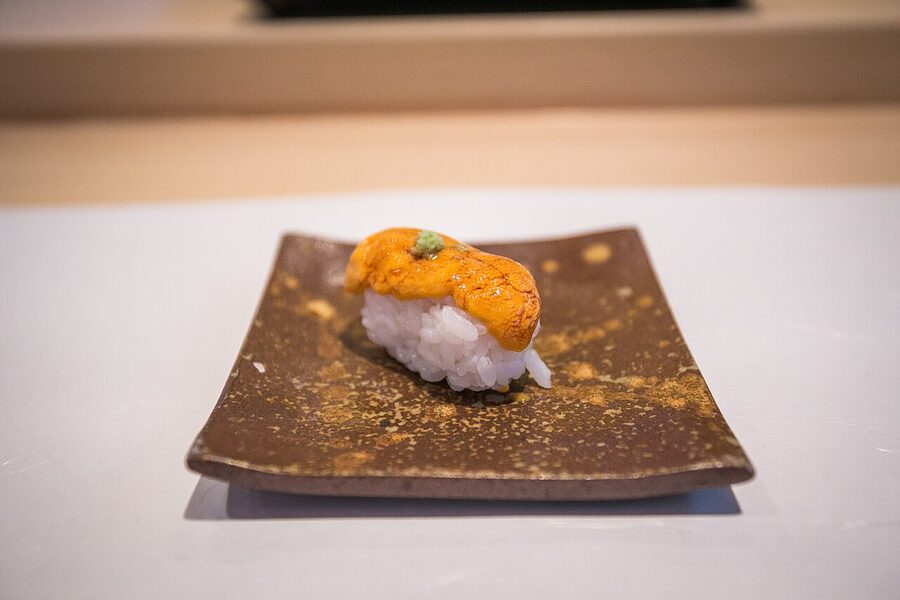
| Sea urchin (uni) | Sparkling sake or junmai daiginjo | 5–8°C (cold) | Cuts the cream; bubbles reset the palate |
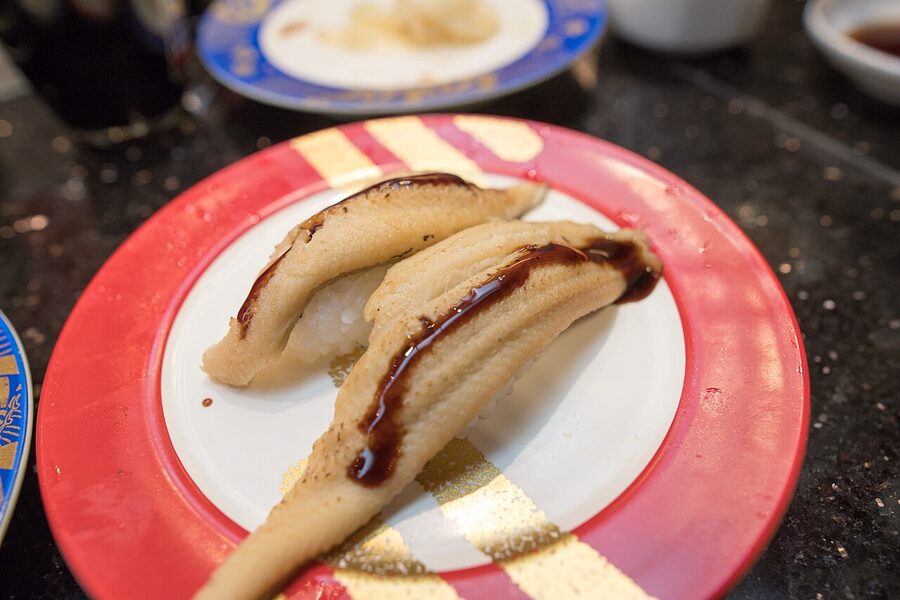
| Eel (anago, unagi) | Dry junmai or atsukan hot sake | 15–20°C or 50°C hot | Sweet glaze needs dry contrast or amplified umami |
| Tamago, pickles, sweet pieces | Dry honjozo | 10–15°C | Strip away the sugar, finish clean |
| Mixed kaiten platter | Asahi Super Dry or a single junmai | Cold beer; cool sake | One drink that doesn’t fight anything |
I’ll unpack each row in the body, and I’ll be honest about which of these pairings I’ve actually tested at the counter and which come from sake-pairing sessions I’ve sat through. (The aged-junmai-with-toro one is borrowed; the sparkling-sake-with-uni I figured out on my own and then found a chef in Toyama doing the same thing.)
Why sake works with sushi at all
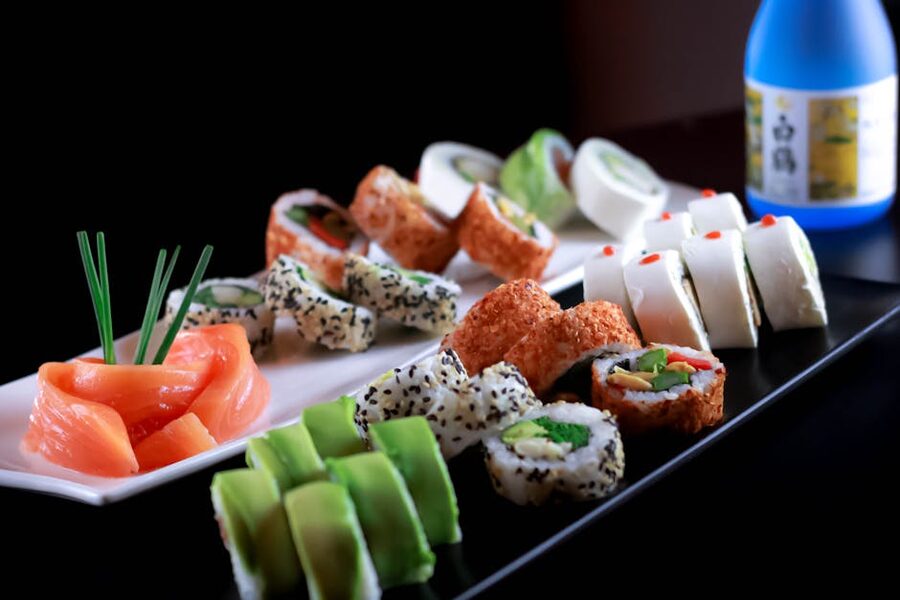
Most other guides tell you sake pairs with sushi because they share umami. That’s true and it’s also a half-answer. The fuller version: sake pairs with sushi because of what it doesn’t have.
Wine has tannins, sulphites, and dissolved iron from grape skins. Iron and sulphites react with the polyunsaturated fats in fish to produce aldehydes – the same compounds that make day-old fish smell like day-old fish. That’s why a glass of cabernet with a piece of toro tastes off in a way you can identify as fishy without being able to say why. Sake contains almost none of those compounds. It’s brewed not fermented from skins; the iron levels are near zero.
This is also why “sake pairs with everything” is a useful lie rather than a real claim. Sake won’t fight sushi the way a tannic red will. But not fighting is the floor, not the ceiling. The good pairings happen when you start choosing sake on purpose: matching weight, matching acidity, picking the temperature that does what the dish needs done.
If you want the long version of how sake gets made and what the categories actually mean, the sake travel guide covers it; if you want the kanji on the label decoded, how to read a Japanese sake label is the field reference. This piece assumes you can roughly tell junmai from ginjo and want to know what to actually order.
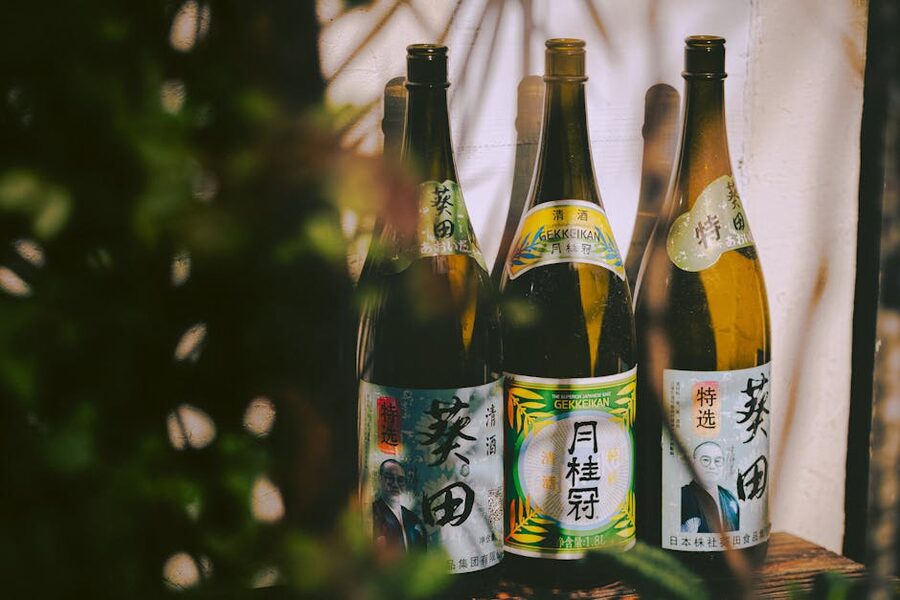
The sake categories that matter at a sushi counter
You don’t need the full classification system. You need four categories.
Honjozo – the workhorse
Brewed with a small amount of distilled alcohol added at the end. The added alcohol pulls more aroma out of the rice and gives a lighter, drier finish. Honjozo is what most older sushi counters in Japan poured before ginjo became fashionable, and it remains the most underrated category for sushi pairing. Light, clean, doesn’t show off. Try Kikusui Funaguchi from Niigata or Tamanohikari Honjozo from Kyoto. Around ¥700–900 a glass at a normal counter, ¥500 at a kaiten chain.
Junmai – the all-rounder
Pure rice sake, no added alcohol. Heavier on the palate than honjozo, more umami, more body. This is the safe default if you can only pick one. A dry junmai (look for a positive Sake Meter Value, +3 to +8) handles most of the sushi spectrum without complaining. Kamoizumi, Senkin, Tedorigawa, Kikuhime – you’ll see these names on lists across Tokyo and the Hokuriku coast.
Junmai ginjo and ginjo – the aromatic pour
Rice polished to 60% or below, lower fermentation temperatures, more fruit-and-flower aromatics. Apple, melon, white peach, banana, pear – depending on the yeast strain. Beautiful with shellfish (scallop, akagai, abalone), excellent with white fish, and good with light tuna akami. Catastrophic with vinegar-cured pieces like kohada or shime-saba: the aromatics fight the vinegar and you taste neither cleanly. This is the most common mistake travellers make at the counter, because the menu makes ginjo sound premium.
Kimoto, yamahai, namazake – the wild ones
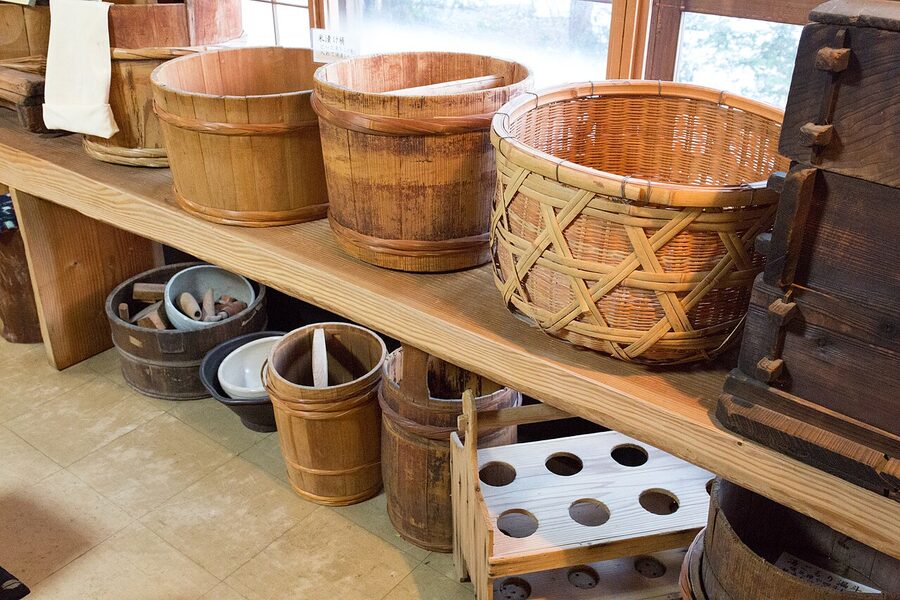

Made with the older yeast-and-lactic-acid starter methods that dominated until industrial fast-brewing took over in the 20th century. They have higher acidity, more savouriness, often a feral funk. Kimoto and yamahai are the two old methods (kimoto involves the famous yamaoroshi rice-mashing; yamahai skips the mashing). Namazake is unpasteurised – alive, fizzy, sometimes wild.
These are the pairings that actually surprise people. A kimoto from Daishichi (Fukushima) with a piece of shime-saba is one of the better sushi-counter moments I’ve had. A yamahai from Tedorigawa (Ishikawa) with grilled aburi-toro turns the meal into something you’d describe to friends afterwards. Namazake is harder – the bottles don’t travel well and you mostly drink them in the prefecture they’re brewed in – but if a Niigata or Akita counter has one on the list in winter or early spring, take it.
Temperature is the secret dial
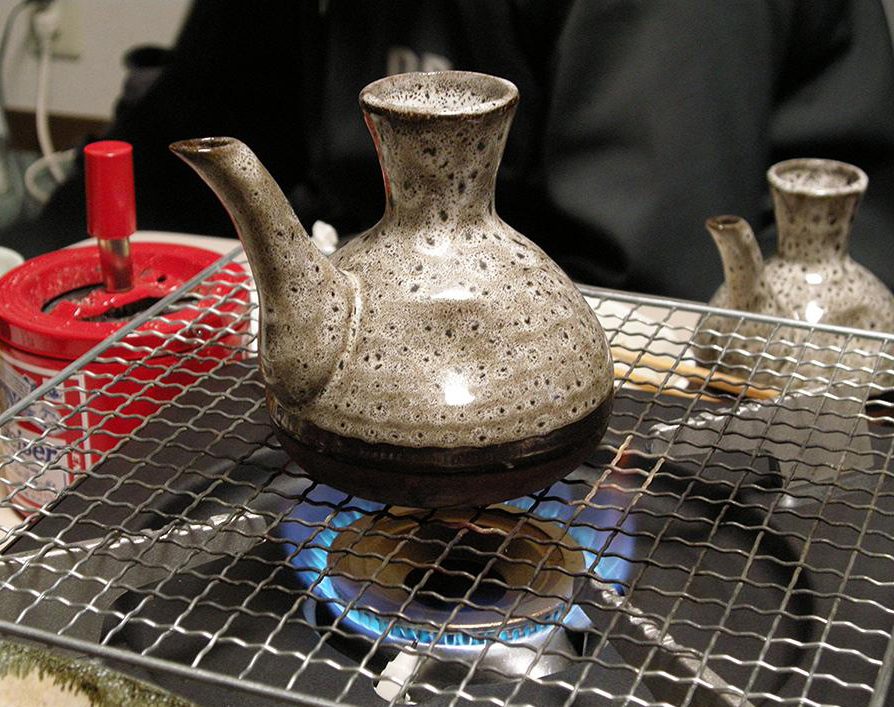

The thing nobody tells you on your first sushi-counter trip: the same bottle of sake is three or four different drinks depending on temperature. Warm it up and the sweetness rises and the bitterness softens. Cool it down and the acidity sharpens and the aromatics quieten. Get this wrong and even a perfect bottle can taste like nothing.
The Japanese names for the bands aren’t just poetic. They’re useful shorthand for what each band is good at:
- Yuki-bie (“snow chilled”), 5–10°C: for delicate aromatic ginjo, sparkling, and namazake. Pairs with white fish, scallop, sweet shrimp.
- Hana-bie (“flower chilled”), 10–15°C: the all-purpose sushi temperature. Honjozo, junmai, junmai ginjo all show well here. Default if you don’t know what to ask for.
- Suzu-bie (“cool breeze”), 15–20°C: slightly above fridge cold. Junmai bodies open up. Good for fattier pieces.
- Jo-on (room temp), 20–25°C: the sake’s own structure shows. Aged junmai, kimoto, yamahai work best here.
- Hitohada-kan (“body warm”), 35–40°C: the gentle warm pour. Everything softens. Pairs with grilled, marinated, or aburi pieces.
- Nuru-kan, 40–45°C: proper warm. The classic pour for kimoto and yamahai. Magic with aburi-toro.
- Atsukan (“hot”), 50°C+: dry, alcoholic, bracing. Old-school. Better with heavily glazed anago than with raw nigiri.
I cover the warm end of this in more depth in the field guide to atsukan; for sushi the takeaway is simpler. Most travellers default to fridge-cold and miss everything. Ask the counter for hana-bie or suzu-bie if you want the sake’s character to actually show.
Counter omakase: how to drink your way through it
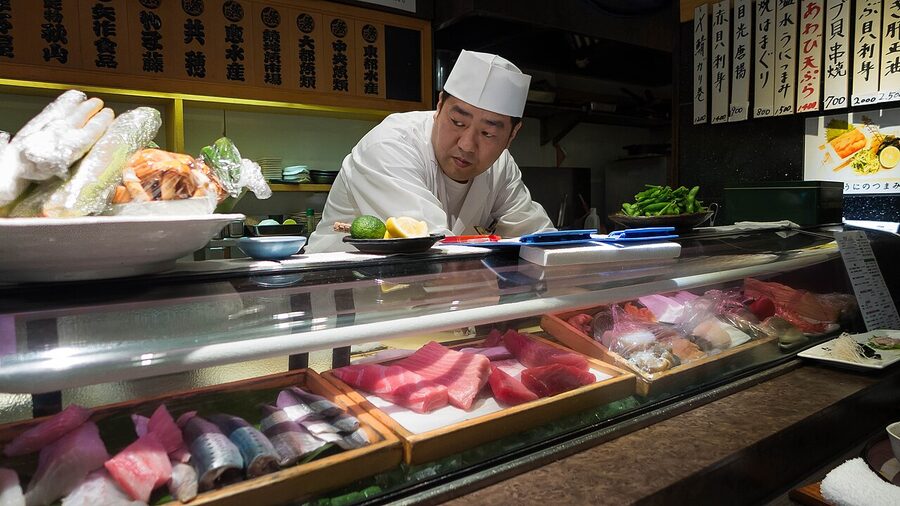
An omakase course at a real Edomae sushi bar runs in a deliberate sequence. You don’t order; the chef picks the order. The sequence has internal logic, and your drinks should respect it.
The classic shape:
- Light starters: a sashimi piece or two, often white fish or shellfish.
- White fish nigiri: tai, hirame, sometimes amberjack.
- Lean tuna akami.
- Ascending fattiness: chu-toro, o-toro.
- Vinegar-cured pieces: kohada, shime-saba.
- The shellfish suite: akagai, mirugai, ikura, uni.
- Cooked or marinated finish: anago, tamago.
- Soup, sometimes a hand roll.
The drinking order that respects this:
- First pour: something light, dry, cool. A honjozo or a crisp junmai. You’re calibrating your palate. Don’t open with daiginjo; the aromatics will dominate the early subtle pieces.
- Second pour, around the toro: shift up in body. A junmai with weight, an aged junmai, or a kimoto. If you only have two pours in you, this is where the second one earns its keep.
- The vinegar-pieces moment: if the chef is doing a proper kohada or shime-saba, ask for a yamahai or a high-acid junmai. Trust me on this.
- Around the uni: a small pour of sparkling sake or a junmai daiginjo if the budget allows. This is the moment most worth indulging on.
- The cooked finish: warm sake. Even a small carafe of nuru-kan with the anago. The anago glaze will reward it.
This sounds like a lot. In practice you’d order two or three pours across an 18-piece omakase, not seven. The point is to think in zones rather than picking one bottle and drinking it through everything.
Counter etiquette: pouring, ordering, paying
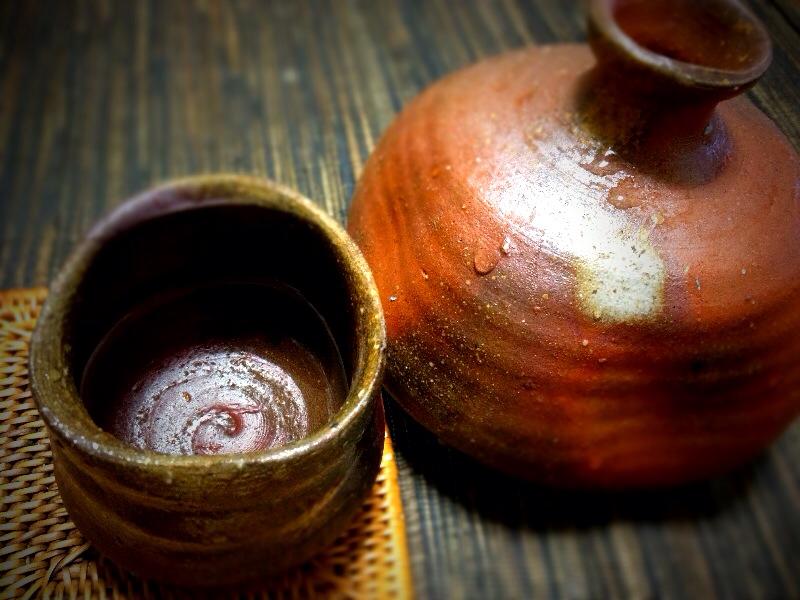

The mechanics most foreign travellers don’t get told:
- Pour for the person beside you, not for yourself. They’ll pour back. If you’re alone, the chef may pour for you the first time; thereafter pour your own.
- Hold the cup with both hands when receiving. Both hands when pouring too if the person is older or higher-status. Two hands is the formal default; one hand is fine among friends.
- Order one cup, one brewery at first. Many counters serve sake by the glass (one go, 180ml) or by the smaller half-go (90ml). Take a half-go of one, finish it, then ask for the next. You’ll taste more by sequencing than by drinking a full glass of one bottle.
- Sashimi and sake yes, nigiri and sake also yes. The old rule was “no rice and rice together” – meaning no sake during the nigiri course because rice + rice. That rule is dead. Modern Edomae chefs pour sake right through. The rule’s only ghost: the very last pieces (tamago, makimono) tend to come without a pour. Drink your remaining sake before then.
- Drink water alongside. Counter sushi is salty – the soy and the vinegar build up. Tea is also offered. Sip one between pours.
- Cash is still safer than card at small counters in Tokyo and the smaller cities. Most major omakase places take cards now (Sushi Sho, Sukiyabashi Jiro, Sushi Saito), but the ¥3,000–7,000 mid-range counters in places like Nogizaka, Hatchobori, Tsukiji are very often cash only.
If you want the broader counter-and-bar etiquette, the izakaya etiquette piece covers the pouring rituals in detail. Sushi-counter etiquette inherits the same vocabulary.
Red shari versus white shari and why it should change your sake
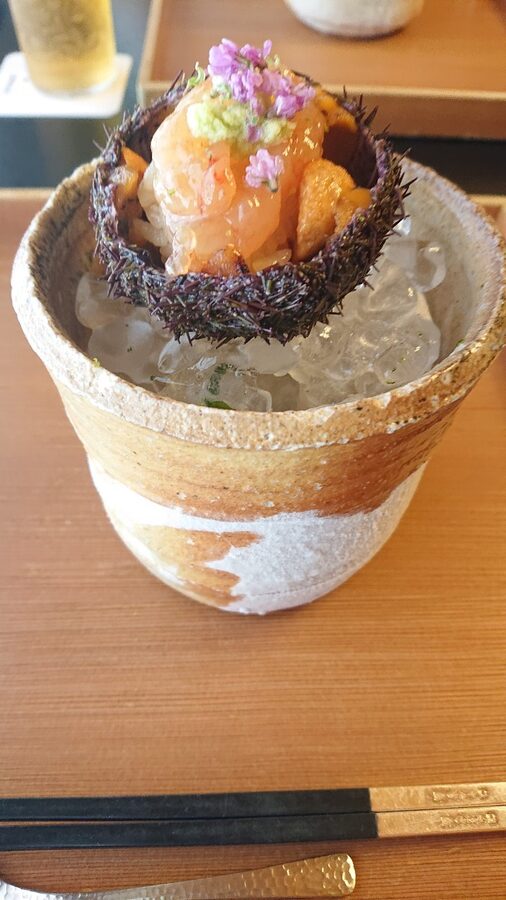
Most travellers don’t notice the rice. The rice changes everything.
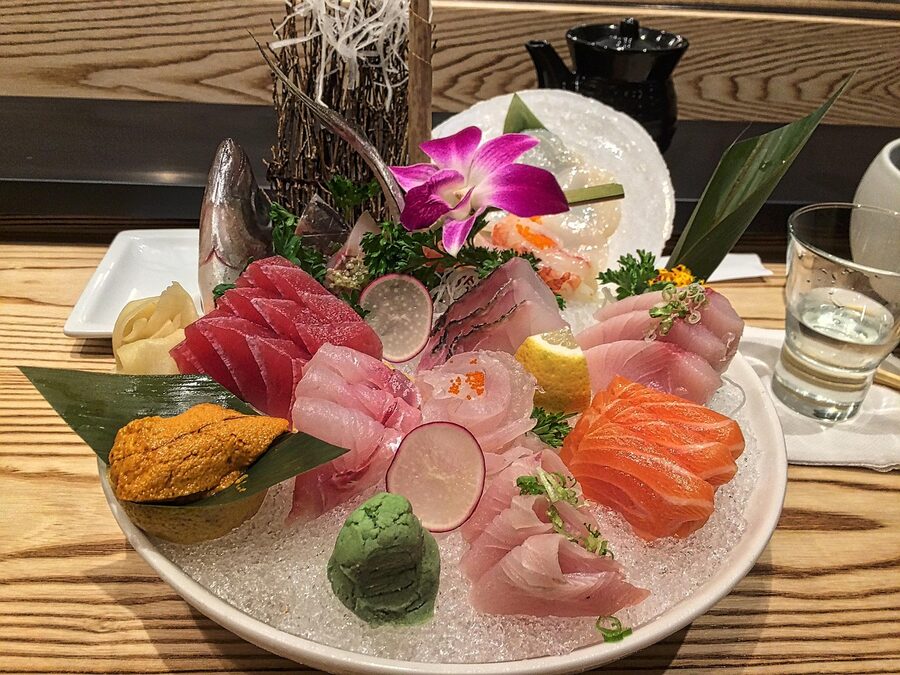
White shari is seasoned with white rice vinegar (komezu), salt, and a small amount of sugar. The flavour is clean, slightly sweet, lets the fish dominate. It’s the modern default at most counters and almost all kaiten chains.
Red shari (aka-shari) is seasoned with akazu – red rice vinegar made from sake-brewing lees. It’s the older Edomae style, popular before refrigeration when stronger seasoning helped preserve the fish. The flavour is darker, earthier, distinctly umami, with a tang that comes through every bite. Mizkan’s Yamabuki is the famous brand; Tamano’s Iio Jozo is the artisan reference.
If a counter is using aka-shari (some Tokyo Edomae purists do; many Kanazawa and Kanazawa-influenced counters do; Sushi Sho in Yotsuya does), your sake choice should shift heavier and drier. The red vinegar is already doing what a yamahai does – supplying acidity and savouriness. A floral ginjo will get steamrolled. Match it with a kimoto, an aged junmai, or a quiet honjozo. Avoid sweet, fruity sake.
If you don’t know which shari your counter uses, ask: “Aka-shari desu ka, shiro-shari desu ka?” Or just look. Aka-shari is visibly tan, sometimes almost grey-brown. White shari is white. The difference is obvious once you’ve seen both.
Regional matches: drink the local sake
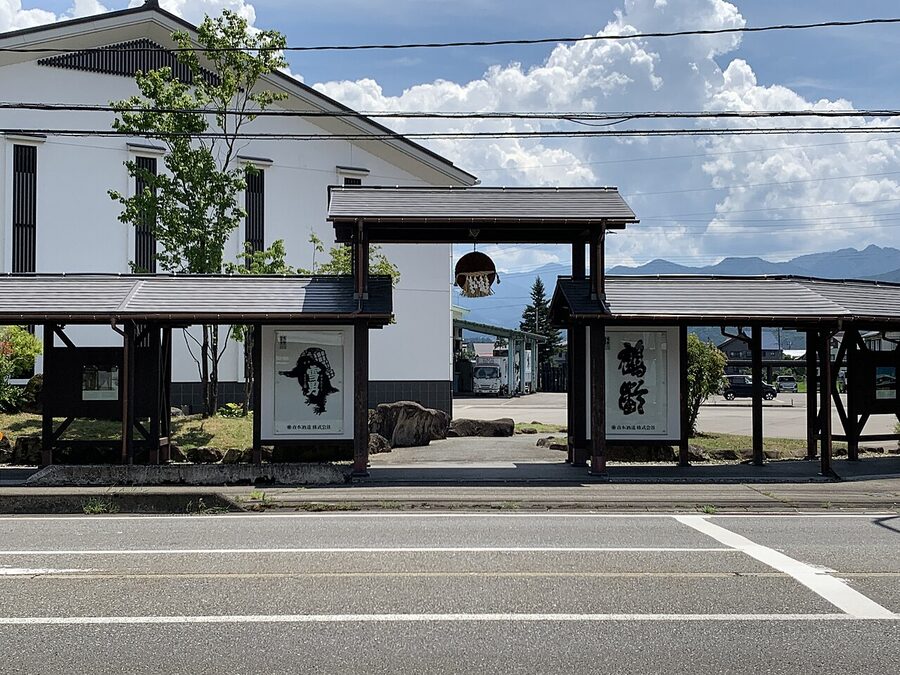

One of the better travel rules I’ve found: the sushi at any given coastal sushi counter in Japan was built to go with the sake brewed in that prefecture. The reverse is also true. They co-evolved across the same water table, the same rice harvests, the same winters.
The rough map:
Tokyo / Edomae
Edomae sushi originated in Tokyo Bay in the 1820s as fast street food. The sake breweries that grew alongside it were mostly in Saitama, Tochigi, and Chiba – though Tokyo itself had a brewing scene that’s slowly returning. Sawanoi (in Ome, western Tokyo) and Toshimaya (Higashimurayama) are the two surviving Tokyo brewers worth ordering at an Edomae counter. Saitama’s Bunraku and Chiba’s Tonoike pour beautifully with traditional Tsukiji-style nigiri.
Niigata
Snow country. Soft water, polished rice, the whole “tanrei karakuchi” (light, clean, dry) school of sake. Hakkaisan, Kubota, Koshi-no-Kanbai, Yoshinogawa – these are the names you’ll see at any decent Tokyo sushi counter as the “Niigata pour”. Niigata sushi gets sweet shrimp (amaebi), nodoguro (rosy seabass), and unbelievably good ikura in season. The local match is junmai ginjo, cool. Niigata covers the whole pillar in the Niigata sake region piece.
.jpg)
Hokkaido
Sapporo gets cold, and the sake handles it. Otokoyama in Asahikawa, Kunimare in Mashike, Kobushi in Yoichi. The sushi here is dominated by Hokkaido seafood: hokkigai surf clam, botanebi spot prawn, salmon roe, hairy crab. The pairing matches: dry, bracing, often slightly warmed. The Sapporo guide walks through which counters serve which.
Ishikawa and Kanazawa
The Sea of Japan side. Kaga rice, soft water, breweries like Tedorigawa, Kikuhime, Manzairaku, Fukumitsuya. Kanazawa sushi is heavier on aka-shari, has a sweet-shrimp tradition (the local amaebi are arguably better than Niigata’s), and produces nodoguro and shiroebi (white shrimp) found almost nowhere else. The local kimoto and yamahai pours match the heavier shari. The Kanazawa guide has the counter recommendations.
Kansai (Osaka, Kyoto)
Osaka has hakozushi (pressed sushi) and battera (mackerel pressed sushi), not just nigiri. The Kansai sake style is sweeter and rounder than Niigata’s; Hyogo’s Nada area produces most of it. Kenbishi, Hakutsuru, Kiku-Masamune. The pairing logic shifts: with pressed sushi the rice density goes up, the umami goes up, and you want sake with body to match. Kimoto rules here too. Osaka eat-and-drink coverage is in the Osaka guide.
Kyushu
The exception. Kyushu drinks shochu more than sake; the culture is genuinely different. If you find a sushi counter in Fukuoka serving local mugi or imo shochu beside the saba, take it. The shochu primer covers what to order.
Beer and sushi: better than people say
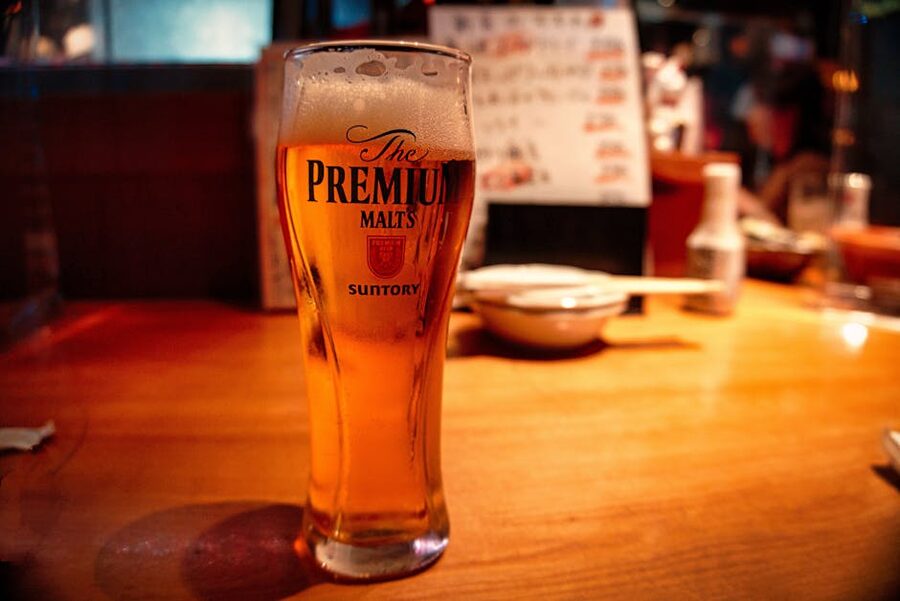
Beer with sushi is a quiet credibility. Most sushi-pairing guides skip it. Most Japanese drinkers don’t.
The reason: the typical Japanese pilsner-style lager (Asahi Super Dry, Sapporo Black Label, Yebisu Premium) is bitter enough to cut fish oil, dry enough not to clash with vinegar, and cold enough to handle palate fatigue across a 90-minute meal. At the kaiten chains – Sushiro, Kura, Kappa – beer outsells sake five to one. There’s a reason.
What works:
- Crisp lager (Asahi, Sapporo, Yebisu, Kirin Ichiban) with mixed kaiten platters. One drink that handles everything from salmon to corn-mayo gunkan. Cheap, fast, no decisions.
- Pale ale (most decent Japanese craft) with vinegar-heavy pieces. The hop bitterness meets the vinegar acidity better than most sake.
- Wheat beer (hefeweizen) with fattier salmon and toro. The banana-clove yeast notes echo the fish’s sweetness without fighting it.
What doesn’t:
- Heavy stout, IPA-heavy double IPA, anything roasted. Will steamroll the fish.
- Lambic, sour beer. Already too acidic. Will fight the rice vinegar.
- Hazy NEIPA. Too fruity, too soft, no cutting power.
If you’re at a craft-beer place that also serves food, the lighter Japanese craft styles (Hitachino White Ale, Coedo Marihana, Yo-Ho Yona Yona Ale) handle sushi well. The wider scene is in the Japanese craft beer guide.
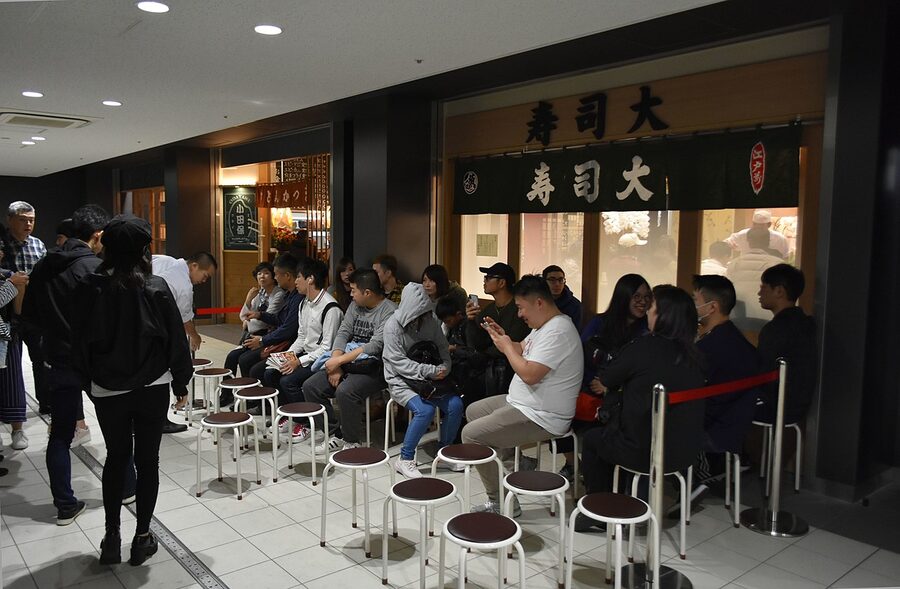
The kaiten-zushi reality
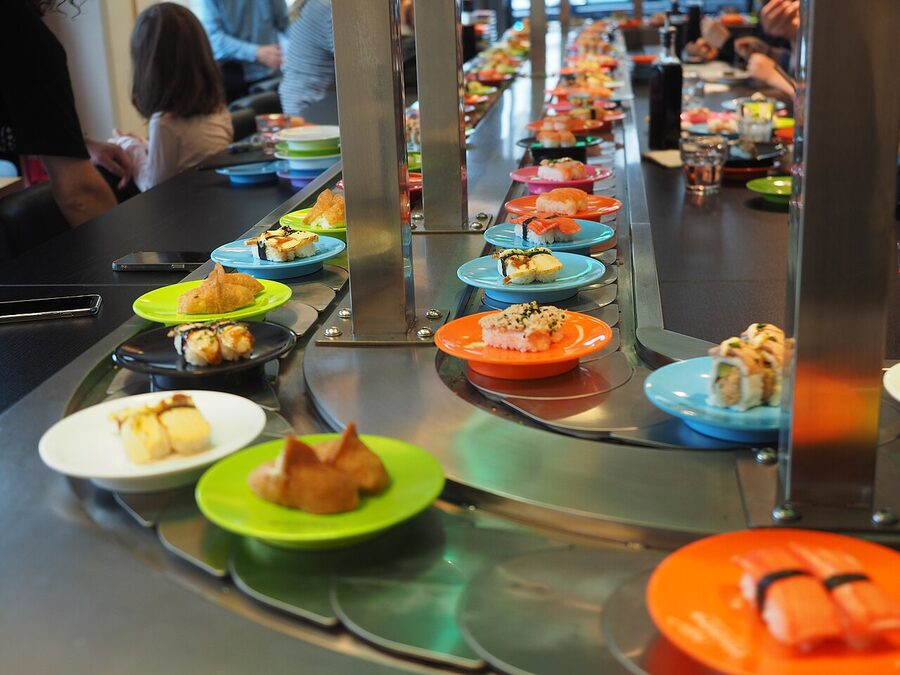

Kaiten chains – Sushiro, Kura, Kappa, Hama-Sushi, Genki Sushi – aren’t the same meal as a counter omakase. The fish is mass-supplied, the shari is machine-formed (it’s actually pretty good machine-formed shari), the prices are ¥100–500 a plate, and you order from a touchscreen.
The drink advice changes accordingly:
- Beer over sake. The kaiten sake is uniformly cheap house-brand, served in machine-fed plastic cups. The beer is tap Asahi or Kirin and it’s better quality.
- If you do order sake, get one cup, drink fast. Don’t bother with temperature decisions. Kaiten sake is cold-pour and that’s the only option.
- Highball is fine. Sushiro and Kura serve premixed Japanese highball that goes well with the simpler nigiri and surprisingly well with the fattier salmon. Cheap, refreshing, doesn’t pretend to be more than it is.
- Skip the wine. The wine list at a kaiten is supermarket bottles at restaurant markup. No version of this works.
The kaiten experience has its own virtues. Don’t try to drink it like an omakase.


Sparkling sake: when it actually earns its place
Sparkling sake (発泡酒, happoshu) is a category that’s grown a lot in the last decade. Bottle-fermented styles like Mio (Takara Shuzo), Kakurei Suzune (Aoki Shuzo), Awa Sake brands like Hakkaisan Awa – the latter two are restaurant-quality, not just cute novelty.
What it does at a sushi counter:
- Resets the palate between courses. Bubbles and acidity together do what champagne does in a Western tasting menu.
- Pairs with uni and ikura. The cream-and-salt richness of either gunkan needs lift, and bubbles deliver it.
- Works with shellfish (akagai, mirugai, hotategai). The minerality of sparkling sake echoes the brininess.
What it doesn’t do: anything heavy. Don’t pour it with toro, don’t pour it with anago, don’t pour it with anything warm. It’s a mid-meal punctuation mark, not a long pour.
Order it by the half-bottle if you can; one full bottle across two people across an omakase is more than enough.
Shochu and umeshu: the rare-but-good options
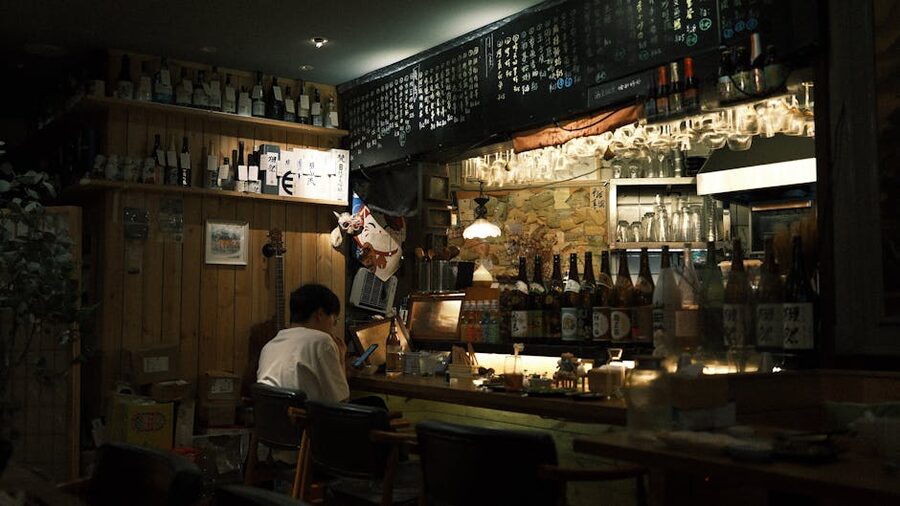
Most sushi counters don’t serve shochu, especially in Tokyo. The handful that do tend to be either Kyushu-themed or run by a chef who personally drinks it. When it’s on the list, it’s usually one of:
- Mugi (barley) shochu, oyuwari (split with hot water). Pairs with grilled or marinated pieces – aburi-toro, anago, marinated mackerel.
- Imo (sweet potato) shochu, on the rocks. The earthy character meets aka-shari well; in a Kanazawa or Hokuriku-influenced counter, this is genuinely good.
- Awamori from Okinawa. Almost never with sushi. Skip unless the chef specifically suggests it.
Umeshu is a separate question. It’s sweet, fruity, and it should not appear at the counter. Save it for after the meal as a digestif. The traveller’s guide to umeshu covers when it shines, and the answer is “not next to your saba”.
Wine at the sushi counter: when it works
This used to be heresy. In 2026 Tokyo it’s almost mainstream. Sushi Yoshitake, Sushi Yamamoto, Sushi M, Sushi Saito on certain nights – some of the better Edomae counters now offer wine pairing alongside the traditional sake list.
The wines that work:
- Champagne. Always. Vintage rosé champagne with toro is the most reliable luxury pairing in Tokyo right now. Cuts fat, doesn’t clash with vinegar, lifts uni.
- Assyrtiko (Greek). High acidity, mineral, no oak. The closest white wine to a kimoto sake structurally. Pairs with most of the white-fish course.
- Chablis (unoaked). Same logic. Avoid Premier Cru with oak; stick with village or AOC straight.
- Mušar Blanc, dry sherry (fino, manzanilla). Their oxidative quality echoes aged junmai.
The wines that don’t:
- Anything red. Iron, tannin, the fish-oil reaction. There’s a reason no serious sushi-counter sommelier pours red.
- Sauvignon Blanc, especially Marlborough. The grassy gooseberry notes fight the wasabi’s vegetal heat.
- Chardonnay with oak. Vanilla and butter steamroll subtle fish.
- Sweet whites (Riesling Spätlese, Moscato). The sugar makes the vinegar taste sour.
If your counter offers a wine pairing, look at the list before you commit. If they’re pouring assyrtiko or champagne, accept. If the list is dominated by big oaked Chardonnay, switch to sake.
Tea: the after-pour, not the with-pour
Hot agari (the strong green tea served at sushi counters) is meant for the end of the meal, not the middle. It’s brewed strong specifically to clear residual fish oils from the palate at the close. Drinking it through your nigiri course will mute everything – the tannin shuts down the rice’s sweetness and dulls the fish.
The right rhythm: water and sake (or beer) through the meal, then agari at the end with the makimono and tamago. If you’re a non-drinker the right substitute is mineral water or barley tea (mugicha) through the meal, then agari at the end. Skip green tea during the nigiri.
What I order at three actual counter types
The ¥3,500 kaiten lunch (Sushiro, Kura, Genki)
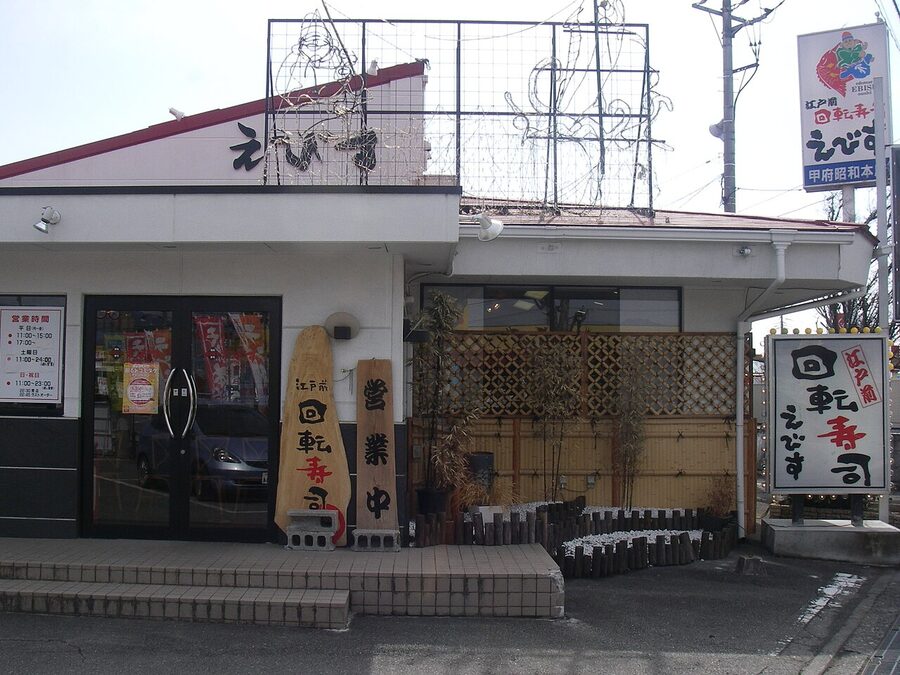
One Asahi Super Dry medium. Maybe a refill if I’m staying long. I’ll pass on the sake list entirely. Total drink spend: ¥500–1,000.
The ¥8,000 mid-range counter omakase (Tokyo, neighbourhood-level)
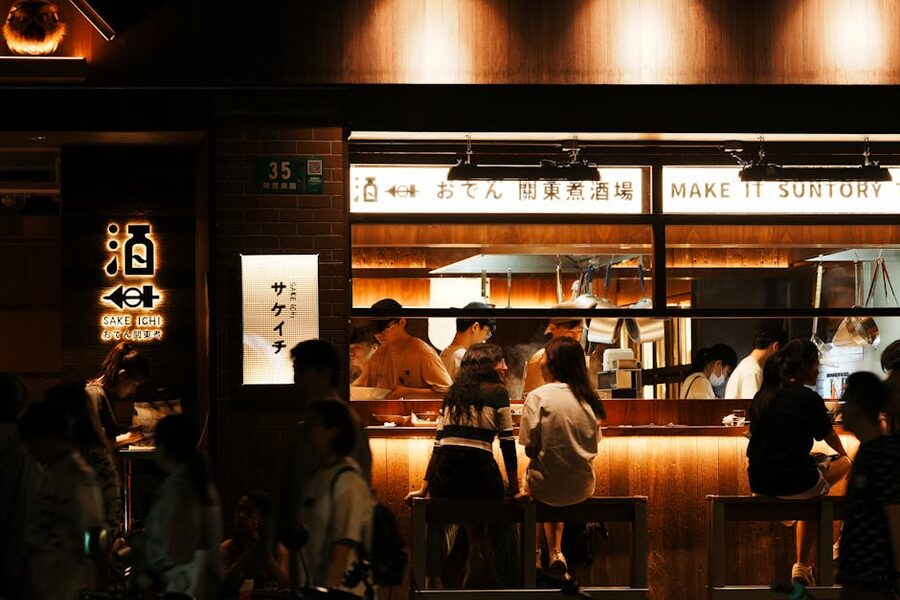
Half-go of Niigata honjozo to start (Hakkaisan Tokujo or similar). Half-go of a Niigata or Saitama junmai with the chu-toro arc. If they have it, a small carafe of nuru-kan with the anago. Total drink spend: ¥2,500–4,000. Total meal: ¥10,500–12,000.
The ¥25,000 high-end omakase (Sushi Sho, Sushi Saito-tier)
I’ll do a sake pairing if they offer it – it’s almost always priced at ¥6,000–10,000 for four to six pours, which is fair given the bottles being opened. If not, I’ll order from the list with the chef’s input: a kimoto, a yamahai, a champagne pour for the uni course, and an aged junmai for the toro. Total drink spend: ¥6,000–15,000. Total meal: ¥30,000–40,000.
For the ¥25,000-and-up tier, sit at the counter, ask the chef what they’d pair, and accept the suggestion. The pairing knowledge at that level is on the chef’s side of the bar, not the customer’s. The Japan drinking itineraries have a sushi-counter route built around exactly this.
Common mistakes and what to do instead
The mistakes I see travellers make at the counter, ranked by frequency:
- Ordering daiginjo first because it sounds premium. Daiginjo is highly polished, very aromatic, and tends to dominate subtle white-fish openings. Save it for mid-meal or skip it. Honjozo or junmai is the right opener.
- Drinking sake too cold. The default at most counters is fridge cold (5°C or lower). At that temperature most sake’s structure is muted. Ask for hana-bie (10–15°C) and you’ll taste twice as much.
- Pairing fruity ginjo with vinegar pieces. Pear-and-melon ginjo plus shime-saba is one of the actual catastrophic pairings. The fruit and the vinegar fight; you taste neither cleanly. Match vinegar with vinegar – yamahai or kimoto.
- Drinking through the meal with one bottle. The flavour zones change too much across a sushi sequence for one bottle to work the whole way. Order half-go pours and switch.
- Ignoring what the chef pours behind the counter. If you can see a half-empty bottle by the chef’s water glass, that’s what they’re drinking with the day’s fish. Ask about it. The answer is usually short and good.
- Pouring for yourself. Pour for the person beside you. They’ll pour back. The counter rhythm is built around this.
- Asking for hot sake reflexively. Atsukan is amazing in winter with anago and grilled pieces. With raw white fish at lunch, it’ll cook the delicate flavour out of the dish. Use temperature on purpose.
What to ask the counter, in Japanese, when in doubt
Three short phrases that work:
- “Kono neta ni au sake wa nan desu ka?” – What sake goes with this piece? The chef will pick something off the list.
- “Karakuchi de, hana-bie de onegaishimasu.” – Dry sake, served at flower-cool temperature, please.
- “Ban-cha tsukete kudasai.” – Please bring me water (technically barley tea, but it’s the universal way to ask for non-alcoholic alongside).
The first phrase is the magic one. It signals to the chef that you care about pairing, and the answer often comes with a short explanation that’s the most enjoyable conversational moment of the meal. If your Japanese is thin, even pointing at a piece and saying “kore ni au?” (what goes with this?) works.
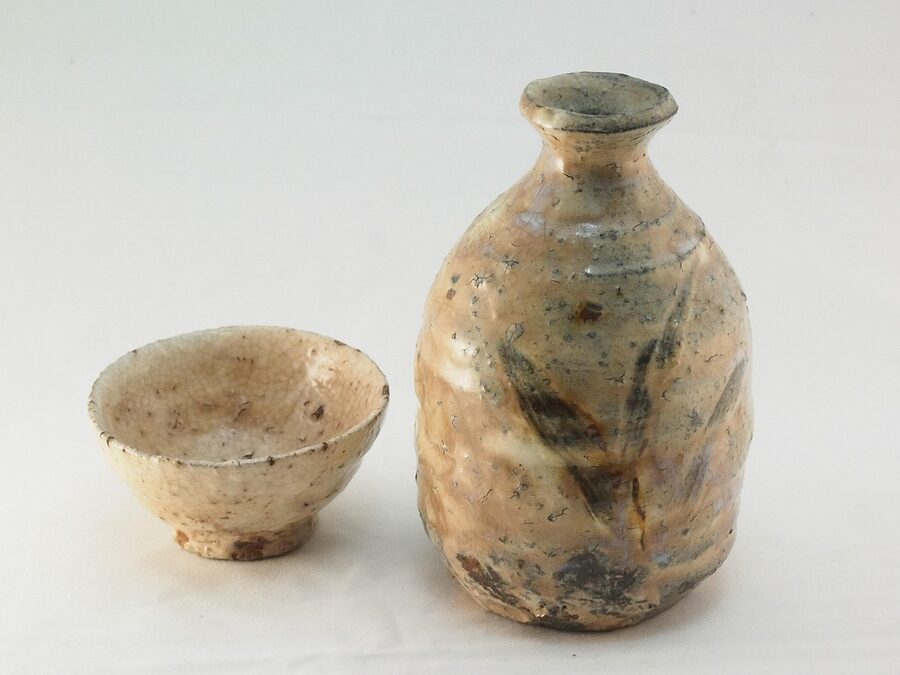
Bottles to actually look for
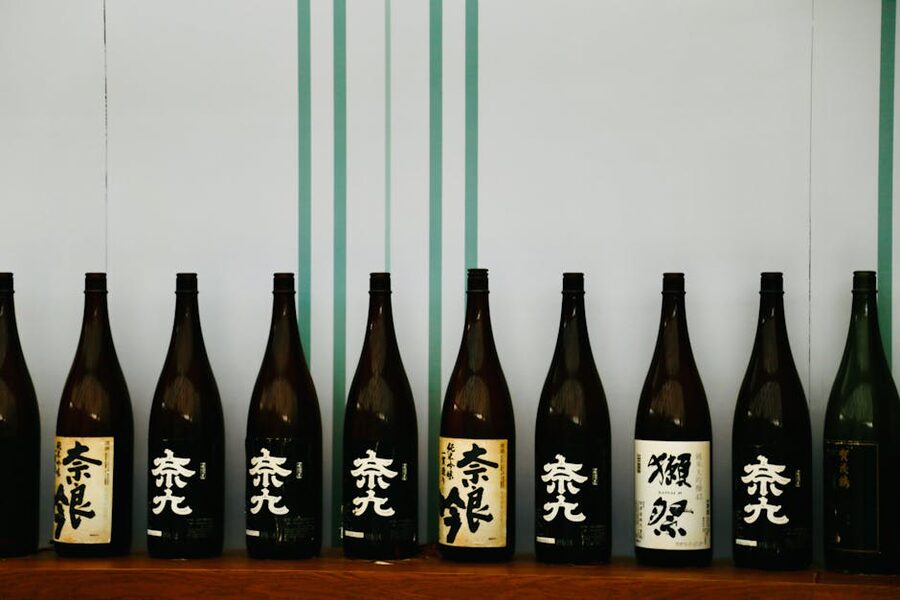
The names that appear repeatedly on Tokyo sushi-counter lists, with what to expect:
- Hakkaisan Tokujo Honjozo (Niigata): dry, clean, almost mineral. The reliable opener. ¥800–1,200 a glass.
- Kubota Senju Junmai Ginjo (Niigata): light, slightly fruity, never aggressive. Versatile, especially with white fish. ¥1,000–1,500.
- Dassai 45 Junmai Daiginjo (Yamaguchi): the daiginjo most foreigners know. Floral, polished, soft. Better with shellfish than with everything. ¥1,500–2,500.
- Tedorigawa Yamahai Junmai (Ishikawa): wild, savoury, slightly funky. Magic with aburi-toro. ¥1,200–1,800.
- Daishichi Kimoto Junmai (Fukushima): the kimoto reference. Body, acidity, depth. Pair with vinegar pieces or aged junmai pours. ¥1,200–1,800.
- Senkin Modern (Tochigi): low-alcohol, high-acid, snappy. Works with kohada beautifully. ¥1,000–1,500.
- Tatsuriki Tokubetsu Junmai (Hyogo): Yamada Nishiki rice, full-bodied. The Kansai answer to a heavier-shari counter. ¥1,200–1,800.
- Mio Sparkling (Kyoto): low-ABV, slightly sweet, fruity. The mid-meal palate reset. ¥800 a small bottle.
- Hakkaisan Awa Sparkling (Niigata): bottle-fermented, drier, more serious than Mio. The grown-up sparkling pour. ¥1,500 a glass.
You won’t find every one of these at every counter. But seeing two or three on a list tells you the counter is taking sake seriously. Seeing none of these and only Asahi Super Dry plus a single jugful of “house cold sake” tells you something else – not bad, just different.
The pairing nobody gets right and the one you should remember
The hardest sushi piece to pair is kohada. Vinegar-cured gizzard shad. Sour, oily, slightly funky, intensely Edomae-traditional. The default sushi pairings (junmai ginjo, daiginjo) all fight it badly. Most kaiten chains don’t even serve it.
What works: a yamahai junmai or a high-acid namazake, served at room temperature. The sake’s lactic acidity meets the vinegar’s acidity, and instead of fighting they layer. The funk of the namazake echoes the funk of the kohada. You stop noticing either as separate.
If you have one moment in Japan to deliberately pair something on purpose, this is the one I’d pick. Counter, chef hands you kohada, you ask for a yamahai. The chef will recognise that you know what you’re doing. The piece will taste like more than the sum of its parts. You’ll leave the counter understanding what sushi-and-sake pairing is actually for.
Everything else in this guide is a refinement of that idea.
 FoodYakitori, and What to Pour Beside ItA lemon sour at an Omoide Yokocho stall costs about ¥500. Six counter seats away from the cook, no English…
 CitiesWhat to Eat and Drink in NagoyaI came into Nagoya planning one meal between Tokyo and Kyoto. I left three days later, full of red miso,…
 CitiesHiroshima for Drinkers: Sake Town to Oyster BayHiroshima Station to Saijo by local train: 31 minutes, ¥420. From the platform, you walk five minutes to a thousand-year-old…