
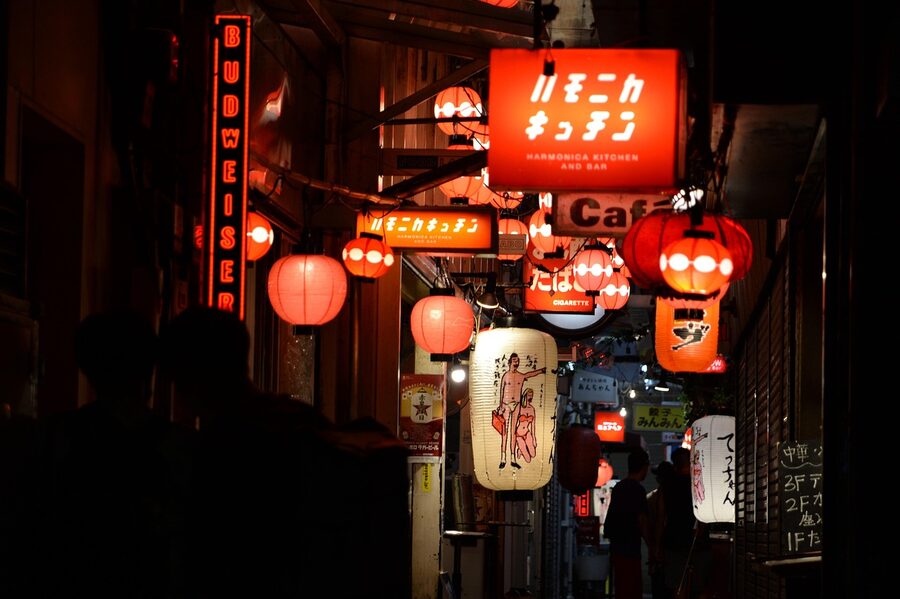
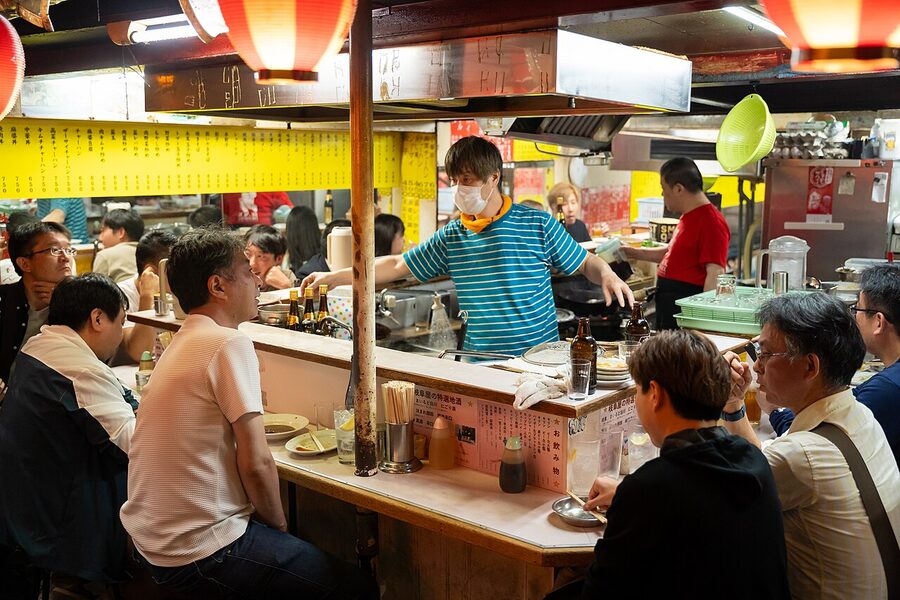
A lemon sour at an Omoide Yokocho stall costs about ¥500. Six counter seats away from the cook, no English menu, you point at a skewer and a cold glass arrives without ceremony. The same drink does not exist on the list at Birdland in Ginza, where an omakase yakitori course starts north of ¥10,000 and the sommelier will pour you a Champagne or a junmai ginjo to go with the chicken skin. Both places are cooking the same bird over the same charcoal. The drink is what changes, and that change carries a lot of meaning.
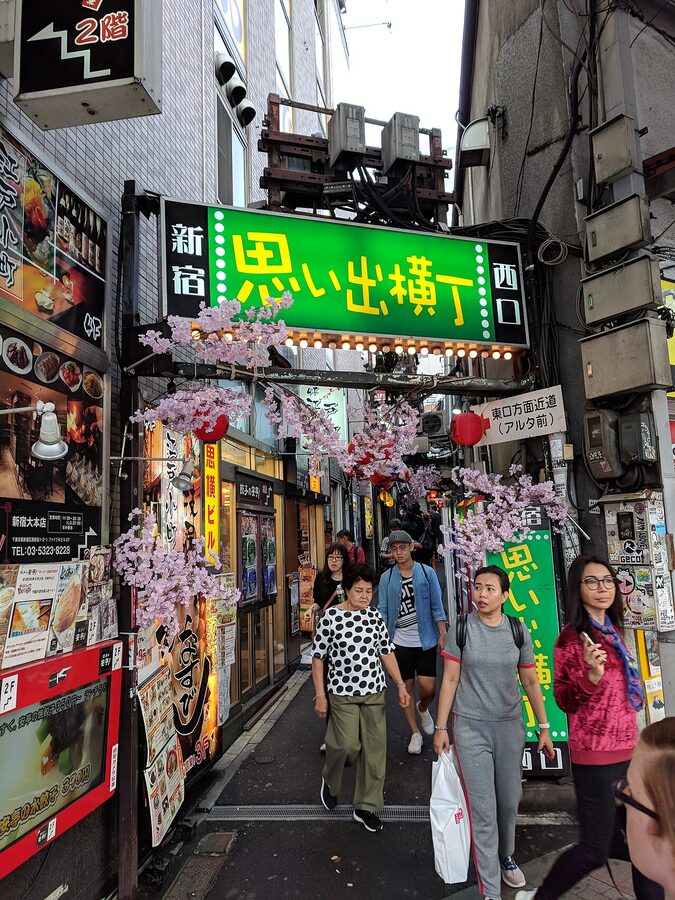

This is a working drinker’s guide to what to put in the glass when there’s chicken on the stick. It’s organised the way Japanese pairing charts organise it, by salt vs. tare, then by cut, then by drink family. I’ve leaned on what the JA pairing tradition actually says, which turns out to be a lot more specific than the Western “beer goes with grilled food” assumption. There’s a small comparison table near the top so you can answer the question on the way to the counter, and the rest of the piece unpacks the why and gives you brand-level picks where they matter.
In This Article
- The cheat sheet, before anything else
- The salt-versus-tare rule and why everything follows from it
- The cuts you should know by name
- Beer is the default, and it’s the right default
- Pale ale and IPA, where it gets interesting
- Sake is the answer most travellers miss
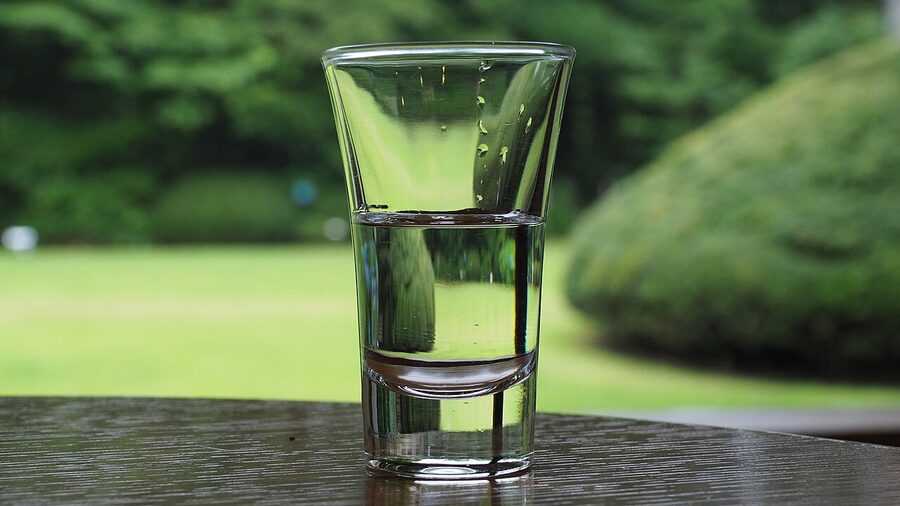
- Cold junmai for salt
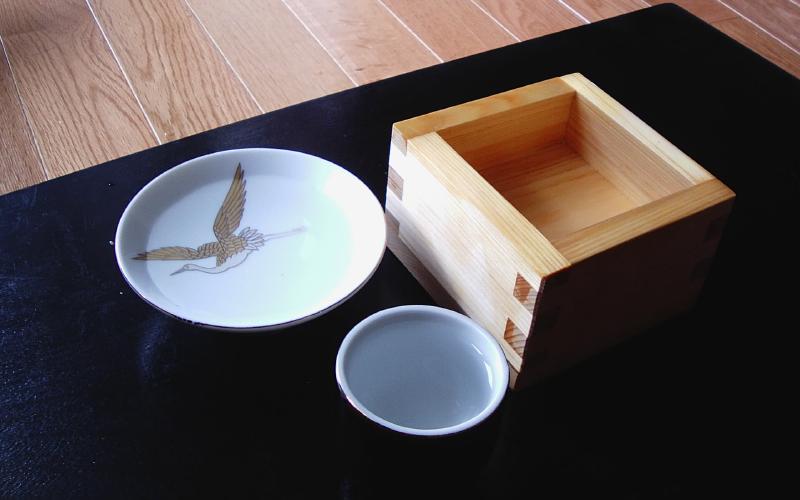
- Warm honjozo for tare and offal
- Avoid super-fragrant daiginjo for offal
- The lemon sour problem, in one Omoide stall
- The other sours
- Highball, and the charcoal-smoke shortcut
- Shochu, the local-knowledge pairing
- Mugi shochu, soda-cut, for any cut
- Imo shochu, hot water, for fatty cuts
- Wine, which is no longer a stunt
- White and salt, red and tare
- Dry rosé is the one-bottle answer
- The cheats Enoteca’s chef recommends
- Non-alcoholic, properly done
- The order matters: how to sequence drinks across a yakitori meal
- One round, ten drinks: a flight to ask for
- Regional habits worth knowing
- Kurume and Hakata (Fukuoka)
- Tokyo
- Kyoto and Osaka
- Sapporo
- Nagoya
- Common mistakes
- The order I’d actually place
- One last note about temperature, because everyone gets it wrong
The cheat sheet, before anything else
.jpg)
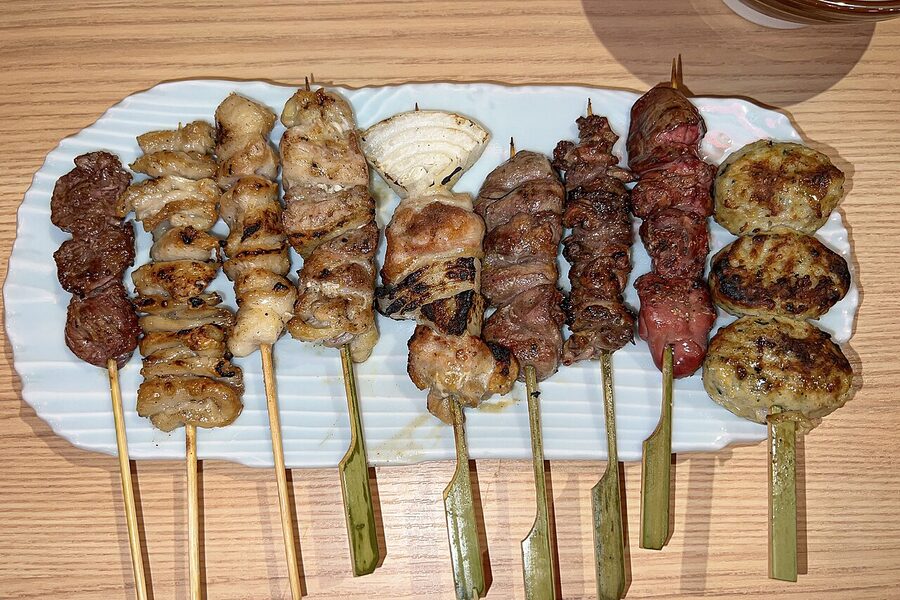
If you’re standing at the counter and the first round is about to be ordered, this is the table to glance at. Detail is below.
| Cut + seasoning | Best beer | Best sake | Best wine | Best shochu / sour |
|---|---|---|---|---|
| negima, salt | Pilsner, 4–6°C | Junmai, cold (7–10°C) | Sauvignon Blanc | Lemon sour |
| negima, tare | Amber pale ale | Honjozo, nuru-kan (40–45°C) | Pinot Noir, 14–16°C | Mugi shochu, soda |
| sasami, salt | Wheat beer | Daiginjo, cold | Chablis, unoaked Chardonnay | Oolong-hai |
| tsukune, tare with yolk | Pale ale | Junmai, room temp | Dry rosé | Mugi shochu, soda |
| kawa (chicken skin), salt | Pilsner or sparkling | Junmai, cold | Champagne / Cava | Lemon sour |
| bonjiri, salt | Lager | Junmai, room temp or warm | Riesling | Imo shochu, hot water (6:4) |
| reba (liver), tare | Stout or amber | Yamahai, atsu-kan (50°C+) | Syrah, Sangiovese | Smoky highball |
| hatsu (heart), tare | Brown ale | Kimoto junmai, warm | Riesling or pinot | Yuzu sour |
| sunagimo (gizzard), salt | IPA | Daiginjo, cold | Dry sparkling | Lemon sour |
| Vegetable skewers | Wheat / witbier | Junmai ginjo, cold | Grüner Veltliner | Plum sour |
That’s the chart. Now the why.
The salt-versus-tare rule and why everything follows from it
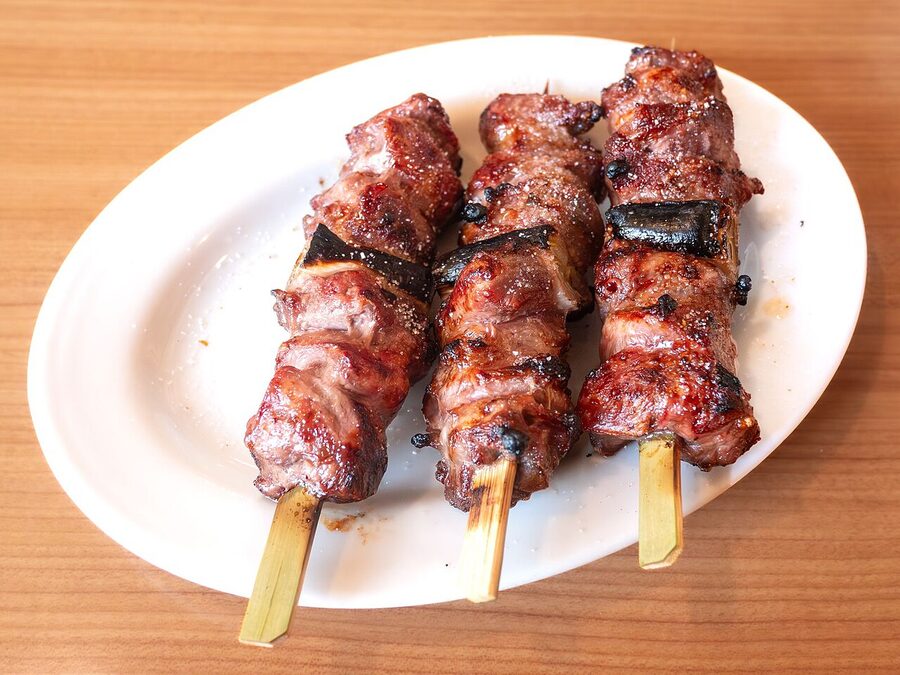

Walk into any yakitori counter and the first question the cook will ask is the one that decides everything: shio or tare? Salt or sauce. There’s no third option, and you can’t really mix-and-match within one round without irritating someone. This single binary is the backbone of every pairing chart that’s ever been written in Japanese, and once you understand why, you can read a drinks list with no more thought than choosing socks.
Salt-seasoned skewers are pale. The seasoning is a finishing flake of salt, sometimes a brush of vegetable oil, no caramelisation, no sweet. The flavour is meat plus charcoal, sometimes a squeeze of citrus at the table. Drinks for salt: bright, dry, low-tannin. Pale beers, white wines, cold sake, lemon sour, oolong-hai. The colour rule is real. If the skewer is light, the drink is light.
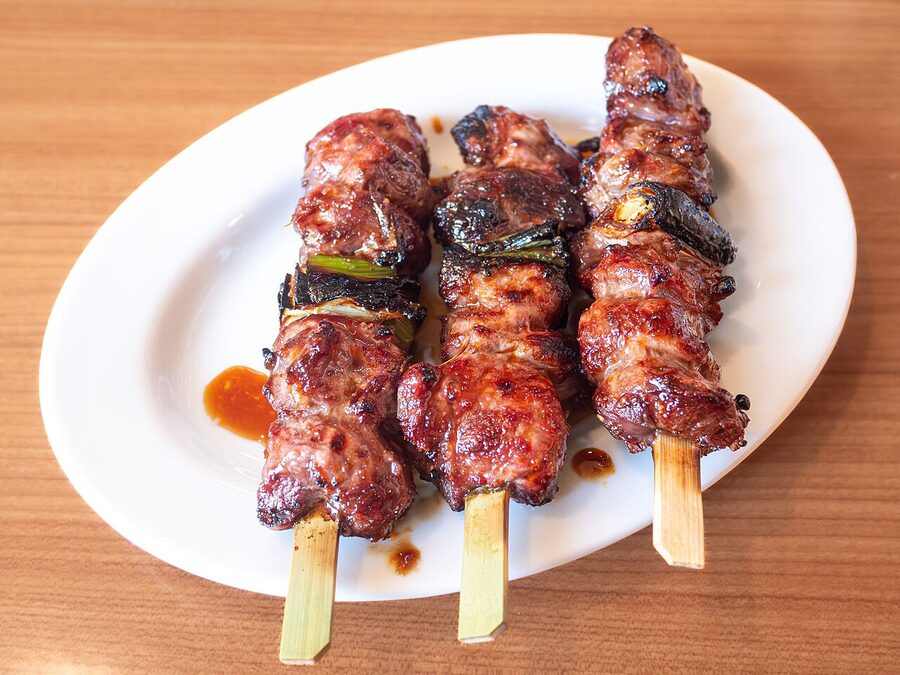

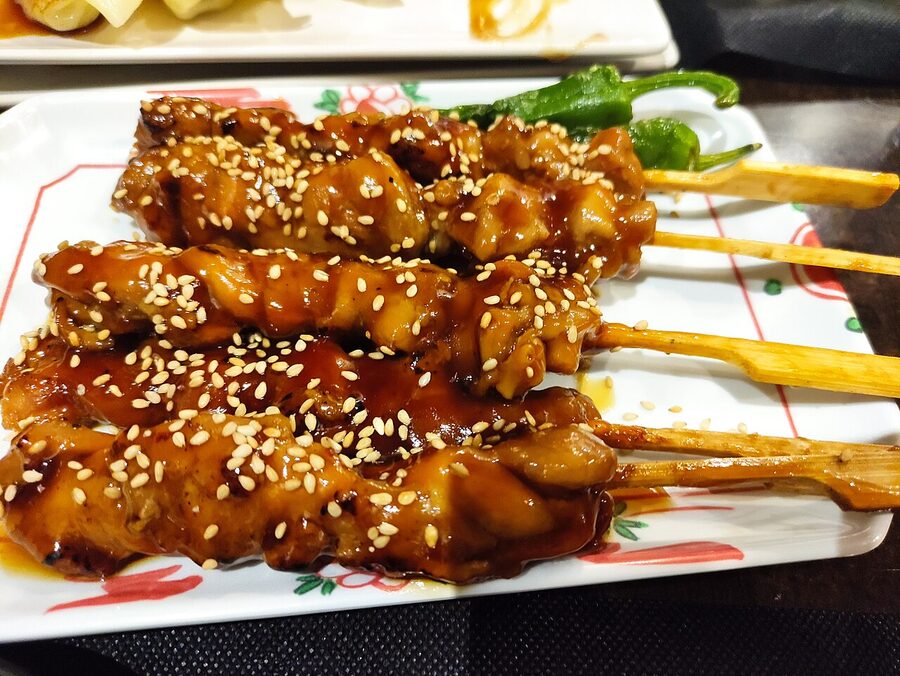
Tare-glazed skewers are dark. The glaze is a soy-mirin-sake-sugar reduction the shop has been topping up for years, sometimes decades, layered on the meat in repeated dips during the grill. The flavour is sweet-savoury, deeply caramelised, far more aggressive than salt. Drinks for tare: anything with weight to match. Amber and stout beers, room-temperature or warm sake, light reds, mugi shochu and bourbon highball. Caramel meets caramel. Sugar meets fruit.
You’ll notice fattier cuts (kawa, bonjiri, tebasaki) bend this rule slightly. They want carbonation regardless of seasoning, because the rendered fat needs cutting. A salt kawa with a still wine is a slog; a salt kawa with a pilsner or a Champagne is bliss.
The cuts you should know by name
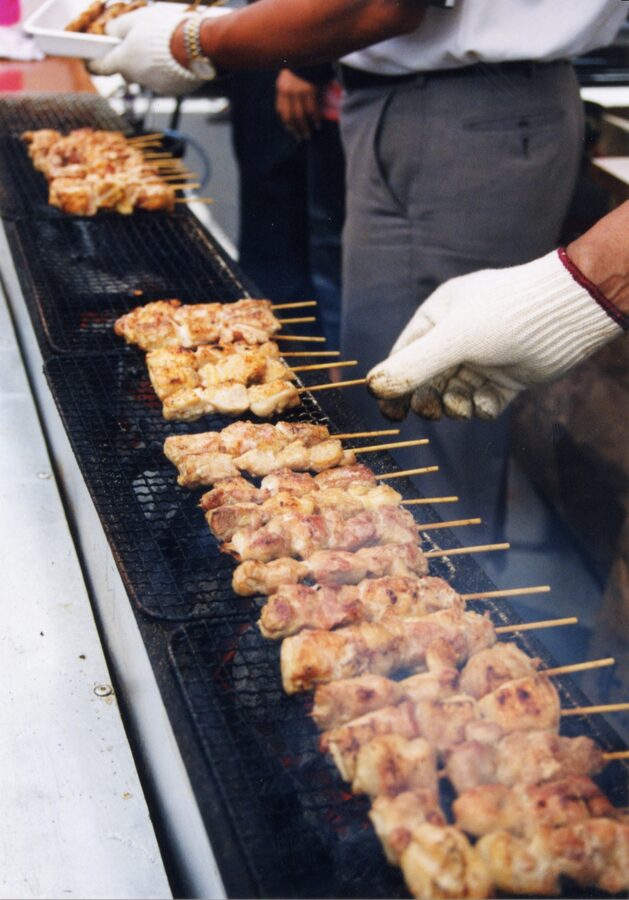
You don’t need to memorise the whole carcass to pair drinks intelligently. These ten will get you through any counter in Japan. The terms in italics are the ones the kitchen will use when the staff calls out the order:
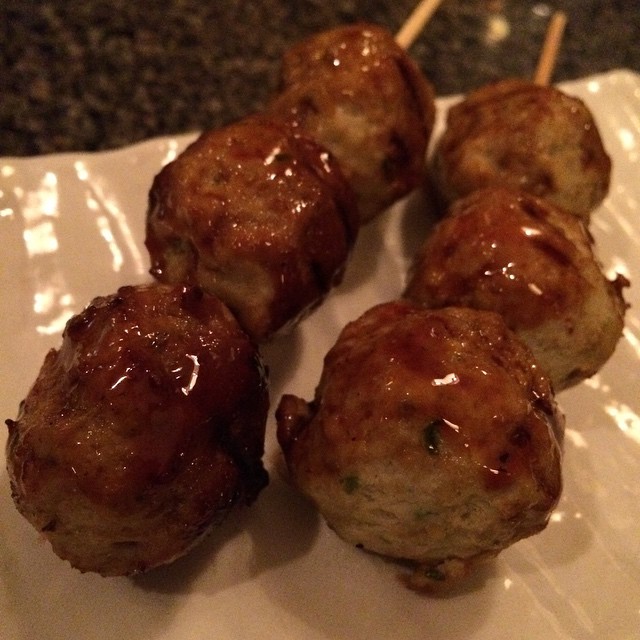
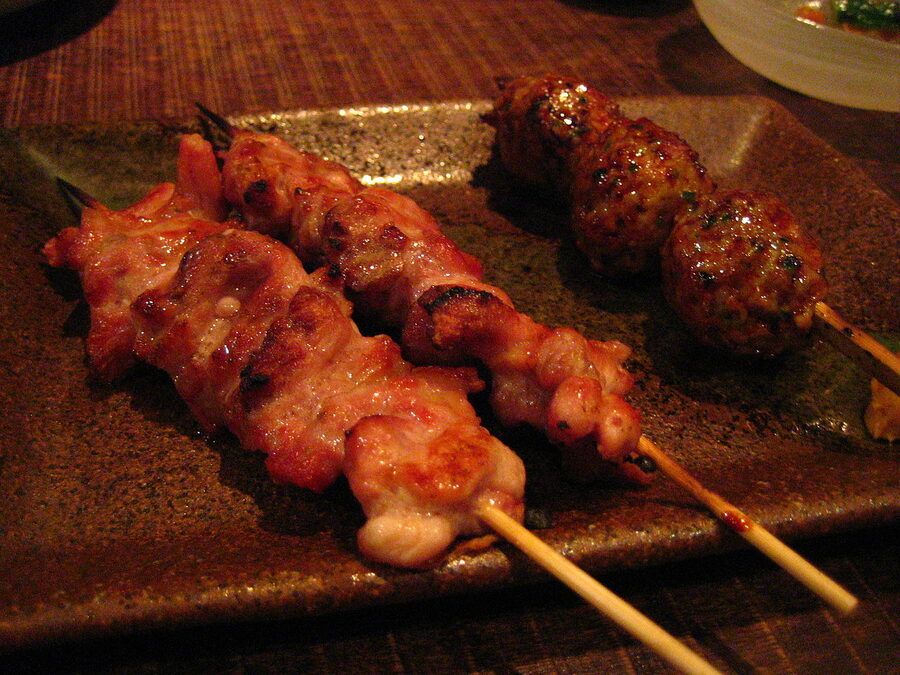
- momo: thigh. Fatty, juicy, the workhorse cut.
- negima: thigh chunks alternating with leek (negi). The most common skewer in the country.
- sasami: breast. Lean, dry-leaning, often with shiso or plum on top.
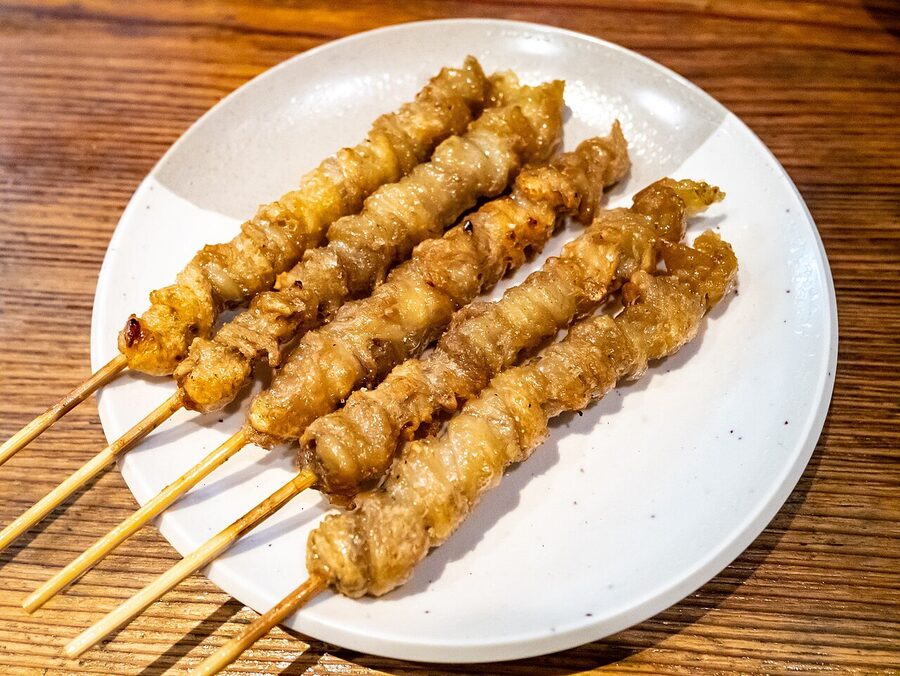
- kawa: skin. Rendered crisp, almost candied. Hakata-style is a regional cult.
- tsukune: ground meatball, sometimes with cartilage and onion folded in. Often served with a raw egg yolk on the side.
- bonjiri: tail meat, also called pope’s nose. Insanely fatty.
- tebasaki: wing. Charred outside, slippery inside.
- sunagimo: gizzard. Crunchy, mineral, addictive.
- reba: liver. Pungent, iron-heavy.
- hatsu: heart. Cleaner than liver, dense.
_(16065642291).jpg)
I lean on these terms throughout. If you want a fuller introduction to ordering, the izakaya ordering guide walks through the rest of the drinks-list vocabulary, and the izakaya etiquette piece covers the unspoken bits about pours, otoshi charges, and how to leave.
Beer is the default, and it’s the right default
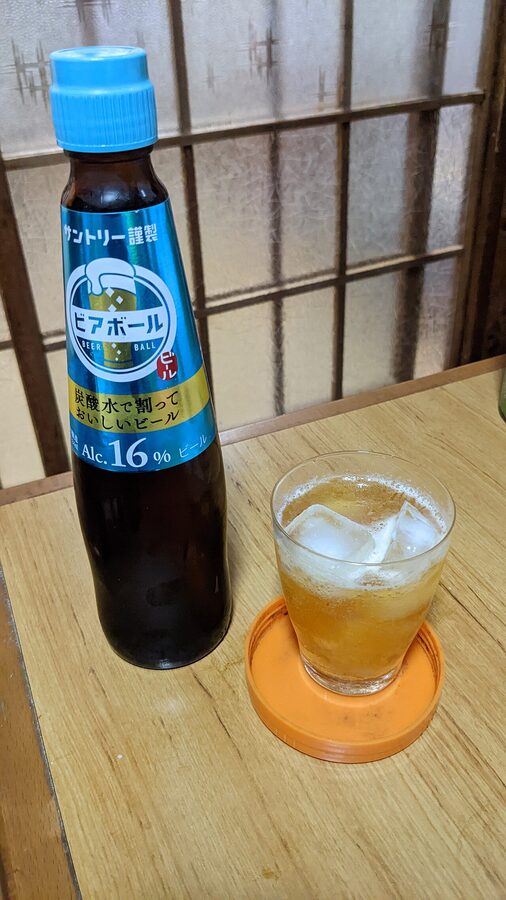

“Toriaezu biiru” is the old shorthand. “Beer for now.” It’s what the cook expects you to order while you read the menu, and it’s what your counter neighbours will be drinking too. There’s a reason it became the default that nobody questions: pilsner-style lager and grilled chicken share the same axis. Carbonation cuts fat, hop bitterness brackets salt, and the next bite tastes as bright as the first. You can do worse, and most travellers in the West already do worse, by ordering a heavy IPA with a delicate chicken breast and wondering why it tasted muddy.
For the salt round, lean pilsner. Asahi Super Dry, Sapporo Black Label, Kirin Ichiban Shibori. Served at 4–6°C in a chilled glass, all three are sharper than they read on paper. The Kurume yakitori belt down in Fukuoka, which has the highest density of yakitori restaurants per capita in Japan, drinks more lager than anything else; that’s not an accident.
Pale ale and IPA, where it gets interesting
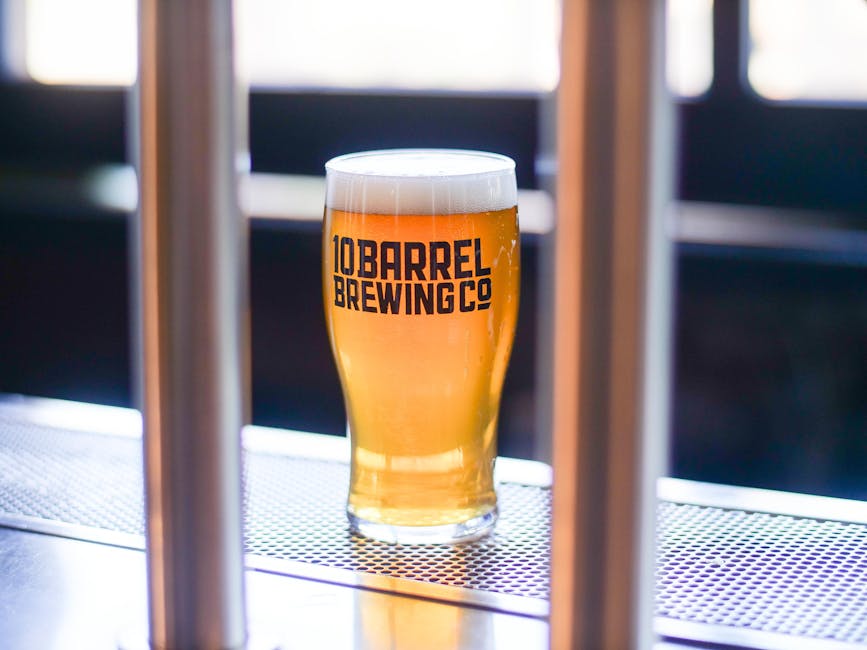
For tare, an amber pale ale starts to outperform the lager. The malt sweetness in a pale ale finds the sweetness in the glaze; the citrus note in the hop reads as a squeeze of yuzu over negima. Yo-Ho Brewing’s Yona Yona Ale, brewed in Nagano, is the easiest pick at Japanese supermarkets and runs about ¥330 per can. COEDO’s Kyara, an IPL out of Saitama, is a step up in body. Both work for tare across the board.
IPA is where I’d argue for a guard rail. The hop intensity that makes IPA fun on its own goes head-to-head with offal. A double IPA against reba is a metallic clash; the JA pairing charts call this out specifically and they’re right. Save the IPA for sunagimo, where the crunch and the hop bitterness amplify each other. Or for the kawa rounds, where a session IPA pulls the rendered fat apart cleanly.
The site has a deeper craft beer guide with brewery-by-brewery picks, and it’s worth a read if you’re building an itinerary that includes brewery visits. Hitachino Nest Sweet Stout is the surprise pairing nobody mentions; it’s spectacular against tare-glazed liver, and you can find it on tap in better izakayas in Tokyo.
Sake is the answer most travellers miss

Western drinkers default to beer because it’s familiar. Japanese drinkers who care about food default to sake because the pairing is technical, deliberate, and based on something measurable: chicken’s inosinic acid and sake’s amino acids stack their umami signals together when they meet on the tongue. The Tamanohikari brewery in Kyoto pushed this far enough to commission a sake specifically for yakitori. They named it 94, pronounced ku-shi, which also means skewer. The “Taste Sensor Leo” project at Keio University ran the pairing through a flavour-balance pentagon and scored the chicken-with-tare-and-warm-Tamanohikari combination at 97.8% match. That’s a higher number than I trust most rating systems with, but the broader point holds: sake and yakitori is a defended pairing, not a cute one.
The system, simplified to what you can act on:
Cold junmai for salt
Junmai (rice + water + koji + yeast, no added alcohol) at hana-bie temperature, 7–10°C, against salt skewers. The rice umami carries the chicken without overwriting the salt crystal. Sasami with shiso or umeboshi is the pairing you want a clean ginjo for; the fruit notes lift the herb. Dassai 39 is the easy international name; Akabu Junmai out of Iwate is a quieter pick that’s sold in most decent Tokyo bottle shops at around ¥3,000 for the 720 ml.

Warm honjozo for tare and offal
Hot sake with grilled chicken is the move that surprises new drinkers, but it’s the standard at sake-driven yakitori counters. The temperature pulls the rice sweetness forward and matches the tare’s caramelisation. Aim for nuru-kan, 40–45°C; warmer than that and the alcohol takes over. Atsu-kan, 50°C and up, is the right call for liver and heart, especially in a kimoto or yamahai-style sake where the lactic complexity meets the iron in the offal. Mr. Inoue, the master brewer at Mii No Kotobuki in Fukuoka, makes a yamahai junmai called Hojo Biden specifically for the Kurume yakitori shops; he drinks it warm with chicken liver and avocado.

Avoid super-fragrant daiginjo for offal
The aromatic, polished daiginjo styles (the ones that smell like white peach and pear) are made for pre-meal sipping or with delicate sashimi. Pair them with liver or heart and the flowers vanish into the iron. Save the high-end daiginjo for sasami or for the first round, before the offal arrives. The site’s sake guide goes into more detail on the styles and how to read a label, and the sake label guide is what to bring up on your phone at the bottle shop.
The lemon sour problem, in one Omoide stall
.jpg)
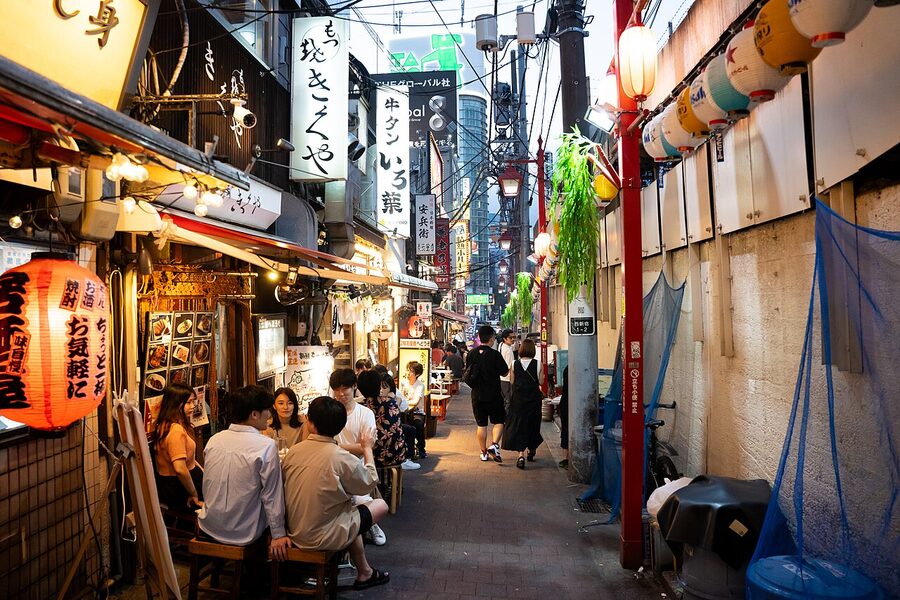
Cher Tan wrote in Roads & Kingdoms about her first lemon sour at an Omoide Yokocho yakitori stall. The drink came in a tall glass, weak by Western standards, served fast. She drank it with motsu (chicken heart, skin and liver, plus pork tongue). She wrote that it intensified the savoury meat without overpowering it, leaving room for food in a way beer doesn’t. After that drink, she said, she ordered nothing else for the rest of the trip. I didn’t write that piece, but I’ve been at the same kind of counter and I’ve made the same conversion.
Lemon sour, also called chuhai (short for shochu highball), is shochu plus soda plus a slice of lemon you may be expected to squeeze yourself. It runs ¥400–600 in most places, less in the cheaper Omoide stalls, more in a smart Ginza basement. Why it works with yakitori has nothing to do with sophistication. It works because:
- The carbonation is aggressive enough to reset the palate between fatty bites.
- The citrus acidity kills caramelised sweetness, so it crushes tare.
- The shochu base is neutral enough not to compete with the meat.
- It’s lower-impact than beer; you can drink three before you bloat.
If your trip is going to include one yakitori counter and one drink, lemon sour is the answer most native drinkers would give you. It’s the working-class default the way Espresso Martini is the dinner-party default in London. Order it without worrying about looking touristic; you’ll match the cook and three of the four salaryman next to you.
The other sours
Once you’re in the chuhai world, the menu opens up:
- Grapefruit sour: closer to lemon sour with more flesh; works the same way.
- Plum sour (umeshu sour): sweeter, fruit-forward, lifts sasami with shiso. More on umeshu.
- Yuzu sour: sharper than lemon, a Kyushu staple, beautiful with kawa.
- Oolong-hai: shochu plus oolong tea, no soda. Looks brown, drinks dry, dangerously easy with offal.
- Green tea-hai: same idea with sencha, slightly more astringent.

Highball, and the charcoal-smoke shortcut
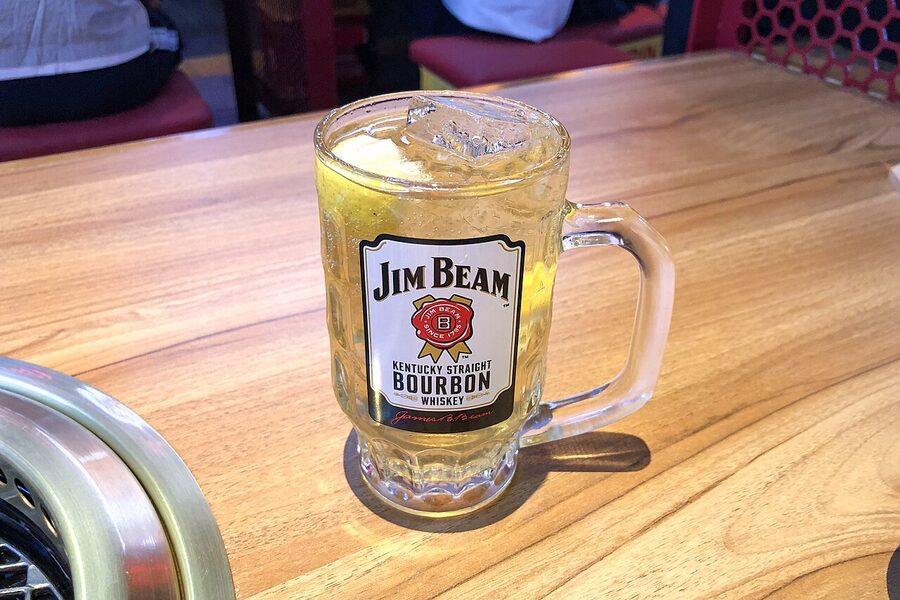
.jpg)
The reason highball became the default izakaya pour in the 2010s isn’t marketing. It’s that whisky’s barrel char has a structural similarity to the charcoal smoke on a yakitori grill. The carbon notes overlap. When you drink a Suntory Kakubin highball next to a tare tsukune, what you taste is two charcoal-touched things working in parallel. It’s not a complicated pairing; it’s a synonym pairing.
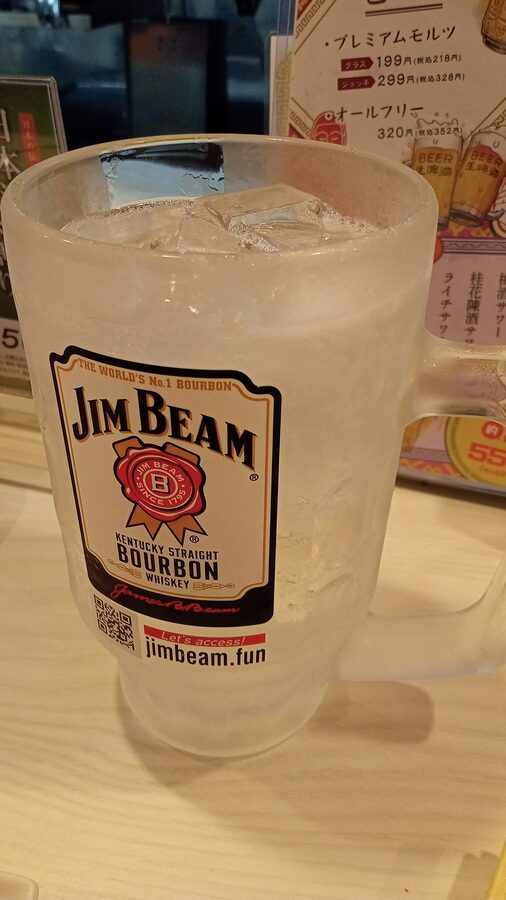
For salt, a Kakubin or Suntory Toki highball is plenty. Light, crisp, doesn’t fight the chicken. For tare and offal, look for something with peat. An Ardbeg highball or a Hibiki Harmony highball will sit hard against liver or heart, in a good way. Bourbon-based highballs (Jim Beam is the cheap default; Maker’s Mark is the upgrade) lean into vanilla and pull the tare’s sugar forward. The deeper highball piece has the home recipe and the bar list.
One warning: the canned highballs you’ll see in konbini at ¥200–250 are mostly fine for a hotel-room nightcap but they’re not what’s on tap at a decent yakitori shop. The Kakubin highball at the chain shop is closer to 7% ABV, hand-pulled, served in a frozen glass. Ask for the draft if it’s listed. The taste gap is real.
Shochu, the local-knowledge pairing
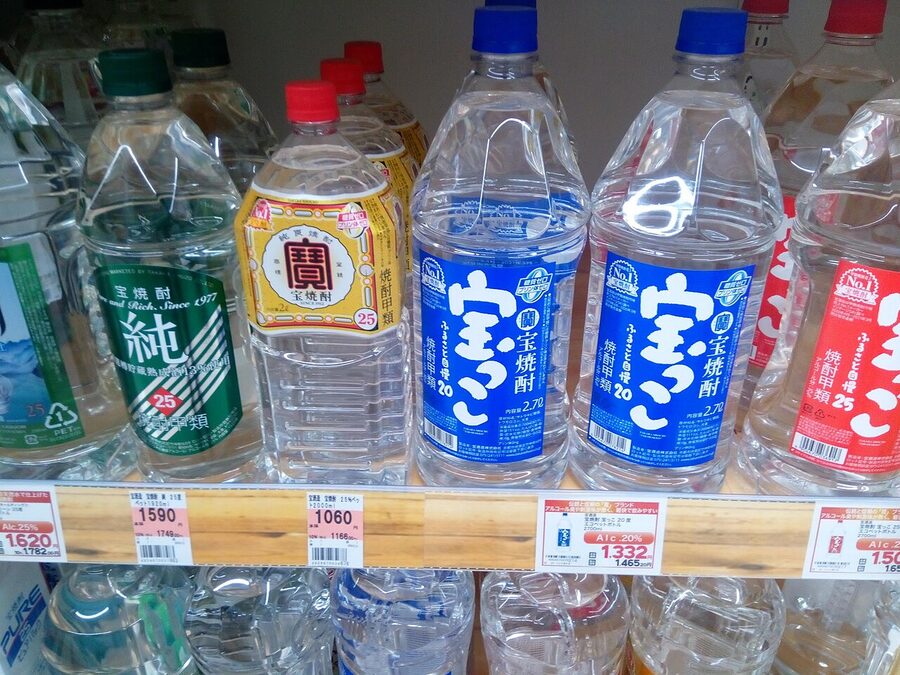

Shochu is the most underrated yakitori drink for travellers because most non-Japanese drinkers haven’t met it yet. It’s distilled, so there’s no residual sugar fighting the food, and it’s got more body than vodka. There are two grain bases worth knowing:
Mugi shochu, soda-cut, for any cut
Mugi (barley) shochu over soda is the lowest-effort pair on the entire menu. Two parts soda to one part shochu, ice, no garnish. The barley’s faint caramel rounds out the tare; the carbonation does the same job as the lemon sour without the citrus footprint. Iki-mugi from Nagasaki is the classic; Iichiko Silhouette is the chain-bar default. You can sit at the counter and order this for everything on the board and never feel like you compromised.

Imo shochu, hot water, for fatty cuts
Sweet potato shochu is heavier and weirder. It’s got a deep, slightly funky sweetness that maps onto the rendered fat in bonjiri or the candied skin in kawa. The Kyushu way is to drink it oyu-wari, hot water added at a 6:4 ratio (shochu first, then hot water; never the other way around or the aroma collapses). Nakamura, Kuro Kirishima, and Mao are the three you’ll see. Mao is the trophy bottle and worth the ¥1,500-per-pour at a real shochu bar.
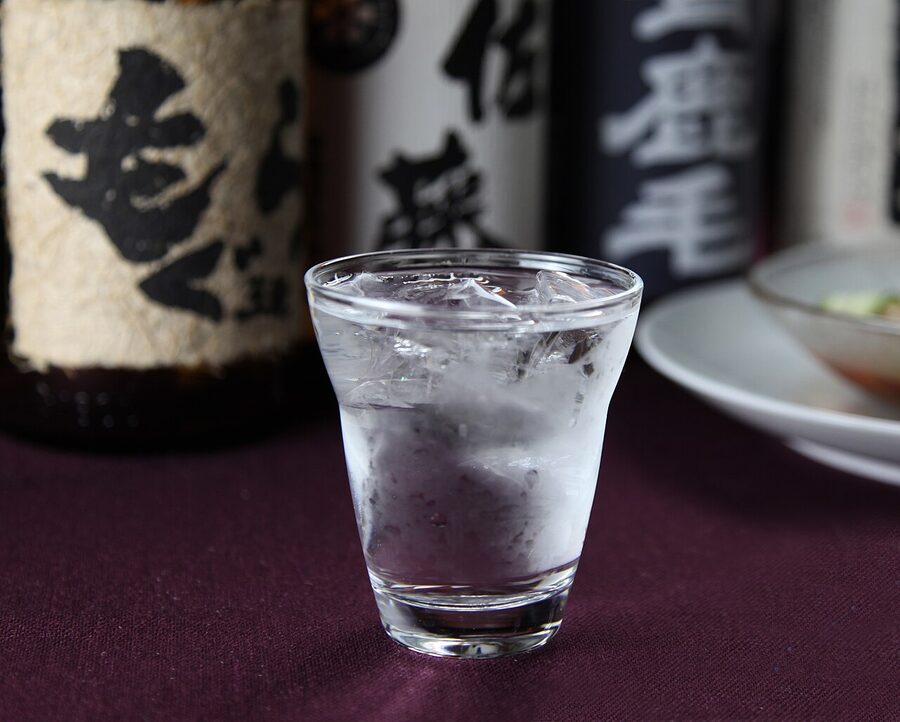
One nuance the JA pairing charts flag: very strong-aroma imo shochu (the white-koji styles) can overwhelm sasami or sunagimo. The chicken’s own flavour gets buried under the sweet potato. Mugi is more flexible; if you want one shochu for the full meal, that’s it. The full breakdown of shochu vs. its cousins is in the shochu/sake/awamori comparison.
Wine, which is no longer a stunt
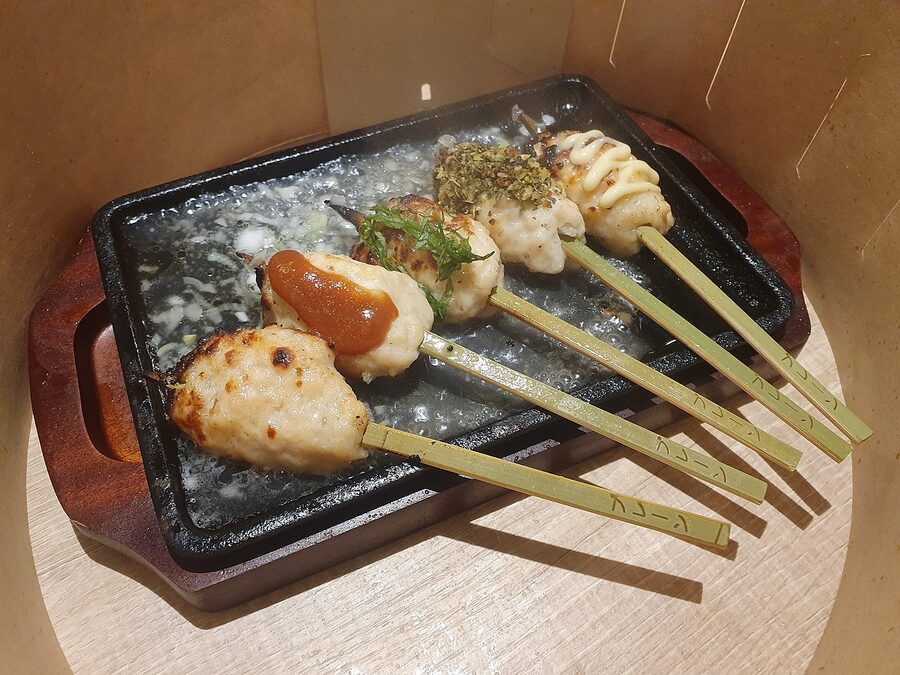

Ten years ago a wine list at a yakitori shop was a curiosity. Now there are wine-forward yakitori specialists in Tokyo, Osaka, and increasingly in regional cities, and Enoteca’s Japan editorial team published a serious pairing piece in 2025 with the chef-owner of Torizen Seo in Azabu-Juban as the source. The basic chart they ran:
White and salt, red and tare
The macro rule that gets you 80% of the way there. For salt skewers, especially the lean ones (sasami, nankotsu), pour a high-acid white. Riesling, Sauvignon Blanc, Albarino. For salt skewers with fat (momo, kawa, bonjiri), step up to a fuller white: Chablis, oak-touched Chardonnay, or a sparkling like Cava.
For tare, bring a light-to-medium red. Pinot Noir is the textbook answer; the red fruit and soft tannins meet the soy-mirin glaze without the wine getting ground down. Gamay (Beaujolais), Sangiovese (Chianti) and lighter Tempranillos all work. Save the heavyweight Bordeaux blends and Napa Cabernet for steakhouse night; on tare yakitori they’ll bury the chicken.

Dry rosé is the one-bottle answer
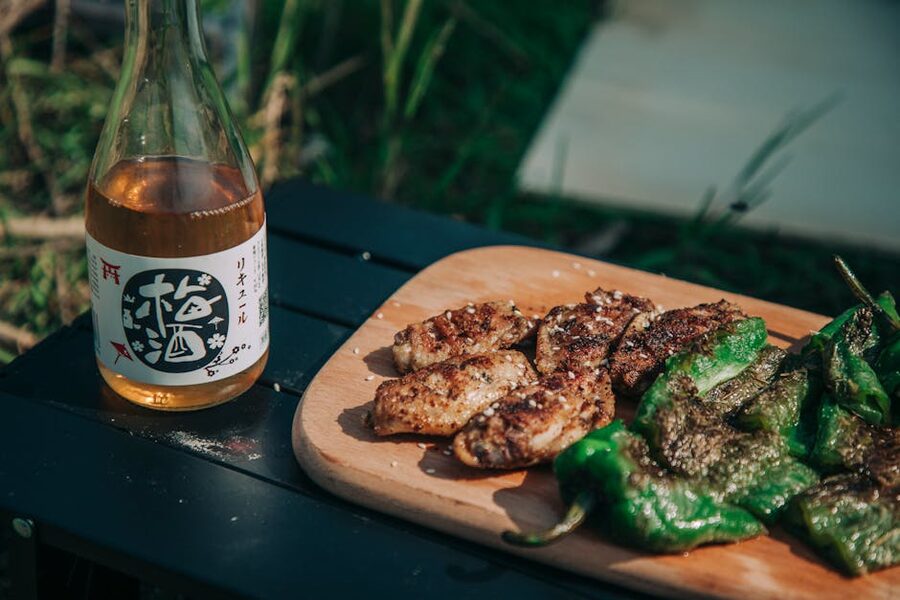
If you’re buying one bottle for a yakitori dinner at home and the order is going to mix salt, tare, and offal, dry rosé (Sec on the label, not Demi-Sec) is the smartest single pour. It carries the white’s brightness for salt and the red’s fruit for tare in the same glass. Provence rosé is the easy import. Japanese-grown rosé from Yamanashi (Grace Wine, Chateau Mercian) is the harder-to-find but on-theme pick.
The cheats Enoteca’s chef recommends
If you’ve already poured the wrong wine, you can rebalance with the table condiments. For a white wine that’s struggling against tare, drop a slice of shiso or a squeeze of yuzu on the skewer; the herb pulls the wine back into its lane. For a red that’s heavy against a salt skewer, dab a little wasabi or a smear of karashi mustard; the heat raises the wine’s fruit. These are professional bar tricks but they work at home too.
Non-alcoholic, properly done
The default non-alcoholic order at a yakitori counter is oolong tea, served cold in a tall glass, and it works. The catechins in oolong cut fat the same way beer does, the bitterness brackets salt, and the absence of sugar means it doesn’t fight tare. Ask for it as oolong-cha; you’ll get a glass with no ice as standard, ice on request.
Other working non-alcoholic picks:
- Hojicha (roasted green tea), served warm or cold. The roasting gives it a nutty, caramel quality that maps onto the Maillard reaction in the grill. Better with tare than salt.
- Mugicha (barley tea), cold. Almost flavourless; works the way water works, just better.
- Yuzu soda, the better convenience-store kind from Pokka or Sangaria. Bright, dry, sits well with sasami.
- Non-alcoholic beer, specifically Asahi Dry Zero or Suntory All-Free. The Japanese non-alc beers are noticeably better than their European counterparts because they’re made primarily for the food-pairing context, not the dinner-party context.
Skip the sweet sodas. Calpis, Mitsuya Cider, ramune. The lactic and the sugar load both fight the tare and bury the salt. They’re fine for kids; they’re not for the chicken.
The order matters: how to sequence drinks across a yakitori meal

A good yakitori meal at a counter shop runs about 90 minutes and 8–15 skewers. Drinks should move through the meal, not sit static on it. The pattern most Japanese drinkers I’ve sat next to actually use:
- Round 1, Beer. Pilsner, lager, draught. While the cook fires the grill and you read the menu. This is the cool-down round; don’t overthink it.
- Round 2, Cold sake or lemon sour. With the lighter, salt-led skewers. Sasami, negima, kawa. The sake delivers the umami amplification; the lemon sour delivers the palate reset.
- Round 3, Warm sake or shochu. With the tare cuts and the offal. Tsukune, reba, hatsu. The temperature shift is the cue to slow down; warm sake is sipped, not chugged.
- Round 4, Highball or wine. With the chicken-finishing cuts and the rice/onigiri. The bourbon highball or the Pinot Noir lands the meal.
- Round 5, Oolong-hai or hojicha. The slow-down round. You’re done with the meal but you’re not yet ready to leave.
You don’t need all five. Three is plenty. But the principle, that the drink should change as the food changes, is what separates a counter regular from a tourist who orders a single beer and rides it.
One round, ten drinks: a flight to ask for
Some specialist shops in Tokyo will pour you a paired flight of three or four small drinks against an omakase course. Birdland in Ginza does this; Imai near Shibuya Station does it; the chef-owner at Toritama in Hong Kong moved the format overseas. If your shop offers a nomi-kurabe setto (drink-comparison set) or a yakitori omakase with a paired drink omakase, take it. The pour sizes are small (50–80 ml), the price doubles the food bill, and you’ll learn more about pairing in 90 minutes than you would in a week of guessing.
Regional habits worth knowing

Yakitori isn’t quite uniform across Japan, and the drinks shift to match.
Kurume and Hakata (Fukuoka)
Kurume in Fukuoka has the highest yakitori-restaurants-per-capita ratio in Japan. The local style includes pork-belly skewers (which the rest of the country still calls yakitori but which Tokyo purists technically wouldn’t), and the drinks lean shochu-heavy. Mugi shochu from nearby Iki is the local pour, soda-cut, ordered by the carafe. More on Fukuoka if you’re routing through. Hakata’s torikawa shops, the chicken-skin specialists, pour shochu, lemon sour, and not much else.
Tokyo
Tokyo’s yakitori scene splits into the alley counters (Omoide Yokocho, Sankaku Chitai in Shimbashi, Nonbei Yokocho in Shibuya) and the omakase rooms (Birdland, Imai, Toritama Aoyama). Alley = lemon sour and lager. Omakase = wine pairings or daiginjo flights. Both are valid; they’re not competing. The Tokyo drinking guide covers the geography by neighbourhood.
Kyoto and Osaka
Kyoto runs cleaner, more sake-forward. The Kyoto eat-and-drink guide notes the local affection for cold ginjo against salt skewers; Tamanohikari, the Kyoto brewery behind the 94 sake, is the brewery that built the chicken-and-sake science case. Osaka leans more toward kushikatsu than yakitori, but the yakitori shops in the Tenma neighbourhood (covered in the Osaka guide) pour heavy on highball.
Sapporo
The Hokkaido capital pours its own brewery’s lager and a lot of it. Sapporo‘s yakitori counters lean toward Sapporo Black Label by default, with whisky highballs as the second round. Cold weather, cold beer, salt skewers. The pairing physics work without thinking.
Nagoya
Nagoya yakitori is more about tebasaki (wings) than skewers, and the wings come with a sticky black-pepper glaze that’s somewhere between salt and tare. The local move is highball; the secondary move is dry sake. Nagoya guide.
Common mistakes
.jpg)
Errors I’ve made and watched others make:
- Big tannic red against salt skewers. A Cabernet Sauvignon over sasami drowns the chicken. The wine wins, the meal loses.
- Sweet sake (amakuchi) over tare. Sweet on sweet equals cloying; you’ll be done after two skewers.
- Big peated whisky neat. Smoke on smoke without water in between is exhausting. Make it a highball.
- Hot sake too hot. Above 50°C the alcohol takes over and the rice character vanishes. Nuru-kan (40–45°C) is the safer default.
- Beer too cold. Below 4°C the hops freeze out and you taste mostly carbon dioxide. Out of the fridge for 5 minutes is the right move at home.
- Wine too cold. Same problem in reverse: white wine straight from the chiller is mute. Let it warm to 8–10°C.
- Mixing tare and salt without a pause. If you’ve just had a tare cut, drink something carbonated before the next salt cut, or the second cut tastes like reheated gravy.
The closer the drink and the food are in temperature and intensity, the better they work. That’s the whole rule.
The order I’d actually place

If you put me on a counter stool tomorrow night, in Tokyo, at one of the alley shops in Omoide Yokocho or Sankaku Chitai, the order would go like this. Reproduce or modify; the structure is the lesson:
Drinks: One pilsner, one lemon sour, one warm honjozo at 40°C, one mugi shochu soda. Total spend ¥1,800–2,400.
Skewers: Two negima (one shio, one tare); one tsukune tare with raw yolk; one kawa shio; one sunagimo shio; one tsukune chase if I’m still hungry; one shishito for the vegetable accent. Total spend ¥1,400–1,800.
The match-ups: Pilsner with the first negima shio and the kawa. Lemon sour with the sunagimo and the second negima tare. Warm honjozo with the tsukune. Mugi shochu soda for the rest of the meal as a slow-burn closer.
You’ll spend about ¥3,500 a head and you’ll learn more about Japanese drink pairing than reading a textbook on it. The cost-to-education ratio of a counter yakitori stop is, in my experience, the best in Japanese drinking.
One last note about temperature, because everyone gets it wrong
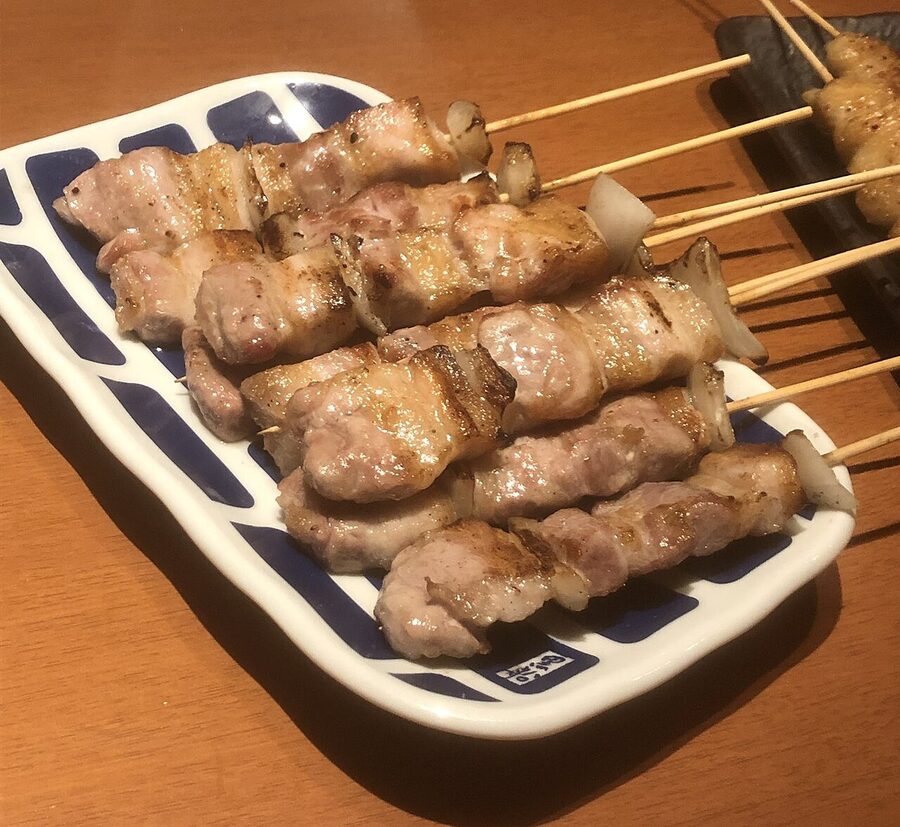

Three numbers worth remembering. Pilsner: 4–6°C. Cold sake: 7–10°C (the hana-bie band). Warm sake: 40–45°C (nuru-kan). Pinot Noir: 14–16°C. Highball: as cold as the glass can be; the ice should be a single carved sphere if the bar is a serious one. Lemon sour: same as the highball, but the soda needs to still be fizzing when it lands at your elbow. If you can feel the carbonation pricking your top lip, the drink is right.
Get the temperatures right and the rest mostly takes care of itself. Get them wrong and even the right drink-and-cut combination will read flat. The cooks at any decent yakitori counter are obsessing over their grill temperatures down to the level of which charcoal layer to use; the drinks team should be doing the same. If they’re not, the highball will be slushy and the warm sake will be lukewarm, and that’s how you’ll know to spend your ¥3,500 somewhere else next time.
Sit down. Order the lager. Order the second drink. Make a different choice for the third. That’s how this works.
 FoodWhat to Drink With Sushi in JapanThe third nigiri at Sushi Sho in Yotsuya was where it landed for me. Hokkaido shima-aji, brushed with a single…
 CitiesWhat to Eat and Drink in NagoyaI came into Nagoya planning one meal between Tokyo and Kyoto. I left three days later, full of red miso,…
 CitiesHiroshima for Drinkers: Sake Town to Oyster BayHiroshima Station to Saijo by local train: 31 minutes, ¥420. From the platform, you walk five minutes to a thousand-year-old…