
Reviewed · SAKE TASTING
Tokyo: Private Tsukiji Street Food & Sake with Local Guide
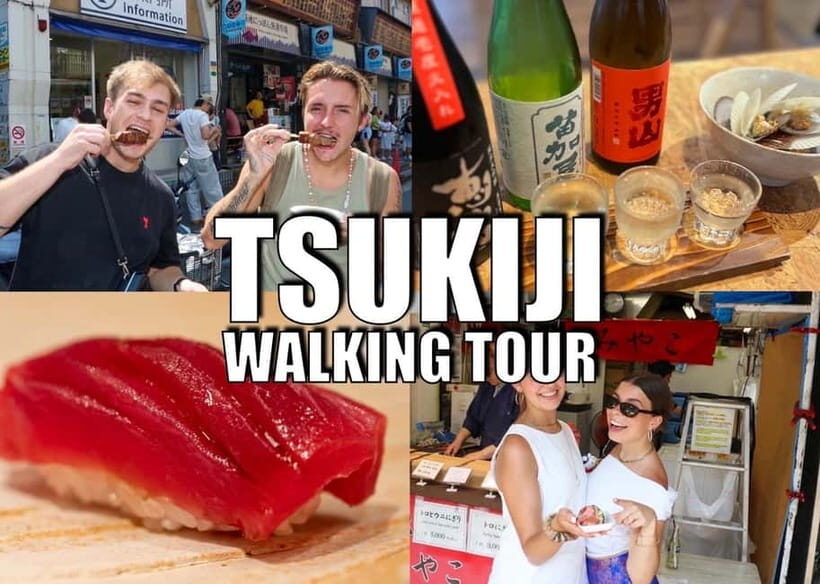
Tsukiji has a way of surprising first-timers. This private-style, guided 2-hour walk mixes street food with a calm sake lesson, so you taste your way through the area without getting lost in the noise.
I especially like the simple, included food pairing: charcoal-grilled wagyu skewers and the fluffy, dashi-rich tamagoyaki. I also like how the guide keeps you moving with a plan, while still paying attention to what you want to eat.
One thing to consider: only a specific set of items is included. If you want extra bites or drinks while you’re strolling, you’ll need to pay for those separately.
In This Review
- Key highlights you’ll care about
- Starting at Tsukiji Hongwan-ji: where the tour tone gets set
- Tsukiji Outer Market with a plan: wagyu and tamagoyaki without the guesswork
- Edo-style palate reset: tea, beans, peanuts, and dashi
- Tsukiji Hongwan-ji to sake: how the tour connects food and story
- Sommelier-led sake tasting with baby scallops: what to pay attention to
- Price and value: why $99 makes sense (and when it doesn’t)
- What the guides do well in real life (and a fair caution)
- Who should book this Tsukiji street food and sake tour?
- Should you book it?
- FAQ
- How long is the tour?
- What food and drinks are included?
- Do I need to pay for extra snacks at the market?
- Is transportation to and from the meeting point included?
- Who is the guide and what languages are offered?
- Where is the meeting point?
- Do I need ID for sake tasting?
- Is the tour running in bad weather?
- Can I cancel for a full refund?
Key highlights you’ll care about
- Bilingual guidance (EN/JP) so ordering and questions feel easy
- Wagyu skewer + tamagoyaki are included, so you skip decision fatigue
- Chilled tea, black beans, peanuts, and dashi give you an Edo-style palate primer
- Sommelier-led sake tasting with 3 types plus a special, paired with baby scallops
- Dietary preferences get handled (the guide asks and adapts)
- A near-insider route through Tsukiji Outer Market, not a random stall hop
Starting at Tsukiji Hongwan-ji: where the tour tone gets set
Your experience begins at 浄土真宗本願寺派築地本願寺 (Tsukiji Hongwan-ji). If you spot someone holding a smartphone showing AlvaJapan in front of the main gate, that’s your guide. It’s a good start point because it anchors the whole trip in the neighborhood’s real rhythm, not just the market’s chaos.
The temple stop is more than a quick photo moment. You’ll see a landmark that mixes Indian stone-architecture ideas with traditional Japanese Buddhist spirit—complete with intricate animal carvings and stained glass. It’s a visual contrast if you’re used to the more common wooden temple look you see in places like Kyoto.
You’ll also learn why this place matters historically: the temple was reconstructed after a massive fire in the Meiji era. That kind of context helps you read the architecture instead of just walking past it.
Tip: wear shoes that can handle uneven walkways. This tour is short, but it still involves purposeful walking between stops.
A few more Tokyo tours and experiences worth a look

Tsukiji Outer Market with a plan: wagyu and tamagoyaki without the guesswork
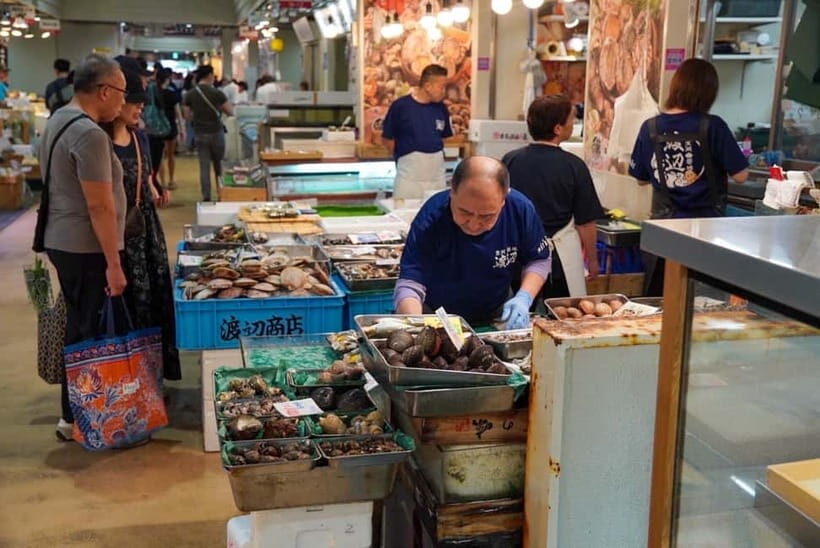
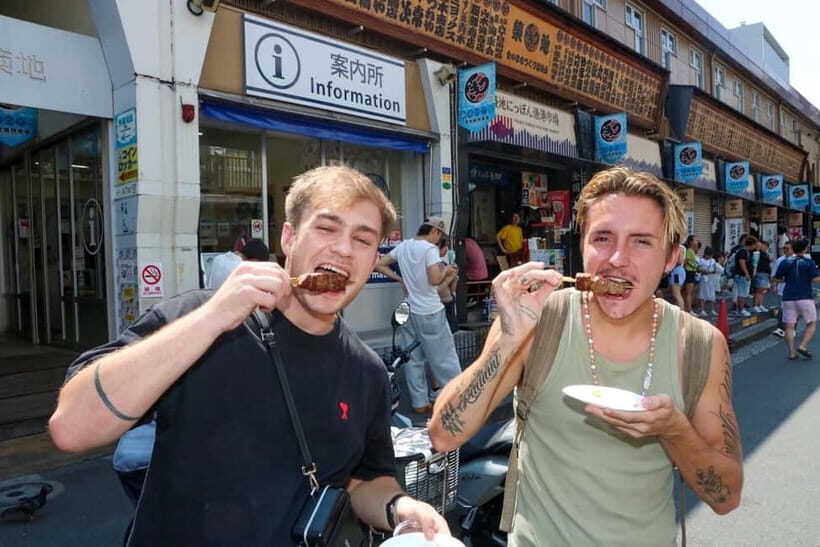
Next, you head into Tsukiji Outer Market. The key idea here is that you’re not just wandering. You get a structured walk that helps you avoid the usual pitfalls: long lines that go nowhere, stalls that look busy but move slowly, and ordering confusion when you can’t read the menu.
The tour’s main food portion is built around two stars that Japan does exceptionally well at street-stall scale:
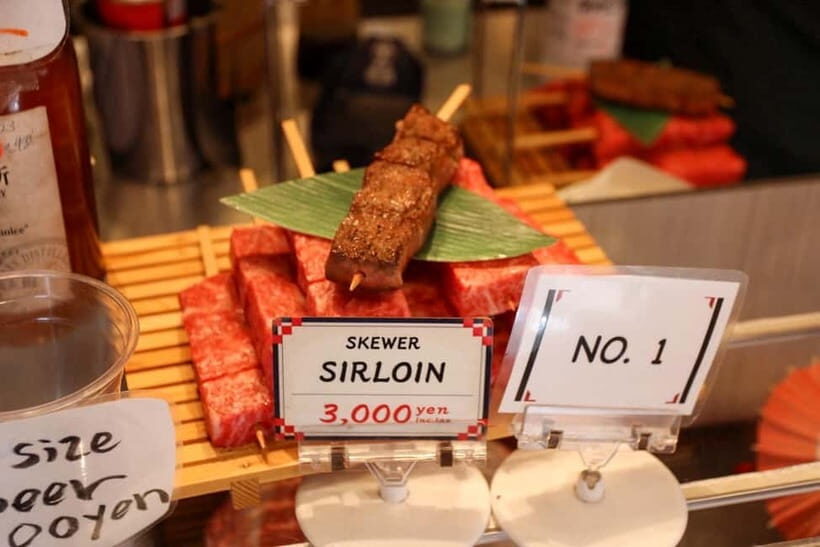
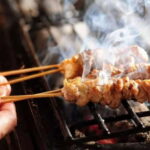
- Charcoal-grilled wagyu beef skewers: You get a portion included, and it’s the kind of bite that’s all about timing—hot, smoky, and fast.
- Tamagoyaki (Japanese omelet): Included as well, and this is where you taste the comfort-food side of the market. The guide steers you toward tamagoyaki that’s fluffy and dashi-rich, not just sweet egg.
What I like about this approach is that you don’t have to become an expert on the spot. The guide helps you get the “right” version of these foods so your first Tsukiji market meal isn’t a gamble.
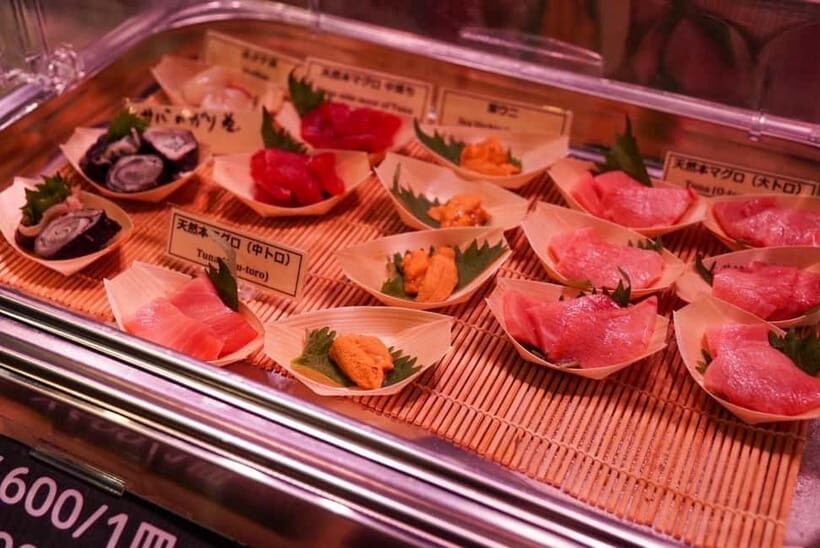
The market itself is a great place to learn how the ecosystem works. Fish and seafood are part of it, sure, but the outer market also thrives on small ready-to-eat items, snacks, and quick-to-order lunches. As you walk, you’ll pick up how the counters operate and why some places are popular for a reason.
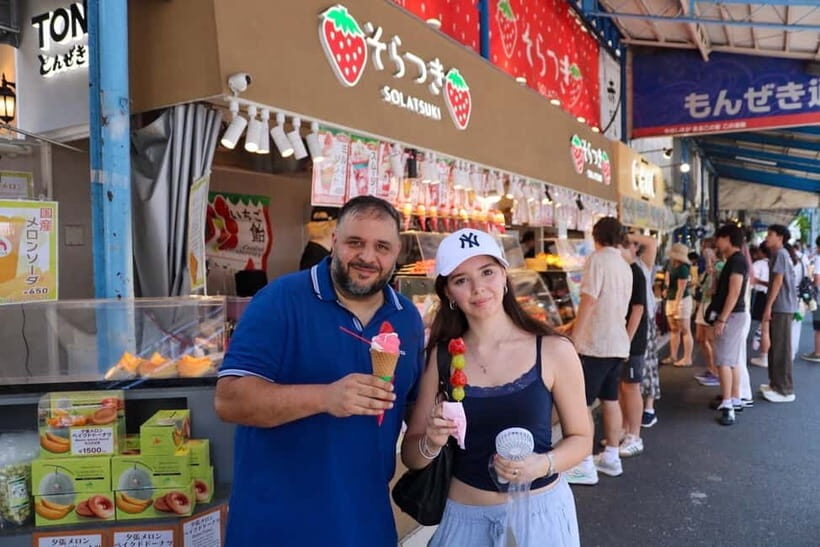
Practical note: the included food covers a clear set of items. If you want extra snacks beyond that (and Tsukiji makes it tempting), bring cash. The tour doesn’t cover additional purchases.
Edo-style palate reset: tea, beans, peanuts, and dashi
After the market’s food momentum, you get a calmer stop at a historic specialty shop that has served customers for over 100 years. This is a smart pacing choice. Markets can turn your sense of taste into noise—too many smells, too many salty bites, too little time.
Here, you cleanse your palate with chilled traditional teas and savory sampling designed to set your baseline for the next flavor step. You’ll taste:
- black beans
- peanuts
- essential dashi broth
The value of this isn’t just that it’s included. It’s that you learn what makes Edo-style flavors “click.” Dashi is the quiet engine behind a lot of Japanese cooking, and tasting it in a simple, focused format helps you notice it later when you’re eating on your own.
It also gives you a break in the middle of the schedule. You get a moment to slow down, sit with the tastes, and let the market move back into the background.
Tsukiji Hongwan-ji to sake: how the tour connects food and story
One of the best parts of this experience is how it links places, not just foods. You’ll learn the story of Tsukiji Outer Market and the move to Toyosu. That context matters because it explains why the area feels the way it does now: market history, a changing logistics story, and a continuing food culture that still lives in the streets.
The tour keeps you in motion, but the pacing is thoughtful. It moves from the temple’s atmosphere, into market energy, into a quiet flavor break, then into the final tasting segment where you can pay attention.
This flow is perfect if you want a “short but full” Tokyo food experience. It’s also a solid choice if you don’t want to spend your precious time trying to figure out where to start and what to order.
Sommelier-led sake tasting with baby scallops: what to pay attention to
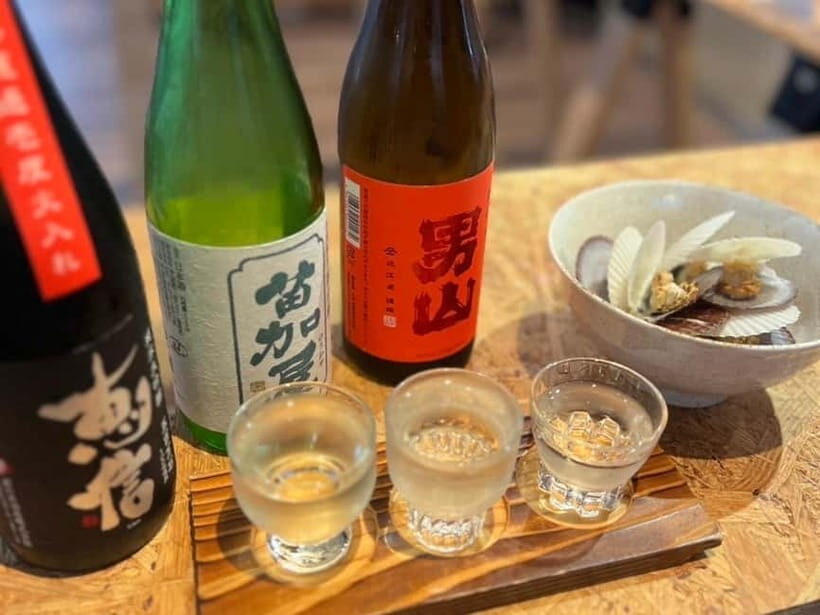
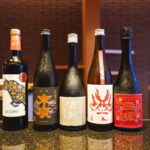
The finale is a guided sake tasting session led by a certified sake sommelier. You’ll sample 3 types of sake plus a special, with baby scallops paired to the sake. This is the moment where the tour turns from food-only into real instruction.
Here’s how to make the most of it. Don’t treat it like a casual sip-and-go. Instead, think about how each sake changes:
- how it hits your tongue at first taste
- how long the flavor lingers
- how well the pairing food changes your impression
The scallops matter because they add sweetness and softness that can highlight different sake characteristics. You’ll likely notice some sakes feel lighter or cleaner, while others feel fuller or more rounded, depending on the type you’re given.
Also important: this is where your ID comes in. You’ll need identification for the sake tasting, and the legal drinking age in Japan is 20. If you’re under that, you may not be able to participate in the tasting part.
From the experience feedback, this is also where the tour gets the biggest praise. People consistently highlight the sake tasting as excellent and call out the scallops as a standout pairing. That’s a good sign, because sake tours can sometimes feel repetitive if the guide doesn’t bring real structure.
Other guided tours in Tokyo



Price and value: why $99 makes sense (and when it doesn’t)
At $99 per person for about 2 hours, the value comes from what’s included. You’re not only buying “a guide.” You’re buying specific food and tasting costs that would add up on your own.
Included items are clearly part of the package:
- 1 wagyu skewer and 1 tamagoyaki portion
- tea tasting
- samples of black beans, peanuts, and dashi broth
- sake tasting flight: 3 types plus a special, guided, with baby scallops
Because all of that is covered, you avoid the constant little “how much is this?” moments while you’re hungry. That makes it easier to enjoy the market instead of doing mental math.
Where it can feel less like a deal is if you plan to snack heavily beyond what’s included. Since additional food and drinks aren’t included, Tsukiji’s temptation can quickly change your final spending.
My practical take: if you want the included highlights and you’re happy keeping extra spending optional, this price is fair for what you get. If your plan is to turn the market into a full-length self-guided eating marathon, you might feel the cap from the included portion list.
What the guides do well in real life (and a fair caution)
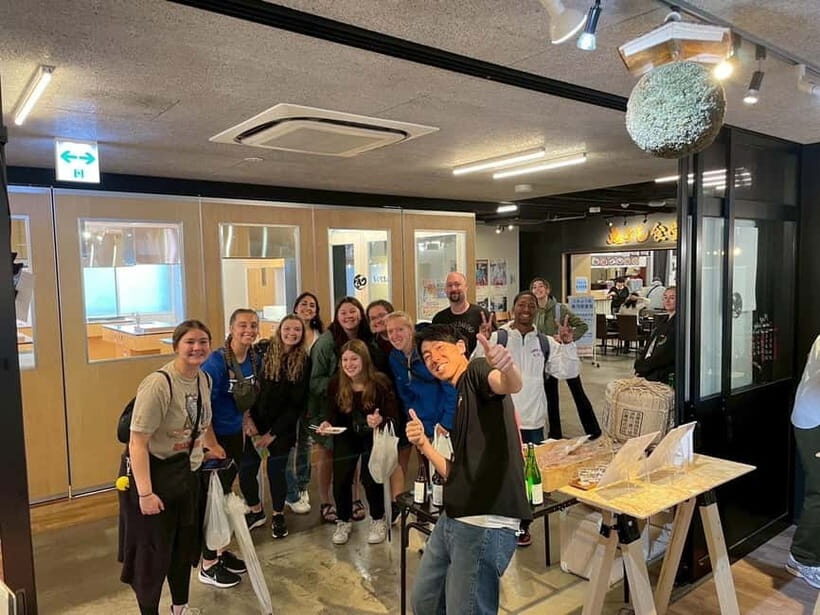
The guiding style is a major part of why this tour works. Feedback points to guides who are upbeat, friendly, attentive, and genuinely interested in you. That matters because Tsukiji can be loud. A good guide helps you keep your head clear and actually taste, not just rush.
Even better, the guide asks about eating restrictions and tailors the experience. That’s a big deal in Japan, where the difference between one ingredient and another can change what’s appropriate for you.
One small caution that comes up: it’s not always obvious at the market which items are included versus extra. If that’s a concern for you, just ask early in the tour what’s covered so you can decide confidently when you see a stall that looks irresistible.
Who should book this Tsukiji street food and sake tour?
This is a strong match if you:
- want a compact, high-impact Tokyo food experience in about 2 hours
- like your Tokyo days structured, not totally improvised
- care about learning what you’re eating, not only eating it
- want a sake tasting led by a sommelier, with food pairing
- have dietary needs you’d like the guide to consider
It may be less ideal if you:
- want to eat broadly from many stalls at your own pace for the full time
- plan to drink a lot of extra sake beyond the tasting flight (extra drinks aren’t included)
- get irritated by walking between temple, market, and shops in a short window
Should you book it?
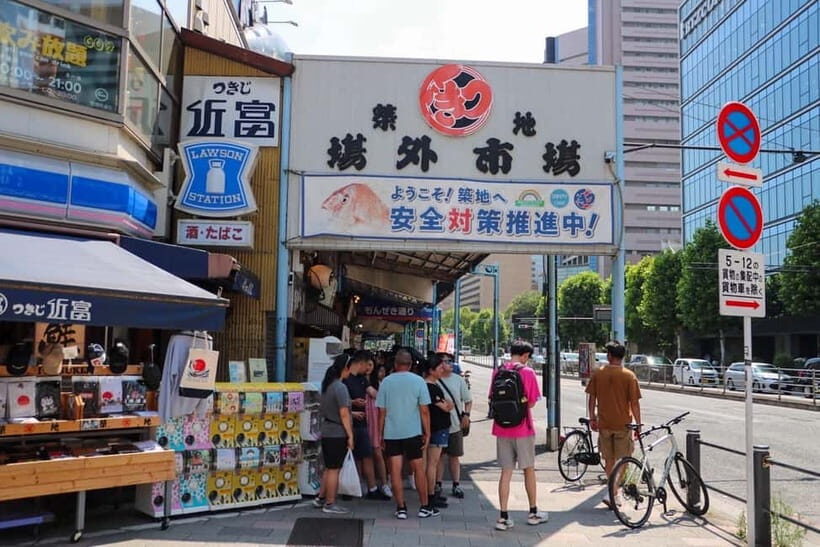
Yes, if you want Tsukiji to feel organized and meaningful without turning into a stressful scavenger hunt. The standout value is the mix of included street favorites plus a structured sake lesson with scallop pairing. You also get the kind of guidance that helps you order confidently and taste in the right sequence.
Book it if your goal is: taste key Tsukiji foods, learn the neighborhood story, and finish with a sake tasting you can actually understand. Skip it if you’re aiming for a long, free-form market binge where the included portions feel too limited.
If you tell me your food preferences (and any restrictions) and your travel dates, I can help you decide what to pair this tour with later in the day.
FAQ
How long is the tour?
It lasts about 2 hours.
What food and drinks are included?
You get 1 wagyu skewer and 1 tamagoyaki portion, a tea tasting, samples of black beans, peanuts, and dashi broth, and a guided sake tasting flight (3 types plus 1 special) with baby scallops.
Do I need to pay for extra snacks at the market?
Any additional food or drinks beyond the included items are not included in the tour price.
Is transportation to and from the meeting point included?
No, transportation to and from the meeting point is not included.
Who is the guide and what languages are offered?
The tour includes a bilingual guide (EN/JP) and a live English experience.
Where is the meeting point?
Meet at the main gate of Tsukiji Hongwanji Temple. Your guide will be holding a smartphone displaying AlvaJapan.
Do I need ID for sake tasting?
Yes, ID is required for the sake tasting. The legal drinking age in Japan is 20.
Is the tour running in bad weather?
It runs rain or shine, with stops that are mostly covered or indoor.
Can I cancel for a full refund?
Yes. You can cancel up to 24 hours in advance for a full refund.
More Private Tours in Tokyo



More Guided Tours in Tokyo
More Food Experiences in Tokyo

More tours in Tokyo we've reviewed






Sake Tasting, compared.
 ★ 5.01-Day Snow Monkeys, Zenko-ji Temple & Sake in NaganoFrom $151
 ★ 5.03-Hour Kyoto Insider Sake Brewery Tour with Tastings & PairingsFrom $84
 ★ 4.9Nagano: Snow Monkeys, Zenkoji Temple & Sake Day TripFrom $1358 - 12 hours
 ★ 5.0Kyoto: Insider Sake Brewery Tour with Sake and Food PairingFrom $873 hours
 ★ 5.0Kyoto Sake Brewery & Tasting Walking TourFrom $98
 ★ 5.01.5-Hour Kyoto Insider Sake Experience with 7 Tastings & PairingsFrom $68
 ★ 5.0Ramen and Sushi Cooking Class with Sake Pairing Set in TokyoFrom $79
 ★ 5.0Sake Tasting Masterclass in Shinjuku (8+ Varieties with a Pro)From $72
The lists this tour appears in