
Reviewed · OSAKA DRINKING TOURS
Osaka Soul : IZAKAYA Shinsekai to Dotonbori Food Paradise!
Osaka food tours should feel like a plan, not a scavenger hunt. Osaka Soul: IZAKAYA Shinsekai to Dotonbori Food Paradise mixes two of the city’s best-known eating zones with a real local feel, starting near Tsutenkaku in Shinsekai and ending under the Glico running man lights in Dotonbori.
I like that you get a guided izakaya-style dinner with multiple Osaka staples, not just a quick taste or two. I also like the pacing: you see the big sights (Billiken, Hozen-ji Temple lanterns, Dotonbori’s neon) while your guide explains what you’re eating and why it matters. One consideration: this is a short, 3-hour experience with set menu portions, so if you want lots of separate stops for tiny snacks every few minutes, you might find it more “one dinner + street-style additions” than a many-table crawl.
In This Review
- Quick hits before you go
- Shinsekai to Dotonbori in one evening: why this tour works
- Meeting point and the “how to show up” checklist
- Stop 1 in Shinsekai: Tsutenkaku area and the kushikatsu moment
- Billiken, Janjan Yokocho alley, and the retro izakaya experience
- Stop 2 around Sennichimae: food lanes and entertainment street energy
- Hozenji Temple in the evening glow
- Hozenji Yokocho: the okonomiyaki restaurant portion
- Dotonbori takoyaki at a Michelin-rated stall
- The Glico Sign finale: neon, photos, and a big sense of place
- What’s included in the meal (and why it’s good value)
- Group size and the guide experience: small group perks
- Logistics and timing: why 5:00 pm is smarter than you think
- Should you add extras? (And how to avoid overspending)
- Who this tour suits best
- FAQ
- How long is the Osaka Soul food tour?
- What time does the tour start?
- Where do I meet the guide?
- What is the tour end point?
- What food and drinks are included?
- Is the tour limited to a small group?
- What if weather is bad?
- Final call: book it or skip it?
Quick hits before you go
- Local guide with real Osaka know-how: people specifically call out guides like Kenny for practical recommendations.
- Two drink servings included (alcoholic or non-alcoholic), which makes the price feel more manageable.
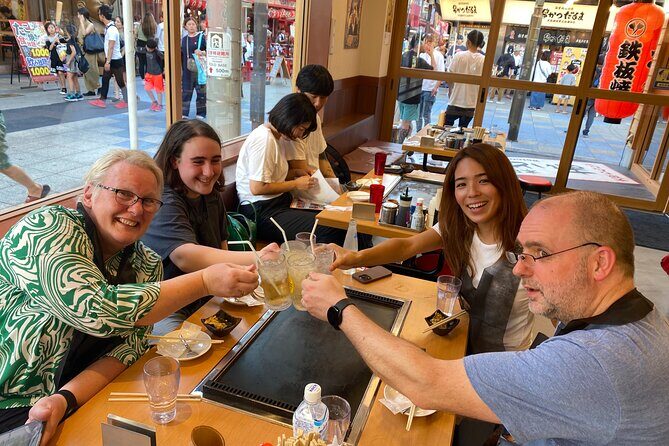
- Set izakaya dinner lineup: kushikatsu (6 pieces), edamame, gyoza or fried chicken, sashimi, tofu salad, plus okonomiyaki (or fried noodles) and takoyaki.
- Iconic neighborhoods in one run: Shinsekai + Hozen-ji Yokocho + Dotonbori, timed for evening energy.
- Small group size (up to 8) means more time to ask questions and get food guidance.
- Expect walking between stations, alleys, and street-food lanes.
Shinsekai to Dotonbori in one evening: why this tour works
Osaka is famous for two things that sometimes clash: food that’s everywhere, and crowds that move fast. This tour is built to solve both problems. You meet at Dobutsuen-mae around 5:00 pm, then spend about 3 hours moving through Shinsekai’s retro energy and into Dotonbori’s full-on neon spectacle.
The biggest value is that the guide gives you context while you eat. Instead of just pointing at stalls, you learn what you’re tasting and how Osaka locals actually treat these foods: shared plates, casual eating, and a lot of repeat orders. That turns your meal from random good bites into something you can remember.
Price-wise, $125 per person sounds steep until you break down what’s included. You’re not only paying for a walk and a few tastes. The dinner includes a full set of dishes plus two drinks, and you’re also getting guided explanations across multiple areas. If you tried to copy this solo, you’d quickly spend comparable money on food alone, then pay for extra guidance (or waste time figuring out which places are good and what to order).
Other izakaya food tours we've reviewed in Osaka
Meeting point and the “how to show up” checklist
You start at Dobutsuen-mae Station (1-chōme-6-12 Taishi, Nishinari Ward). Your tour ends at the Glico Sign area in Dotonbori (1-chōme-10-4 Dōtonbori, Chuo Ward). The tour includes a mobile ticket, so you can focus on getting there.
Two practical notes for your day:
- Wear comfortable shoes. Even at a relaxed pace, you’re moving through alleys and street lanes, and evening crowds can slow you down.
- Come hungry but not fragile. This is not a salad-only night. You’ll likely eat multiple fried items (kushikatsu, plus gyoza or fried chicken, depending on the day) along with seafood and savory pancake options.
If you’re planning your own subway ride after the tour, the data notes that transportation is not included, so budget for getting yourself between start and end areas.
Stop 1 in Shinsekai: Tsutenkaku area and the kushikatsu moment
Your evening begins in Shinsekai, the district most people associate with old-school Osaka fun. You’ll get a look at Tsutenkaku Tower—the visual anchor of the area—and then settle into the foods that made Shinsekai part of Osaka’s identity.
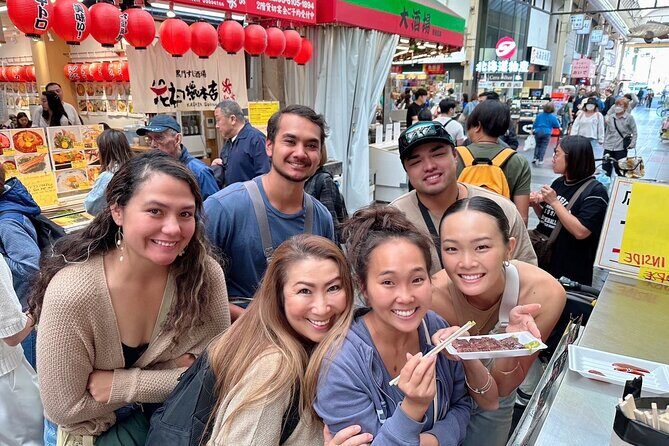
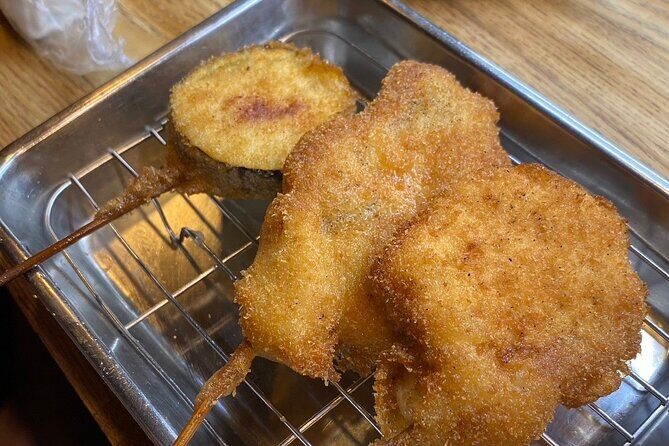
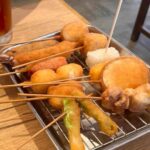
The centerpiece here is kushikatsu, Osaka’s famous bite-size skewers. The tour includes 6 pieces of kush katsu, and that matters. In Osaka, kushikatsu isn’t just “some fried food.” It’s the kind of meal people order because it hits a specific comfort zone: crispy outside, juicy inside, and a sauce system that keeps you nibbling.
This is also where you’ll understand the local rhythm. Most people don’t treat it like a formal course; it’s casual and social. A guide helps you avoid the common beginner mistake: ordering with no plan and then getting too full on the wrong thing.
Billiken, Janjan Yokocho alley, and the retro izakaya experience
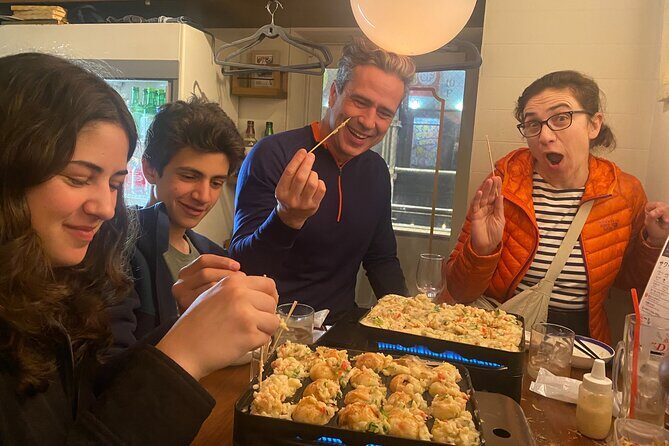
From Shinsekai, you move through the surrounding lanes, including Janjan Yokocho Alley and time with the famous Billiken (the lucky statue). This part isn’t just decoration. It’s a quick shortcut to the “why Osaka feels different” story: quirky landmarks, old-style shopfronts, and the sense that the city likes to keep things playful.
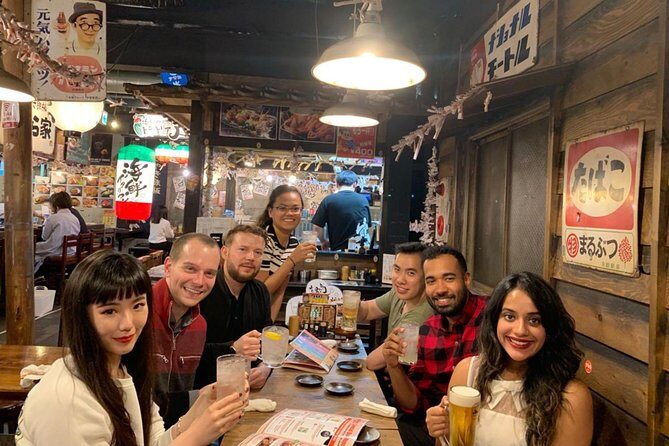
Then comes the izakaya-style meal at a retro izakaya. This is the tour’s main food block, and it’s where the included dishes do the heavy lifting. Based on what the tour states is included, you may get:
- Edamame
- Sashimi made from the day’s fresh fish
- Tofu salad with sesame dressing
- Fried gyoza OR fried chicken (your day’s option)
- Okonomiyaki OR fried noodles
- Plus takoyaki later in Dotonbori
You should think of this stop as a guided dinner plan, not a random sampling. That’s great if you want structure. It’s less great if you expected constant “switch locations, try something new, repeat” for the entire night.
Stop 2 around Sennichimae: food lanes and entertainment street energy
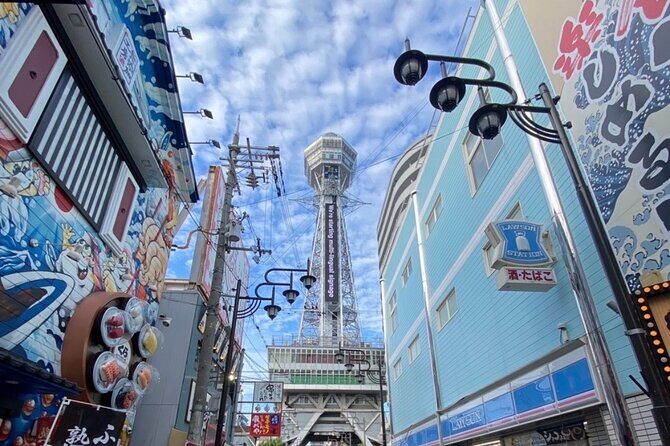
Next you head to Sennichimae Street, known for its street-life mix of entertainment and food. Here you get an extra short segment (about 20 minutes) that helps connect Shinsekai’s older vibe with the broader Osaka food-culture scene.
This time window is ideal for what you’re doing: you don’t get lost, and you get a taste of the atmosphere that surrounds Osaka’s food stalls and sweet vendors. Since this portion is relatively short, it also works as a palate reset after your izakaya portion, or as a warm-up before the next set of hits.
If you’re the kind of traveler who likes to photograph everything, this is a good stretch for it—but keep your energy for the later Dotonbori neon zone.
Other Osaka drinking tours we've reviewed in Osaka

Hozenji Temple in the evening glow
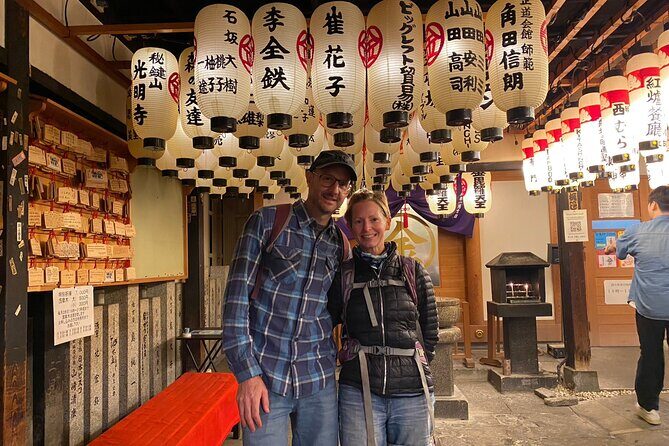
A key emotional beat of the tour is Hozen-ji Temple, a moss-covered temple area with stone statues. You’ll spend about 10 minutes here, timed for evening atmosphere when lanterns glow.
This stop is small, but it changes the feel of the tour. After Shinsekai’s casual eating and alley energy, Hozen-ji gives you a pause—quiet, stone, and lantern light. It also breaks up the fried-food rhythm so your next meal moment doesn’t feel like overload.
Practical tip: bring your phone, but don’t treat this as a photo-only stop. The glow matters, and you’ll get more out of it if you pause for a minute and let the space do its thing.
Hozenji Yokocho: the okonomiyaki restaurant portion
From Hozen-ji, you move to Hozenji Yokocho, where you hit an okonomiyaki restaurant for about 50 minutes. This is a long enough chunk to actually eat, not just stand and taste.
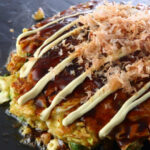
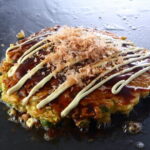
Okonomiyaki is Osaka’s savory pancake, built around choice and technique. The tour includes okonomiyaki (or fried noodles, depending on the day’s included option), and the framing matters: you’re eating it as recommended local-style food, not as a generic tourist dish.
Why this stop is valuable: okonomiyaki is both a comfort food and a cultural symbol. If you’ve never ordered it in Osaka before, a guide helps you avoid confusion about what to expect and how to eat it properly. This is one of those meals that can be a hit or miss if you order without understanding the baseline.
Dotonbori takoyaki at a Michelin-rated stall
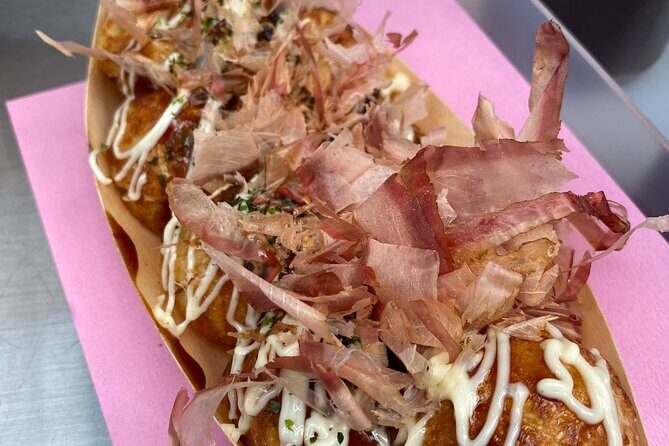
Then it’s on to Dotonbori, the city’s best-known food-and-night-life strip. The tour includes a takoyaki stall moment (about 10 minutes) where you’ll get Michelin-rated takoyaki.
Takoyaki is basically Osaka’s edible street-drama: small balls with octopus inside, crisp on the outside, soft in the center, and covered with sauce and toppings. When you have it right after an okonomiyaki-focused section, it also works as a “different texture” checkpoint. You go from pancake to street snack, which keeps the evening interesting.
This is quick, which is the trade-off for a 3-hour total experience. Still, it’s a solid way to do Dotonbori without spending half your trip just finding where to buy the food.
The Glico Sign finale: neon, photos, and a big sense of place
You end at the Dotonbori Glico Sign area (another 10 minutes). This is the classic running man moment people come to see, and it’s also a practical finish line: once you’re there, you can easily continue exploring on your own afterward.
Think of the ending as twofold:
- You’ve seen the main “Osaka at night” imagery.
- You’ve still got time left in your evening to grab dessert or chase a ramen tip if you want.
And yes, this is where guides like Kenny have an advantage. One review-style detail that stands out is how he offers specific local recommendations, including a top spicy ramen restaurant. Even if ramen isn’t on your included menu, having that kind of advice at the end of your tour can turn Dotonbori from a photo stop into an actual food plan.
What’s included in the meal (and why it’s good value)
Here’s the practical takeaway: the tour includes a lot of food for a short window. Included items list:
- 2 drinks (alcoholic or non-alcoholic)
- Dinner dishes: 6 pieces of kush katsu, edamame, fried gyoza or fried chicken, sashimi (day’s fresh fish), tofu salad with sesame dressing, okonomiyaki or fried noodles, and takoyaki
- History and food explanations
That lineup covers multiple Osaka categories: skewers, seafood, fried snacks, savory pancake, and street balls. It’s not just one “theme.” It’s a guided sampler of the city’s go-to comfort foods.
Value check: because drinks are included and portions are clearly defined, you reduce the guesswork. You know roughly what you’ll eat, and you’re not stuck paying extra at every stop just to feel like you got your money’s worth.
The one drawback to flag: since the largest eating time is focused on the izakaya block and then okonomiyaki/takoyaki moments afterward, this isn’t designed as a nonstop string of micro-samples across many tiny shops. If you want a true multi-location buffet of different bites every few minutes, you may feel it’s a bit “two main eating settings” plus street stops.
Group size and the guide experience: small group perks
The maximum group size is 8 travelers, and that’s a big deal for a food tour. Smaller groups usually mean:
- fewer lines
- more chance to ask questions
- less waiting around
- better flow through tight alleys
And when the guide is the difference-maker, you notice it. People highlight guides with long Osaka ties and the ability to share specific local picks. The best strategy on your side: ask what to order or what to try next after the tour. If your guide is someone like Kenny, expect helpful suggestions, not generic advice.
Logistics and timing: why 5:00 pm is smarter than you think
Starting at 5:00 pm is smart. Osaka’s food scene shifts into night mode around then, and your stops line up with that energy. Shinsekai feels nostalgic as evening drops. Hozen-ji’s lantern light adds atmosphere. Dotonbori is at its brightest near nightfall.
If you’re deciding between a late-night tour and an early one, this timing gives you both:
- early evening appetite
- and the visual payoff of neon in the final segment
Should you add extras? (And how to avoid overspending)
The tour doesn’t include additional food or drinks beyond what’s listed. That’s not a problem. It’s actually a budgeting tool.
If you want dessert or one last snack after the tour, do it with intention. You’ll know what you already ate. Add-ons cost money fast in Dotonbori, especially if you’re tempted by every sweet stall.
Simple rule: if you’re already full from the included dishes, use your extra time for photos and a final drink instead of more food.
Who this tour suits best
This is a strong fit if you:
- want a guided Osaka food experience without spending time searching for good places
- like classic Osaka foods like kushikatsu, okonomiyaki, and takoyaki
- enjoy mixing sights with eating (Billiken, Hozen-ji Temple, Dotonbori neon)
- prefer small groups and conversational explanations
It may be less ideal if you:
- want a high-frequency snack crawl where you stop at lots of different tiny places repeatedly
- don’t like walking and standing in busy street areas
- are hoping for a fully customized menu (the included items are set by the tour)
FAQ
How long is the Osaka Soul food tour?
It runs for about 3 hours.
What time does the tour start?
The start time is 5:00 pm.
Where do I meet the guide?
You meet at Dobutsuen-mae Station (address listed near 1-chōme-6-12 Taishi, Nishinari Ward, Osaka).
What is the tour end point?
The tour ends at the Glico Sign in Dotonbori (1-chōme-10-4 Dōtonbori, Chuo Ward, Osaka).
What food and drinks are included?
You get 2 drinks and dinner-style items including 6 pieces of kush katsu, edamame, fried gyoza or fried chicken, sashimi (day’s fresh fish), tofu salad with sesame dressing, okonomiyaki or fried noodles, and takoyaki.
Is the tour limited to a small group?
Yes, it has a maximum group size of 8 travelers.
What if weather is bad?
The tour notes it requires good weather. If it’s canceled due to poor weather, you’ll be offered a different date or a full refund.
Final call: book it or skip it?
Book it if you want an organized, high-value Osaka night that blends Shinsekai + Hozen-ji + Dotonbori with a real set of iconic foods and drinks. The small group size and the included izakaya dinner make the price feel like you’re paying for guidance, not just walking.
Skip it only if you’re chasing a nonstop “10+ tiny tasting stops” style experience. This one is more about a strong dinner block plus key street-food moments and sight highlights. If that matches your style, you’ll come away with the Osaka classics you came for, plus enough local flavor in the explanations to make it feel like a planned night out rather than a checklist.
More Food Experiences in Osaka
More Osaka Drinking Tours in Osaka
More Izakaya Food Tours in Osaka
More tours in Osaka we've reviewed


Osaka Drinking Tours, compared.
 ★ 5.0Osaka Bar Hopping Night Walking Tour in Namba (3 bars, 6 tastes)From $98
 ★ 4.9Osaka: Namba Pub Bar Crawl with a Local GuideFrom $303h 30m
 ★ 5.0Osaka Local Bar Crawl in Dotombori & Uranamba AreaFrom $26
 ★ 5.03Hour Osaka Pub Crawl Bar Hopping Nightlife Guided Tour in NambaFrom $46
 ★ 4.7Osaka: Bar-Hopping Night Tour in NambaFrom $1123 hours
 ★ 4.7Osaka Bar Hopping | Explore Hidden Bars & Izakayas in NambaFrom $192 hours
 ★ 4.5Osaka: Private Food Tour & Bar Hopping in NambaFrom $48
The lists this tour appears in