
Reviewed · SAKE CLASS EXPERIENCES
Osaka Home Feast Cooking and Sake Experience
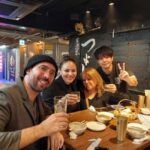
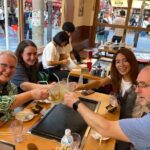
Sake and takoyaki in a local kitchen.
This Osaka experience turns a simple cooking class into a real food errand: you start with a walk through a neighborhood Japanese supermarket to choose ingredients and brainstorm Osaka-style takoyaki fillings, then move to a cozy studio to cook and eat an izakaya spread with sake pairing. I also like that the night ends with a downloadable recipe pack, so you can copy the flavors later instead of just carrying a full stomach.
The group stays small (up to 7), and the guide is English-speaking, so you get actual conversation time while you cook. One consideration: this is built around pairing drinks with your meal, so if you avoid alcohol, you’ll still have soft drinks, but the core format does include sake.
Key things I’d circle before booking
- Supermarket start: you learn what to buy and why, not just how to cook
- English-speaking local guides like Chie and Nina who answer questions as you go
- Hands-on izakaya cooking: takoyaki, wasabi-marinated tuna, and chicken with mayo & ponzu
- Sake pairing with your meal in a relaxed taku-nomi vibe
- Small group (max 7) so you don’t get lost in a crowd
- Downloadable recipe pack you can use at home
In This Review
- Why This Osaka Night Starts at the Supermarket
- From Ingredients to Izakaya Dishes: What You’ll Make
- Takoyaki Tactics: Crispy Outside, Juicy Inside
- The Sake Pairing Part: How Taku-nomi Fits the Meal
- Timing and Meeting Point: Tenjinbashi at 4:30 pm
- What You Take Home: The Downloadable Recipe Pack
- Who This Osaka Home Feast Is For (and Who Might Skip It)
- Should You Book This Osaka Home Feast Cooking Experience?
- FAQ
- Where does the Osaka Home Feast Cooking and Sake Experience start?
- What time does it begin?
- How long is the experience?
- What dishes and drinks are included?
- Is this experience in a small group?
- Is there an English-speaking guide?
- Can I cancel and get a full refund?
Why This Osaka Night Starts at the Supermarket
The best part of this class is where it begins: a short shopping run at a nearby Japanese supermarket, guided by an English-speaking local. You’re not just picking random items. You’re looking for ingredients you can’t easily “wing” at home, plus you get to talk through takoyaki filling ideas that fit Osaka’s style.
In the reviews, Chie gets credit for bringing context as you shop. That matters, because ingredients make more sense when you know how they’re used in everyday Japanese cooking. You also get a very normal, street-level view of shopping habits—people carry their own purchases, and you’ll see the rhythm of a real store trip rather than a staged demo.
Practical tip: arrive a few minutes early so you’re not sprinting from the station to the FamilyMart start point. This kind of experience moves fast once the group starts cooking.
From Ingredients to Izakaya Dishes: What You’ll Make
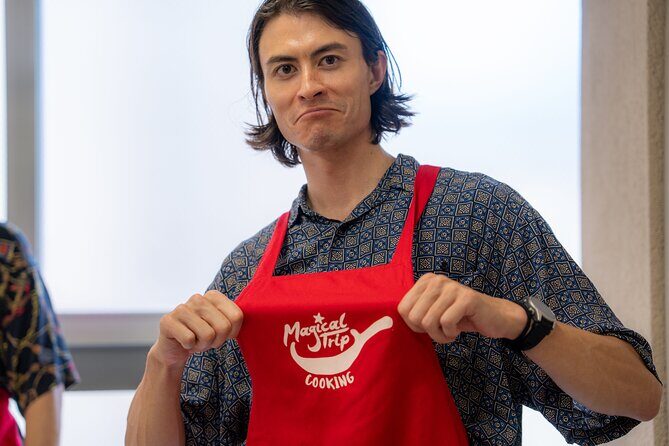
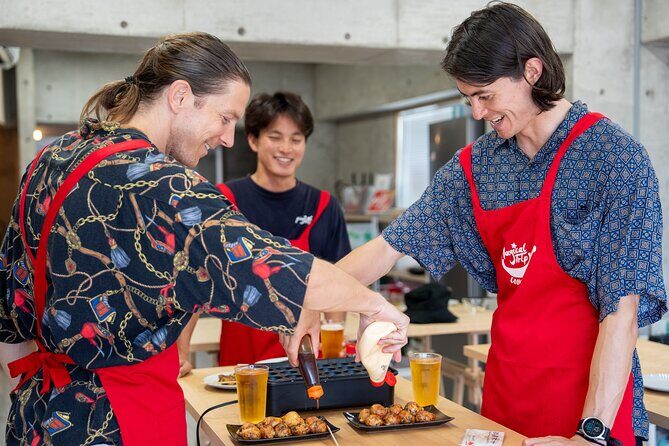
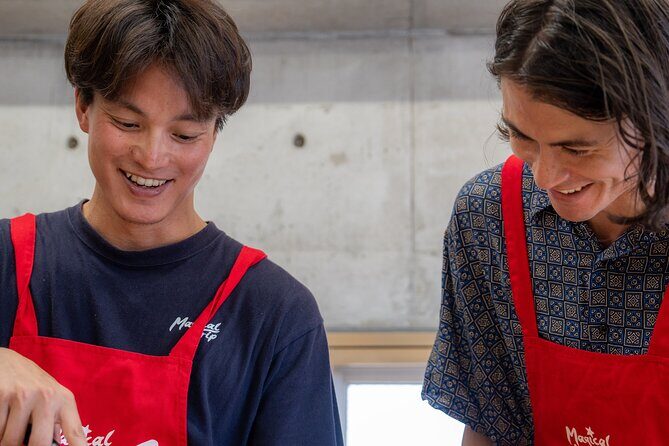
After the supermarket, you head to the cooking studio and slip into a MagicalTrip apron. The tone is relaxed but hands-on, like learning from a helpful friend who actually cooks these dishes at home.
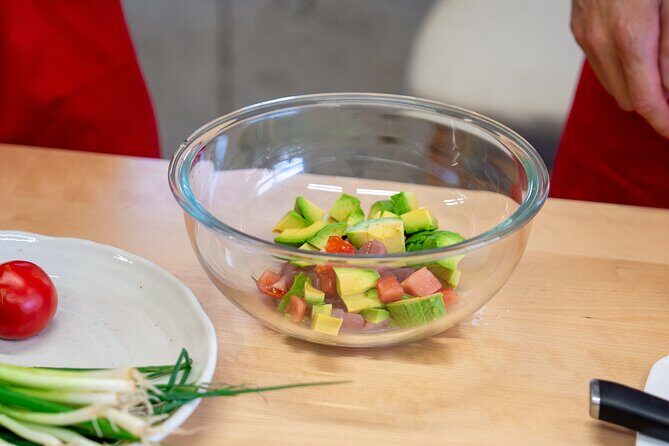
You start with early bites while you work, including Mugen Cabbage and Wasabi Tuna Salad. These help you get your bearings: you’ll taste the flavors in advance, then make the rest with the right idea of balance—salty, savory, tangy, and a little heat.
Then the main cooking shifts into three clear targets:
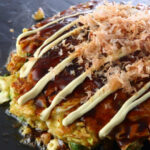
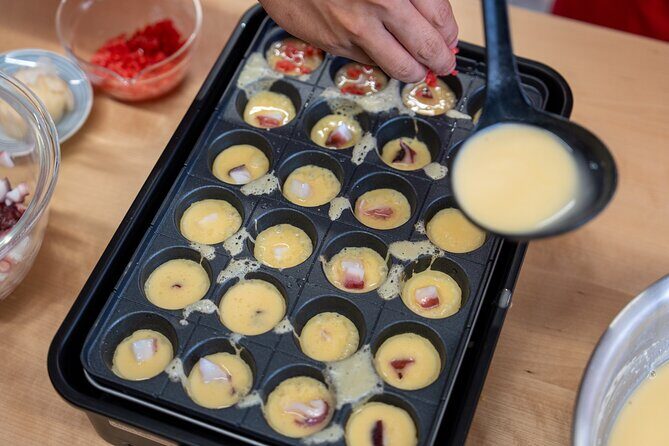
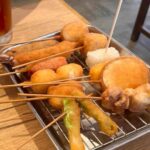
- Crispy takoyaki (the Osaka classic, made in bite-size portions)
- Wasabi-marinated tuna (where you’ll feel how the wasabi cuts through richness)
- Chicken with green onion, mayo & ponzu (a sauce combo that’s both punchy and comfortable)
The pacing is built for learning. You’re not watching someone else cook while you take notes. You’re actively preparing and assembling parts of your meal, then tasting what you’ve made as the night progresses.
If you’re the type who worries you’ll be bored in a cooking class, this format usually helps. You’ve got multiple dishes, multiple steps, and breaks that are tied to eating rather than waiting.
If you're still narrowing it down, here are other tours in Osaka we've reviewed.



Takoyaki Tactics: Crispy Outside, Juicy Inside
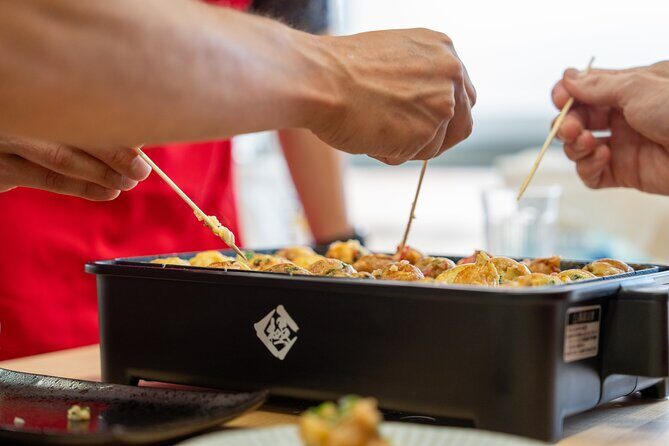
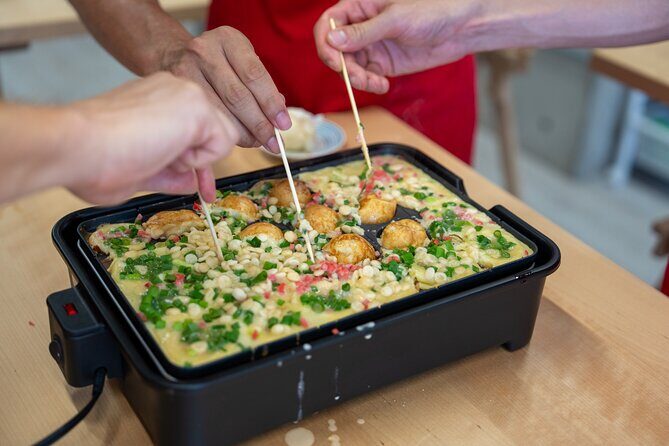
Takoyaki is where many classes turn “fun” into “I’m learning something real.” This one focuses on getting that signature texture: crispy outside, tender inside, and a filling that tastes intentional.
You’ll brainstorm Osaka-style takoyaki fillings during the grocery portion, which is a smart setup. When you reach the cooking stage, you already know what you want your bites to taste like, so you can adjust seasonings and proportions with purpose.
Once you’re cooking, expect a skill lesson, not just a plate of food. Getting takoyaki right is all about heat control and timing—small differences change the crust and the chew. The guide keeps you moving, so you’re not stuck waiting for other people’s turn.
If you’re bringing someone who only wants to eat, not cook, this is still worth it. The group format and the guided steps usually make it easy to contribute without feeling like you’re failing a cooking exam.
The Sake Pairing Part: How Taku-nomi Fits the Meal
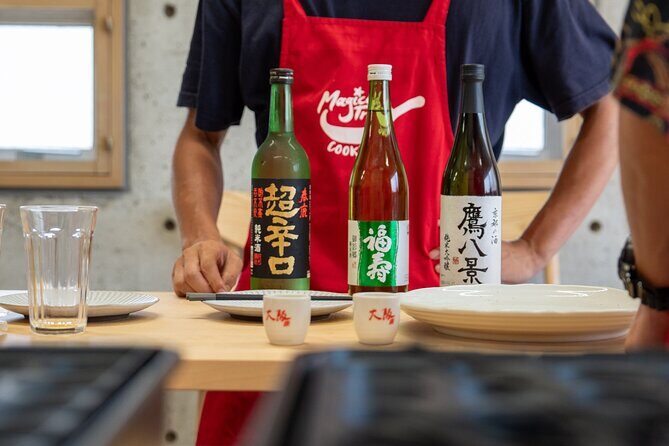
This is not a lecture about sake. It’s sake pairing in a “home drinking” rhythm—your drinks show up as part of the meal, and the pairing is meant to match what you’re cooking and eating.
You’ll be offered handpicked sakes, plus beer or soft drinks depending on what you choose. The idea is simple: as your dishes get more savory or more tangy (ponzu does that), the drink should feel like it belongs at the table.
That’s why the class works for food lovers and casual drinkers alike. You’re tasting dishes like wasabi tuna salad and then seeing how sake interacts with sharp flavors and salty-sweet notes. You don’t need to be a sake expert going in.
One consideration: if you don’t drink alcohol, you still can enjoy the experience through the soft-drink option. Still, the entire flow is organized around tasting as you go, so plan to participate in the food side even if you keep your drinks non-alcoholic.
Timing and Meeting Point: Tenjinbashi at 4:30 pm
The class runs about 3 hours, starting at 4:30 pm. That timing is nice in Osaka because you’re hitting the sweet spot: early enough to still feel like you’re getting evening energy, late enough that dinner feels like a built-in reward.
You meet at FamilyMart Minamimorimachi station South side, Osaka, Kita Ward, Tenjinbashi 2-chōme 3-10 1F. It’s close to public transportation, so you’re not stuck in “take a long taxi to a random building” territory.
Group size matters here. With a maximum of 7 travelers, you should feel like you can actually ask questions while you cook. In a review, Nina mentions making it fun, and another note highlights how well the guide handled a small or solo setup. That’s usually what you want: less time waiting, more time learning.
Practical move: when you arrive, confirm you’re at the South side entrance area and that you can see the guide or a clear meeting point marker. This is the kind of tour where being on time keeps the vibe calm.
What You Take Home: The Downloadable Recipe Pack
Most cooking classes stop at dinner. This one adds a real reason to care after you leave: you get a downloadable recipe pack to recreate the dishes at home.
That’s a big value lever. If you’re the kind of person who cooks at home, the recipe pack turns the class into a future dinner party. If you’re not, it still helps you remember the exact flavor logic—what went with what, and how the drinks fit the meal.
The dishes you’ll likely want to repeat are the ones that showed up clearly in the cooking flow: takoyaki, wasabi-marinated tuna, and chicken with green onion, mayo, and ponzu. Mugen cabbage and wasabi tuna salad are also the sort of items you might want to revisit when you want something quick and satisfying.
Other cooking classes in Osaka

Who This Osaka Home Feast Is For (and Who Might Skip It)
I’d recommend this experience if you want:
- a hands-on cooking night (not a sit-and-watch class)
- Osaka flavors with takoyaki as the anchor
- a small-group format where an English-speaking guide can answer your questions
- a food-and-drink pairing style that’s relaxed rather than fancy
It’s especially good for couples, friends, and solo travelers who like structured learning with real conversation. In reviews, guides like Chie show up not only as cooks but as question-answerers with Japan context, which makes the shopping-to-studio arc feel more meaningful.
You might skip it if you want a purely cultural sightseeing walk or if you prefer cooking without any drink pairing at all. The format is designed around the home-meets-izakaya meal and sake vibe, so that part is part of the point.
Should You Book This Osaka Home Feast Cooking Experience?
Book it if you want a practical, memorable way to eat like a local in Osaka—starting in a real supermarket, then cooking an izakaya-style spread you can actually recreate. The biggest value signs are the small group size, the multiple dishes, and the downloadable recipe pack, plus the guide energy from Chie and Nina showing up in the details.
Consider it carefully if you’re sensitive to alcohol pairing themes. You do have soft drink options, but the flow is still built around tasting with drinks.
If you love food that’s specific to a place—like Osaka takoyaki—this is the kind of night you’ll keep thinking about. You won’t just remember that you ate well. You’ll remember how the flavors came together.
FAQ
Where does the Osaka Home Feast Cooking and Sake Experience start?
It starts at FamilyMart Minamimorimachi station South side, Osaka (530-0041), Kita Ward, Tenjinbashi 2-chōme 3-10 1F.
What time does it begin?
The start time is 4:30 pm.
How long is the experience?
It lasts about 3 hours.
What dishes and drinks are included?
You’ll cook izakaya-style dishes such as crispy takoyaki, wasabi-marinated tuna, and chicken with green onion, mayo & ponzu, and you’ll taste earlier bites like Mugen Cabbage and Wasabi Tuna Salad. The experience includes handpicked sake, and you can also have beer or soft drinks.
Is this experience in a small group?
Yes. The maximum group size is 7 travelers.
Is there an English-speaking guide?
Yes. The experience is guided by an English-speaking local.
Can I cancel and get a full refund?
Yes. You can cancel for free up to 24 hours before the experience starts for a full refund.
More Cooking Classes in Osaka
More tours in Osaka we've reviewed



Sake Class Experiences, compared.
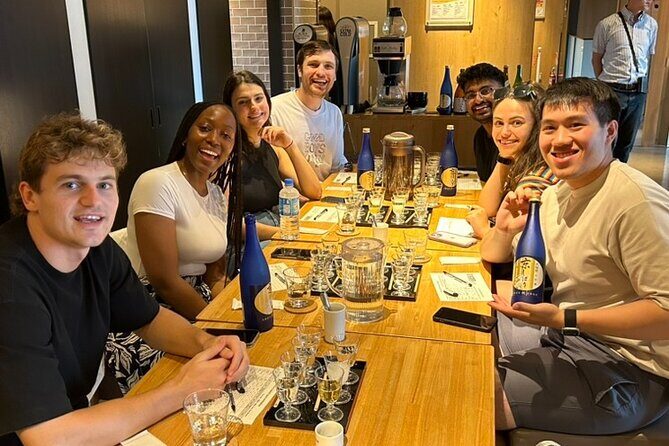 ★ 5.01.5-Hour Kyoto Insider Sake Experience with 7 Tastings & PairingsFrom $68
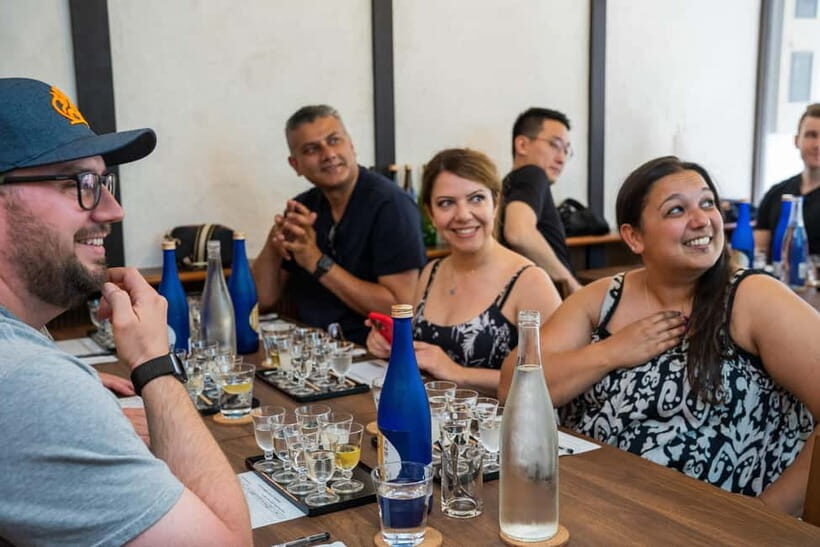 ★ 5.0Kyoto: Insider Sake Experience with 7 Tastings and SnacksFrom $661h 30m
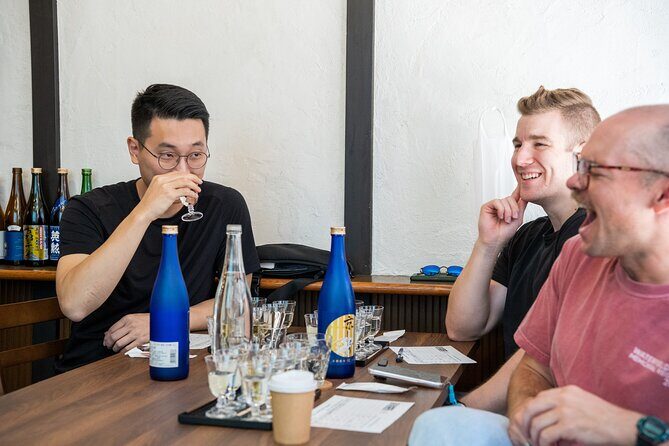 ★ 5.03 Hours Kyoto Insider Sake Experience | Tasting KontekiFrom $92
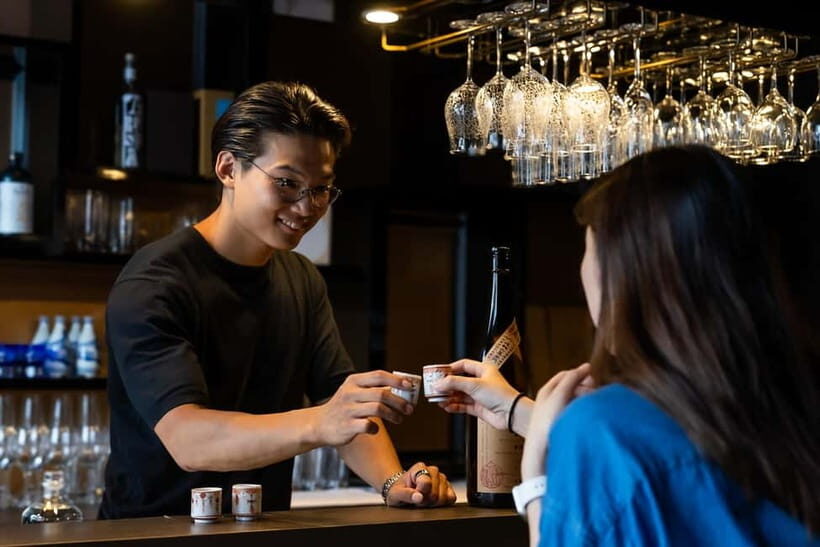 ★ 4.7Ginza, Tokyo: Sake Experience with traditional vesselsFrom $221 day
The lists this tour appears in