
Reviewed · WORKSHOPS
Tokyo Sushi Making Class : Sake Ceremony & Matcha Experience
Sake, sushi, and matcha in Asakusa. I love the Kagami-biraki tradition at the start, because it turns a food class into a real Japanese celebration. I also like how the nigiri workshop focuses on practical technique, so you leave knowing how to shape rice and place toppings with confidence.
One thing to consider: the whole experience runs about 1 hour 30 minutes, so it moves at a friendly pace. If you want ultra-slow practice, you may wish you had more time at the rice-shaping station.
In This Review
- Key moments that make this class worth your time
- Asakusa Sake, Sushi, and Matcha in About 90 Minutes
- Kagami-biraki Sake Barrel Opening and the Group Toast
- Nigiri Workshop: Shaping Rice and Assembling Toppings Cleanly
- Torched Salmon Mayo Gunkan: The Modern Tokyo Twist
- Make Matcha Yourself: A Calm Finish After the Food Action
- What You’ll Make and Eat (So You’re Not Guessing)
- Price and Value: $45.77 for Skill, Culture, and a Real Take-Home Memory
- Who Should Book This Class (and Who Might Want Something Else)
- Quick Practical Tips Before You Go
- Should You Book This Tokyo Sushi Making Class?
- FAQ
- What is the duration of the Tokyo Sushi Making Class?
- Where does the activity start?
- Do I need a printed ticket?
- Is this class beginner-friendly?
- How many sushi pieces will I make?
- What is included besides sushi?
- Is there an alcohol option for the sake toast?
- What special sushi dish do you make?
- How big are the groups?
- What is the cancellation policy?
Key moments that make this class worth your time
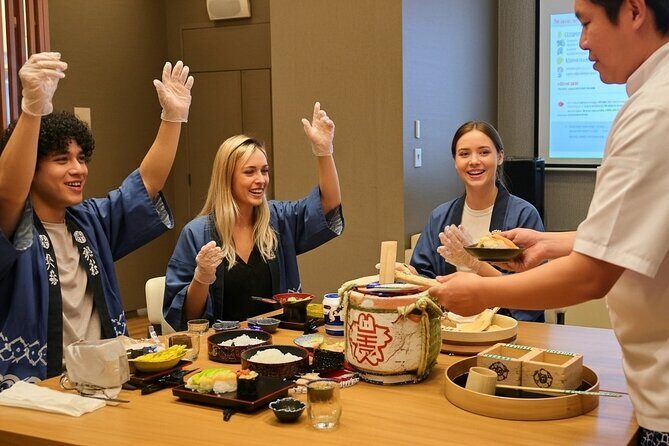
- Kagami-biraki sake barrel opening and group chant for a fun, ceremonial start (with water or warm Japanese tea if you skip alcohol).
- Hands-on nigiri fundamentals: rice pressure, topping handling, and clean assembly so your sushi looks right.
- WASSHOI torched salmon mayo gunkan with a modern Tokyo flavor twist and a planned photo moment.
- You make 6–12 pieces (nigiri plus rolls), not just watch and take notes.
- Finish with matcha you whisk yourself, then enjoy it as a calm finale.
- Max 20 people, which helps the instructor keep an eye on what your hands are doing.
Asakusa Sake, Sushi, and Matcha in About 90 Minutes
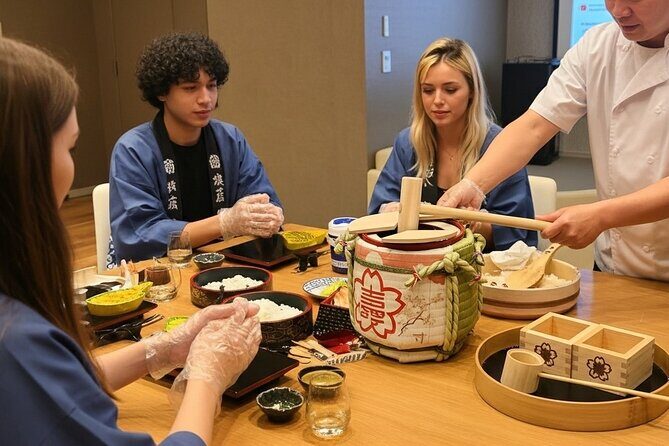
This is the kind of Tokyo food activity that feels like more than a class. In a compact 1.5-hour window, you get three different parts of Japanese culture: a sake ritual, sushi technique, and matcha making. It happens in Asakusa, a great area for first-timers because you’re never far from traditional atmosphere while learning something very hands-on.
The structure also matters. You start with an upbeat group moment (the sake barrel opening), then switch into skill-building (nigiri basics), then end with a “fun you can taste” dish (torched salmon mayo gunkan) before finishing quietly with matcha. That arc keeps the energy up without turning everything into a party.
A few more Tokyo tours and experiences worth a look
Kagami-biraki Sake Barrel Opening and the Group Toast
The experience kicks off with kagami-biraki, the traditional practice of opening a sake barrel to mark new beginnings. It’s not just a background ceremony. You join the group for the action and the chant—Yoisho, yoisho, yoisho—and then there’s a toast.
What I like about this opening is the way it sets the tone. Before you touch any ingredients, you’re already participating in Japanese tradition. It also makes the whole class feel special, even if you’ve never made sushi before.
If you’d rather not drink alcohol, you’re covered. You can choose a non-alcohol option like water or warm Japanese tea for the toast. That means you get the moment without feeling like you need to do anything you don’t want to do.
Potential drawback: ceremonies add time. Here, you’re still moving forward quickly, but you should expect the opening to be more than a quick photo stop. Plan to show up with a relaxed mindset.
Nigiri Workshop: Shaping Rice and Assembling Toppings Cleanly
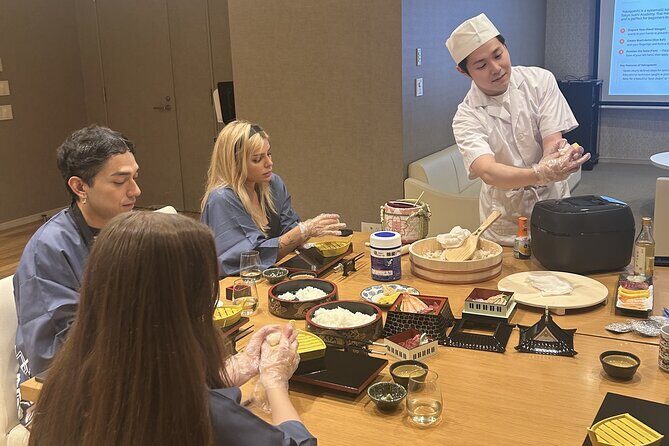
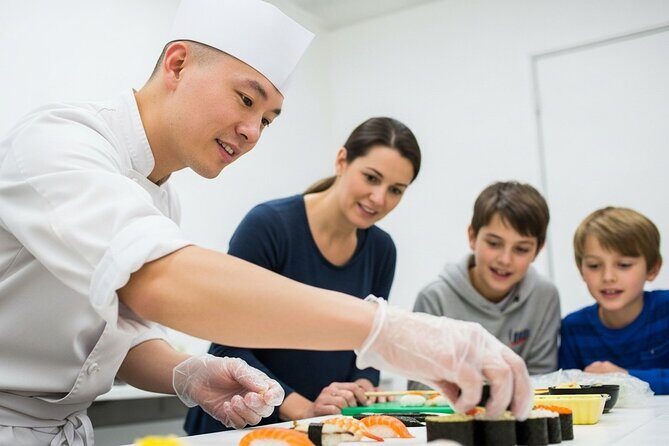
After the ritual, the workshop shifts to practical sushi skills. The focus is on nigiri essentials—the stuff you need to make sushi look and taste right. The instructor’s approach (based on how people describe the experience) is friendly and supportive, with explanations that help you understand what your hands should do.
You’ll work on:
- shaping rice with the right pressure
- handling toppings properly
- placing fish cleanly and confidently
This part is where beginner-friendly really counts. Nigiri looks simple, but rice texture and pressure matter a lot. The good news: you’re not expected to be a sushi chef overnight. The goal is that you can assemble pieces you’re proud of, and you can recreate the basics later at home.
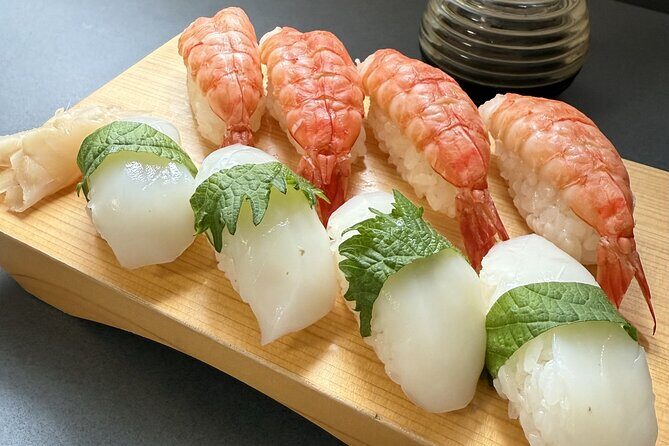
You’ll also make multiple pieces by the end—6–12 pieces total, including nigiri and rolls. That matters for value. Watching someone else do everything is fine once, but you’ll learn faster and enjoy it more when you’re actively building.
Torched Salmon Mayo Gunkan: The Modern Tokyo Twist
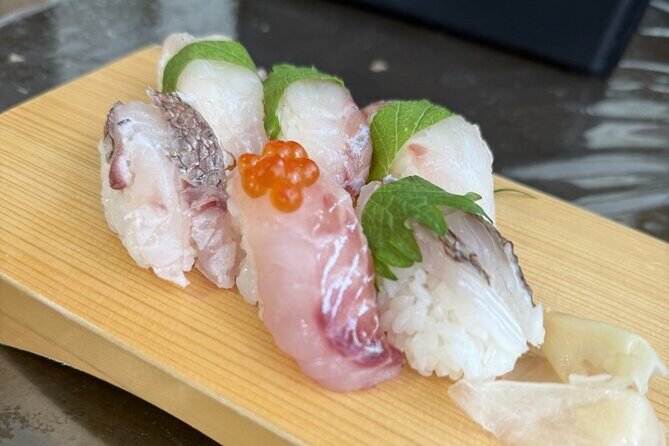
Then comes the crowd favorite: WASSHOI torched salmon mayo gunkan. This is where the class gets playful and a little dramatic in a good way. Instead of only sticking to classic Edomae style, you try a modern Tokyo flavor approach.
The format is clear and fun:
- pile salmon high
- zigzag mayo
- finish with a quick torch step for smoky, creamy umami
You’ll chant Wasshoi three times, and there’s a planned moment to snap photos at the best time. That’s smart planning. Torch moments aren’t the easiest to coordinate, and having a cue for when to take the picture saves you from awkward timing.
Why this dish is a great lesson: it teaches that good sushi isn’t only about tradition. It’s also about balance—fatty, smoky, and savory notes working together. It’s also a flavor combo you’re more likely to want to recreate than a super-technical fish-cut lesson.
Small consideration: torched items run hot (in the literal sense). If you have dietary sensitivities or prefer mild flavors, you’ll want to communicate that early, because mayo and torch flavor are central to the dish.
Make Matcha Yourself: A Calm Finish After the Food Action
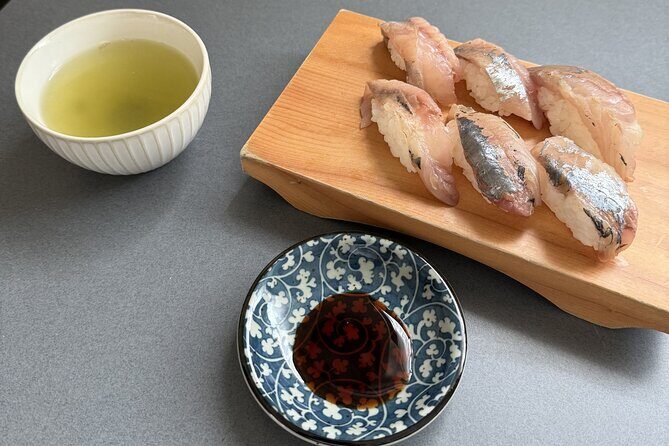
After sushi building and torching, you get a slower, satisfying finale: making matcha. You’ll learn how to whisk it properly so you get a smooth, foamy bowl, then you get to enjoy your own freshly made matcha.
I like this ending because it resets the experience. Sushi classes can feel like a nonstop sprint from one step to the next, but matcha is a different rhythm. It’s also a practical skill: once you know how the whisking works, you can repeat the ritual back home.
And since matcha is part of Japanese tea culture, it ties the whole experience together. Sake is the start celebration, sushi is the main skill, matcha becomes the quiet punctuation.


What You’ll Make and Eat (So You’re Not Guessing)
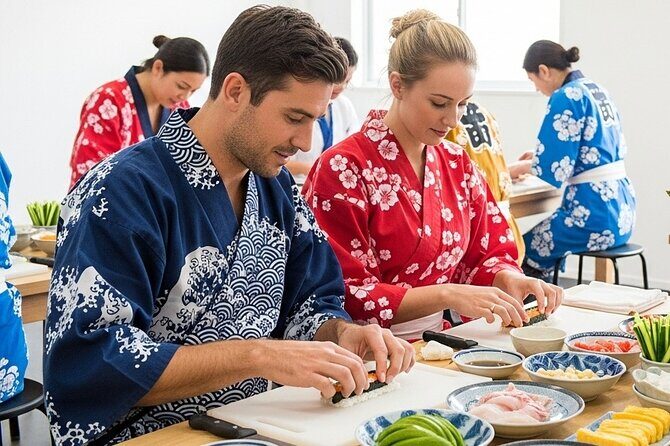
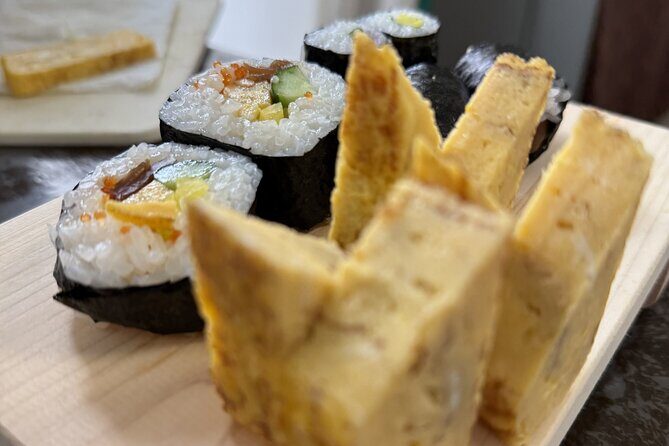
You’ll create 6–12 pieces during the workshop, including nigiri and rolls. That’s enough variety to taste different textures and flavors without feeling like you’ve been handed an endless conveyor belt.
A nice detail is that the experience isn’t only about one dish. It blends classic technique (nigiri fundamentals) with a specific signature item (torched salmon mayo gunkan), and then finishes with matcha. The result is a set of skills that feels useful, not just a one-time meal.
If you’re coming hungry, do remember you’re in a class format. You’ll eat what you make, but this is not positioned as a full multi-course restaurant dinner.
Price and Value: $45.77 for Skill, Culture, and a Real Take-Home Memory
At $45.77 per person, this isn’t a high-cost Tokyo splurge. You’re paying for something that usually takes experience and guidance: technique with rice and assembly, plus a ceremonial opening and a matcha workshop. The value is in participation.
Here’s why I think the price makes sense for most people:
- You’re not just watching; you’re making 6–12 pieces yourself.
- You’re learning multiple cultural beats, not one food trick.
- The group size is capped at 20, so it doesn’t feel like you’re lost in a crowd.
In Tokyo, many food activities either focus on tasting or on one quick demo. This one gives you both technique and experience, all in a single session.
Who Should Book This Class (and Who Might Want Something Else)
This works especially well if you:
- are a beginner and want step-by-step guidance
- like hands-on cooking activities more than watching demonstrations
- want a Tokyo experience that’s more than just eating
It’s also a good choice for people who like food culture details, because kagami-biraki and matcha are more than decorative add-ons. You get the why and the participation.
You might want to consider a different format if:
- you’re the type who wants long practice time on just one skill
- you dislike strong smoky flavors (torch step is part of the signature dish)
- you’re very pressed for time and hate anything ceremonial, even short rituals
Quick Practical Tips Before You Go
- Wear comfortable clothes. You’ll be working with your hands and staying close to the food prep area.
- Come ready to chant and smile. The group vibe is part of the experience, especially at the sake opening.
- If you don’t drink alcohol, choose the non-alcohol toast option (water or warm Japanese tea). You still get the ritual moment.
Should You Book This Tokyo Sushi Making Class?
Yes, if you want a compact Tokyo experience that feels genuinely interactive. I’d book it for the blend of Kagami-biraki, hands-on nigiri essentials, and the standout torched salmon mayo gunkan you help assemble, plus the neat finishing touch of making matcha yourself.
It’s beginner-friendly without being watered down. You leave with skills you can actually use, and with photos that make sense because the experience cues you to capture the moment.
If you’re the kind of traveler who likes structured fun—ceremony first, technique next, then a tasty finale—this is a strong match.
FAQ
What is the duration of the Tokyo Sushi Making Class?
It runs about 1 hour 30 minutes.
Where does the activity start?
The meeting point is Sushi Meets Matcha, 1-chōme-10-16 Hanakawado, Taito City, Tokyo 111-0033, Japan.
Do I need a printed ticket?
No. It uses a mobile ticket.
Is this class beginner-friendly?
Yes. The workshop is designed to be beginner-friendly, with friendly, step-by-step guidance.
How many sushi pieces will I make?
You’ll make about 6–12 pieces, including nigiri and rolls.
What is included besides sushi?
You’ll also take part in a sake barrel opening (kagami-biraki) and whisk your own matcha to finish.
Is there an alcohol option for the sake toast?
Yes. There’s a non-alcohol option, such as water or warm Japanese tea.
What special sushi dish do you make?
You make torched salmon mayo gunkan, a modern Tokyo twist finished with a quick torch.
How big are the groups?
The maximum group size is 20 travelers.
What is the cancellation policy?
Free cancellation is available up to 24 hours in advance for a full refund. If you cancel less than 24 hours before the experience starts, the amount you paid is not refunded.
More Workshops & Classes in Tokyo

More tours in Tokyo we've reviewed




Workshops, compared.
 ★ 5.0Ramen and Sushi Cooking Class with Sake Pairing Set in TokyoFrom $79
 ★ 5.0Tokyo Washoku 4-hour Cooking Class: From Market to TableFrom $79
 ★ 4.9Kyoto: Afternoon Japanese Izakaya Cooking ClassFrom $673 hours
 ★ 5.0Izakaya Style Cooking ClassFrom $71
 ★ 5.0Tokyo: Sushi and Ramen Cooking Class with Sake Pairing SetFrom $1293 hours
 ★ 5.0Osaka Cooking Class and Sake Tasting with Local Supermarket VisitFrom $92
 ★ 5.0Cozy Tokyo Class: Ramen, Sushi, Sake Pairing & Cultural ExchangeFrom $79
 ★ 5.0Tokyo Night Cooking Class: 5 Home-Cooked Japanese DishesFrom $79
The lists this tour appears in