
Reviewed · KYOTO DRINKING TOURS
Private Pewter Sake Cup Experience with a Kyoto Artisan
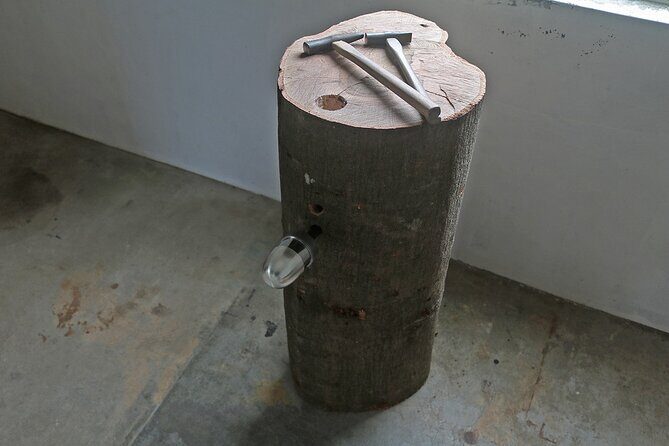
This workshop is all about making, not watching. You shape a pewter sake cup by hand with different hammers, then refine the rim so it feels good to drink from. I especially love that you get clear, friendly guidance from Kanako in a small, intimate setting, and that you can personalize your cup with letters, numbers, or even a date.
One thing to consider: you’ll be heading away from central Kyoto, so plan for the ride and give yourself a little buffer time to get there calmly.
In real terms, this is a 2.5-hour craft class that results in a functional keepsake. You leave with something you can use for sake, whiskey, or even tea, not just a decorative trinket.
In This Review
- Key points to know before you book
- Craft Gallery SALUK: where Kyoto quiet starts
- Your 2.5-hour plan: hammer, shape, refine, and finish
- Hammering pewter: how the patterns stay in your control
- Personalize it: stamping letters, numbers, initials, and dates
- Finishing the rim: where functional craft beats souvenirs on shelves
- Size, capacity, and what to pour besides sake
- What you’ll take home: a handmade cup with presentation box energy
- Price and value: $144.96 for a private, guided craft you can actually use
- Who should book this (and who might skip it)
- Practical tips so the workshop feels easy
- Should you book this private pewter sake cup workshop?
- FAQ
- How long is the private pewter sake cup experience?
- Is this a private tour or small-group class?
- What is the price per person?
- Do I need to bring any materials or tools?
- Can I personalize the cup?
- Is there anything special about the rim finishing?
- How big is the finished cup?
- Where does the experience start?
- Is the location near public transportation?
- Is it okay if I don’t drink sake?
Key points to know before you book
- Handmade pewter with hammering patterns: your cup’s texture comes from striking and rotating the metal.
- Small-group feel with private comfort: it’s only your group, and the instruction stays personal.
- Personalization built in: stamp letters, numbers, initials, or a date on the base.
- Rim finishing for real drinking comfort: height and beveling are part of the process; final polishing is handled by the artisan.
- Quiet workshop location: you trade city noise for a calmer studio setting outside downtown.
- A souvenir that doubles as a drink cup: it’s sized for sake (and beyond) and comes in a neat presentation box.
Craft Gallery SALUK: where Kyoto quiet starts
Your experience meets at Craft Gallery SALUK, at 35-2 Shizuichinonakachō, Sakyo Ward, Kyoto (601-1122). This is not a downtown “shopfront” stop. The studio sits in a calmer area outside the city, and the whole vibe is gentler once you arrive—perfect if you’re tired of crowds and rush.
Getting there is part of the charm. If you’re coming from Kyoto Station, you’ll likely take a scenic train ride rather than hopping on the busiest streets and walking forever. I’d still plan for transit time like it matters, because the workshop itself runs about 2 hours 30 minutes, and you don’t want to feel rushed when the class starts.
The meeting place is also near public transportation, and the activity ends back at the same location. Service animals are allowed, and most travelers can participate.
Other Kyoto drinking tours we've reviewed in Kyoto


Your 2.5-hour plan: hammer, shape, refine, and finish
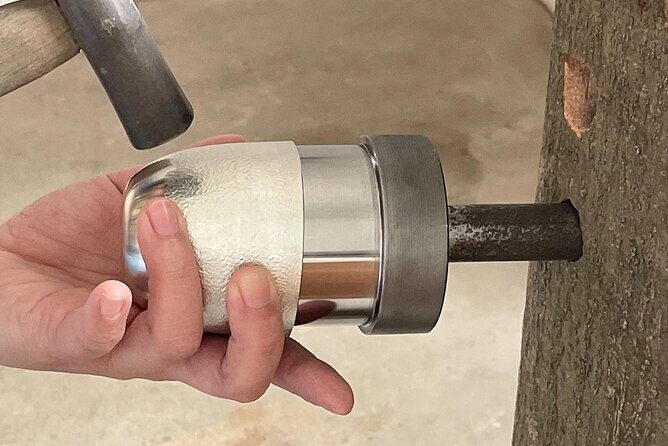
This is a hands-on sequence with enough variety to keep your attention, but it never feels chaotic. The flow goes like this:
First, you start with the pewter blank and hammer choice. You’ll pick from several hammer types, set the pewter cup on an anvil, and strike while rotating to build patterns. You can use just one hammer or mix several for a more complex surface.
Next, you refine the shape. After the hammered texture, you use a file to adjust the height and bevel the rim at an angle, so the edge feels pleasant when you drink.
Then, polishing is handled safely. The final polishing is done by the craftsman using a rotary machine, which keeps things smooth and controlled.
Optional personalization fits in naturally. If you want, you can stamp letters, numbers, initials, or a date on the base before finishing.
Some people are also served something to drink during the workshop flow—often sake for those who drink, and green tea for those who don’t. Either way, the point is the same: once your cup is done, you get to see it in action.
Hammering pewter: how the patterns stay in your control
Pewter is one of those materials that rewards patience. When you hammer, you’re not just hitting metal—you’re shaping the way it catches light and texture changes across the surface.
Here’s what matters for your results:
- Rotation is key. You strike while rotating the cup on the anvil. Small shifts in angle and rotation create different kinds of rhythm and pattern density.
- Hammer choice changes the mood. Different hammer heads leave different impressions. Even if your design concept is simple, the hammer set creates variety.
- You can go off-script (and still win). If your first attempts are messy, the instructor’s guidance helps you land on a final cup you’re happy to take home.
This is also why I’d call the experience “beginner-friendly” in practice. You don’t need prior metalworking skill. You just need steady hands and a willingness to try, adjust, and try again.
Personalize it: stamping letters, numbers, initials, and dates
One of the best parts of this class is that personalization isn’t an afterthought. You can stamp directly onto the base, so the mark looks intentional—like it belongs to the cup.
You can personalize with:
- letters and numbers
- initials
- a date
That tiny area becomes the story button. It’s the kind of detail you’ll remember months later, because it ties the object to your trip and your people back home.
I like that you can make it personal even if you’re not a “design person.” Pick a clean set of characters, and the hammered surface does the rest.
Finishing the rim: where functional craft beats souvenirs on shelves
A lot of tourist crafts look nice but never get used. This cup is built to be used.
The class includes rim work:
- you file the height
- you bevel the rim at an angle
- the drinking edge becomes more comfortable
For safety and quality, the final polishing is performed by the artisan on a rotary machine. That means you don’t have to guess how to make the edge smooth. You focus on shaping your pattern and personalization, and the last step stays professional.
If you’re thinking about this as a “gift craft,” this finishing detail is exactly what makes it feel grown-up. It isn’t just decorative metal; it’s a cup that makes sense in a real setting—at home, during a celebration, or on a quiet night when you want something special.
Other private tours in Kyoto

Size, capacity, and what to pour besides sake
Your finished pewter cup measures about:
- 64 mm diameter
- 53 mm height
- holds about 90 ml (about 115 ml when filled to the rim)
That sizing matters because it lines up with typical serving habits. It’s not a tiny shot glass for show. It’s a real cup that works for sake, and that’s part of the design philosophy behind pewter.
Also, the cup can be used beyond sake. The experience notes it works for whiskey and chilled green tea, plus other occasions. That flexibility makes the souvenir feel less fragile. You’re not limited to one ritual.
There’s another practical point from the craft side too: pewter is considered to help keep water clean, which connects to flower care for ikebana. So if you’re the type who likes using objects creatively, this cup can become a small part of daily life rather than living in a drawer.
What you’ll take home: a handmade cup with presentation box energy
You’re paying for a full process, not just a finished item. The end result is a one-of-a-kind hammered pewter cup because the pattern comes from your strikes—your exact rhythm and rotation.
Many people also mention thoughtful packaging. Your finished cups are presented in wood boxes, which helps with gifting and also makes the souvenir feel properly “Kyoto.” It’s the kind of presentation that makes it easier to hand someone a gift without needing extra wrapping.
And yes—because this is functional craft, you’ll likely use it. People often get excited about showing the cup to friends because it looks handmade and you can say you made it.
Price and value: $144.96 for a private, guided craft you can actually use
At $144.96 per person, this isn’t the cheapest thing on a Kyoto schedule. But the value is in what’s included.
You get:
- a private setup (only your group participates)
- guided instruction from Kanako
- all materials provided, so you don’t bring tools or supplies
- a complete process ending in a useable pewter cup
- room to personalize with stamped characters
- a final rim finishing process that keeps the cup comfortable
If you compare this to buying a pre-made souvenir cup, you’re paying for skill, time, and the fact that the object is yours to shape. You’re also paying for access to a workshop environment that isn’t your typical retail factory line.
In other words: you’re not just buying a product. You’re buying the moment where the metal becomes yours.
Who should book this (and who might skip it)
I’d steer you toward this if you want:
- a hands-on Kyoto experience with a real artisan
- a souvenir that’s actually useful
- a calmer, less crowded setting outside downtown
- a class you can enjoy even if you’re not “crafty”
You might skip it if:
- you hate anything with a learning curve and you want zero participation
- you’re short on time and don’t want to travel out of central Kyoto
- you prefer mass-produced souvenirs you can buy quickly without scheduling a workshop
For many couples and small groups, this is a sweet spot. The experience is intimate, it creates shared memories, and it ends with a tangible result you’ll keep.
Practical tips so the workshop feels easy
You don’t need to bring anything, since materials are provided. Still, a few small choices can make the time smoother.
- Wear comfortable clothes. You’ll be standing and working with your hands.
- Plan your transport. The workshop is worth the trip, but you should budget time to get there.
- Think about your personalization before you arrive. Letters, initials, and a date are simple, but deciding ahead saves stress.
- Give yourself a calm mindset. Hammering pewter is rhythmic, but it takes a few minutes to find your comfort zone.
If you end up making a change mid-process (like adjusting your pattern plan), don’t panic. The instruction is part of the value. Your goal is a cup you’re proud to use.
Should you book this private pewter sake cup workshop?
If you’re the kind of traveler who likes learning a craft with your hands, this is a very strong yes. The combination of private group time, real artisan coaching, and a functional keepsake makes it feel like the opposite of disposable travel.
Book it especially if you want something that doesn’t just sit on a shelf. This cup is meant to be used—at home, with a drink, or as a small object for everyday rituals.
If your idea of a great Kyoto day is only temples and walking, you might prefer a different track. But if you want one hour or two to slow down and make something authentic, this is one of the better bets in the city.
FAQ
How long is the private pewter sake cup experience?
It lasts about 2 hours 30 minutes.
Is this a private tour or small-group class?
Yes. It’s private, and only your group participates.
What is the price per person?
The price is $144.96 per person.
Do I need to bring any materials or tools?
No. Materials are provided.
Can I personalize the cup?
Yes. You can stamp letters, numbers, initials, or a date on the base.
Is there anything special about the rim finishing?
Yes. You file and bevel the rim at an angle, and the final polishing is done by the artisan using a rotary machine.
How big is the finished cup?
It’s about 64 mm in diameter and 53 mm in height, holding about 90 ml (about 115 ml when filled to the rim).
Where does the experience start?
It starts at Craft Gallery SALUK, 35-2 Shizuichinonakachō, Sakyo Ward, Kyoto, 601-1122, Japan.
Is the location near public transportation?
Yes, it’s near public transportation.
Is it okay if I don’t drink sake?
The workshop experience includes serving options mentioned in the available information, including green tea for some participants.
More Private Tours in Kyoto
More Kyoto Drinking Tours in Kyoto


More tours in Kyoto we've reviewed









Kyoto Drinking Tours, compared.
 ★ 5.03-Hour Kyoto Insider Sake Brewery Tour with Tastings & PairingsFrom $84
 ★ 4.9Kyoto: Izakaya Bars Guided Walking TourFrom $253 hours
 ★ 5.0Kyoto: Insider Sake Brewery Tour with Sake and Food PairingFrom $873 hours
 ★ 5.0Kyoto Sake Brewery & Tasting Walking TourFrom $98
 ★ 5.0Kyoto Bar Hopping Night TourFrom $105
 ★ 5.0Kyoto Local Bar Crawl in Kawaramachi AreaFrom $28
 ★ 5.01.5-Hour Kyoto Insider Sake Experience with 7 Tastings & PairingsFrom $68
 ★ 5.0Kyoto: Insider Sake Experience with 7 Tastings and SnacksFrom $661h 30m
The lists this tour appears in