
Reviewed · SAKE TASTING
Sake Blending Experience : Craft Your Own Signature Sake
Sake mixing in a real lab. This hands-on workshop takes you into a hidden corner of Shirataki Sake Brewery to experience Chōgō, the post-fermentation blending step most people never see. I like that it starts with a focused lecture by a WSET Level 3–certified brewery guide, and then the tasting anchors everything in real flavor terms using the flagship Jozen Mizuno Gotoshi.
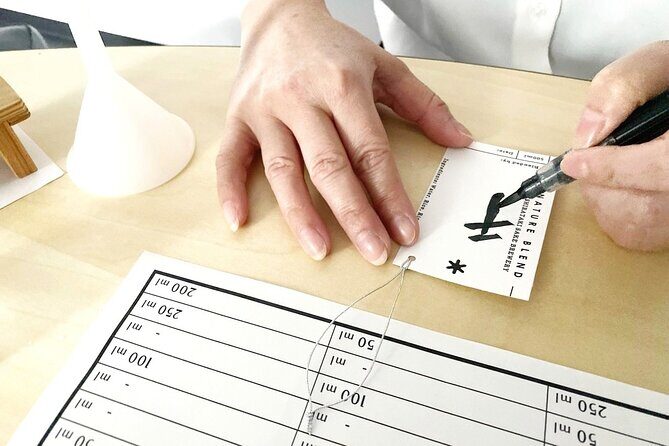
I especially like the personalization. You blend your own bottle, then finish by choosing a kanji character and brushing it onto your label, so the bottle feels like your choice, not a souvenir. One thing to consider: it’s about 2 hours, so if you’re hoping for a longer, step-by-step brewery tour, this is more about blending than the full production story.
In This Review
- Key things I’d circle before you book
- Niigata meets a blending workshop you can actually use
- Finding Shirataki Sake Brewery and using the 2:00 pm timing
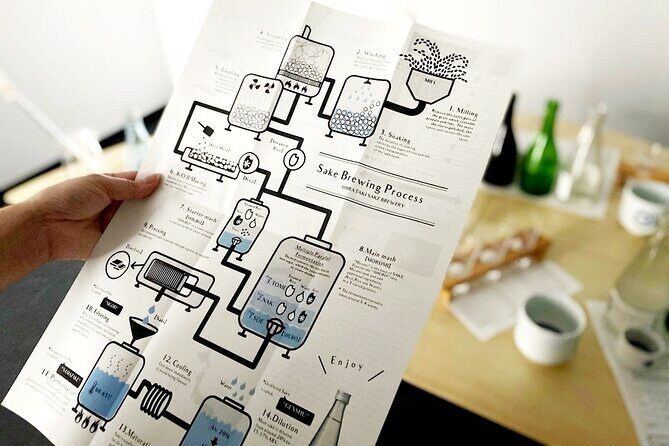
- Entering the Chōgō room: what post-fermentation blending really means
- Your tasting order: Jozen Mizuno Gotoshi plus four flavor directions
- Blending your own signature sake: how you avoid guesswork
- The kanji label moment: turning a blend into a real keepsake
- Price and value: what $117.28 gets you (and what it doesn’t)
- Who should book this sake blending session
- Should you book the Shirataki sake blending experience?
- FAQ
- How long is the sake blending experience?
- What sakes will I taste before blending?
- Is the tour guided in English?
- Will I take home the bottle I blend?
- Is this experience private?
- How much does it cost per person?
- Can I get a full refund if I need to cancel?
Key things I’d circle before you book
- Chōgō access to the post-fermentation blending process, usually kept off most visitor routes
- WSET Level 3 guidance plus a clear, English-guided explanation of how craftsmanship turns into flavor
- A structured tasting of five sakes, including Jozen Mizuno Gotoshi and four key flavor directions
- Curated blending recipes from the master brewer, so you’re not just guessing
- Kanji label finish with staff support, turning your blend into a take-home keepsake
Niigata meets a blending workshop you can actually use
Niigata is a big deal for sake, and Shirataki Sake Brewery sits in that spotlight in a practical way. They’ve been making sake for over 170 years, and the brewery’s story is tied to soft snowmelt from one of Japan’s heaviest snowfall regions. That matters because it hints at why the sake styles often feel clean, focused, and balanced.
What I like about this experience is that it doesn’t treat sake as a mystery. You get an explanation of the brewing craft, then you taste with a purpose. After that, you do the blending step yourself—so you leave understanding not just what you liked, but why that flavor direction makes sense.
Also, it’s in a secluded corner of the brewery. That small detail changes the vibe. Instead of a crowded tasting room, you’re working in a setting built for the real process, with staff guiding you through how blends are designed.
Finding Shirataki Sake Brewery and using the 2:00 pm timing
You’ll meet at Shirataki Sake Brewery, 2633-1 Yuzawa, Minamiuonuma District, Niigata 949-6101. The start time is 2:00 pm, and the whole experience runs about 2 hours.
If you’re building a day around it, plan your morning with something flexible. This workshop is short enough that you can still fit it into a travel day, but long enough that you don’t want to rush in and rush out. After your tasting and blending, there’s a natural wrap-up moment when you label your bottle—so give yourself time to take that slow and get a great souvenir.
The activity is near public transportation, and it’s private, meaning it’s only for your group. If you’re coming with friends or your partner, that privacy helps you ask questions without feeling like you’re performing in front of strangers.
Entering the Chōgō room: what post-fermentation blending really means
The star of the experience is Chōgō, the post-fermentation blending process. In normal sake tasting, you taste what’s already decided—one batch bottled as-is. Here, you learn how producers shape flavor after fermentation by combining sakes to steer characteristics like dryness, sweetness, richness, acidity, and balance.
The session begins with an English-guided lecture from a WSET Level 3–certified brewery guide. In real-world terms, that means you’ll get a structured explanation, not just casual talk. You’ll also learn how craftsmanship links to what you taste in the glass.
This is where the workshop feels different from a typical tasting. Instead of naming aromas and moving on, you build a flavor map in your head. Then, when it’s time to blend, you’re translating your preferences into an actual recipe approach.
One practical note: blending is creative, but it still follows guidance. The master brewer provides curated recipe options so you can match your taste goals without needing to understand lab-level details.
Your tasting order: Jozen Mizuno Gotoshi plus four flavor directions
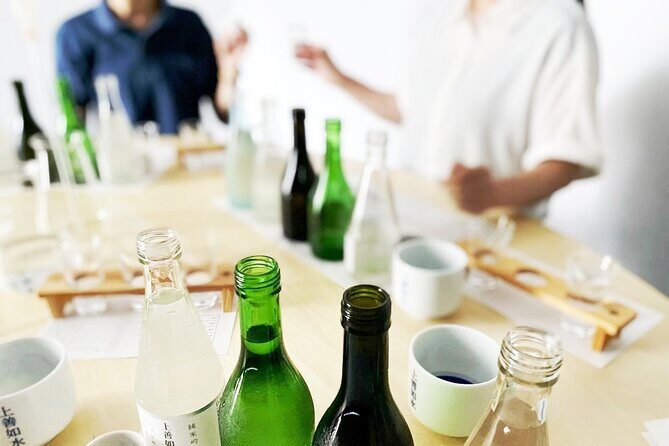
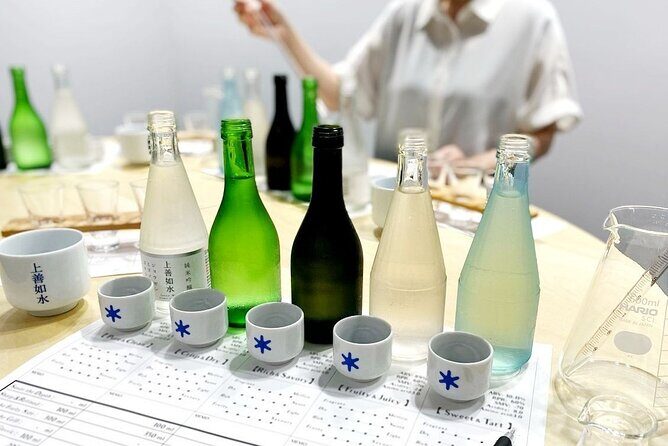
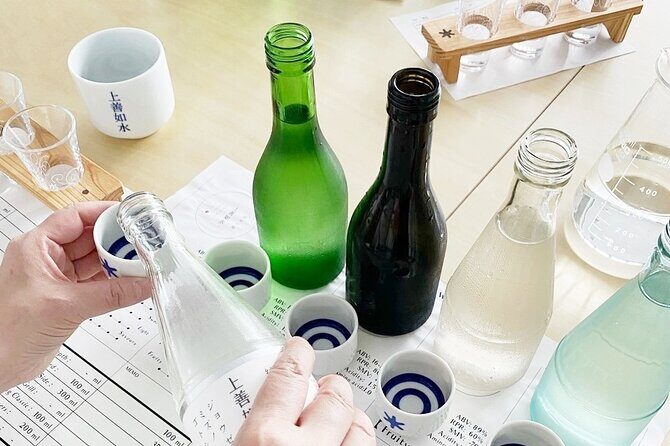
Before you blend, you taste five carefully selected sakes. You start with the flagship Jozen Mizuno Gotoshi—described as having graceful balance and crisp purity. That’s a useful anchor because it gives you a baseline for what the brewery’s house style feels like.
Then you taste four other sakes designed to represent key flavor directions:
- dryness
- sweetness
- richness
- acidity
In other words, you’re not sampling randomly. You’re tasting building blocks. That’s why this workshop is so effective for first-timers. Even if you don’t know sake terminology, you can figure out which “knob” you like turning more: do you want the finish to feel drier, the body more rounded, or the acidity more forward?
The experience can also include modern-leaning styles, which is part of why it feels fresh. You’re not just drinking the same familiar profile; you’re seeing how the brewery expresses different tastes through blending choices.
And your guide—often mentioned as Kumi-san—keeps it engaging. The tone in the session is practical, with an emphasis on what you’re tasting and how it connects to blending decisions.
Blending your own signature sake: how you avoid guesswork
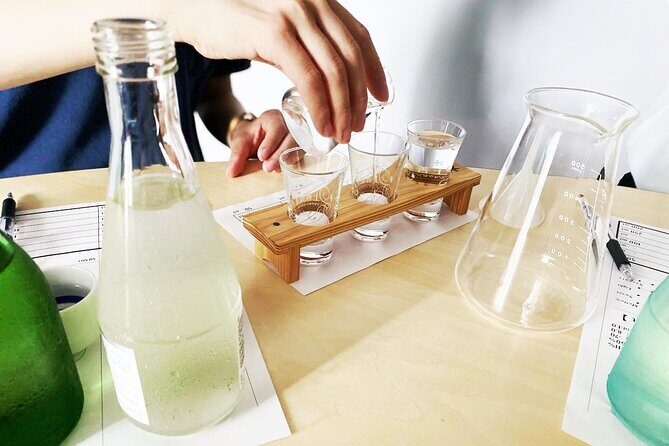
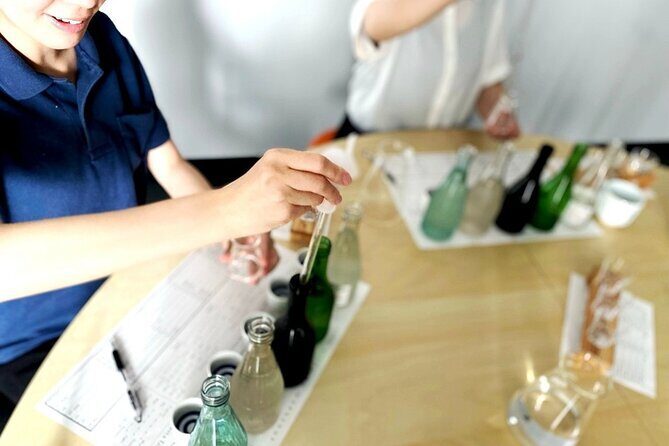
Now for the fun part: you craft your own blend. You’ll be guided through the process, with curated recipes available from the master brewer. These are tailored to different moods, occasions, and tastes, so you can pick a direction that matches what you want from your bottle.
This setup is smart. A lot of hands-on food experiences ask you to create something, but then leave you without enough structure to make good choices. Here, you get enough framework to make the creative part genuinely enjoyable.
Here’s how to think about it while you blend:
- If you liked the dryness direction, aim for a blend that keeps the finish crisp.
- If the sweetness felt right, choose recipes that give you more roundness and impression on the palate.
- If richness stood out, you’ll likely want body and texture more than sharpness.
- If you kept reaching for the more acid-driven sakes, consider a blend that brings brightness.
Even if you’re not fluent in sake tasting language, your reactions will guide you. The guided tasting does the heavy lifting first, so blending feels like selecting and balancing—not like starting from zero.
The kanji label moment: turning a blend into a real keepsake
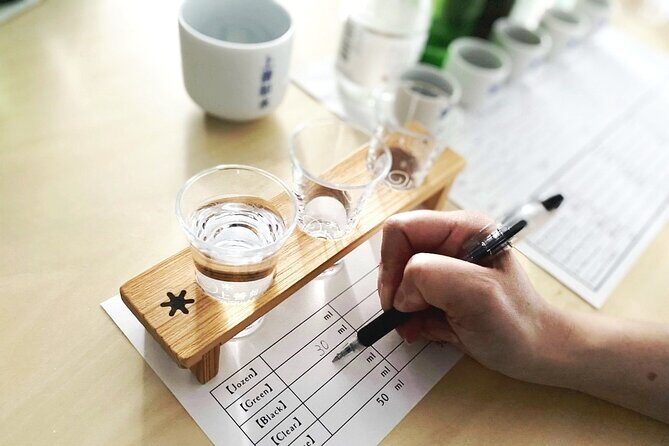
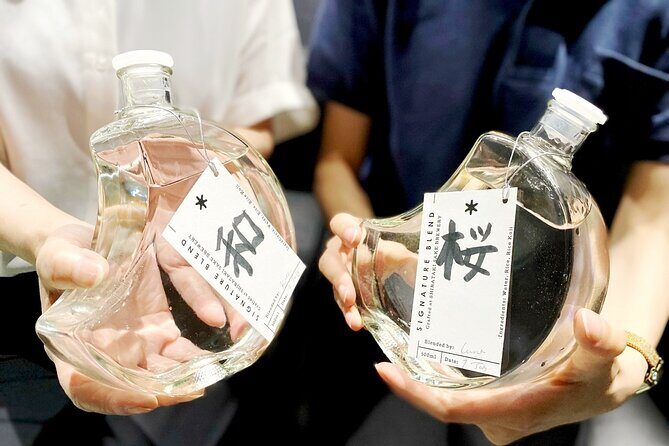
When your blend is set, you finish by choosing a kanji character that expresses your blend’s personality. Then you brush the character onto the label with staff support.
This part is small but powerful. Most sake souvenirs are passive: you buy it, it sits there, and that’s it. Here, you actively “sign” the bottle with a symbol that makes sense to your blend choice. It’s also a fun mental exercise: you have to decide what your sake feels like.
If you care about presentation, you’ll appreciate that the label isn’t generic. It’s designed to look like your final product, not just a sample bottle.
And yes, you take home a one-of-a-kind bottle you created. For me, that’s the best kind of souvenir: useful, edible, and tied to an experience you’ll remember when you open it later.
Price and value: what $117.28 gets you (and what it doesn’t)
At $117.28 per person (for about 2 hours), the value comes from the fact that you’re doing far more than tasting. This isn’t a quick pour-and-leave activity. You get:
- an English-guided explanation of how sake is crafted
- a guided tasting of five sakes representing key flavor profiles
- hands-on blending with recipe guidance from the master brewer
- a take-home bottle finished with a kanji label you apply
So you’re paying for instruction plus a real, creative workshop output.
What it isn’t: it’s not a full-day brewery tour. There’s no mention of a long production walkthrough across multiple areas, so if that’s your priority, pair this with another brewery stop. But if your goal is to understand sake flavor and learn how producers shape it through blending, this is exactly the right length and format.
Also, because it’s a private experience for your group, the learning feels less rushed and more personal than you’d expect from a larger-group tour. If you’re traveling with someone who enjoys food, wine-style tastings, or anything hands-on, it’s a strong match.
Who should book this sake blending session
I think this workshop fits best if you’re one of these travelers:
- You like tastings but want to do more than just sip.
- You enjoy food workshops where decisions change the final result.
- You want a sake experience that feels local and process-focused, not generic.
- You’re a couple or small group that enjoys guided conversation.
It can also be a great choice if you’re new to sake. The format is forgiving. You taste, you learn, you blend. You don’t need to already know terms like dryness or acidity. The experience builds your palate step by step.
If you’re the type who loves collecting stories behind what you eat and drink, you’ll leave with a bottle that has an origin you can explain.
Should you book the Shirataki sake blending experience?
If you want an activity where you actively shape the flavor—not just taste it—then yes, you should book this. The best part is that it connects taste to technique through Chōgō. You get guided structure from a WSET Level 3–certified brewery expert (often Kumi-san), plus the fun payoff of a labeled, take-home bottle.
I’d hesitate only if you’re specifically looking for a long, traditional brewery tour with lots of time watching brewing in action. This is blending-focused. But as a hands-on sake education with a real creative finish, it’s hard to beat.
FAQ
How long is the sake blending experience?
It lasts about 2 hours.
What sakes will I taste before blending?
You’ll taste five carefully selected sakes, starting with Jozen Mizuno Gotoshi, plus four others representing dryness, sweetness, richness, and acidity.
Is the tour guided in English?
Yes. The lecture is described as English-guided.
Will I take home the bottle I blend?
Yes. You finish by labeling your bottle with a kanji character and take it home as your one-of-a-kind creation.
Is this experience private?
Yes. It’s listed as private, so only your group participates.
How much does it cost per person?
The price is $117.28 per person.
Can I get a full refund if I need to cancel?
Yes. You can cancel up to 24 hours in advance for a full refund.
Sake Tasting, compared.
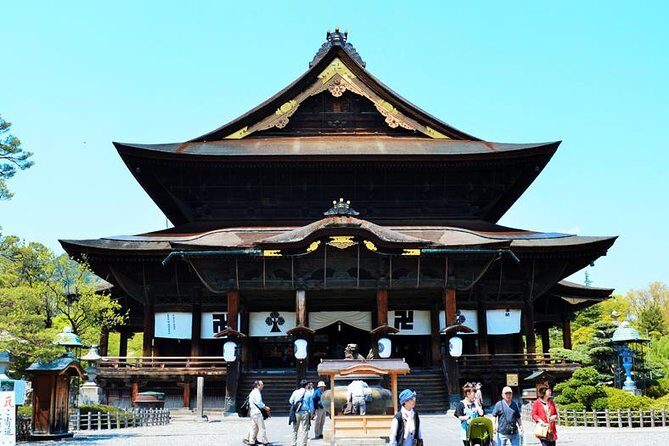 ★ 5.01-Day Snow Monkeys, Zenko-ji Temple & Sake in NaganoFrom $151
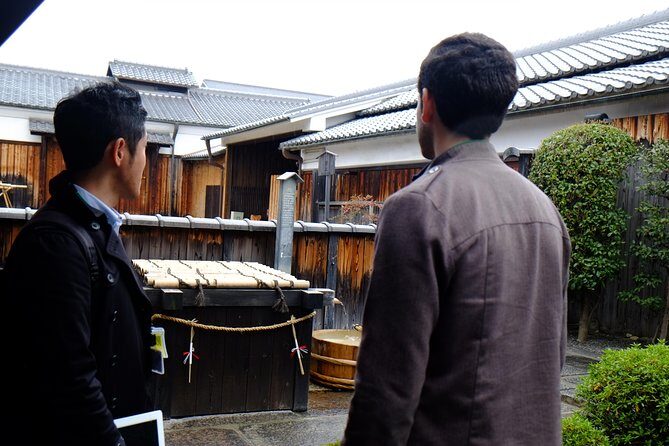 ★ 5.03-Hour Kyoto Insider Sake Brewery Tour with Tastings & PairingsFrom $84
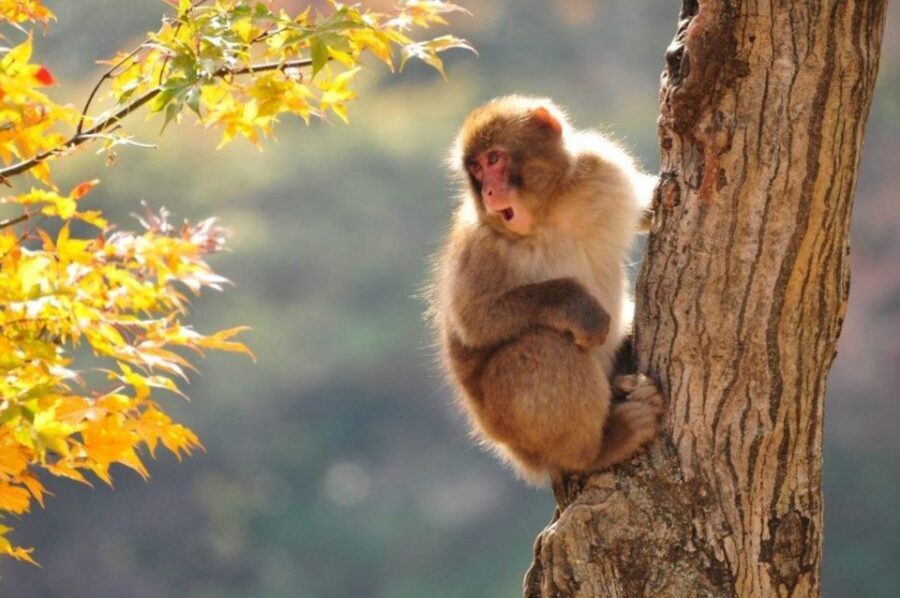 ★ 4.9Nagano: Snow Monkeys, Zenkoji Temple & Sake Day TripFrom $1358 - 12 hours
 ★ 5.0Kyoto: Insider Sake Brewery Tour with Sake and Food PairingFrom $873 hours
 ★ 5.0Kyoto Sake Brewery & Tasting Walking TourFrom $98
 ★ 5.01.5-Hour Kyoto Insider Sake Experience with 7 Tastings & PairingsFrom $68
 ★ 5.0Ramen and Sushi Cooking Class with Sake Pairing Set in TokyoFrom $79
 ★ 5.0Sake Tasting Masterclass in Shinjuku (8+ Varieties with a Pro)From $72
The lists this tour appears in