
Reviewed · KYOTO DRINKING TOURS
Kyoto: Gion Geisha District & Sake-in-Hand Walking Tour
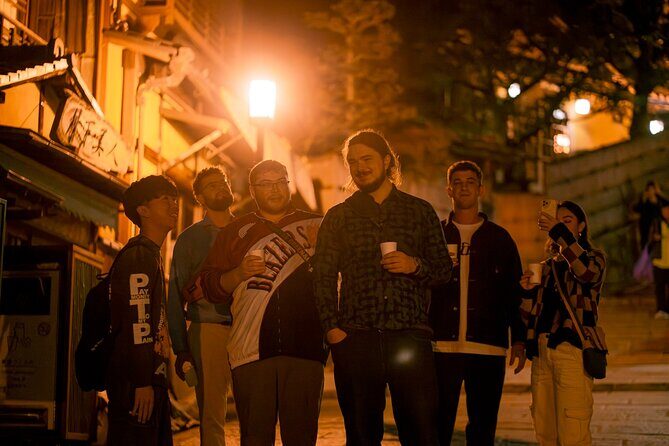
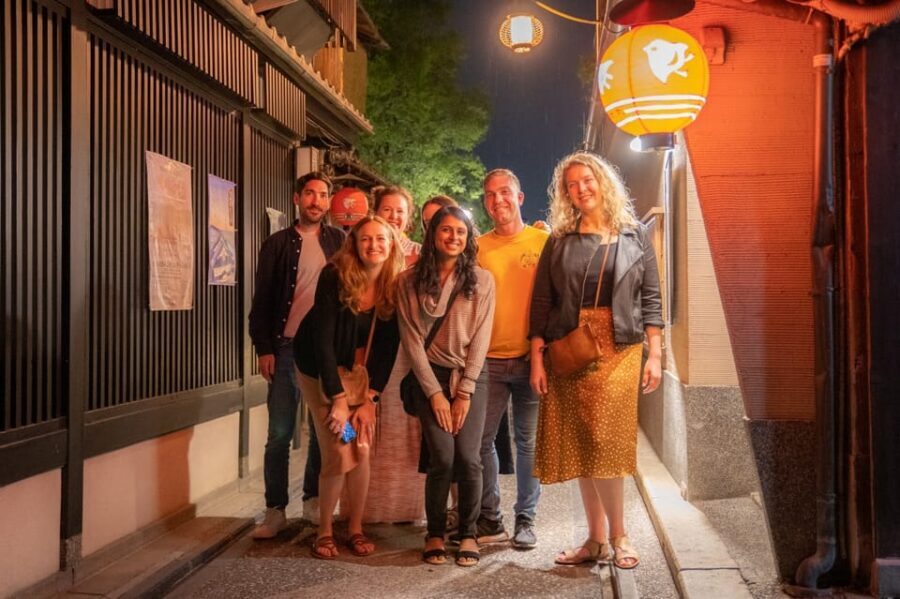
Gion feels different after dark. This small-group night walk helps you find the right lanes in Kyoto’s historic geisha district while the guide adds context you’d normally miss. I like that you’re not just staring at streets—you’re moving through them with sake in hand and commentary that connects what you see to geisha culture, samurai-era stories, and Zen ideas.
I also love the stop mix around Yasaka Shrine—it’s not only Gion photo spots, but also shrines and stone-paved slopes nearby that feel made for nighttime wandering. One thing to consider: it’s still a walking tour, so if you want lots of back-and-forth conversation for the whole time, plan to ask questions and speak up early.
In This Review
- Key highlights at a glance
- A Night Walk Through Gion’s Back Alleys With Sake
- Meeting at Kikunoi Roan and Why the Small Group Matters
- Kamo River First: Settle In Before Gion’s Lanterns
- Gion and Hanamikoji Street: What You Should Look For
- Shrine Detours Around Yasui-Konpiragu and Hokan-ji Pagoda
- Ninenzaka, Sannenzaka, and Nene-no-Michi: Old Stone Lanes at Night
- Yasaka Shrine Finale: Ending Where the Atmosphere Peaks
- Sake in Hand: How the Tasting Shapes the Experience
- Guide Commentary: From Geisha Culture to Samurai and Zen Threads
- Practical Tips for a Smooth Kyoto Night (Shoes, Voices, Pace)
- Who This Tour Fits Best
- Should You Book This Gion Geisha District & Sake Tour?
- FAQ
- How long is the Kyoto Gion Geisha District & Sake-in-Hand Walking Tour?
- Where does the tour start and end?
- How much does the tour cost?
- Is the tour a small group?
- Does the tour include sake?
- Is this tour suitable for everyone physically?
- What’s the minimum age?
- What sights will we pass or stop at?
- Is admission needed for the stops?
- What should I bring for a night walk?
Key highlights at a glance
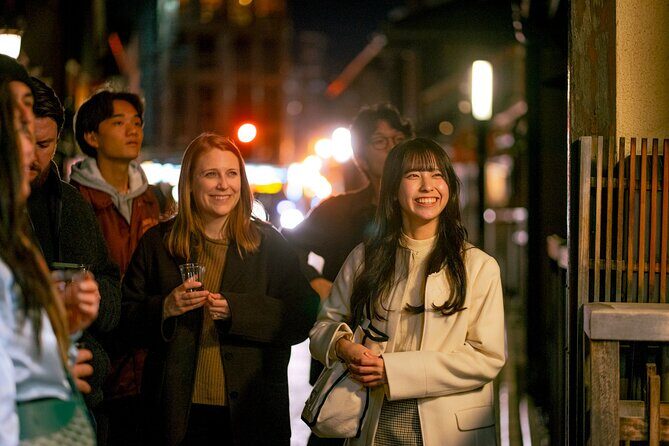
- Small group size (max 10) keeps the pace calmer and easier to manage
- Sake tasting included changes how the evening feels, especially in lantern-lit streets
- Geisha-area orientation so you know where you are and what to look for
- Higashiyama sights at night beyond the usual Gion lanes: shrines, pagoda views, old slopes
- Respect-first route through residential areas, so you can enjoy the vibe without being disruptive
- Guide personalities stand out, including Shumpei and Mune in past groups
A Night Walk Through Gion’s Back Alleys With Sake
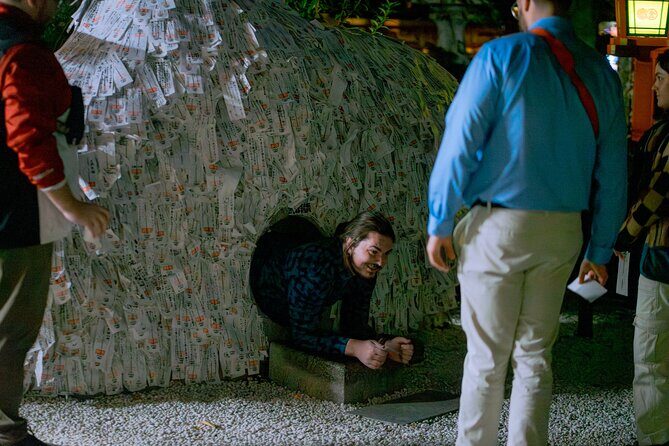
Kyoto after dark has a softer rhythm. The big streets can feel busy, but Gion’s side lanes slow everything down—especially when lanterns come on and the area looks almost cinematic. This tour is designed for that feeling. You get a guided route through the Gion area where it’s easy to lose your bearings on your own, and you’re given cultural context as you go.
The standout twist is the sake. You’re not waiting until you’ve finished sightseeing to enjoy a drink. The tasting is part of the flow, which makes it easier to treat the evening like a lived experience instead of a checklist. That matters in Gion, where the details—wood facades, narrow corners, shrine gates—can be easy to overlook if you’re rushing.
The best part for me is the balance: you get orientation and stories, but you’re still walking outside in the night air, noticing real neighborhoods—not only major monuments.
Other Kyoto drinking tours we've reviewed in Kyoto


Meeting at Kikunoi Roan and Why the Small Group Matters
You start at Kikunoi Roan (in the area of Shijo/Gojo), then the tour ends at Yasaka Shrine. It runs about 1 to 1.5 hours, so it’s long enough to feel like you had a proper evening, but short enough that you’re not exhausted before you can explore more on your own after.
The group cap is 10 travelers, which is a big deal in Gion. Narrow streets plus crowds can turn a “walk” into a stop-and-start squeeze. A small group usually means you can keep moving, hear your guide, and actually read the street-level details instead of constantly shoulder-checking your way through.
Also note: this is an adults-only tour—participants must be 20 or older—because the experience includes alcohol. If you’re traveling with teens, you’ll need a different plan.
One practical bonus: the tour is described as near public transportation, so you’re not stuck with an awkward last-mile scramble before it begins.
Kamo River First: Settle In Before Gion’s Lanterns
Your route begins near the Kamo River, which runs through central Kyoto and is famous for its scenery and historical importance. Starting here works. It gives you a calm “prelude” before you enter the denser Gion streets.
At night, the river area often feels quieter than the main sightseeing hubs. Even if it’s not the most dramatic view of your trip, it’s a good moment to slow down, grab your bearings, and get into the evening mindset. You’re not yet worrying about which lane leads where—you’re just getting the atmosphere of Kyoto at night before the geisha district steals the show.
Then you transition into Gion itself, where the streets narrow and you’ll want the guide’s help to stay oriented.
Gion and Hanamikoji Street: What You Should Look For

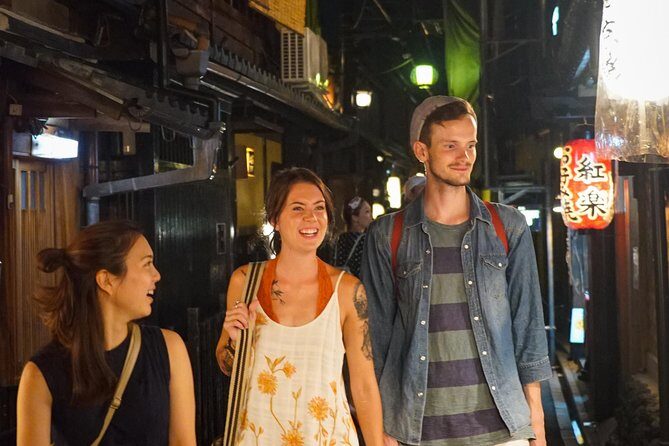
Gion is Kyoto’s best-known geisha district. That’s the marketing line. The real value of walking it at night is that the district feels like a neighborhood first, and a showpiece second. You pass traditional wooden machiya houses and old-style teahouses, and the narrow streets can make you feel like you’re moving through a preserved scene.
Your first real Gion stop is Gion itself, where the guide helps you understand what you’re seeing—especially if you’re curious about where geisha culture fits in Kyoto’s modern life. You’re also given tips on where you might spot geiko or geisha activity. Nobody can promise sightings, but with the guide’s local sense of the area and timing, you’re much more likely to notice movement and details than if you wander randomly.
Then comes Hanamikoji Street, one of Gion’s best-known lanes. It’s lined with preserved wooden houses, and it’s often the spot people photograph most. The reason this tour includes it isn’t because you need another photo. It’s because it’s a reference point. After Hanamikoji, the back streets feel easier—you understand the layout and you’re not just chasing the loudest street.
Shrine Detours Around Yasui-Konpiragu and Hokan-ji Pagoda
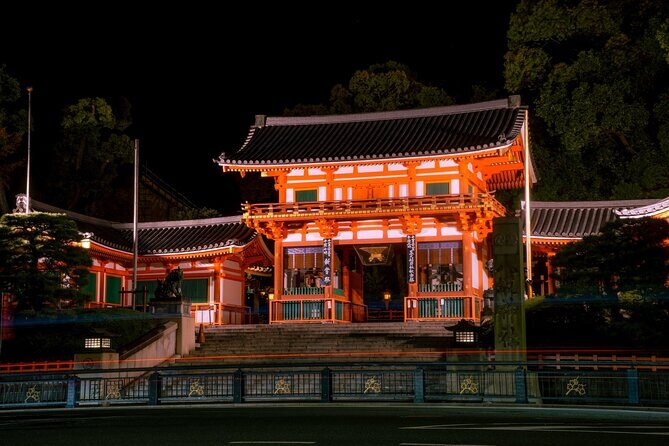
From Gion, the tour moves into the Higashiyama area for shrine and temple stops that change the tone of the walk. This is where the evening becomes more than a geisha-district stroll.
First up is Yasui-Konpiragu Shrine. It’s known for a legend and practice connected to severing bad relationships and bringing good ones. The atmosphere here feels grounded and everyday. If you’ve spent the day hopping from one attraction to the next, this stop offers a slower, more reflective break.
Next is Hokan-ji Temple, commonly known as Yasaka Pagoda. The “Yasaka Pagoda” name is easier for visitors to remember, but the bigger point is that you get a landmark that anchors the wider neighborhood. In Kyoto, it’s often the pagoda silhouette—or the way a temple complex frames the street—that helps you read the city at night.
These religious stops also give the tour context: samurai-era and Zen-related commentary is mentioned as part of the storytelling, and these are the kinds of places where those ideas make more sense. If you’ve ever wondered how religion and everyday Kyoto life overlap, this is the portion that answers that question.
Other walking tours we've reviewed in Kyoto
Ninenzaka, Sannenzaka, and Nene-no-Michi: Old Stone Lanes at Night
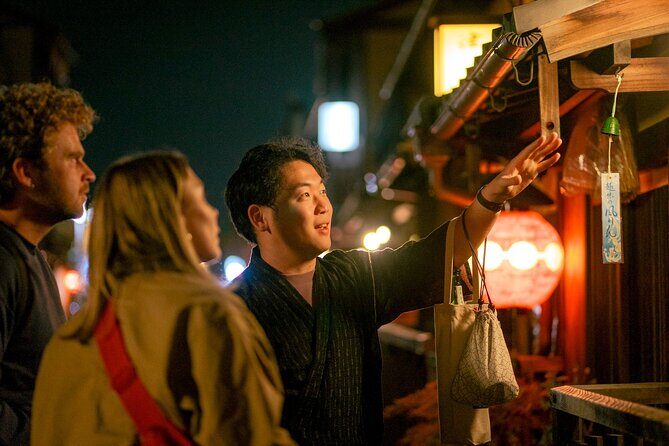
After the shrine and temple anchors, the walk turns to Kyoto’s classic stone-paved slopes. Ninenzaka and Sannenzaka are both pedestrian-friendly lanes in the Higashiyama area, and they’re known for their preserved traditional streetscapes.
Why you’ll appreciate this on a guided night tour: these slopes can look charming in daylight, but at night they feel different—less like a shopping corridor, more like a corridor through time. The stone steps and the old building lines help your brain slow down. You start noticing how people are meant to move through the space—carefully, on foot, with time to look.
Then there’s Nene-no-Michi, named after Nene, the wife of Toyotomi Hideyoshi. It’s described as a serene, picturesque path connecting Kodaiji Temple to Maruyama area. Even if you don’t know the name yet, the tour’s storytelling gives you a reason to care beyond the look of the street.
If your biggest fear about night tours is feeling stuck in the “tourist lane,” these slope segments are a strong counterpoint. They’re recognizable Kyoto, but less chaotic than the main drags.
Yasaka Shrine Finale: Ending Where the Atmosphere Peaks
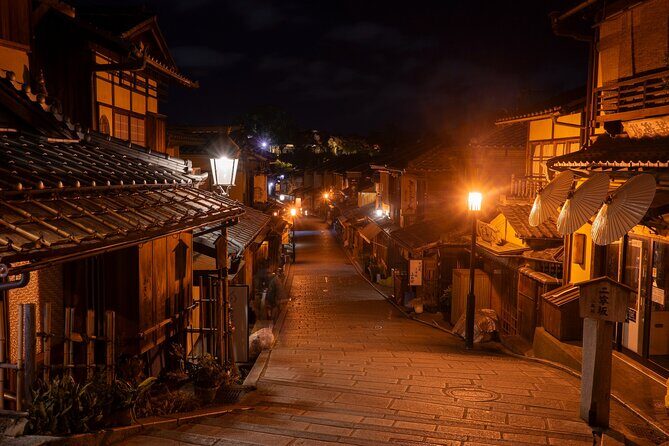
The tour concludes at Yasaka Shrine, also known as Gion Shrine. It dates back to 656 AD, and it’s one of the most historically significant shrines in the Gion area.
This ending is smart. Yasaka Shrine is the kind of place where you can stand for a few minutes and let the night sink in. It’s also a natural “reset” for your evening. After the walk, you’ll be standing at a major reference point where it’s easier to continue exploring—dinner, another temple visit, or a quick hop to transportation.
A final note on how the walk is handled: the route includes residential areas at night, and you’re asked to keep your voices down. That’s not just politeness—it’s how you keep the neighborhood feeling peaceful instead of turning it into a loud group outing.
Sake in Hand: How the Tasting Shapes the Experience

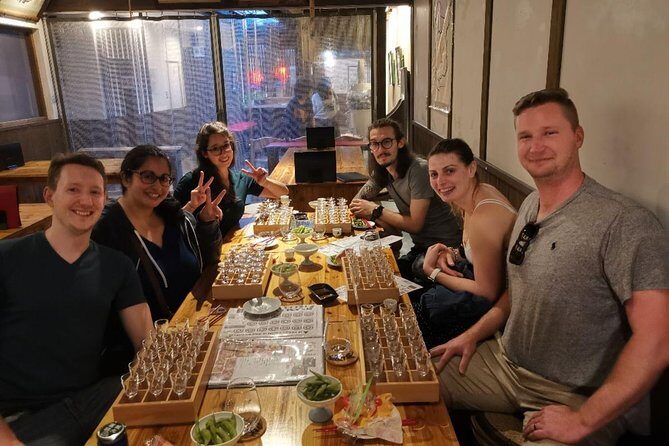
Sake is often sold as a souvenir thing. Here, it becomes a pacing tool. You’re tasting local sake while you’re actively walking through Kyoto’s evening atmosphere, which makes the experience feel more social and more sensory.
The tour is explicitly alcohol-included, and it’s meant for adults, so do yourself a favor and pace it. If you’re the kind of person who gets tipsy quickly, you’ll want to sip rather than chug. You’ll still be walking, and you’ll want your footing and attention.
One reason the sake tasting gets repeated praise is simple: it helps set the tone. Several guides are described as personable, and the sake gives you an easy topic for conversation and a shared moment with your group.
You might also find small bites are included alongside the tasting. The key is that the sake doesn’t feel like an afterthought—it’s integrated into the flow.
Guide Commentary: From Geisha Culture to Samurai and Zen Threads
This tour is built around guide commentary, not just movement. You’re meant to walk through Gion with enough context that the streets don’t blur together.
In past groups, guides like Shumpei and Mune have been singled out for friendliness and for connecting what you see to deeper cultural themes. You’ll hear about geisha culture with practical tips on where to look, but the tour also mentions samurai culture and Zen meditation as part of the story line.
What that means for you on the ground: when you’re standing near a shrine gate or looking down a narrow alley, you’re not asking the same question every time. The guide gives you a framework, so you can interpret details faster—materials, symbols, street layout, and how the neighborhood works.
That said, the one potential downside is also predictable in a walking format. If you’re expecting constant interactive conversation, you may be disappointed. The walk is still a sightseeing experience, and your guide will likely focus more on storytelling at certain stops than on prolonged group discussion all the way through. If that’s you, go in with questions ready.
Practical Tips for a Smooth Kyoto Night (Shoes, Voices, Pace)
This tour involves a lot of walking and is described as moderate physical fitness. Wear comfortable shoes you trust on uneven stone and steps. If you’re used to smooth sidewalks, the Kyoto slopes and lanes can surprise you at night.
Clothing matters too. You’re outdoors in the evening, and lantern-lit streets can feel cooler than you expect. Bring a light layer.
Also, keep your voice level in residential areas. This is one of those “small behavior, big payoff” rules. When you respect quiet neighborhoods, you get to enjoy the calm vibe the tour is aiming for.
If you’re planning photos, bring a phone/camera with enough battery. The illuminated streets around Gion and the shrine area can be great for shots, especially because you’re there during a time when lighting makes the architecture look softer.
Who This Tour Fits Best
This is ideal if you want:
- a small-group night walk with a structured route
- help navigating the Gion area so you don’t waste time guessing lanes
- geisha-culture context and practical viewing tips
- a sake tasting that’s part of the experience, not tacked on later
- multiple Kyoto “mood” locations in 1 to 1.5 hours: Gion + shrines + old slopes + Yasaka Shrine
It may not be the best match if:
- you want mostly sit-down time or very slow pacing
- you’re only interested in one or two major sights and hate walking between them
- you expect nonstop conversation for the entire tour
Should You Book This Gion Geisha District & Sake Tour?
Book it if your goal is to experience Kyoto at night in a way that feels intentional. The combination of narrow-lane navigation, cultural commentary, and sake tasting is good value for a short evening plan—especially if you want to leave with a clearer sense of where geisha culture sits within the broader Higashiyama-Gion landscape.
Don’t book it if you strongly prefer independent exploring without group movement, or if you need a tour that is heavily interactive minute to minute. This one is more about guided context plus walking rhythm than about sitting and chatting.
My take: if you’ll wear good shoes, keep your voice low, and come ready with questions about what you’re seeing, you’ll likely enjoy this as a memorable first (or second) night in Kyoto.
FAQ
How long is the Kyoto Gion Geisha District & Sake-in-Hand Walking Tour?
It’s about 1 hour to 1 hour 30 minutes.
Where does the tour start and end?
The tour starts at Kikunoi Roan Japan, 600-8012 Kyoto, and ends at Yasaka Shrine, located at 625 Gionmachi Kitagawa, Higashiyama Ward, Kyoto.
How much does the tour cost?
The price is $27.84 per person.
Is the tour a small group?
Yes. It has a maximum of 10 travelers.
Does the tour include sake?
Yes. A local sake tasting is included, and the tour provides alcohol.
Is this tour suitable for everyone physically?
The tour involves a lot of walking and is recommended for people with moderate physical fitness.
What’s the minimum age?
Participants must be 20 years old or older.
What sights will we pass or stop at?
Key stops include the Kamo River area, Gion, Hanamikoji Street, Yasui-Konpiragu Shrine, Hokan-ji Temple (Yasaka Pagoda), Ninenzaka, Sannenzaka, Nene-no-Michi, and Yasaka Shrine.
Is admission needed for the stops?
The stops are listed as admission ticket free.
What should I bring for a night walk?
Wear comfortable clothing and shoes. Since you’ll be walking through residential areas at night, keep your voices down and be respectful.
More Walking Tours in Kyoto
More Kyoto Drinking Tours in Kyoto

More tours in Kyoto we've reviewed








Kyoto Drinking Tours, compared.
 ★ 5.03-Hour Kyoto Insider Sake Brewery Tour with Tastings & PairingsFrom $84
 ★ 4.9Kyoto: Izakaya Bars Guided Walking TourFrom $253 hours
 ★ 5.0Kyoto: Insider Sake Brewery Tour with Sake and Food PairingFrom $873 hours
 ★ 5.0Kyoto Sake Brewery & Tasting Walking TourFrom $98
 ★ 5.0Kyoto Bar Hopping Night TourFrom $105
 ★ 5.0Kyoto Local Bar Crawl in Kawaramachi AreaFrom $28
 ★ 5.01.5-Hour Kyoto Insider Sake Experience with 7 Tastings & PairingsFrom $68
 ★ 5.0Kyoto: Insider Sake Experience with 7 Tastings and SnacksFrom $661h 30m
The lists this tour appears in