
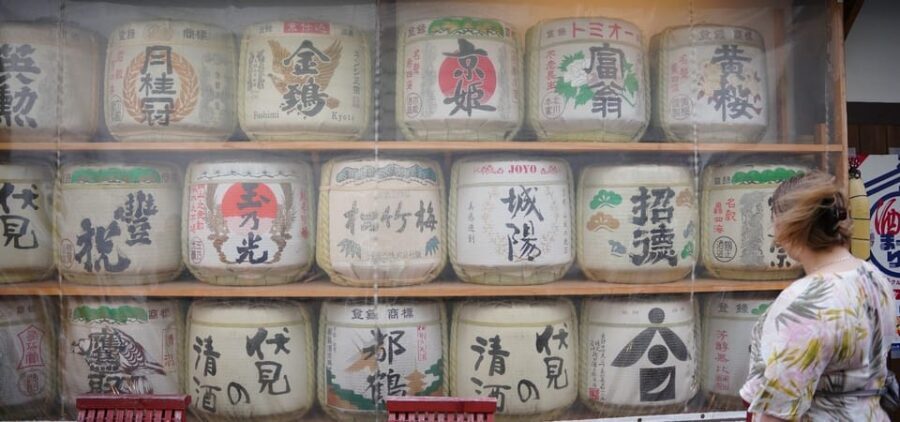
Reviewed · KYOTO DRINKING TOURS
Japanese Sake Breweries Tour in Kyoto Fushimi
Walking Fushimi tastes like homework.
This tour is a smart way to learn sake while you’re on the move, with Fushimi’s famous sake district as your classroom and a tasting set so you can compare styles with your own tongue. I love how it mixes brewery stops with small historical details—Edo to Meiji stories you can actually picture. One possible drawback: if you’re hoping for lots of deep, flavor-by-flavor teaching, your experience may depend on how talkative your guide is that day.
I also like the practical pacing: it’s about 3 hours, mostly on foot, and each stop has a purpose—from the Gekkeikan museum to a finishing tasting at Ginjo Shubo Aburacho. For context, you’ll hear how Fushimi became a logistics hub connecting to Osaka, and how sake culture grew alongside shipping, rice, and trade. Just keep in mind that alcohol rules apply: under 20 is allowed, but drinking alcohol is illegal in Japan, so you’ll need to stick with the non-alcoholic options and juices.
If you want the full “see it, sip it, connect the dots” feel, this is a strong pick for a first-time sake lover in Kyoto. You’ll also get extra food and drink included, not just pours—like a Kyoto beer glass and sake ice cream—so you won’t leave hungry or empty-handed. And if you’re the type who might want a scenic add-on, there’s a Jukkokubune boat ride option that costs extra (1500 yen at the dock).
In This Review
- Key things to notice before you go
- Fushimi sake in 3 hours: what you’ll actually do
- Meeting at 中書島駅: the barrel and the sign 888
- Stop 1: Gekkeikan Ōkura Sake Museum (35 minutes) and the museum-to-tongue start
- Stop 2: Kizakura Kappa Country for Kyoto beer (5 minutes) and a quick taste of variety
- Stop 3: Fushimi Saka Gura Kouji (25 minutes) and the sake-brewer alley feeling
- Stop 4: Fushimi Yume Hyakushu Café (35 minutes) with sake ice cream and a big drink set
- Stop 5: Ginjo Shubo Aburacho (40 minutes) for the final ginjo tasting comparison
- Price and value: why $80 might feel fair (or not)
- Guide style and your best move to get more from the tour
- Alcohol rules, age limits, and tastings if you’re under 20
- Optional Jukkokubune boat ride: scenic add-on, extra cost
- Should you book this Kyoto Fushimi sake tour?
- FAQ
- How long is the Japanese Sake Breweries Tour in Kyoto Fushimi?
- Where do I meet the guide?
- What does the tour include?
- Is the Jukkokubune boat ride included?
- Are non-alcoholic options available?
- Can people under 20 join?
- What languages is the live guide available in?
- Is the tour suitable for elderly travelers?
- How many brewery stops will I visit?
Key things to notice before you go
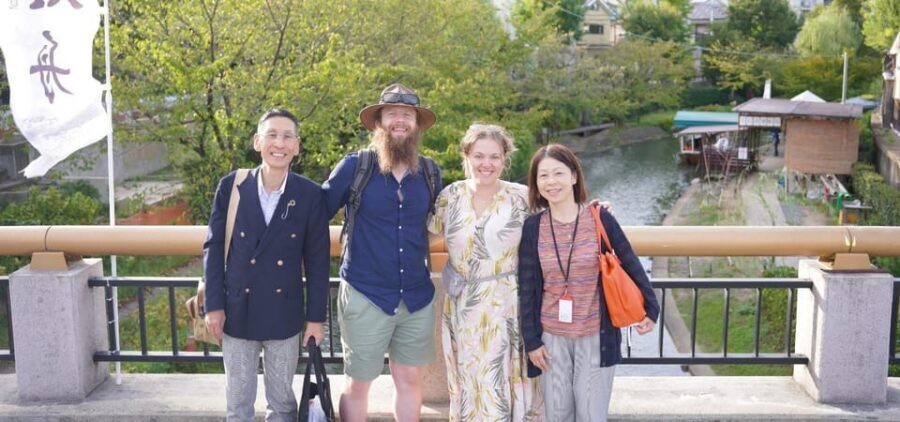
- 2–3 brewery-focused stops with guided tastings that help you compare styles instead of just sampling
- Gekkeikan Ōkura Sake Museum with an included guided visit plus a commemorative sake cup
- Kyoto beer at Kizakura Kappa Country (included) alongside the sake theme
- Fushimi Yume Hyakushu Café where you’ll have a snack of sake ice cream and a multi-drink set people often post online
- Ginjo Shubo Aburacho as the finish, built for final taste comparisons with included pours
- Optional Jukkokubune boat ride available for an extra 1500 yen if the timing works for you
Fushimi sake in 3 hours: what you’ll actually do
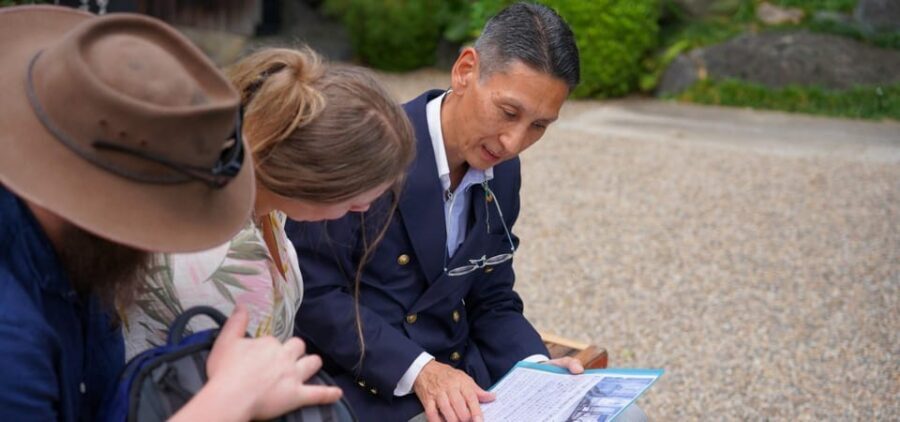
This is a walking tour built around Kyoto’s Fushimi sake district, one of Japan’s best-known regions for brewing. The appeal is that you don’t just get a lesson; you get a sequence. Taste, then learn, then taste again, so the differences start to make sense.
The route is paced for about three hours total. You’ll move between sites close enough to keep it lively, with short walking segments that add up to a real neighborhood experience rather than a bus-and-bail setup.
The tour also includes extra small perks that add up: a museum ticket, a commemorative cup, Kyoto beer, sake ice cream, and multiple tasting sets. That’s why the price can feel less scary once you add up what you’d otherwise buy separately.
Other sake brewery and tasting tours in Kyoto
Meeting at 中書島駅: the barrel and the sign 888
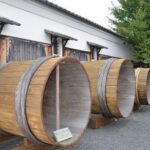
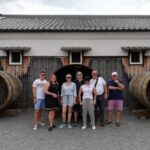
Your meeting point is specific: find the sake barrel object just outside the north exit ticket gate of 中書島駅 (Chushojima Station). Your guide will be holding a sign that says 888.
Take this part seriously because there’s a nearby naming confusion. Don’t mix it up with JR Sumiyoshi Station, which can have similar station names. If you arrive 10 minutes early, you’ll avoid the awkward scramble that happens when you’re trying to spot a small sign in a busy station.
Stop 1: Gekkeikan Ōkura Sake Museum (35 minutes) and the museum-to-tongue start
The day begins with Gekkeikan Ōkura Sake Museum, and the timing is designed well: you get a guided museum visit before you start comparing flavors later. This first stop is your setup. You learn the basics and the bigger story of brewing so the tastings don’t feel random.
What you get here is practical, not just decorative. The admission fee is included, and you’ll also receive a commemorative sake cup. In other words, the tour starts with a souvenir you’ll actually want to keep, not a paper brochure.
If you’re new to sake, this is where you’ll likely start noticing how many variables affect flavor. Even if your guide keeps it conversational rather than lecture-style, the museum visit gives you vocabulary you can use when you taste ginjo and other styles at later stops.
Stop 2: Kizakura Kappa Country for Kyoto beer (5 minutes) and a quick taste of variety
Next is Kizakura Kappa Country, a shorter stop (about 5 minutes) that still matters. The included perk here is a glass of Kyoto Beer, which breaks the “only sake” pattern in a good way.
Why it works: after you learn sake is a careful craft, it helps to taste something else brewed nearby in the same spirit of local tradition. Even though this is a quick visit, it gives you a reset. You’ll be ready for the more sake-focused stops that follow.
If you’re expecting a full brewery walkthrough here, manage your expectations. This is not the main deep-dive location. It’s a brief stop that adds variety and keeps the tour moving.
Stop 3: Fushimi Saka Gura Kouji (25 minutes) and the sake-brewer alley feeling
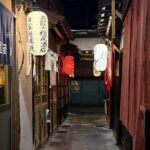
Then you’ll head to Fushimi Saka Gura Kouji, guided for about 25 minutes. This is where Fushimi feels like a real district instead of a checklist. You’ll walk through a corridor tied to the Fushimi Sake Brewers Association, supported by 17 breweries.
What I like about this kind of stop is the way it connects craft to geography. When you hear why brewers clustered here and how the area became known, it makes the alley layout and building density feel intentional.
You should also look at this segment as your “story pause” between tastings. Even if you’re most excited for the pours, this is the part that explains why those pours matter in the first place.
Other Kyoto drinking tours we've reviewed in Kyoto

Stop 4: Fushimi Yume Hyakushu Café (35 minutes) with sake ice cream and a big drink set
At Fushimi Yume Hyakushu Café, the tour shifts from historic street vibe into a place where you can taste in a more playful way. The guided time is about 35 minutes, and you’ll get snacks sake ice cream included.
This is one of the most fun parts if you’re traveling with friends who are not as hardcore about learning every brewing term. Ice cream turns sake culture into something approachable. It’s also a good contrast if you’ve already had some sake tastings and you need a palate reset.
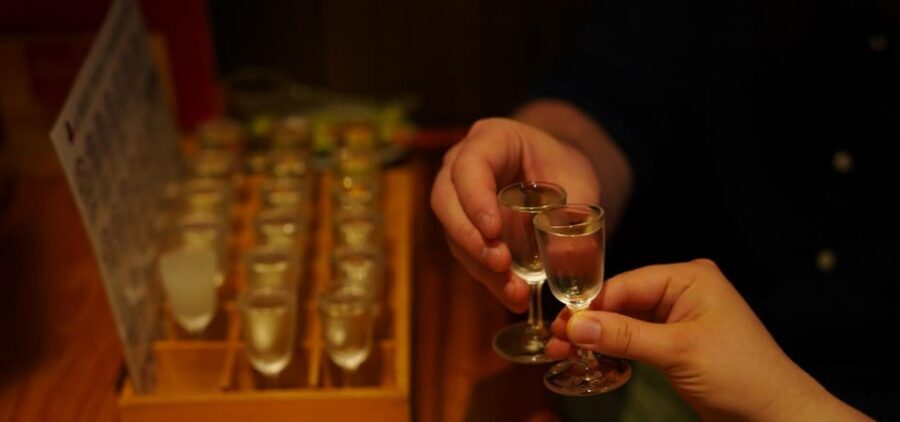
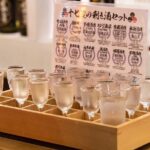
The tour also mentions a set of 17 drinks tied to a photo that people share online. Even if you don’t plan to sample all of them, the key value is being able to compare what’s presented and how different styles get grouped. If you enjoy tasting menus or wine flights, this stop will fit your brain.
Stop 5: Ginjo Shubo Aburacho (40 minutes) for the final ginjo tasting comparison
Your tour finishes at 吟醸酒房 油長 (Ginjo Shubo Aburacho) after about 40 minutes of a guided visit. This is where you’ll likely feel the learning payoff most clearly, because you’re ending with tastings designed for comparison.
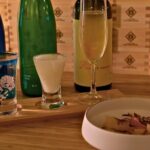
The included tasting set here is three types of Japanese sake. By the time you reach this stop, you’ve seen the museum context, walked through the district story, and already sampled other included drinks. That makes it easier to pick up on differences without needing a ton of expert-level background.
Also, this is a good time to ask questions. If anything earlier felt confusing—like why one sake tastes drier or more aromatic—this is where your guide can connect those dots.
Price and value: why $80 might feel fair (or not)
At $80 for a 3-hour walking experience, this isn’t a bargain tour. But it can still feel like good value if you’re the type who wants to taste multiple sake styles with context.
Here’s what’s included that you’d normally pay for separately:
- Admission to the Gekkeikan Ōkura Sake Museum
- A commemorative sake cup
- One glass of Kyoto Beer at Kizakura
- Sake ice cream at Yume Hyakushu Café
- A tasting set of three types of sake at ABURACYO
- A tasting set of three types of sake at Gekkeikan
That’s a lot of “paid-on-your-own” items built into one price. And the guide component matters too—because it’s not just pouring; it’s meant to help you notice differences on your tongue.
If you’re the kind of traveler who wants lots of talking and deep explanation at every stop, then the value will depend on your guide style. One guide can turn a walking route into a real conversation; another might stick to the script and move briskly. You can reduce this risk by asking early: what style should I focus on tasting, and what should I compare between the pours?
Guide style and your best move to get more from the tour
I like that this tour offers a guide who knows the subject. Names like Musaki (Bob) have been mentioned as informative and well-organized, especially for learning how sake is made and why different styles taste the way they do.
Still, your experience can swing based on how your guide handles Q and A. If you want more detail, don’t wait until the last stop. Ask one or two questions early and then connect them to what you taste later.
Here are smart, low-effort prompts you can use:
- Which tasting should I treat as my baseline for comparison?
- What’s the easiest clue to detect between styles, aroma or texture?
- If I only remember one thing from today, what should it be?
If it’s raining, it’s still doable. You’ll be outside walking between sites, so bring a small umbrella or a light rain jacket and plan for slower photos.
Alcohol rules, age limits, and tastings if you’re under 20
This tour allows participants under 20, with an important caveat: drinking alcohol is illegal under Japanese law. The tour notes that non-alcoholic options and juices are available, so younger participants can still enjoy the experience without breaking the rules.
So if you’re booking for a group with teenagers, you can feel good that there’s a plan for them. You’ll still be participating in the walking, the tastings structure, and the guided learning.
Also note: the tour is not suitable for people over 80. That matters because the route is on foot and built around timed guided stops.
Optional Jukkokubune boat ride: scenic add-on, extra cost
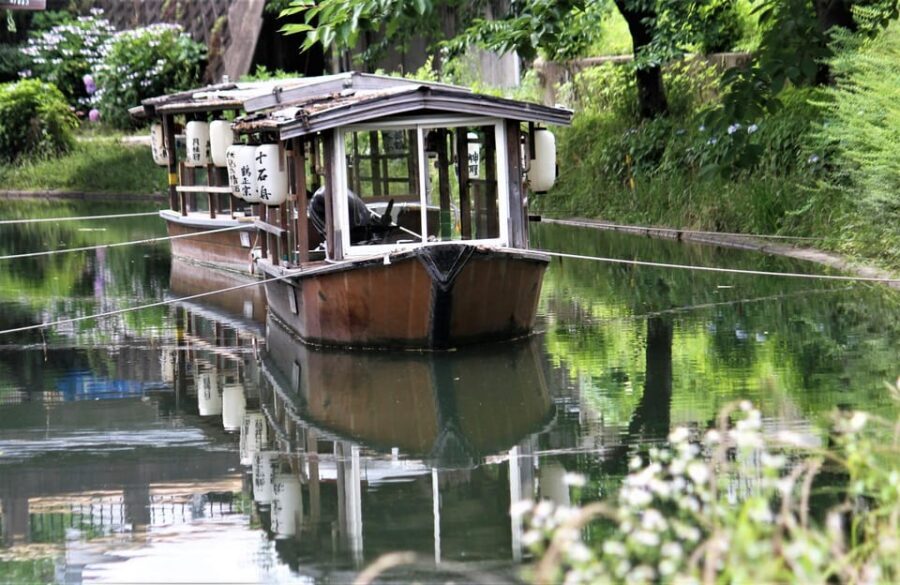
Fushimi’s story isn’t only brewing. The area’s role as a logistics hub connecting Fushimi and Osaka comes up in the background, including the mention of ships tied to the late Edo and later eras.
There’s also a Jukkokubune boat ride option, but it’s not included. You pay 1500 yen at the boat dock if you choose to board.
If you love water views and short transit breaks, keep this in mind. If you prefer to stay focused on the tastings, you can skip it and just enjoy the walking route.
Should you book this Kyoto Fushimi sake tour?
Book it if:
- You want a first-timer friendly sake experience that mixes walking + context + multiple tastings
- You like guided comparison, not random sampling
- You’ll use the included extras (museum, beer glass, sake ice cream, tastings) rather than treating them as an afterthought
Skip it (or choose another format) if:
- You mainly want a deep, uninterrupted lecture about sake chemistry and flavor profiling
- You prefer a quieter tour with lots of seated explanation, because this one is built around moving between stops
- You’re traveling with someone who needs very low walking effort (it’s not suitable for people over 80)
If you go with the right mindset—taste first, then learn what you just tasted—this tour can be a fun, practical way to understand why Fushimi matters in Kyoto’s drinking culture.
FAQ
How long is the Japanese Sake Breweries Tour in Kyoto Fushimi?
The tour lasts 3 hours.
Where do I meet the guide?
Meet at the sake barrel object just outside the north exit ticket gate of 中書島駅 (Chushojima Station). The guide holds a sign that says 888.
What does the tour include?
It includes admission to the Gekkeikan Ōkura Sake Museum, a commemorative Gekkeikan sake cup, one glass of Kyoto Beer (Kizakura), sake ice cream (at Fushimi Yume Hyakushu Café), and two tasting sets of three sake types each (one at ABURACYO and one at Gekkeikan).
Is the Jukkokubune boat ride included?
No. You pay the boarding fee (1500 yen) on the boat dock.
Are non-alcoholic options available?
Yes. The tour notes that while sake is offered, non-alcoholic options and juices are available.
Can people under 20 join?
Yes, participants under 20 can join, but drinking alcohol is illegal under Japanese law.
What languages is the live guide available in?
The live tour guide is available in English, Chinese, and Japanese.
Is the tour suitable for elderly travelers?
It is not suitable for people over 80.
How many brewery stops will I visit?
The tour is described as visiting 2 to 3 diverse sake breweries for tastings.
More Breweries in Kyoto
More Kyoto Drinking Tours in Kyoto
More Sake Brewery Tours in Kyoto
More tours in Kyoto we've reviewed
Kyoto Drinking Tours, compared.
 ★ 5.03-Hour Kyoto Insider Sake Brewery Tour with Tastings & PairingsFrom $84
 ★ 4.9Kyoto: Izakaya Bars Guided Walking TourFrom $253 hours
 ★ 5.0Kyoto: Insider Sake Brewery Tour with Sake and Food PairingFrom $873 hours
 ★ 5.0Kyoto Sake Brewery & Tasting Walking TourFrom $98
 ★ 5.0Kyoto Bar Hopping Night TourFrom $105
 ★ 5.0Kyoto Local Bar Crawl in Kawaramachi AreaFrom $28
 ★ 5.01.5-Hour Kyoto Insider Sake Experience with 7 Tastings & PairingsFrom $68
 ★ 5.0Kyoto: Insider Sake Experience with 7 Tastings and SnacksFrom $661h 30m
The lists this tour appears in