
Reviewed · SAPPORO BAR TOURS
Sapporo: Buddha Hill, TV Tower, and Sake Stand Bar Tour
Sapporo gets spiritual in a big way. I love the sheer scale of Butsugan-ji Temple with its 45-meter Buddha Nirvana statue, and I love that the day ends with a real sake tasting at Yata where staff help you understand what you’re drinking. One thing to plan around: this is a long, mostly walking day, and it’s not ideal if you have back issues or limited mobility.
You start at Sapporo Station at 9 a.m., meet your English-speaking guide (Scott is one guide name that’s been singled out for being especially upbeat), and then you’ll hop around by bus and local transport. Expect plenty of photo moments: a Buddha-lit rotunda, odd-but-amazing cemetery landmarks, and a 360-degree view from Sapporo TV Tower.
In This Review
- Key things to know before you go
- Why this Sapporo Buddha Hill and sake combo actually works
- Butsugan-ji Temple: the 45-meter Buddha Nirvana moment
- Hill of the Buddha: the arched tunnel and rotunda light
- Moai statues and Stonehenge in a sacred cemetery
- Getting back to city pace: local transit and underground links
- Sapporo TV Tower: 360-degree views you can plan a night around
- Yata Sake Stand Bar: learning sake types without making it complicated
- Price and pace: is $170 worth it for your style of travel?
- What to bring (and what to skip) for comfort and respect
- Who this tour suits best (and who should choose something else)
- Should you book this Sapporo Buddha Hill and sake tour?
- FAQ
- FAQ
- What is the meeting point for the tour?
- How long is the tour?
- Is the tour guide available in English?
- What’s included in the price?
- What’s not included?
- What can I expect at Butsugan-ji Temple?
- What’s special about the Hill of the Buddha stop?
- Are there any restrictions on what I can do during the tour?
- Final recommendation
Key things to know before you go
- 45-meter Buddha Nirvana statue at Butsugan-ji Temple for a very visual start to the day
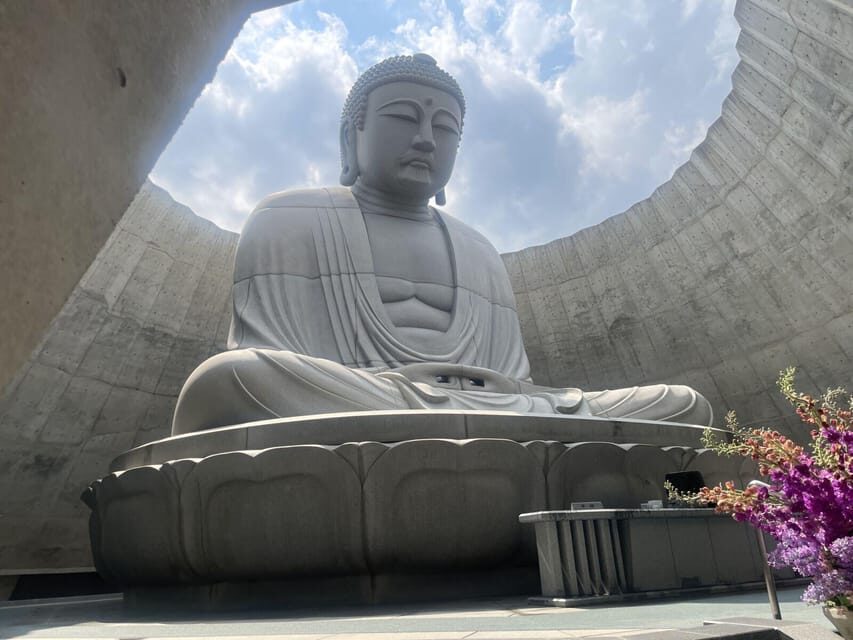
- Hill of the Buddha’s 13.5-meter Buddha seen through an arched concrete tunnel and rotunda light
- 360-degree Sapporo TV Tower views to get your bearings fast
- Moai statues and a Stonehenge replica in the sacred cemetery for a surprising twist
- Yata Sake Stand Bar tasting with guidance on the different types of sake
- A long but structured route (about 8.5 hours) that links south Sapporo to the city center
Why this Sapporo Buddha Hill and sake combo actually works
Most Sapporo days focus on food, shopping, or beer. This one mixes something quieter: temple grounds, big Buddha statuary, and a dose of Sapporo’s city view from above. You get contrast—spiritual calm in the south, then city lights and local rhythm back in central Sapporo.
The value here is the pacing. You’re not trying to figure out bus routes alone, and you’re not skipping the “why” part either. By the time you reach the Yata Sake Stand Bar, you’re in a more relaxed mood, and the tasting feels like a natural finish rather than just a random stop.
Other Sapporo bar tours we've reviewed in Sapporo

Butsugan-ji Temple: the 45-meter Buddha Nirvana moment
The tour begins by heading south from Sapporo Station to Butsugan-ji Temple, where the main attraction is the Great Nirvana Temple Hall and its Buddha Nirvana statue. This statue stretches about 45 meters long, and it rests on the roof—so your eyes keep traveling, even after you think you’ve taken it in.
The “spiritual power” aspect is real here, even if you’re not traveling for religious reasons. Big sacred art changes how you stand and how you look. You’ll feel that when you’re close enough to register the scale, and when you notice people moving through the space with quiet attention.
Practical note: the stop is built for sightseeing, but you should still plan to be on your feet. Comfortable shoes matter, and so does water.
Hill of the Buddha: the arched tunnel and rotunda light
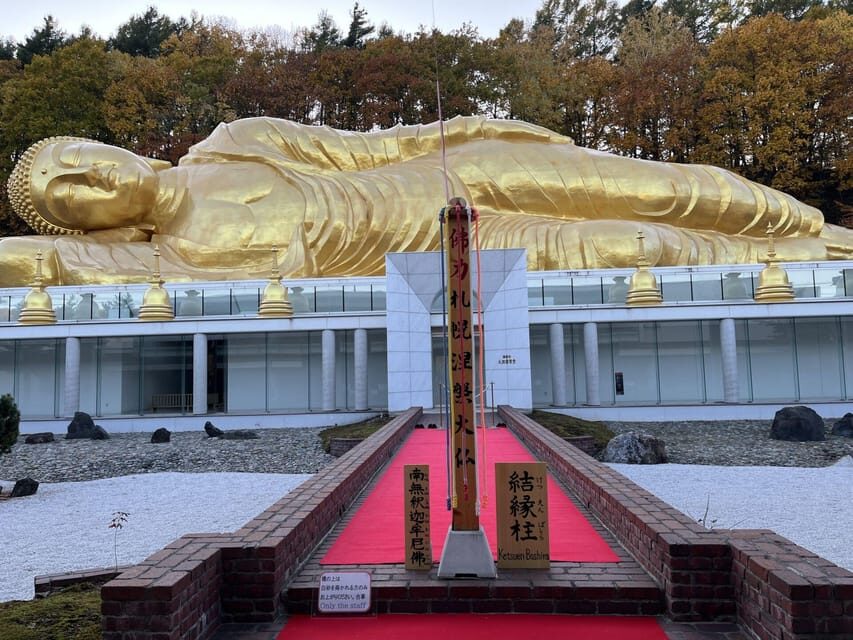
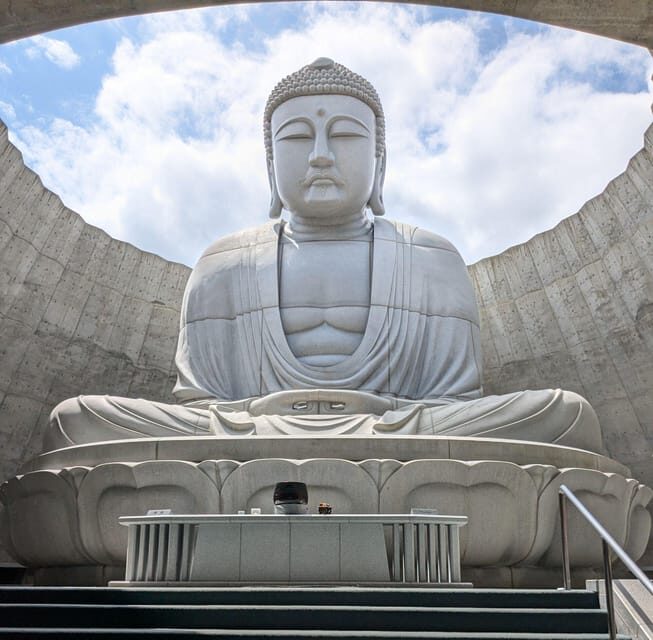
Next you travel to the Hill of the Buddha, and the approach is part of the experience. You walk through an arched concrete tunnel to reach the main site, then you arrive at a 13.5-meter-tall Buddha housed within a rotunda.
This is the kind of design that guides your eyes. Light streams into the rotunda through a circular opening, and that lighting shift is what makes the Buddha feel serene rather than just massive. It’s a clever setup: you don’t see the full effect from the entrance; you earn it as you move closer.
Also, the Hill of the Buddha stop adds variety beyond the main figure. The surrounding sacred cemetery includes giant Moai statues and even a replica of Stonehenge. It’s unexpected, and that’s exactly why it works. You’re in a spiritual setting, but the site also plays with global iconography in a way that makes the whole area memorable.
Moai statues and Stonehenge in a sacred cemetery
This is one of the most “only-in-Hokkaido” moments on the day. Moai statues show up alongside a replica of Stonehenge within the sacred cemetery area, so your camera roll will get more than one type of shot.
Why this matters: it prevents the day from feeling like a single-theme checklist. After you’ve absorbed the big Buddha art, you get a mental reset with landmarks that look like they belong in different places. It’s still within the temple’s sacred grounds, so you’re not just sightseeing oddities—you’re seeing how this location blends reverence with imagination.
If you like photos, go slow here. You’ll want time to line up angles for Moai faces and the Stonehenge replica, without rushing past the Buddha views you’ll still want later.
Getting back to city pace: local transit and underground links
After the temple and Buddha sites, you return toward central Sapporo and then you move into the city-view portion of the day. One nice touch is how the route can feel local rather than purely “tour bus.” You may ride local trains and buses to reach Buddha Hill, and that helps you get a feel for how Sapporo actually moves.
Another bonus: when you’re in the TV Tower and into the end of the tour, you might also walk through the underground malls that connect Odori, Sapporo Station, and Susukino. This is useful year-round, especially if the weather turns. In colder seasons, it’s the difference between enjoying the city and feeling drained before dinner.


Sapporo TV Tower: 360-degree views you can plan a night around
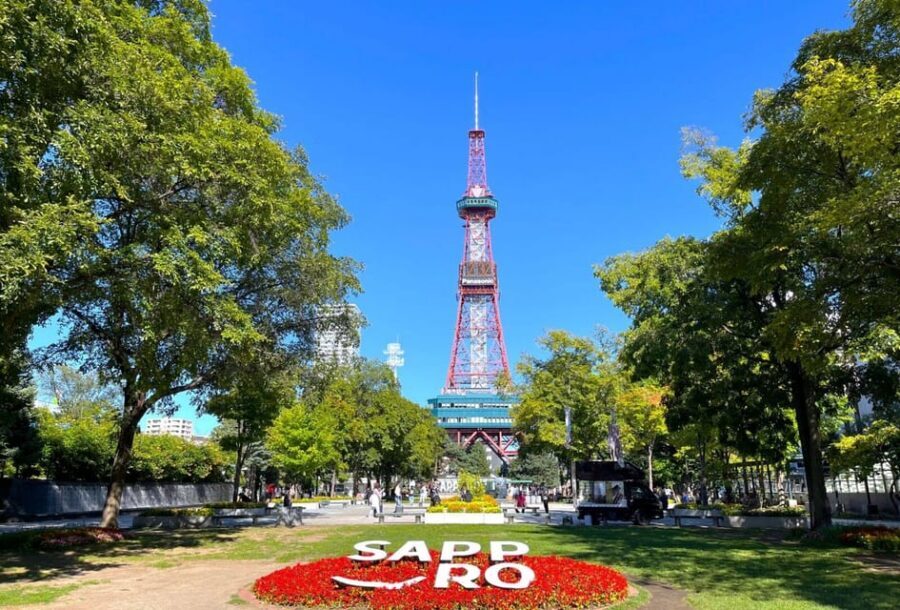
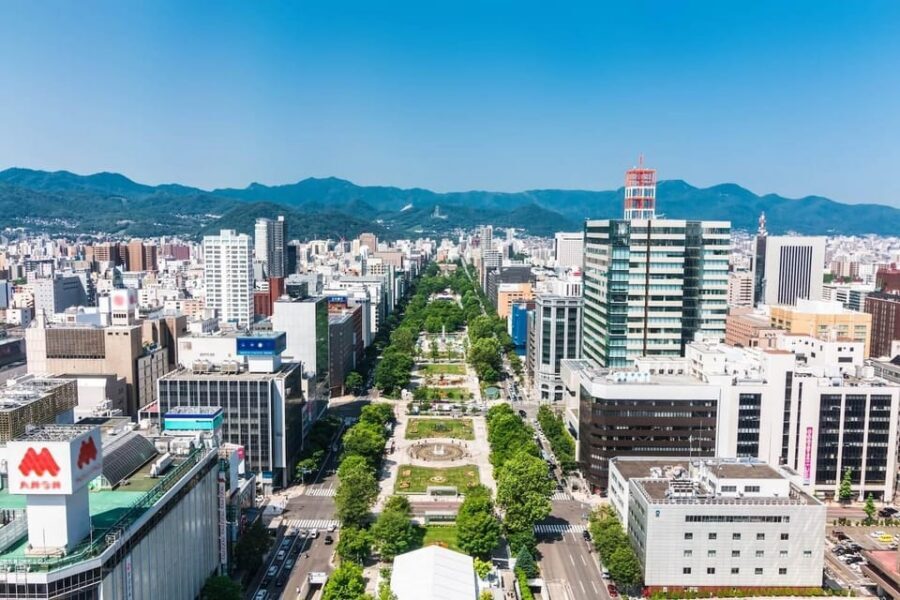
Once you arrive at Sapporo TV Tower, you’ll head up to the observation deck for spectacular 360-degree views. This is one of those stops that’s great even if you’ve only been in Sapporo for a day, because it gives you orientation fast.
Look for how the city layers out from the tower, and then connect that to what you saw earlier in the day. The contrast helps: the Buddha Hill area feels grounded and still; the view from above makes Sapporo feel like a place with momentum.
This is also a good moment to think ahead. Since the tour ends with sake tasting, you’ll likely want to choose a dinner spot afterward. Those views make you more comfortable wandering, instead of feeling like you’re starting the evening from scratch.
Yata Sake Stand Bar: learning sake types without making it complicated
The grand finish is at Yata Sake Stand Bar, where you get a sake tasting and explanations from staff. This is not just a sip-and-go stop. You’ll learn about the various types of sake, and the people behind the bar help translate what you’re tasting into something you can actually tell apart.
You can use this as a mini “sake cheat sheet” for the rest of your trip. If you end up ordering sake later, you’ll have a baseline for the styles you tried here, instead of guessing.
And here’s a practical extra: the bartenders can chat with you and share tips on where to explore for dinner after the tour ends. That kind of guidance is gold, because it matches your tastes and your location at that exact time, not some generic recommendation list.
Price and pace: is $170 worth it for your style of travel?
At $170 per person for about 510 minutes (around 8.5 hours), this tour isn’t meant to be cheap. It’s priced like a full, organized day: English-speaking guide, transport between stops, and paid admission to each attraction, plus sake tasting.
So the real question is what you’re buying with that price:
- If you want a guided route that strings together distant sites (south Sapporo) with central Sapporo, you’re paying for the logistics.
- If you care about explanations—Buddha meanings, what you’re looking at, and sake types—you’re paying for interpretation, not just photos.
- If you don’t drink much sake or you hate walking, you might feel the cost more than the value.
For me, the best fit is a traveler who likes structure but still wants authentic moments. You get a mix of sacred sights and a local-style bar experience at the end.
What to bring (and what to skip) for comfort and respect
This day asks for comfort. Bring comfortable shoes, plus a hat, sunscreen, and water. Weather in Hokkaido can change, so plan for conditions that shift while you’re outside at the temples and cemetery areas.
You should also bring your camera, but remember: no flash photography is allowed. Smoking is also not allowed. If you’re sensitive to rules in quiet places, it helps to treat this as a respectful cultural stop, not just a sightseeing outing.
Finally, this tour isn’t suitable for pregnant women, people with back problems, or wheelchair users, based on the walking and site conditions described.
Who this tour suits best (and who should choose something else)
I’d steer you toward this tour if you want:
- a focused day that covers Butsugan-ji, Hill of the Buddha, Sapporo TV Tower, and sake tasting in one go
- the spiritual/ceremonial feel of the Buddha sites, plus practical city time at the end
- an English-speaking guide to connect the dots between what you see and what it means
I’d think twice if you:
- need minimal walking or have difficulty with uneven terrain
- don’t want a full half-day schedule
- prefer to build your own route instead of following a set order
Should you book this Sapporo Buddha Hill and sake tour?
Book it if you want a day that’s more than postcard photos: you’ll get a major Butsugan-ji Buddha moment, a carefully designed viewing experience at the Hill of the Buddha, and then a relaxed, learn-something finish at Yata. It’s also a good choice if you’d rather spend your effort enjoying Sapporo than solving transit between sites.
Skip it if you’re not up for a long day on your feet or you’re sensitive to temple rules like no flash photography and the need to respect sacred spaces.
FAQ
FAQ
What is the meeting point for the tour?
Meet outside Sapporo Station after exiting the main JR gates. Turn left, walk toward the South Exits, and look for the circular white stone structure called MYOMU. Your guide will be standing there wearing a SNOW MONKEY RESORTS tour tag, and you should arrive by 9 a.m.
How long is the tour?
The duration is listed as 510 minutes, so plan on roughly 8.5 hours.
Is the tour guide available in English?
Yes. The tour includes an English-speaking live guide.
What’s included in the price?
The tour includes transportation from Sapporo Station to the destinations on the itinerary, entry/admission tickets to each attraction, and sake tasting.
What’s not included?
Lunch and accommodation are not included.
What can I expect at Butsugan-ji Temple?
You’ll see the Great Nirvana Temple Hall and the Buddha Nirvana statue, which is about 45 meters long, and the spiritual significance of the temple area is part of what you’ll learn.
What’s special about the Hill of the Buddha stop?
You’ll walk through an arched concrete tunnel to reach a 13.5-meter-tall Buddha statue in a rotunda, where light comes through a circular opening for a distinctive viewing effect.
Are there any restrictions on what I can do during the tour?
Smoking is not allowed, and flash photography is not allowed. The tour also advises comfortable walking shoes and weather-ready clothing, plus water and sun protection.
Final recommendation
If you’re doing Sapporo with a mix of curiosity and stamina, this tour is a strong fit. The combination of Buddha Hill scale, TV Tower orientation, and a guided sake tasting gives you both meaning and momentum for the rest of your evening.
More Sapporo Bar Tours in Sapporo
More tours in Sapporo we've reviewed
Sapporo Bar Tours, compared.
 ★ 5.0Sapporo Bar Hopping Food TourFrom $108
 ★ 5.0[Otaru & Yoichi] Let’s go to Otaru Canal, Sakaimachi Street, Music Box Hall, and Yoichi Nikka Whiskey by private car (arriving and departing from Sapporo)From $372
 ★ 5.0A pairing experience in Sapporo where you can enjoy tempura and 3 kinds of Hokkaido-only sake, along with a soba-noodle making experience!From $123
 ★ 5.0Sapporo: Nightlife Bar Hopping Tour with Local GuideFrom $1163 hours
 ★ 5.01 Day Tour to Hill of the Buddha, Sapporo and SakeFrom $165
 ★ 5.0Sapporo Tour in the Port City of Otaru and Local beer breweryFrom $165
 ★ 5.0Local Bar Hopping Tour in SapporoFrom $117
 ★ 5.01-Day Tour Sapporo: The port city of Otaru & Local BreweryFrom $1708h 30m
The lists this tour appears in