
Reviewed · KYOTO DRINKING TOURS
Private Nara Tour and Sake Tasting (Departing from Kyoto/Nara)
Deer, temples, and a calm plan. This private morning route is built to hit Nara’s big-name sights before they get crowded, with time to wander and actually look. You’ll pair Todai-ji, Kasuga Taisha, and Nara Park deer with an optional stop for Harushika sake tasting, all paced by a local guide like Ikki to keep it smooth.
I particularly like two things: the photo-ready routing (the guide knows where to stand and how to avoid the worst bottlenecks), and the extra care for families and mixed ages, so you’re not just rushing through monuments. The tour also includes professional photos, which is a nice way to capture deer chaos without turning your whole trip into a selfie project.
One consideration: this is a walking-focused experience using public transportation plus time on foot. If you’re not a fan of stairs and steady walking, or if you choose the sake tasting, you’ll want to plan for extra time and energy.
In This Review
- Key highlights at a glance
- Why this private Nara morning feels easier than doing it solo
- Kofuku-ji Temple: the five-story pagoda stop that sets the tone
- Todai-ji Temple and the Great Buddha: the UNESCO moment you came for
- Nigatsu-do for views and the Omizutori connection
- Tamukeyama Hachimangu: the “small” shrine that adds balance
- Nara Park deer time: the fun part, managed well
- Kasuga Taisha Shrine: lanterns, UNESCO, and a calmer atmosphere
- Harushika Brewery sake tasting: optional, local, and not the whole day
- Photos included: why this matters more than you think
- Price and logistics: what you’re really paying for
- Who this private Nara tour fits best
- Quick schedule feel: what a 4–6 hour day actually means
- Should you book this private Nara tour plus sake tasting?
- FAQ
- How long is the private Nara tour?
- Where does the tour start and end?
- What’s included in the ticket price?
- Is the sake tasting included?
- Do I have to pay for public transportation from Kyoto?
- Is there free cancellation?
Key highlights at a glance
- Private, morning-first sightseeing in Nara Park and the UNESCO temple zone
- Ikki-style guidance that keeps the day efficient without feeling rushed
- Todai-ji Great Buddha stop with included entrance
- Kasuga Taisha lantern scenery at a relaxed pace
- Nara Park deer time for feeding and photos
- Optional Harushika sake tasting (extra fee, add about 30 minutes)
Why this private Nara morning feels easier than doing it solo
Nara is one of those places where the “main sights” don’t just sit in a straight line. They’re spread out across temple complexes, shrines, and parkland, and they attract day-trippers fast. This tour’s big advantage is that it’s designed around timing and order, so you spend less time figuring things out and more time looking at what matters.
What I like about the private setup is that you’re not stuck behind slow-moving groups or rushed by a group schedule that doesn’t fit your pace. When you’re traveling from Kyoto, the trip is structured to keep the day tight but not frantic. When you start in Nara, the whole experience compresses nicely into a half-day format.
Also, the guide isn’t only a walking map. In the feedback you can feel the difference: Ikki is described as upbeat, patient, and tuned in to what your group needs, from helping with trains to steering you toward strong viewpoints for photos. That’s the kind of practical knowledge you can’t easily buy in a guidebook.
Other sake tasting experiences we've reviewed in Nara
Kofuku-ji Temple: the five-story pagoda stop that sets the tone
Your first major cultural hit is Kofuku-ji Temple, a UNESCO site with one standout visual: its iconic five-story pagoda, famous as the second tallest pagoda in Japan. Even if you’re not a “pagoda person,” it’s the kind of landmark that gives you instant context for why Nara looks the way it does—temple architecture here isn’t just background scenery; it’s part of the city’s identity.
Time here is short (about 15 minutes), so you don’t get stuck in endless browsing. The trade-off is that you’re choosing “impact over wandering.” If you prefer to linger in temples for an hour, you might feel the timebox, but if you want a tour that still covers a lot of Nara, this works.
Practical tip: treat this as your warm-up stop. Once you see the pagoda silhouette and the temple grounds, the next UNESCO complex (Todai-ji) clicks into place.
Todai-ji Temple and the Great Buddha: the UNESCO moment you came for
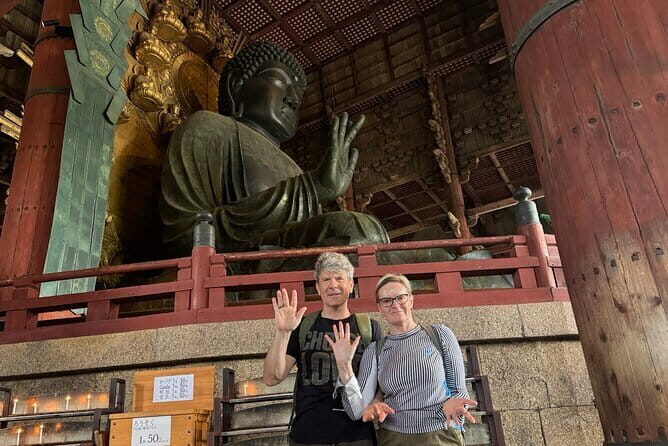
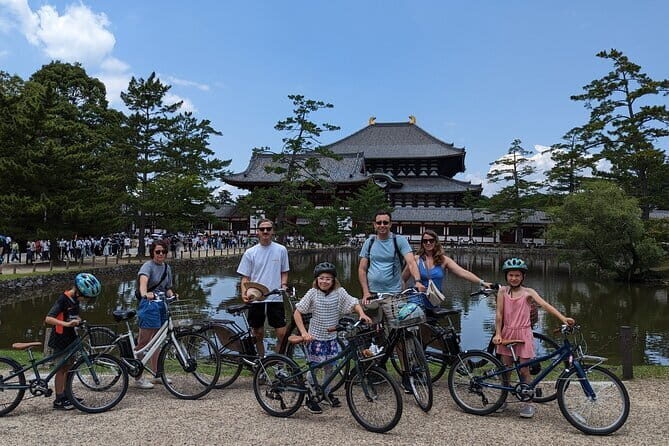
Todai-ji Temple is the headline. This stop lasts about 30 minutes and includes the entrance fee (listed as 800 yen). The reason it’s so famous is the Great Buddha (Daibutsu)—a massive bronze Buddha statue that’s among the largest of its kind in the world. Todai-ji is also famous for its huge wooden hall, and standing in that scale is usually what people remember long after they’ve left Japan’s temple circuit.
In a self-guided plan, Todai-ji can feel like a “checkpoint”: see the Great Buddha, take a photo, move on. With a guide, it tends to become more of a story—what you’re looking at, why it matters, and how to navigate the space so you’re not fighting the busiest paths.
Drawback to consider: Todai-ji is a major draw, and even with a morning start you should expect foot traffic. The smart part of this tour is that you don’t just arrive at the loud moment and hope for the best; you’re routed to spend your time where it counts.
Nigatsu-do for views and the Omizutori connection
Next up is Nigatsu-do (part of the Todai-ji area), with about 15 minutes on the clock. This smaller stop can still be a big payoff because it’s tied to a tradition most visitors only hear about in passing: Omizutori, the torch-lit ritual held every March. The tradition is over 1,200 years old, and the stop is known for the kind of view that helps you see Nara beyond the temple walls.
If you’re visiting outside March, you won’t catch the ceremony itself. But you’ll still get the context—why this location matters and why people plan trips around it. For me, this is the kind of stop that makes a tour feel more than like a photo list.
Practical tip: if you like skyline views, give this one your full attention. People often rush through it because it’s shorter. That’s where you can get the calmer perspective.
Tamukeyama Hachimangu: the “small” shrine that adds balance
Tamukeyama Hachimangu Shrine is a Shinto site near Nara Park, and it lasts about 15 minutes. Founded in 749, it enshrines Hachiman, known as the guardian deity of Todai-ji and its surrounding tradition.
This stop is valuable because it balances the Buddhist-heavy flow of the morning. Nara’s religious world isn’t one-note, and Hachimangu brings in the Shinto side—often with a different feeling of space, symbols, and attention to the living relationship between people and places.
In a tight half-day tour, this is the “breather” moment. Not a long pause, but a reset that keeps the morning from turning into one long temple-to-temple sprint.

Nara Park deer time: the fun part, managed well
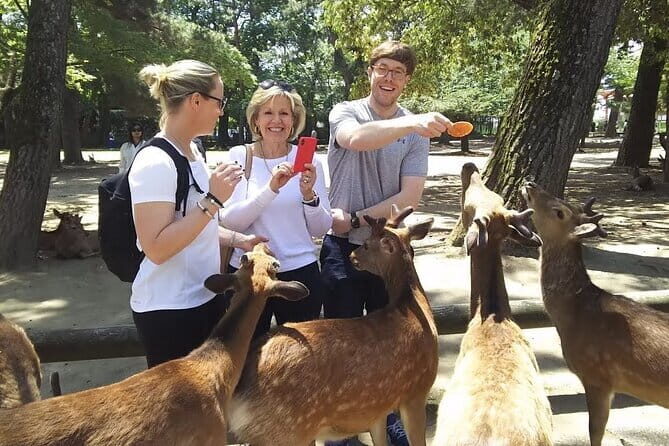
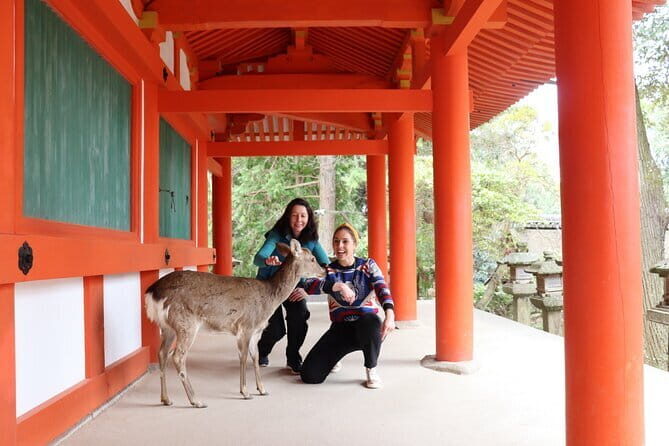
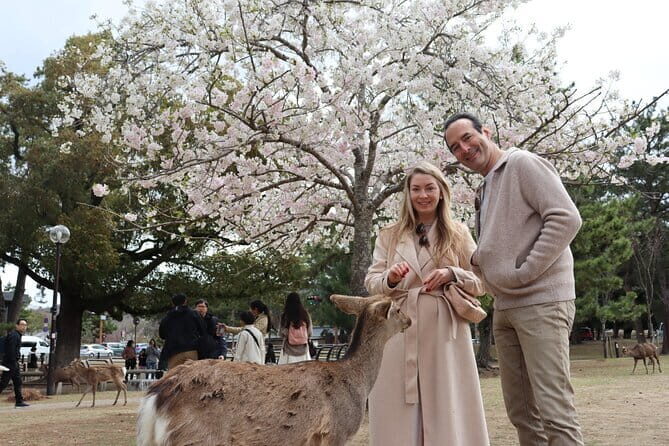
Nara Park is the reason many people remember Nara instantly: free-roaming deer that approach visitors with zero stage fright. The tour sets aside about 20 minutes here, and admission is free.
Two things matter in this part of the day. First, you get a real chance to experience deer interactions rather than just a quick look from the roadside. Second, your guide helps you handle the chaos with common sense. In feedback, you can see how Ikki handles deer photo moments patiently—helping your group get good shots without steamrolling your comfort level.
What I like about the structure here: 20 minutes sounds short, but it’s long enough to feed deer and take photos, without derailing the rest of the itinerary. If deer encounters are on your must-do list, this tour gives you a scheduled slice rather than leaving it to chance.
Consideration: deer can crowd walkways. If you’re uncomfortable with animals approaching, you can still enjoy the scenery and architecture around the park, just keep a relaxed distance and follow your guide’s cues.
Kasuga Taisha Shrine: lanterns, UNESCO, and a calmer atmosphere
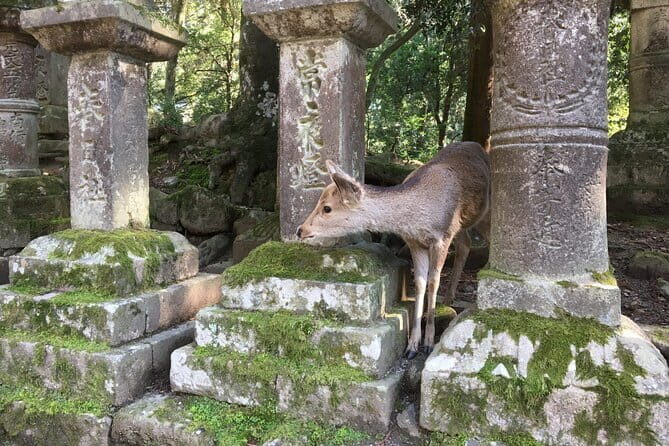
Kasuga Taisha Shrine is next, lasting about 30 minutes and also free to enter. This UNESCO site is famous for hundreds of stone and bronze lanterns. These lanterns aren’t just decorative; they create that signature Kasuga look where the shrine feels softly lit even in daylight angles, and the walkways around the lantern displays can feel meditative compared with the busiest temple halls.
If you’ve only seen lanterns in posters and photos, it’s worth slowing down here. A guide helps you spend time on the parts that make sense to see in sequence, so you don’t end up circling the same areas because you missed a key viewing spot.
Practical tip: if you care about photography, ask your guide when to stand. A small timing shift can make a big difference with lanterns, light, and crowds.
Harushika Brewery sake tasting: optional, local, and not the whole day
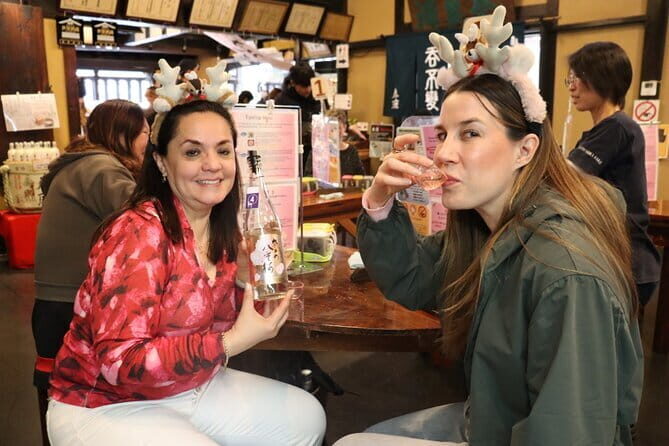
If you want sake, this is where the tour adds flavor. Harushika Brewery is listed as free to visit, but the sake tasting costs 700 yen per person and adds about 30 minutes.
This stop works well because it’s not shoehorned into the day like an afterthought. You choose it, and the schedule adjusts. Harushika is known for producing high-quality sake using traditional methods, and the goal here is local taste—not just “try some alcohol and move on.”
Value perspective: 700 yen is an extra fee, but it’s usually worth it when you’re pairing a brewery visit with the rest of a Nara temple-and-park route. You’ll go home with a memory that isn’t only visual. Still, if you’re trying to keep the day tight, skip the tasting and use that time for more deer or extra shrine viewing.
Photos included: why this matters more than you think
Most tours promise photos. This one takes it a step further by including professional photos during the experience. That can help a lot in Nara because deer photos are both fun and stressful: you’re moving, the deer move, and your group photo often turns into half-smiles and missed shots.
The feedback also highlights that Ikki acts like an extra photographer and helps people with the practical side of getting the right angles. In other words, you’re not just getting a “nice souvenir.” You’re getting the kind of images that actually capture what you did and where you stood.
My advice: if you’re bringing a camera or phone, still expect the guide to set you up. Your devices are great, but good timing and positioning are the real secret sauce.
Price and logistics: what you’re really paying for
The price is $165.13 per person, with the day designed as a private tour (only your group) and typically around 6 hours from Kyoto and about 4 hours from Nara.
At first glance, that might sound like a “pay for convenience” number. But when you look at what’s included, it’s more about buying a prepared route plus a skilled guide plus photos. Entrance at Todai-ji is included (800 yen). Everything else in the main stops is listed as free, which keeps your spending predictable once you’re on the tour.
Two extra costs can apply:
- Public transportation fare from Kyoto: ¥1,280 per person
- Sake tasting: ¥700 per person if you choose it
So the real question for you is how you’re traveling. If you’re already in Kyoto, the route and timing can save you time and decision fatigue. If you’re already in Nara, the half-day length makes it easier to justify paying for the guide and photo help because you’re compressing your sightseeing into fewer hours.
Who this private Nara tour fits best
This is a strong fit if you want:
- A planned morning route that hits UNESCO sights and Nara Park with less hassle
- A guide who’s supportive for families (including kids) and can adapt the pace
- A photography-friendly day with professional photos included
- Optional sake tasting without turning your schedule upside down
It’s also a good match if you’d rather walk with intention than “wing it” between stations, entrances, and crowded spots. On a day like Nara, that can be the difference between enjoying the city and feeling stuck in a crowd.
Quick schedule feel: what a 4–6 hour day actually means
From Nara, plan closer to 4 hours. From Kyoto, plan closer to 6 hours. The experience is built around walking plus public transportation, with plenty of time on foot.
If you add sake tasting, tack on about 30 minutes. That doesn’t just affect the brewery stop—it affects the rest of your day’s energy level, so it’s best to treat it as the “extra chapter,” not the “side quest.”
Should you book this private Nara tour plus sake tasting?
If you’re choosing between doing Nara on your own versus paying for a guided half-day, I’d lean toward booking this if any of these are true:
- You want to see the big UNESCO sites (Todai-ji, Kofuku-ji area, Kasuga Taisha) without guessing your best route.
- Photos matter to you, especially deer and temple backdrops.
- You care about a guide who can manage crowds and keep your group moving at a comfortable pace.
- You’d like optional Harushika sake tasting without adding chaos to logistics.
Skip it if you’re the type who wants long, slow temple wandering with no schedule and no transit planning. Also skip the sake tasting option if you want maximum flexibility for lunch and extra park time.
Overall, this tour sells the right promise: a smooth, efficient Nara morning with standout stops, a local guide like Ikki, and a little extra joy in the form of professional photos and optional sake.
FAQ
How long is the private Nara tour?
It runs about 4 to 6 hours depending on your departure point. From Nara it’s closer to 4 hours, and from Kyoto it’s closer to 6 hours. If you add sake tasting, plan for about 30 extra minutes.
Where does the tour start and end?
The tour starts and ends at Kintetsu-Nara Station (Kintetsu-Nara Station, Nara, Nishimikadochō, 東向中町29). You finish back at the same station.
What’s included in the ticket price?
Included are a local English-speaking guide, the entrance fee for Todai-ji Temple, professional photos taken during the tour, and the tour itself as a private experience for your group.
Is the sake tasting included?
No. Sake tasting at Harushika Brewery costs 700 yen per person and is optional. If you choose it, add about 30 minutes to your schedule.
Do I have to pay for public transportation from Kyoto?
Yes, if you depart from Kyoto. The public transportation fare is listed as ¥1,280 per person. (If you depart from Nara, this transport fare doesn’t apply in the same way.)
Is there free cancellation?
Yes. You can cancel for free up to 24 hours in advance for a full refund.
More Sake Tasting Experiences in Nara
More tours in Nara we've reviewed
Kyoto Drinking Tours, compared.
 ★ 5.03-Hour Kyoto Insider Sake Brewery Tour with Tastings & PairingsFrom $84
 ★ 4.9Kyoto: Izakaya Bars Guided Walking TourFrom $253 hours
 ★ 5.0Kyoto: Insider Sake Brewery Tour with Sake and Food PairingFrom $873 hours
 ★ 5.0Kyoto Sake Brewery & Tasting Walking TourFrom $98
 ★ 5.0Kyoto Bar Hopping Night TourFrom $105
 ★ 5.0Kyoto Local Bar Crawl in Kawaramachi AreaFrom $28
 ★ 5.01.5-Hour Kyoto Insider Sake Experience with 7 Tastings & PairingsFrom $68
 ★ 5.0Kyoto: Insider Sake Experience with 7 Tastings and SnacksFrom $661h 30m
The lists this tour appears in