

Reviewed · SHINJUKU DRINKING TOURS
Tokyo: Shinjuku Bar Hopping & Night Walking Tour
Three bars, one perfect Tokyo evening.
This Shinjuku bar-hopping tour is interesting because it strings together three very different nightlife zones in a tight 3 hours: Omoide Yokocho, Kabukicho, and Golden Gai. I love the chance to try food and drinks that feel built for after-work locals, not just casual sightseeing stops, and I also like how sake tasting and cultural talk turn the night into something you can actually understand. One possible drawback: with limited seating, some places may have you standing while you eat and sip.
What makes it work in real life is the structure. You start at the Shinjuku Station East Exit Police Box (Shinjuku Police Station, East Exit), you follow your guide holding the Local Guide Stars sign, and you walk the short gaps between neighborhoods. Photos are included, and the guide handles the hard parts like getting you into tiny spots when getting a table is tough.
You should also know this is a drinking-focused experience. By Japanese law, only guests age 20+ can drink alcohol, and service can run slow at small restaurants, which can push the tour a bit later. Still, rain or shine, you’ll be out there reading the city the way locals do.
In This Review
- Key takeaways before you go
- Meeting at Shinjuku East Exit without wasting time
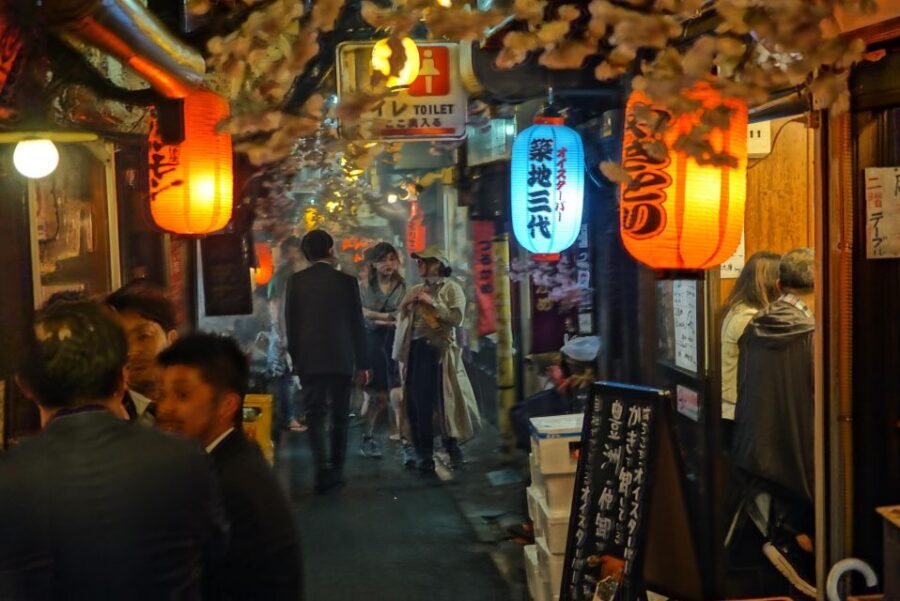
- Omoide Yokocho: tiny lanes, red lanterns, and real after-work life
- Kabukicho: neon chaos with context, not just photos
- Golden Gai: inside bars that usually don’t take walk-ins
- The food and drink rhythm: sushi, kushikatsu, gyoza, and sake
- Group vibe, guide quality, and the “local friend” effect
- Price and value: $30 for the guide and the door into small places
- Logistics that actually matter (cash, standing, late starts, and 20+ alcohol)
- Who should book this Shinjuku night tour
- Should you book this Shinjuku bar hopping tour or not?
- FAQ
- Where do I meet the guide?
- How long is the tour?
- What’s included in the price?
- Are food and drinks included?
- Do I need cash?
- What places will we visit?
- What language is the tour in?
- Is the tour good for vegetarians?
- Can I drink alcohol if I’m under 20?
- What if it rains?
Key takeaways before you go
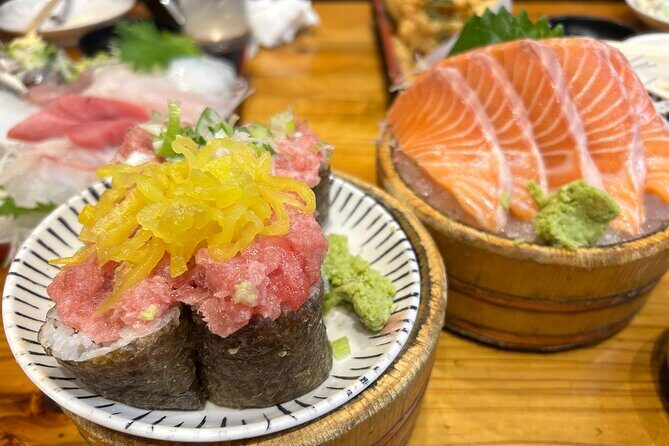
- Three distinct izakaya styles across Omoide Yokocho, Kabukicho, and Golden Gai
- Sake tasting with clear comparisons, often led by guides like Miko and Hajime
- Reservations handled for you in the spots that stay packed
- Cash matters because food and drinks aren’t included
- Some bars require standing, due to tight seating
- Arcades and hidden alleys help you see Shinjuku beyond the main streets
Meeting at Shinjuku East Exit without wasting time
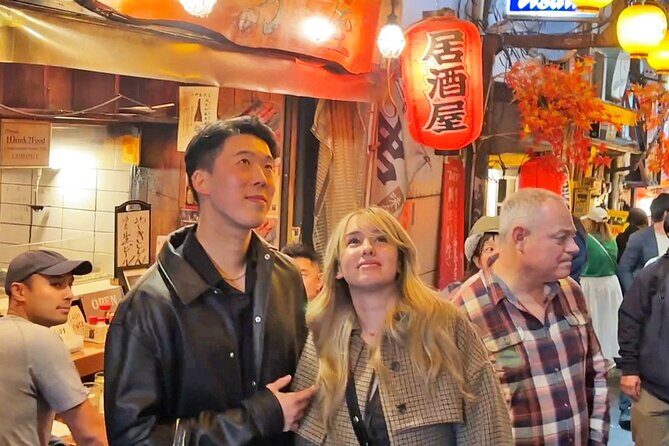
The meeting point is easy once you know what to look for: Shinjuku Station East Exit Police Box, right in front of the Shinjuku Police Station East Exit. Your guide will be holding a sign that says Local Guide Stars, which helps in a crowd where everyone seems to be walking fast in every direction.
Why this matters: starting on time is part of how the tour gets you into those small places. Shinjuku nightlife is not the kind of environment where you can casually stroll and expect tables on demand. If you show up late and miss the group, rescheduling or refunds aren’t offered, so treat the start like a showtime.
Also keep your expectations grounded about the pace. You’ll be on foot, with short walks between neighborhoods. That’s the point: the best “night walking” tours do more than transport you. They help you notice the tiny lanes, the signage, and the shift in vibe as you move from zone to zone.
Other bar hopping tours we've reviewed in Tokyo

Omoide Yokocho: tiny lanes, red lanterns, and real after-work life
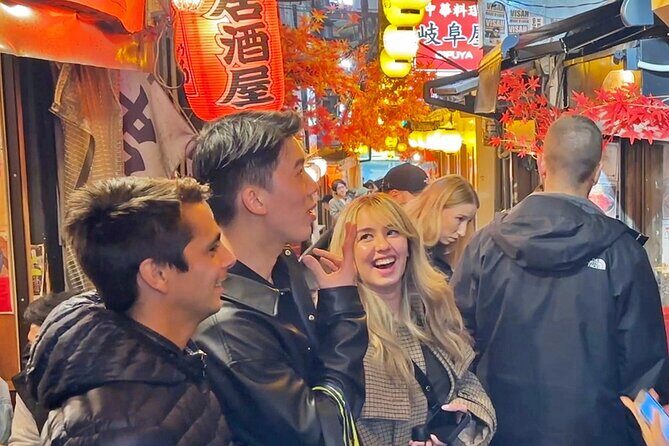
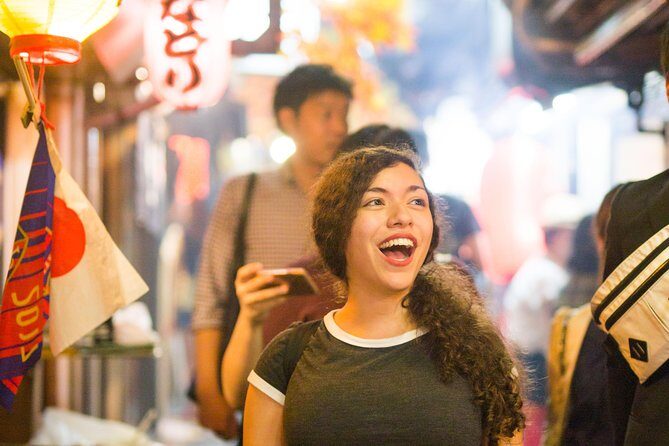
Omoide Yokocho is the first stop, and it’s a strong one. Think narrow lanes lined with red lanterns, cramped counters, and after-work crowds that treat dinner like a social event. The places here are small, often packed with office workers who come to drink and snack without making a whole event out of it.
What you’ll likely feel quickly is how different it is from big dining rooms. Tables can be hard to get, and because the tour is arranged for this kind of space, the guide typically handles reservations so you’re not standing around trying to problem-solve in Japanese.
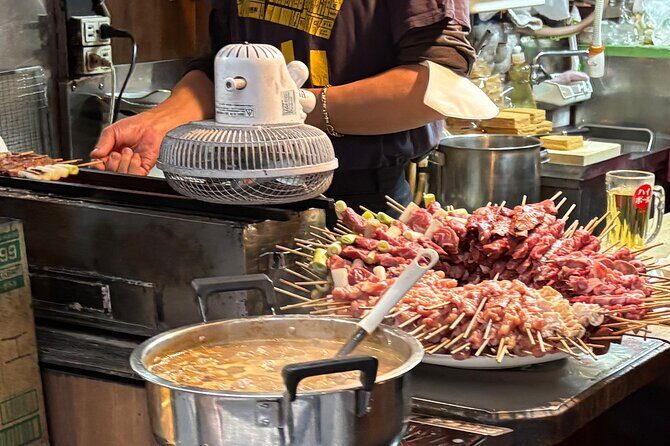
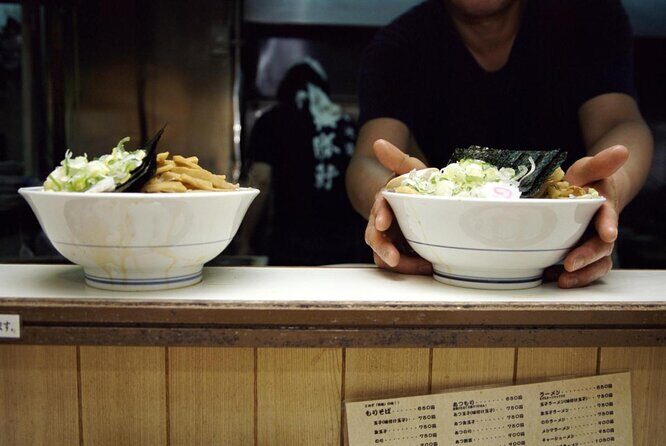
Food here tends to match the mood: quick, shareable items that pair with beer and sake. You may get fresh sushi—plus the kind of comfort bites that make an izakaya meal fun even if you’re not ordering a formal “course.” If you like crispy textures, kushikatsu is a likely highlight, because it’s the kind of food that makes sense in a loud, casual lane.
One practical note: seating can be tight, and because these lanes are narrow and crowded, you might end up standing at times. If you don’t want to spend the night on your feet, plan to pace yourself and take whatever short pauses you can between drinks.
Kabukicho: neon chaos with context, not just photos
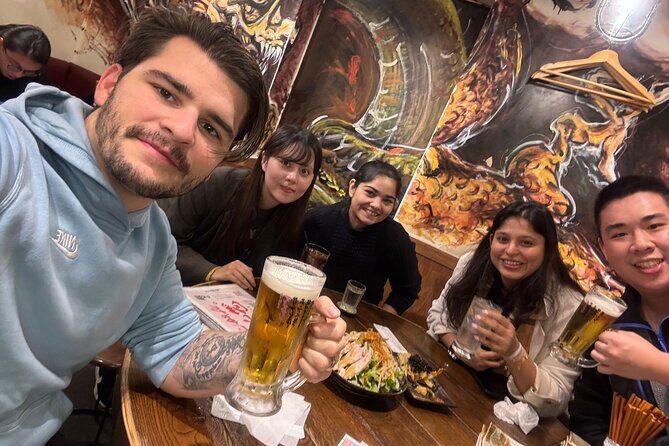
Next comes Kabukicho, Shinjuku’s famous entertainment neighborhood. You’ll see the neon, the busy foot traffic, and the character of the area right away. The main difference on this tour is that you’re not just walking through lights—you’re walking through meaning. The guide explains how the district works, what you’re seeing, and how nightlife behavior fits Japanese social norms.
This stop is a good place to ask questions. You’ll often hear practical explanations that help you decode what’s going on: the rhythm of arrivals, why people are grouped the way they are, and how to read an area when you might not know the language.
Food and drinks at this stage are still very “izakaya night,” but the vibe shifts. Omoide Yokocho feels like a tight lane tradition; Kabukicho feels like the louder stage of Shinjuku nightlife. You might try juicy gyoza, and if your guide is the type who likes variety, you’ll get a better spread than you’d normally order for yourself.
Potential drawback here: because Kabukicho is busy and lights are everywhere, it’s easy for first-timers to feel slightly overwhelmed. Having a guide helps, but you still want to stay focused. Put your phone away every so often. The tour is more enjoyable when you look up and actually see the district.
Golden Gai: inside bars that usually don’t take walk-ins
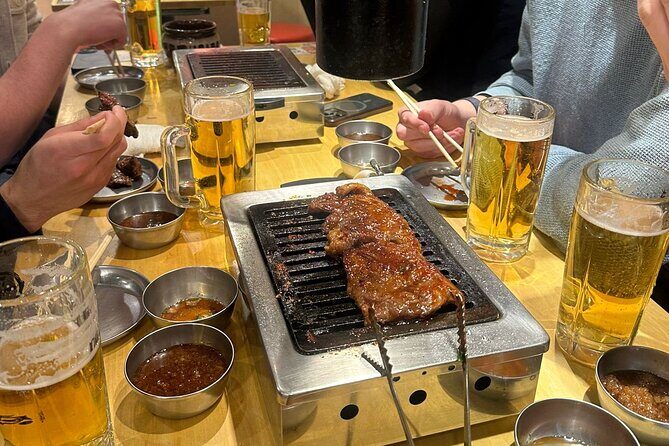
Golden Gai is the final neighborhood, and it’s the one people talk about for a reason. It’s a maze-like zone of tiny bar spaces—often narrow rooms where the inside feels closer than it looks from outside. What makes it special on this tour is access. Your guides may have insider connections that let you go into bars that typically don’t welcome random new customers.
That access changes the whole experience. Without it, you’d spend time guessing which places are open to you, whether someone will step out, or whether you’re expected to come back later. With the tour structure, the night becomes less about uncertainty and more about experiencing Tokyo nightlife as locals do.
Drinks here are often where the tour really clicks. You’ll likely sample local beers and spirits, and you may also try Japanese sake in a more thoughtful way than simply ordering by the label. One guide-led example you’ll likely appreciate: Miko is known for taking people through sake types and explaining what makes each one different, not just where to drink it.
This is also where the night can expand beyond the planned stops. Some participants have mentioned karaoke after the tour or a karaoke-type vibe connected to arcade areas nearby. If that sounds fun, great. If it doesn’t, you can still enjoy Golden Gai as a drink-and-conversation zone without pushing it.
The food and drink rhythm: sushi, kushikatsu, gyoza, and sake
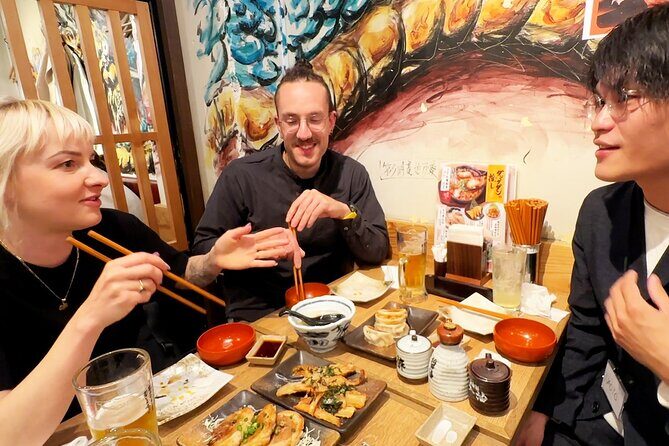
Even though the tour is built around neighborhoods, it’s ultimately about what you put in front of you. The highlights point to fresh sushi, crispy kushikatsu, juicy gyoza, and plenty of sake. That mix is smart because it covers different cravings: seafood freshness, fried crunch, and savory dumpling comfort.
Why this matters for value: eating in Tokyo is often easiest when you’re not stuck trying to translate every item. An organized izakaya crawl helps you avoid the common problem of ordering blandly familiar things because you’re too tired to figure out what’s best. With a guide guiding your ordering and pacing, you get a “real night out” feel instead of a slightly awkward meal you rushed through.
Sake deserves special attention. A good sake tasting isn’t just drinking. It’s learning the basic categories and the language of flavors—how different kinds can taste drier, smoother, heavier, or more aromatic. If you get a guide like Hajime or Yuki, the explanation style tends to be practical, tied to what you’ll notice in each glass.
Drink service can also be slower than you expect at small places. The pace is part of the culture, and because you’re not paying for a set menu with strict timing, service delays can push the tour past the scheduled window. That’s not a deal-breaker, but it is a reason to plan your next day with less pressure.
Other nightlife tours we've reviewed in Tokyo



Group vibe, guide quality, and the “local friend” effect
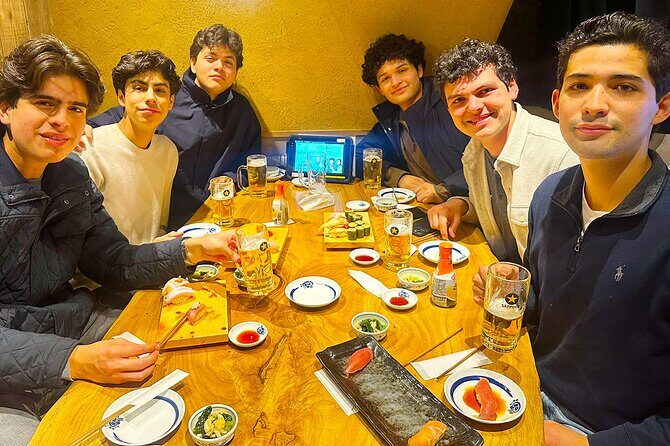
The best part of this experience is often the human part: a friendly local guide who keeps the night moving and makes you feel like you belong. Guides you may encounter include Miko, Han, Ayaka, Hajime, Chihiro, Yuki, and Luna. Across different nights, the pattern is the same—people leave talking about the guide’s humor, energy, and ability to set a comfortable tone fast.
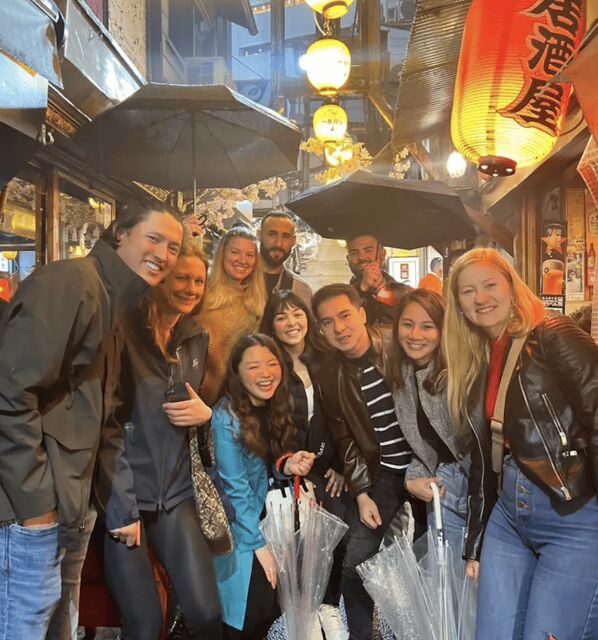
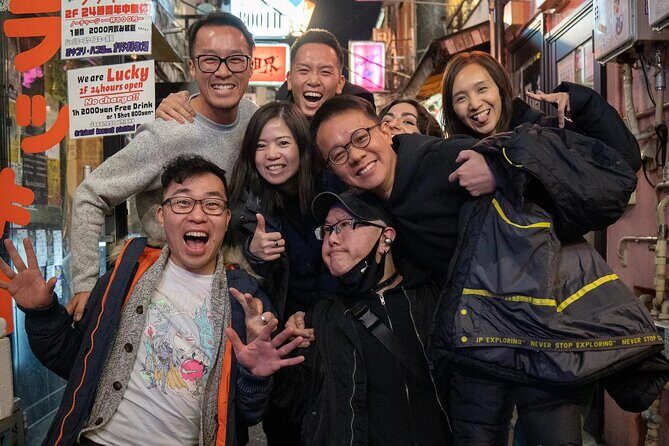
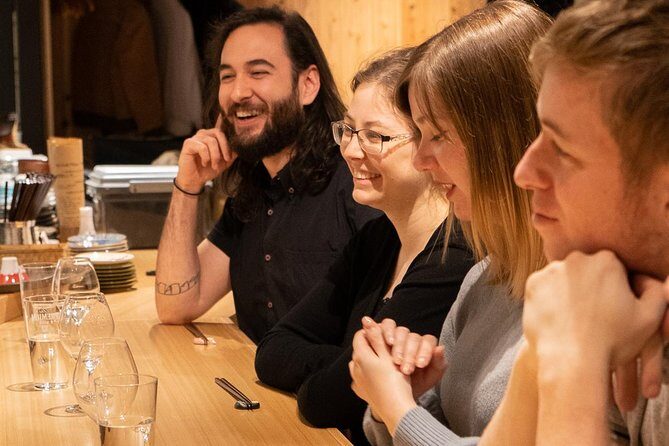
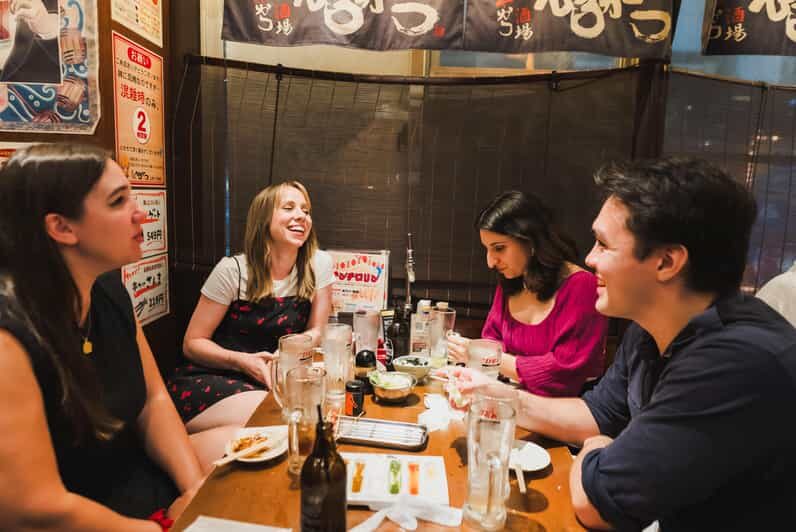
You’ll probably also like the social element. Many people enjoy it because you’re not doing this alone in a dense district. You meet other travelers, share food, and ask questions without feeling like you’re blocking someone’s evening. There’s also a practical benefit: group momentum helps you stay confident in places that feel confusing when you’re on your own.
One more upside: you get photos during the tour. That might sound small, but in Shinjuku the best shots happen when you’re moving through lanes and neon pockets. Guides tend to know where the angles are and how to keep the group from drifting.
If you prefer total quiet and zero social energy, this might feel a bit loud and chatty. But if you want an evening that feels lived-in, that energy is exactly what makes it fun.
Price and value: $30 for the guide and the door into small places
The tour price is $30 per person for a 3-hour walking experience with a local guide, plus photos. Food and drinks are not included, so your total spend will depend on how much you eat and drink.
Here’s how I think about the value. In Tokyo, getting into tiny izakaya-style spots can be the hard part. This tour is paying for three things: a guided route through the right neighborhoods, expert timing so you’re not wandering at the wrong moment, and the social confidence of having someone who can handle reservations and ordering flow. If you’ve ever tried to get seated in a narrow after-work alley, you know that “just find a place” is not always a simple plan.
On top of that, some stops can involve access that’s difficult to get as a random walk-in. Even when the exact bars change on the night, the structure is built to use local connections and make the evening smoother than DIY.
So yes, you still need spending money for food and drinks, and you should bring cash. But the $30 price makes sense when you treat it as buying time, confidence, and local entry—not just a walk between landmarks.
Logistics that actually matter (cash, standing, late starts, and 20+ alcohol)
A few details can make or break the night:
- Bring cash. Food and drinks are not included, and cash is specifically recommended.
- Expect standing at times. Limited seating is part of these izakaya environments.
- You must be 20+ to drink alcohol. This is by Japanese law, and it matters for ordering decisions.
- Start time is strict. If you’re late and miss the group, refunds or rescheduling aren’t available.
- Rain or shine. The plan runs anyway, so wear shoes you can handle on wet sidewalks and crowded lanes.
- Service delays can happen. Small restaurants move at their own pace, which can extend the experience beyond the scheduled time.
Also note that while the tour aims to visit Omoide Yokocho, Kabukicho, and Golden Gai, occasional circumstances can change the route. If you have any concerns about what you’ll see, ask in advance for more specific info.
Who should book this Shinjuku night tour
This is a great fit if you want:
- A first-time-friendly way to experience Shinjuku nightlife without guessing where to go
- A food-and-drink night built around izakaya culture, including sake sampling
- A guided route that shows you arcades and hidden alleys that most visitors skip
It’s a weaker fit if:
- You hate standing in tight spaces
- You don’t drink and don’t want a nightlife-style itinerary
- You need a highly vegetarian-friendly menu. Vegetarian options can be limited because many Japanese restaurants aren’t set up for full vegetarian menus.
If you’re a solo traveler, the group dynamic can be a big plus. People have also said they felt comfortable with the guide and group during the night, which is a real consideration when you’re traveling alone in busy districts.
Should you book this Shinjuku bar hopping tour or not?
Book it if you want Shinjuku nightlife to feel guided, social, and genuinely local. The combination of three distinct izakaya-style stops, hands-on sake tasting talk, and insider access to Golden Gai is exactly the kind of experience that’s hard to replicate on your own without spending hours figuring it out.
Skip it if you want a quiet, sit-down food tour, or if you’re planning to keep alcohol out of the night. Also, if you’re traveling light and don’t like the idea of carrying cash, that’s a small friction you’ll feel.
My bottom line: for $30, you’re paying for the route, the local guide, and the “how do I do this right” factor. If you’re ready for a real night out—standing sometimes included—this is one of the best ways to read Shinjuku after dark.
FAQ
Where do I meet the guide?
Meet at Shinjuku Station East Exit Police Box (Shinjuku Police Station, Shinjuku East Exit Police Box), at 3-38-1 Shinjuku, Shinjuku-ku, Tokyo.
How long is the tour?
The duration is 3 hours.
What’s included in the price?
Included are the walking tour, a local guide, and photos taken during the tour.
Are food and drinks included?
No. Food and drinks are not included, and you’ll need to pay for what you order.
Do I need cash?
Yes. You should bring cash for food and drinks.
What places will we visit?
The tour focuses on Omoide Yokocho, Kabukicho, and Golden Gai, though the route can sometimes change due to circumstances.
What language is the tour in?
The tour is available in English and Japanese.
Is the tour good for vegetarians?
Vegetarian options are available, but they are limited because many restaurants aren’t fully equipped for vegetarian menus.
Can I drink alcohol if I’m under 20?
No. By Japanese law, only guests aged 20 and over are allowed to drink alcohol.
What if it rains?
The tour proceeds rain or shine.
More Shinjuku Drinking Tours in Tokyo

More Nightlife Tours in Tokyo
More Bar Hopping Tours in Tokyo

More tours in Tokyo we've reviewed



Shinjuku Drinking Tours, compared.
 ★ 5.0Tokyo Bar Hopping Tour in Shinjuku (All-You-Can-Drink + Dinner)From $106
 ★ 5.0Best of Shinjuku: Izakaya Food Tour (4 Stops, 14+ Tastings)From $92
 ★ 4.9Tokyo: Shinjuku Local Bar and Izakaya Guided Walking TourFrom $343 hours
 ★ 5.0Tokyo: Shinjuku Local Bar & Izakaya Crawl TourFrom $39
 ★ 4.9Tokyo: Shinjuku Bar Hopping with All-You-Can-Drink & DinnerFrom $1083 hours
 ★ 5.0Sake Tasting Masterclass in Shinjuku (8+ Varieties with a Pro)From $72
 ★ 4.8Tokyo: Shinjuku Nightlife & Secret Backstreets Walking TourFrom $221h 30m
 ★ 4.9Tokyo: The Best of Izakaya in Shinjuku Food & Cultural TourFrom $1293 hours