
Reviewed · KYOTO DRINKING TOURS
Kyoto: Newly Opened Sake Tasting – Sanjo Chasuian
Sake tasting with a plan feels easy. At newly opened Sanjo Chasuian, you’re greeted by instructor Yuko in a traditional kimono, and the whole experience runs in English. Best of all, it’s just a 5-minute walk from Subway Karasuma Oike Station.
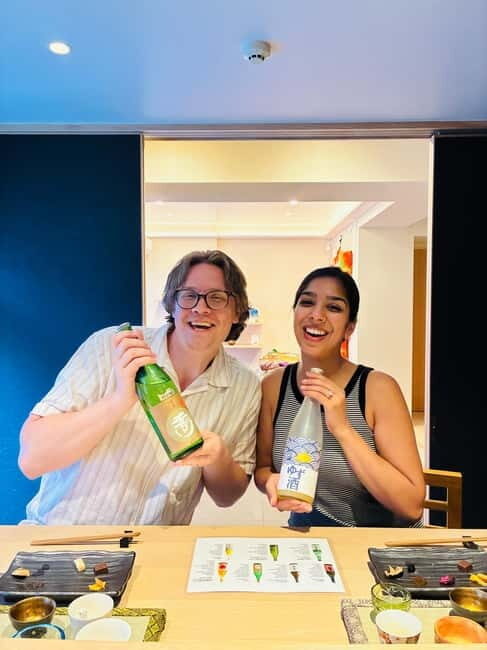
I especially liked the way the session teaches you how to taste and choose sake, not just sip it. You also get to sample sake across different styles and aromas, then compare how presentation changes the drink.
One thing to consider: it’s a shared small-group experience, so it’s not the quiet, private kind of outing.
In This Review
- Key things I’d bet on
- Enter Sanjo Chasuian: kimono welcome, English guidance, and an easy location
- The 80-minute flow: from sake basics to tasting 7 types
- The pairing approach: 7 sake types and snack matches that actually matter
- How to read sake labels without stress
- Variety of sake vessels: why the cup can change what you taste
- Where you sit: table seats or Japanese-style room setup
- Small group vibe: shared plan, limited to 6 participants
- Certified instructor Yuko: what you’ll learn from the style of teaching
- Price and value for $50: what you get for your money
- Who should book this sake tasting in Kyoto
- Quick “know before you go” checklist
- Should you book Sanjo Chasuian’s sake tasting?
- FAQ
- What is the duration of the Kyoto sake tasting?
- Where is Sanjo Chasuian located?
- How much does it cost?
- How many types of sake do you taste?
- Is the experience available in English?
- How big is the group?
- What seating style should I expect?
- Are dietary restrictions accommodated?
- Is there an age requirement?
- Can I drink if I’m driving a car or bicycle?
Key things I’d bet on
- A short walk from Karasuma Oike makes it easy to fit into a Kyoto day
- Yuko, a certified instructor in kimono guides everything in English
- 7 types of sake with snack pairings are treated like a real match, not an afterthought
- 8 sakes total (including a welcome drink) in just 80 minutes
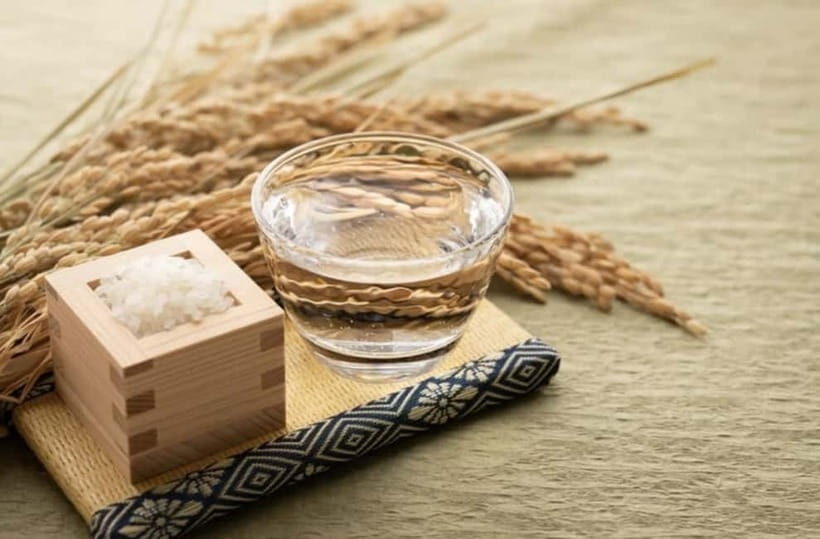
- Different sake vessels let you taste how aroma and flavor shift with the cup
Enter Sanjo Chasuian: kimono welcome, English guidance, and an easy location
Kyoto can be overwhelming fast. This is the kind of experience that helps you get oriented without doing a ton of planning. Sanjo Chasuian is newly opened and set up to welcome international visitors, with guidance offered in English from start to finish.
When you arrive, you’re not handed a generic tasting sheet. Staff are waiting for you at the entrance, and there’s a large logo plate with the name Sanjo Chasuian. Inside, the vibe is traditional, and then you meet your instructor—Yuko—who welcomes you in a kimono.
Practical win: it’s a five-minute walk from Subway Karasuma Oike Station. That matters in Kyoto, where timing and transfers can quietly eat your day.
Other sake tasting experiences we've reviewed in Kyoto
The 80-minute flow: from sake basics to tasting 7 types
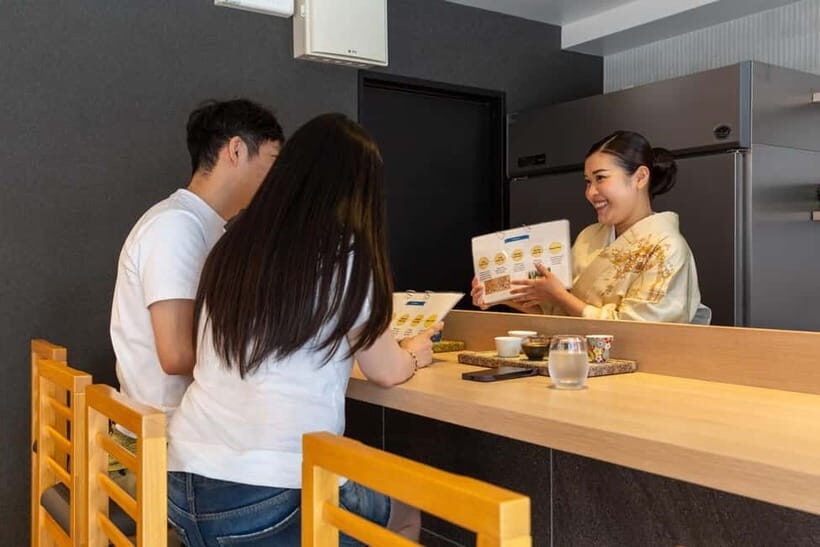
This is a tightly packed 80 minutes, designed for beginners. The structure is built around learning, tasting, then applying what you just learned.
Here’s how the session feels from the inside:
- You start with a welcome drink.
- Yuko walks you through sake history, brewing methods, and the main types of sake.
- You get help with how to read labels, so the next time you’re shopping, you’re not guessing.
- Then you move into tasting.
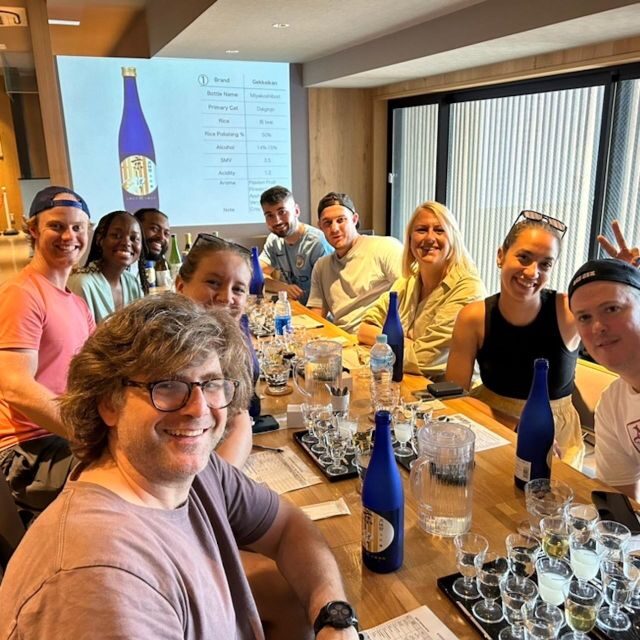
You’ll sample 7 types of Japanese sake, and because the welcome drink is included, that’s 8 sakes total. It’s a good pace: enough variety that you learn something real, but not so long that it turns into a blur.
The best part is the emphasis on tasting skills. The experience isn’t only about what you drink—it’s about how you pay attention. You’ll learn how to taste and how to decide what you like.
The pairing approach: 7 sake types and snack matches that actually matter
A lot of tastings treat food like a consolation prize. This one treats snacks like partners.
You’ll enjoy carefully curated snack pairings with each sake type. And the pairing is not framed as a side dish. The snacks are part of the experience on equal footing with the sake, and Yuko gives you pairing tips along the way—practical guidance you can reuse later.
Here’s why this matters if you’re new to sake:
- You learn that sake style and food texture interact in predictable ways.
- You start to understand that the same sake can feel different depending on what’s on your plate.
- You get a language for what you’re tasting, so you can repeat the pairings that work for you.
If you’ve ever had sake and wondered why one glass felt clean while another felt heavy, this pairing setup helps you connect the dots.
How to read sake labels without stress
One quiet benefit of this experience is that it doesn’t assume you already speak the language of sake.
Yuko helps you understand sake history, brewing methods, and how to read labels. That means you’re not just tasting in the moment—you’re building a small toolkit for after the class.
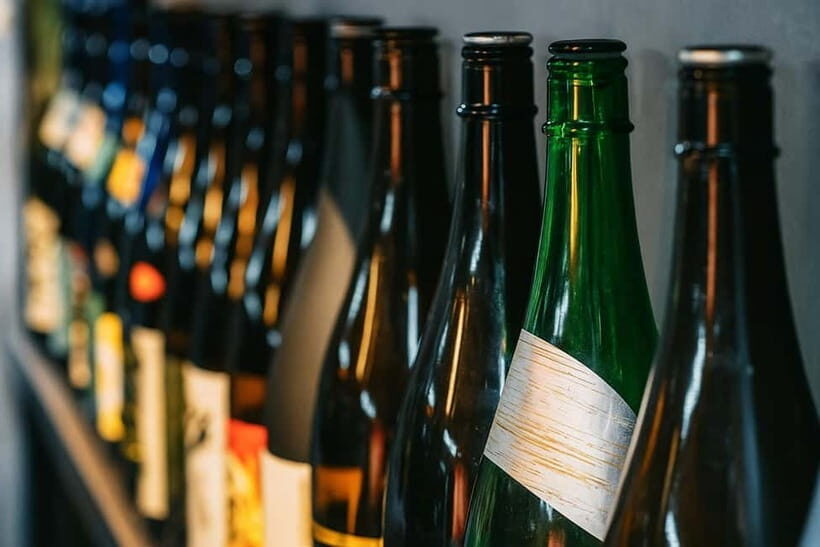
So when you see terms on a bottle, you’ll have a better chance of matching that label info to the flavors you liked during your tastings. And since you can take your favorites home (your favorite sake and sake vessels are available for purchase), this label skill can turn into real buying confidence.
Variety of sake vessels: why the cup can change what you taste
This is the part I found most fun, because it’s the kind of detail that’s easy to ignore until someone forces you to notice it.
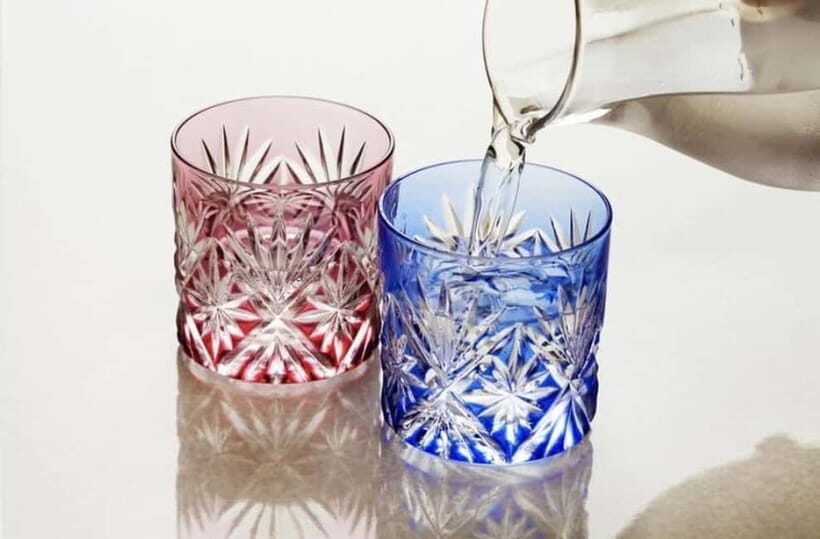
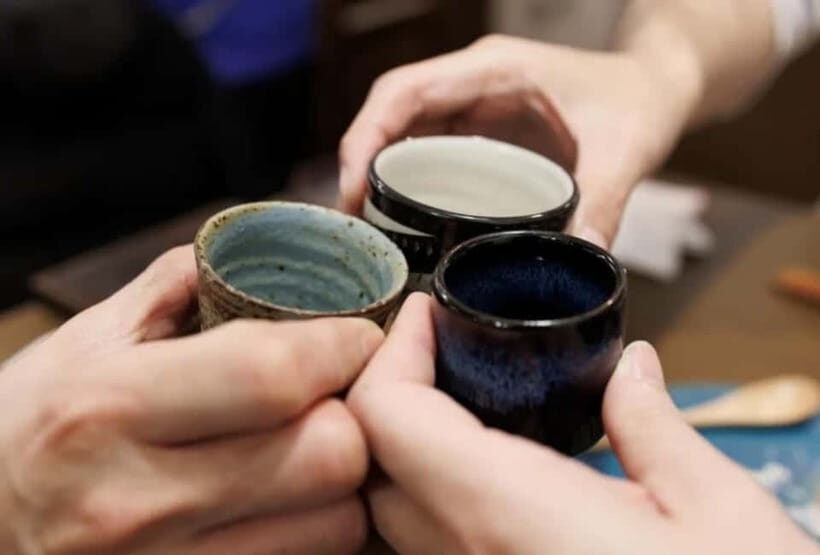
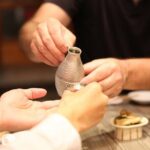
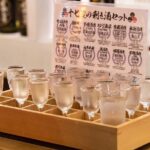
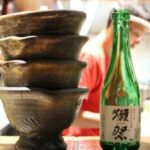
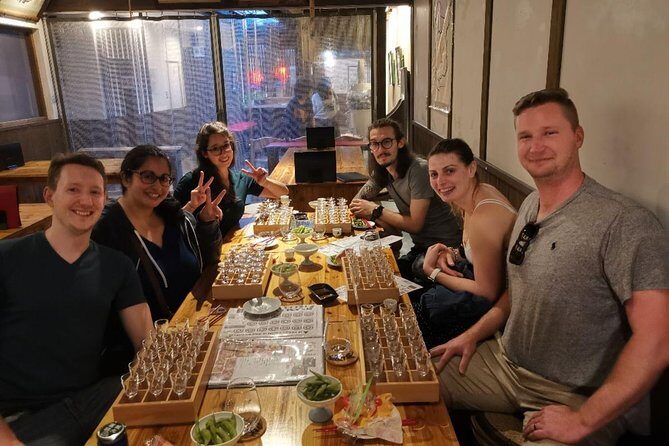
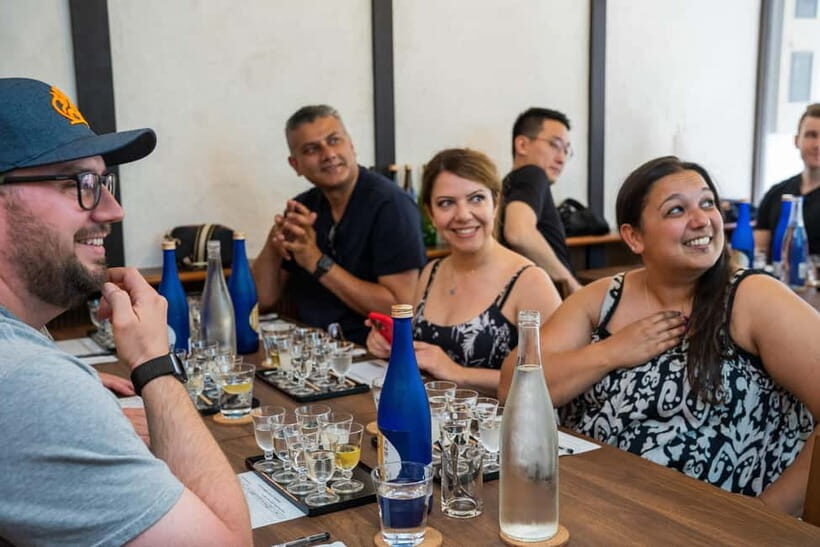
You’ll taste sake using a variety of sake vessels. The experience explains that flavor and aroma can change depending on what the sake is poured into. So you’re not only sampling different sake types—you’re also learning how presentation shifts the experience.
For you, that’s useful because it gives you a more precise way to choose what you want next time. If you loved a certain aroma or balance, you can ask yourself whether the vessel played a role—or whether it was purely the sake style. Either way, you leave with a more accurate sense of your preferences.
Also, the vessels bring visual appeal. It’s not just practical; it’s enjoyable.
Other Kyoto drinking tours we've reviewed in Kyoto




Where you sit: table seats or Japanese-style room setup
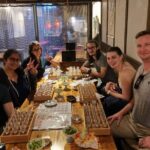
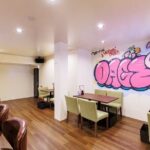
The experience is run at the venue as either table seating or in a Japanese-style room. That affects the feel, especially if you prefer one setting over another.
Either way, the point is comfort and good sightlines for tasting and explanation. In a 6-person limited group, it’s easier to hear Yuko and easier to focus on each drink without feeling rushed.
Small group vibe: shared plan, limited to 6 participants
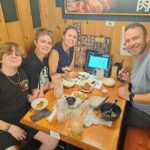
This isn’t a mass event. It’s limited to 6 participants, and it’s offered as a shared plan with other guests.
That’s a plus if you like conversation and a casual atmosphere. It can also be a drawback if you want total quiet or private pacing. Still, for a beginner-friendly learning format, a small group size usually makes the explanations feel more personal.
Certified instructor Yuko: what you’ll learn from the style of teaching
The most consistently praised part of this experience is the instruction itself—especially Yuko’s ability to explain the culture around sake and how to taste.
You can expect to be guided through:
- the cultural roots of sake
- basics of brewing and sake types
- how to read labels
- how to choose based on taste
- practical tips for pairing sake with different dishes
One strong element: Yuko doesn’t just talk at you. You’re tasting while learning, which helps the information stick. And since you’re learning in English, the explanations are meant to be accessible—not simplified in a way that loses important details.
If you like hands-on learning, you’ll likely find this format satisfying.
Price and value for $50: what you get for your money
Let’s talk value plainly. The price is $50 per person for 80 minutes. You also get:
- a welcome drink
- 7 types of sake
- snack pairing with the tastings
- variety of vessels
- English instruction from Yuko
- a beginner-friendly structure
Is it expensive? It depends on what you compare it to. But judged by what’s included—guided tasting, snacks, vessel variety, and cultural/brewing education—it’s not just a drink purchase. You’re paying for the learning and the guided comparisons that make the tasting more meaningful.
And because your favorite sake and vessels are available for purchase, the “cost” can turn into a souvenir that actually matches your taste, not just something you buy because it’s cute.
Also, this facility has a grand opening discount running until September 15. If you’re booking around that window, you’re getting an extra incentive to try a newly opened spot while it’s still fresh.
Who should book this sake tasting in Kyoto
This works best if you:
- are curious about sake but don’t want to figure out labels and styles on your own
- like structured learning with real tasting moments
- want a Japanese cultural experience without needing advanced knowledge
- enjoy food pairings and want to understand why they work
- want a small group format (limited to 6)
It may not be the right fit if:
- you prefer private experiences only
- you need a fully alcohol-free experience (the activity is a sake tasting, and alcohol rules apply if you’re driving)
Quick “know before you go” checklist
A few rules and details can affect comfort and planning:
- The instructor and explanations are in English.
- Participants must be 20 years of age or older.
- If you’re driving a car or bicycle, drinking alcohol is strictly prohibited for you.
- The venue can be a table setup or a Japanese-style room.
- Dietary restrictions should be sent by email or WhatsApp so the team can try to accommodate.
- If you come with an interpreter, you should note that the interpreter’s participation fee also applies as one guest.
This is an activity built around tasting, so it’s worth checking that the alcohol rule lines up with your own situation.
Should you book Sanjo Chasuian’s sake tasting?
I’d book it if you want Kyoto flavor plus actual education. The combination of 7 sake types, snack pairing, English instruction from Yuko, and the vessel comparison makes this more than a basic tasting stop.
Book it with confidence if:
- you’re a beginner and want help learning the basics fast
- you care about pairing sake with food
- you’d like something easy to schedule near Karasuma Oike
Skip it if you strongly dislike shared small-group settings or you’re looking for something that’s truly quiet and private.
If you’re on the fence, the grand opening discount until September 15 is a nice reason to try it sooner rather than later.
FAQ
What is the duration of the Kyoto sake tasting?
The experience lasts 80 minutes.
Where is Sanjo Chasuian located?
It’s about a 5-minute walk from Subway Karasuma Oike Station.
How much does it cost?
The price is $50 per person.
How many types of sake do you taste?
You taste 7 types of Japanese sake, plus you receive a welcome drink, for 8 sakes in total.
Is the experience available in English?
Yes. The instructor provides guidance in English.
How big is the group?
The group is limited to 6 participants. It’s a shared plan with other guests.
What seating style should I expect?
The sake experience takes place at table seats or in a Japanese-style room.
Are dietary restrictions accommodated?
You can send dietary restrictions by email or WhatsApp, and the team will do their best to accommodate your request.
Is there an age requirement?
Yes. Participants must be 20 years of age or older, and it’s not suitable for people under 20.
Can I drink if I’m driving a car or bicycle?
No. Drinking alcohol is strictly prohibited for those who drive cars or bicycles.
If you want, tell me when you’ll be in Kyoto and what neighborhood you’re staying in—I can help you judge whether Karasuma Oike is a good fit for your day plan.
More Kyoto Drinking Tours in Kyoto
More Sake Tasting Experiences in Kyoto
More tours in Kyoto we've reviewed





Kyoto Drinking Tours, compared.
 ★ 5.03-Hour Kyoto Insider Sake Brewery Tour with Tastings & PairingsFrom $84
 ★ 4.9Kyoto: Izakaya Bars Guided Walking TourFrom $253 hours
 ★ 5.0Kyoto: Insider Sake Brewery Tour with Sake and Food PairingFrom $873 hours
 ★ 5.0Kyoto Sake Brewery & Tasting Walking TourFrom $98
 ★ 5.0Kyoto Bar Hopping Night TourFrom $105
 ★ 5.0Kyoto Local Bar Crawl in Kawaramachi AreaFrom $28
 ★ 5.01.5-Hour Kyoto Insider Sake Experience with 7 Tastings & PairingsFrom $68
 ★ 5.0Kyoto: Insider Sake Experience with 7 Tastings and SnacksFrom $661h 30m
The lists this tour appears in