
Reviewed · HISTORICAL TOURS
Takayama Local Cuisine, Food & Sake Cultural Tour with Government-Licensed Guide
A good food walk starts with local context. This Takayama tour pairs a government-licensed English guide with real stops that explain how people here eat, shop, brew, and celebrate daily life. You’ll stroll side streets that feel Edo-period honest, then cap the trip with brewery tastings, plus optional sweets made with sake.
The big draw for me is the mix of morning markets and brewing traditions in one smooth route. I also like that the itinerary is customizable from a menu of must-see sites, so you can lean more food-focused or more culture-focused. One thing to weigh: it’s a walking tour, and not every cost is included (for example, Takayama Jinya admission is not covered, and some tastings have extra charges).
In This Review
- Key takeaways before you go
- Why Takayama cuisine feels different than a typical food tour
- The real value: a licensed local guide (not just a translator)
- Your 6-hour walk plan, without feeling rushed
- First stop: Takayama Jinya and the Edo-era government hub
- Morning Market stop 1: Asa-ichi and the habit of shopping early
- Morning Market stop 2: Miyagawa Morning Market by the Miya River
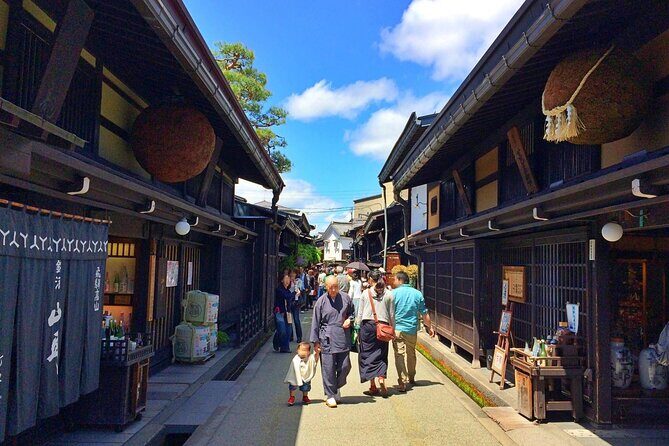
- Sanmachi Suji: Takayama’s preserved old town streets
- Onoya Brewery: traditional miso and soy with 250-year roots
- Harada Sake Brewery: Sansha dry sake and small tasting cups
- Kawashiri Sake Brewery: matured sake tasting for an extra charge
- How the customizable 3–4 site plan works in real life
- Price and value: what you’re paying for at $154.37
- Practical tips so the day feels smooth
- Who should book this Takayama cuisine and sake tour?
- Should you book this Takayama tour or pass?
- FAQ
- How long is the Takayama cuisine, food, and sake cultural tour?
- Is this tour walking-only, and is pickup available?
- What sites will I visit?
- Are entrance fees included?
- Is the guide English speaking?
- Is this a group tour with other people?
- Do I need tickets in advance?
- Is free cancellation available?
Key takeaways before you go
- Government-licensed English guide brings historical and cultural context, not just pointing at signs
- Customizable 3–4 sites means you can shape the day around your tastes
- Asa-ichi and Miyagawa markets are true morning texture: produce, crafts, and local rhythms
- Miso/soy and sake breweries give you flavors you can actually identify and buy
- Brewery stops vary by experience level: some are free to enter, some tastings cost extra
- Private feel for your group keeps the pacing friendly and flexible
Why Takayama cuisine feels different than a typical food tour
Takayama has a way of slowing you down, and that’s exactly what makes this kind of tour work. Instead of rushing you through a checklist, you get a guided walk through the town’s preserved old-town streets, where daily life and long-running shops still matter.
You also get food in the order it naturally shows up here. A morning market first makes the rest of the day click. Even if you’re not a big shopper, seeing how locals pick ingredients and crafts is a lesson in what Takayama values.
A few more Takayama tours and experiences worth a look
The real value: a licensed local guide (not just a translator)
This tour is built around a licensed local English-speaking guide. That matters because Takayama’s stories aren’t just facts; they are why certain shops, buildings, and food traditions exist. A guide with government-licensed interpreter credentials can connect the dots between Edo-era Takayama and what’s sold today.
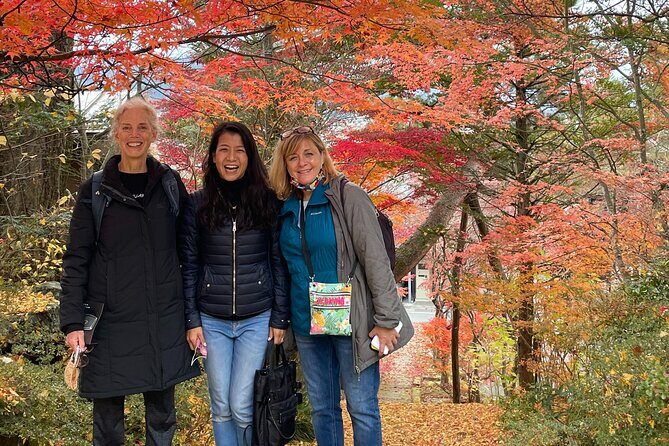
In the reviews, I saw guides like Mitsu and Yoko praised for adjusting to what the group wanted as the day unfolded. That flexibility is practical. If your group leans toward tastings, you’ll likely get more time on breweries. If you care more about crafts and old streets, your walk can tilt that direction.
Your 6-hour walk plan, without feeling rushed
Plan on about six hours walking through central Takayama. The pace is designed for sightseeing plus tasting, with time set for multiple stops. Each location is also short enough that you can stay engaged without dragging yourself from place to place.
Pick-up is offered, but it’s not like a taxi-to-everything setup. You’ll meet the guide on foot within a designated area, and the tour itself is walking throughout. If your hotel is far from the old town core, give yourself extra buffer to get to the meeting zone calmly.
First stop: Takayama Jinya and the Edo-era government hub
You start at Takayama Jinya, a surviving Edo-period jin’ya. This site once served as the government headquarters for Hida Province under the Tokugawa shogunate, from 1692 to 1871. It’s one of those places where history becomes physically real because the building still carries the function.
A key practical note: the Jinya admission ticket is not included. You’ll want to budget for it or be ready to pay onsite. The upside is that your guide can explain why this matters in everyday terms, not just as a timeline.
Why I think this stop works: it gives you the framework for the rest of the walk. Markets and shop streets start making more sense once you understand how the area was administered and organized.
Morning Market stop 1: Asa-ichi and the habit of shopping early
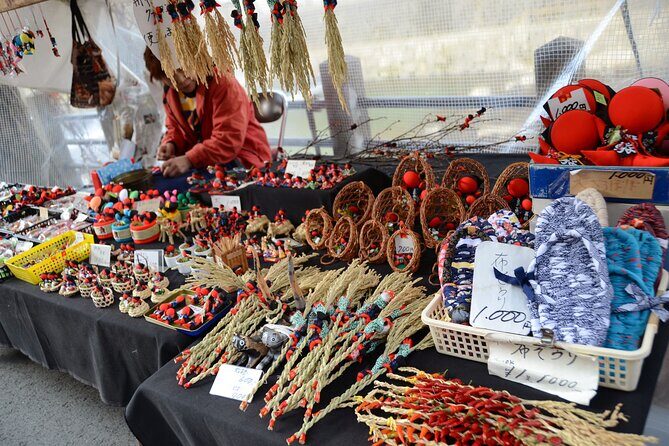
Next comes the Asa-ichi morning market scene. The idea is simple: fresh produce and local crafts appear early, and people build their day around what looks good and what’s available. Even if you don’t buy much, the sights and smells teach you what locals consider worth getting.
This stop is free to enter, and it’s short on purpose. You’re not there to spend all morning comparing stalls. You’re there to get oriented and to taste the tempo of Takayama.
What to do while you’re there: watch how vendors present items and how shoppers choose. If you’re the type who likes to snack, ask your guide what’s best to try that fits the season, because the tour timing favors early food experiences.
Morning Market stop 2: Miyagawa Morning Market by the Miya River
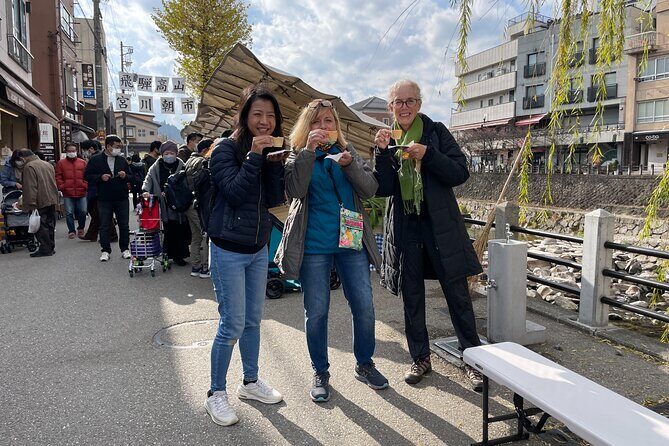
Then you shift to the Hida-Takayama Miyagawa Morning Market. This market has existed in some form for more than two centuries, and it still functions as a hub for fresh produce. The market sits along the Miya River on either bank between bridges.
The free-entry part is great value, but the bigger win is atmosphere. River-adjacent markets tend to feel livelier and more open than indoor markets. You also get a pleasant walking component as the guide moves you between viewpoints.
If you like photography, this is where you’ll likely get your best angles. If you’re more food-inclined, this is where you can catch ingredients that may connect to later tasting stops.
Sanmachi Suji: Takayama’s preserved old town streets
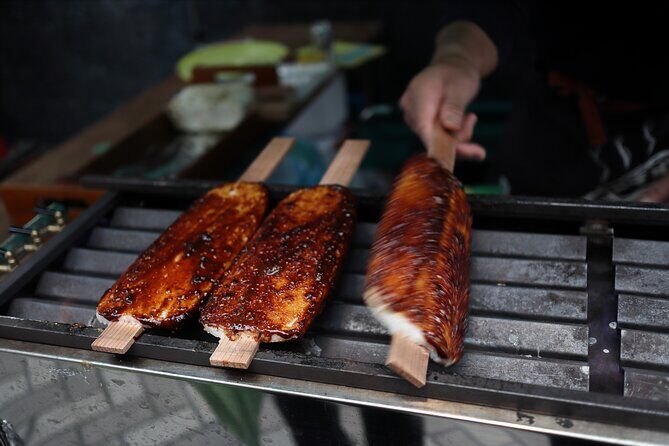
Sanmachi Suji is the heart of Takayama’s preserved old town. During the Edo period, it functioned as a hub where craftsmen, merchants, and farmers interacted. Today, you get restored buildings and a street layout that helps you imagine daily commerce back then.
This is a free stop and typically one of the most relaxing parts of the day. It’s not just sightseeing; it’s context. When you later visit breweries and specialty shops, you’ll better understand why these businesses became long-running fixtures.
The practical angle: wear shoes you can handle. Even with scheduled time blocks, old-town streets can include uneven pavement and lots of small turns. The good news is you’re walking a route your guide knows well, so you won’t feel lost.
Onoya Brewery: traditional miso and soy with 250-year roots
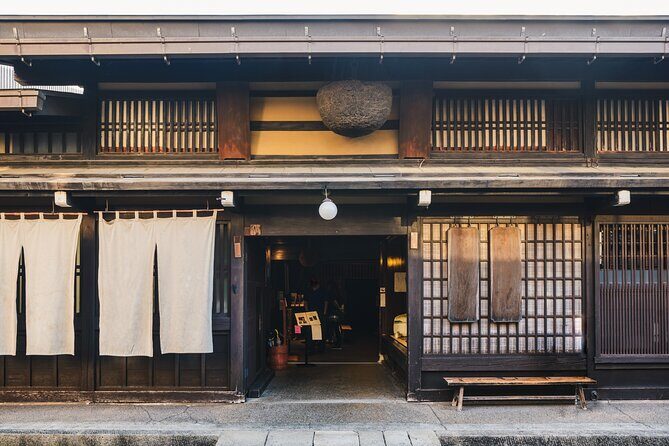
Now for the food nerd part. Onoya is a traditional miso and soy source brewery and shop founded 250 years ago in Takayama. The stop is free to enter, and it’s designed to show you how Takayama’s flavors get made, not just what to buy.
Miso and soy are the backbone of so many Japanese dishes, but in a place like Takayama they also become a local signature. This stop is a great chance to buy something you can bring home and use right away, since miso and soy products are practical souvenirs.
What to expect during a visit like this: the shop experience tends to be more sensory than showy. You’ll likely notice how products are displayed and how the guide describes what makes the local approach distinctive.
Harada Sake Brewery: Sansha dry sake and small tasting cups
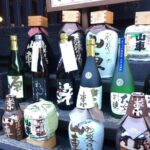
Next is Harada Sake Brewery, where the brand Sansha is described as a dry sake with muscular umami. That phrasing is your clue to what to look for: you’re not just chasing sweetness; you’re looking for depth and savory structure.
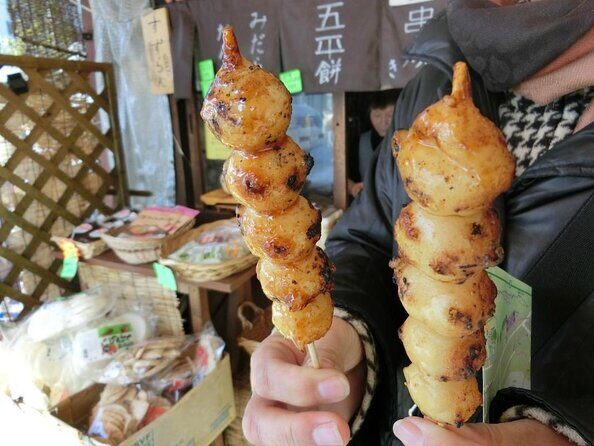
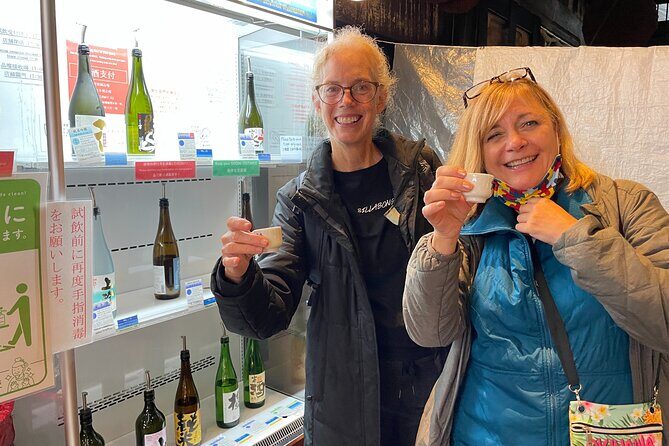
This stop is also free to enter. You can buy a small tasting cup and savor more than ten types of sake. If that sounds like a lot, your guide can help you pick a sensible order so you don’t end up overloaded too fast.
There’s also food here: steamed manju buns and cakes made with sake. Even if you’re not a heavy sweets person, this is where you can sample how sake flavors show up in baked treats.
Kawashiri Sake Brewery: matured sake tasting for an extra charge
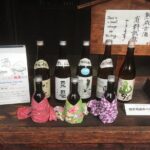
The final brewery stop is Kawashiri, which focuses on artisanal matured sake. The emphasis is on aging and complexity, and that often means your tastes feel more layered than in fresher styles.
Entry is free, but tastings are available for an additional charge. You can taste a trio of fine brews, including Hidamasamune. This structure is smart for most visitors: three samples give you variety without turning the day into a marathon.
If you’re buying to take home, this stop is usually where you’ll feel confident choosing because the guide can talk you through what matured sake means on the tongue.
How the customizable 3–4 site plan works in real life
You choose your must-see spots from a list, and your walk becomes a customized itinerary built around 3–4 selected locations. That’s a big deal for value because you control the day’s balance.
If you’re a first-time visitor, I’d steer toward the combo of morning market + at least one old-town street segment + one brewery stop. If you already know you want sake, prioritize the Harada and Kawashiri stops and treat the markets as your flavor warm-up.
Also remember the small cost exceptions: Takayama Jinya admission is not included, and Kawashiri tastings cost extra. Everything else on the core route is set up with free entry at most stops, which helps keep your spending predictable.
Price and value: what you’re paying for at $154.37
At about $154.37 per person for roughly six hours, the price is not primarily about doors you walk through. It’s about the guide and the pacing.
A few reasons this can be good value:
- The guide is licensed and English-speaking, which upgrades the whole experience from sightseeing to understanding
- Multiple major stops are free to enter, so you’re not paying entrance fees for everything
- The tour is private for your group, which helps you get more attention per minute
- The tasting stops give you a chance to buy products you’ll actually use at home
Where it may not be the best deal: if you only want a quick photo walk and no tastings at all. This works best when you show up hungry for context and flavor.
Practical tips so the day feels smooth
Keep these in mind and you’ll get more out of every stop.
- Bring a light snack or plan to eat after the tour. Lunch isn’t included, so you’ll want energy for the morning market and the later tastings.
- Wear comfortable walking shoes. The tour is entirely on foot, and the old-town streets reward sturdy soles.
- Pace your sake tasting. Buy the small cups and take it slow; you don’t need to chase every sample right away.
- Bring cash or a card for the items that are extra. Jinya admission and certain tasting charges are not included, and you’ll probably want to pick up miso/soy and sake.
If you get a guide like Mitsu or Yoko in the reviews, expect a warm, proactive vibe. In particular, I like the idea that the guide can shift timing based on your interests as the day changes.
Who should book this Takayama cuisine and sake tour?
This is a great fit if you want:
- a guided, walkable way to understand Takayama food and culture
- real tastings, not just browsing
- a private tour feel where your group matters
- flexibility to choose 3–4 stops from a set list
It’s also smart for couples and small families who like structure but don’t want to be herded. If your group includes people who care more about history, you’ll have Edo-era context through the jin’ya stop. If your group cares more about food, the miso and sake stops keep it tasting-forward.
If you’re traveling solo and want a deep local day, this still works well, especially since the guide meets you within a designated area and keeps the route manageable.
Should you book this Takayama tour or pass?
Book it if you want Takayama through food and story, with a guide who can explain why things are the way they are. The combination of morning markets, preserved old-town streets, and multiple brewery experiences makes this more than a snack tour.
Consider passing or adjusting your expectations if:
- you hate walking tours
- you don’t plan to spend on tastings or admissions not included
- you’re looking for a heavy lunch-focused experience (lunch isn’t included)
If you want a morning-to-early-afternoon plan that feels local and understandable, this tour is a solid pick.
FAQ
How long is the Takayama cuisine, food, and sake cultural tour?
It runs for about 6 hours.
Is this tour walking-only, and is pickup available?
Yes, it is a walking tour. Pickup is offered on foot, and you’ll meet your guide within a designated area.
What sites will I visit?
You choose 3–4 sites from a list of options, and the walk is built around your selected stops.
Are entrance fees included?
Most stops are free to enter, but Takayama Jinya admission is not included. Also, tastings at Kawashiri are available for an additional charge.
Is the guide English speaking?
Yes. The tour includes a licensed local English speaking guide.
Is this a group tour with other people?
No. This is private, and only your group participates. You can’t combine multiple tour groups.
Do I need tickets in advance?
You’ll receive a mobile ticket, and confirmation is received at booking time.
Is free cancellation available?
Yes. You can cancel up to 24 hours in advance for a full refund. If you cancel less than 24 hours before the start time, the amount paid is not refunded.
More Historical Tours in Takayama
More Food Experiences in Takayama
More tours in Takayama we've reviewed
Historical Tours, compared.
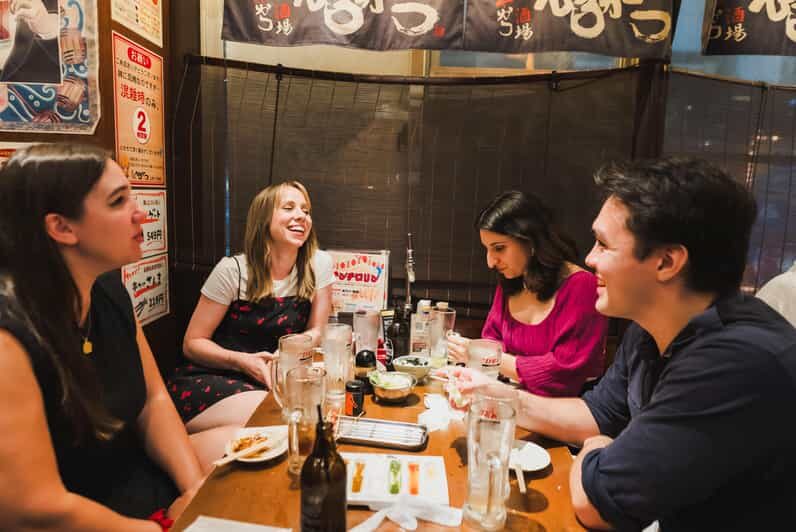 ★ 4.9Tokyo: The Best of Izakaya in Shinjuku Food & Cultural TourFrom $1293 hours
 ★ 5.0Takayama: Authentic Sake Tasting at a Historic BreweryFrom $50
 ★ 4.9Historic Kanda Sake Tasting at Tokyo’s Oldest Shop (1596)From $382 hours
 ★ 4.9Kanazawa Historic Brewery: Fermentation Tour, Tasting, LunchFrom $772h 30m
 ★ 4.5World Heritage Himeji Castle & Sake Breweries Private TourFrom $101
 ★ 5.0Sake Heritage Nagoya Brewer’s Insights and Tastings tourFrom $208
 ★ 5.01-Day Sapporo Historical Village and Sapporo Beer Museum TourFrom $1808 hours (approx.)
The lists this tour appears in