
Reviewed · SAKE TASTING
Experience Tasting Fukui’s Local Sake in Lacquered Glasses
Sake tastings are better when the glass has a job.
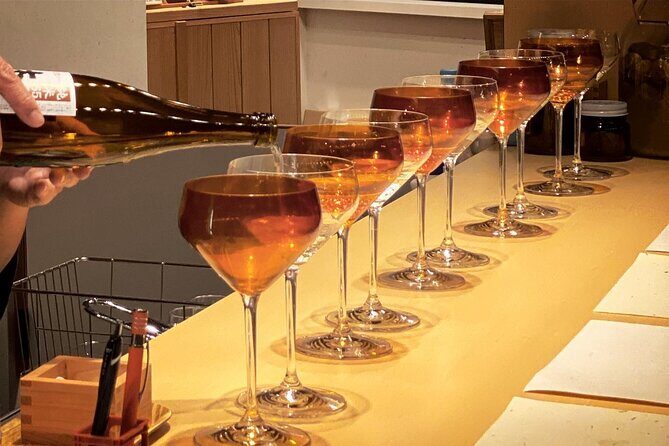
In Sabae, you’ll sample Fukui local sake using specially made lacquered glasses designed for how each sake should smell and taste. I love that you can choose junmai, daiginjo, or a hybrid plan, so the tasting fits your mood. I also like the practical, sensory angle: the glass shape is different on purpose, with the junmai cups built for fuller flavor and the daiginjo cups shaped to hold the aroma closer. One thing to consider: if you want an English guide, it’s not included and costs extra.
This is also a low-stress way to connect with local alcohol culture without needing insider knowledge. The pace is short, about 1 hour, and the experience ends right where it starts. And yes, it’s very popular—booked about 32 days in advance on average.
In This Review
- Key things to know before you go
- Kubota Liquor Store in Sabae: where the tasting starts
- Junmai vs daiginjo: the glasses do the talking
- Your tasting plans: junmai, daiginjo, or the hybrid
- Junmai plan
- Daiginjo plan
- Hybrid plan
- What’s included in the price (and what isn’t)
- Timing, pace, and how to prepare for a one-hour tasting
- What makes this sake tasting feel special in real life
- Who should book this in Fukui (and who might skip it)
- Should you book this Fukui lacquered-sake tasting?
- FAQ
- How long is the sake tasting?
- How much does it cost?
- What plans are available?
- What’s included in the price?
- What is not included?
- Where does the activity start and end?
- Is this a private tour?
- When will I receive confirmation?
- Is it near public transportation?
- What happens if the experience is canceled?
Key things to know before you go
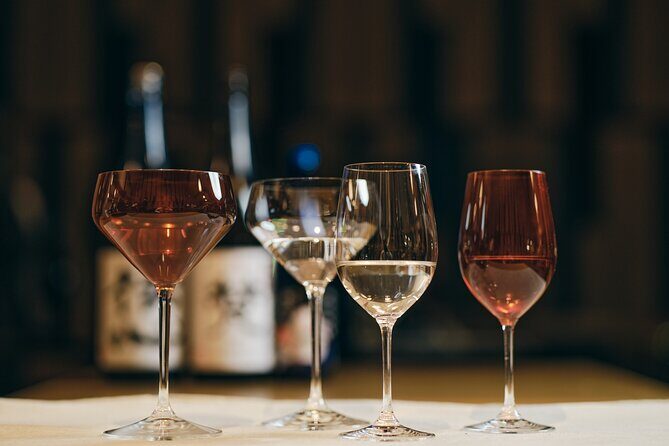
- Lacquered glasses built for tasting: one shape for junmai (wide opening), another for daiginjo (narrower opening and deeper form).
- Pick your plan: junmai (2 glasses), daiginjo (2 glasses), or hybrid (4 glasses) with snacks included.
- Short and focused: plan on about 1 hour total, then you’re done.
- Simple meeting point: it starts and finishes at 1-chōme-1-4 Asahimachi, Sabae, Fukui.
- English help costs extra: an English guide is not included and runs ¥20,000 per booking.
- Weather and minimum size can affect dates: you’ll be rescheduled or refunded if conditions fail.
Kubota Liquor Store in Sabae: where the tasting starts
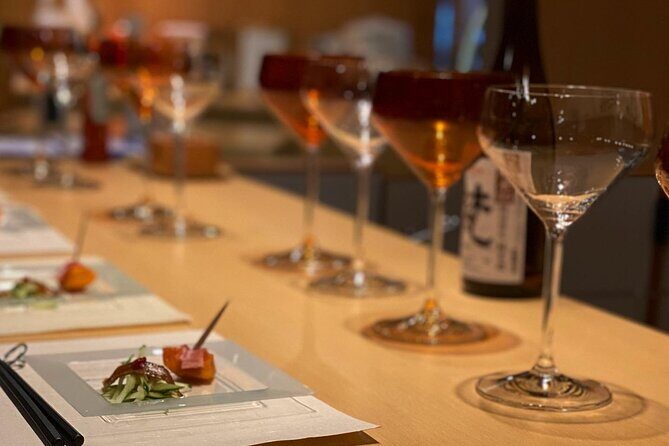
Your experience begins at Kubota Liquor Store in Sabae, Fukui. The store has been around since 1914 (Taisho 3), which matters here because it’s not a pop-up tasting concept. It’s a long-running place where people go to buy local sake, and this tasting is built around that same local focus.
You’ll meet at 1-chōme-1-4 Asahimachi, Sabae, Fukui 916-0025, Japan, and the activity returns to that point when it’s over. The start-to-finish setup is straightforward, which is helpful if you’re pairing this with other sights in Fukui.
This is a private activity, meaning it’s just your group, not a big mixed crowd. You’ll also use a mobile ticket, which usually means less fuss the day of the tasting.
One other practical note: the listing says it’s near public transportation and that most travelers can participate. That typically makes it easier to slot into a day without a long detour.
Junmai vs daiginjo: the glasses do the talking
What I find most interesting is that this tasting isn’t only about drinking sake. It’s about comparing how sake behaves when it’s served in glasses designed for specific styles.
For junmai, the lacquered glass has a wide opening. The whole idea is that you can enjoy the full flavor, not just chase aromas at the surface. If you like sake that feels fuller and more “rounded” when you sip, a wide-mouth glass is a smart match.
For daiginjo, the lacquered glass has a slightly narrower opening plus a distinct shape with depth. That deeper form is meant to trap the aroma, so smell stays concentrated as you drink. If you enjoy the nose of sake—those lifted, fragrant notes—this is the style that typically rewards a careful sniff right before the sip.
Even though you’re only in town for an hour, these glass differences give you a quick, clear lesson in how serving design changes the experience. I like that it turns the tasting into something you can notice immediately, instead of hoping you’ll “figure out” the differences on your own.
Your tasting plans: junmai, daiginjo, or the hybrid
You get to choose between three plans: junmai, daiginjo, or a hybrid option that mixes both.
Junmai plan
The junmai plan includes two glasses of junmai sake plus one snack. This is the best choice if you want to focus your attention and not feel like you’re rushing through lots of samples.
Daiginjo plan
The daiginjo plan includes two glasses of daiginjo sake plus one snack. Choose this if you’re mainly curious about aroma and want to experience how the narrower, deeper lacquered glass changes what you notice.
Hybrid plan
The hybrid plan comes with four glasses of sake and two snack items. If you’re torn between the two styles, this is the most efficient way to compare them back-to-back using the correct glass for each.
My practical advice: pick hybrid if you’re new to Fukui sake or if you want variety without spending extra time. Pick a single-style plan if you already know you prefer the kind of flavor/aroma profile you’re chasing.
What’s included in the price (and what isn’t)
At $19.51 per person, you’re paying for a short, focused alcohol tasting experience with food support. The included items are alcoholic beverages and snacks. That matters because sake tastings can feel pricey when you’re also paying for nibbles separately. Here, the snack is part of the package.
The big thing not included is an English guide. The data says an English guide costs ¥20,000 per booking if you want one. If you’re comfortable with basic travel Japanese or you’re happy to go with the flow, you might not need it. If you want detailed explanations of what you’re tasting, budget for that extra option.
You also get a mobile ticket, and confirmation happens within 48 hours of booking, depending on availability. That helps planning because you’re not stuck waiting until the last minute.
One more value point: this activity is often booked about 32 days in advance on average. That doesn’t automatically mean it sells out fast, but it’s a decent hint that this is a popular stop for people doing a sake day in Fukui. If your dates are fixed, booking earlier is a smart move.
Timing, pace, and how to prepare for a one-hour tasting
The experience runs about 1 hour. That short duration is a plus when your schedule is packed, but it also means you’ll want to arrive ready to pay attention. You’ll likely get the most out of the tasting if you slow down your sips and actually compare aroma and flavor between glasses.
Weather can matter. The information says the experience requires good weather, and if it’s canceled due to poor weather, you’ll be offered a different date or a full refund. Also, if a minimum number of travelers isn’t met, it can be canceled and you’ll get a different date or a refund. That’s normal for small-format experiences, so if your itinerary is tight, keep a little flexibility.
Because alcohol is included, plan your day accordingly. If you’re combining this with other stops, I’d keep the rest of the schedule simple afterward. Bring water and think about what you’ll do next so you’re not rushed or stressed.
And since it’s near public transportation and not an all-day excursion, you can treat it as a focused cultural stop rather than a whole plan. The meeting location is clear, and the end point is the same place.
What makes this sake tasting feel special in real life
Plenty of sake tastings exist, but this one has a specific angle: the glasses are designed for the styles you’re tasting. That’s the “why” behind the experience.
Here’s what that means for you:
- You’re not just drinking; you’re learning what changes when service changes.
- Junmai’s wide mouth helps you catch more of the flavor experience.
- Daiginjo’s narrow mouth and deeper shape push aroma toward you, so smell becomes part of the tasting.
The lacquered look also isn’t just decoration. The shape is part of the function, and it turns a typical sip into something you can observe. For me, that’s the easiest way to feel satisfied at the end of a tasting, especially when the time is short.
The store setting adds another layer. Kubota Liquor Store is not described as a novelty venue. It’s presented as a long-established place in Sabae where you can buy Fukui local sake, and the tasting is designed around that local reality.
Who should book this in Fukui (and who might skip it)
I think this is a strong fit if:
- You like sake and want a quick way to understand style differences.
- You enjoy food-and-drink experiences that are short and easy to plan.
- You’d rather compare two styles with the right tools (glasses) than guess at flavor differences.
It may be less perfect if:
- You don’t drink alcohol or you’re trying to avoid it entirely.
- You need detailed English explanations and don’t want to pay the ¥20,000 per booking for an English guide.
- You’re traveling on dates with no flexibility and you’re worried about weather-based changes.
Still, the overall structure is pretty traveler-friendly: near public transportation, private for your group, and most travelers can participate.
Should you book this Fukui lacquered-sake tasting?
If your goal is a high-satisfaction, short sake stop in Sabae, I’d book it. The value comes from combining two sake styles (or both) with snacks and, most importantly, tasting through glasses made for junmai vs daiginjo. In about an hour, you get enough contrast to actually notice what changes.
Choose the plan that matches your interest:
- Want variety fast? Go hybrid.
- Want to focus on fuller flavor? Go junmai.
- Want aroma emphasis? Go daiginjo.
One last practical thought: since good weather matters and the activity is booked in advance fairly often, lock in your date early when you can. Then treat it like a purposeful stop, not just a quick drink.
FAQ
How long is the sake tasting?
The experience lasts about 1 hour.
How much does it cost?
The price is $19.51 per person.
What plans are available?
You can choose a junmai plan, a daiginjo plan, or a hybrid plan.
What’s included in the price?
Alcoholic beverages and snacks are included.
What is not included?
An English guide is not included. The cost for an English guide is ¥20,000 per booking.
Where does the activity start and end?
It starts at 1-chōme-1-4 Asahimachi, Sabae, Fukui 916-0025, Japan and ends back at the meeting point.
Is this a private tour?
Yes. It’s private, and only your group participates.
When will I receive confirmation?
You should receive confirmation within 48 hours of booking, subject to availability.
Is it near public transportation?
Yes, the meeting point is near public transportation.
What happens if the experience is canceled?
Cancellation is free. You can cancel up to 24 hours in advance for a full refund, and cancellation due to poor weather may offer a different date or a full refund. If a minimum number of travelers isn’t met, you’ll also be offered a different experience/date or a full refund.
Sake Tasting, compared.
 ★ 5.01-Day Snow Monkeys, Zenko-ji Temple & Sake in NaganoFrom $151
 ★ 5.03-Hour Kyoto Insider Sake Brewery Tour with Tastings & PairingsFrom $84
 ★ 4.9Nagano: Snow Monkeys, Zenkoji Temple & Sake Day TripFrom $1358 - 12 hours
 ★ 5.0Kyoto: Insider Sake Brewery Tour with Sake and Food PairingFrom $873 hours
 ★ 5.0Kyoto Sake Brewery & Tasting Walking TourFrom $98
 ★ 5.01.5-Hour Kyoto Insider Sake Experience with 7 Tastings & PairingsFrom $68
 ★ 5.0Ramen and Sushi Cooking Class with Sake Pairing Set in TokyoFrom $79
 ★ 5.0Sake Tasting Masterclass in Shinjuku (8+ Varieties with a Pro)From $72
The lists this tour appears in