
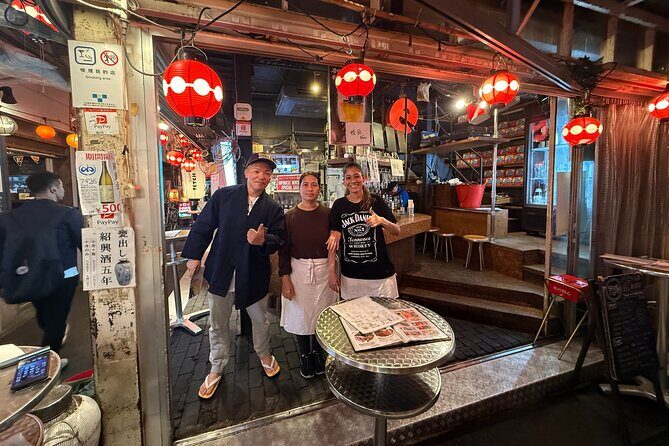
Reviewed · EVENING EXPERIENCES
Samurai Guide Sho’s:Kichijoji Night Training–Drink & Dish Pairing
Sho’s Samurai training feels personal.
In Kichijoji, you follow Samurai Guide Sho through three small, local food-drink stops, turning a simple night out into a practice of pairing flavors and choosing what you actually want to drink next. I like the way the tour stays calm and conversational, not a noisy bar crawl. I also like that you get reserved seats at the first stop, so you can focus on the alley atmosphere instead of standing around. One thing to consider: drinks are ordered and paid individually, so your final total depends on what you choose.
What makes it work is the pairing ritual.
At each “training ground,” you’re served a few carefully selected dishes, and you choose the single glass you want most to match what’s in front of you. I love that the guidance is there if you need it, including Sho’s quiet “secret word” style of help, so you don’t need to be an alcohol expert to enjoy it. The possible drawback is also part of the format: it’s built for stillness and flavor focus, so it’s not for people who want fast movement or an all-you-can-drink party.
In This Review
- Key things to know before you go
- Modern Samurai Training in Kichijoji: What the Night Is Really Like
- Price and Value: What Your $97.73 Covers (and What It Doesn’t)
- Before You Go: Timing, Group Size, and the Quiet-Training Vibe
- Stop 1: Kichijōji Station and Meeting Sho’s Indigo “Modern Samurai”
- Stop 2: Harmonica Yokocho Kanpai—Yakitori Bar Atmosphere and Sake Pairing
- Stop 3: The Craft Beer Dojo—Draft Japanese Beer and Real Pairing Choices
- Stop 4: Sushi Finale at Harmonica Yokocho—Your Favorite Sake with Seasonal Bites
- How the Drink-and-Dish Pairing Training Works (So You Don’t Feel Lost)
- What to Expect From the Food and Drink (and Dietary Reality)
- Logistics That Matter: Seats, Stops, and How to Plan Your Night
- Who This Tour Fits Best (and Who Might Not Love It)
- Should You Book Samurai Guide Sho’s Kichijoji Night Training?
- FAQ
- What does the $97.73 price include?
- How much do drinks cost during the tour?
- Where do I meet for the tour?
- What time does the tour start?
- How long is the experience?
- Is this a party-style bar crawl?
- Do I need to know a lot about alcohol to enjoy it?
- What if I have dietary restrictions?
- How big is the group?
- Will communication be easy in English?
- What is the cancellation policy?
Key things to know before you go
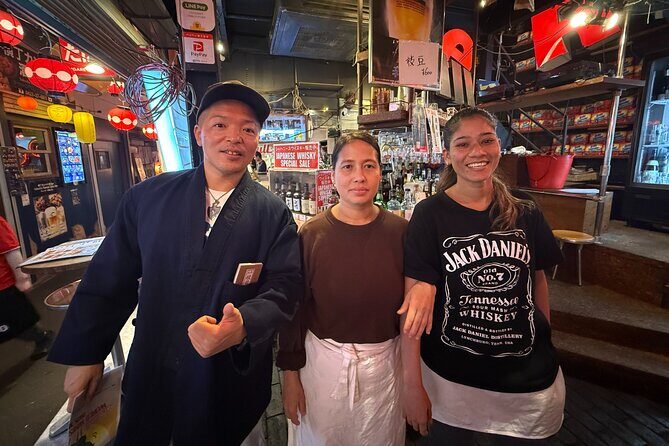
- Small group, quiet pacing: maximum 5 people, time to sit and talk
- You pay for drinks: included are the dish rounds and the pairing support
- Harmonica Yokocho first: a nostalgic alley mood with reserved seating
- Craft Beer Dojo focus: lots of Japanese craft beer on draft, not just bottles
- Sushi finale with your choice: the last pairing decision is yours
- Flexible route energy: Sho picks the best venues for that night’s flow
Modern Samurai Training in Kichijoji: What the Night Is Really Like
This tour is built around one simple idea: you don’t just drink, you practice noticing what works together. You’ll walk through western Tokyo at a gentle pace, then sit down at each stop and work through a dish-and-drink match in real time.
Samurai Guide Sho shows up dressed in an indigo haori, but this is not a costume show. His style is quiet respect—more once-in-a-lifetime encounters than performance—so the night stays grounded in the local places you’re visiting.
The big win for me is the “pause” between stops. You’re not racing from place to place, and you’re not doing the same tasteless bar-crawl checklist. Instead, the night feels like a small story that unfolds at three neighborhood counters and tables.
If you're still narrowing it down, here are other tours in Musashino we've reviewed.
Price and Value: What Your $97.73 Covers (and What It Doesn’t)
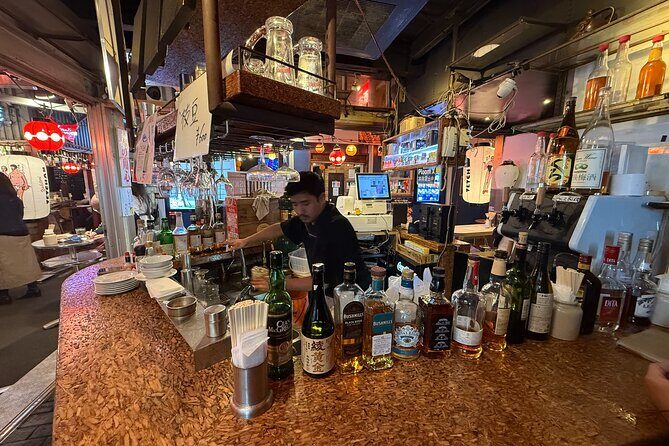
The price—$97.73 per person—covers the parts that are hard to replicate on your own. You’re paying for a small-group experience, the seat reservation at Harmonica Yokocho, the handpicked venue selection for that night, and the drink-and-dish pairing guidance.
What it does not cover is the drink tab. Drinks are ordered freely and paid individually, and the tour notes about ¥1,000 per drink. Credit cards are accepted, which matters in Japan when you don’t want to worry about cash for every round.
So how do you judge value? If you only want cheap quantity, this isn’t built for that. If you want better decision-making, calmer pacing, and local seating at places you might not find alone, the price starts to make sense. You’re also paying for intimacy—this isn’t mass-scaled bar hopping.
Before You Go: Timing, Group Size, and the Quiet-Training Vibe
Start time is 5:30 pm, and the night runs about 3 hours. You meet at the entrance area by Baskin-Robbins near JR Kichijōji Station (north exit), and the tour ends back at the same meeting point.
Sho keeps the group small—up to 5 travelers—so you’ll likely share tables with other solo or small groups. That’s part of the charm. You’ll talk, but you won’t feel shoved into forced fun.
One practical note: the experience includes walking, so wear comfortable shoes. Also, you must be at least 20 years old since it includes alcohol.
Stop 1: Kichijōji Station and Meeting Sho’s Indigo “Modern Samurai”
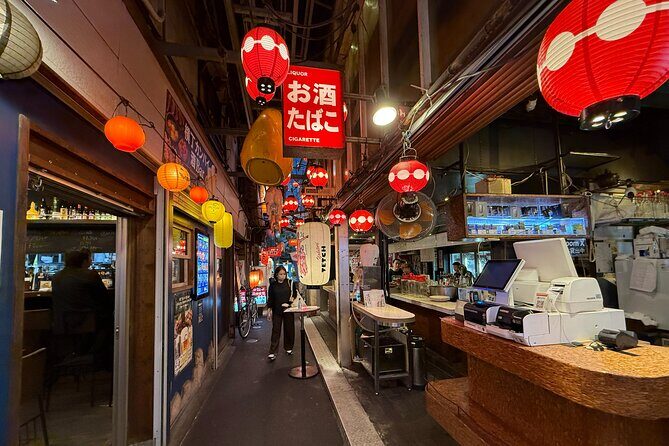
You begin at Kichijōji Station, meeting in front of Baskin-Robbins at the north exit area. Within minutes, Sho appears in his indigo haori. It’s a small detail, but it sets the tone: this is about blending into the city, not standing out like a tour group.
There’s no long lecture at the start. You’re in motion, and Sho keeps explanations simple. He uses translation tools when needed, and he doesn’t try to fill every silence with a speech. If you prefer learning through doing—through tasting and choosing—that style fits.
This first moment is also a confidence boost. If you feel unsure about alcohol, you don’t need a crash course. The tour’s “training” is about your instincts as much as it is about taste.
Stop 2: Harmonica Yokocho Kanpai—Yakitori Bar Atmosphere and Sake Pairing
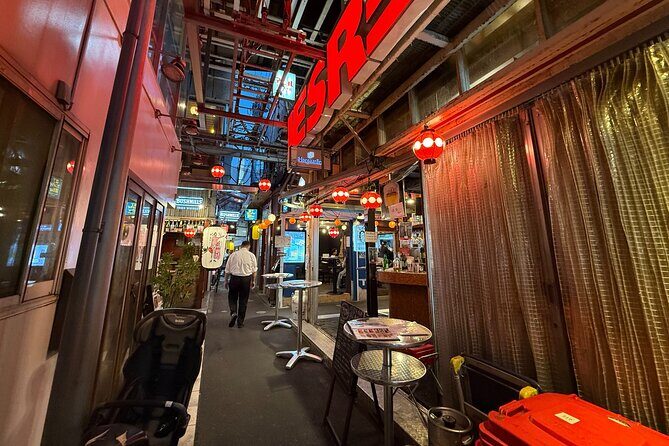
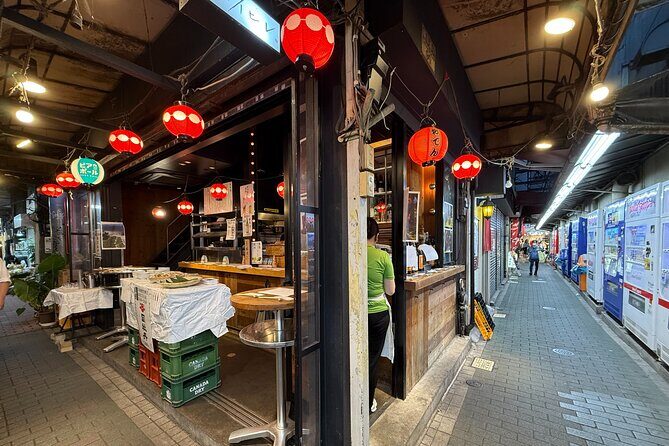
The night’s mood shifts at Hamonika Yokocho (Kichijōji). You start with a kanpai at a hidden yakitori-style bar inside the alley network. This is where the tour’s “modern samurai” idea feels real—traditional Japanese bar life inside a retro, nostalgic lane.
You’ll be served 4–5 carefully selected local dishes here. The point is not just variety; it’s building a baseline for your own pairing decisions. You get to taste something local, then think about what drink makes sense with it.
Sake shows up in this first stage, and the structure is consistent: you’ll choose the drink that matches the dish you’re eating right now. Drinks aren’t served as a fixed set, which means you control the direction of the flavor.
A detail that really matters: the tour includes reserved seating for this first stop. That lets you actually enjoy the alley vibe—people passing by, the small-bar energy—without standing in the doorway or losing your view.
If there’s a drawback, it’s that this portion is designed for calm conversation. If you’re hoping for loud entertainment or a performance, you might find the pacing too quiet.
Stop 3: The Craft Beer Dojo—Draft Japanese Beer and Real Pairing Choices
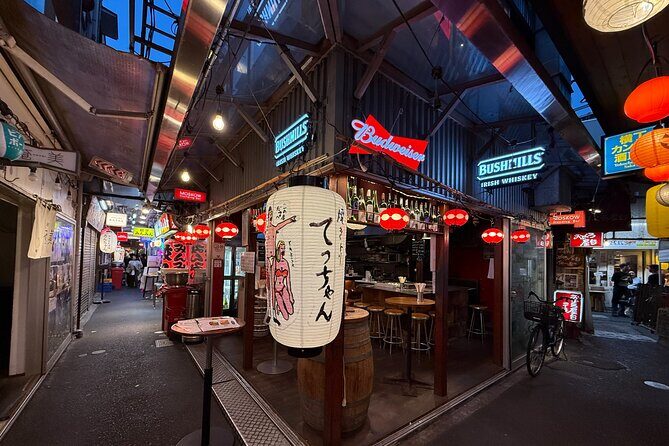
Next comes the Craft Beer Dojo, where the focus is balance—aroma and bitterness—and the training is about choosing beer based on what the food is asking for.
At this stop, you’ll try Japanese craft beer on draft, with support for matching the drink to the dishes served. This is one of the most praised parts of the experience, and I get why: draft variety is where craft beer tours usually get weak. Here, the setup is meant for tasting choices, not just pouring the same thing into everyone’s glass.
Sho is also part of the experience quality. The vibe is relaxed because he’s friendly with staff and keeps communication smooth. That translates into an easier night for you—less awkwardness, less guessing, more actual conversation at the table.
You should expect a menu that can include more than beer. The tour notes that craft gin, sake, and other drinks may be available. Still, the “dojo” identity is craft beer first, so if you love Japanese beer, this is likely your favorite stop.
The only consideration: if you want a nonstop drinking rhythm, the structure won’t match. You’re sitting, tasting, choosing, and talking. It’s intentional.
Stop 4: Sushi Finale at Harmonica Yokocho—Your Favorite Sake with Seasonal Bites
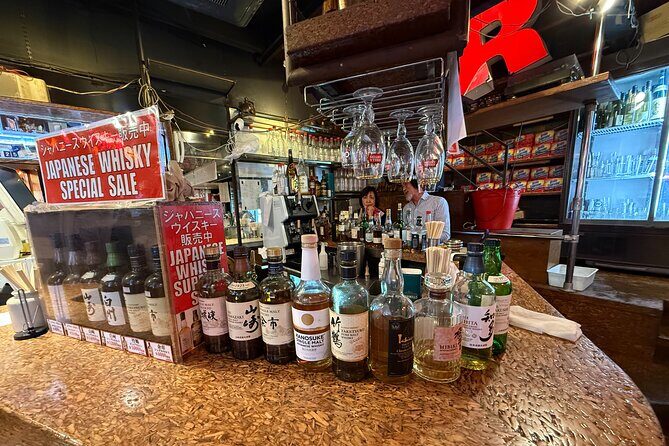
The final training stops back in Hamonika Yokocho, ending with a sushi pairing moment. This part is described as a quiet harmony between sushi and your chosen drink, and it’s meant to feel like closure rather than a rushed last round.
You’ll get a seasonal recommended sushi assortment. Seasonal means you aren’t just eating “whatever is on the poster.” The idea is that the sushi and the day’s ingredients come first, and your drink choice becomes the finishing line.
This stop also reinforces the tour’s central practice: you decide what to drink to match what you’re eating. The tour even frames it as choosing the single glass you want most. That hesitation is treated like part of the fun, not a problem.
If you’re someone who worries you’ll pick wrong, Sho’s guidance is there. The support is not heavy-handed, but there is a “secret word of guidance” approach if you get stuck. It’s a gentle safety net for your choices.
And yes, the sushi finish is a big deal for good reason. The earlier stops give you training in matching flavors, so by the end, your decision-making feels faster—and more satisfying.
How the Drink-and-Dish Pairing Training Works (So You Don’t Feel Lost)
You might think pairing means knowing wine theory or sake grades. Here, it’s simpler. You taste the dishes Sho selects, then you choose the drink that feels like the best match in that moment.
At each stop:
- You’re served carefully selected dishes
- You choose the drink yourself, instead of getting a forced set
- Sho supports you with matching guidance if you want help
This is why the tour doesn’t depend on being an expert. It’s a practice in noticing. You’ll learn fast by doing, and you don’t have to pretend to understand everything.
The “secret word” concept is smart. It avoids interrupting your conversation while still giving you an out if you feel unsure. So if you’re worried about language or alcohol knowledge, don’t be. You’re there to refine your instincts, not take a test.
What to Expect From the Food and Drink (and Dietary Reality)
The included food comes in portions that are meant to be satisfying at each bar, not just tiny tastes. The tour explicitly says you should come hungry, and by the final sushi course, you should feel full in both your head and stomach.
But there’s a key dietary limitation you need to know early. The tour notes that vegetarian, vegan, kosher, and halal diets cannot be accommodated. Dishes may include animal products and seafood-based broth, plus alcohol-based seasonings.
If you have allergies or specific restrictions, inform the organizer in advance. They say they will do their best to accommodate where possible, but the baseline menu is built around authentic local options.
Also, since drinks are paid individually, you can adjust your spending. If you want fewer drinks, you can slow down your order. Just remember the pairing happens with the drink you choose, so having a drink you enjoy still matters.
Logistics That Matter: Seats, Stops, and How to Plan Your Night
You’re not doing a classic crawl with constant standing and rapid exits. Reserved seating at the first stop helps a lot, and the overall pacing is designed for sitting and tasting.
The tour duration is about 3 hours, with short meet-and-walk segments between stops. Stop lengths are roughly:
- 5 minutes meeting at the station
- about 50 minutes at each bar/dojo stage
- about 5 minutes back to the station
Sho also has flexibility. Routes and venues may change depending on crowd conditions and the night’s energy. That’s good news for you, because it means the experience can stay comfortable rather than rigid.
Who This Tour Fits Best (and Who Might Not Love It)
This is a strong match if you:
- Prefer small-group nights and meaningful conversation
- Want to focus on pairing food with drinks, not drinking for quantity
- Like local alley life in neighborhoods like Kichijōji
- See your guide as a companion for the night, not a lecturer
You might not love it if you want:
- An all-you-can-drink party
- A fast-paced bar crawl with lots of stops
- A heavy sightseeing script with detailed explanations
In other words: if your ideal Tokyo night is calm, curious, and flavor-focused, this training format should click.
Should You Book Samurai Guide Sho’s Kichijoji Night Training?
Book it if you want a Tokyo night that feels like a real local rhythm—three sit-down tastings, guided pairing, and the kind of reserved-seat comfort that makes you relax. Sho’s style is easy to talk to, and the overall emphasis on quiet pairing is exactly what you’re paying for.
I’d skip it if you mainly want to maximize the number of drinks, or if you’re very sensitive to uncertainty about alcohol. The tour’s whole structure assumes you’ll choose what you want and trust the guidance if you need it.
If your budget can handle drinks on top of the base price, and you’re ready for a calmer pace in Kichijōji, this one is a satisfying pick.
FAQ
What does the $97.73 price include?
It includes the dish portions at each stop, pairing support from Samurai Guide Sho, reserved seating at the Harmonica Yokocho stop, and a mobile ticket. Drinks are ordered freely and paid individually.
How much do drinks cost during the tour?
The tour notes about ¥1,000 per drink. The exact amount depends on what you order, and you pay individually at the bars.
Where do I meet for the tour?
You meet in front of Baskin-Robbins near JR Kichijōji Station, north exit. The experience ends back at the meeting point.
What time does the tour start?
The start time is 5:30 pm.
How long is the experience?
It runs about 3 hours (approx.).
Is this a party-style bar crawl?
No. This is not an all-you-can-drink party and not a fast, high-energy crawl. It’s designed for quiet conversations, good drinks, and a natural flow.
Do I need to know a lot about alcohol to enjoy it?
No. The tour is a practice that sharpens your intuition. If you feel unsure, Sho offers quiet guidance, including a secret word approach.
What if I have dietary restrictions?
You should inform the organizer in advance. However, the tour states vegetarian, vegan, kosher, and halal diets cannot be accommodated, since dishes may include animal products, seafood-based broth, and alcohol-based seasonings.
How big is the group?
Maximum group size is 5 travelers. You may share a table with other guests.
Will communication be easy in English?
Sho uses translation tools, plus simple English for what’s needed in the moment. He doesn’t aim to explain everything in long detail.
What is the cancellation policy?
Free cancellation is available up to 24 hours before the experience start time for a full refund. If you cancel less than 24 hours before, you don’t receive a refund.
More tours in Musashino we've reviewed
Evening Experiences, compared.
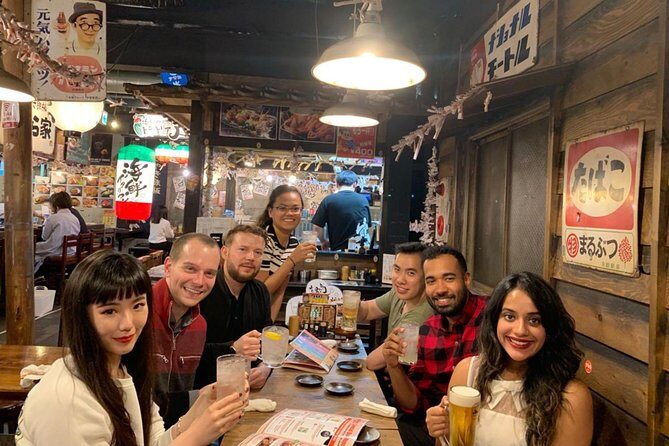 ★ 5.0Osaka Bar Hopping Night Walking Tour in Namba (3 bars, 6 tastes)From $98
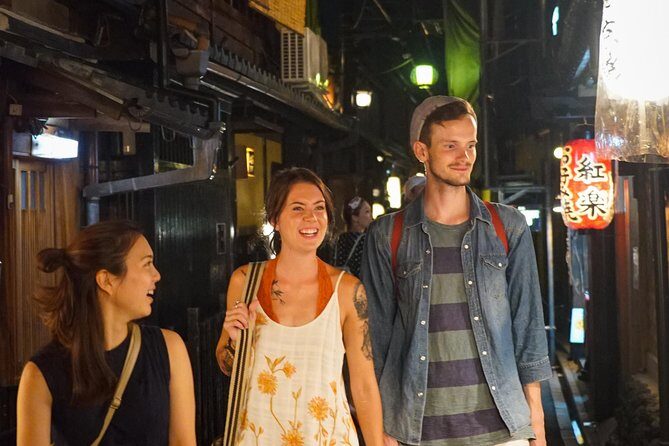 ★ 5.0Kyoto Bar Hopping Night TourFrom $105
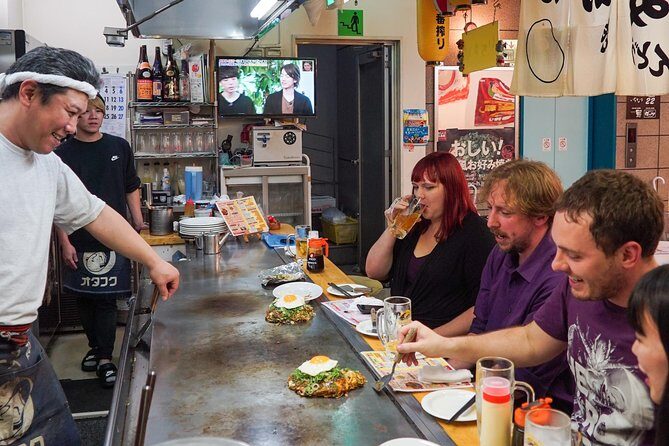 ★ 5.0Hiroshima Izakaya Food and Drink Night TourFrom $110
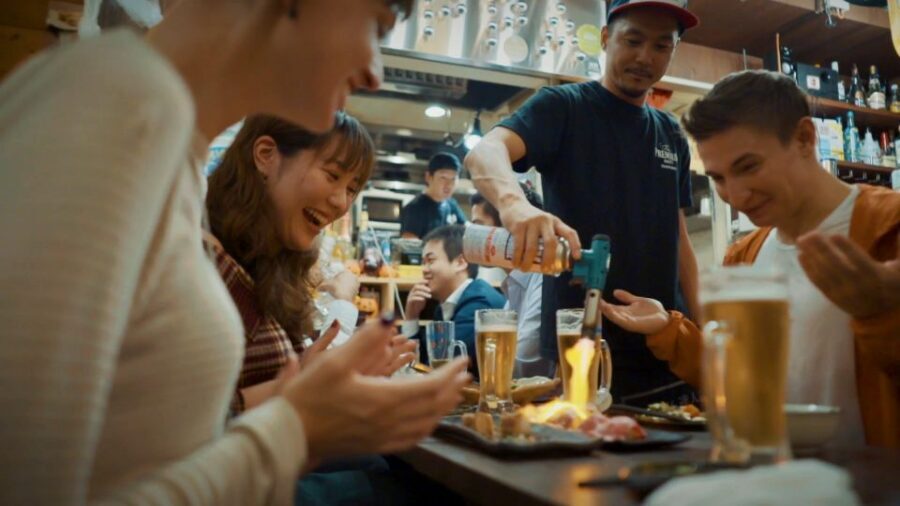 ★ 4.8Shibuya Meltdown Night Tour: All-You-Can-Drink Bar HoppingFrom $1033 hours
 ★ 4.6Tokyo: Shinjuku Bar Hopping & Night Walking TourFrom $303 hours
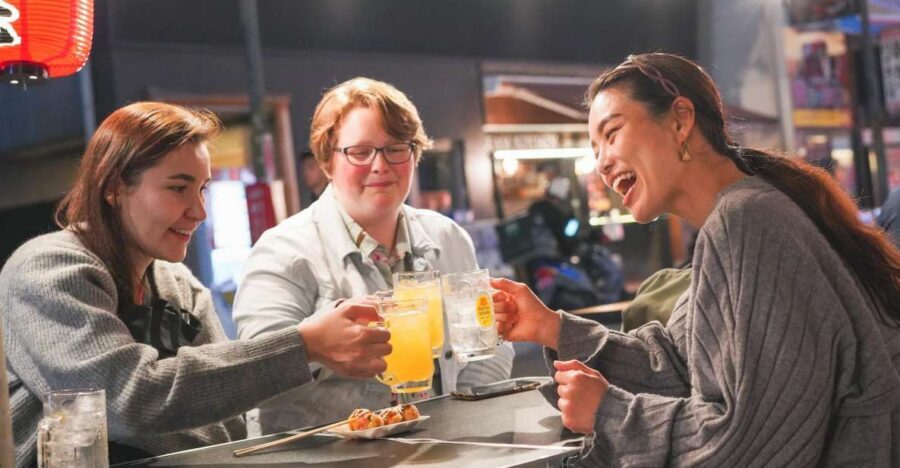 ★ 4.7Osaka: Bar-Hopping Night Tour in NambaFrom $1123 hours
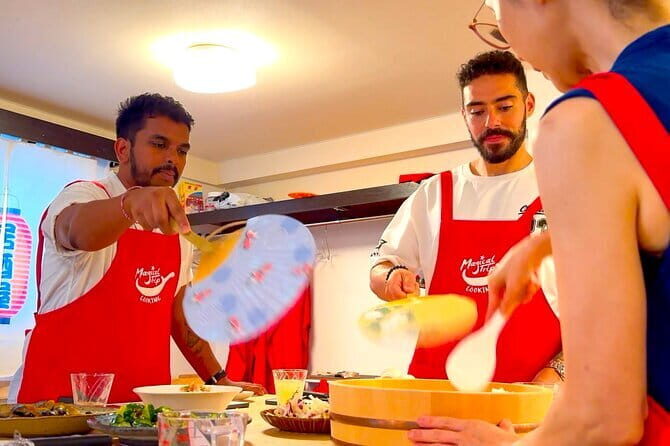 ★ 5.0Tokyo Night Cooking Class: 5 Home-Cooked Japanese DishesFrom $79
★ 5.0Tokyo: Shinjuku Bar Hopping & Night Walking TourFrom $36
★ 5.0Tokyo Night Cooking Class: 5 Home-Cooked Japanese DishesFrom $79
★ 5.0Tokyo: Shinjuku Bar Hopping & Night Walking TourFrom $36
The lists this tour appears in